

The Global Scholarly Directory.
Discover world-class academic programs curated for the modern intellectual. Search through 19877+ degrees and professional certificates.
 Coursera
Use Animations and Transitions in PowerPoint 365
PowerPoint 365 offers many advanced options that will really make your presentations shine and stand out above the rest. In this project, you will learn how to use animations and transitions in Microsoft PowerPoint. First, you will learn how to prepare your presentation for adding animations, and then we will dive into all of the effects PowerPoint provides. You will learn how to apply and edit with Entrance Animations onto the screen. Then, you will apply Emphasis Animations to objects already on the screen and Exit Animations to make objects leave the screen. Finally, you will discover the secret behind transitions in between slides within your presentation.
 Pearson
Cisco Software-Defined Wan for Enterprise & Cloud: Unit 5
This course provides a detailed exploration of SD-WAN deployment and management strategies, focusing on seamless integration into existing environments. You'll learn effective migration techniques for transitioning brownfield branch sites to SD-WAN, emphasizing the strategic placement of edge devices in centralized locations like data centers and Colo facilities. Additionally, gain insights into Cisco's innovative approach to edge device configuration management, including the use of config groups, feature profiles, and feature parcels. By the end of this course, you'll be equipped with the skills to efficiently deploy, manage, and optimize SD-WAN solutions.
 Coursera
Understanding Smart Objects in Adobe Photoshop
**Enroll in this Guided Project before April 2026, for a free 1-month trial to the Creative Cloud Pro Plan!** By the end of this project, you’ll be able to create and edit smart objects in Adobe Photoshop. You’ll use smart objects to apply nondestructive edits and swap assets inside files. During this project, you’ll get used to navigating some important Photoshop tools and practice creating and importing smart objects, and you’ll learn what makes them smart in the first place. Then you’ll apply nondestructive edits and work with different kinds of smart objects. Once you’re finished, you’ll learn how to export your work. By the end of the project, you’ll be able to use smart objects to make smart and speedy edits to images.
 Google Cloud
Innovating with Google Cloud Artificial Intelligence - 日本語版
AI と ML は、幅広い業種に急速な変革をもたらしているインフォメーション テクノロジーにおける重要な進化です。「Innovating with Google Cloud Artificial Intelligence」では、AI と ML を活用して組織でビジネス プロセスを変革する方法について学習します。 このコースは Cloud Digital Leader 学習プログラムの一部で、個人が自分の役割において成長し、ビジネスの未来を構築することを目的としています。
 University of Geneva
Droit International de l'Eau Douce
Au cours des dernières décennies, le droit international a connu des développements majeurs afin de tenir compte des multiples facettes que revêt la gestion et la protection des eaux douces. L’adoption d’instruments universels, régionaux et de bassins souligne l’importance d’étudier l’évolution de la réglementation internationale relative à l’eau et d’identifier les grands principes en ce domaine. Aussi, ce cours vise à offrir les bases nécessaires pour appréhender et examiner la régulation qui s’applique eaux douces transfrontières notamment aux fleuves, aux lacs et aux aquifères. Il présente les principes et les normes juridiques qui régissent l’utilisation, le partage, la gestion et la protection de ces ressources. Le MOOC est composé de 5 modules pouvant être visualisés dans un ordre quelconque, car abordant chacun un thème différent. Cependant, l’ordre des modules suit une certaine logique pédagogique et facilite la compréhension du MOOC pour des personnes ne connaissant pas le sujet. Chaque module s’accompagne d’un questionnaire d’évaluation/quiz. Le MOOC suivra un parcours unique donnant droit à un certificat pour les apprenants ayant obtenu une moyenne supérieure à 80% aux quiz. A la fin du cours, l’apprenant sera à même entre autres : 1) de décrire les enjeux liés à la régulation des eaux douces transfrontières ; 2) d’expliquer l’évolution de la réglementation internationale relative aux eaux douces transfrontières ; 3) de rappeler et d’interpréter les principes et les règles qui régissent la régulation des ressources en eau ; 4) de comprendre le rôle des mécanismes de règlement des différends liés aux eaux douces transfrontières dans le développement du droit international de l’eau douce (ou de comprendre le rôle des cours et tribunaux internationaux dans la résolution des conflits sur l’eau douce) Ce MOOC a été développé par la Plateforme pour le droit international de l’eau douce qui fait partie du Pôle Eau de Genève. Il a été accompagné par la Cellule MOOC de l’Université de Genève. A côté des chercheurs et des enseignants de la Plateforme, plusieurs experts internationaux ont également participé. Ce MOOC fait partie des trois cours soutenu par le Pôle Eau Genève et l’Université de Genève en compagnie des MOOCs en « Gestion et politique de l’eau » (www.coursera.org/learn/gestioneau) et en « Services écosystémiques : une méthode pour le développement durable » (www.coursera.org/learn/ecosystem-services). Ce cours est financé par le Programme Global Eau de la Direction du développement et de la coopération suisse (DDC).
 Coursera
Automate Data Workflows with Airflow Excellence
Transform your data engineering capabilities with production-ready Apache Airflow workflows that eliminate manual intervention and ensure bulletproof reliability. This course empowers data engineers to move beyond simple task scheduling to architecting resilient, maintainable, and configurable automated pipelines that handle real-world complexities. You'll master the art of defining logical task dependencies, implementing automated retry mechanisms for transient failures, configuring Service Level Agreements with proactive alerting, and designing parameterized workflows that adapt to different scenarios. By course completion, you'll confidently create robust DAGs that integrate monitoring systems like Slack, handle edge cases gracefully, and scale from development to production environments. This course is unique because it focuses on production-grade practices from day one, teaching you to build workflows that data teams actually trust to run unsupervised. You'll work with real-world scenarios involving sales data processing, automated monitoring, and enterprise-level reliability requirements. To be successful in this course, you should have basic Python knowledge and familiarity with data processing concepts.
 Packt
Packt
Advanced Selenium WebDriver and Test Automation
Updated in May 2025. This course now features Coursera Coach! A smarter way to learn with interactive, real-time conversations that help you test your knowledge, challenge assumptions, and deepen your understanding as you progress through the course. This course is designed to elevate your Selenium WebDriver and test automation skills by automating complex web elements like select boxes, datepickers, and web tables, including handling multi-select boxes and web table cell objects. You'll manage browser pop-ups, multiple windows, and differentiate between close and quit methods. The course covers automation for iFrames, JavaScript alerts, and advanced mouse actions such as drag-and-drop, resizing UI elements, and multi-key operations. Test synchronization focuses on implicit and explicit waits, ensuring efficient test runs. You will explore Selenium 4 features, including configuration, relative locators, and updates to the actions class. Additionally, the course delves into operations like taking screenshots and retrieving element dimensions before advancing to TestNG concepts, including installation, automation, and using annotations for test management. The Page Object Model and Page Factory provide a framework for organizing test code, while TestNG's advanced features like groups, parameters, and parallel execution prepare you for any test automation challenge. This course is ideal for intermediate to advanced test automation engineers and developers with basic Selenium WebDriver knowledge, looking to expand their TestNG and advanced web automation skills.
 Packt
Packt
Intermediate Ethical Hacking Hands-on Training
Updated in May 2025. This course now features Coursera Coach! A smarter way to learn with interactive, real-time conversations that help you test your knowledge, challenge assumptions, and deepen your understanding as you progress through the course. Intermediate Ethical Hacking Hands-On Training provides essential intermediate skills in white, grey, and black hat hacking. It covers advanced reconnaissance with the NMap scripting engine and pentesting tools. Key sections include: - Web application attacks, wireless network attacks, PowerShell Empire, Netcat, and Wireshark fundamentals. - Creating a reverse shell via command injection, - Upgrade a dumb terminal to a BASH Shell, - Perform advanced password hacking with Metasploit, - Dump Wi-Fi credentials using netsh. By the end of the course, you’ll understand network, wireless, and web application penetration testing. Lab exercises are based on real-world Red Team practices. The course teaches web application attacks, Python scripting for pentesters, wireless network attacks, and advanced hacking methodologies, and explores PowerShell Empire. Designed for those with introductory knowledge in ethical hacking or pentesting, this course deepens your expertise. This course is ideal for aspiring ethical hackers and IT security professionals who have a basic understanding of networking, operating systems, and scripting. A familiarity with Kali Linux and basic command-line operations is recommended, but not required, as the course will guide you through the necessary setups.
 Alex Genadinik
Press Coverage, Publicity And Public Relations
START GETTING PUBLICITY WITHIN THE FIRST WEEK OF GETTING THIS COURSE - THESE STRATEGIES WORK! Recently updated to include more lectures: How to write better headlines that increase click-through rates 10 actionable strategies to get press coverage as early as this week Press release example and template Case study of how one of my clients got millions of website visitors from publicity OVER 2,000 DELIGHTED STUDENTS HAVE TAKEN THIS PUBLIC RELATIONS COURSE INSTRUCTOR BACKGROUND I've been an entrepreneur for 15+ years, have coached 1,000+ entrepreneurs in person, taught 1,000,000+ students, impacted millions of entrepreneurs worldwide creating 6- and 7-figure businesses in the process, and I would love to help you. MAIN STRATEGIES IN THE COURSE Learn Actionable strategies to get publicity you can begin implementing on day one. This course will teach you how to get publicity (PR) and press coverage for your business from podcasts, radio shows, books, industry publications, and even celebrities. The first part of the course gives you actionable strategies to get publicity and to position your business to naturally get more PR exposure by being more exciting. I share many advanced tactics for generating publicity and press coverage for your business. In the second part of the course I show you practical tips for how to get publicity in various types of media, and how to pitch journalists, radio show hosts and podcasters to get them to invite you on their shows. In the third part of the course, I interview my client who has gone on to use the publicity strategies I taught him to get publicity and exposure to millions of people! In addition to the course lectures, you get my help and advice! You can start discussions and message me with private questions about your publicity or public relations questions. I answer 99% of questions within 24 hours. I love helping students who take my courses and I look forward to helping you. RESPONSIVE AND CARING INSTRUCTOR: WORLD-CLASS STUDENT SUPPORT If you have questions, know that I am here to help! I answer 99% of student questions within 24 hours. Many students tell me that other instructors don't respond. Well, I do because 1) I care about my students. 2) I feel a responsibility to make sure that students get their money's worth from the course. Invest in your future. Enroll now.
 The Chinese University of Hong Kong
崑曲之美
課程簡介: 本課程以崑曲的歷史文化、文學、音樂、表演、美學為核心主題,透過學者與表演藝術家的解說示範,提昇學生對中國傳統文化、古典文學與表演藝術之鑑賞能力。 (An English version has been launched in 2016 on Coursera. Link: https://www.coursera.org/learn/kunqu-opera) 學生透過本科的學習,可以: (1) 增進對中國歷史及其文化瑰寶「崑曲」的認識 (2) 加深對中國古典文學、美學與表演藝術之鑑賞能力 (3) 加深對中國人文精神的感知 (4) 增加學生文化素養,對個人及社會的感悟 授課形式: (1) 課堂錄像(錄像約15分鐘一節,每課總長約1小時) (2) 功課:選擇題(每週8題)
 Packt
Packt
Advanced Networking, Virtualization, and IT Security
Updated in May 2025. This course now features Coursera Coach! A smarter way to learn with interactive, real-time conversations that help you test your knowledge, challenge assumptions, and deepen your understanding as you progress through the course. This course empowers IT professionals with advanced knowledge on critical infrastructure. Covering everything from the tiers of the internet to VPNs and IoT, to setting up virtual environments and securing cloud assets, this curriculum equips learners with the tools they need to manage, troubleshoot, and enhance both physical and virtual IT systems. In this course, learners begin with an exploration of internet architecture, diving into LANs, WANs, broadband connections, and firewalls. You'll also understand how application-layer protocols and VPNs enable secure communications across networks. The journey continues with a comprehensive understanding of virtualization, walking through the setup and management of virtual machines and cloud environments. Finally, the course transitions into IT security fundamentals, from protecting mobile devices to advanced cloud security measures, ensuring participants can safeguard modern tech ecosystems. Ideal for IT professionals, network administrators, and CompTIA Network+ candidates. A basic understanding of networking concepts is required, and familiarity with virtualization is helpful but not essential.
 Coursera
Automate Workflows Quickly
Communicate Status Clearly Clear status communication is one of the most critical and most misunderstood skills in IT leadership. Projects rarely fail because work is not being done; they fail because progress, risk, and decisions are not understood at the right time by the right stakeholders. This course, Communicate Status Clearly, helps IT managers and technical leaders develop the skills needed to communicate project status in a way that supports transparency, trust, and effective decision-making. Rather than focusing on reporting more information, the course emphasizes designing status communication for how stakeholders actually consume it, especially in executive and senior leadership contexts. Learners explore how stakeholders interpret status updates, why executives often disengage from detailed reports, and how small structural decisions can dramatically improve clarity. The course is grounded in real-world IT workflows and uses Confluence as the primary communication platform, supported by live Jira data, to model realistic status reporting scenarios. What This Course Covers The course begins by reframing what “clear status” really means. Learners examine common assumptions about reporting, such as the belief that more detail equals more transparency. Through guided examples and reflection, learners see how executives typically scan updates, look for signals, and assess whether action is required. This foundation helps learners shift from activity-based reporting to outcome-focused communication. From there, learners move into applying these principles in practice. Using Confluence as the central workspace, learners explore how to structure a weekly status page so that key information is immediately visible. They learn how to surface KPIs early, use layout and visual hierarchy intentionally, and embed live Jira charts in a way that reinforces credibility without overwhelming the reader. The course also addresses visibility and notification strategies, a common challenge in stakeholder communication. Learners examine how and when to use @mentions responsibly, balancing the need for awareness with the risk of alert fatigue. Rather than treating notifications as a broadcast mechanism, learners practice using them as deliberate signals for escalation, accountability, and decision-making. A significant focus of the course is learning how to improve communication over time. Learners explore how stakeholder feedback appears in many forms, including comments, silence, and repeated questions. Through guided activities, they learn how to gather feedback after briefings, identify patterns rather than isolated opinions, and refine communication methods based on evidence. This approach helps learners build a non-defensive, iterative mindset toward communication improvement. Hands-On, Job-Relevant Learning This course is designed around hands-on learning activities that mirror real IT leadership work. Rather than asking learners to memorize features or follow rigid step-by-step instructions, the course emphasizes judgment, decision-making, and application. Learners design a weekly status page blueprint, deciding how information should be structured, which KPIs should be surfaced, how Jira data should be used, and who should be notified. This blueprint reflects a job-ready artifact that can be directly applied in the learner’s own organization. Later, learners complete a status page iteration exercise, where they review realistic stakeholder feedback and decide how to refine a status update. They practice identifying improvement themes, prioritizing changes, and deciding what content to move, elevate, or remove. These activities reflect the real post-briefing work IT leaders perform to improve clarity and stakeholder alignment. Throughout the course, Coach dialogues support reflection and sense-making. Learners are prompted to think like IT leaders, examining how communication choices affect trust, transparency, and decision readiness. These dialogues help learners internalize concepts before applying them in hands-on tasks. Skills You Will Develop By the end of this course, learners will be able to: Communicate project status clearly and transparently to stakeholders using Confluence Design scan-first status updates that support executive understanding Use live Jira data to reinforce credibility and reduce manual reporting Balance visibility and notification strategies to avoid alert fatigue Gather and evaluate stakeholder feedback post-briefing Iteratively refine communication methods based on evidence rather than assumption These skills are applicable across industries and project types, and are especially valuable for IT managers, technical program managers, delivery leads, and anyone responsible for keeping stakeholders informed and aligned. Who This Course Is For This course is designed for intermediate to advanced IT professionals who already participate in project delivery and stakeholder communication. It is especially relevant for: IT managers and senior engineers transitioning into leadership roles Technical program and project managers Delivery leads responsible for executive reporting Professionals using Confluence and Jira to communicate project status Learners are not expected to be Confluence or Jira experts, but should have basic familiarity with project status updates and stakeholder communication. How This Course Helps You at Work After completing this course, learners are better prepared to communicate status in a way that reduces confusion, minimizes unnecessary meetings, and builds trust with stakeholders. Rather than reacting to questions or defending reports, learners can proactively design communication that anticipates stakeholder needs. The result is clearer alignment, faster decisions, and more effective collaboration across teams. By focusing on communication as a leadership skill rather than a reporting task, this course helps learners strengthen one of the most impactful capabilities in IT management.
 Fundação Instituto de Administração
Ferramentas para Ciência de Dados: Introdução ao R
Nossas boas-vindas ao Curso Ferramentas para Ciência de Dados: Introdução ao R. Neste curso, você aprenderá que o mundo evoluiu muito quando o assunto é tomada de decisão baseada em dados e já não é possível comparar a quantidade de informações a que temos acesso atualmente com o que tínhamos disponíveis décadas atrás. Basicamente, a ciência de dados tem como objetivo encontrar formas inovadoras para analisar e impulsionar o crescimento de negócios, por isso, muitas ferramentas analíticas foram adotadas pelo mercado e são utilizadas para processar os dados, realizar análises avançadas e facilitar o processo de tomada de decisão. Ao final deste curso, você será capaz de conhecer as principais ferramentas de mercado e aprender os fundamentos da linguagem R e como utilizá-la em seu dia-a-dia. O curso cobre a os principais tópicos: - Ferramentas para Data Science; - Introdução à linguagem de programação em R; - Utilização de ambiente de desenvolvimento; - Instalação e utilização de bibliotecas no R; - Escrita de funções em R; - Escrita, leitura e manipulação de dados; - Análises gráficas.
 L&T EduTech
AI & ML Applications in Oil and Gas Industry
This course, “AI&ML Applications in Oil and Gas Industry” takes into a comprehensive journey through the oil and gas industry, exploring both the fundamental overview and the cutting-edge applications of Artificial Intelligence and Machine Learning (AI&ML). It gives a holistic understanding of the industry's core principles, while uncovering the transformative potential of AI&ML technologies in revolutionizing operations and decision-making processes. This course begins with an in-depth exploration of the origin and formation of crude oil, types of reservoirs and the entire life cycle of oil and gas fields. It reveals the intricacies of oil and gas exploration methods, drilling processes, gathering stations and surface production/separation facilities. It covers the essentials of crude oil treating systems, natural gas processing and onshore/offshore hydrocarbon storage facilities. This course delves into the forefront of AI&ML applications within the oil and gas industry. It explains how ML techniques enhance seismic data processing, geomodelling and reservoir engineering, enabling accurate reservoir characterization and optimal production engineering. It also explores the vast potential of AI in the upstream sector, revolutionizing exploration, drilling and production optimization. It keeps the learners updated on the latest advances in AI technology and big data handling, empowering them to drive innovation and efficiency in the industry. Target learners: Students pursuing Diploma / UG / PG Programs in Chemical/ Petroleum/ Oil and Gas Engineering. Faculties / Working Professionals in the above domain & other aspiring learners. Prerequisite: Basic Chemical/ Petroleum/ Oil and Gas Engineering with Basic Python knowledge.
 University of Colorado Boulder
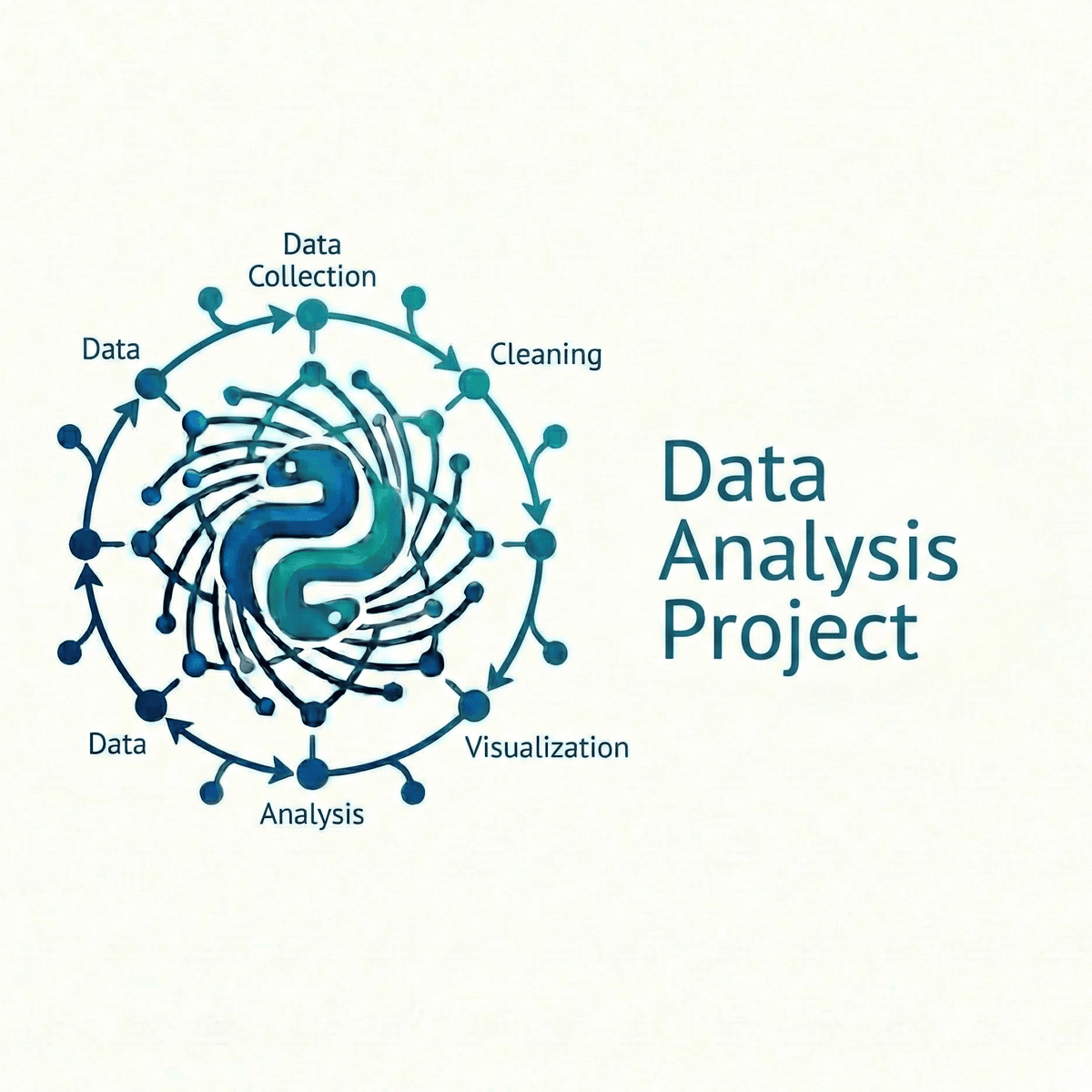
Data Analysis with Python Project
The "Data Analysis Project" course empowers students to apply their knowledge and skills gained in this specialization to conduct a real-life data analysis project of their interest. Participants will explore various directions in data analysis, including supervised and unsupervised learning, regression, clustering, dimension reduction, association rules, and outlier detection. Throughout the modules, students will learn essential data analysis techniques and methodologies and embark on a journey from raw data to knowledge and intelligence. By completing the course, students will be proficient in data analysis, capable of applying their expertise in diverse projects and making data-driven decisions. By the end of this course, students will be able to: 1. Understand the fundamental concepts and methodologies of data analysis in diverse directions, including supervised and unsupervised learning, regression, clustering, dimension reduction, association rules, and outlier detection. 2. Define the scope and direction of a data analysis project, identifying appropriate techniques and methodologies for achieving project objectives. 3. Apply various classification algorithms, such as Nearest Neighbors, Decision Trees, SVM, Naive Bayes, and Logistic Regression, for predictive modeling tasks. 4. Implement cross-validation and ensemble techniques to enhance the performance and generalizability of classification models. 5. Apply regression algorithms, including Simple Linear, Polynomial Linear, and Linear with regularization, to model and predict numerical outcomes. 6. Perform multivariate regression and apply cross-validation and ensemble methods in regression analysis. 7. Explore clustering techniques, including partitioning, hierarchical, density-based, and grid-based methods, to discover underlying patterns and structures in data. 8. Apply Principal Component Analysis (PCA) for dimension reduction to simplify high-dimensional data and aid in data visualization. 9. Utilize Apriori and FPGrowth algorithms to mine association rules and discover interesting item associations within transactional data. 10. Apply outlier detection methods, including Zscore, IQR, OneClassSVM, Isolation Forest, DBSCAN, and LOF, to identify anomalous data points and contextual outliers. Throughout the course, students will actively engage in tutorials, practical exercises, and the data analysis project case study, gaining hands-on experience in diverse data analysis techniques. By achieving the learning objectives, participants will be well-equipped to excel in data analysis projects and make data-driven decisions in real-world scenarios.
 Edureka
Getting Started with APIs
This program explores API development step by step, covering fundamentals, RESTful design principles, documentation, testing, and deployment to help participants build and manage modern APIs effectively.Tailored for developers, software engineers, and technical leads, it provides the skills to effectively design, document, test, and deploy APIs that power real-world applications. You’ll begin by mastering the fundamentals of APIs, exploring their evolution, architecture, and role in modern applications. From the client-server model to key principles like statelessness, cacheability, and layered systems, you’ll gain a strong foundation in how APIs enable communication across platforms and services. By the end of this program, you will be able to: - Understand core API fundamentals, architecture, and modern standards such as REST and GraphQL. - Apply REST principles to design scalable APIs with effective URIs, verbs, and versioning strategies. - Document and test APIs using OpenAPI, Postman, and automated testing practices. - Deploy and manage APIs with CI/CD pipelines, monitoring, and lifecycle management. - Build secure, maintainable, and high-performing APIs ready for real-world applications. This program is ideal for software engineers, backend developers, and technical leads aiming to strengthen their expertise in API design and management. A foundational understanding of programming concepts and web technologies is recommended. Join us to master the art of API development and transform the way applications communicate, scale, and deliver value.