

The Global Scholarly Directory.
Discover world-class academic programs curated for the modern intellectual. Search through 19877+ degrees and professional certificates.
 University of Colorado System
Exploring the Origins of Selfhood
This course is an immersive journey that invites learners to unravel the intricate tapestry of selfhood and identity across different periods and contexts. Learners will will develop critical thinking skills, enhance their self-awareness, and foster a deeper understanding of their own identity and its interconnectedness with societal, cultural, and digital influences. What sets this course apart is its interdisciplinary approach, blending historical, philosophical, psychological, sociological, digital, and global perspectives. It provides a holistic exploration of identity, reflecting the complexity of selfhood in the modern world. This course not only equips learners with knowledge but also empowers them to understand and navigate their identity in an ever-evolving world. Starting with historical and philosophical perspectives, the course spans from ancient philosophies to present-day theories, revealing how luminaries like Plato, Descartes, and contemporary scholars have informed our understanding of selfhood. Students will delve deeper into the realm of identity formation, analyzing the impact of both psychological and social influences. As we navigate an increasingly digital era, learners will investigate the complex relationship between technology, self-perception, and the management of digital identities. We will scrutinize the influence of social media on self-esteem and the ethics involved in online identity construction. Lastly, in the global context, we will explore how globalization interplays with cultural identity, the concept of cultural assimilation, the emergence of hybrid identities, and the significance of cultural heritage in identity shaping.
 Edureka
Modern Financial Operations(FinOps) with Generative AI
This program streamlines financial operations with AI, enabling finance teams and leaders to improve risk management, AP/AR automation, and financial analysis. You’ll start with AI for Financial Risk Assessment, automating credit checks, market insights, and compliance workflows using Flowise, ChatGPT, and Claude AI. Then, in AI for Accounts Payable and Receivable Automation, you’ll simplify invoice processing, vendor communication, collections, and cash-flow forecasting through hands-on workflows built in Make.com with AI assistants. Finally, in AI for Financial Analysis, you’ll apply Notion AI, n8n, ChatGPT, and Claude AI to automate forecasting, profitability analysis, benchmarking, and tax data extraction. The program ends with assessments and a capstone project demonstrating your integrated AI-powered finance workflow. By the end of this program, you will be able to: - Explain how AI elevates risk scoring, market modeling, compliance tracking, and audit readiness. - Apply Flowise to automate policy retrieval and support rapid risk and compliance workflows. - Build AP/AR automation flows with Make.com to optimize invoicing, reminders, and cash cycles. - Generate AI-powered financial summaries, forecasts, and tax extraction using Notion AI and n8n. - Design integrated finance workflows that improve accuracy, speed, and analytical depth. - Evaluate AI-driven finance systems for security, fairness, compliance, and responsible oversight. This program is designed for finance teams, analysts, AP/AR professionals, auditors, and business leaders aiming to modernize financial operations with AI. A background in finance or accounting is beneficial, but no technical expertise is required. Learners require a reliable internet connection, a modern web browser, and access to commonly used AI and productivity tools; no specialized hardware or software installation is necessary. Join us to transform how you assess financial risk, automate operations, and deliver strategic insights with next-generation AI solutions.
 EDUCBA
Equity Derivatives: Analyze, Apply & Evaluate Markets
By the end of this course, learners will be able to explain the fundamentals of equity derivatives, differentiate between key instruments such as forwards, futures, and options, analyze market indices and payoff structures, and apply hedging, speculation, and arbitrage strategies to manage risk and capture opportunities. This comprehensive program is designed to transform beginners into confident practitioners in the derivatives market. Starting with foundational concepts of equities and derivatives, learners progress through futures contract structures, trading mechanisms, and payoff models before advancing into the world of options—covering pricing, strategies, and practical uses. Each module combines real-world examples, structured lessons, and engaging practice quizzes to reinforce learning. What makes this course unique is its step-by-step progression from basics to applications, its focus on both theoretical clarity and practical scenarios, and its emphasis on Bloom’s Taxonomy learning outcomes to ensure measurable skill development. By completing this course, learners will gain the confidence to interpret derivatives markets, make informed trading decisions, and strategically apply derivatives for risk management and investment growth.
 Google
Capstone: Applying Project Management in the Real World
You made it! Applying Project Management in the Real World is the final course in the Google Project Management program. In this capstone course, you will practice applying the project management knowledge and skills you have learned so far. If you haven’t taken Courses 1-6 yet, we highly recommend doing so, as they provide the foundation necessary to complete the activities in this course. As you progress through this course, you will “observe” a project manager in a real-world scenario and complete dozens of hands-on activities. By the end of this course, you will have developed a portfolio of project management artifacts that will demonstrate the skills you have learned throughout the entire program, such as the ability to manage stakeholders and teams, organize plans, and communicate project details. These artifacts can exhibit their career readiness when applying for jobs in the field. Learners who complete this program should be equipped to apply for introductory-level jobs as project managers. No previous experience is necessary. By the end of this course, you will be able to: - Analyze project documents to identify project requirements and evaluate stakeholders. - Complete a project charter and use it as a tool to align project scope and goals among stakeholders. - Identify tasks and milestones and document and prioritize them in a project plan. - Define quality management standards and explore how to effectively share qualitative data. - Demonstrate your project’s impact through effective reporting. Google employees who currently work in the field will guide you, providing hands-on activities and examples that simulate common project management tasks while showing you some of the best tools and resources used on the job.
 The Chinese University of Hong Kong
Classics of Chinese Humanities: Guided Readings
An introductory yet trenchant exploration of select Chinese classic texts that cover the domains of classical literature, history, philosophy, and fine arts.
 Imperial College London
Mathematics for Machine Learning: Multivariate Calculus
This course offers a brief introduction to the multivariate calculus required to build many common machine learning techniques. We start at the very beginning with a refresher on the “rise over run” formulation of a slope, before converting this to the formal definition of the gradient of a function. We then start to build up a set of tools for making calculus easier and faster. Next, we learn how to calculate vectors that point up hill on multidimensional surfaces and even put this into action using an interactive game. We take a look at how we can use calculus to build approximations to functions, as well as helping us to quantify how accurate we should expect those approximations to be. We also spend some time talking about where calculus comes up in the training of neural networks, before finally showing you how it is applied in linear regression models. This course is intended to offer an intuitive understanding of calculus, as well as the language necessary to look concepts up yourselves when you get stuck. Hopefully, without going into too much detail, you’ll still come away with the confidence to dive into some more focused machine learning courses in future.
 Coursera
The Road to Autonomy: Exploring EV Technologies
Electric Vehicle Autonomous Technologies is a dynamic and forward-looking course that covers the transformative realm of autonomous electric vehicles (AEVs). In an era where transportation is on the brink of a revolution, this course provides a setting to analyze the fusion of electric propulsion and autonomous driving. It explores the convergence of cutting-edge technologies that are reshaping the automotive landscape, offering learners a journey into the future of mobility. In the first part of this course, we embark on an exploration of the foundations of AEVs. We take a deep dive into the history and evolution of autonomous electric vehicles, tracing their roots from early experiments to the present day. Learners will gain an appreciation of the importance of AEVs in reducing emissions, enhancing safety, and revolutionizing transportation in urban environments. The second segment of the course immerses learners in the heart of AEV technology—the sensor systems, perception algorithms, and decision-making processes that enable vehicles to navigate autonomously. In the final part of the course, we confront the critical aspects of safety and the challenges that lie ahead for AEVs. Safety is paramount in autonomous driving, as we explore the regulatory frameworks and measures in place to ensure the well-being of passengers and pedestrians alike. This course is designed for electric vehicle (EV) enthusiasts interested in the future of electric and autonomous vehicles. It is recommended to complete the basic course on electric vehicle technology before taking this course.
 IBM
IBM
Ethical Hacking Capstone Project: Breach, Response, AI
Ready to put your ethical hacking skills to the test and power your cybersecurity career forward? This hands-on course is ideal for aspiring cybersecurity analysts, ethical hackers, and IT professionals who want to be able to demonstrate their real-world skills in offensive and defensive security to employers. During this course, you’ll start on the Red Team, using industry-standard tools such as Kali Linux, Nmap, and Metasploit to conduct reconnaissance, exploitation, privilege escalation, and persistence. Then, you’ll shift to the Blue Team, where you’ll practice log analysis, detect Indicators of Compromise, and respond to attacks using OpenVAS and the MITRE ATT&CK framework. You’ll also explore the growing role of generative AI in cybersecurity, applying AI-assisted reconnaissance, exploit generation, and anomaly detection to strengthen your strategies. Each lab will challenge you to prove your mastery, culminating in a professional-grade incident response report. If you’re keen to showcase your ethical hacking prowess and cybersecurity skills through a portfolio-worthy capstone, enroll today!
 Automatic Data Processing, Inc. (ADP)
Building Confidence in the Future
Welcome to Leading StandOut Teams: Building Confidence in the Future. This course will help you build your own specific vision to share with your team. We’ll define what is it that makes your company so special. And we’ll explore the value you, your team, and your company provide to your clients, and how you can keep that front-of-mind to ensure that the people you serve can see the unique value you offer. By the end of the course, you will be able to: - Build a detailed vision of the next six months for your team. - Describe what makes your company special and explain how you can make sure your team members feel it in their own ways. - Create a compelling picture of why clients need your company. Modules Include: One: Vision: The Next 6 Months. What does a vision look like for your team, and how does it connect to the vision for your company? Build your own specific vision to share with your team. Two: What Makes This Company Special? So, what is it that makes your company so special? And once you figure that out, how do you make sure your team members feel it too, in their own ways? Explore these questions. Three: Why Clients Need Us. Explore the value you, your team, and your company provide to your clients, and how you can keep that front-of-mind to ensure that the people you serve can see the unique value you offer. This is a beginner's course, intended for team leaders with an interest in Leading StandOut Teams. It includes lecture videos by StandOut Strengths Coaches, practice quizzes, graded quizzes, peer-reviewed assignments, discussion prompts, and activity guides to facilitate ongoing learning and provide a structure to make sense of learning so that it can be embedded into real change. To succeed in this course, you should be willing to self-reflect and open to shifting perspectives. Making the effort will result in a positive and fulfilling response.
 H2O.ai
H2O Driverless AI Starter Course
Join Andreea Turcu, our Head of Global Training at H2O.ai, as she guides you through the “Driverless AI Starter Course” by H2O ai. Dive into automated machine learning (AutoML) using H2O Driverless AI. This course is suitable for all levels and will provide you with the necessary skills to apply AutoML in your projects. You’ll learn the basics of H2O Driverless AI, including setup, data import, and interface navigation. The course offers hands-on experience in data preprocessing, visualization, and analysis, preparing you for machine learning model development. The course covers advanced topics like correlation graphs, prediction creation, and model performance optimization. You’ll learn to hyper-tune models, manage experiments, interpret results, and generate reports. Practical tasks are included for real-world practice. Upon completion, you’ll not only be proficient in using H2O Driverless AI for AutoML but also gain skills in setting up environments, analyzing data, and utilizing advanced features like custom recipe creation and model fine-tuning. This course goes beyond theory, offering practical skills that can be applied in the real world. Additionally, you’ll be eligible for the H2O Driverless AI Certification. This certification is a testament to your proficiency and can significantly enhance your career prospects in the fields of AI and data science. Enroll now to master automated machine learning with H2O Driverless AI.
 Olay
Olay
Cosmetic Product Development
In the third course, Cosmetic Product Development, we analyze every step of developing cosmetic products. We cover everything, including how you would generate ideas, how you know what the customer wants, and feasibility studies. We strongly emphasize collaboration and prototype development, along with how we design and select cosmetic packaging. We engage with raw material suppliers and navigate international manufacturing regulations. You will also learn to evaluate cosmetic product performance, market trends, and sustainable practices. We designed this course to give you a holistic understanding of the cosmetic product development process within industry standards.e.g. This is primarily aimed at first- and second-year undergraduates interested in engineering or science, along with high school students and professionals with an interest in programming.
 EDUCBA
Master SAS Macros for Dynamic and Automated Programming
Learn to design, automate, and optimize SAS programs using powerful macro techniques. In this course, learners will develop the ability to explain macro processing, create and manage macro variables, apply macro functions, and implement conditional and iterative logic for dynamic code generation. By completing this course, learners will gain hands-on skills to build reusable, parameter-driven SAS programs that reduce repetition, improve maintainability, and adapt to changing data and business requirements. The course guides learners from foundational macro concepts to advanced applications such as debugging macros, managing variable scope, controlling execution flow, and creating dataset indexes using macro logic. What makes this course unique is its practical, step-by-step approach grounded in real SAS programming scenarios. Each module is supported by video-based instruction, video-wise checks, practice quizzes, and graded assessments that reinforce learning outcomes progressively. Learners practice interpreting macro behavior through logs, symbol tables, and execution traces, enabling a deeper understanding of how macros operate behind the scenes. This course is ideal for SAS programmers, data analysts, and professionals seeking to automate workflows, enhance program efficiency, and confidently apply SAS Macros in real-world data processing environments.
 KodeKloud
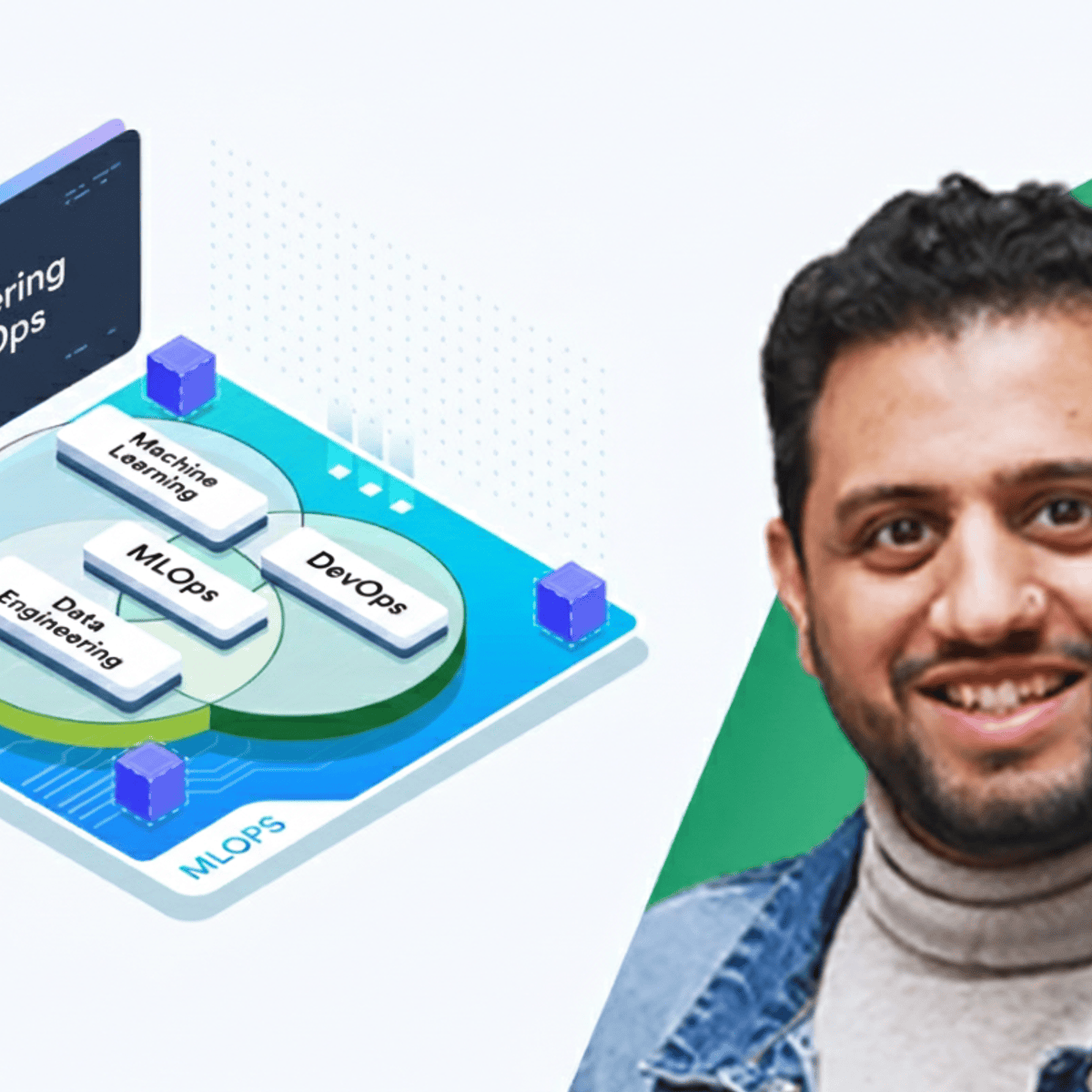
Data Engineering Essentials
This course bridges the gap between raw data and production-ready AI systems. In 2026, the value of a machine learning model is defined by the reliability of the data pipelines that feed it. This program transforms you into an MLOps-ready engineer capable of building automated, scalable, and observable data architectures. You will start by mastering the MLOps lifecycle, learning why traditional DevOps isn't enough for the unique challenges of data and model drift. Moving into the technical core, you will learn to build resilient ETL pipelines using modern tools like Pandas and Polars for medium datasets, before scaling up to distributed processing with Apache Spark and Dask. The course features heavy emphasis on real-time streaming with Apache Kafka and the implementation of Feature Stores to solve the dreaded "training-serving skew." Finally, you will tie everything together through workflow orchestration using Airflow and Prefect, ensuring your data flows are not just functional, but production-grade, automated, and fully monitored. Course Highlights - Industry-Standard Stack: Hands-on experience with Kafka, Spark, Airflow, and Feature Stores. - Production-First Mindset: Focus on CI/CD/CT (Continuous Training) and data governance. - Hands-on Labs: Every module concludes with a practical lab to build your professional portfolio. - Scalability Focused: Transition from local Python scripts to distributed cloud-scale architectures.
 Coursera
Project Milestones Fast: Recall & Apply
Stuck with projects that are perpetually "90% complete" but never seem to finish? "Project Milestones Fast: Recall & Apply" is your antidote to ambiguous updates and stalling timelines. This beginner-level course transforms you from a passive observer to a proactive project driver by mastering one critical skill: creating and managing clear, effective milestones. Through hands-on simulations, step-by-step screencasts, and a final AI-graded "Project Rescue Plan," you will learn to define meaningful checkpoints, apply standard navigation steps in common project management tools, and sequence tasks for success. Stop guessing and start leading. In just 90 minutes, gain the confidence to bring clarity and momentum to any project, ensuring your work drives toward successful completion, every time.
 Microsoft
Data Storage in Microsoft Azure for Associate Developers
Azure provides a variety of ways to store data: unstructured, archival, relational, and more. In this course, you will learn the basics of storage management in Azure, how to create a Storage Account, and how to choose the right model for the data you want to store in the cloud. This course part of a Specialization intended for Data engineers and developers who want to demonstrate their expertise in designing and implementing data solutions that use Microsoft Azure data services anyone interested in preparing for the Exam DP-203: Data Engineering on Microsoft Azure (beta). This is the second in a program of 10 courses to help prepare you to take the exam so that you can have expertise in designing and implementing data solutions that use Microsoft Azure data services. The Data Engineering on Microsoft Azure exam is an opportunity to prove knowledge expertise in integrating, transforming, and consolidating data from various structured and unstructured data systems into structures that are suitable for building analytics solutions that use Microsoft Azure data services. Each course teaches you the concepts and skills that are measured by the exam. By the end of this Professional Certificate program, you will be ready to take and sign-up for the Exam DP-203: Data Engineering on Microsoft Azure (beta).
 Packt
Packt
Full-Stack JavaScript Apps with User Interactivity
This course features Coursera Coach! A smarter way to learn with interactive, real-time conversations that help you test your knowledge, challenge assumptions, and deepen your understanding as you progress through the course. In this course, you’ll learn to build full-stack JavaScript applications that merge engaging front-end design with functional logic. Starting with beginner projects like the Multiplication App and Step Progress Bar, you’ll explore how to structure pages with HTML, style them using CSS, and bring them to life with JavaScript. You’ll gain experience in DOM manipulation, event handling, and real-time interactivity to create smooth, user-focused experiences. As you progress, you’ll develop advanced projects such as Image Sliders, Video Popups, and Monthly Calendars that demonstrate responsive design, animations, and reusable components. You’ll also integrate Bootstrap and Font Awesome for faster development and polished results. This course is ideal for learners with basic web skills who want to master front-end interactivity. By the end, you’ll confidently design and deploy responsive, data-driven JavaScript applications with professional UI and user engagement.