

The Global Scholarly Directory.
Discover world-class academic programs curated for the modern intellectual. Search through 19877+ degrees and professional certificates.
 KodeKloud
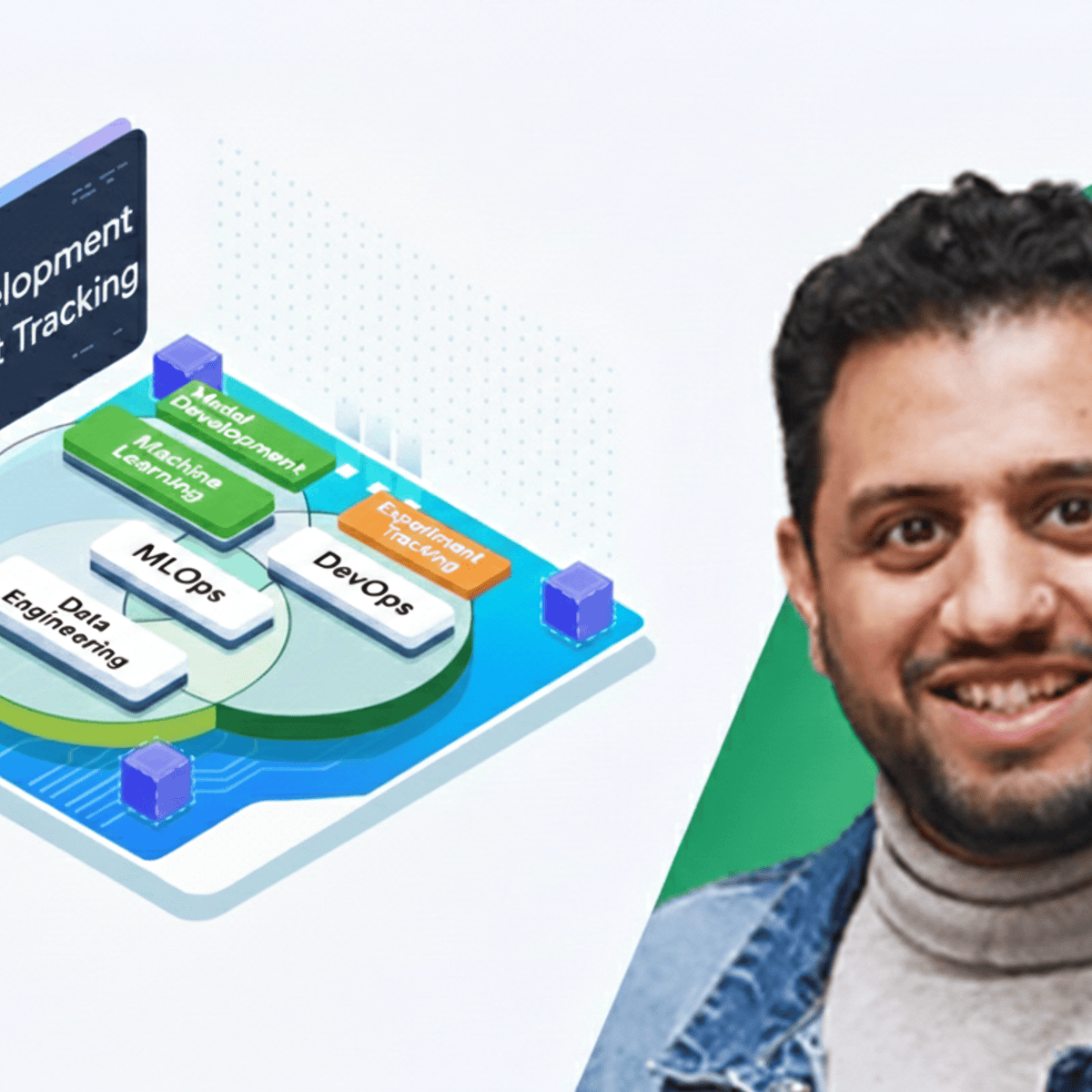
ML Model Development and Tracking: Hands-on Guide
In this course, you will bridge the gap between experimental coding and production-ready machine learning by mastering the "Middle Loop" of the MLOps lifecycle. You will start by refining your model development process, learning to distinguish between standard training and hyperparameter tuning to maximize model performance. To ensure operational efficiency, you will evaluate compute strategies by matching your workloads to the specific strengths of CPUs and GPUs. The core of your experience involves building a robust "Source of Truth" using MLflow to automatically log parameters, track metrics, and manage model versions with professional precision. You will move beyond manual tracking by implementing a centralized dashboard that allows for seamless comparison of hundreds of experimental runs. To maintain organizational integrity, you will master the MLflow Model Registry to handle artifact versioning and transitions from staging to production. The course culminates in a hands-on capstone where you will launch a live MLflow server and generate synthetic datasets to simulate a real-world insurance claim review system. By the end, you will have established a fully reproducible training environment, ensuring your AI solutions are organized, searchable, and ready for high-scale deployment.
 Coursera
Production AI Model Development and Ethics
This comprehensive program provides end-to-end training on the production machine learning lifecycle, designed to take your models from experiment to deployment. You’ll progress from applying feature engineering pipelines with scikit-learn and selecting models through rigorous evaluation, to optimizing PyTorch models with custom training loops and advanced diagnostics. Finally, you will master the principles of responsible AI by creating model cards and auditing systems for ethical compliance. By the end of this course, you will be able to build, tune, and deploy efficient, reliable, and ethical AI solutions. These skills are essential for ML engineers who develop and maintain robust, production-grade machine learning systems.
 Packt
Packt
IP Connectivity & IP Services
Updated in May 2025. This course now features Coursera Coach! A smarter way to learn with interactive, real-time conversations that help you test your knowledge, challenge assumptions, and deepen your understanding as you progress through the course. This comprehensive course on IP Connectivity and IP Services provides a deep dive into the concepts and technologies essential for configuring and managing modern networking environments. By the end of this course, learners will be equipped with the skills needed to configure and troubleshoot network devices, configure routing protocols, and understand the key services that support network operations. The journey begins with foundational concepts such as identifying routing components, interpreting routing table information, and understanding packet forwarding. Learners will explore routing decisions in detail, including static and dynamic routing configurations for both IPv4 and IPv6. The course also delves into the OSPFv2 protocol and how it can be configured for efficient routing in single-area networks. The course moves into critical network services such as Network Address Translation (NAT), DHCP, and DNS. Learners will gain hands-on experience configuring and verifying NAT in various forms, as well as securing remote access with protocols like SSH. A key focus is on mastering dynamic IP address allocation through DHCP and ensuring that network time synchronization is managed effectively through NTP. Designed for individuals looking to gain a robust understanding of IP networking, this course is ideal for network administrators, system engineers, and those pursuing networking certifications. Basic understanding of networking concepts is recommended, with the difficulty level aimed at intermediate learners.
 Johns Hopkins University
Multiple Regression Analysis in Public Health
Biostatistics is the application of statistical reasoning to the life sciences, and it's the key to unlocking the data gathered by researchers and the evidence presented in the scientific public health literature. In this course, you'll extend simple regression to the prediction of a single outcome of interest on the basis of multiple variables. Along the way, you'll be introduced to a variety of methods, and you'll practice interpreting data and performing calculations on real data from published studies. Topics include multiple logistic regression, the Spline approach, confidence intervals, p-values, multiple Cox regression, adjustment, and effect modification.
 EDUCBA
Analyze Machine Data Using Splunk Fundamentals
By the end of this course, learners will be able to analyze machine-generated data, configure and manage Splunk environments, execute efficient searches, and create meaningful reports and visualizations to support operational intelligence. Learners will also be able to apply advanced search commands to identify patterns, trends, and anomalies in large datasets. This course provides a comprehensive, hands-on introduction to Splunk for beginners and aspiring data analysts, system administrators, and IT professionals. Starting with core concepts such as operational intelligence and Splunk architecture, the course guides learners through installation, configuration, and data ingestion. Learners will progressively build search and reporting skills, working with fields, timelines, statistics, and visualizations to transform raw machine data into actionable insights. What makes this course unique is its end-to-end learning approach—combining conceptual foundations with practical search techniques and real-world analysis workflows. Through structured modules, practice quizzes, and graded assessments, learners gain confidence in using Splunk for monitoring, troubleshooting, and decision-making. Upon completion, learners will be equipped with industry-relevant Splunk skills that can be immediately applied in operational and analytical roles.
 EDUCBA
Master OpenCV Fundamentals for Real-Time Computer Vision
Learners will be able to understand core computer vision concepts, implement essential image processing techniques, perform geometric transformations, and build real-time applications such as webcam effects and face recognition systems using OpenCV and Python. This course is designed for beginners who want a structured and practical introduction to OpenCV. Starting from environment setup and basic image operations, learners progressively work through color manipulation, image translation, rotation, scaling, and advanced transformations such as image wrapping. The course then transitions into real-time video processing, guiding learners to interact with webcams, handle user input, and create engaging visual effects. What makes this course unique is its hands-on, subtitle-driven curriculum that emphasizes conceptual clarity alongside practical implementation. Every module builds logically on the previous one, ensuring learners gain confidence while applying OpenCV techniques in real-world scenarios. By the end of the course, learners will have developed a complete face recognition workflow—from dataset creation to identity prediction—equipping them with industry-relevant computer vision skills applicable in surveillance, automation, and AI-driven applications. This course provides a strong foundation for further exploration in machine learning and advanced computer vision projects.
 Coursera
AI-Augmented Decision-Making for Business Leaders
In this course, you'll gain foundational knowledge, practical tools, and actionable frameworks for integrating AI into your executive decision-making. You’ll explore AI-powered forecasting, strategic planning, risk assessment, and ethical considerations through engaging case studies and hands-on activities. You'll also discover how to build an AI-ready culture, communicate AI-driven insights effectively, and strategically position your organization for the future. This course is tailored for a broad spectrum of business professionals who influence or make strategic decisions. Executives, senior leaders, managers, consultants, and entrepreneurs will benefit from practical tools and insights to apply AI in real-world business contexts. It also welcomes aspiring AI champions and HR professionals eager to build AI-ready cultures and lead technological transformation across their organizations. No prior knowledge of AI, data science, or advanced technology is required to take this course. It is designed to be fully accessible to business leaders with curiosity and a willingness to explore how AI can inform strategic decision-making. Access to AI tools like ChatGPT is recommended for learners who want to experiment and apply concepts hands-on during the course. By the end of this course, learners will understand foundational AI concepts and how data fuels intelligent decision-making. They will be able to evaluate ethical concerns related to AI, apply tools for forecasting and risk analysis, and lead AI integration across teams. Ultimately, participants will be equipped to communicate AI insights effectively and guide their organizations confidently into an AI-powered future.
 Packt
Packt
Product Management Cert: Agile, Scrum & Product Owner
Updated in May 2025. This course now features Coursera Coach! A smarter way to learn with interactive, real-time conversations that help you test your knowledge, challenge assumptions, and deepen your understanding as you progress through the course. In this comprehensive course, you will gain the essential skills needed to thrive as a Product Owner in an Agile and Scrum environment. You will learn the core principles of Agile, the role of the Product Owner, and how to manage product development effectively using Scrum methodology. By the end of the course, you will be ready to lead teams and manage products with confidence in any Agile framework. The course begins with an introduction to Agile and Scrum, followed by a deep dive into the role of the Product Owner. You will explore the differences between traditional product management and Agile Scrum, learning how to prioritize, create, and manage the product backlog. Special focus is placed on crafting product roadmaps and vision boards, ensuring you understand how to steer projects toward success. Next, the course walks you through core Scrum practices like sprint planning, daily stand-ups, sprint reviews, and retrospectives, preparing you for real-world Scrum ceremonies. Practical tips for Scrum Master, Sprint Planning, and Backlog refinement help reinforce your understanding of these key concepts while ensuring you are ready for certification. This course is ideal for aspiring Product Owners, Scrum Masters, and professionals interested in Agile product management. No prior experience with Agile or Scrum is required, though a basic understanding of product management or software development may be helpful. This is a beginner to intermediate-level course, designed to offer both theory and practical strategies for those new to the role of Product Owner.
 EDUCBA
V-Ray Lighting & Rendering in 3DS Max
Learners will be able to analyze, apply, and evaluate advanced lighting and rendering techniques in V-Ray for 3DS Max, mastering the tools needed to produce photorealistic and professional-quality visualizations. This course begins with the foundations of V-Ray lighting, where learners explore affect channels, artificial vs. CG lights, and how color temperature influences realism. Next, the focus shifts to mastering materials and rendering, including Fresnel reflections, glossiness, max depth, and exit color, giving students the skills to refine material accuracy and simulate real-world light interactions. In the final module, learners will dive into advanced techniques, working with sampling, material libraries, light options, texture mapping, environment overrides, skylight customization, and the powerful V-Ray Frame Buffer. By completing this course, learners will gain the ability to design, configure, and optimize lighting and materials to achieve highly realistic renders. What makes this course unique is its step-by-step, practical approach, ensuring students not only understand theoretical concepts but also apply them in real-world projects. Ideal for aspiring 3D artists, architects, and visualization professionals, this course builds confidence in producing industry-ready renders.
 EDUCBA
Implement Animated Car Graphics Using Computer Graphics
Learners will understand, construct, and implement an animated computer graphics project by applying core graphics programming concepts, animation logic, and visual enhancement techniques. By the end of this course, learners will be able to set up a graphics environment, draw structured graphical scenes, animate moving objects, and apply colors and fills to enhance visual realism. This course provides a hands-on, project-based learning experience focused on building an advanced moving car graphics project from scratch. Learners progress step by step—from initializing the graphics library and plotting static scene elements like roads, cars, and buildings, to implementing animation loops that simulate movement and applying color techniques for improved clarity and realism. Each module is designed to reinforce practical skills through incremental development of a complete animated scene. What makes this course unique is its end-to-end project focus, allowing learners to see how individual graphics functions come together in a cohesive, real-world animation project. Ideal for beginners and aspiring programmers, this course strengthens logical thinking, visual programming skills, and foundational computer graphics knowledge applicable to academic projects and entry-level graphics development.
 SkillUp
Product Management: Building AI-Powered Products
Generative AI is transforming how businesses operate. According to a McKinsey survey, over 78% of organizations are implementing AI, making its impact undeniable. Netflix’s AI-driven recommendations feature is one such example. With companies leaning to develop AI-powered products, the AI product manager role is becoming increasingly critical. This course covers the AI product manager’s role in managing product lifecycles with AI. You will learn about the AI process and how to balance traditional and AI skills, build the right team, and communicate with stakeholders. You will also explore common challenges and reasons for AI project failures. Next, you will learn about the AI product development stages and product management phases. You will also understand AI’s impact across industries and review real-world use cases, commercialization strategies, and future trends. Throughout this short self-paced course, you will be presented with instructional guidance through videos followed by hands-on labs to practice what you learn. You will also complete a final project to showcase your AI product manager skills. Enroll now to master AI product management!
 University of Minnesota
Introduction to Predictive Modeling
Welcome to Introduction to Predictive Modeling, the first course in the University of Minnesota’s Analytics for Decision Making specialization. This course will introduce to you the concepts, processes, and applications of predictive modeling, with a focus on linear regression and time series forecasting models and their practical use in Microsoft Excel. By the end of the course, you will be able to: - Understand the concepts, processes, and applications of predictive modeling. - Understand the structure of and intuition behind linear regression models. - Be able to fit simple and multiple linear regression models to data, interpret the results, evaluate the goodness of fit, and use fitted models to make predictions. - Understand the problem of overfitting and underfitting and be able to conduct simple model selection. - Understand the concepts, processes, and applications of time series forecasting as a special type of predictive modeling. - Be able to fit several time-series-forecasting models (e.g., exponential smoothing and Holt-Winter’s method) in Excel, evaluate the goodness of fit, and use fitted models to make forecasts. - Understand different types of data and how they may be used in predictive models. - Use Excel to prepare data for predictive modeling, including exploring data patterns, transforming data, and dealing with missing values. This is an introductory course to predictive modeling. The course provides a combination of conceptual and hands-on learning. During the course, we will provide you opportunities to practice predictive modeling techniques on real-world datasets using Excel. To succeed in this course, you should know basic math (the concept of functions, variables, and basic math notations such as summation and indices) and basic statistics (correlation, sample mean, standard deviation, and variance). This course does not require a background in programming, but you should be familiar with basic Excel operations (e.g., basic formulas and charting). For the best experience, you should have a recent version of Microsoft Excel installed on your computer (e.g., Excel 2013, 2016, 2019, or Office 365).
 Coursera
Usability Testing with Hotjar
Do you know if your website is being used effectively? Are users taking the actions that you intend on your site? Usability testing is an iterative process to help you develop the best product. Usability testing can help you along the way as your product is developed to determine issues and to find solutions for those problems. In this project, you will be using Hotjar to set up a usability test and plan, you will be able to track your customer actions, and evaluate the effectiveness of your product or site.
 Coursera
Deploy and Optimize Cloud AI Architectures
This short course helps you deploy and optimize scalable machine learning workloads in the cloud using managed AI services. You’ll start by learning how distributed training jobs work on platforms like Amazon SageMaker. Then you’ll configure training pipelines using Spot Instances and autoscaling features, gaining hands-on experience with real-world deployment patterns. Finally, you’ll dig into monitoring and optimization: reading GPU utilization logs, exploring CloudWatch metrics, and making recommendations that balance performance and cost. By the end, you will know how to right-size an ML workload, select efficient instance families, and justify architecture changes based on data.
 University of California, Irvine
Personnel & Third-Party Security
In this course, you will learn all about the process of implementing effective education, training, and awareness programs. You will also study the role personnel security plays in protecting an organization’s assets, intellectual property, and physical assets. You will also be introduced to the steps required for effective Vendor Risk Management (VRM), including: due diligence, contracting, monitoring & accessing, and termination. Throughout the course, you will engage with current case studies that illustrate the key concepts in your lessons. You will also have the chance to submit assignments in which you will apply the material in a practical application.
 L&T EduTech
Project Management - Initiation and Planning
The course begins with an introduction to project management, elucidating its significance and the roles undertaken by project managers. The course progresses to project feasibility methods and Project phases, including initiation, planning, execution, monitoring and controlling, and closure, are explored in detail. In the first module, the learners will begin with the concept of a project, then into the project phases and the overall project lifecycle by understanding the key activities and considerations at each stage. This module also covers project feasibility methods, providing a perspective on assessing the viability and potential success of a project. Additionally, the learners will explore various project organization structures, elucidating how different organizational frameworks can impact project management dynamics. In the second module, the learners will begin with understanding the Essential Elements of Valid Contracts, and gain insights into legal and contractual principles. They will also learn the Common Contract Types, providing a brief perspective on various contractual structures. Tendering processes, including Bid Evaluation, and Contract Award procedures are explained, offering the leaners a practical insight into the competitive procurement landscape. This module extends to Change Management, exploring strategies to navigate and implement changes effectively within the contract framework. Additionally, the learners will also understand the art of Claim Management, how to address and resolve disputes while maintaining contractual integrity. In the third module, the leaners will begin with a comprehensive understanding of scope management like how to define, document, and control project scope. Then understand how to break down complex projects into manageable components. Through a combination of theoretical concepts and real-life case study, the leaners will develop the skills necessary to effectively structure and organize a well-defined WBS tailored to the unique needs of their projects.