

The Global Scholarly Directory.
Discover world-class academic programs curated for the modern intellectual. Search through 19877+ degrees and professional certificates.
 University of Toronto
Managing Your Health: The Role of Physical Therapy and Exercise
Managing Your Health: The Role of Physical Therapy and Exercise will introduce learners to the concepts and benefits of physical therapy and exercise. Over six weeks learners will explore: Why physical activity and exercise are important, Exercise and Cardiovascular Disease, Exercise and Osteoporosis, Exercise and Cancer, Common Sports Injuries, Exercise and Arthritis
 Packt
Packt
Microsoft Fabric: Fundamentals and Power BI Workflow
This course features Coursera Coach! A smarter way to learn with interactive, real-time conversations that help you test your knowledge, challenge assumptions, and deepen your understanding as you progress through the course. Gain foundational knowledge of Microsoft Fabric and discover how to streamline your Power BI workflow. This course takes you through essential aspects of Microsoft Fabric, from initial setup and key terminologies to advanced features like Dataflow Gen 2 and real-time data streaming. You’ll learn how to create Delta tables, visualize data with Power BI, and automate your data processing tasks. The course is structured around guided lessons that walk you through the platform's interface, configuration settings, and data storage methods. You’ll work hands-on with tools like Data Engineering Notebooks, Delta Tables, and external SQL endpoints. Throughout, you will learn to integrate Microsoft Fabric with Power BI for enhanced reporting and analytics. The journey covers creating semantic models, understanding version control, and leveraging the new features of Fabric for advanced data management. You’ll also get the chance to use Microsoft Fabric with Power BI's real-time capabilities, streamlining reporting and data transformation. This course is designed for professionals looking to enhance their data engineering and reporting skills. It’s ideal for beginners, with a focus on Power BI developers and data engineers. Prerequisites include familiarity with Power BI, but no advanced coding skills are required. By the end of the course, you will be able to navigate Microsoft Fabric, create and manage Delta tables, integrate Power BI for automated reporting, and leverage advanced dataflow features for optimized workflows.
 Microsoft
Intro to Natural Language Processing in Microsoft Azure
Natural language processing supports applications that can see, hear, speak with, and understand users. Using text analytics, translation, and language understanding services, Microsoft Azure makes it easy to build applications that support natural language. In this course, you will learn how to use the Text Analytics service for advanced natural language processing of raw text for sentiment analysis, key phrase extraction, named entity recognition, and language detection. You will learn how to recognize and synthesize speech by using Azure Cognitive Services. You will gain an understanding of how automated translation capabilities in an AI solution enable closer collaboration by removing language barriers. You will be introduced to the Language Understanding service, and shown how to create applications that understand language. This course will help you prepare for Exam AI-900: Microsoft Azure AI Fundamentals. This is the fourth course in a five-course program that prepares you to take the AI-900 certification exam. This course teaches you the core concepts and skills that are assessed in the AI fundamentals exam domains. This beginner course is suitable for IT personnel who are just beginning to work with Microsoft Azure and want to learn about Microsoft Azure offerings and get hands-on experience with the product. Microsoft Azure AI Fundamentals can be used to prepare for other Azure role-based certifications like Microsoft Azure Data Scientist Associate or Microsoft Azure AI Engineer Associate, but it is not a prerequisite for any of them. This course is intended for candidates with both technical and non-technical backgrounds. Data science and software engineering experience is not required; however, some general programming knowledge or experience would be beneficial. To be successful in this course, you need to have basic computer literacy and proficiency in the English language. You should be familiar with basic computing concepts and terminology, general technology concepts, including machine learning and artificial intelligence concepts.
 Duke University
Negotiating with Impact Investors
How do you close a successful financing deal with impact investors? This course guides you through a step-by-step approach to effectively engage, pitch, and negotiate with impact investors. You’ll learn how to craft a cohesive investment narrative and align your emails, executive summary, and pitch deck around a clear investment story that balances financial return with social or environmental impact. You'll gain insight into the due diligence process, including what investors are looking for and where you have leverage. Finally, you'll explore common investment terms in impact deals and learn how to identify areas for negotiation to ensure a strong, long-term partnership. By the end of this course, you’ll be equipped to approach investors with confidence, communicate your value clearly, navigate due diligence efficiently, and negotiate terms that support your venture’s success. This course is ideal for aspiring and current impact entrepreneurs preparing to raise capital, advisors supporting impact ventures, and anyone interested in the mechanics of impact investing. No prior experience is required; we simplify complex concepts, define key terms, and provide practical tools and templates to support your learning and application.
 Coursera
Fundamentals of Internal Business Communications
Welcome to your course on Internal Business Communications. In this course we’ll focus on the importance of internal communication, and you’ll learn how to improve communication across your entire organization. We’ll look at communication strategies and theories, but the course is immensely practical so you’ll learn many tips you can use immediately. The course gives you the right tools to improve your company’s comms. In today’s ever-changing business world, knowing how to use the correct channels is vital. We’ll also consider the different needs of your many audiences. You’ll learn to craft messages that are clear and compelling. This course is relevant for all professionals who want to improve comms for everyone at their company. You’ll be empowered to build a communications culture that engages leaders, gives employees a voice and engages stakeholders. This course if for everyone who has to communicate at work – that includes team leaders, project managers, department heads, corporate executives and communications officers. Everyone at work will benefit hugely from this course! Prerequisites for this course include a basic understanding of business operations and familiarity with the role of communication in business. Additionally, participants should come with a willingness to improve their communication skills and a desire to foster a more effective working environment. In this course, learners will master the principles of effective internal communication and its role in business success. They'll develop practical skills for implementing strategies that ensure clarity, transparency, and engagement within organizations. By course end, participants will apply these skills in real-world scenarios, fostering a collaborative and productive working environment.
 The State University of New York
Introduction to Early Childhood
This course is targeted toward individuals wishing to operate a family day care center, and it covers topics including the fundamentals of early childhood development; the importance of play and Developmentally Appropriate Practice; and the significance of building strong family-educator relationships and how to achieve them. Since a Family Policy Handbook is essential for anyone operating a family day care center, this course includes the development of one of three imperative sections of the handbook. The remaining two sections are created in subsequent courses of the Home-Based Childcare series available on Coursera.
 Google Cloud
Introduction to Migration Center Servers Assessments
This is a self-paced lab that takes place in the Google Cloud console. Learn how to assess a customer's existing environment, and import data collected from Azure/AWS infrastructure. Generate inventory, performance, network dependencies and financial reports such as TCO (total cost analysis) and DPR (detailed pricing) reports.
 Starweaver
Securing Cloud Operations
Are You Ready to Secure Your First Cloud Project? The cloud is where today’s ideas turn into tomorrow’s apps—but an unsecured virtual machine, open storage bucket, or forgotten access key can derail that dream overnight. Securing Cloud Operations is a straightforward, step-by-step course that teaches absolute beginners how to set up, strengthen, and review a small web stack on AWS, Azure, or Google Cloud using only free-tier services and simple checklists. You will learn why service models (IaaS, PaaS, SaaS) matter, how the shared-responsibility model works, and which one-click security features offer instant protection. This course is designed for cloud engineers, DevOps engineers, security analysts, and solution architects who want practical skills for securing real cloud environments. It’s a strong fit for anyone responsible for building, operating, or reviewing cloud infrastructure and who needs a clear, hands-on approach to strengthening cloud workloads. Learners should have a basic grasp of networking and virtualization, along with some experience using at least one major cloud platform such as AWS, Azure, or Google Cloud. You don’t need deep security knowledge—just enough comfort navigating cloud consoles and launching simple resources. By the end of the course, learners will be able to distinguish shared responsibilities across cloud service models, configure identity and network protections, enable and interpret cloud-native security tools, and align their environment with frameworks like CIS Benchmarks, ISO 27001, and NIST CSF while generating simple, audit-ready evidence.
 LearnQuest
Artificial Intelligence Data Fairness and Bias
In this course, we will explore fundamental issues of fairness and bias in machine learning. As predictive models begin making important decisions, from college admission to loan decisions, it becomes paramount to keep models from making unfair predictions. From human bias to dataset awareness, we will explore many aspects of building more ethical models.
 University of Illinois Urbana-Champaign
Cloud Computing Applications, Part 2: Big Data and Applications in the Cloud
Welcome to the Cloud Computing Applications course, the second part of a two-course series designed to give you a comprehensive view on the world of Cloud Computing and Big Data! In this second course we continue Cloud Computing Applications by exploring how the Cloud opens up data analytics of huge volumes of data that are static or streamed at high velocity and represent an enormous variety of information. Cloud applications and data analytics represent a disruptive change in the ways that society is informed by, and uses information. We start the first week by introducing some major systems for data analysis including Spark and the major frameworks and distributions of analytics applications including Hortonworks, Cloudera, and MapR. By the middle of week one we introduce the HDFS distributed and robust file system that is used in many applications like Hadoop and finish week one by exploring the powerful MapReduce programming model and how distributed operating systems like YARN and Mesos support a flexible and scalable environment for Big Data analytics. In week two, our course introduces large scale data storage and the difficulties and problems of consensus in enormous stores that use quantities of processors, memories and disks. We discuss eventual consistency, ACID, and BASE and the consensus algorithms used in data centers including Paxos and Zookeeper. Our course presents Distributed Key-Value Stores and in memory databases like Redis used in data centers for performance. Next we present NOSQL Databases. We visit HBase, the scalable, low latency database that supports database operations in applications that use Hadoop. Then again we show how Spark SQL can program SQL queries on huge data. We finish up week two with a presentation on Distributed Publish/Subscribe systems using Kafka, a distributed log messaging system that is finding wide use in connecting Big Data and streaming applications together to form complex systems. Week three moves to fast data real-time streaming and introduces Storm technology that is used widely in industries such as Yahoo. We continue with Spark Streaming, Lambda and Kappa architectures, and a presentation of the Streaming Ecosystem. Week four focuses on Graph Processing, Machine Learning, and Deep Learning. We introduce the ideas of graph processing and present Pregel, Giraph, and Spark GraphX. Then we move to machine learning with examples from Mahout and Spark. Kmeans, Naive Bayes, and fpm are given as examples. Spark ML and Mllib continue the theme of programmability and application construction. The last topic we cover in week four introduces Deep Learning technologies including Theano, Tensor Flow, CNTK, MXnet, and Caffe on Spark.
 EDUCBA
XML - Beginner Level
This comprehensive beginner-to-intermediate course equips learners with a solid foundation in XML and its practical applications. Starting with the core principles of markup languages and XML architecture, participants will learn to construct, interpret, and apply XML in real-world data-sharing scenarios. Through progressive modules, learners will classify character data types, define and reuse entities, and build valid XML documents using Document Type Definitions (DTDs). The course emphasizes hands-on learning with over 25 real XML examples, guiding students to apply syntax rules, define custom elements, structure nested tags, and integrate attributes. By the end of the course, learners will be able to design well-formed XML structures, validate them using DTDs, and apply XML best practices to represent and manage data across diverse domains. Ideal for aspiring developers, data professionals, and technical writers, this course bridges the gap between XML theory and practical document construction.
 Google Cloud
Performance and Cost Optimization with BigQuery
This is a self-paced lab that takes place in the Google Cloud console. Learn how to improve your database from a performance and cost perspective
 Coursera
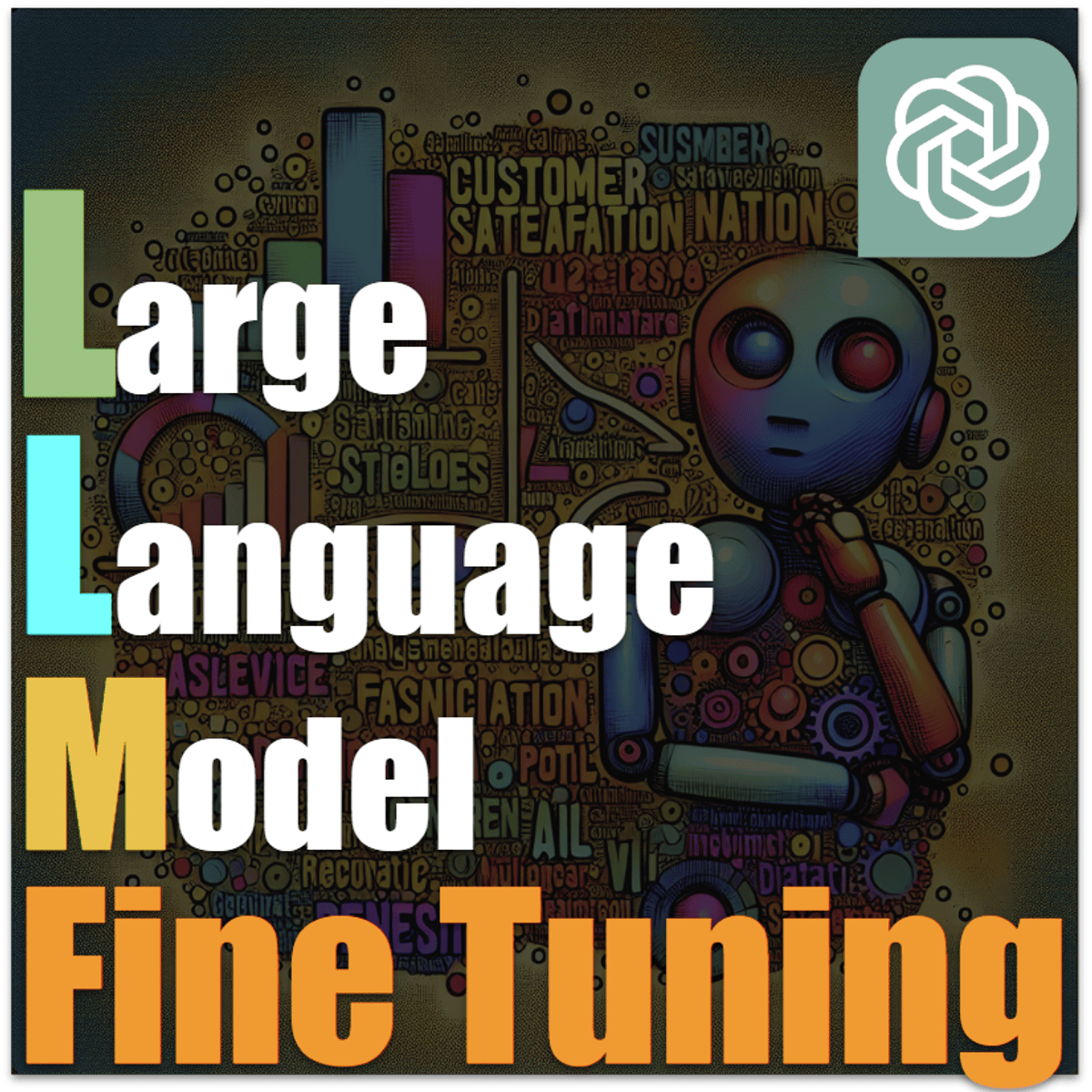
GenAI For Business Analysis: Fine-Tuning LLMs
In this 2-hour project, you'll learn how to fine-tune the GPT-3.5 model using the OpenAI API in Python. You are an AI engineer employed by PulseNet, a telecommunications company that provides internet, television, and phone services. PulseNet operates with a large customer base and manages a substantial volume of daily inquiries, support requests, and product reviews. The company has received numerous complaints from customers, expressing dissatisfaction. PulseNet's objective is to enhance customer satisfaction by analyzing customer complaints more regularly to address and fix issues regarding their services. They require a Large Language model capable of extracting specific details from each complaint, including the topic, problem, and customer dissatisfaction index in real-time. This dissatisfaction index will range between 0 and 100, representing the level of customer anger derived from the complaint text. PulseNet has provided a dataset containing the latest 50 user complaints along with the extracted information in the desired format. Your role as an AI engineer is to use the OpenAI API and Python to fine-tune the GPT-3.5 model and retrain a new large language model (LLM) that is capable of extracting the necessary information from a given customer complaint in the desired format. To get the most out of this course, you'll need access to the OpenAI API Key and a basic understanding of data analysis concepts, including data types, and data manipulation, along with some familiarity with Python. This course is for those who are experienced data analysts with at least a basic knowledge of Python and want to explore the exciting applications of generative AI in data analysis.
 Google Cloud
Work with Gemini Models in BigQuery
This course demonstrates how to use AI/ML models for generative AI tasks in BigQuery. Through a practical use case involving customer relationship management, you learn the workflow of solving a business problem with Gemini models. To facilitate comprehension, the course also provides step-by-step guidance through coding solutions using both SQL queries and Python notebooks.
 École Polytechnique Fédérale de Lausanne
Geographical Information Systems - Part 1
This course is organized into two parts presenting the theoretical and practical foundations of geographic information systems (GIS). - Together theses courses constitute an introduction to GIS and require no prior knowledge. - By following this introduction to GIS you will quickly acquire the basic knowledge required to create spatial databases and produce high-quality maps and cartographic representations. - This is a practical course and is based on free, open-source software, including QGIS. If you study or work in the fields of land management or the analysis of geographically distributed objects such as land use planning, biology, public health, ecology, or energy, then this course is for you! In this first part of the course, we will focus on the digitization and the storage of geodata. In particular, you will learn: - To characterize spatial objects and/or phenomena (territory modeling) with respect to their position in space (through coordinate systems, projections, and spatial relationships) and according to their intrinsic nature (object/vector mode vs. Image/raster mode); - About the different means used to acquire spatial data; including direct measurement, georeferencing images, digitization, existing data source, etc.); - About the different ways in which geodata can be stored - notably, files and relational databases; - How to use data modeling tools to describe and create a spatial database; - To query and analyze data using SQL, a common data manipulation language. The second part of this course will focus on methods of spatial analysis and geodata representation. In this section, you will learn: - How to describe and quantify the spatial properties of discrete variables, for example through spatial autocorrelation; - To work with continuous variables. In particular, we will look at sampling strategies, how to construct contour lines and isovalue curves, and we will explore different interpolation methods; - To use digital elevation models and create their derivative products (i.e. slope, orientation); - How to evaluate the interaction between different types of geodata through overlay and interaction techniques; - How to create effective maps based around the rules of graphic semiology; - Finally, we will also explore other, increasingly common, forms of spatial representation such as interactive web-mapping and 3D representations. You can find an interactive forum for course participants on our Facebook page: https://www.facebook.com/moocsig
 Microsoft
Introduction to Generative AI for Developers With Copilot
This course introduces developers to generative AI technologies, focusing on their practical applications in software development. You will explore the core concepts of generative AI and understand the basic functionalities and ethical considerations of generative AI. The course is structured to provide a comprehensive overview, starting with the fundamentals of generative AI and progressing to its practical uses in code review, documentation, and project planning. Through engaging modules, you will gain a solid foundation in navigating the risks and responsibilities associated with AI. Hands-on activities and quizzes will reinforce the knowledge gained, ensuring that you are well-equipped to harness the potential of generative AI in your development workflows. Required Course Materials: A Copilot license is required to complete this course. If you don’t have a Microsoft 365 Personal or Family license, you can start a free 30-day trial using the link provided in the course.