

The Global Scholarly Directory.
Discover world-class academic programs curated for the modern intellectual. Search through 19877+ degrees and professional certificates.
 Arizona State University
3D Printing Technology Deep Dive and Use Cases
Welcome to “Introduction to 3D Printing Technology Deep Dive!” In this short course, you will learn about the working principles, applications, and limitations of various 3D printing technologies. After the course, you will be familiar with how to choose the right 3D printing technology to create proper prototypes.
 Universitat Politècnica de València
Built Environment Sustainability Assesment
This course provides an in-depth exploration of foundational concepts and contemporary trends vital for conducting comprehensive assessments of the built environment. It also hones participants' abilities in utilizing tools for analyzing the policy implications of urban sustainability initiatives. During the initial week, students are introduced to the various dimensions of urban sustainability, beginning with an examination of classic theories. This is followed by a master lecture on climate change delivered by Nobel laureate Edward S. Rubin, and concludes with an interview featuring the late Nobel laureate Sir Harold Kroto discussing Nanoscience. The second week focuses on establishing connections with scientific methodologies available for fostering sustainable cities. The first video presentation explores the potential applications of Nanomaterials, succeeded by an analysis of Green Infrastructure's pivotal role in urban metabolic processes. The week concludes with an examination of how smart grids will influence energy distribution in future urban landscapes. Week three is dedicated to the core chapters concerning assessment and impact analysis within the built environment. The initial video segment outlines the theoretical framework, leading into the essential Integrated Design approach to assessment and impact evaluation, which is thoroughly presented in the final video. Throughout the fourth week, the principal techniques for modeling a city are brought together to elucidate their underlying principles and practical applications. The module commences with the highly detailed Building Information Modeling (BIM) approach, transitions to the widely adopted Life Cycle Analysis, and concludes with an economic perspective, focusing on the formulation of business models. In the final, fifth week, the course introduces the ultimate envisioned paradigm of the circular city, starting from the foundational concepts elaborated in the proposed Circular City model. The program culminates with a detailed analysis of the University of British Columbia's comprehensive Sustainability Plan.
 University of California, Davis
Beer Quality: Flavor
In this second course of the Beer Quality Series, you will learn about factors influencing the perception of flavor and the molecules that influence flavor. We also review methods of evaluating and measuring flavor, as well as methods of modifying flavor. In addition, you will learn about how to address individual quality issues from the standpoint of: the basic underpinning science, the practicalities of the issue pertaining to brewing and its associated activities, quality assurance and quality control parameters, and a troubleshooting guide.
 Packt
Packt
The Ultimate BPMN Course
This course features Coursera Coach! A smarter way to learn with interactive, real-time conversations that help you test your knowledge, challenge assumptions, and deepen your understanding as you progress through the course. Unlock the power of Business Process Model and Notation (BPMN) to transform your process modeling skills and streamline complex workflows across industries. This course offers a comprehensive and practical journey through BPMN fundamentals, advanced elements, and real-world scenarios to enhance your ability to design clear, efficient, and effective process diagrams. You will begin with foundational BPMN concepts, learning essential symbols, tasks, events, and gateways. Then, through hands-on scenarios—from retail and racing processes to beauty salons and manufacturing—you will progressively master more intricate BPMN constructs like parallel gateways, message events, subprocesses, event handling, and complex gateways. Real-world case studies reinforce your learning by applying theory to practical process challenges. The course concludes with best practices, advanced event handling, and strategic BPMN applications in banking, HR, and compliance contexts. Whether you're a business analyst, process manager, or IT professional, this course equips you with the expertise to improve operational efficiency, support digital transformation, and ensure business agility. Prerequisites are minimal, requiring only a keen interest in process improvement, making it ideal for beginners and intermediate learners aiming to deepen their BPMN proficiency.
 Scrimba
Introduction to ES6+
Introduction to ES6+ covers modern JavaScript features, specifically ES6 and newer ECMAScript versions. JavaScript, a widely used programming language in various domains, is essential for developers aiming to stay relevant across web applications, servers, mobile, and IoT devices. Developers who are already familiar with JavaScript will be able to update their skills and broaden their knowledge in this tiny but mighty course.
 Coursera
Analyze Apple's Stock and Financials with Bloomberg Terminal
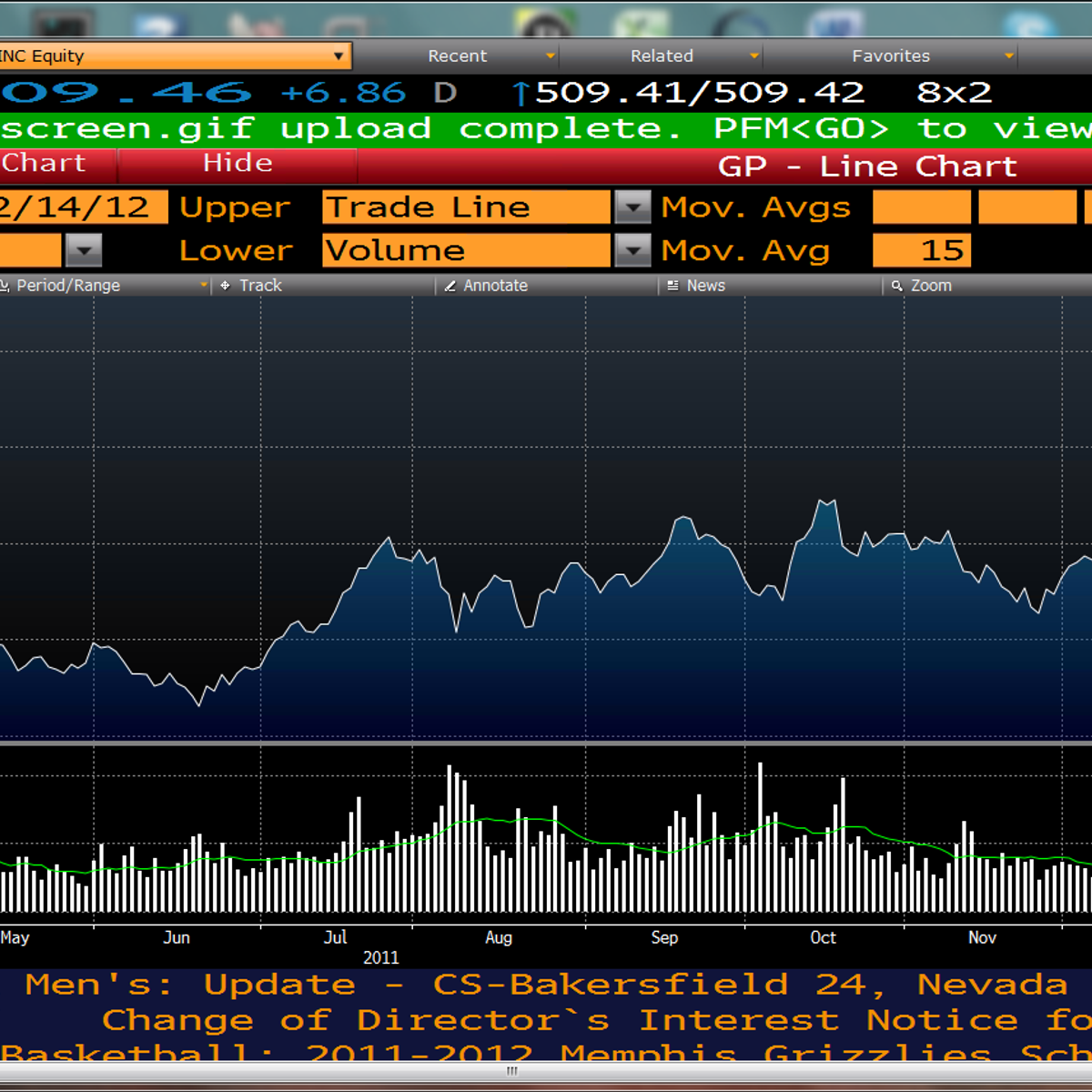
In this 1-hour long guided tutorial, you will learn how to use Bloomberg to access equities and financials data, analyze and interpret stock and financial data, use Bloomberg DES, GP, ANR, FA, MODL, and EQRV functions. Note: This tutorial works best for learners who are based in the North America region. We're currently working on providing the same experience in other regions. This tutorial requires access to Bloomberg Terminal. This tutorial’s content is not intended to be investment advice and does not constitute an offer to perform any operations in the regulated or unregulated financial market.
 SAS
SAS
Practicing for the SAS Programming Certification Exam
In this course you have the opportunity to use the skills you acquired in the two SAS programming courses to solve realistic problems. This course is also designed to give you a thorough review of SAS programming concepts so you are prepared to take the SAS Certified Specialist: Base Programming Using SAS 9.4 Exam.
 Google
Stay Ahead of the AI Curve
Continue developing your skills within the current and emerging AI landscape. Learn about the ways different organizations have leveraged AI and consider how these innovations may inspire your own AI-powered workplace solutions. By the end of this course, you'll develop a strategy to stay up to date with future AI developments.
 Universidades Anáhuac
Introducción al Derecho Internacional Público
En la actualidad las relaciones internacionales se han visto impulsadas por la globalización, afectando directamente tanto la vida personal de los individuos, así como la de los negocios. Hoy en día existe una pluralidad de ordenamientos nacionales que encuentran un punto de conexión a través de las personas físicas o morales de diferentes nacionalidades que participan en ellas. Las relaciones internacionales entre países o entre personas se da a través de una normatividad internacional. Este curso te permitirá entender qué es el Derecho Internacional Público y cómo se aplica dentro de la normatividad nacional pudiendo determinar qué legislación será la aplicable para proteger tus derechos. De igual forma conocerás la diferencia entre el Derecho Internacional Público y el Derecho Internacional Privado, quienes son los sujetos de derecho internacional; cual es el proceso para crear los tratados, quienes pueden representar a los estados ante una negociación y cuáles son los privilegios, facilidades e inmunidades que la comunidad internacional les otorga a los negociadores de Tratados. Conocerás la estructura de las organizaciones internacionales y cuál es el proceso de integración económica que impacta directamente en los negocios internacionales. ¡Sé un agente promotor de salvaguardar el Derecho Internacional!
 EDUCBA
Overview of Automotive SPICE
The Knowledge framework of Automotive SPICE (Software Process Improvement and Capability Determination) is the focus of the AutoSPICE course, which seeks to provide you with a thorough grasp of it. The automotive industry has embraced Automotive SPICE as a widely used industry standard to recall information to enhance software management and development procedures. The goal of the course is to give you the understanding and abilities you need to create, evaluate, and manage software development processes following Automotive SPICE standards. You will gain valuable skills that will help you apply and put best practices into practice, perform evaluations, and implement initiatives for process improvement that are in line with the standards and objectives of the automotive sector by the end of the course. You will develop the ability to analyze and evaluate software development processes to improve the speed, reliability, and consistency of the procedures used to build automotive software. You should be able to create and develop strategies to enhance the speed, reliability, and consistency of automotive software development procedures. You will be able to critically evaluate the outcomes and impact of implementing Automotive SPICE standards in the automotive industry and assess the success of process improvement initiatives in alignment with sector-specific objectives by the end of the course. Target learners for the course include professionals and individuals from automotive industry such as automotive software engineers, project managers in automotive software development, quality assurance and testing professionals, product managers and product owners, automotive systems architects, consultants and auditors in automotive software. To be successful in this course, you will be required to have prior knowledge of software development principles. Familiarity with process improvement methodologies like Six Sigma and CMMI can be advantageous when considering an AutoSPICE course. Additionally, having a basic understanding of the automotive sector and strong analytical problem-solving skills can enhance your grasp of the course material.
 LearnQuest
Teradata: Building Analytics Systems
Building Analytics Systems is a course for professionals interested in Data Analytics with Teradata. Data Analysts taking on the Teradata tool, new students of Data Analytics, and business professionals pivoting to this field will all benefit. If you've taken "Getting Started with Teradata" and "Improving Analysis and Storage," you're ready to run with this third course in my Teradata Specialization. This course uses animated lectures, scenarios, instructor demonstrations and software simulations to strengthen your skills with Teradata as well as your understanding of how to integrate and use the growing variety of data sources. In this course, you will recognize how to connect to additional data sources; define how APIs and JSON are the pillars of enterprise data warehousing; identify how Teradata handles the common challenges of connecting with data sources; identify which columns are eligible for categorical summaries and how to interpret the output; define the importance of summary statistics for your data tables; recognize techniques on how to clean up missing, null, or incomplete data; identify how the in-database analytics provided by Teradata create data visualizations; define the process of Exploratory Data Analysis (EDA) in exploring data and testing hypotheses; Define event attribution and how it can be applied to business processes; recognize how to search for patterns within data using the nPath function; identify the process to match a session window time frame to an analysis goal; recognize how to apply aggregate functions to a sessionized dataset for advanced analytics; identify strategies to manipulate text data for analysis; practice creating grams, bigrams, and trigrams using the nGrams function; recognize the use of sentiment analysis to better understand customer needs, and define the use of the Sentiment Extractor function to analyze meaning from text data.
 Edureka
Project Leadership, Risk, and Strategic Management
This course is designed to help you develop and refine the skills needed to lead projects successfully from initiation to completion. You will gain a strong foundation in project management principles while exploring advanced topics that shape effective leadership and strategic decision-making. Throughout the course, you will learn to manage critical aspects of projects, including quality assurance, resource optimization, risk assessment, procurement planning, and stakeholder engagement. Special emphasis is placed on leadership skills, communication techniques, and problem-solving approaches that enable you to guide teams confidently and align project goals with broader business objectives. By the end of this course, you will be able to: - Apply fundamental principles of project management and leadership to ensure effective project execution. - Use structured approaches for resource management, risk reduction, and procurement strategies. - Distinguish between quality assurance and quality control, and implement robust quality frameworks. - Develop strategies for stakeholder engagement that keep projects aligned with organizational priorities. - Strengthen leadership, communication, and problem-solving abilities for efficient project delivery. This course is ideal for Project Managers, Business Analysts, and Team Leads who want to enhance their skills in both agile and traditional project management methodologies. Whether you are looking to sharpen your current expertise or prepare for advanced leadership roles, this program will provide the knowledge and practical tools you need to achieve measurable project success. Join us to build a solid foundation in project leadership, manage risks effectively, and fast-track your career with the essential skills of modern project management.
 Alibaba Cloud Academy
Protecting Cloud Architecture with Alibaba Cloud
Course Description The Security Exam Preparation Course is a series of online courses covering topics including Linux and Windows OS basics and operations, network fundamentals, host security, application security, network security, and data security. It is designed to help you understand how these products work, how they should be used, and help you gain the required knowledge to prepare for the ACA/ACP level cloud security specialist. To earn an official Alibaba Cloud certificate please join the Security courses on the Academy's website: Cloud Platform Security Overview: https://edu.alibabacloud.com/certification/clouder_securityoverview Secure Your Data on Alibaba Cloud: https://edu.alibabacloud.com/certification/clouder_securedata Use Alibaba Cloud Anti-DDoS Service to Defend DoS Attack: https://edu.alibabacloud.com/certification/clouder_ddos
 Google Cloud
Production Machine Learning Systems - Español
En este curso, analizaremos los componentes y las prácticas recomendadas de la creación de sistemas de AA de alto rendimiento en entornos de producción. Veremos algunas de las consideraciones más comunes tras la creación de estos sistemas, p. ej., entrenamiento estático, entrenamiento dinámico, inferencia estática, inferencia dinámica, TensorFlow distribuido y TPU. Este curso se enfoca en explorar las características que conforman un buen sistema de AA más allá de su capacidad de realizar predicciones correctas.
 L&T EduTech
Heavy Manufacturing Process and System
Welcome to the Heavy Manufacturing course, where we explore the intricate techniques and technologies essential for modern manufacturing. This comprehensive program delves into three key areas: Machining Processes in Manufacturing, Fluid Power System in Production and Controls of Manufacturing, and Pressure Vessel Specialized Manufacturing, Surface Treatment, and Refractory Materials. Through theoretical knowledge and hands-on practical applications, students will gain a deep understanding of the principles, methodologies, and best practices shaping the field of advanced manufacturing. In the Machining Processes module, students will embark on a journey through the fundamental techniques used to shape raw materials into precise components. From traditional turning and milling to specialized processes such as deep hole drilling and thread machining, learners will explore the principles of material removal, tool selection, and chip formation. Understanding the mechanism of metal cutting, tool wear, and tool life is crucial for optimizing machining parameters and achieving superior surface finish and dimensional accuracy. Additionally, learners will delve into advanced machining technologies including CNC machines and programming, enabling automation and enhancing productivity in manufacturing operations. The Fluid Power System module introduces learners to the dynamic world of hydraulic and pneumatic systems that power a wide range of manufacturing processes. Through theoretical lectures and practical demonstrations, learners will delve into the components, properties, and generation of hydraulic oil and compressed air. Control valves play a pivotal role in regulating fluid flow and pressure within these systems, and new learner will gain expertise in various valve types and their applications. Hands-on circuits is included in designing hydraulic-powered circuits for milling, grinding, drilling, and hydraulic press applications, as well as pneumatic circuits for safety, clamping, and dual pressure control. Maintenance and troubleshooting techniques for fluid power systems, including pneumatic systems and servo valves, will also be covered to ensure uninterrupted operation in manufacturing environments. In the Pressure Vessel module, learners will explore the intricacies of fabricating and maintaining vessels designed to contain fluids or gases at high pressures and temperatures. Specialized manufacturing processes such as tube-to-tube sheet welding and robotic welding ensure precise assembly and structural integrity of pressure vessel components. Surface treatment methods, including painting and thermal spray aluminum coating, are vital for enhancing corrosion resistance and extending vessel lifespan. Furthermore, learners will gain insights into the selection and application of refractory materials to provide thermal insulation and protect vessel walls in high-temperature environments. By the end of this course, students will emerge as proficient Manufacturing Engineers equipped with the knowledge and skills to tackle complex challenges in advanced manufacturing processes. Whether entering the workforce or advancing in their careers, graduates will be well-prepared to contribute to industries at the forefront of technological innovation and industrial excellence. Target Learners: Working Professional of Mechanical, Manufacturing and Chemical Engineers Undergraduate students of Mechanical, Manufacturing & Chemical Engineering Students from Manufacturing and Automation Post-Graduate Students of Computer Integrated Manufacturing Practicing Engineers in Process Plant equipment Diploma students of Mechanical / Manufacturing
 IBM
IBM
Software Testing, Deployment, and Maintenance Strategies
Organizations need skilled systems professionals who can lead software testing, deployment, and maintenance efforts that ensure quality and reliability. This IBM course equips existing and aspiring Systems Architects, Solutions Architects, Systems Analysts, Software Engineers, IT Managers, Product Managers, Release Managers, QA Managers, and Business Analysts with the frameworks and coordination skills needed to deliver stable, production-ready systems. During the course, you’ll learn to design effective test plans and traceability matrices, ensure testing coverage, and coordinate user acceptance testing (UAT) across teams. Through hands-on exercises, you’ll develop deployment checklists, manage CI/CD workflows, validate data migration, and apply risk management techniques for successful releases. You’ll also explore non-functional requirements (NFRs)—including performance optimization, scalability, and reliability—to strengthen post-deployment system health and business continuity. If you want to build the in-demand skills for testing and release management, monitoring post-deployment performance, and maintaining software lifecycle excellence through continuous improvement, enroll today!