

The Global Scholarly Directory.
Discover world-class academic programs curated for the modern intellectual. Search through 19877+ degrees and professional certificates.
 LearnQuest
Leading High-Performance Sales Teams
This course builds core leadership capabilities needed to inspire, manage, and develop high-performing sales teams across culturally diverse environments including bilingual American markets and rapidly evolving Indian ecosystems. Students will enhance communication, motivation, and people management skills essential to build cohesive, agile teams that surpass ambitious targets.
 Universidad de Palermo
Psicología de la Percepción
¿Cómo funcionan nuestros sentidos para ayudarnos a dar sentido y responder a nuestro entorno? ¿La percepción es un reflejo “fiel” del ambiente que nos rodea? ¿En qué se diferencia una alucinación de una percepción normal? ¿Cómo se relacionan los avances neurocientíficos con las teorías psicológicas clásicas de la percepción? ¿Cómo influyen la memoria, la atención y las expectativas en lo que percibimos? En este curso introductorio a la psicología de la sensación y la percepción podrás encontrar respuestas a estas y otras preguntas. La capacidad para recolectar y dar sentido a la información que nos llega del entorno es un aspecto clave para entender nuestra vida mental y nuestro comportamiento. Por eso, se encuentra entre los temas más importantes y más antiguos de la psicología. Este curso te permitirá explorar videos, lecturas y actividades para que puedas ir apropiándote de conceptos básicos de este campo a partir de ejemplos concretos, interrogantes clásicos y avances neurocientíficos recientes. A su vez, se persiguen los siguientes objetivos generales: • Diferenciar los conceptos de sensación y percepción e identificar las principales tareas o técnicas que se usan para estudiar estos fenómenos. • Caracterizar el proceso perceptivo tomando como ejemplo la anatomía y función de la visión, desde la captación de luz en el ojo hasta el reconocimiento y la interacción con lo que vemos. • Discutir el rol de la memoria, la atención y las expectativas sobre la percepción. • Desarrollar la capacidad de reflexión y análisis de los fenómenos sensoperceptivos, partiendo de ejemplos y demostraciones científicas concretas.
 Coursera
Operations Management in Healthcare- Streamlining Systems
In this course, you’ll explore how to improve patient outcomes and organizational efficiency by streamlining healthcare systems and processes. Led by Joy Hicks—a seasoned healthcare leader with hands-on experience from patient care tech to nurse—you’ll gain the tools, insights, and confidence to integrate healthcare systems, optimize workflows, and apply data-driven strategies in real-world settings. Over this 1-hour immersive experience, you’ll learn how to evaluate technology's role in communication, harness lean operational strategies, and align with evolving healthcare regulations and CMS guidelines. This course is designed for healthcare administrative professionals, leaders in ambulatory and inpatient settings, and operations management professionals working across healthcare environments. Whether you're managing patient services, coordinating care across departments, or leading strategic improvement initiatives, this course provides practical skills and frameworks for operational excellence. To succeed in this course, learners should have a basic understanding of healthcare processes and terminology, including how services are delivered across inpatient, outpatient, pharmacy, and imaging settings. Familiarity with business process concepts such as workflow efficiency, resource allocation, and healthcare quality improvement will be helpful. No programming or formal leadership experience is required. By the end of this course, you'll be equipped to lead and support operational improvements that make a real impact on patient care and organizational performance. You’ll walk away with actionable strategies to reduce inefficiencies, enhance interdepartmental coordination, and implement sustainable process changes in diverse healthcare settings. Whether you're aiming to improve communication pathways, streamline resource utilization, or ensure regulatory compliance, this course empowers you to drive results with clarity, confidence, and a systems-thinking approach.
 Università di Napoli Federico II
Machine Learning e Data Mining in R
Il corso Machine Learning e Data Mining in R è rivolto a chiunque voglia avere una pratica panoramica delle tecniche di apprendimento automatico, dalle più interpretabili - come l’analisi di regressione, delle componenti principali e dei gruppi - a quelle più flessibili come le reti neurali artificiali, sia shallow che deep - e le più ricorrenti problematiche di analisi e modellazione di dati e problemi reali - come collinearità, overfitting, regolarizzazione e knowledge transfer. La modalità di erogazione del corso è di tipo learning by doing, mediante una continua implementazione in R dei concetti esposti. Le diverse unità ti verranno prima illustrate a voce, per permetterti di ricordare e capire, e poi rese disponibili sotto forma di reading, per permetterti di analizzarne criticamente il contenuto. Alla fine di ogni unità, verrai messo alla prova attraverso open Lab in ambiente di sviluppo RStudio, che ti permetteranno di applicare i metodi trattati nel corso ai tanti data set reali che ti saranno forniti. Ti verrà infine richiesto di valutare i tuoi progressi mediante graded quiz contenenti domande a risposta multipla. Non rimandare: Machine Learning e Data Mining in R sono ora a portata di mano!
 Pontificia Universidad Católica de Chile
Transferencia tecnológica: De la investigación al mercado.
Este MOOC fue desarrollado para fortalecer las capacidades de gestión de la transferencia tecnológica de académicos e investigadores de las diferentes disciplinas, gestores tecnológicos y estudiantes de postgrado. Pretende ser un apoyo para todos aquellos que quieran que sus resultados de investigación se conviertan en productos o servicios que impacten en la calidad de vida de las personas mediante su transferencia a empresas o instituciones, o a través de la generación de emprendimientos de base tecnológica. Asimismo, el curso permite profundizar en los mecanismos de protección intelectual, en las diferentes variables que definirán una estrategia de transferencia, generando material de orientación para quienes apoyen la transferencia tecnológica y la conformación de emprendimientos de base tecnológica en etapas tempranas. Fue desarrollado por la Dirección de Transferencia y Desarrollo perteneciente a la Vicerrectoría de Investigación de la Pontificia de la Universidad Católica de Chile, cuyo objetivo es apoyar la transferencia de resultados de investigación generados en la UC de manera que se conviertan en productos o servicios que impacten en la calidad de vida de las personas. Además, fue apoyado por la Corporación de Fomento de la Producción de Chile (CORFO). http://transferenciaydesarrollo.uc.cl/
 Fundação Instituto de Administração
Marketing e a Jornada do Cliente
Nossas boas-vindas ao Curso Marketing e a Jornada do Cliente. Neste curso, você aprenderá sobre os aspectos gerais que ajudam a organização a compreender a aplicabilidade de estratégias de marketing, com ênfase no ambiente digital, levando em consideração a jornada do cliente. Ao final deste curso, você será capaz de compreender a importância do marketing para uma organização e como analisar a jornada do cliente. Este curso é composto por quatro módulos, disponibilizados em semanas de aprendizagem. Cada módulo é composto por vídeos, leituras e testes de verificação de aprendizagem. Ao final de cada módulo, temos uma avaliação de verificação dos conhecimentos. Estamos muito felizes com sua presença neste curso e esperamos que você tire o máximo de proveito dos conceitos aqui apresentados. Bons estudos!
 University of Colorado System
Agile Leadership: Introduction to Change
This is a foundational course in the Agile Leadership Specialization. By the end of this course, you will build an understanding of key agile leadership concepts. You will begin building a toolbox that will give you an ability to evaluate and create a baseline for yourself as an agile leader. You will access your team’s readiness for change. You will also analyze to what degree an organization is agile, and evaluate its ability to respond to change triggers.
 Johns Hopkins University
YARN MapReduce Architecture and Advanced Programming
The course "YARN MapReduce Architecture and Advanced Programming" provides an in-depth understanding of YARN and MapReduce architectures, focusing on their components and capabilities. Students will explore the MapReduce programming model and learn essential optimization techniques such as combiners, partitioners, and compression to improve job performance. The course covers Mapper and Reducer parallelism in MapReduce, along with practical steps for writing and configuring MapReduce jobs. Advanced topics such as multithreading, speculative execution, and input/output formats are also explored. By the end of the course, participants will have hands-on experience in optimizing and writing efficient MapReduce jobs, preparing them to apply best practices in real-world scenarios. This course is unique as it not only covers the foundational aspects of YARN and MapReduce but also delves into optimization strategies, offering learners the tools to enhance data processing efficiency. Whether you're new to MapReduce or looking to deepen your knowledge, this course provides valuable insights for mastering large-scale data processing.
 Coursera
GenAI for Sales Proposals and Presentations
This course is designed to transform the way you create, deliver, and win sales pitches using the power of generative AI. Imagine crafting data-driven, personalized, and visually stunning sales materials in half the time, with double the impact. By integrating AI tools, you’ll not only optimize your efficiency but also elevate your creativity and storytelling skills, allowing you to connect with your audience like never before. Together, we'll explore practical techniques and AI-driven strategies to revolutionize your sales game. Let’s get started! This course is tailored for sales professionals, including Sales Executives, Sales Managers, Business Development Representatives (BDRs), Sales Development Representatives (SDRs), Inside Sales Representatives, Account Managers, Proposal Writers, and Marketing Professionals. Whether you're presenting to a potential client or crafting proposals, this course will elevate your sales approach with AI-powered insights and skills. To benefit from this course, you should have a basic understanding of sales processes and proposal creation, as well as familiarity with common sales and presentation software such as PowerPoint or Google Slides. Access to generative AI tools like ChatGPT or Claude will be helpful, but no coding experience is required. By the end of this course, learners will be able to synthesize AI-generated market research to create data-driven sales strategies, design personalized proposals using AI-assisted storytelling, evaluate sales materials with AI-powered tools, and create advanced interactive proposals and presentations to drive more impactful sales outcomes.
 Coursera
Compare Costs: Smart Procurement for Success
Compare Costs: Smart Procurement for Success is an essential course for any professional involved in purchasing who aims to make truly informed, data-driven decisions. The lowest price on a quote is rarely the lowest total cost. This course equips you with the analytical framework to see beyond the sticker price and calculate the Total Landed Cost—including all the hidden fees like shipping, duties, and insurance that impact your bottom line. Through practical case studies and hands-on spreadsheet exercises, you will master the art of building a powerful quotation comparison matrix. You will learn to structure supplier proposals side-by-side for a fair, transparent evaluation. Crucially, you will apply advanced spreadsheet techniques like conditional formatting to instantly visualize the most cost-effective options and flag non-compliant offers. By the end of this course, you will be able to stop guessing and start making procurement decisions that are both financially sound and strategically smart.
 Coursera
Azure: create a REST API using NodeJS Serverless Functions
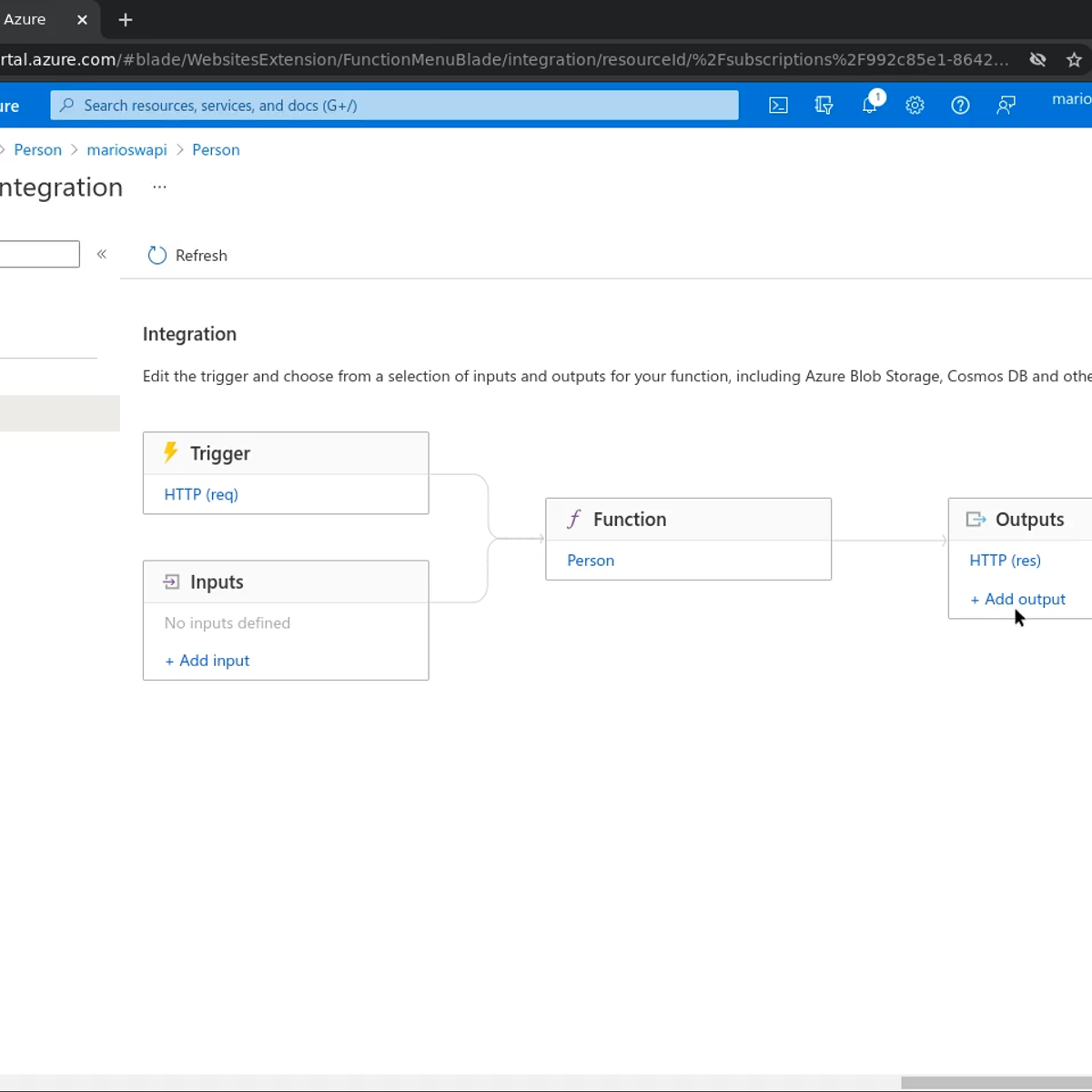
In this Guided Project, you will familiarize yourself with the basics of Azure Serverless Functions and Azure API Management using NodeJS. You're going to create a Function App and two different Serverless Functions, triggered by HTTP calls. You're going to set them up to receive data using both query parameters and path parameters, thus understanding the role of route templates. Then you're going to set up an API Management instance in order to expose them as an unique, homogeneous API that uses path parameters by using inbound processing rules. Note: before taking this Guided Project, if you don't have an Azure subscription yet, please create an Azure Free Trial beforehand at https://portal.azure.com Note: This course works best for learners who are based in the North America region. We’re currently working on providing the same experience in other regions.
 University of Michigan
UX Research at Scale: Surveys, Analytics, Online Testing
This UX course will provide an overview of survey methodology from the perspective of UX research. UX surveys typically focus on uncovering user needs, connecting needs to user characteristics, and gaining insight into user attitudes towards systems they use. In this course, learners will learn the basics of UX survey research and conduct a survey of their own design! Learners will be introduced to techniques for gaining UX insights from large numbers of users, including web analytics, A/B testing, and remote unmoderated studies. We will discuss how these techniques work, when they can be applied, and what can be learned by using them. What You’ll Learn: -Learn how web analytics works and how to analyze analytics data -Understand how to develop A-B tests, before/after, and multivariate experiments -Learn how to set up and analyze remote unmoderated testing studies -Analyze and report on large scale user experience studies Learn about the different types and uses of surveys in UX research -Understand the survey population: when to sample, when to recruit -Develop a survey instrument that meets your requirements -Analyze and report on surveys -Learn to critique user surveys
 Packt
Packt
Modern C++ Templates In Depth
This course features Coursera Coach! A smarter way to learn with interactive, real-time conversations that help you test your knowledge, challenge assumptions, and deepen your understanding as you progress through the course. In this comprehensive course, you will dive deep into the world of C++ templates, gaining both theoretical knowledge and practical experience. You’ll start with foundational concepts like template syntax and basic function templates, before advancing to more complex topics like class templates, specialization, and template instantiation. By understanding how templates enhance code reusability and flexibility, you’ll unlock powerful programming techniques to elevate your C++ skills. The course is structured into distinct modules focusing on key areas such as function templates, class templates, and template changes across C++ standards. You'll explore critical topics like non-type template parameters, template argument deduction, and the practical uses of variadic templates. In addition, we'll cover template optimizations introduced in C++11, C++14, C++17, and C++20, ensuring you’re equipped with the most up-to-date tools for real-world applications. Whether you're a seasoned C++ developer or someone eager to master template programming, this course will provide you with the depth of knowledge required to use templates effectively in modern C++ programming. By tackling hands-on examples and a final project, you'll sharpen your problem-solving skills and get exposure to best practices in template-based design. This course is perfect for intermediate to advanced programmers who already have a basic understanding of C++ syntax and object-oriented programming principles. It’s ideal for developers aiming to specialize in template programming and those who want to improve their skills in managing complex codebases. By the end of the course, you will be able to create and optimize function and class templates, apply advanced template features introduced in modern C++ standards, use explicit and partial specialization, and confidently implement templates in real-world projects.
 National Taiwan University
東亞儒學:孟子一(East Asian Confucianisms: Mencius (1))
本課程以教師講授及課後作業、作業互評,引導學生進入孟子與中華文化的思想世界,與孟子「對話」,從《孟子》原典中汲取智慧的靈感,以作為在現代社會中立身處世的資糧。
 LearnQuest
Spring Data Repositories
This course is aimed at students wishing to learn how Java interacts with databases in a modern framework. The course uses the very popular Spring Boot Framework, with Micro services, as a setting for our database interactions using Java Persistence Framework (JPA) and Spring Data Repositories to abstract away JPA. Students will then learn how to expose Repositories as Rest Web services in their own right using Hypermedia as the Engine of Application State or HATEAOS concepts. Spring Aspect Oriented Programming (AOP) will be covered to illustrate how cross cutting concerns like logging can be applied in a centralized non evasive manner to domain classes. finally the course covers the use of Spring Transaction Managers and Springs declarative configuration Transaction model.
 Pragmatic AI Labs
Advanced Fine-Tuning in Rust
Master the complete fine-tuning pipeline—from transformer internals to production deployment—using memory-efficient techniques that run on consumer hardware. This course transforms you from someone who uses large language models into someone who customizes them. You'll learn to fine-tune 7-billion parameter models on a laptop GPU using QLoRA, which reduces memory requirements from 56GB to just 4GB through intelligent quantization and low-rank adaptation. What sets this course apart is its rigorous, scientific approach. You'll apply Popperian falsification methodology throughout: instead of asking "does my model work?", you'll systematically try to break it. This skeptical mindset—testing tokenization edge cases, running rank ablation studies, and validating corpus quality through six falsification categories—builds the critical thinking skills that separate production-ready engineers from those who ship fragile systems. By course end, you'll confidently: calculate VRAM requirements and select appropriate hardware; trace inference through the six-step transformer pipeline; configure LoRA rank to match task complexity; build quality training corpora using AST extraction; and publish datasets to HuggingFace with proper splits and documentation. Built entirely on a sovereign AI stack, everything runs locally with no external dependencies—true ML independence.