

The Global Scholarly Directory.
Discover world-class academic programs curated for the modern intellectual. Search through 19877+ degrees and professional certificates.
 Coursera
Run Campaign Cycles
Successful marketing isn't random; it's a managed cycle. Run Campaign Cycles is a 110-minute course for professionals who want to bring structure, control, and data-driven precision to their marketing initiatives. You will master the four-stage campaign lifecycle, a framework used by top teams like those at Asana to move from planning to closure with clarity. Drawing on real-world case studies like Airbnb's "Live There" campaign, you will learn not just to launch a project, but to monitor its vital signs using key performance indicators (KPIs). The course culminates in you learning how to translate raw data into a compelling status update that tells a story, justifies a strategy, and drives smart, in-flight optimizations. Stop guessing and start managing the entire campaign lifecycle.
 Coursera
Bridging the Gap: EV Grid Integration & V2G Systems
Electric Vehicle (EV) Grid Integration and Vehicle-to-Grid (V2G) Systems is an essential course that discusses the critical intersection of electric vehicles and the electrical grid. As the EV market continues to grow, being aware of how these vehicles can interact with and benefit the grid becomes increasingly crucial. This course provides learners with a comprehensive overview of the principles, technologies, and challenges associated with integrating EVs into the grid. Through engaging lessons, real-world examples, and expert insights, participants will explore the concept of grid integration, smart charging strategies, and the potential of V2G systems. Upon completing this course, participants will have a profound understanding of electric vehicle grid integration, smart charging technologies, and the role of Vehicle-to-Grid (V2G) systems in reshaping our energy landscape. This course is suitable for individuals interested in electric vehicle technology, renewable energy, and grid management. It is designed for a wide range of professionals, including engineers, energy analysts, policymakers, and electric vehicle enthusiasts. There are no specific prerequisites for this course. Basic knowledge of electric vehicles and energy systems is beneficial but not required. By the end of the course, learners will be equipped to contribute to the sustainable evolution of our energy ecosystem.
 Coursera
Flick Social for Beginners: Accelerating Social Media Output
Did you know that proper use of hashtags can significantly increase your post engagement? This Guided Project is designed to help social media strategists and marketers effectively leverage Flick for strategic hashtag management and post scheduling. In this 2-hour course, you'll learn to set up Flick, perform advanced hashtag research, and create targeted hashtag collections. You'll then apply these skills in a real-world scenario by creating and scheduling a social media campaign for a fitness instructor. This project stands out because it offers hands-on experience with a leading social media tool, enhancing your digital marketing skills. No prior Flick experience is needed, but familiarity with social media concepts will be helpful. Note: This course works best for learners who are based in the North America region. We’re currently working on providing the same experience in other regions.
 University of Colorado Boulder
Biology Everywhere Foundations
In this course, we will explore the nature of science and biology. We will discuss what the “biology everywhere” philosophy means and the history of the “biology everywhere” project. We will also discuss what science (and biology) are as a discipline of inquiry and how chemistry is foundational to understanding biology.
 Google Cloud
Transformer Models and BERT Model - בעברית
בקורס הזה נציג את הארכיטקטורה של טרנספורמרים ואת המודל של ייצוגים דו-כיווניים של מקודד מטרנספורמרים (BERT). תלמדו על החלקים השונים בארכיטקטורת הטרנספורמר, כמו מנגנון תשומת הלב, ועל התפקיד שלו בבניית מודל BERT. תלמדו גם על המשימות השונות שאפשר להשתמש ב-BERT כדי לבצע אותן, כמו סיווג טקסטים, מענה על שאלות והֶקֵּשׁ משפה טבעית. נדרשות כ-45 דקות כדי להשלים את הקורס הזה.
 The Hong Kong University of Science and Technology
Programming with Scratch
Learning coding is not only about understanding the programming language being used, but also developing important computational thinking skills, which are useful for problem solving across many disciplinary areas. In this course, students will learn basic programming skills by creating interactive storybooks, animations, and games with Scratch, which is a block-based visual programming language for anyone new to coding.
 Shanghai Jiao Tong University
Mandarin Chinese for Intermediate Learners: Part 3
"Mandarin Chinese 3: Chinese for Intermediate Learners" is the third course of the MOOC specialization "Learn Intermediate Mandarin Chinese" created by Shanghai Jiao Tong University.
 Google Cloud
Preparing for Your Professional Cloud Network Engineer Journey
This course helps you structure your preparation for the Professional Cloud Engineer exam. You will learn about the Google Cloud domains covered by the exam and how to create a study plan to improve your domain knowledge.
 Whizlabs
AWS DynamoDB Fundamentals
Amazon DynamoDB Fundamentals is a skill enhancement course designed for candidates aiming to enhance their knowledge as Database professionals. This course will help learners understand working with NoSQL databases. Furthermore, fluency in basic concepts of AWS DynamoDB brings long-term opportunities with a specialization in database designing on the cloud. This course provides 7+ hours of training videos which are segmented into modules. The course concepts are easy to understand through lab demonstrations. Learners could find a total of 55 lectures in the training course with comprehensive coverage of the features and concepts of DynamoDB. The course is divided into 6 Modules and each module is further split into lessons. In order to test the understanding of learners, every module includes Assessments in the form of Quizzes and In Video Questions. A mandatory Graded Questions Quiz is also provided at the end of every module. Module 1: NoSQL Introduction Module 2: DynamoDB Tables Module 3: DynamoDB Items Module 4: DynamoDB Indexes Module 5: DynamoDB Global Tables Module 6: DynamoDB Backups This course aims to achieve multiple AWS Certifications. Some of the important benefits of achieving these certifications include: - Validating your knowledge and understanding of serverless NoSQL databases. - Providing you with global recognition for your knowledge, skills, and experience. - Getting more chances of being promoted in your current job or getting a new job with a high paycheck. So, enroll in our Amazon DynamoDB Fundamentals Course and attain career growth by becoming a Database Professional. In addition, you can also explore many other opportunities in various job roles in the AWS landscape.
 Coursera
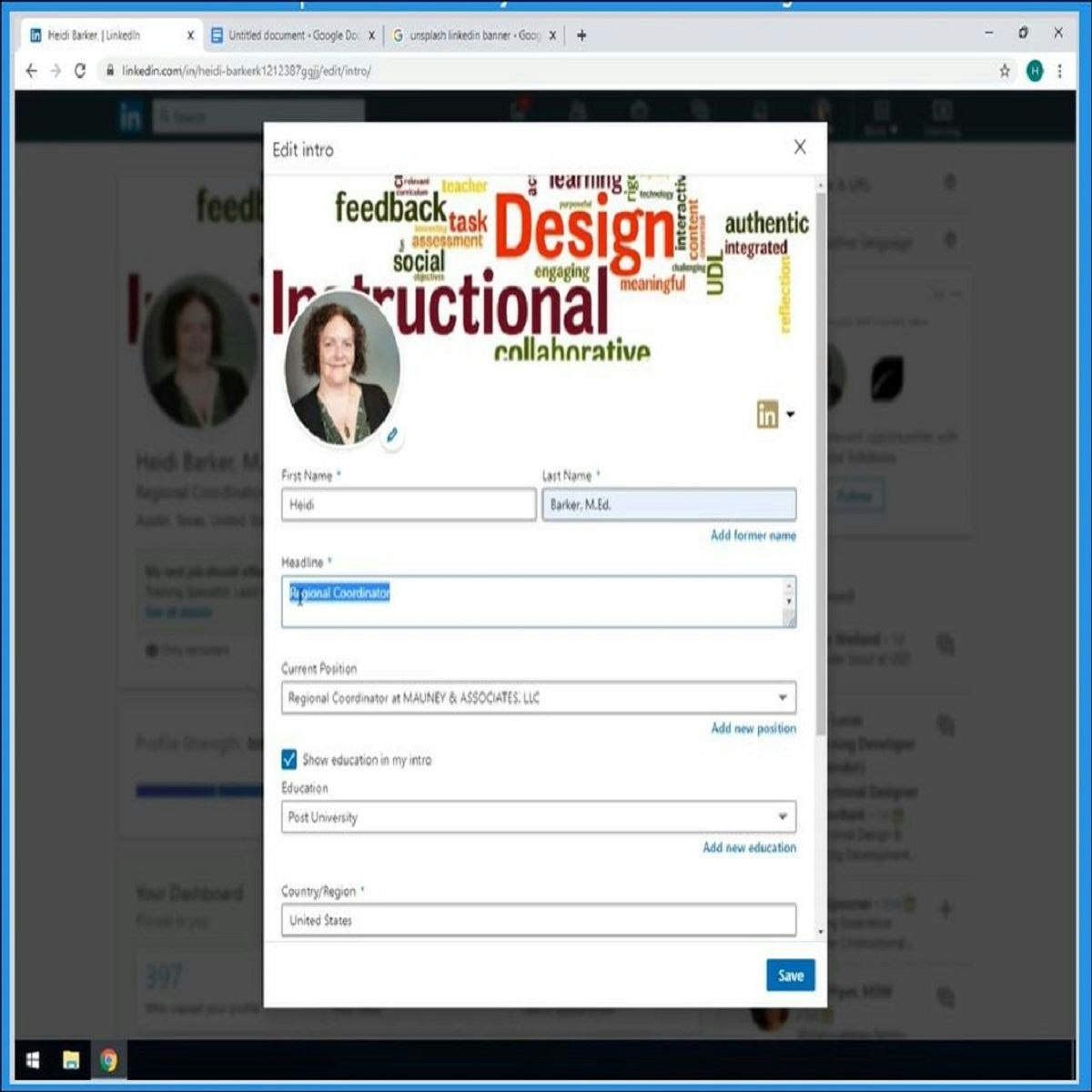
Create a Profile and Network on LinkedIn
In this 1-hour long project-based course, you will learn how to create a profile and network on LinkedIn. We will go step by step-by-step through this project so you can build a profile if you do not have one or strengthen your current one if you do. You will also learn about the tools and options offered by LinkedIn to assist you. We will explore the basics of how to set-up an engaging profile. You may even learn something you do not already know to make your current profile stand out above the rest. Some learning objectives that we will cover include building a profile that sends a professional message with your banner and your personalized URL code as well as knowing how to share your URL code. We will expand your network by learning how to make connection requests professionally. And we will go through following people, pages, groups and hashtags. Note: This course works best for learners who are based in the North America region. We’re currently working on providing the same experience in other regions.
 EDUCBA
Apply Puppet for Scalable Infrastructure Automation
By the end of this course, learners will be able to apply intermediate Puppet concepts, analyze configuration logic, implement dynamic manifests using facts and iteration, and deploy infrastructure code using industry-standard tools. Puppet Training – Intermediate Level is designed for professionals who already understand Puppet basics and want to advance toward real-world, production-ready automation. The course guides learners through Puppet module architecture, variable management, expressions, conditionals, and iteration, enabling them to write cleaner, more maintainable, and scalable manifests. Learners also explore system facts and executable facts to build environment-aware configurations that adapt automatically to infrastructure changes. What makes this course unique is its strong emphasis on practical Puppet workflows. Beyond core language features, learners gain hands-on exposure to Puppet Forge for leveraging reusable community modules and r10k for managing multi-environment deployments using version control. This bridges the gap between writing Puppet code and operating Puppet in enterprise environments. Completing this course equips learners with the confidence to manage complex configurations, collaborate effectively using version-controlled Puppet code, and support scalable infrastructure automation across development, testing, and production systems.
 University of California, Davis
Healthcare Data Literacy
This course will help lay the foundation of your healthcare data journey and provide you with knowledge and skills necessary to work in the healthcare industry as a data scientist. Healthcare is unique because it is associated with continually evolving and complex processes associated with health management and medical care. We'll learn about the many facets to consider in healthcare and determine the value and growing need for data analysts in healthcare. We'll learn about the Triple Aim and other data-enabled healthcare drivers. We'll cover different concepts and categories of healthcare data and describe how ontologies and related terms such as taxonomy and terminology organize concepts and facilitate computation. We'll discuss the common clinical representations of data in healthcare systems, including ICD-10, SNOMED, LOINC, drug vocabularies (e.g., RxNorm), and clinical data standards. We’ll discuss the various types of healthcare data and assess the complexity that occurs as you work with pulling in all the different types of data to aid in decisions. We will analyze various types and sources of healthcare data, including clinical, operational claims, and patient generated data as well as differentiate unstructured, semi-structured and structured data within health data contexts. We'll examine the inner workings of data and conceptual harmony offer some solutions to the data integration problem by defining some important concepts, methods, and applications that are important to this domain.
 Rice University
Capstone: Build a Winning Investment Portfolio
Put your investment and portfolio management knowledge to the test through five weeks of hands-on investment experiences: • Developing and managing your own simulated investment portfolio, resulting in a peer-graded report covering portfolio strategy, analysis, and performance • Advising case study clients on a variety of investment topics, essentially acting as an investment advisor in a simulated environment recommending strategies for and changes in portfolios based on challenges and issues faced by your clients • Using the sophisticated web-based analytical tools of Silicon Cloud Technologies LLC’s Portfolio Visualizer including portfolio mean variance optimization, historical and forecasted efficient frontiers, Fama-French factor models, and many more Your capstone experiences are directly applicable to managing real world investment portfolios and the final report can be shared with family, friends, and potential or current employers. By the end of the capstone project, you will have incorporated concepts from all four courses, including: • Analyzing multiple asset classes • Asset allocation and risk management • Current market trends • Behavioral finance • Investment styles and strategies • Financial market innovation • Investment performance evaluation
 Google Cloud
Create Image Captioning Models - 简体中文
本课程教您如何使用深度学习来创建图片标注模型。您将了解图片标注模型的不同组成部分,例如编码器和解码器,以及如何训练和评估模型。学完本课程,您将能够自行创建图片标注模型并用来生成图片说明。
 Birla Institute of Technology & Science, Pilani
Writing Practice
Welcome to the Writing Practices course. This course aims to prepare you for performing writing tasks in academic contexts. In this course you will be introduced to basic academic writing skills. You will learn how the principles and structures of academic writing work when you are composing a variety of scripts. This course covers a wide variety of topics related to academic writing that will prepare you for presenting arguments, describing scientific processes and comparing objects and ideas. Course Positioning This course is an intermediate level course in academic writing, intended for learners who have basic proficiency in reading and writing in English. The knowledge gained from this course will help you write effectively in most academic situations. System Requirements for the Course You would need a functional computer, a steady internet connection, a good browser, and access to Google Drive for this course.
 Packt
Packt
Data Visualization and Storytelling with Python
This course features Coursera Coach! A smarter way to learn with interactive, real-time conversations that help you test your knowledge, challenge assumptions, and deepen your understanding as you progress through the course. Dive into the world of data visualization and learn to effectively communicate data insights using popular Python libraries. You will explore a wide range of tools such as Matplotlib, Seaborn, Bokeh, Plotly, and Folium to craft stunning visualizations and interactive plots. This course will equip you with the skills needed to visualize data across different domains—from simple 2D plots to complex 3D and geographic visualizations. Throughout the course, you will start by learning the basics of Matplotlib, including customizing plots, adding markers, and managing axis limits. Then, you will move into advanced topics like creating subplots, contour plots, and even 3D plots. You will also explore Seaborn for high-level visualization, including relational and categorical plots, heatmaps, and more. As you advance, you'll interact with tools like Bokeh and Plotly to make your plots interactive, and finally, you’ll learn to create geographic maps with Folium to visualize real-world data such as COVID-19 statistics. This course offers an interactive journey where each concept builds upon the last. You'll apply what you learn in quizzes and real-world projects, allowing you to strengthen your skills progressively. You'll also benefit from hands-on projects, such as working with 3D surface plots and geographical data, which will allow you to test your skills and deepen your understanding. This course is designed for individuals who are looking to enhance their data visualization skills with Python. It is ideal for beginners to intermediate learners in data science, computer science, or anyone looking to better present and interpret data insights. Familiarity with Python programming basics is recommended but not required. By the end of the course, you will be able to create various types of visualizations—from simple line plots to complex interactive 3D scatter plots and geographical maps—and understand how to choose the right type of plot for your data and audience.