

The Global Scholarly Directory.
Discover world-class academic programs curated for the modern intellectual. Search through 19877+ degrees and professional certificates.
 Packt
Packt
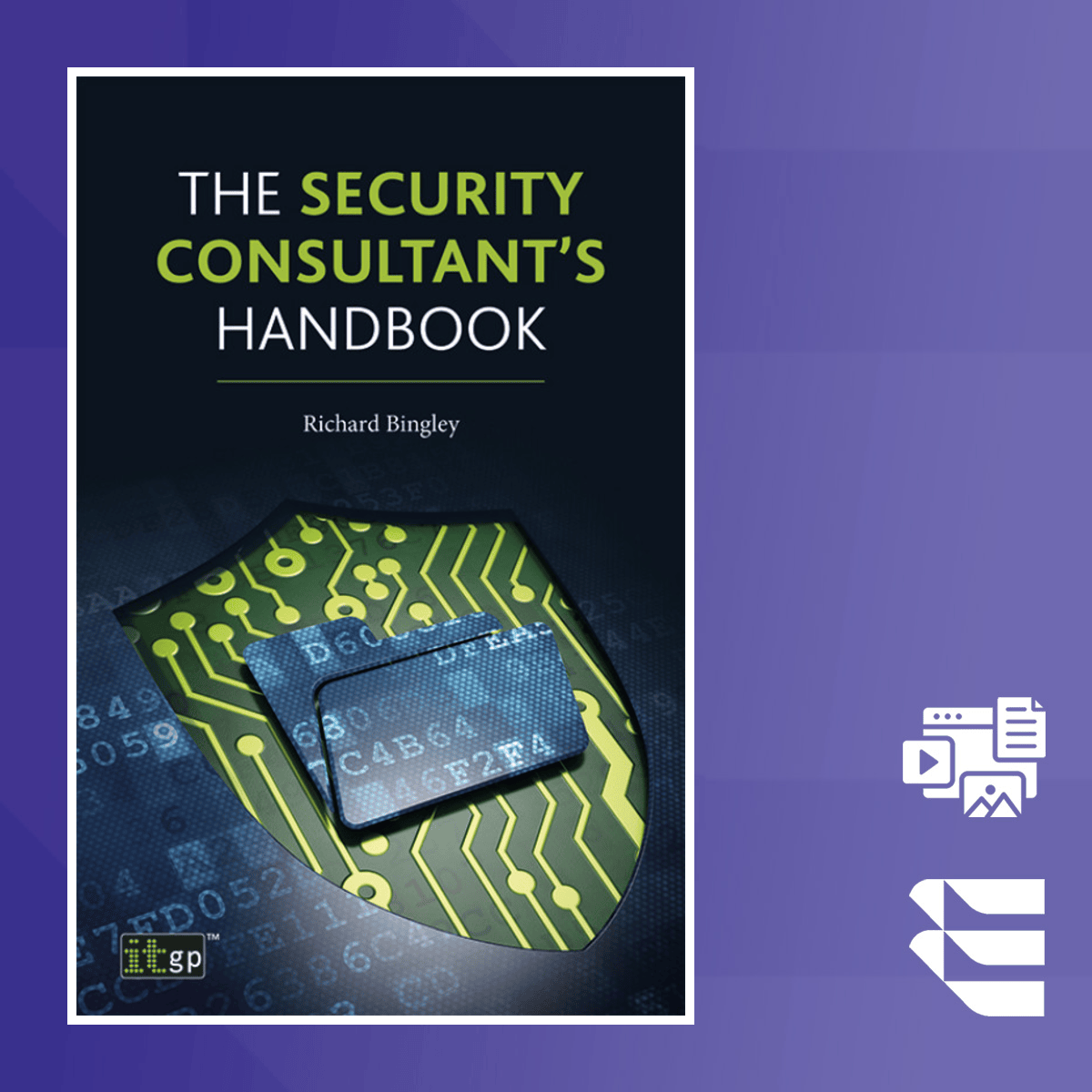
The Security Consultant's Handbook
In today's rapidly evolving security landscape, building and managing a security consulting business is crucial for professionals who want to stand out. This course will teach you the essential strategies needed to succeed in the dynamic field of security consulting. Whether you're just starting or looking to expand your expertise, this course provides a comprehensive foundation for growth and resilience in the security industry. Throughout the course, you will learn how to develop the entrepreneurial skills necessary for launching and scaling a security consulting business. You’ll gain insights into key security disciplines such as private investigations, risk management, and information security. Additionally, you’ll explore the legal frameworks and regulations that govern the security industry, helping you build a robust, ethical, and successful business. What sets this course apart is its combination of theory and real-world application. With practical case studies, expert insights, and actionable strategies, you’ll not only learn the fundamental principles of security consulting but also how to apply them in your professional practice. The course provides a hands-on approach to enhancing your consulting practice and strengthening your resilience in various security sectors. This course is designed for aspiring and experienced security consultants, managers, and entrepreneurs who want to improve their skills and build a consulting business. While no prior security experience is required, a basic understanding of business principles will be beneficial. Copyright © Richard Bingley 2015 The author has asserted the rights of the author under the Copyright, Designs, and Patents Act, 1988, to be identified as the author of this work. First published in the United Kingdom in 2015 by IT Governance Publishing Every possible effort has been made to ensure that the information contained in this course is accurate at the time of going to press, and the publisher and the author cannot accept responsibility for any errors or omissions, however caused. Any opinions expressed in this book are those of the author, not the publisher. Websites identified are for reference only, not endorsement, and any website visits are at the reader’s own risk. No responsibility for loss or damage occasioned to any person acting, or refraining from action, as a result of the material in this publication can be accepted by the publisher or the author. Apart from any fair dealing for the purposes of research or private study, or criticism or review, as permitted under the Copyright, Designs and Patents Act 1988, this publication may only be reproduced, stored or transmitted, in any form, or by any means, with the prior permission in writing of the publisher or, in the case of reprographic reproduction, in accordance with the terms of licences issued by the Copyright Licensing Agency. Enquiries concerning reproduction outside those terms should be sent to the publisher at the following address: IT Governance Publishing Ltd Unit 3, Clive Court Bartholomew’s Walk Cambridgeshire Business Park Ely, Cambridgeshire CB7 4EA United Kingdom www.itgovernancepublishing.co.uk
 LearnKartS
Cloud Security Foundations
The future of technology runs on the cloud—and securing it starts here. Cloud Security Foundations offers a clear, practical introduction to the systems, identities, and controls that keep cloud environments resilient. Start by getting to know the fundamentals of cloud platforms, including basic principles, deployment and delivery models, roles, and architectural elements. Then it's time to grasp core technical concepts—virtualization, containers vs. VMs, components of cloud infrastructure, and managing a cloud platform—to learn how cloud systems are structured and run. From there, dive into the world of Identity and Access Management. Understand IAM basics, identity lifecycle management, authentication vs. authorization, IAM standards, policies, MFA, and how they are implemented in the real world. You'll also learn how identity threats develop, how to prevent them, and how Zero Trust and IAM metrics improve cloud security. Perfect for beginners, IT professionals, and those looking to become cloud or security enthusiasts, this course will give you the basics of understanding how modern cloud works and how to secure it.
 Emory University
Ebola Virus Disease: An Evolving Epidemic
Learn about the evolving Ebola epidemic and its various aspects including disease prevention, management and treatment, response to the epidemic, ethical considerations, and the post-Ebola global health landscape.
 Whizlabs
Getting Started with Microsoft Entra
Getting Started with Microsoft Entra is a foundational course designed for learners and IT professionals aiming to build expertise in identity and access management using Microsoft Entra. This course focuses on the core components of the Microsoft Entra suite, including Microsoft Entra ID, role-based access control (RBAC), authentication methods, Conditional Access policies, and identity governance. Through a structured and interactive learning path, you’ll gain deep insights into managing user identities, configuring secure access, and enabling protection for both internal and external users across cloud environments. Whether you’re new to Entra or preparing for advanced identity certifications, this course will equip you with the essential skills and practical knowledge to confidently manage identity solutions within your organization. This course includes approximately 6:30–7:00 hours of video lectures, combining both theory and hands-on demonstrations. It is divided into three comprehensive modules, each broken down into focused lessons. To assess learning progress, every module features interactive quizzes and in-video practice questions that reinforce key concepts. Module 1: Microsoft Entra Fundamentals Module 2: Microsoft Entra: Access Management & Authentication Module 3: Microsoft Entra: Identity Lifecycle, Protection & Governance By the end of this course, you will be able to learn Understand what Microsoft Entra ID is and how it fits in the Entra product family. Learn basic tenant and license management tasks. Learn how to assign and manage Entra roles with RBAC. Set up and manage MFA, passwordless, and other auth methods. Configure password policies, lockouts, and writeback.
 Packt
Packt
Building a Personal Brand for Career Success
This course features Coursera Coach! A smarter way to learn with interactive, real-time conversations that help you test your knowledge, challenge assumptions, and deepen your understanding as you progress through the course. In this transformative course, you'll learn how to craft a personal brand that propels your career forward. Building a personal brand isn't just about visibility—it's about creating an authentic, consistent reputation that resonates with your audience and communicates your unique value. You’ll begin by laying the foundation of your personal brand. You'll learn why consistency is crucial, how to identify your core audience, and how to differentiate yourself in a crowded marketplace. The course then helps you uncover your unique edge, guiding you to articulate what makes you stand out, and how to create a powerful brand story. This course is ideal for professionals, job seekers, entrepreneurs, or anyone looking to enhance their career. No prerequisites are needed, though basic career development knowledge is helpful. By the end of the course, you’ll have the tools to build a respected, trustworthy reputation and elevate your career to the next level.
 Alex Genadinik
2026 Mobile App Development With Replit AI - Vibe Coding
The way we build software has fundamentally changed. You no longer need years of traditional programming experience to create a mobile app. With modern AI tools like Replit, you can build real, functional mobile apps by collaborating intelligently with AI: a workflow known as vibe coding. But there’s a right way and a wrong way to do it. Most people open an AI tool, type a vague prompt, copy some code, hit errors, and get stuck. This course teaches you how to do it properly. You will learn how to think like a product builder, structure your ideas clearly, guide AI effectively, debug with confidence, and turn rough prototypes into real mobile applications ready for users. What You’ll Learn By the end of this course, you will be able to: • Use Replit as a full development environment• Build front-end interfaces and basic back-end logic• Debug common errors without feeling overwhelmed• Improve mobile app usability and user experience• Prepare your app for publishing to app stores• Think like a modern AI-assisted developer This is not a “copy-paste some code and hope it works” class. This is a structured system for building apps intelligently in the AI era. What Makes This Course Different Most coding courses teach syntax. This course teaches decision-making. You’ll learn: • How to iterate quickly without breaking everything• How to move from prototype to polished product You’ll also learn how to use AI as a collaborative partner instead of treating it like a magic black box. Who This Course Is For This course is ideal for: • Entrepreneurs who want to build their own apps instead of outsourcing• Course creators and consultants building digital tools• Side-hustlers testing app ideas• Professionals curious about AI-assisted development• Beginners who feel intimidated by traditional coding You do not need prior coding experience. You do need curiosity and a willingness to experiment. Why This Skill Matters The future belongs to people who can build. AI is not replacing developers, it is multiplying the capabilities of those who understand how to guide it. Vibe coding is not about avoiding effort. It is about directing intelligence, human and artificial, toward creating real products. When you finish this course, you won’t just understand how mobile apps work. You will have built one. And more importantly, you will know how to build the next one. Invest in your future! Enroll today!
 Coursera
Model Data in Weaviate
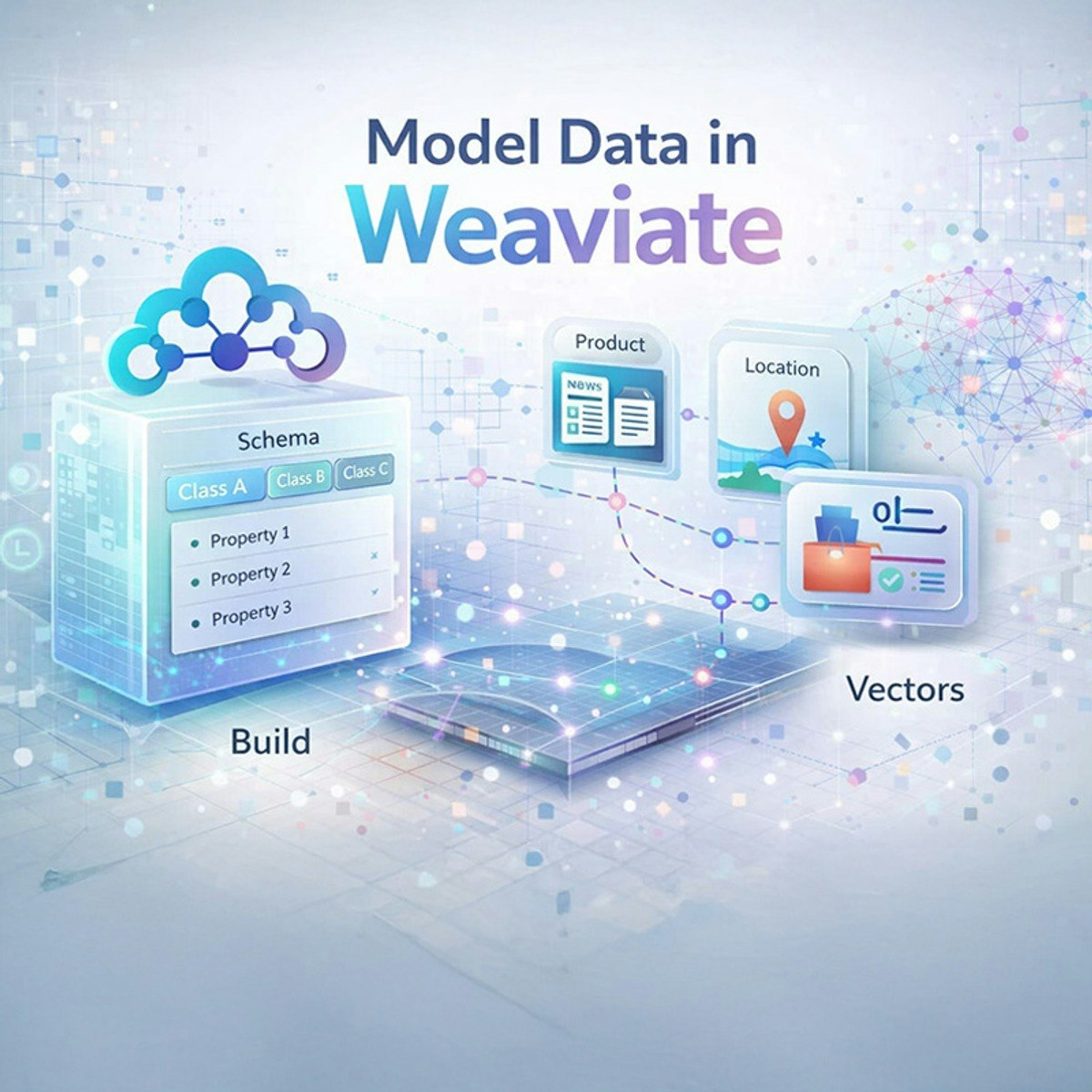
Model Data in Weaviate is an intermediate, project-based course for developers and data professionals who want to unlock the full potential of vector search. In modern AI applications, search speed and relevance are everything, and they both begin with a powerful data model. This course teaches you the principles of designing a sophisticated, high-performance schema, moving beyond flat data structures to build a connected graph of information. You will learn to model complex relationships using multi-class schemas and relational links. Through a hands-on project using Weaviate as our implementation tool, you will design a schema for a real-world dataset, import interconnected data objects, and, most importantly, learn how to benchmark your design choices. The course culminates in an evaluation where you will use query latency data to prove the performance gains of your schema. You’ll leave with not just a working project, but also a repeatable methodology for optimizing data architecture in any advanced search application.
 Coursera
Use Canva to Design Digital Course Collateral
By the end of this project, you will create digital course collateral for use in your digital courses. You will be able to incorporate a color scheme, images, and other design elements for aesthetically pleasing and value-added course collateral. This course will include intermediate to advanced level skills using the free version of Canva. You will create a course promo graphic, a fillable PDF, a worksheet, and a course certificate for your digital course collateral in this project. Note: This course works best for learners who are based in the North America region. We’re currently working on providing the same experience in other regions.
 Coursera
Image Classification on Autopilot with AWS AutoGluon
Hello everyone and welcome to this new hands-on project on image classification with Amazon Web Services (AWS) AutoGluon. In this project, we will train several deep neural networks models to classify images using a powerful library known as AutoGluon. AutoGluon is the library behind AWS SageMaker autopilot and it allows for quick prototyping of several powerful models using a few lines of code.
 University of California San Diego
Computational Thinking for K-12 Educators: Variables and Nested Loops
How can students learn about abstraction by creating a movie scene? Or make an interactive map using lists? You'll learn (and do it yourself) in this course! This class teaches the concepts of abstraction (methods and parameters) and lists. For each concept, we'll start by helping you connect real-world experiences you are already familiar with to the programming concept you are about to learn. Next, through a cognitively scaffolded process we'll engage you in developing your fluency with problem solving with abstraction and lists in a way that keeps frustration at a minimum. Along the way you will learn about the common challenges or "bugs" students have with these concepts as well as ways to help them find and fix those concepts. You'll also be guided in running classroom discussions to help students develop deeper understanding of these concepts. Finally, you'll learn about the importance and logistics of assigning creative, student-designed programming projects. Additionally, you will create a personal plan for increasing your skills in supporting a culturally responsive learning environment in your classroom.
 FAIR Institute
Foundations of Cyber Risk Management and FAIR™
Empower your executive decision-making with a quantitative approach to cyber risk management. This specialization introduces the Factor Analysis of Information Risk (FAIR) model, providing executives with a powerful framework to effectively understand, measure, and communicate cyber risks. What you'll learn Understand the fundamentals of cyber risk management from an executive perspective. Grasp the core principles of the FAIR model and its application in cyber risk quantification. Develop skills to make informed, data-driven decisions about cybersecurity investments. Learn to communicate complex cyber risks to board members and stakeholders effectively. Skills you'll gain Executive-level Cyber Risk Management FAIR Model Fundamentals Quantitative Risk Analysis Strategic Cybersecurity Decision-making Risk Communication for Executives Courses in this Specialization 1. Cyber Risk Management Essentials for Executives Gain a comprehensive understanding of cyber risk management tailored for executive leadership. Learn to identify and prioritize cyber threats relevant to your organization's strategic objectives. 2. Introduction to FAIR: Quantifying Cyber Risk for Decision Makers Discover how the FAIR model transforms cyber risk management. Learn the basics of risk quantification and how FAIR can provide actionable insights for executive decision-making. 3. Applying FAIR: From Risk Analysis to Strategic Decisions Explore practical applications of FAIR in executive contexts. Learn to interpret FAIR analyses, evaluate cybersecurity investments, and align risk management with business goals. 4. Cyber Risk Governance and Communication for Executives Master the art of translating technical cyber risk concepts into business language. Develop strategies for effective board reporting, regulatory compliance, and fostering a risk-aware culture. Applied Learning Project Throughout this specialization, you'll engage with executive-focused discussion prompts and first-hand executive case studies. You'll practice using FAIR principles to analyze cyber risks, make strategic decisions about risk mitigation, and develop board-level communications about your organization's cyber risk posture. This specialization is designed for CEOs, Board Directors, CFOs, General Counsels, and Chief Risk Officers seeking to enhance their cyber risk management capabilities using the FAIR model. No technical background is required, but a basic understanding of risk management principles is beneficial. By completing this specialization, you'll be equipped to confidently lead your organization's cyber risk management efforts, leveraging the power of the FAIR model to drive informed, strategic decision-making.
 Imperial College London
Introduction to Statistics & Data Analysis in Public Health
Welcome to Introduction to Statistics & Data Analysis in Public Health! This course will teach you the core building blocks of statistical analysis - types of variables, common distributions, hypothesis testing - but, more than that, it will enable you to take a data set you've never seen before, describe its keys features, get to know its strengths and quirks, run some vital basic analyses and then formulate and test hypotheses based on means and proportions. You'll then have a solid grounding to move on to more sophisticated analysis and take the other courses in the series. You'll learn the popular, flexible and completely free software R, used by statistics and machine learning practitioners everywhere. It's hands-on, so you'll first learn about how to phrase a testable hypothesis via examples of medical research as reported by the media. Then you'll work through a data set on fruit and vegetable eating habits: data that are realistically messy, because that's what public health data sets are like in reality. There will be mini-quizzes with feedback along the way to check your understanding. The course will sharpen your ability to think critically and not take things for granted: in this age of uncontrolled algorithms and fake news, these skills are more important than ever. Prerequisites Some formulae are given to aid understanding, but this is not one of those courses where you need a mathematics degree to follow it. You will need only basic numeracy (for example, we will not use calculus) and familiarity with graphical and tabular ways of presenting results. No knowledge of R or programming is assumed.
 Pearson
AWS Developer: Unit 3
This course covers various AWS services and tools, teaching you how to build, deploy, and manage applications effectively. You'll begin with data management and storage solutions like S3, RDS, and DynamoDB. Then, you'll explore AWS Developer Tools to improve your development process and learn about networking and computing services such as API Gateway and EC2 to boost application performance and scalability. You'll also learn to integrate applications with services like AppSync and EventBridge and use serverless computing with AWS Lambda and Elastic Beanstalk. By the end of the course, you'll have the skills to design, develop, and deploy applications on AWS,
 Corporate Finance Institute
Intermediate DAX & Time Intelligence
DAX is essential for working with data and data models in Excel and Power BI. Many analysts start building complex DAX formulas, without a solid grounding in DAX basics, context manipulation, and time intelligence. In this course, we’ll quickly review the basics of DAX formulas for creating Measures and Calculated Columns. We’ll explore the difference between DAX functions that return a scalar value, and those that return a table. With this deep understanding of scalar values and tables, we'll show you the ins and outs of data modeling and context manipulation. Additionally, we'll demonstrate how DAX Studio can integrate with Excel and Power BI, speeding up your DAX development process. If you want to get better at using Excel and Power BI, and understand the power of DAX Studio, this course is for you. We keep it simple, clear, and focused, so you can learn fast and start applying your new skills right away. By the end of the course, you should be able to: Recall the core concepts of DAX: measures, calculated columns, row & filter Context Apply functions that return a single, scalar value of various data types Manipulate source data with Table Functions Apply DAX concepts and functions on a Data Model Analyze data over time with Date & Time Intelligence functionality This DAX course is perfect for anyone who would like to build up their understanding of Business Intelligence in Excel and Power BI. This course is designed to equip anyone who desires to supercharge their career in data analysis, business intelligence, or other areas of finance with the fundamental knowledge of DAX.
 LearnKartS
WordPress Website Development Course
In this digital age, your website is more than just a page — it’s your brand’s identity, credibility, and growth engine. This WordPress Course gives you the complete roadmap to build professional, high-converting websites from scratch using the world’s most powerful content management system. You’ll start by learning domain setup and web hosting, as well as navigating around a control panel, followed by installing WordPress, setting up themes, and getting comfortable with responsive design. Find out how to build engaging sections — from hero banners and review carousels to product showcases and mission-based content — without navigating a labyrinth of options and with smart drag and drop tools driving AI-powered customizations. Learn to integrate essential plugins for SEO, security, speed optimization, and analytics tracking while ensuring your site’s performance, protection, and professionalism. Whether you’re an aspiring web designer, entrepreneur, or freelancer, this course equips you with both the creative vision and technical expertise to build websites that engage, inspire, and convert. Enroll today and transform your WordPress skills into real-world success — build websites that don’t just exist, but dominate online.
 University of Colorado Boulder
A Turma Toda com Simulações PhET para Educação STEM
O projeto Simulações Interativas PhET (https://phet.colorado.edu/pt_BR), da Universidade do Colorado em Boulder, oferece simulações de ciências e matemática divertidas, gratuitas e interativas baseadas em pesquisa para uso no ensino fundamental, médio e superior. Cada simulação foi extensivamente testada e avaliada para garantir que seja adequada para fins educacionais. Além disso, todas as simulações são de código aberto e gratuitas, tanto para alunos como para professores. Neste curso, você aprenderá estratégias sobre como usar o PhET em circunstâncias em que apresenta uma simulação para toda a turma por meio de projetor, lousa interativa ou enquanto compartilha sua tela online. Este curso é o segundo da programa de cursos integrados “Aprendizagem Ativa em STEM com Simulações Interativas PhET”, que inclui 4 cursos no total. Para concluir este curso, você precisa completar duas das três tarefas possíveis com Revisão por Pares: 1) Perguntas para Toda a Turma, 2) Aulas Interativas com Demonstrações, 3) Questões Conceituais. Este curso também está disponível em espanhol como “Clase Entera con PhET para la Educación STEM” e em inglês como "Whole Class with PhET for STEM Education".