

The Global Scholarly Directory.
Discover world-class academic programs curated for the modern intellectual. Search through 19877+ degrees and professional certificates.
 Coursera
Craft Sales Strategy
Building an effective sales strategy starts with understanding how buyers think, decide, and evaluate risk in different industries. In this practical, hands-on lesson, learners explore how entering a new industry vertical requires more than reusing existing messaging—it demands clear strategic choices about who to target, what value to emphasize, and how to reach buyers effectively. Through guided examples and structured activities, learners practice translating the same product into the language, priorities, and buying process of a new vertical. They work with real-world scenarios to adjust segmentation, refine value propositions, and select channels that match buyer behavior and trust requirements. By the end of the lesson, learners create a one-page sales strategy that captures these decisions in a focused, easy-to-use format. Designed for sales professionals and go-to-market teams, this lesson builds confidence in making strategic trade-offs and producing a clear artifact that can guide real-world planning, alignment, and execution.
 Politecnico di Milano
Water: an essential resource
One of the most obvious claims in our everyday life is the importance of water, often called the blue gold. Anyway, we are often incapable of shifting this importance in tangible actions aimed at protecting this resource and optimizing its use. Past and present anthropic pressure has heavily impaired fresh water, usually supplied for drinking water production. Water utilities and water-treatment practitioners were unprepared to effectively face the challenge of a growing high-quality water demand, especially in climate change scenarios. We need to think out of the box, creating multi-disciplinary panels of experts able to exploit the advances in chemistry, environmental engineering, and ICT to effectively join human health protection and economic and social development. In this sense, stakeholders’ involvement is essential to success. This MOOC wants to communicate the challenge of protecting water and then human health from chemical and microbiological hazards, as well as the multidisciplinarity required by this challenge by providing some key elements about water quality, protection and remediation, sustainable drinking water production, online monitoring, and finally advanced computing for process control. Moreover, a broader perspective to investigate the experience of water supply will be introduced. For instance, participants will be invited to observe and understand people’s practices around drinking water, exploring approaches and tools derived from service and product design to support behavioral change. It fulfills SDG6, covering almost all its set targets, but also some relevant targets in SDG11, SDG12, and SGD15, considering the strict connection among safe water provision, robust cities/societies development, and sustainable consumption.
 Packt
Packt
Figma for UI/UX: Master Web Design in Figma
Updated in May 2025. This course now features Coursera Coach! A smarter way to learn with interactive, real-time conversations that help you test your knowledge, challenge assumptions, and deepen your understanding as you progress through the course. Unlock the full potential of Figma and become a proficient UI/UX designer with this comprehensive course. You'll start by exploring Figma’s essential tools, comparing it with other design software, and creating your first website design. As you progress, you’ll dive into advanced design techniques, including color theory, typography, effects, and component-based workflows. Through hands-on projects, you’ll design complete web layouts, mastering elements like headers, navigation menus, cards, and footers. You’ll also explore responsive design principles, ensuring your designs look great on any device. Additionally, you’ll gain insights into the freelancing world, learning how to build a portfolio and attract clients. By the end of the course, you’ll be equipped to bring your designs to life by preparing them for developers. You'll understand how to optimize your workflow with tools like Zeplin and how to deliver production-ready files. Whether you're an aspiring UI/UX designer or a freelancer looking to expand your skills, this course will guide you from beginner to expert.
 Osmosis
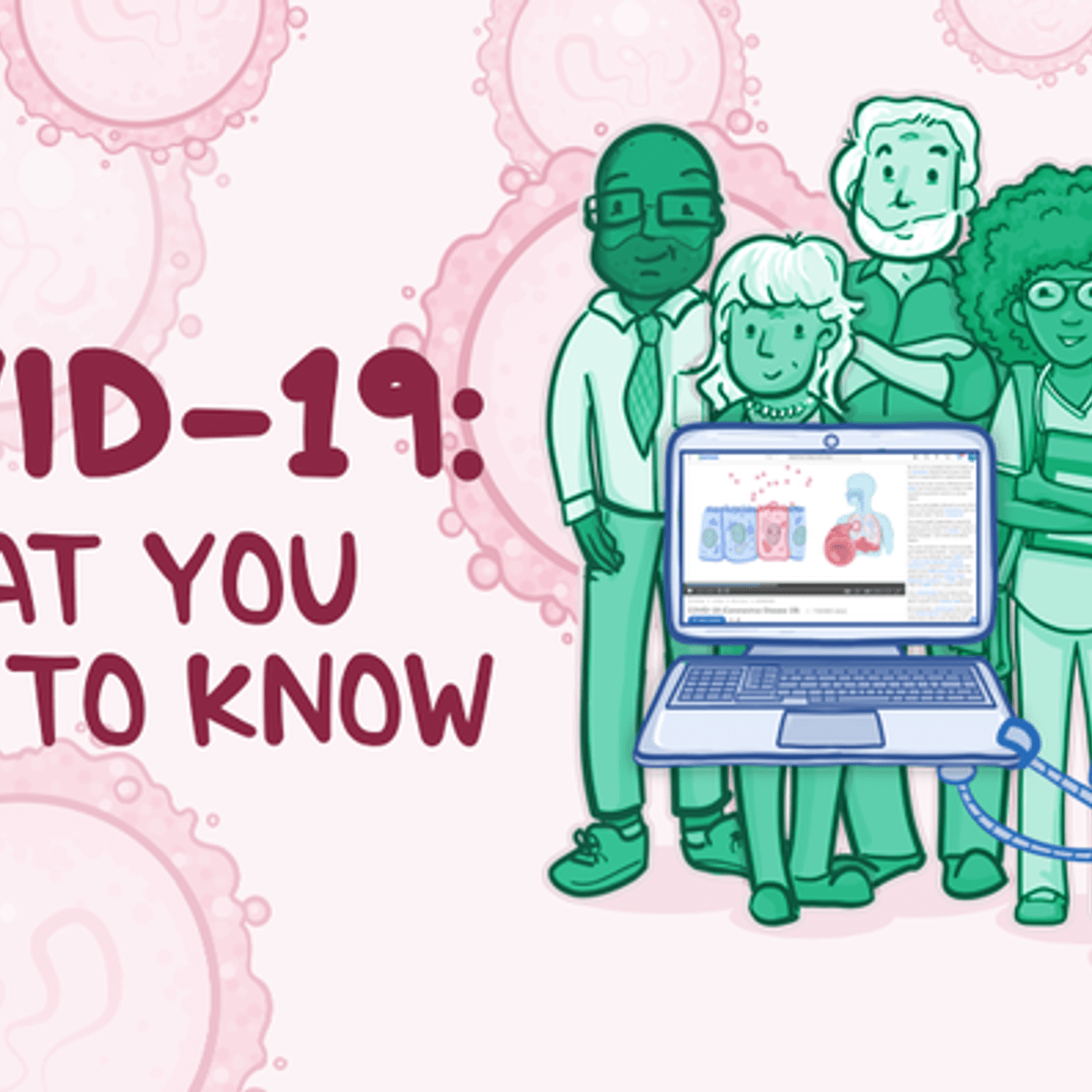
COVID-19: What You Need to Know
Register for this course here: https://www.coursera.org/learn/covid-19-what-you-need-to-know? COVID-19 is a global pandemic that has already resulted in hundreds of thousands of infections and thousands of deaths, with many more anticipated. This course is a go-to resource that will be regularly updated with all of the current information put forth by the CDC, WHO, and other leading agencies and covers the basics, personal protective equipment, diagnostics, and other material. As a healthcare professional, you can help to #RaiseTheLine by becoming prepared to treat COVID-19.
 Packt
Packt
Next.js 14 from Scratch
Updated in May 2025. This course now features Coursera Coach! A smarter way to learn with interactive, real-time conversations that help you test your knowledge, challenge assumptions, and deepen your understanding as you progress through the course. This comprehensive course is designed to equip you with the skills needed to build modern, high-performance web applications using Next.js 14. You'll learn how to create dynamic websites with ease, leveraging server-side rendering, API routes, and authentication systems. By the end of the course, you'll be able to develop and deploy a full-stack property rental platform. The course begins with a deep dive into the fundamentals of Next.js, including understanding its core features, setting up your development environment, and building a project from scratch. You'll start by creating a property rental website, PropertyPulse, and will walk through essential Next.js features such as file-based routing, components, and conditional rendering. As the course progresses, you'll learn how to integrate a MongoDB database, set up API routes for CRUD operations, and implement advanced features like user authentication with Google OAuth. You'll build a robust backend using Mongoose to handle database interactions and explore the creation of dynamic property pages, bookmarking, and messaging functionalities. This course is ideal for developers with some basic understanding of JavaScript and React who want to take their skills to the next level with Next.js. You'll learn practical techniques for building, managing, and deploying full-stack applications, including integration with external tools like Cloudinary and Vercel. If you're interested in developing modern web applications, this course offers an in-depth and hands-on experience.
 Packt
Packt
Official Next Js Tutorial Code Along - React Web Development
This course features Coursera Coach! A smarter way to learn with interactive, real-time conversations that help you test your knowledge, challenge assumptions, and deepen your understanding as you progress through the course. Are you ready to master Next.js and React web development? This course is designed to guide you through the process of becoming proficient in building dynamic, high-performance web applications. From the basics of web development to advanced concepts in Next.js, you will be exposed to every step of the journey. Along the way, you'll gain practical experience through hands-on projects and code-along examples. The course starts with an introduction to foundational web development concepts such as HTML, CSS, and JavaScript. Once you’re comfortable with the basics, you’ll dive into React, learning how to write components, manage state, and utilize hooks to enhance your app’s functionality. As you progress, you'll migrate from React to Next.js, understanding server-side rendering (SSR), static site generation (SSG), and client-side rendering (CSR). Each lesson builds upon the last, ensuring a smooth learning curve while also reinforcing key concepts. The course is designed to provide you with the necessary tools to confidently build, deploy, and optimize full-stack applications using Next.js. You’ll gain insights into performance optimization techniques like code splitting, prefetching, and dynamic routing, as well as working with metadata and assets. By the end of the course, you'll be equipped to deploy a fully functional Next.js app with real-world features, preparing you for professional development tasks. Who will benefit from the course? This course is perfect for beginners with a basic understanding of web development, as well as React developers who want to elevate their skills with Next.js. There are no advanced prerequisites, but familiarity with HTML, CSS, and JavaScript is recommended. This course is ideal for aspiring front-end developers, full-stack developers, and anyone looking to learn modern web development tools and techniques. By the end of the course, you will be able to build and deploy production-ready Next.js applications, integrate dynamic content with React, optimize your app's performance, and leverage modern web development techniques in a professional setting.
 University of Pennsylvania
Calculus: Single Variable Part 1 - Functions
Calculus is one of the grandest achievements of human thought, explaining everything from planetary orbits to the optimal size of a city to the periodicity of a heartbeat. This brisk course covers the core ideas of single-variable Calculus with emphases on conceptual understanding and applications. The course is ideal for students beginning in the engineering, physical, and social sciences. Distinguishing features of the course include: 1) the introduction and use of Taylor series and approximations from the beginning; 2) a novel synthesis of discrete and continuous forms of Calculus; 3) an emphasis on the conceptual over the computational; and 4) a clear, dynamic, unified approach. In this first part--part one of five--you will extend your understanding of Taylor series, review limits, learn the *why* behind l'Hopital's rule, and, most importantly, learn a new language for describing growth and decay of functions: the BIG O.
 EDUCBA
Mastering Data Visualization with Matplotlib
This comprehensive course equips learners with the skills to create, customize, and evaluate high-quality visualizations using Python’s Matplotlib library. Beginning with foundational plotting concepts, learners will identify key Matplotlib components, construct simple and multi-axis plots, and apply labeling, scaling, and annotation techniques to effectively convey data insights. In the advanced modules, learners will design and differentiate specialized charts, including custom dashed lines, pseudocolor meshes, streamplots, ellipses, polar charts, and pie charts. They will manipulate figure styles, integrate image data, and modify axes properties to produce publication-ready visuals. By the end of the course, learners will be able to synthesize plotting techniques to create professional, context-specific visualizations that enhance data-driven storytelling.
 Universidad de Palermo
Storytelling - Relanza tu Marca
En este curso podrás explicar el concepto de storytelling, cómo se puede utilizar en cualquier organización o marca personal y proporcionar a los estudiantes las herramientas para crear historias de marca a través de canales de comunicación tradicionales y nuevos medios. Evalúa críticamente la utilización de estrategias narrativas en diferentes sectores y géneros. Proporciona a los estudiantes la oportunidad de aplicar un método de stroytelling a un proyecto práctico. Objetivos generales: • Comprender la necesidad de las historias en el cerebro humano. • Aprender los conceptos clave que hacen que una historia sea memorable. • Diferenciar entre storytelling táctico y estratégico. • Comprender el concepto de economía de la atención. • Conocer qué se necesita para crear una historia con números. • Aprender qué tipo de ayuda visual es importante para comunicar nuestra historia. • Reconocer qué se necesita en cualquier organización para crear una narrativa. • Familiarizarse con los diferentes tipos de historias y narrativas que se aplican a las marcas.
 Google Cloud
Essential Cloud Infrastructure: Core Services dalam bahasa Indonesia
Kursus akselerasi sesuai permintaan ini memperkenalkan peserta pada infrastruktur dan layanan platform yang komprehensif dan fleksibel yang disediakan oleh Google Cloud, dengan fokus pada Compute Engine. Melalui kombinasi video materi edukasi, demo, dan lab praktis, peserta akan mengeksplorasi dan men-deploy berbagai elemen solusi, termasuk komponen infrastruktur seperti jaringan, sistem, dan layanan aplikasi. Kursus ini juga membahas cara men-deploy solusi praktis termasuk kunci enkripsi yang disediakan pelanggan, pengelolaan keamanan dan akses, kuota dan penagihan, serta pemantauan resource.
 Google
Diseñar una experiencia del usuario de una iniciativa de interés público y prepararse para el trabajo
Diseñar una experiencia del usuario de una iniciativa de interés público y prepararse para el trabajo es el séptimo y último curso de un programa que te brindará las habilidades que necesitas para convertirte en un diseñador de UX de nivel básico. En este curso, diseñarás una aplicación móvil dedicada y un sitio web adaptable centrados en una iniciativa de interés público. Podrás mostrar lo que aprendiste durante el programa de certificación para realizar el proceso de diseño de principio a fin: empatizar con los usuarios, definir sus dificultades, proponer soluciones de diseño, crear prototipos y esquemas de páginas, y probar diseños para recopilar retroalimentación. Al final de este curso, tendrás un proyecto de diseño multiplataforma nuevo que podrás incluir en tu portfolio profesional de UX. Con este curso, te prepararás para obtener tu primer trabajo como diseñador de UX. Además, te prepararás a fin de presentarte en entrevistas para puestos de diseñador de UX de nivel básico, accederás a consejos de Googlers en función de sus propias experiencias en entrevistas y conocerás sus puntos de vista únicos en calidad de gerentes contratantes. Por último, podrás pulir el portfolio profesional de UX que desarrollaste durante el programa y dejarlo preparado para presentarlo en solicitudes de empleo. En el curso, que dictarán personas que trabajan actualmente como diseñadores e investigadores de UX de Google, realizarás actividades prácticas que simulan escenarios reales de diseño de UX. Los alumnos que completen los siete cursos de este programa de certificados adquirirán las habilidades necesarias para solicitar trabajos de nivel básico como diseñadores de UX. Al final de este curso, podrás hacer los siguiente: - Aplicar cada paso del proceso de diseño de UX (empatizar, definir, idear, crear prototipos y probar diseños) para crear diseños centrados en una iniciativa de interés público. - Identificar las diferencias entre las aplicaciones móviles dedicadas y las aplicaciones web adaptables. - Comprender los conceptos de mejora progresiva y degradación agraciada para el diseño en diversos dispositivos. - Desarrollar esquemas de páginas, maquetas y prototipos de alta y baja fidelidad en Figma y Adobe XD. - Agregar un proyecto de diseño nuevo a tu portfolio profesional de UX. - Preparar tu portfolio de trabajos de diseño para presentarlo en solicitudes de empleo. - Presentarte en una entrevista para un trabajo de diseño de UX de nivel básico. - Determinar si trabajar de manera independiente en proyectos de diseño es adecuado para ti. Este curso está destinado a diseñadores de UX de nivel básico que hayan realizado los seis cursos previos del Certificado de diseño de UX de Google.
 Vanderbilt University
ChatGPT & Zapier: Agentic AI for Everyone
Agentic AI is a type of AI that combines Generative AI with tools and actions, allowing us to build "agents" to assist us with everyday tools like Gmail, Office365, Google Sheets, Salesforce, etc. These agents can perform tasks on our behalf, such as updating a spreadsheet or sending an email. There are classes that teach these Agentic AI concepts, but they are geared towards programmers. If you aren't a programmer, they won't teach you how to build agents to help with your daily tasks. This class will teach you how to use ChatGPT and Zapier to build your own agents to help prioritize tasks, keep track of expenses, plan meals and shopping lists, etc. These won't be tools that require you to cut and paste the results back into an email; these will be tools that can directly create a draft email and put it into your email account or allow you to snap a picture of a receipt on the go and have it show up in a spreadsheet. These agents can automate and take action for you. By the end of this class, not only will you understand state-of-the-art aspects of Agentic AI, but you will have built your own Travel Expense Agent. Your agent will be able to take a picture of a receipt or a description of an expense and catalog it into a Google Sheet. It will check your expense with another agent for completeness, ensure the expense isn't already in the spreadsheet, and even draft an email to your administrator with a simple reimbursement report. This course will transform the way you work.
 MathWorks
Image Segmentation, Filtering, and Region Analysis
In this course, you will build on the skills learned in Introduction to Image Processing to work through common complications such as noise. You’ll use spatial filters to deal with different types of artifacts. You’ll learn new approaches to segmentation such as edge detection and clustering. You’ll also analyze regions of interest and calculate properties such as size, orientation, and location. By the end of this course, you’ll be able to separate and analyze regions in your own images. You’ll apply your skills to segment an MRI image of a brain to separate different tissues. You will use MATLAB throughout this course. MATLAB is the go-to choice for millions of people working in engineering and science, and provides the capabilities you need to accomplish your image processing tasks. You will be provided with free access to MATLAB for the duration of the course to complete your work. To be successful in this course you should have a background in basic math and some exposure to MATLAB. If you want to familiarize yourself with MATLAB check out the free, two-hour MATLAB Onramp. Experience with image processing is not required.
 Universidad Nacional Autónoma de México
Estructura de capital y política de dividendos
En el curso estructura de capital y política de dividendos se analizará la forma en la que una empresa financia sus activos a través de métodos internos o externos, estructurando así su pasivo y capital. Dichas fuentes de financiamiento se ven reflejadas en el costo de capital promedio ponderado (Weighted Average Cost of Capital- WACC). De la mano de la determinación de dicho costo de financiamiento y de la estructura del capital, el administrador financiero deberá determinar la política de dividendos, tomando como referencia el teorema de Modilgliani – Miller. En este curso el administrador financiero adicionalmente será capaz de evaluar activos financieros o portafolios, evaluando la relacion que existe entre riesgo y retorno bien a través del modelo Capital Asset Pricing Model CAPM o del Arbitrage Pricing Theory APT.
 The University of Tokyo
From the Big Bang to Dark Energy
We have learned a lot recently about how the Universe evolved in 13.8 billion years since the Big Bang. More than 80% of matter in the Universe is mysterious Dark Matter, which made stars and galaxies to form. The newly discovered Higgs-boson became frozen into the Universe a trillionth of a second after the Big Bang and brought order to the Universe. Yet we still do not know how ordinary matter (atoms) survived against total annihilation by Anti-Matter. The expansion of the Universe started acceleration about 7 billion years ago and the Universe is being ripped apart. The culprit is Dark Energy, a mysterious energy multiplying in vacuum. I will present evidence behind these startling discoveries and discuss what we may learn in the near future. This course is offered in English.
 EDUCBA
Logistic Regression Fundamentals: Analyze & Predict
This beginner-friendly course provides a comprehensive introduction to logistic regression, one of the most widely used techniques in data science and analytics. Learners will explain regression fundamentals, differentiate probability prediction methods, and analyze logistic regression key concepts including logit transformation, odds interpretation, and Maximum Likelihood Estimation (MLE). The course progresses from foundational regression principles to practical applications of logistic regression, covering approaches such as binning, continuous, and dummy variable transformations. Learners will also apply SAS methodologies for variable selection, use PROC LOGISTIC, and evaluate model performance with concordant/discordant pairs, chi-square tests, and global vs local goodness-of-fit measures. By the end of the course, participants will be able to design stable predictive models, interpret results with confidence, and evaluate logistic regression models for real-world decision-making in analytics and business intelligence.