

The Global Scholarly Directory.
Discover world-class academic programs curated for the modern intellectual. Search through 19877+ degrees and professional certificates.
 Georgia Institute of Technology
Better Business Writing in English
Do you need to write more easily and effectively in English? This course will provide the tools to help you do just that. You will develop your personal voice in your writing. You will develop strategies to plan and produce clear, understandable text. You will learn and practice specific writing skills to use in different types of business communications including cover letters, mission and vision statements, proposals , instructions and reports. You will organize, design and write clear text for Power Point Productions. Writing skills include how to choose correct noun and noun modifiers; how to choose correct verb forms and tenses; how to write a variety of clauses and sentences. As you work through the course, you will complete self- and peer-evaluations. Many of the peer assignments will have 2 or more options so that you can choose the best path depending on your current situation. Through a combination of lectures, quizzes, supplementary resources, practice and performance, you’ll gain the skills and confidence to write well in English for your business and professional purposes.
 Universidad de los Andes
Diseño de Videojuegos: Una introducción
¡Hola! ¡Bienvenidos a Diseño de videojuegos: una introducción! El diseño de videojuegos es el arte de aplicar conceptos de diseño para crear la interacción entre jugadores. Es un ejercicio mental que requiere varios conocimientos en diferentes campos y la habilidad de comunicar qué es lo que se quiere lograr. Este curso hace parte del Programa desarrollo y diseño de videojuegos, de la Universidad de lo Andes, Colombia. En este ambiente de aprendizaje los estudiantes aprenderán las bases del diseño de videojuegos, aplicarán éstas al diseño de juegos de acción y de plataformas en 2D y prepararán una especificación funcional en un documento de 10 puntos y no más de 10 páginas. Al final deben presentar un prototipo funcional en Unity del juego. Se recomienda que los participantes hayan visto el curso de "Desarrollo de videojuegos en Unity: una Introducción", pues para el desarrollo de los prototipos deberán tener conocimientos de programación en este motor de desarrollo de ambientes lúdicos y bajo control del usuario. Ten en cuenta que este curso ha sido diseñado como el segundo de cinco cursos que hacen parte del programa especializado en Desarrollo y Diseño de Videojuegos. Puedes tomar todos los cursos por separado o sólo uno de ellos, sin embargo te recomendamos que te inscribas y participes en los cinco, ojalá en el orden que te proponemos, de manera que llegues al último curso denominado "Desarrollo y Diseño de Videojuegos: proyecto final" preparado para aplicar los conocimientos adquiridos en los cursos anteriores. Para inscribirte únicamente a este curso debes ir a la página del mismo: https://www.coursera.org/learn/diseno-videojuegos-intro/home/welcome. Haz click en el botón azul de la izquierda "Enroll now" o "Inscribirse ahora", donde podrás elegir si deseas tomar el curso pagando por la certificación con una suscripción mensual o anual, en cuyo caso debes hacer unas evaluaciones adicionales obligatorias y cumplir con los otros requisitos de certificación; o si deseas auditarlo, es decir acceder al contenido sin pagar por el certificado o suscripción.
 The World Bank Group
Bajemos la temperatura: De la ciencia climática a la acción
Todas las regiones del mundo se enfrentan a vulnerabilidades concretas ante el cambio climático y tienen diversas oportunidades de mitigar los efectos y aumentar su resiliencia en el siglo XXI. La comunidad internacional ha expresado su intención de actuar al respecto mediante el Acuerdo de París en la 21ª Conferencia de las Partes en la Convención Marco de las Naciones Unidas sobre el Cambio Climático. De hecho, décadas de avances en desarrollo se ven amenazadas si no se adoptan medidas contra el cambio climático, lo que significa que nos encontramos en un momento de «ahora o nunca». Este curso presenta las pruebas científicas más recientes sobre el cambio climático, explica los distintos efectos de alcance regional y difunde estrategias de acción contra el cambio climático, así como oportunidades para que pueda tomar medidas en relación con el cambio climático. Acerca del curso Este MOOC orientado a la acción le brindará la oportunidad de conocer los efectos del cambio climático a escala regional y las estrategias sectoriales específicas utilizadas para aumentar la resiliencia y avanzar hacia un futuro con bajas emisiones de carbono. Tendrá la oportunidad de estudiar a fondo estas cuestiones y adaptar su experiencia de aprendizaje a una o varias de las siguientes regiones: • América Latina y el Caribe • África Subsahariana • Oriente Medio y Norte de África • Europa Oriental y Asia Central • Asia Oriental y el Pacífico • Asia Meridional Para ello el MOOC reúne a reconocidos científicos y responsables políticos que ofrecerán un resumen de las últimas pruebas científicas sobre el cambio climático, estrategias de desarrollo con bajas emisiones de carbono y capacidad de adaptación al cambio climático a escala regional entre sectores, así como un análisis del Acuerdo de París y otros de los resultados de la 21ª Conferencia de las Partes. Programa del curso Descripción Bajemos la temperatura: La ciencia climática pasa a la acción se divide en cuatro semanas. En las primeras dos semanas se presentará una visión global de las pruebas científicas del cambio climático, que irá seguida de perspectivas específicas de cada región sobre los efectos de un aumento de la temperatura en el mundo en el siglo XXI. Las últimas dos semanas se centrarán en las estrategias de acción emprendidas en distintas regiones y países para abordar el desafío climático, y sobre cómo puede actuar la población de manera individual. Semana 1: El cambio climático en el siglo XXI • Cambios históricos y previstos observados en el sistema climático en los últimos años del siglo XXI. • El potencial de contribución prevista determinada a nivel nacional (CPDN) presentada en la 21ª Conferencia de las Partes por parte de 187 países para inducir a la acción climática. • Tendencias de los efectos del cambio climático, entre otros la pérdida de la capa de hielo del Ártico, el deshielo de los glaciares, el aumento de las olas de calor y las temperaturas extremas, la sequía y la aridez. • Las posibles respuestas de los sistemas naturales, explicando cómo el calentamiento podría dar lugar al aumento del nivel del mar, a olas de calor y temperaturas extremas, y a la acidificación de los océanos. Semana 2: Efectos de alcance sectorial y regional • Repercusiones en sectores clave del desarrollo —desde el calentamiento por encima de la temperatura de la época preindustrial y tendencias climáticas previstas— en cada una de las regiones del mundo. • Repercusiones sectoriales centradas en la producción agrícola, los recursos hídricos, los servicios de los ecosistemas y la vulnerabilidad de las zonas costeras para las poblaciones afectadas. • Importancia de los riesgos que pueden invertir los logros de desarrollo obtenidos con tanto esfuerzo y atrapar en la pobreza a millones de personas, ilustrando la necesidad de actuar ya con urgencia. Semana 3: La ciencia climática pasa a la acción en materia de cambio climático • Debates sobre regiones específicas en torno a las acciones de mitigación necesarias para reducir las emisiones a la vez que se disminuye la vulnerabilidad ante los efectos del cambio climático por medio de la adaptación y el aumento de la resiliencia al clima. • Perspectivas de expertos regionales sobre sus experiencias con estrategias y acciones propuestas en cada región para contribuir a la transición hacia una senda de desarrollo con bajas emisiones y resiliente al clima. Semana 4: Qué puede hacer • Efecto transformador de los cambios diarios a escala mundial • La razón de actuar ahora, actuar juntos y actuar de un modo diferente • Ejemplos y beneficios esperados de las políticas de mitigación y adaptación, teniendo en cuenta las contribuciones a las reducciones de las emisiones a escala mundial y las oportunidades de desarrollo a escala local Aparte de los principales recursos y asignaciones, podrá optar por aprovechar aún más el curso participando en ejercicios divertidos opcionales, interconexiones y debates, y sumergiéndose a fondo en nuestra rica selección de recursos complementarios. Tendrá la oportunidad de estudiar a fondo estas cuestiones y adaptar su experiencia de aprendizaje a una o varias de las siguientes regiones: • América Latina y el Caribe • África Subsahariana • Oriente Medio y Norte de África • Europa Oriental y Asia Central • Asia Oriental y el Pacífico • Asia Meridional Formación recomendada No es necesario ningún conocimiento previo El contenido de este curso está diseñado para ser accesible para estudiantes de cualquier materia. Conectar Comunique y comparta recursos a través de Twitter utilizando la etiqueta #learnclimate. Registre una cuenta gratuita en http://twitter.com Formato del curso La estructura de este MOOC es semanal, con recursos, actividades y ejercicios diseñados para que participe en ellos durante cada una de las cuatro semanas del curso. Cada semana encontrará un conjunto de material didáctico, entre otros: • Conversaciones de vídeo interactivas de reconocidos científicos y profesionales estudiosos del clima. • Recursos: actividades interactivas principales, opcionales (inmersión a fondo) y divertidas sobre el tema de la semana. • Cuestionarios para comprobar su conocimiento, reforzar el material de la lección y proporcionar respuestas inmediatas. • Asignaciones que perfeccionarán sus capacidades de análisis, reflexión y comunicación. • Foros de debate y redes sociales que permiten la colaboración con personas de todo el mundo, enriqueciendo la interacción entre los participantes. • Una sesión interactiva de Google Hangouts en directo con expertos internacionales que participarán en una sesión de preguntas y respuestas sobre el cambio climático. • Como proyecto final, creará un artefacto digital.
 Edureka
Introduction to Analytics Engineering
This course helps you build a strong foundation in analytics engineering and gives you the practical skills needed to work with modern data systems. You will begin by learning the core components of the modern data stack and the responsibilities of analytics engineers. From there, you will move into analytical SQL, dimensional modeling concepts, and the structure of ELT pipelines. The course concludes with hands-on development in dbt Core, where you will create, test, and document high-quality data models. With a practical, applied approach, the course covers essential topics such as writing effective SQL queries, organizing raw, staging, and mart layers, designing fact and dimension tables, and building automated transformations using dbt. You will learn how to structure data models, implement data quality checks, manage lineage, and support scalable analytics within modern data environments. • By the end of this course, you will be able to: • Understand the role of analytics engineering in modern data workflows • Design dimensional models using facts, dimensions, keys, and grain • Build structured ELT pipelines across raw, staging, and mart layers • Create, run, test, and document dbt Core models • Apply tests and documentation to strengthen data quality and transparency This course is designed for freshers, aspiring analytics engineers, data analysts, and data engineers who want to expand their skills in SQL, data modeling, ELT processes, and dbt development. It is ideal for anyone looking to build dependable, scalable, and well-documented analytics pipelines in today’s data-driven environments.
 Kennesaw State University
Successful Career Development
No matter the professional level, we can all benefit from learning how to succeed in our careers. Whether a well-seasoned professional, a management trainee, or a service level employee, this course will help you enrich your career by honing your professional behavior and networking. Through industry expert support and resources, this course is designed to prepare you for success in any chosen career. You will develop the habits and attitudes you need to perform effectively in the job market. You will identify a mentor to add value to your career. You will analyze your relationships and develop a practical approach for engaging your LinkedIn network. You will differentiate between networking and networking with intention. You will also discover the most effective ways to ask for help from your peer or professional group. Finally, you will evaluate the best methods of adjusting your career path at various stages of life.
 EDUCBA
Mastering Business Combinations: Analyze and Apply IFRS
Learners will identify, analyze, and apply advanced principles of business combinations under IFRS and US GAAP. They will distinguish businesses from asset acquisitions, evaluate control indicators, measure identifiable assets and goodwill, classify intangible assets, interpret tax impacts, assess partial acquisitions, and apply valuation techniques used in practice. This course equips learners with the full end-to-end understanding needed to navigate real-world acquisition scenarios. By working through examples, structured entity cases (VIEs and SPEs), goodwill calculations, contingent consideration, reverse acquisitions, and common control transactions, learners develop the technical and analytical skills essential for advanced financial reporting roles. What makes this course unique is its highly practical, example-driven approach, breaking down complex standards into clear, actionable steps. With video-based walkthroughs, real transaction simulations, and assessment-aligned practice sets, learners gain confidence in applying standards to realistic business situations. Whether preparing for corporate reporting roles, audit engagements, or professional exams, this course provides a comprehensive and intuitive mastery of business combination accounting.
 Edureka
Generative AI Foundation for HR Professionals
This program explores Generative AI in Human Resources, giving HR professionals, recruiters, and business leaders the skills to design, optimize, and deploy AI-powered HR solutions. You’ll start with the foundations of Generative AI, mastering its applications in HR, prompt engineering basics, and advanced prompting techniques for tasks such as job descriptions, structured outputs, and role-based HR scenarios. From crafting effective prompts to refining advanced strategies, you’ll learn how to build smarter, scalable HR workflows. You’ll then advance to AI for Recruitment, applying AI tools to job description creation, candidate screening, and interview preparation, while exploring AI-driven engagement through chatbots and personalized communication. Moving further, you’ll work with AI in Onboarding, designing personalized onboarding content, automating FAQs, creating employee handbooks, and building analytics-driven onboarding workflows to enhance new hire experiences. The program concludes with a capstone, where you develop AI-assisted recruitment and onboarding strategies, supported by structured projects, graded assessments, and reflective activities for practical mastery. By the end of this program, you will be able to: - Define the core concepts of Generative AI and explain its practical applications in HR. - Apply widely used AI tools to streamline workflows and improve efficiency in HR processes. - Design and refine effective prompts for completing diverse HR tasks across functions. - Develop comprehensive recruitment strategies using AI for job ads, screening, and engagement. - Construct personalized onboarding experiences supported by AI-generated content and analytics. This program is designed for HR professionals, recruiters, L&D managers, and business leaders aiming to integrate Generative AI into workforce management and employee experience strategies. A foundation in HR practices and digital tools will help maximize your learning experience. Join us to unlock the full potential of Generative AI in HR, and transform the way you recruit, onboard, and engage employees with next-generation AI systems.
 Alex Genadinik
50-Point Website SEO Audit
Learn to perform an SEO audit with my comprehensive 50-point checklist. You will be able to not only identify problems on your site, but I'll show you how to fix them on your own. My goal is for you to be able to find and fix SEO problems on your site. You will only need to hire freelancers to do the intermediate to advanced technical work that is beyond SEO. Sometimes you will encounter SEO issues that can be fixed by a software engineer or a network engineer. In those cases, I recommend that you hire a freelancer. But in most cases, I show you how to fix the SEO problems on your own. AFTER THE SEO AUDIT, YOU WILL HAVE: After performing the SEO audit, you'll have a list of improvements and an ability to implement: Making your site mobile Improving site load speed Content quality Optimal content strategy with full site crawling, indexing, and ranking potential SELL SEO AUDIT SERVICES AS A FREELANCER OR AGENCY SERVICE SEO audits are a popular service to provide. After this course, you'll be able to impress potential clients that you will give them an impressive and comprehensive site audit with many actionable items they can implement. After that, you will be able to implement most of those action items and make more revenue from that. SEO AUDIT BETTER THAN FREELANCERS CAN DO FOR YOU There are many freelancers who offer to do an SEO audit. But they won't do an SEO audit as thorough as the SEO audit you can do by following this course. The 50-point SEO audit in this course is one of the most thorough you'll see. HOW I WOULD RECOMMEND APPROACHING THIS COURSE I would recommend to first perform an SEO audit on your own website so you can see the nuances of performing every check and fixing every problem you have. After you perform the SEO audit on your own website, I'd recommend selling an SEO audit service on freelancing websites so you can gain more experience in this field. If you don't have a website, I'd recommend creating your own small business website so you can practice all the skills you'll gain from this course. As you gain more experience creating SEO audits, you can charge higher prices and position your business less as a freelancer, and more as an agency. USE THE GOOGLE SEARCH CONSOLE The Google Search Console (formerly known as Webmaster Tools) is free. It gives you information about your site indexing, crawling, and ranking of many of your pages for various keywords. We use the Google Search Console extensively in this course. It is a very helpful tool during an SEO audit. SEO AUDIT SKILLS YOU WILL LEARN: What an SEO audit is How to perform an SEO audit You’ll discover the 4 parts that make up every SEO audit Website speed SEO audit Common technical SEO problems a websites can face On-page SEO audit Internal link structure and navigation audit I'll show you how to audit a websites URLs and find any 404 pages SEO audit for page titles and meta descriptions SEO audit for duplicate content Thin content SEO audit SEO audit to find broken links on your website RESPONSIVE AND CARING INSTRUCTOR: WORLD-CLASS STUDENT SUPPORT If you have questions, know that I am here to help! I answer 99% of student questions within 24 hours. Many students tell me that other instructors don't respond. Well, I do because 1) I care about my students. 2) I feel a responsibility to make sure that students get their money's worth from the course. Invest in your future! Enroll today, perform your own SEO audit, and find ways to rank your website higher. Or make money by performing SEO audits for clients.
 The University of Edinburgh
Learning for a Sustainable Future: Live at COP28
The 28th UN Climate Change Conference (COP28) is being held in Dubai, UAE from 30 November – 12 December 2023. It will bring together heads of state, climate experts and campaigners to agree and accelerate coordinated global action on climate change. This two-week course, which runs in parallel with the COP28 conference, offers you an opportunity to examine what COP28 is, why it’s important and reflect on how you can add your voice to the call for collective action for a sustainable future. You’ll explore the broader context of COP28 and consider other key frameworks such as the UN Sustainable Development Goals and the UN Convention on Biological Diversity. Throughout the course, we will share ‘live’ insights into the issues being discussed at COP28, as well as responses to the conference themes from children and young people, community groups and ministerial bodies, both nationally and internationally. Using these ‘starting points’, we will invite you to reflect on what you have heard, watched and read and think about what these conversations and issues mean to you. We will provide opportunities for discussion and reflection and will share ideas and inspiration to help us all take our next steps beyond the Conference. There has never been a more urgent need for the world to work together and take collaborative action to secure a sustainable future for people and planet. Join us and become part of our shared learning community, where everyone, course team included, is encouraged to reflect, share and learn with and from one another during COP28. You may also be interested in our 5-week course Learning for a Sustainable Future https://www.coursera.org/learn/learning-for-a-sustainable-future
 EDUCBA
Jupyter & Python: Visualize, Optimize & Accelerate
By the end of this course, learners will be able to configure Jupyter and IPython environments, create professional data visualizations with Matplotlib, enhance graphs with NumPy, and apply advanced scientific plotting techniques. They will also master IPython functionalities such as widgets, magic commands, kernels, and unit testing while optimizing Python performance with profiling tools, memory mapping, and conversions. Finally, learners will accelerate Python with Numba and Cython, implement parallel and distributed computing, and explore next-generation visualization with Seaborn, D3.js, and Julia. This course uniquely integrates beginner to advanced skills in one streamlined pathway. Unlike typical introductions, it emphasizes both productivity and performance, enabling learners to go from setup and plotting fundamentals to high-performance computing workflows. With a hands-on approach and a structured sequence of modules, students will gain not just technical knowledge but also the ability to apply these tools to real-world scenarios in data science, research, and analytics. Whether you are a beginner exploring Jupyter or a practitioner aiming to optimize workflows, this course equips you with the skills to analyze, visualize, and accelerate data-driven applications.
 The University of Tokyo
Words Spun Out of Images: Visual and Literary Culture in Nineteenth Century Japan
This course explores how Japanese painters, poets, novelists, and photographers of the nineteenth century collaborated to depict 'real life,' a practice distinct from their European contemporaries. Learners will gain a clear understanding of how society and individuals were represented in early modern Japan. The course highlights the unique combination of Japanese visual and literary culture, where texts inspired images and images were inscribed with poems. Interpreting this indivisibility is key to understanding the social and psychological values embedded in Japanese art. By the end of this course, you will be able to: - Understand Japanese artistic collaboration in the nineteenth century. - Analyze representations of society and individuals in early modern Japan. - Interpret combined visual and literary Japanese cultures. - Re-evaluate artistic realism through a Japanese historical lens. This course is for students, researchers, and enthusiasts of Japanese art, history, and cultural studies. No specific software or tools are required. A general interest in art history or cultural studies is beneficial.
 Google Cloud
Google Docs
With Google Docs, your documents are stored in the cloud, and you can access them from any computer or device. You create and edit documents right in your web browser; no special software is required. Even better, multiple people can work at the same time, you can see people’s changes as they make them, and every change is saved automatically. In this course, you will learn how to open Google Docs, create and format a new document, and apply a template to a new document. You will learn how to enhance your documents using a table of contents, headers and footers, tables, drawings, images, and more. You will learn how to share your documents with others. We will discuss your sharing options and examine collaborator roles and permissions. You will learn how to manage versions of your documents. Google Docs allows you to work in real time with others on the same document. You will learn how to create and manage comments and action items in your documents. We will review a few of the Google Docs tools. You will understand how to set your preferences to suit your own work style and explore how to use tools to add value to your content.
 Arizona State University
Leading Through Effective Communication
Do you struggle to influence your team’s chances of success? Learn effective communication and leadership skills from this Leading Through Effective Communication course!
 Arizona State University
Introduction to Materials Science
Periods of our civilization have names associated with materials – stone age, bronze age, iron age and the silicon age. Materials impact all aspects of your daily life and will continue to do so in the future. The more we understand materials, the more we imagine the future with fantastic devices and advancements enabled by materials. This initial specialization introduces a limited number of material science and engineering concepts. The topic presentations are at the concept level without being mired in heavy mathematics. Participation in each course is best done by initially having a firm sense of what MSE does and its impact on society. Topics in this specialization span from atom bonding and crystal structure to diffusion and phase diagrams. Some of the position titles that may benefit from this course include Materials Engineer, Chemical Engineer, Electrical Engineer, Aerospace Engineer and Materials Quality Control. Others who want to explore the world of materials will find it helpful.
 EDUCBA
Apply Intermediate iOS Development with Swift Core Features
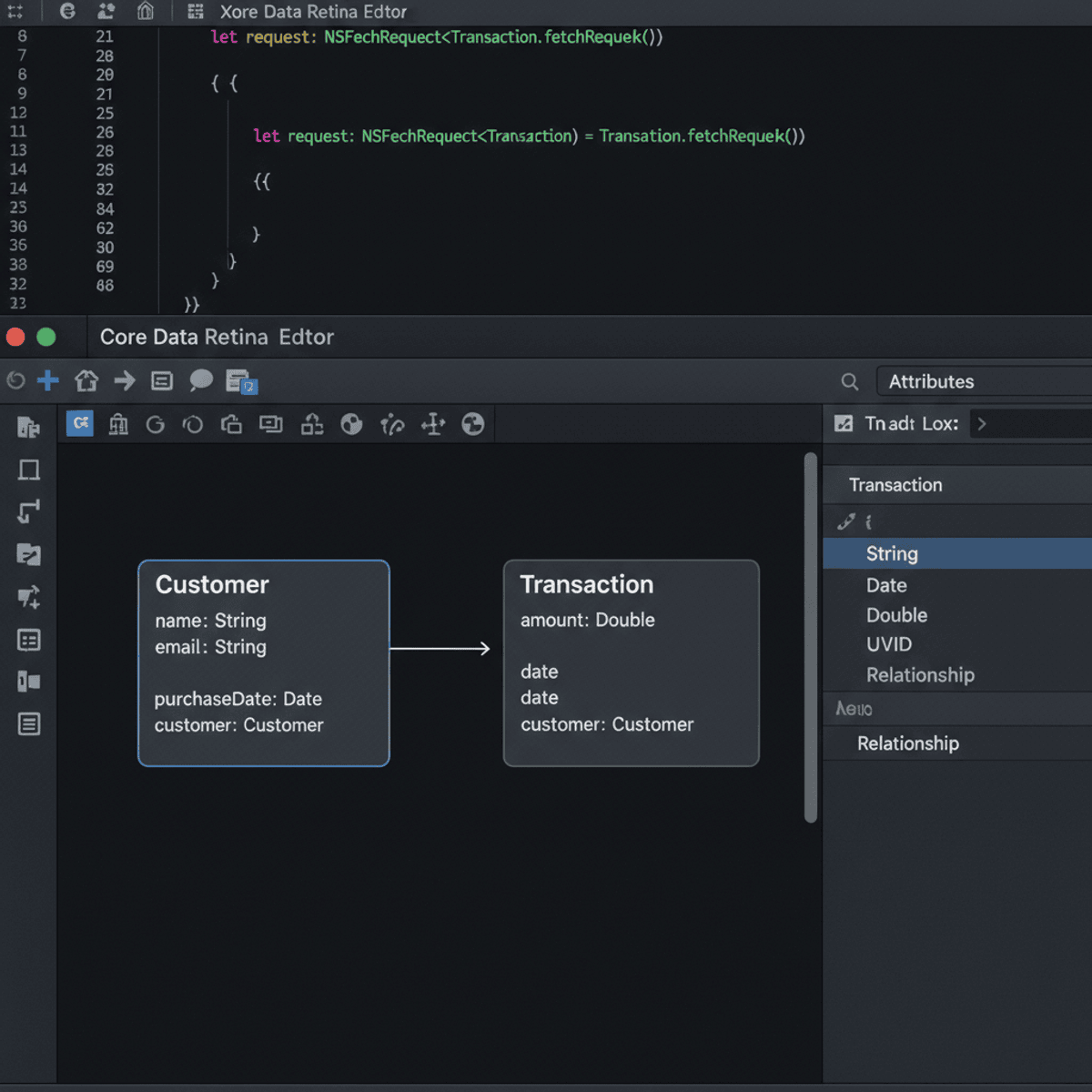
By the end of this course, learners will be able to design multi-screen iOS applications, implement secure data flow between view controllers, persist and retrieve structured data using Core Data, build adaptive user interfaces with Auto Layout, and apply Swift programming logic to manage application behavior and user interaction. This intermediate-level course helps learners move beyond basic iOS concepts and develop production-ready skills using Swift and core iOS frameworks. Learners will gain hands-on experience with view controller lifecycles, text field validation, Core Data persistence, table views, collection views, multimedia integration, and web services. The course also strengthens foundational Swift concepts such as conditional logic, functions, and data structures in real application contexts. What makes this course unique is its practical, end-to-end focus on how iOS components work together in real apps rather than in isolation. Each module connects UI design, data handling, and application logic to reflect real-world development workflows. By completing this course, learners will be better prepared to build scalable iOS applications, contribute confidently to professional iOS projects, and progress toward advanced iOS development roles.
 Coursera
RESTful API with Rust: Build a Game Map Server
Do you know that according to surveys, Rust is one of the most admired computer programming languages for 8 years in a row? Rust is a language that is prized for its performance, memory safety, and concurrency, making it ideal for today’s cloud-based computing world. It is used by major technology and gaming companies such as Microsoft and Discord. In this 1-hour long project-based course, you will hone your web development skill with and get a taste of game development with Rust. We will do this by building a RESTful HTTP server that provides flight map data for client applications to display the map. This course is aimed at learners who know the fundamentals including data types, variables, ownership, functions, macros, Cargo build system. Knowledge of REST API, TCP and HTTP are helpful but are optional. If your knowledge of Rust is limited, taking the guided project "Fundamentals with Rust: Build a CLI Distance Calculator" first is highly recommended.