

The Global Scholarly Directory.
Discover world-class academic programs curated for the modern intellectual. Search through 19877+ degrees and professional certificates.
 Google Cloud
BigQuery pour les analystes de données
Ce cours s'adresse aux analystes de données qui souhaitent apprendre à utiliser BigQuery pour leurs besoins d'analyse de données. À travers un ensemble de vidéos, d'ateliers et de démonstrations, nous aborderons différents sujets pour expliquer comment ingérer, transformer et interroger vos données dans BigQuery afin de dégager des insights qui contribuent à la prise de décisions commerciales.
 Coursera
Automate, Analyze, and Evaluate Accounting with AI
Did you know that AI automation can reduce manual accounting errors by up to 90% while cutting processing time in half? Leveraging intelligent tools is now essential for achieving both accuracy and efficiency in modern finance operations. This Short Course was created to help professionals in this field automate routine accounting processes while ensuring accuracy, compliance, and demonstrable return on investment through AI-powered solutions. By completing this course, you will be able to use AI tools to categorize expenses, detect anomalies, and assess the financial impact of automation—skills that help you modernize accounting workflows and make data-backed decisions with confidence. By the end of this course, you will be able to: Apply an AI tool to categorize expenses and validate the outputs for accuracy. Analyze anomaly detection results to identify irregular transactions and recommend investigative actions. Evaluate the return on investment (ROI) of an automated invoice processing system. This course is unique because it merges AI technology with accounting best practices, giving you practical experience in balancing automation, control, and strategic evaluation to drive smarter, faster financial operations. To be successful in this project, you should have: Basic accounting principles knowledge Familiarity with financial software Experience with expense management processes
 University of Geneva
Introduction aux Droits de l’Homme
Ce cours propose une introduction à la protection internationale des droits de l’homme. Il en présente les sources, les catégories, le contenu et les limites qui leur sont opposables, ainsi que les obligations qu’ils génèrent à la charge des Etats. Il expose aussi les principaux mécanismes de mise en œuvre prévus au niveau universel et régional pour assurer leur respect. Depuis la fin de la Seconde Guerre mondiale, les droits de l’homme sont un domaine en plein essor. De nombreuses causes sont aujourd’hui défendues et débattues sous la bannière des droits de l’homme : la protection des minorités, la lutte contre la discrimination des femmes, des personnes lesbiennes, gaies, bisexuelles et transgenres (LGBT), la lutte contre la torture et les disparitions forcées, la lutte contre la pauvreté ou encore la protection de l’environnement et la protection des données. Partout dans le monde, ces causes mobilisent tant les acteurs politiques que la société civile et elles sont discutées dans de multiples enceintes, nationales et internationales. Le présent cours vise à offrir les bases nécessaires pour appréhender et comprendre le domaine vaste et complexe que sont devenus les droits de l’homme. Quelles sont les caractéristiques et les différentes catégorie des droits de l’homme ? Quels sont leurs fondements philosophiques et historiques ? Pourquoi ces droits sont-ils importants ? Quels instruments visent à les protéger ? Comment rendre ces droits opérationnels ? Quels mécanismes existent pour les mettre en œuvre et quels sont leurs avantages et leurs inconvénients ? En abordant ces questions, le cours s’adresse tant à des membres de la communauté universitaire qu’à des praticiens (responsables politiques, membres du corps diplomatique, fonctionnaires, journalistes, membres d’ONG, défenseurs des droits de l’homme et spécialistes de la coopération au développement, de l’aide humanitaire et des questions relatives aux réfugiés), ainsi qu’à toutes les personnes qui sont engagées dans la protection des droits de l’homme ou simplement désireuses de mieux comprendre ce phénomène. Le cours est conçu et dispensé par les Professeurs Maya Hertig Randall et Michel Hottelier, de la Faculté de droit de l’Université de Genève. Durant le cours, des membres d’organes et institutions voués à la protection des droits de l’homme et des spécialistes de la communauté académique seront invités à intervenir. Le cours est donné en français. Il consiste en une série de 8 sessions, comprenant chacune un certain nombre de brèves présentations vidéo (8 à 15 minutes). Chaque session s'accompagne d'un questionnaire d'évaluation. Des lectures préparatoires sont requises pour chaque session.
 Google Cloud
Creating a Persistent Disk
This is a self-paced lab that takes place in the Google Cloud console. In this hands-on lab, you will learn how to create a persistent disk and use it on a Google Compute Engine virtual machine. You will also learn about zones, regions, and different disk types. Watch the short preview Create a Persistent Disk, GCP Essentials.
 Johns Hopkins University
The Creative Leader
This aims primarily at post-baccalaureate students interested in leadership theory. The course has four modules. Module 1 covers definitions and foundations of creative leadership. Topics include, What is creative leadership? Why creative leadership? And foundations of creative leadership. Module 2 addresses the facilitative functions of the creative leader. Topics include employee creativity on an individual level; employee creativity and team complexity; and employee creativity and team diversity. Module 3 addresses the directive functions of the creative leader. Topics include directive creative leaders in politics; directive creative leaders in haute cuisine; and directive creative leaders in the arts. Module 4 addresses the integrative functions of the creative leader. Topics include integrative creative leadership and final creative products; and integrative leadership and others’ individual creative products This is one course in the Coursera specialization, Leadership: An Introduction. It examines current trends in leadership theory invoking several disciplines, including business, sociology, philosophy, history, and psychology. To complete this course successfully students should be able to analyze college-level readings and audio/visual presentations into understandable parts, including premises and conclusions; synthesize the results of the analysis into coherent and accurate summaries; and evaluate the results for accuracy and practical applicability. Upon successful completion of the course, students will be able to • Define creative leadership • Explain the facilitative functions of a creative leader • Explain the directive functions of a creative leader • Explain the integrative functions of a creative leader • Assess the value of creative leadership to contemporary organizational leadership • Apply techniques of creative leadership to organizational challenges
 Coursera
Crear un Business Model Canvas con Miro
Este proyecto te permite crear un Business Model Canvas con la plataforma Miro, una herramienta en línea para crear imágenes gráficas profesionales y trabajo colaborativo remoto. Comprenderás las diversas funcionalidades de la plataforma y tendrás todas las habilidades básicas para crear un Business Model Canvas para tu proyecto con facilidad. Aprenderás a usar Miro para construir fácilmente un Business Model Canvas y podrás presentarlo con claridad. Este proyecto está destinado a personas que deseen desarrollar sus proyectos profesionales.
 Google Cloud
Getting Started with Google Kubernetes Engine
Welcome to the Getting Started with Google Kubernetes Engine course. If you're interested in Kubernetes, a software layer that sits between your applications and your hardware infrastructure, then you’re in the right place! Google Kubernetes Engine brings you Kubernetes as a managed service on Google Cloud. The goal of this course is to introduce the basics of Google Kubernetes Engine, or GKE, as it’s commonly referred to, and how to get applications containerized and running in Google Cloud. The course starts with a basic introduction to Google Cloud, and is then followed by an overview of containers and Kubernetes, Kubernetes architecture, and Kubernetes operations.
 EDUCBA
Analyze and Automate Splunk Reporting with Data Models
By the end of this course, learners will be able to automate Splunk reports, design interactive dashboards, apply reusable macros, build structured data models, and generate high-performance visual analytics using pivots and acceleration techniques. This course provides a comprehensive, hands-on pathway for mastering Splunk reporting and data modeling beyond basic search usage. Learners will gain practical skills to schedule and manage reports, create dynamic dashboards, and standardize search logic using macros. Through structured lessons on data models, attributes, lookups, and hierarchies, participants will learn how to simplify complex data and enable self-service analytics for stakeholders. What makes this course unique is its end-to-end, job-focused approach. Instead of isolated features, learners experience how reports, dashboards, macros, data models, and pivots work together in real-world scenarios. Performance optimization through data model acceleration and instant pivots ensures learners can deliver insights quickly and efficiently. By completing this course, learners will improve operational visibility, reduce repetitive work, and confidently design scalable Splunk solutions—making them more effective analysts, engineers, and Splunk power users.
 Coursera
Visualize Marketing Data with Looker Studio
Transform raw marketing data into compelling visual stories that drive business decisions. This Short Course was created to help digital marketing professionals accomplish effective data visualization and reporting using Google's powerful Looker Studio platform. By completing this course, you'll be able to connect data sources, create professional time-series charts, and share actionable insights with your marketing team - skills you can apply immediately in your daily workflow. By the end of this course, you will be able to: Apply a reporting tool to create a basic time-series visualization Configure chart filters to focus on specific time periods Generate shareable reports for team collaboration This course is unique because it focuses on practical, hands-on implementation rather than theory, teaching you the exact steps marketing professionals use daily to monitor key metrics and communicate performance trends. To be successful in this project, you should have basic familiarity with marketing metrics and data concepts.
 Google Cloud
Acelera el intercambio de conocimientos con Gemini Enterprise
Combina la experiencia en la búsqueda y la IA de Google con Gemini Enterprise, una herramienta potente diseñada para ayudar a los empleados a encontrar información específica en almacenes de documentos, correos electrónicos, chats, sistemas de tickets y otras fuentes de datos, todo desde una sola barra de búsqueda. El asistente de Gemini Enterprise también puede ayudarte a generar ideas, investigar, crear esquemas de documentos y realizar acciones como invitar a compañeros de trabajo a un evento de calendario para acelerar el trabajo de conocimiento y la colaboración de todo tipo. (Ten en cuenta que Gemini Enterprise antes se llamaba Google Agentspace, por lo que puede haber referencias al nombre anterior del producto en este curso).
 Alibaba Cloud Academy
Big Data Analysis Deep Dive
The job market for architects, engineers, and analytics professionals with Big Data expertise continues to increase. The Academy’s Big Data Career path focuses on the fundamental tools and techniques needed to pursue a career in Big Data. This course includes: data processing with python, writing and reading SQL queries, transmitting data with MaxCompute, analyzing data with Quick BI, using Hive, Hadoop, and spark on E-MapReduce, and how to visualize data with data dashboards. Work through our course material, learn different aspects of the Big Data field, and get certified as a Big Data Professional!
 Coursera
YouTube Analytics: Optimize Performance
Learn how to use YouTube Analytics to make smarter content decisions and grow your channel with purpose. This course walks you through interpreting key performance metrics, understanding viewer behavior, and applying data insights to optimize titles, thumbnails, structure, and SEO. You'll explore benchmarking strategies, audience retention analysis, and AI tools that help you refine your content plan over time. Whether you're a creator, marketer, or brand, you'll gain the skills to turn data into growth.
 Coursera
Write basic ansible playbooks
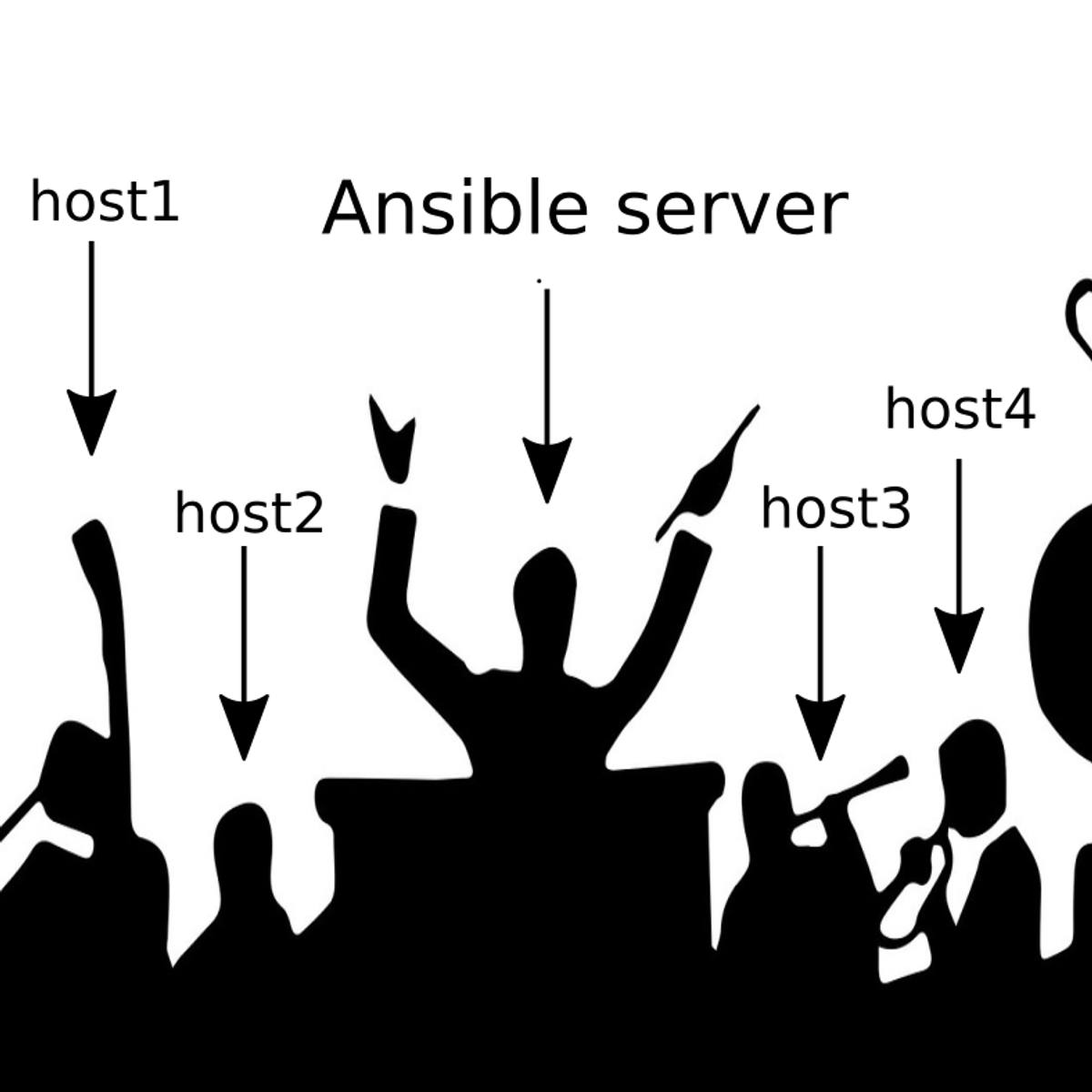
In this 1-hour long project-based course, you will learn how to setup an inventory of hosts which, for our case here, will only contain one hosts, which is the local host. You will learn how to run Ansible ad-hoc commands. Then you will learn what an Ansible playbook looks like, and how to write a playbook to perform basic operations. You will write playbooks to run file tasks and to setup software. Note: This course works best for learners who are based in the North America region. We’re currently working on providing the same experience in other regions.
 University of Amsterdam
Methods and Statistics in Social Science - Final Research Project
The Final Research Project consists of a research study that you will perform in collaboration with fellow learners. Together you will formulate a research hypothesis and design, come up with operationalizations, create manipulation and measurement instruments, collect data, perform statistical analyses and document the results. In this course you will go through the entire research process and will be able to help determine what research question we will investigate and how we design and perform the research. This is an invaluable experience if you want to be able to critically evaluate scientific research in the social and behavioral sciences or design and perform your own studies in the future.
 Microsoft
Team Building and Leadership in Project Management
In this course, you’ll discover the essentials of project management success through effective team development and leadership. Learn to identify key team stages, build strong teams, and adapt leadership styles for various projects. Whether you're new to project management or an experienced professional, this course offers indispensable knowledge for achieving project excellence. After completing this course, you’ll be able to: • Identify the stages of team development. • Discuss the importance of effective team building and leadership to ensure project objectives are met. • Discuss different leadership styles relevant to Project Management This is a great way to prepare for the industry-recognized PMI® Authorized PMP® Exam, a global standard in project management certification.
 Google Cloud
SAP Landing Zone: Plan and Deploy the SAP Network
This is a self-paced lab that takes place in the Google Cloud console. In this lab, students will be introduced to the key activities involved in deploying GCP network resources involved in building an “SAP Landing Zone”.