

The Global Scholarly Directory.
Discover world-class academic programs curated for the modern intellectual. Search through 19877+ degrees and professional certificates.
 Universidad Nacional Autónoma de México
Introducción a las finanzas
En este curso estudiaremos el objetivo principal de las finanzas, la importancia en la creación de valor y mantenerlo a través de un uso eficiente de los recursos financieros. Además, incluiremos algunas herramientas básicas que te permitirán crear un plan financiero con el que podrás establecer objetivos y metas claras, identificar qué factores pueden afectar el rumbo de tu empresa o idea de negocio y saber si estás aplicando los recursos de una manera eficiente. Al término del curso aplicarás herramientas básicas de análisis, control y evaluación de información financiera para una adecuada gestión de negocio.
 EDUCBA
Build and Deploy an eCommerce Shop with jQuery, HTML & CSS
Learners will set up a complete eCommerce project, build responsive storefront layouts, implement interactivity with jQuery, and deploy a fully functional online shop. By the end of the course, they will be able to design semantic HTML structures, apply CSS styling for responsiveness, integrate AJAX for dynamic product handling, and manage shopping cart data with LocalStorage. They will also validate checkout forms, simulate payment processes, and optimize their site for deployment. This course benefits learners by offering a practical, hands-on case study that takes them step by step from project setup to final deployment. Unlike theory-heavy programs, this course provides real-world coding experience with HTML, CSS, and jQuery while emphasizing responsive design and user engagement. Its unique approach blends frontend development with eCommerce-specific features such as filtering, cart functionality, and checkout simulation, ensuring students gain immediately applicable skills. Whether you are a beginner in web development or looking to strengthen your portfolio with a professional project, this course equips you with the essential skills to analyze, build, and deploy a working eCommerce application.
 Icahn School of Medicine at Mount Sinai
Voice Disorders: What Patients and Professionals Need to Know
Welcome to Voice Disorders: What Patients and Professionals Need to Know Knowledge regarding vocal production physiology and management options for voice disorders have experienced rapid growth over the past 40 years. This growth has resulted in a knowledge gap amongst patients and practitioners. Entirely new subspecialties of laryngology under otolaryngology and vocology under speech-language pathology have developed in response to this gap. This MOOC (Massive Open Online Course) is designed to educated patients, allied healthcare providers, vocal trainers/coaches, general medical practitioners and otolaryngologists. Participants will be exposed to current concepts on the physiology of voice production. These physiologic principles will be applied to speaking and performance voice production styles. Building on the knowledge of efficient voice production methods, participants will learn how vocal inefficiencies can lead to the development of voice disorders. Finally, behavioral, medical and surgical management options and indications will be presented. The course has been divided into five modules, each of which is followed by multiple choice questions: Week 1 - CME Information, Accreditation and Introduction (2 min) Week 2 - Module 1: Basic Anatomy and Physiology of the Speaking and Singing Voice (29 min. + quiz) Week 3 - Module 2: Applied Physiology (Function) (20 min. + quiz) Week 4 - Module 3: Changes in Vocal Effort and Quality (20 min. + quiz) Week 5 - Module 4: Principles of Voice Evaluation and Examination (17 min. + quiz) Week 6 - Module 5: Medical or Surgical Intervention (33 min. + quiz) Note: This course is no longer available for CME Credit. Please review the CME Information and Accreditation prior to proceeding with the course modules. Release Date: November 29, 2017 Expiration Date: November 29, 2019 Estimated Time to Complete: 3 hours CME Fee: $30 CME Credits Offered: 3.0 CME Reviewer: Marita S. Teng, MD How to Receive CME Credit: For physicians who are interested in earning CME credits and other allied health professions who wish to receive a Verification of Attendance certificate, you must: a. Complete Signature Track (details to follow after enrolling in this course) b. Complete registration process through the Icahn School of Medicine at Mount Sinai, CME Office using the following link: https://mssm.cloud-cme.com/default.aspx?EID=9&P=3000&CaseID=2 (WARNING: This course is no longer available for CME Credit.) (You will be required to pay an additional non-refundable fee of $30.00 in addition to the $49.00 fee for signature track.) c. Email an attached copy of your Verified Certificate from Coursera to the CME office at the Icahn School of Medicine at cme@mssm.edu and request your CME certificate. d. You will be provided with the instructions for downloading your CME/CE certificate. Course Planners Lynette Bobbitt Mark S. Courey, MD Lisa Chase Jill Gregory Gale Justin Paul Lawrence Erik Popil Christopher Smith Kelly Zerella Amy Zhong
 DeepLearning.AI
Getting Started with Mistral
In this course, you’ll access Mistral AI’s collection of open source and commercial models, including the Mixtral 8x7B model, and the latest Mixtral 8x22B. You’ll learn about selecting the right model for your use case, and get hands-on with features like effective prompting techniques, function calling, JSON mode, and Retrieval Augmented Generation (RAG). In detail: 1. Access and prompt Mistral models via API calls for tasks, and decide whether your task is either a simple task (classification), medium (email writing), or advanced (coding) level of complexity, and consider speed requirements to choose an appropriate model. 2. Learn to use Mistral’s native function calling, in which you give an LLM tools it can call as needed to perform tasks that are better performed by traditional code, such as querying a database for numerical data. 3. Build a basic RAG system from scratch with similarity search, properly chunk data, create embeddings, and implement this tool as a function in your chat system. 4. Build a chat interface to interact with the Mistral models and ask questions about a document that you upload. By the end of this course, you’ll be equipped to leverage Mistral AI’s leading open source and commercial models.
 Universitat Autònoma de Barcelona
Archaeology and Heritage of Africa
This course was funded by the German Foreign Office and developed by the German Archaeological Institute (DAI), in collaboration with the Universitat Autònoma de Barcelona (UAB), the Interdisciplinary Center for Archaeology and Evolution of Human Behavior (ICArEHB) in Portugal, and the Eduardo Mondlane University in Mozambique, with input from experts around the world. Africa has a rich cultural heritage spanning tens of thousands of years, including the earliest known fossils of our hominin ancestors, abundant and diverse rock art sites, and some of the oldest civilizations in human history. Would you like to know more about the new methods archaeologists are using to study African archaeology? And to learn directly from case studies with researchers working on the continent? Are you interested in knowing the role local communities have in the preservation and protection of heritage sites? By enrolling in this course, you will have the opportunity to learn and explore these and so many other subjects in African Archaeology and Heritage and discover the rich and diverse heritage of Africa.
 Packt
Packt
Mathematical Foundations and Quantum Mechanics Essentials
Updated in May 2025. This course now features Coursera Coach! A smarter way to learn with interactive, real-time conversations that help you test your knowledge, challenge assumptions, and deepen your understanding as you progress through the course. Begin your journey by exploring the mathematical foundations that are crucial to understanding quantum mechanics. From probability theory and complex numbers to matrices and linear transformations, this course builds a strong framework, ensuring that each concept is connected to real-world applications in quantum computing. This section helps you distinguish between classical and quantum systems, emphasizing their operational differences. The next part of the course delves into quantum mechanics with an introduction to qubits—the fundamental unit of quantum information. You will learn about the principles that differentiate qubits from classical bits, such as superposition, interference, and entanglement. Key mathematical notations like Braket will be explored to solidify your understanding of how quantum states are represented and manipulated. Finally, the course concludes with an in-depth look at advanced quantum concepts like multi-qubit systems. By the end of this course, you will have developed a well-rounded understanding of both the mathematical tools and quantum principles that are essential for anyone entering the field of quantum computing. This course is designed for students, professionals, and enthusiasts with a background in mathematics or computer science. Familiarity with basic algebra, statistics, and probability is recommended but not required.
 Utrecht University
Human Rights for Open Societies
Human rights are under pressure in many places across the globe. Peaceful protests are violently quashed. Voting is tampered with. And minorities are often excluded from decision-making. All of this threatens the ideal of an open society in which each of us can be free and participate equally. A solid protection of human rights is needed for an open society to exist and to flourish. But it is often an uphill battle to work towards that ideal. Equip yourself and learn more about what human rights are and how they work. In this course, we will introduce you to one of the world’s most intricate human rights systems: the European Convention on Human Rights. You will see when and how people can turn to the European Court of Human Rights to complain about human rights violations. You will learn how the Court tries to solve many of the difficult human rights dilemmas of today. We will look, amongst other things, at the freedom of expression and demonstration, the right to vote, and the prohibition of discrimination. And we will address the rights of migrants, refugees, and other vulnerable groups. And, of course, we will see whether it is possible to restrict rights and if so under what conditions. You will even encounter watchdogs and ice cream in this course. We invite you to follow us on a journey of discovery into the European Convention!
 IBM
IBM
Developing Websites and Front-Ends with Bootstrap
Building flexible, fast, and responsive websites and front-ends with a consistent look and feel has become a basic requirement. To accomplish this, the use of libraries and frameworks is trending. As a front-end developer, it is important that you know at least one front-end framework. Bootstrap is a CSS framework that provides an extensive set of templates that help with speeding up the website development process. According to W3Tech.com, Bootstrap is a popular CSS framework that is used by 18.7% of all the websites, that is a CSS framework market share of 78.6%. In this short course, which is part of the IBM Front-End Developer Professional Certificate, you will not only equip yourself with concepts but get several opportunities to practice building website components using Bootstrap. After completing this course, you will be able to: - Describe the features of Bootstrap - Set up Bootstrap for a project using a suitable method - Outline key classes and components offered by Bootstrap - Create a simple React app and use Bootstrap for styling - Create a responsive grid layout - Demonstrate your proficiency in using Bootstrap classes and components to build responsive websites
 Coursera
Fine Tune BERT for Text Classification with TensorFlow
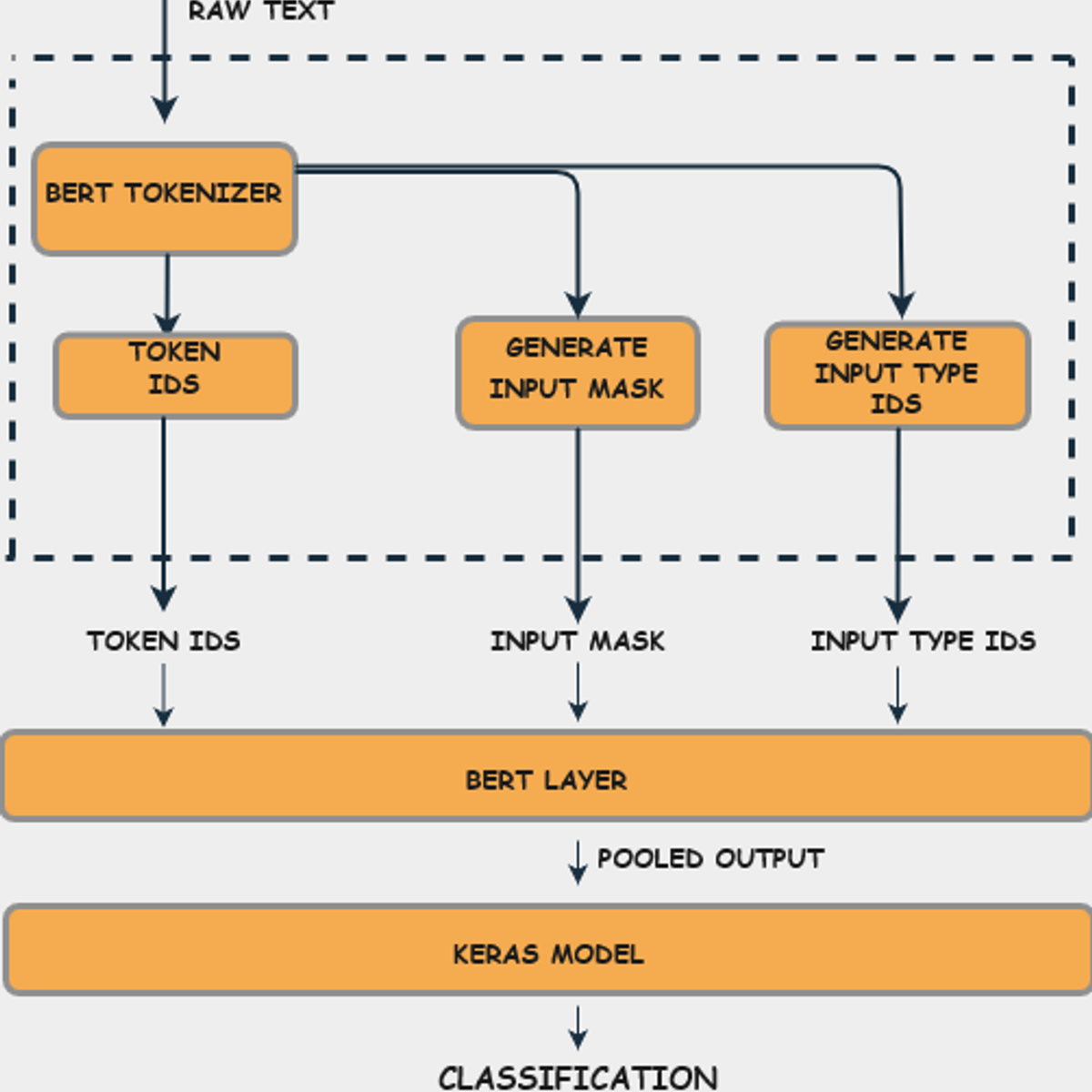
This is a guided project on fine-tuning a Bidirectional Transformers for Language Understanding (BERT) model for text classification with TensorFlow. In this 2.5 hour long project, you will learn to preprocess and tokenize data for BERT classification, build TensorFlow input pipelines for text data with the tf.data API, and train and evaluate a fine-tuned BERT model for text classification with TensorFlow 2 and TensorFlow Hub. Prerequisites: In order to successfully complete this project, you should be competent in the Python programming language, be familiar with deep learning for Natural Language Processing (NLP), and have trained models with TensorFlow or and its Keras API. Note: This course works best for learners who are based in the North America region. We’re currently working on providing the same experience in other regions.
 Kennesaw State University
Cybersecurity and the X-Factor
What is the X-Factor? In Cybersecurity, the X-Factor related to unknown and unpredictable human behavior within and outside of your organization. “No one really knows why humans do what they do”, (David K. Reynolds), and because of this organizations can be unprepared for malicious, untrained, or even best intentioned behavior that can cause alarm and sometimes irreparable harm. This course will introduce you to the types of training available to reduce the impact of the X-Factor, evaluate its effectiveness, explore the Security Education, Training and Awareness (SETA) program, and learn why it may fail. The course will conclude with information designed to assist you with some critical components for your business security program. Activities focused on hactivism, cyberinsurance, and ransomware will round out your knowledge base. Your team of instructors has prepared a series of readings, discussions, guest lectures, and quizzes to engage you in this exciting topic.
 University of London
Fundamentals of Marketing Strategy
The ‘Fundamentals of Marketing Strategy’ course is very interactive and designed to offer learners the opportunity to share ideas and engage in discussions with their fellow students. Throughout this course, learners will be given the opportunity to explore key and relevant marketing models and concepts in the formulation of effective marketing strategy. Learners will also engage in research as well as the application of key models and concepts to gain further insights into the implementation of an effective marketing strategy in a competitive business environment. At the end of this course, learners will gain a deeper understanding of the nature of a rather dynamic marketing environment, and will have developed new skills to enable them to conduct audits of the macro and micro-marketing environments for an organisation and most importantly be able to design and implement an effective marketing strategy.
 The University of Melbourne
Contemporary India
This course presents some important vignettes of a complex, highly diverse India that is also witnessing unprecedented changes since its formal independence in 1947 from Great Britain. The lectures revolve around social dimensions of change, the continuing influence of ancient texts on contemporary India, political democracy, economic transition from the state to the market, gender relations, India's economic globalisation and changing world view. While one of the objectives is to capture the multifaceted process of change, the course also critically examines some of the tensions inherent in these changes. For example, how does gender inequality play itself out in a changing Indian society, how do the modernist conceptions of art entailing market valuation challenge the more socio-centric values found in South India, what are the politics linguistic identities, and how might India address its myriad development challenges such as poverty and unemployment. No specific prior knowledge is required. However, it would be helpful if students are aware of the socio political dynamics at play in contemporary India and keep themselves abreast with current affairs and debates in the country to fully appreciate the various dimensions and contours if the subject matter in the course. This course is taught in English. View the MOOC promotional video here: http://tinyurl.com/hx8mhxb
 Pearson
Hadoop and Spark Fundamentals: Unit 2
This course introduces the fundamentals of modern data processing for data engineers, analysts, and IT professionals. You will learn the basics of Hadoop MapReduce, including how it works, how to compile and run Java MapReduce programs, and how to debug and extend them using other languages. The course includes practical exercises such as word counts across multiple files, log file analysis, and large-scale text processing with datasets like Wikipedia. You will also cover advanced MapReduce features and use tools like Yarn and the Job Browser. The course then covers higher-level tools such as Apache Pig and Hive QL for managing data workflows and running SQL-like queries. Finally, you will work with Apache Spark and PySpark to gain experience with modern data analytics platforms. By the end of the course, you will have practical skills to work with big data in various environments.
 Infosec
Memory, Encryption, and Protecting Data in iOS
This course on iOS Security is designed for intermediate to advanced learners who have a background in iOS development or security. Participants will delve into the intricacies of managing iOS memory effectively, gaining a solid understanding of Swift pointers and techniques to prevent overflows. The course will also cover the implementation and verification of encryption techniques in iOS applications, including the use of keychain and data persistence strategies. Additionally, learners will identify common data risks in iOS applications and explore strategies to mitigate these risks, with a focus on file protection and network security.
 Microsoft
PMP Application Process and Practice Exam
In this course, you will learn about the content areas, domains, and structure of the PMP exam, providing you with a solid foundation for exam preparation. Through various learning activities, such as reviewing the PMP Exam Content Outline and discussing the domains, knowledge areas, and question formats typically found in the exam, you'll gain insight into the exam's structure and expectations. Additionally, you'll learn and apply good practice exam techniques to increase your chances of passing the PMP Exam successfully. This comprehensive approach will equip you with the knowledge, skills, and strategies needed to pass the exam and achieve PMP certification. After completing this course, you’ll be able to: • Identify the content areas, domains, and structure of the PMP exam. • Review the PMP Exam Content Outline, discussing the domains, knowledge areas, and question formats typically found in the exam. • Apply good practice exam techniques to pass the PMP Exam. This is a great way to prepare for the industry-recognized PMI® Authorized PMP® Exam, a global standard in project management.
 SkillsBooster Academy
DeepSeek R1 for AI Marketing and Business Strategy
Master AI-powered marketing strategy with DeepSeek R1 — and turn generative AI into your competitive edge. The marketing landscape is being redefined by artificial intelligence. Customers expect personalization. Campaigns must move faster. Strategic decisions can no longer wait for guesswork or outdated data. This course gives you the tools to stay ahead by combining DeepSeek R1 with cutting-edge AI marketing, automation, and analytics techniques that drive measurable business impact. In this hands-on, results-focused course, you’ll learn how to integrate generative AI into every layer of your marketing strategy — from customer journey mapping and content creation to campaign planning, trend analysis, and ROI modeling. Using DeepSeek’s advanced features — including Chat, Search, and DeepThink modes — you’ll gain job-ready skills that help you: - Build high-converting content funnels focused on customer lifetime value (LTV) - Create ad creatives, messaging, and landing page content with generative AI - Analyze market trends, audience segments, and competitor positioning with AI tools - Automate marketing prep tasks, SOPs, and strategic planning workflows - Personalize customer journeys with AI-generated insights and behavioral data - Run scenario planning to test offers, pricing, and media strategies - Launch full AI-powered marketing sprints — from strategy to execution This course is ideal for: - Marketers looking to enhance productivity, performance, and personalization - Business owners who want lean, AI-augmented growth strategies - Product managers seeking data-driven decision-making tools - Strategists and digital professionals transitioning to AI-powered workflows You don’t need to be a technical expert — just bring curiosity and a drive to lead in the age of AI. By the end of this course, you’ll be equipped to: - Integrate AI into core marketing functions - Build automated, insight-driven marketing systems - Use DeepSeek R1 to drive real business growth and team performance If you're ready to move beyond theory and start using AI as a strategic asset, this course is your step-by-step guide. Learn faster, work smarter, and make better decisions — with DeepSeek as your marketing co-pilot.