

The Global Scholarly Directory.
Discover world-class academic programs curated for the modern intellectual. Search through 19877+ degrees and professional certificates.
 University of Colorado Boulder
Control Systems Analysis: Modeling of Dynamic Systems
In this course, you'll explore modeling of dynamic systems and feedback control. The course begins with an introduction of control theory and the application of Laplace transforms in solving differential equations, providing a strong foundation in linearity, time-invariance, and dynamic system modeling. The following week will delve into the laws governing the modeling of dynamic systems, with a focus on deriving differential equations from fundamental principles like Newton's laws and Kirchhoff's laws, as well as mastering the representation of systems as transfer functions in the Laplace domain. The third week delves deeper into Laplace transforms, emphasizing initial/final value theorems, block diagram manipulation, and dynamic response analysis. Moving into the fourth week, you'll learn to analyze system performance using transient step response specifications, enabling you to assess and optimize system behavior effectively. Finally, in the fifth week, you'll explore Bounded-Input Bounded-Output (BIBO) stability and Routh's stability criterion, gaining the skills to assess, analyze, and design stable systems. By the course's end, you'll be well-equipped to navigate the intricacies of control systems and dynamic modeling.
 University of Colorado Boulder
Project Management: Foundations and Initiation
Project Management: Foundations and Initiation provides students the foundational knowledge of how engineering projects are managed and initiated. Project managers are responsible for project scope, stakeholder management, effective communication, and team leadership. In this course, you will develop introductory skills needed to manage traditional engineering projects, along with tools needed to engage stakeholders and build diverse teams. This course can be taken for academic credit as part of CU Boulder’s Master of Engineering in Engineering Management (ME-EM) degree offered on the Coursera platform. The ME-EM is designed to help engineers, scientists, and technical professionals move into leadership and management roles in the engineering and technical sectors. With performance-based admissions and no application process, the ME-EM is ideal for individuals with a broad range of undergraduate education and/or professional experience. Learn more about the ME-EM program at https://www.coursera.org/degrees/me-engineering-management-boulder. Logo image courtesy of Jehyun Sung, available on Unsplash at https://unsplash.com/photos/6U5AEmQIajg?utm_source=email&utm_medium=referral&utm_content=photos-page-share
 Amazon Web Services
Getting Started with Amazon Comprehend
Amazon Comprehend is a natural-language processing (NLP) service that you can use to extract valuable insights and connections from text. In this "Getting Started" course, you will learn about the benefits, features, typical use cases, technical concepts, and costs of Amazon Comprehend. You will have the opportunity to review an architecture for a text-processing solution that uses Amazon Comprehend, which you can adapt to your own use cases. Through a guided tutorial consisting of a narrated video, step-by-step instructions and transcript, you will also try the service in your own Amazon Web Services (AWS) account. In lieu of using your own account, you can become an AWS Skill Builder subscriber to unlock all our hands-on, interactive content, including unlimited access to 125+ AWS Builder Labs. These hands-on, guided labs allow you to develop practical skills for common cloud scenarios by building in an AWS sandbox environment without the risk of accruing unwanted charges.
 Board Infinity
Continuous Integration (CI) Insight for Agile Development
In the fast-paced world of Agile development, achieving seamless collaboration and rapid delivery is paramount. "Continuous Integration (CI) Insight for Agile Development" is your comprehensive guide to mastering CI practices that enhance team efficiency and product quality. This course delves into the fundamentals of CI, showcasing how it fits into Agile workflows to ensure automated, frequent code integrations and rigorous testing. You’ll explore the configuration of CI pipelines using industry-standard tools like Jenkins, Travis CI, and CircleCI, and learn to integrate automated tests that maintain code integrity. Beyond the basics, the course introduces advanced techniques like managing multiple development branches, implementing Continuous Delivery (CD), and securing CI pipelines. Real-world examples, case studies, and troubleshooting tips will help you apply your knowledge to real Agile projects. Whether you’re a developer, tester, or DevOps enthusiast, this course equips you with the skills to streamline Agile workflows and accelerate delivery without compromising quality or security. Step into the future of Agile development—enroll now to master Continuous Integration! Note: This is the Course 1 of three course specialisation series. Disclaimer: This is an independent educational resource created by Board Infinity for informational and educational purposes only. This course is not affiliated with, endorsed by, sponsored by, or officially associated with any company, organization, or certification body unless explicitly stated. The content provided is based on industry knowledge and best practices but does not constitute official training material for any specific employer or certification program. All company names, trademarks, service marks, and logos referenced are the property of their respective owners and are used solely for educational identification and comparison purposes.
 The University of Sydney
eHealth: More than just an electronic record
The MOOC, "eHealth: More than just an electronic record!", is multidisciplinary in nature, and aims to equip the global audience of health clinicians, students, managers, administrators, and researchers to reflect on the overall impact of eHealth on the integration of care. It explores the breadth of technology application, current and emerging trends, and showcases both local and international eHealth practice and research. The entire eHealth Course consists of 5 modules and takes about 5 weeks to complete. Completion certificates are issued on the basis of participation in all 5 modules. Completing the health practice assignment in Module 5 entitles you to advanced standing in some of the eHealth courses run by the Faculty of Health Sciences, University of Sydney. What you'll learn - The fundamentals of eHealth and where it is heading - What kind of health data we are currently collecting and how it will transform healthcare in the future - How new technologies are helping health consumers participate in their own healthcare - How eHealth can improve the coordination and efficiency of healthcare and what the barriers might be Length: Self-paced 5 week course Study time commitment: 3 hours per week Assessable components: Assignment 1 in Module 2 (40%) and Assignment 2 in Module 5 (60%). Guest presenters (listed in alphabetical order): * Jordan Andersen | The University of Sydney * Dr Teresa Andersen | Sydney Local Health District * Dr Robert Birnbaum | Harvard Medical School / Partners Healthcare * Melissa Brunner | The University of Newcastle & The University of Sydney * Professor Jane Burns | Young and Well Cooperative Research Centre & The University of Sydney * Professor Rafael A. Calvo | The University of Sydney * Dr Andrew Campbell | The University of Sydney * Dr Jelle Demeestere | John Hunter Hospital, Newcastle NSW * Professor Hugh Durrant-Whyte | The University of Sydney * Karen Finnin | Physios Online * Professor Afaf Girgis | UNSW Medicine * Anna Janssen | The University of Sydney * Professor Judy Kay | The University of Sydney * Dr Melanie Keep | The University of Sydney * A/Professor Jinman Kim | The University of Sydney * Dr John Lambert | eHealth NSW * Dr Melanie Keep | The University of Sydney * Dr Karen Luxford | Clinical Excellence Committee NSW * Michael Marthick | Chris O’Brien Lifehouse & The University of Sydney * A/ Professor Mark McEntee | The University of Sydney * Professor Kathryn Refshauge | The University of Sydney * Dr Ursula Sansom-Daly | Sydney Children's Hospital, Prince of Wales Hospital & UNSW Medicine * Dr Arran Schlosberg | The University of Sydney * Professor Stephen Simpson | The University of Sydney * Professor Leanne Togher | The University of Sydney * Josh Zadro | The University of Sydney
 Google Cloud
생성형 AI: 챗봇 그 이상의 가치
'생성형 AI: 챗봇 그 이상의 가치'는 생성형 AI 리더 학습 과정의 첫 번째 과정이며 요구되는 기본 요건이 없습니다. 이 과정은 챗봇에 대한 기본적인 이해를 넘어 조직을 위한 생성형 AI의 진정한 잠재력을 살펴보는 것을 목표로 합니다. 생성형 AI의 강력한 기능을 활용하는 데 중요한 파운데이션 모델 및 프롬프트 엔지니어링과 같은 개념을 살펴봅니다. 또한 조직을 위한 성공적인 생성형 AI 전략을 개발할 때 고려해야 할 중요한 사항도 안내합니다.
 Coursera
Notion Integrations for Beginners: Manage a Blog Business
In this 1.5-hour long project-based course, you will integrate digital tools with Notion to streamline your workflow. You will build a fully integrated blog content management platform for capturing ideas, gathering customer feedback, chart and analyzing data, automating and managing social media. You will integrate Notion with Google Drive and other file management tools for idea capture, collect feedback with Tally integration, visualize Notion database data with ChartBrick, expand capabilities beyond the existing integrations using Zapier and managing social media with Buffer. This project will help an aspiring project and content manager to create an efficient workflow expanding and integrating Notion capablities with the tool suite of your choice. There are no hard prerequisites however a fundamental knowledge of Notion, especially pages and databases, is preferable.
 L&T EduTech
Grouping, Testing & Quality Control of Pile Foundations
This course encompasses crucial aspects of Pile Grouping, Testing & Quality Control, particularly focusing on pile testing, quality control and addressing execution challenges across four informative modules. In Module one of the course, the learners will explore pile group settlement and its connection to soil properties. Also, skills for assessing pile group capacity and predicting settlement in different soil types will be gained. Transitioning to Module two, learners will acquire knowledge about various pile testing methods and how to practically apply them, validating theoretical designs. In Module three, learners will understand the importance of maintaining quality assurance and quality control in piling works. Learners will also acquire the skills needed to ensure Environment, Health & Safety operations on-site. This course empowers learners in Module four to recognize the critical role of bill of quantities in pile foundations. Understand challenges during pile execution and discover effective remedies. Additionally, gain insights into using software for pile foundation analysis, specifically focusing on mastering PLAXIS 3D. Target Learners: Undergraduate students of Civil Engineering Post-Graduate Students of Geotechnical Engineering Practicing Engineers in Pile Construction based projects. Faculties of Civil Engineering Domain Prerequisites: Soil Mechanics Foundation Engineering Reinforced Concrete Design Basics of Pile Foundation
 Tecnológico de Monterrey
Fundamentos del emprendimiento en la empresa familiar
¡Las empresas familiares son indispensables en la actualidad, sin embargo, es de suma importancia conocer las herramientas y las estrategias de éxito que les permitan trascender en un entorno competitivo, es por ello que este curso de emprendimiento te brinda la oportunidad de conocer y aplicar las mejores prácticas, teniendo en cuenta los modelos de emprendimiento e innovación, para aprovechar las fortalezas de la empresa familiar, para que esta crezca y trascienda de generación en generación. En este curso de emprendimiento tendrás la oportunidad de conocer los instrumentos y componentes que implican emprender; desde la ideación, validación de mercado y la propuesta de valor, hasta la presentación de venta para atraer inversionistas (Pitch de Negocios). Este curso en línea entrega los conocimientos y las herramientas necesarias para el éxito de un emprendimiento en la empresa familiar. El Centro de Familias Emprendedoras y EGADE Business School de la Escuela de Negocios del Tecnológico de Monterrey es la Institución ideal para desarrollar estas habilidades, ya que el Tec de Monterrey es la universidad número 1 en México y la 6a mejor en Latinoamérica según Times Higher Education (THE) 2016. Los profesores del Centro de Familias Emprendedoras están altamente calificados y son reconocidos al ser parte del proyecto mundial STEP para el emprendimiento familiar, y la EGADE Business School es la escuela número 1 en América Latina, en su MBA, según el ranking de AméricaEconomía.
 Pontificia Universidad Católica del Perú
Introducción a la Responsabilidad Social Universitaria
El curso de Introducción a la Responsabilidad Social Universitaria tiene como objetivo que el participante conozca: qué es la Responsabilidad Social Universitaria, cuáles son las principales características de la RSU y cómo se expresa a través de múltiples estrategias y acciones concretas en el ámbito universitario desde la experiencia en la Pontificia Universidad Católica del Perú. El curso cuenta con tres módulos. En el primer módulo se presentan los conceptos y características de la Responsabilidad Social Universitaria a fin de identificar el valor de la responsabilidad en el sentido de la convivencia humana, así como en el rol de las instituciones de educación superior como agentes activos del desarrollo social. En el segundo módulo se describen las características del enfoque de Responsabilidad Social Universitaria que propone la Pontificia Universidad Católica del Perú y la relación que guarda con otros enfoques como el enfoque territorial, enfoque de género y enfoque de sostenibilidad. Finalmente, en el tercer módulo se presentan los criterios generales de las acciones de Responsabilidad Social Universitaria a partir de ejemplos y experiencias concretas de diferentes actores de la comunidad de la Pontificia Universidad Católica del Perú, con el fin de favorecer que otros actores universitarios se animen a sumar esfuerzos para impulsar el enfoque desde su rol y aportar así en la generación de espacios de transformación social. Al finalizar el curso las y los participantes - Identifican el valor de la Responsabilidad Social Universitaria en instituciones de educación superior. - Reconocen las características del enfoque de Responsabilidad Social Universitaria que propone la Pontificia Universidad Católica del Perú y su importancia en los diferentes ámbitos en los que se encuentra una institución de educación superior. - Identifican los criterios generales de las acciones de Responsabilidad Social Universitaria en experiencias concretas de la comunidad de la Pontificia Universidad Católica del Perú.
 Coursera
Introduction to Microsoft Excel
At the end of this project, you will be able to start a simple spreadsheet in Microsoft Excel. Being able to use Microsoft Excel will allow you to simplify many of your daily tasks at work but also at home. There is no limit to what you can use Microsoft Excel for, you can use it to plan the annual budget of your business, you can use it to track business expenses but you can also use it simply to keep inventory of all the books you own.
 Coursera
How to Develop an Account Strategy
Understanding and implementing an effective account strategy is crucial because it enables organizations to focus their resources efficiently, enhancing profitability and ensuring long-term customer loyalty. The goal of an account strategy is to maximize the value of the account for both the customer and the company, leading to increased revenue and long-term partnership. Designed for account managers, customer success managers, customer service professionals, and business leaders, this course aims to foster predictable and sustainable business growth through proactive customer-centric strategies. By completing this course, you'll be equipped to: -Use the core tenets of effective account strategy to build trust and drive tangible results. -Maximize customer value by implementing a customer engagement strategy tailored to their needs. -Set clear customer expectations using milestones, which is crucial for tracking progress and ensuring alignment with strategic goals. This short course is unique in its combination of customer success strategies, tactics, and practical lessons from industry leaders. To succeed, you will need an eagerness to learn, a commitment to both team and customer success, and strong problem-solving skills—all essential for mastering account strategy.
 Packt
Packt
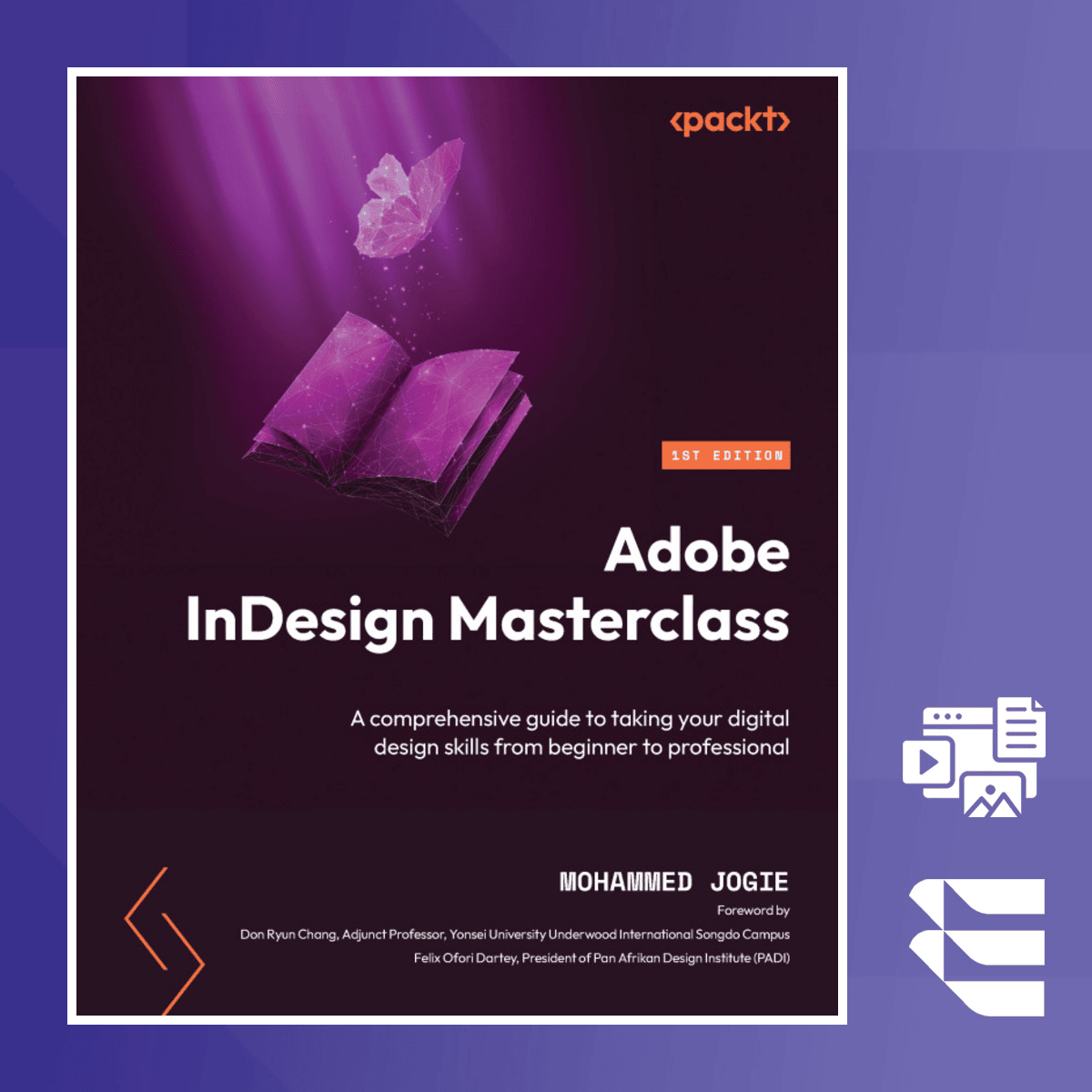
Adobe InDesign Masterclass
Master the art of layout and design with Adobe InDesign—an industry-standard tool for creating stunning print and digital content. This course empowers you with essential skills that are highly valued across publishing, marketing, and creative industries. Through hands-on projects and clear explanations, you'll learn how to structure documents, manage text and images, apply advanced typography, and design professional-grade content for social media, print, and interactive media. Each module builds your confidence to tackle real-world design challenges. What sets this course apart is its blend of creative theory with practical application. You'll not only understand how to use InDesign’s tools, but also why and when to apply them for maximum impact in various design contexts. This course is ideal for graphic designers, marketers, content creators, and aspiring publishers. No prior experience with InDesign is necessary, though familiarity with basic design concepts is helpful. This course is based on material written by an expert author, bringing the depth of a book into a more engaging, interactive format. The core content is delivered through clear, structured text you can read at your own pace, supported by short videos and quizzes to highlight key ideas and test your understanding. By combining the strengths of book learning with interactive assessments, you get the best of both worlds: the depth and clarity of an author’s expertise, plus the flexibility to revisit, practice, and reinforce concepts whenever you need.
 University of Colorado System
Managing ADHD, Autism, Learning Disabilities, and Concussion in School
Welcome to our next course in the School Health specialization: Managing ADHD, Autism, Learning Disabilities, and Concussion in School. In this course, you will about the most common developmental and behavioral disorders affecting children such as ADHD, autism spectrum disorder, learning disorders, and concussions. We will focus on how schools can support children by recognizing common symptoms and understanding the diagnosis process. You’ll be introduced to scenarios that provide firsthand clinician experience working with children with ADHD. We will walk through management options for the most common developmental and behavioral disorders. Next, we’ll go through two interview modules that discuss autism and learning disorders. Finally, we’ll discuss what concussions are, symptoms, and management Prepare yourself to learn about the most common development and behavioral disorders affecting children.
 Coursera
GenAI for PR Specialists
As part of the GenAI Academy, "GenAI for PR Professionals" explores how Generative Artificial Intelligence (GenAI) is transforming the field of public relations. This course is an introduction where learners will discover the key capabilities of GenAI and uncover practical strategies to leverage these powerful tools in their day-to-day PR work. Through interactive discussions, video demos, and hands-on activities, learners will explore how GenAI enhances productivity in content creation, media monitoring, campaign personalization, and crisis management. They'll also address ethical concerns, examining risks and best practices for responsible use. By course end, PR professionals will be equipped to leverage GenAI to scale their productivity effectively. This course is designed for team leads, PR and Communication Managers, PR professionals, and aspiring PR practitioners. Team leads and managers will learn how to identify GenAI opportunities and guide their teams toward more efficient, innovative practices. PR professionals will discover ways to enhance their workflows and boost productivity by integrating GenAI-powered tools into their daily tasks. Participants should understand PR basics like content creation, media relations, and crisis management. Familiarity with PR tools, such as media monitoring software and social media platforms, is recommended. While a technical background isn't required, an open mindset and willingness to explore GenAI will maximize the course's benefits. By the end of this course, participants will understand how to leverage GenAI for PR tasks like content creation and media monitoring. They'll apply this knowledge through real-world examples and experiments to enhance their workflows. Additionally, they'll consider ethical challenges, learning to integrate GenAI responsibly while boosting their professional productivity.
 Harvard Business Review
Succeed with Customers
By putting customers front and center, can companies pull ahead—and stay ahead—of their rivals? Understanding who your customers are and how their needs change allows you to deliver superior value that competitors cannot easily copy. By mastering the way you communicate that value, you ensure your products and services resonate deeply and win over your target audience. In this course, you’ll explore how to learn about your customers to better meet their needs and use customer knowledge to deliver additional value. You’ll find out how to build a customer-focused team and foster a marketing orientation that shifts your mindset from selling products to solving problems. Finally, you’ll develop the skills to research and identify target customers, develop a marketing strategy, and implement a marketing plan that effectively reaches both local and global customers.