

The Global Scholarly Directory.
Discover world-class academic programs curated for the modern intellectual. Search through 19877+ degrees and professional certificates.
 Skillshare
Team Building: Create Engaging Events for Hybrid Teams
Create effective team building activities that help your team thrive from anywhere with peak performance strategist Abigail Ireland! Supporting and engaging your team in a hybrid or remote work environment can be difficult. Creating a remote event that’s effective and interesting for employees can be even harder. In order to build high-performing teams, everyone needs to be able to work together and establish trust—which doesn’t happen automatically. Join Abigail as she walks through how to build an engaging team building activity that will inspire your team, no matter where they’re located. Together with Abigail, you’ll: * Learn team building principles like inclusivity, motivation, and more * Explore the T.E.A.M.S. formula and learn how to bring it to life * Discover several tips and tricks for improving team dynamics on a long-term basis * Practice an activity that can be replicated with your team By the end of the class, you’ll have a new team building activity to take back to your team and inspiration for new tactics to better unite your hybrid team. Abigail’s class is designed for team leaders, but all members are welcome to participate and enjoy. Instructor bio: Abigail Ireland is a Peak Performance Strategist who helps executives and teams maximize focus, energy, and productivity. Through her consultancy, she combines psychology, physiology, and productivity to deliver practical strategies for sustainable high performance. With a background in banking, private equity, and strategy, Abigail brings real-world business expertise along with qualifications as a leadership coach, NLP practitioner, and personal trainer. She has trained thousands of professionals worldwide, empowering them to perform at their best without burnout.
 Google Cloud
Mit Google Vids ansprechende Videos erstellen
In diesem Kurs lernen Sie Google Vids kennen, eine App zum Erstellen und Bearbeiten von Videos für ausgewählte Google Workspace-Nutzer. Anhand von Lektionen und Demos erfahren Sie, wie Ihnen mit Videos bei Ihrer Arbeit ansprechendes Storytelling gelingt. Wir zeigen Ihnen außerdem, wie Sie Medien, Audio- und Videoclips nahtlos einbinden, Stile anpassen und Ihre Arbeit ganz einfach teilen können. Einige Vids-Funktionen nutzen generative KI und ermöglichen so effizienteres Arbeiten. Generative KI-Tools wie Gemini können ungenaue oder unangemessene Daten liefern. Verlassen Sie sich nicht auf die Funktionen von Gemini, wenn Sie medizinischen, rechtlichen, finanziellen oder anderen professionellen Rat erhalten möchten. Vorschläge von Gemini-Funktionen spiegeln nicht die Auffassung von Google wider und sollten Google nicht zugeschrieben werden.
 Rice University
America Through Foreign Eyes
The United States has always been a source of fascination — both attraction and repulsion — for the people of France, Mexico, China, Russia, and African countries such as Nigeria, Ghana, and Sudan. "America Through Foreign Eyes" is a rich, interdisciplinary, international course that features Rice University faculty from a variety of disciplines and area studies. Focused on perceptions of America abroad, the course is a cross between World Cultures and American Studies. The course features five core modules, each covering the perceptions and interactions of particular regions with America, Americans and Americanization.
 Coursera
GenAI for Compliance Officers: Streamline Regulatory Reports
In this course, you’ll learn how to harness GenAI for proactive regulatory reporting, transforming compliance from a reactive slog into a strategic asset. You’ll explore state-of-the-art techniques to detect discrepancies, generate actionable insights in real time, and automate complex report compilations Through engaging lessons and hands-on practice, you’ll master the art of crafting intelligent prompts, designing adaptive report automation frameworks, and integrating GenAI into your compliance workflows. By the end of this course, you’ll be ready to implement GenAI solutions that enhance reporting accuracy, streamline compliance processes, and safeguard your organization against emerging regulatory threats. This course is designed for professionals across the compliance ecosystem who seek to enhance efficiency and accuracy in regulatory reporting. Compliance officers, risk managers, internal auditors, and regulatory affairs specialists will gain actionable insights into automating manual reporting tasks using GenAI. Legal, finance, and IT professionals supporting regulated environments will also benefit from practical strategies to integrate AI tools into their workflows. Executives and department heads will gain a strategic understanding of how GenAI can transform compliance into a proactive, value-generating function. Learners should be familiar with the basic principles of compliance management and have a general understanding of generative AI concepts. No programming or deep technical expertise is required. The course is designed for professionals who recognize inefficiencies in their current processes and are motivated to explore smarter, AI-enhanced solutions for regulatory reporting and compliance oversight. By the end of this course, participants will be able to apply GenAI prompting strategies to automate data extraction and draft regulatory content, identify inefficiencies in current workflows, and design AI-integrated reporting systems. They will also learn to evaluate GenAI outputs for regulatory compliance and accuracy, ensuring that AI-generated reports meet both internal standards and external regulatory requirements.
 Universidad de los Andes
Vulnerabilidades y pruebas de penetración
El curso Vulnerabilidades y pruebas de penetración busca que identifiques los conceptos de detección de vulnerabilidades y amenazas, los fundamentos de los ciberataques y de pruebas de penetración a sistemas. Este curso se desarrolla en cuatro (4) módulos en donde aprenderás a cómo Identificar las vulnerabilidades y amenazas de los ciberataques, recopilar la información disponible de la organización y los sistemas objetivo y la posterior identificación de los activos de información y las posibles amenazas, revisar como realizar la explotación de las vulnerabilidades de los sistemas para irrumpir en el mismo y poder acceder a los activos de información; es decir establecer el acceso a un sistema o recurso, determinar el valor del sistema comprometido y mantener el control para su uso posterior, y revisar como realizar la explotación de las vulnerabilidades de los servidores y las aplicaciones web. Este curso está diseñado para personas que quieran empezar a estudiar o aprender conocimientos básicos en seguridad de la información y ciberseguridad y que tengan interés en adquirir conocimientos básicos en identificación de vulnerabilidades a través de pruebas de penetración. El curso está diseñado para que realices algunas actividades con máquinas virtuales. Esto requiere que tu computador cumpla con los siguientes requerimientos: -CPU compatible 64-bit X86/AMD64 de 2011 o posterior -Procesador de 1.3GHz o mayor - Quadcore -3GB de RAM aunque es preferible tener 4 GB.
 Google Cloud
エンベディング作成、ベクトル検索、BigQuery での RAG
このコースでは、BigQuery で検索拡張生成(RAG)ソリューションを使用して AI ハルシネーションを軽減する方法を説明します。エンベディングの作成、ベクトル空間の検索、改善された回答の生成を含む RAG ワークフローについて解説し、これらの手順の背後にある概念的な理由と、BigQuery を使用した実践的な実装方法についても説明します。このコースを完了すると、BigQuery、Gemini などの生成 AI モデル、エンベディング モデルを使用して RAG パイプラインを構築し、独自の AI ハルシネーションのユースケースに対処できるようになります。
 University of Colorado System
Algorithms, Data Collection, and Starting to Code
This course starts you on your journey learning about computational thinking and beginning C programming. If you’d like to explore how we can interact with the world in a rigorous, computational way, and would also like to start learning to program, this is the course for you! You may have heard lots of talk about computational thinking recently, but if you ask 10 different people what it is you’ll probably get 10 different answers. Rather than trying to define computational thinking, we’ll just say it’s a problem-solving process that includes lots of different components. In this course, we’ll explore algorithms and data collection. Most people have a better understanding of what beginning C programming means! You’ll start learning how to develop C programs in this course by writing your first C program; learning about data types, variables, and constants; and honing your C programming skills by implementing a variety of STEM computations. This course doesn't assume you have any previous programming experience, so don't worry if you've never written code before. If that all sounds interesting to you, go ahead and jump into the course! Caution: Beginning (assuming no prior programming knowledge) is not the same as easy (not hard to do). Learning to program IS hard to do, especially since the courses in this specialization are built from a freshman-level college course. Meeting the course challenges while you master the material will be rewarding to you, but doing that will require hard work and maybe even a few expletives along the way. Module 1: Learn about algorithms and write your first C program Module 2: Discover how we store data in our programs Module 3: Explore how we use data collection to solve problems and answer questions Module 4: Practice writing C programs to implement STEM computations
 Packt
Packt
Managing Incident Response, IAM, and AWS Service Security
Updated in May 2025. This course now features Coursera Coach! A smarter way to learn with interactive, real-time conversations that help you test your knowledge, challenge assumptions, and deepen your understanding as you progress through the course. Unlock the full potential of AWS security with this comprehensive course on incident response, identity and access management (IAM), and AWS service protection. You'll gain essential knowledge on compliance frameworks, automated alerting, and response strategies tailored for the AWS environment. Learn how to mitigate risks and respond effectively to security incidents using AWS tools and best practices. The course begins with an in-depth exploration of compliance and incident response planning. You’ll learn how AWS supports your security efforts, manage abuse reports, and establish automated alerts with tools like Config and Step Functions. From planning responses to executing them, this section equips you with actionable strategies to ensure robust security postures. Next, we delve into IAM security. Discover how to design and implement effective IAM policies, manage organizational accounts with AWS Organizations, and secure credentials using federation and SSO. Hands-on demos, such as creating policy types and troubleshooting IAM, provide practical insights to streamline identity management. Finally, secure your AWS services by learning to protect compute, storage, database, and code development services. Whether you’re hosting a website on S3, securing database configurations, or enabling advanced features like RDS Proxy, this course ensures you have the tools to maintain AWS security at every layer. This course is ideal for IT professionals aiming to enhance their AWS security skills and prepare for the AWS Certified Security - Specialty exam.
 Macquarie University
Cyber Security: Essentials
Cyber Security Essentials: Stay Safe. Stay Secure. Cyber threats are a daily reality. This introductory course provides critical knowledge and practical tools to protect yourself, your data, and your organization at home and work. Developed by Macquarie University’s Cyber Skills Academy, this course suits any individual, regardless of role or technical background. Cyber security starts with you. By the end of this course, you will be able to: • Recognize cyber risks and understand security awareness importance. • Create secure passwords and use multi-factor authentication. • Browse safely and use social media without compromising privacy. • Avoid phishing scams, malware, and data breaches. • Protect mobile devices and connect safely on public networks. • Understand human and organizational costs of cybercrime. • Apply the CIA triad and explore cyber strategy. Cybercrime is projected to cost the global economy over $10.5 trillion USD annually by 2025. Many attacks succeed due to human error. This course builds cyber confidence, protecting data, people, reputations, and livelihoods. With self-paced content, Cyber Security Essentials builds cyber security resilience and literacy. It is ideal for onboarding new employees, fostering security awareness, or upskilling individuals with practical knowledge. Secure your skills. Secure your future. No prior technical background is required.
 University of Zurich
Teaching Science at University
This course will prepare you for teaching science in higher education. In this MOOC you will learn to make your knowledge as an excellent researcher accessible to your students. We will show you how to communicate science to novices as well as advanced students in science. You will experience the value of teaching with analogies and you will be guided to train your students' competences. Based on up-to-date findings from research into teaching and learning science you will be able to - implement evidence-based strategies into your own teaching, - use students everyday-conceptions for the development of courses, - prepare analogies and models to teach in your field, - implement problem-based teaching, - set up for experiments and teach the nature of science. This course enables you to teach abstract science topics to your students and make them become active and successful learners. The course is based on lectures (videos), handouts (knowledge-to practice briefs), which supplement the knowledge taught in the lectures and assignments to implement the teaching strategies into your own practice.
 Berklee
Introducción a la guitarra
Aprende los elementos esenciales necesarios para empezar a tocar la guitarra acústica o eléctrica. Aprenderás un enfoque fácil que te hará tocar rápidamente a través de una combinación de la exploración del instrumento, la técnica de ejecución y la teoría básica de la música. Esta obra fue financiada con una donación del Banco Inter-Americano de Desarrollo con recursos del Fondo Coreano para la Reducción de la Pobreza. Las opiniones expresadas en esta obra son exclusivamente de los autores y no necesariamente reflejan el punto de vista del Banco Interamericano de Desarrollo, de su Directorio Ejecutivo ni de los países que representa. El Banco Interamericano de Desarrollo no garantiza la veracidad de la data incorporada en esta obra. Puedes cambiar el idioma en Coursera de inglés al español utilizando la página de ajustes de tu cuenta. Para cambiar los ajustes en tu cuenta de Coursera sigue los siguientes pasos: 1. Ve a coursera.org 2. En la esquina derecha superior haz click en el pequeño triángulo invertido que está a lado de tu nombre y foto. 3. Haz click en ‘Settings’. 4. Selecciona el recuadro debajo de ‘Language’ (idioma), selecciona español y salva los cambios realizados. Coursera ofrece ayuda financiera a los estudiantes que no pueden pagar los cursos y necesiten de una beca. Los estudiantes con ayuda financiera podrán tener acceso a todo el contenido del curso y completar todo el trabajo requerido para adquirir el Certificado de Coursera. La ayuda financiera solo aplica al curso en el que se aprobó la solicitud de ayuda financiera. Para aplicar haz click en la opción “Learn More and Apply” (aprende mas y aplica) debajo del menú a la izquierda.
 Coursera
API Testing a real web application via Postman
API is an acronym for Application Programming Interface. In software application (app) development, API is the middle layer also known as logic layer or backend layer and lies between the front-end (UI) and the database layer. APIs enable communication and data exchange from one software system to another. API testing is a software testing practice that tests the APIs directly — from their functionality, reliability, performance, to security. In this project, we will practice the API testing of a real web application using the Postman tool covering scenarios like creating, updating, retrieving resources, and also the authorization flow using OAuth 2.0 flow
 Politecnico di Milano
Designing Learning Innovation
Where to start to innovate your teaching? But before that, what does it mean to innovate in the classroom? Designing Learning Innovation aims to put the designing culture at the service of learning innovation, supporting those who do not have a specific pedagogical background and those who wish to learn the basic tools of a good teaching design then to continue exploring the frontiers of innovation. A set of logical and methodological tools to innovate teaching, finding the most suitable approaches with one’s own vision of the teaching-learning experience. INTENDED LEARNING OUTCOMES (ILOs) If you actively participate in this course, at the end you will be able to: Use basic theoretical-methodological tools (such as Constructive Alignment and the Learning Innovation Network) to enhance teaching coherence between learning objectives, assessment methods and learning experiences; apply pedagogical frameworks of the active learning methodology to the design either an individual teaching module or an entire teaching path; evaluate advantages and disadvantages, in the field of your own teachings, of traditional evaluation approaches compared to the new assessment strategies, in particular those oriented to the formative evaluation; apply simple strategies for managing the active class in small, medium and large classrooms; designing and producing quality teaching materials also enhancing the availability of “Open Educational Resources”. THE MOOC-BOOK: MATERIALS AND ACTIVITIES The MOOC is realized in a strongly integrated way with the book “Designing Learning Innovation” published by Pearson (the english version is the translation of the italian one already published and accessible here https://www.bookrepublic.it/ebook/9788891926067-designing-learning-innovation-pearson/) In the course you will find video lessons and infographic articulated as in the book. You will also encounter different types of activities which will contribute to make your experience richer and more complete.
 Copenhagen Business School
Digital Transformation of Financial Services - Capstone Project
In this capstone project course, we ask YOU to apply everything you have learned in this specialization to analyze a real world company and to develop a digital transformation strategy for this company. You will have the possibility to choose between four different case companies, that varies in size (from small start-up to large financial service providers), industry (banking, financial trading, insurance) and geographical location. For one of these -- only one -- you will create a concise recommendation of a strategy to leverage the digital transformation of financial services. To do this well, you will need to summon ideas appropriately from the earlier three courses in the specialization.
 Packt
Packt
Intro to NumPy
This course features Coursera Coach! A smarter way to learn with interactive, real-time conversations that help you test your knowledge, challenge assumptions, and deepen your understanding as you progress through the course. In this course, you will gain a comprehensive understanding of NumPy, a powerful Python library for numerical computing. By the end, you will be able to manipulate data, perform mathematical operations, and visualize data effectively. Through hands-on experience with real-world examples, you'll learn essential skills such as array indexing, slicing, and element-wise operations. Whether you're new to NumPy or looking to reinforce your knowledge, this course will guide you through all the fundamentals and advanced techniques. The course begins by introducing NumPy and its setup in the Python environment, ensuring you're well-equipped with the necessary tools. You'll review Python basics, get familiar with Jupyter notebooks, and dive into NumPy arrays and their data types. After mastering the basics, you'll explore advanced concepts such as array slicing, broadcasting, and reduction operations. Graphing and visualization techniques will help you bring data insights to life, while shape and sort operations further enhance your understanding of NumPy arrays. In later sections, you'll get hands-on experience with time series analysis using NumPy. You'll also learn how to handle structured arrays and work with data types like casting, size, and structure. Through exercises and practice, you'll gain the confidence to apply your skills in various real-world contexts, from data manipulation to scientific computing. This course is ideal for beginners who want to learn data manipulation using NumPy. It's perfect for those looking to enhance their Python programming skills with a focus on numerical computations. No advanced knowledge is required, but a basic understanding of Python is recommended. The course is structured to be accessible and rewarding, regardless of your prior experience with NumPy.
 University of Colorado Boulder
Fracciones para la Educación Primaria con PhET
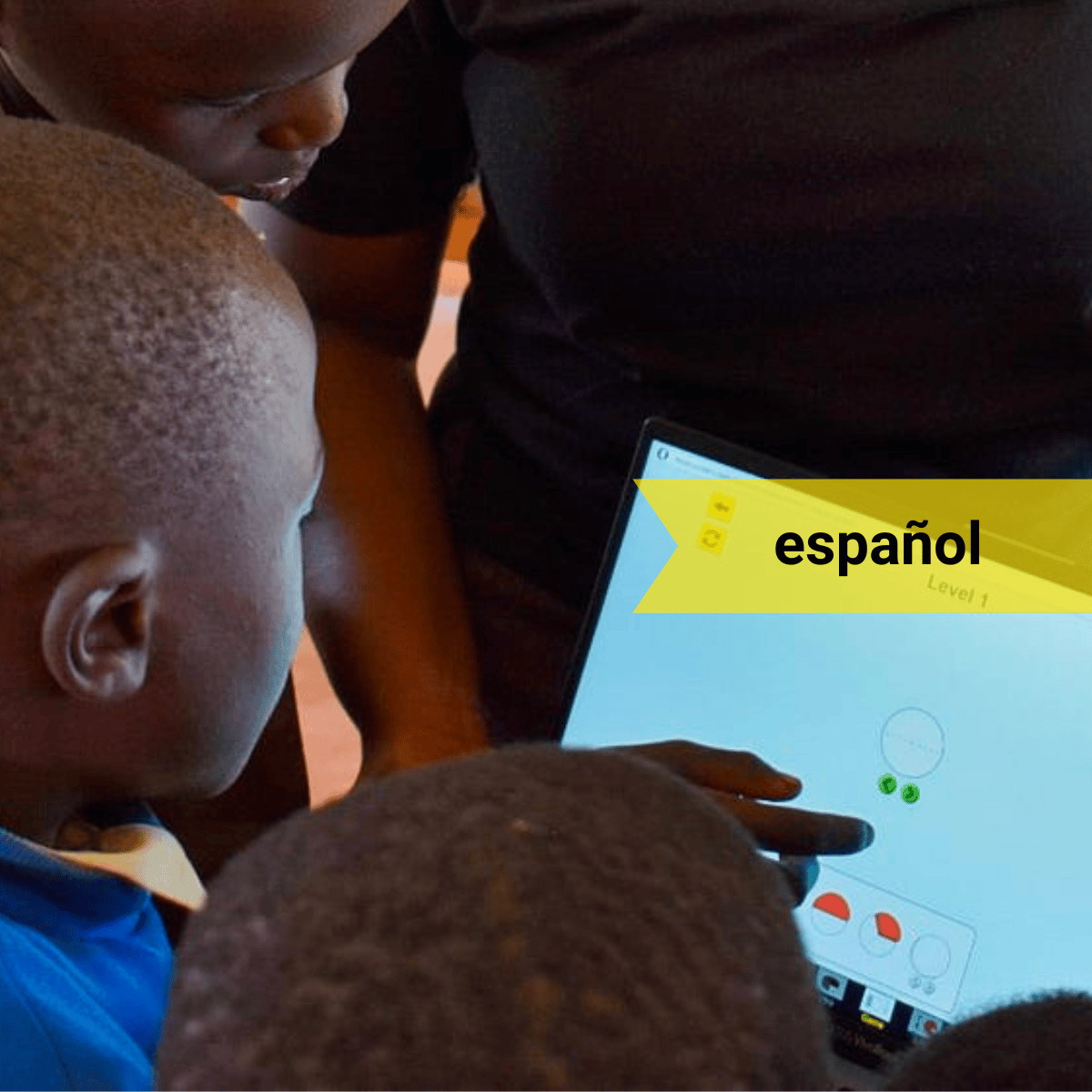
Las Simulaciones Interactivas PhET (https://phet.colorado.edu/es), es un proyecto de la Universidad de Colorado en Boulder, ofrece simulaciones de ciencias y matemáticas divertidas, gratuitas, interactivas y basadas en la investigación para educación primaria, secundaria y superior. Cada simulación se somete a pruebas exhaustivas para garantizar su eficacia educativa. Todas las simulaciones y los recursos asociados son de código abierto y, por lo tanto, gratuitos para todos los usuarios. En este curso, aprenderás a: Adquirir estrategias de enseñanza y facilitación sobre cómo usar simulaciones de PhET en un aula de 3.º a 5.º grado (de 7 a 11 años) y participar en lecciones que respalden el aprendizaje de los estudiantes sobre fracciones. Específicamente, (a) Desarrollar familiaridad con las fracciones a través de simulaciones PhET que incluyen Fracciones: Intro, Parejas de Fracciones, Construye una Fracción, Fracciones: Números Mixtos y Fracciones: Igualdades, y (b) reflexionar sobre estrategias para enseñar fracciones, incluidos grupos pequeños, demostraciones, narración de historias y predicciones, al tiempo que se maximiza la conversación de los estudiantes. Para finalizar este curso, deberás completar debates, cuestionarios calificados automáticamente y una tarea importante con revisión por pares. La tarea de revisión por pares consiste en crear una lección (usando una plantilla) sobre fracciones usando una de las simulaciones PhET presentadas en este curso y revisar las lecciones de otros (utilizando una rúbrica proporcionada).