

The Global Scholarly Directory.
Discover world-class academic programs curated for the modern intellectual. Search through 19877+ degrees and professional certificates.
 Coursera
Cómo usar Canva para maestros
En este proyecto guiado, el alumno aprenderá a aprovechar Canva para maestros. Canva es un software de diseño gráfico en línea que te permite diseñar muchas cosas, ofrece plantillas y muchas otras herramientas que te permiten crear todo lo que necesitas, desde presentaciones, tareas, horarios y mucho más. Canva cuenta con un Programa Educativo que dará acceso a los profesores a Canva Pro totalmente gratis. En este proyecto guiado, podrás explorar la página de inicio de Canva y aprender cómo acceder a Canva para profesores, crear experiencias atractivas para su aula digital, aprender cómo desarrollar relaciones personales con sus alumnos usando Canva, creará un calendario para usted y para sus estudiantes, encontrarás el kit de aula perfecto para ti y finalmente podrá personalizar sus tareas para que tengan el mismo estilo que su salón de clase.
 Board Infinity
Master Full-Stack Web Development with Laravel & PHP
Master Full-Stack Web Development with Laravel & PHP is designed for aspiring web developers and backend engineers who want to build modern, secure web applications using one of the most popular PHP frameworks. You'll start by exploring PHP fundamentals and learning how to install Laravel, as well as how PHP integrates with HTML to power server-side scripting. Through hands-on lessons, you'll master Laravel's elegant structure, routing system, and MVC architecture while building real-world applications. In the second module, you'll dive into advanced Laravel concepts including controllers, views, database migrations, and Eloquent ORM relationships. You'll learn to implement middleware and authentication systems, use the Blade templating engine, and manage complex database interactions that power dynamic web applications. The third module focuses on integrating PHP with Laravel for secure application development. You'll implement CSRF protection, session security, user input validation, and learn to develop RESTful APIs with proper controller design and validation functions. This module ensures your applications meet industry security standards. The final module brings everything together through a comprehensive project series where you'll build a complete Laravel application, applying all concepts learned throughout the course. You'll gain experience in project organization, Laravel documentation usage, and deploying applications using the latest version of Laravel. By the end of this course, you will confidently: 1. Build and deploy complete web applications using the Laravel framework and PHP 2. Implement secure coding practices, authentication, and database management with Laravel migration 3. Develop RESTful APIs and integrate external PHP libraries within Laravel applications 4. Apply Laravel documentation and best practices to create scalable, maintainable web applications 5. Launch production-ready projects and qualify for PHP developer and Laravel specialist roles This course is ideal for those who: - Want a step-by-step, hands-on introduction to the Laravel framework and PHP web development - Are new to backend development or looking to upskill with modern PHP frameworks - Prefer learning by doing and applying knowledge to real-world projects - Are preparing for web developer roles, freelance projects, or PHP/Laravel certifications This course empowers you to build scalable, secure web applications and unlock new opportunities in modern web development with Laravel and PHP. Disclaimer: This is an independent educational resource created by Board Infinity for informational and educational purposes only. This course is not affiliated with, endorsed by, sponsored by, or officially associated with any company, organization, or certification body unless explicitly stated. The content provided is based on industry knowledge and best practices but does not constitute official training material for any specific employer or certification program. All company names, trademarks, service marks, and logos referenced are the property of their respective owners and are used solely for educational identification and comparison purposes.
 Google
5. アセット、脅威、そして脆弱性
Google サイバーセキュリティ プロフェッショナル認定証の 5 つめのコースです。各コースでは初級サイバーセキュリティの職に必要なスキルを身につけることができます。 このコースではアセット、脅威、脆弱性の概念について学びます。まず、アセットがどのように分類されるのかについて理解を深めます。次に、一般的な脅威と脆弱性、貴重な情報を保護し、リスクを軽減するために組織が使用しているセキュリティ コントロールについて理解します。さらに脅威モデリング プロセスの実践を通じて、攻撃者の考え方を身につけ、セキュリティ侵害を未然に防ぐための対策を学びます。 サイバーセキュリティの分野で働いている現職の Google 社員が最適なツールやリソースを使って一般的なサイバーセキュリティの業務を遂行する実践的な方法を指導します。また就職活動への準備も手助けします。 この認定プログラムを修了すると、エントリーレベルのサイバーセキュリティの職に応募できるようになります。過去の業務経験は不要です。
 École Polytechnique
Vers l'infiniment grand - Voyages de l'infiniment grand à l'infiniment petit
Partez à la découverte de l'infiniment grand, en compagnie de physiciens et de physiciennes qui vont vous faire découvrir l'Univers aux distances les plus grandes connues à ce jour et les outils scientifiques utilisés pour l'étudier. Vous comprendrez ce que les scientifiques ont pu apprendre sur l'histoire et la structure de l'Univers, ses composantes, et comment ils ont pu accumuler ces observations sur les étoiles, les galaxies, les amas de galaxies, et l'Univers dans son ensemble. Ce cours en français fait partie du MOOC "Voyages de l'infiniment grand à l'infiniment petit", conçus par des physiciens et des physiciennes du Labex P2IO (Physique des 2 Infinis et des Origines) regroupant des laboratoires de physique de l'infiniment grand et de l'infiniment petit situés à Orsay et Saclay. Les différents parcours de ce MOOC vous montreront les connaissances et les énigmes de l'infiniment grand et de l'infiniment petit, les relations que ces deux infinis entretiennent, et les liens de ces découvertes avec la société : https://www.coursera.org/learn/physique-2-infinis-infiniment-petit https://www.coursera.org/learn/physique-2-infinis-infiniment-grand https://www.coursera.org/learn/physique-2-infinis-liens https://www.coursera.org/learn/physique-2-infinis-et-nous Le MOOC "Voyages de l'infiniment grand à l'infiniment petit" a été conçu avec le soutien financier du Labex P2IO (Physique des 2 Infinis et des Origines) présenté sur www.labex-p2io.fr
 University of Geneva
Portfolio and Risk Management
In this course, you will gain an understanding of the theory underlying optimal portfolio construction, the different ways portfolios are actually built in practice and how to measure and manage the risk of such portfolios. You will start by studying how imperfect correlation between assets leads to diversified and optimal portfolios as well as the consequences in terms of asset pricing. Then, you will learn how to shape an investor's profile and build an adequate portfolio by combining strategic and tactical asset allocations. Finally, you will have a more in-depth look at risk: its different facets and the appropriate tools and techniques to measure it, manage it and hedge it. Key speakers from UBS, our corporate partner, will regularly add a practical perspective on these different topics as you progress through the course.
 University of California, Irvine
Verb Tenses and Passives
This is the first course in the Learn English: Advanced Grammar and Punctuation specialty. In this course, you will review the verb tenses that you learned in beginning English classes and learn about a few tenses you may not know very well. In all, you'll cover all 12 of the English verb tenses and passive verb forms. Most importantly, you'll learn how to blend these tenses, which is what native speakers frequently do. This course is vital to your becoming a more fluent English speaker. Please note that the free version of this class gives you access to all of the instructional videos and handouts. The peer feedback and quizzes are only available in the paid version.
 DeepLearning.AI
Data Storage and Queries
In this course, you will learn about the raw ingredients and processes that are used to physically store data on disk and in memory. You’ll explore different storage systems, including object, block, and file storage, as well as databases, that are built on top of these raw ingredients. You’ll also get a chance to use the Cypher language to query a Neo4j graph database, and perform vector similarity search, a key feature behind generative AI and large language models. You will explore the evolution of data storage abstractions, from data warehouses, to data lakes, and data lakehouses, while comparing the advantages and drawbacks of each architectural paradigm. With hands-on practice, you will design a simple data lake using Amazon Glue, and build a data lakehouse using AWS LakeFormation and Apache Iceberg. In the last week of this course, you’ll see how queries work behind the scenes, practice writing more advanced SQL queries, compare the query performance in row vs column-oriented storage, and perform streaming queries using Apache Flink.
 Duke University
Emphasizing Christian Formation
Welcome to Emphasizing Christian Formation. This course examines how Methodism’s deep-rooted attention to Christian formation can nurture both gifts and character in our communities. We’ll see how Methodist formation hinges upon the Methodist doctrine of holiness. We’ll consider how innovations in the complementary practices of preaching and fellowship were directed to holiness and fueled the growth of Methodism in 18th-century England. We will also consider how education contributes to our growth as disciples of Christ. Drawing on these lessons allows us to rethink the practices of our own communities. Finally, we will learn that the Methodist way of Christian formation finds its fullest expression in prayer. Throughout four weeks, you will learn the definition of Christian formation— and how to connect this to your church and individual practices and forming diverse communities of faith. In each week of the course, you’ll be asked to reflect on scripture to guide you to take practical steps in how to incorporate theology in your own worship, fellowship, teaching, and mission. If you are a pastor or ministry professional in need of Continuing Education Unit (CEU) credits for your professional development, CEU credits are available for this course. Upon successful completion of this course, you can provide your Coursera certificate and the course description to your employer for recognition of earning 0.5 CEUs. Contact divinityonline@duke.edu with any questions regarding CEUs for this course. Each of the 5 courses in the Rediscovering the Heart of Methodism specialization is worth 0.5 CEUs, for a total of 2.5 CEUs for completing all of the courses. This course is part of the Rediscovering the Heart of Methodism series. This is one of five 4-week online courses designed to help engaged laypeople and clergy (including local pastors in licensing schools) develop core capacities for innovative leadership within the Wesleyan tradition. Through this series, we hope you will experience a deeper grounding in the distinctive elements of Methodism at its best, and a renewed capacity for hopeful, imaginative participation in the mission of God.
 University of Colorado Boulder
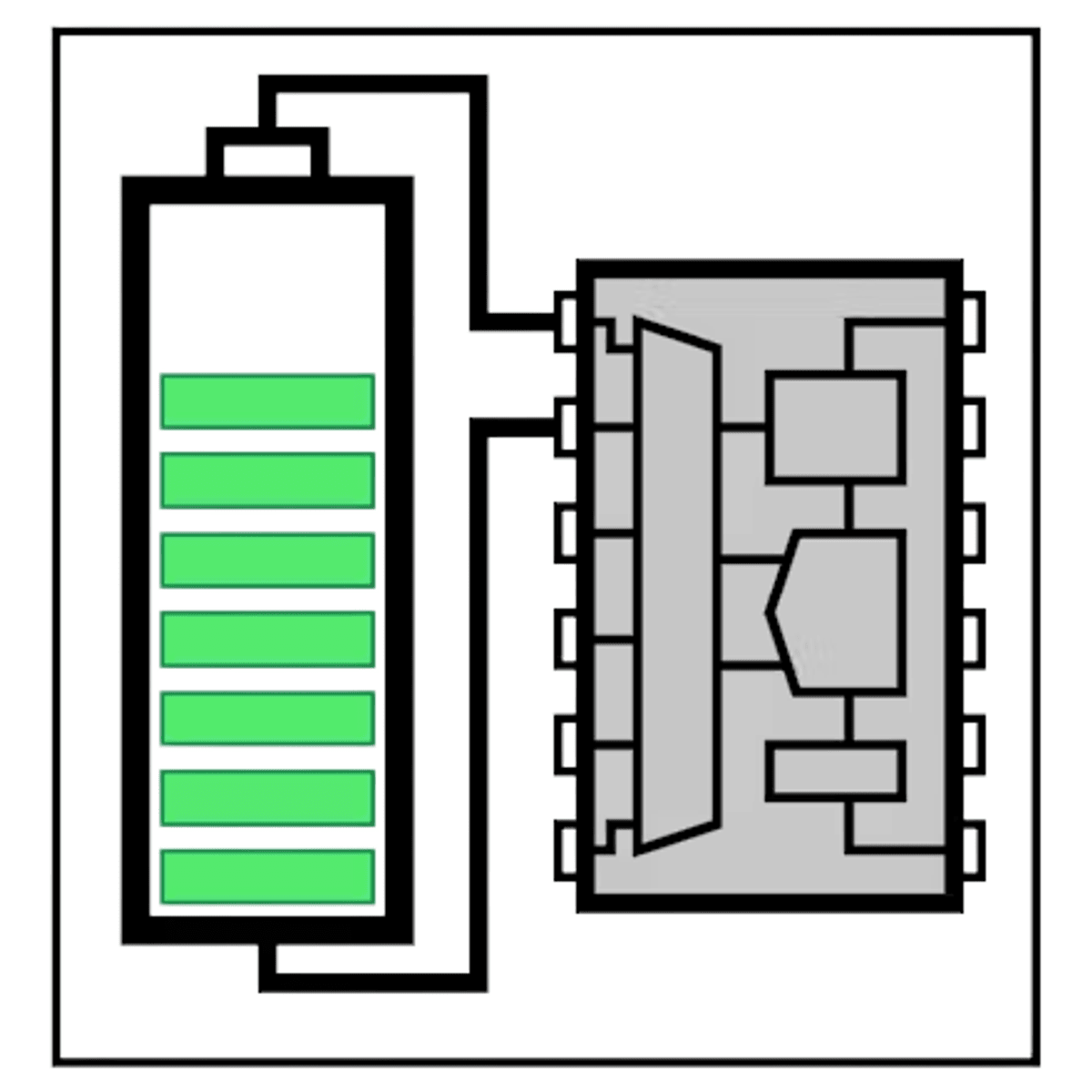
Introduction to battery-management systems
This course can also be taken for academic credit as ECEA 5730, part of CU Boulder’s Master of Science in Electrical Engineering degree. This course will provide you with a firm foundation in lithium-ion cell terminology and function and in battery-management-system requirements as needed by the remainder of the specialization. After completing this course, you will be able to: - List the major functions provided by a battery-management system and state their purpose - Match battery terminology to a list of definitions - Identify the major components of a lithium-ion cell and their purpose - Understand how a battery-management system “measures” current, temperature, and isolation, and how it controls contactors - Identify electronic components that can provide protection and specify a minimum set of protections needed - Compute stored energy in a battery pack - List the manufacturing steps of different types of lithium-ion cells and possible failure modes
 Coursera
Crea Videos para Redes Sociales con PicsArt
Al final de este proyecto usted habrá aprendido a crear un video para las redes sociales usando la versión gratis de PicsArt. PicsArt es un programa de edición basado en la web para editar fotos y videos. Consumidores hoy en día están constantemente saturados con información e imágenes en las redes sociales. Parte del social media marketing es aprender maneras creativas para atraer la atención a productos y servicios , con un presupuesto que muchas veces es magro. PicsArt ofrece todas las herramientas necesarias para crear un producto tanto organizado como visualmente atractivo y fácilmente de compartir y trabajar en equipo. Los usuarios de PicsArt pueden fácilmente crear e implementar ediciones creativas con herramientas de diseño virtuales para comercializar sus negocios. Al final de este proyecto usted podrá aplicar herramientas de diseño gráfico a sus posts de redes sociales para comercializar su negocio. Nota: Este curso es de mayor utilidad para estudiantes que residen en la región de América del Norte. Actualmente, estamos trabajando para proporcionar la misma experiencia en otras regiones.
 IBM
IBM
SQL: A Practical Introduction for Querying Databases
Much of the world's data lives in databases. SQL (or Structured Query Language) is a powerful programming language that is used for communicating with and manipulating data in databases. A working knowledge of databases and SQL is a must for anyone who wants to start a career in Data Engineering, Data Warehousing, Data Analytics, Data Science or Business Intelligence. The purpose of this course is to help you learn and apply foundational and intermediate knowledge of the SQL language, and become familiar with many relational database (RDBMS) concepts along the way. You will start with performing basic Create, Read, Update and Delete (CRUD) operations using CREATE, SELECT, INSERT, UPDATE and DELETE statements. You will then learn to filter, order, sort, and aggregate data. You will work with functions, perform sub-selects and nested queries, as well as JOIN data in multiple tables. You will also work with VIEWS, transactions and create stored procedures. The emphasis in this course is on hands-on, practical learning. As such, you will work with real database systems, use real tools, and real-world datasets. You will create a database instance in the cloud. Through a series of hands-on labs, you will practice building and running SQL queries. At the end of the course you will apply and demonstrate your skills with a final project. The SQL skills you learn in this course will be applicable to a variety of RDBMSes such as MySQL, PostgreSQL, IBM Db2, Oracle, SQL Server and others. No prior knowledge of databases, SQL or programming is required, however some basic data literacy is beneficial.
 The University of North Carolina at Chapel Hill
Research Data Management and Sharing
This course will provide learners with an introduction to research data management and sharing. After completing this course, learners will understand the diversity of data and their management needs across the research data lifecycle, be able to identify the components of good data management plans, and be familiar with best practices for working with data including the organization, documentation, and storage and security of data. Learners will also understand the impetus and importance of archiving and sharing data as well as how to assess the trustworthiness of repositories. Today, an increasing number of funding agencies, journals, and other stakeholders are requiring data producers to share, archive, and plan for the management of their data. In order to respond to these requirements, researchers and information professionals will need the data management and curation knowledge and skills that support the long-term preservation, access, and reuse of data. Effectively managing data can also help optimize research outputs, increase the impact of research, and support open scientific inquiry. After completing this course, learners will be better equipped to manage data throughout the entire research data lifecycle from project planning to the end of the project when data ideally are shared and made available within a trustworthy repository. This course was developed by the Curating Research Assets and Data Using Lifecycle Education (CRADLE) Project in collaboration with EDINA at the University of Edinburgh. This course was made possible in part by the Institute of Museum and Library Services under award #RE-06-13-0052-13. The views, findings, conclusions or recommendations expressed in this Research Data Management and Sharing MOOC do not necessarily represent those of the Institute of Museum and Library Services. Hashtag: #RDMSmooc Learners can apply for Financial Aid directly with Coursera to assist with the cost of accessing the full course and gaining a certificate for successfully completing the course.
 ISAE-SUPAERO
Introduction to Aircraft Airworthiness
ISAE-SUPAERO and ENAC, two academic and research leaders in the field of aviation and aerospace engineering, join to propose a course about the basics of aircraft airworthiness. At the end of this course, you will be able to identify the applicable processes and technical requirements to ensure safety and environmental protection level of an aircraft, from its design to its end-of-life: - identify an acceptable level of safety - describe roles and responsibilities of stakeholders - describe the principles required to ensure that an aircraft design will meet applicable requirements - describe the principles required to ensure that an aircraft remains safe and compliant with environmental requirements when in operation. ISAE-SUPAERO and ENAC are based in Toulouse, France, at the heart of a dynamic civil and military aeronautical ecosystem that shapes the future of global aerospace.
 Google Cloud
Introduction to Computer Vision with TensorFlow
This is a self-paced lab that takes place in the Google Cloud console. In this lab you create a computer vision model that can recognize items of clothing and then explore what affects the training model.
 Google
Análise de dados com programação em R
Este é o sétimo curso do Certificado de Data Analytics do Google. Estes cursos darão a você as habilidades necessárias para se candidatar a cargos empregos de analista de dados de nível inicial. Neste curso, você aprenderá sobre a linguagem de programação conhecida como R. Você descobrirá como usar o RStudio, o ambiente que permite trabalhar em R. O curso também abarcará os aplicativos e ferramentas de software exclusivos de R, como os pacotes de R. Você descobrirá como é possível limpar, organizar, analisar, visualizar e gerar relatórios de dados usando R de maneiras novas e contundentes. Os analistas de dados do Google vão instruir e oferecer maneiras práticas de realizar tarefas comuns de analistas de dados com as melhores ferramentas e recursos. Os alunos que concluírem este programa de certificação poderão se candidatar a empregos de nível inicial para analista de dados. Nenhuma experiência anterior é necessária. Ao final deste curso, você poderá: - Examinar os benefícios de usar a linguagem de programação R. - Usar o RStudio para aplicar R em suas análises. - Explorar os conceitos fundamentais da programação em R. - Explorar o conteúdo e os componentes dos pacotes de R, inclusive o pacote Tidyverse. - Compreender os dataframes e seu uso em R. - Conhecer as opções para gerar visualizações em R. - Saber sobre R Markdown para documentar a programação em R.
 Universidad Nacional Autónoma de México
Negociar con sentido: ¿Competir, colaborar o ceder?
Quien egresa de este curso comprenderá de forma integral, crítica y contextual los fundamentos de la negociación, identificando cómo los modelos clásicos, críticos, feministas y comunitarios se relacionan con marcos teóricos, éticos, psicológicos y culturales. Reconocerá e interpretará las dinámicas en la negociación del poder, la persuasión y la cooperación en distintos contextos interpersonales, profesionales, sociales e interculturales, mostrando sensibilidad ante la diversidad y las asimetrías. Comprenderá también la relevancia de la cultura, las emociones y los sesgos cognitivos en la toma de decisiones negociadoras, así como los fundamentos conceptuales de herramientas como BATNA, ZOPA, equilibrio de Nash y dilema del prisionero, interpretándolas como medios para construir acuerdos justos, sostenibles y culturalmente pertinentes.