

The Global Scholarly Directory.
Discover world-class academic programs curated for the modern intellectual. Search through 19877+ degrees and professional certificates.
 University of Houston
Value-Based Care: Introduction to Value-Based Care and the U.S. Healthcare System
COURSE 1 of 7. This course is designed to introduce you to the concept of value-based care (VBC). While the information you will explore is general, it will help you establish a solid foundation for continued learning and future thinking about the concept of VBC. Through a historical lens, you will explore the creation of Medicare and Medicaid and the evolution of commercial insurance, TRICARE, and the Veterans Health Administration. While history is an important filter for understanding healthcare in this country, you will learn how each of these mechanisms emerged, the populations served, and what changes occurred over time, with a focus on funding and expenditures. In addition, this course will help you establish a firm foundation for understanding the development and evolution of quality measures and outcomes in healthcare. By developing an understanding of what quality is and how it is measured, you can begin a knowledge-building exploration of the components of quality in healthcare. Why is this important? In value-based care models, providers must meet quality measures and improve the health outcomes of their patients. In the summative assignment, you will use a national system of quality measures to develop a plan that would positively impact value within your healthcare organization.
 University of Illinois Urbana-Champaign
Managerial Accounting: Tools for Facilitating and Guiding Business Decisions
In this course, you will explore how to use accounting to allocate resources and incentivize manager and employee behaviors with these resources. You will also learn how financial and non-financial accounting information facilitates strategic performance measurement and how to integrate this information to continuously improve strategy. You will be able to: • Understand the role of managerial accounting information and use it to avoid common pitfalls in business decisions • Understand the iterative and interrelated nature of budgeting and apply the key components to preparing a master budget • Evaluate capital investments via a variety of measures • Calculate, interpret, and investigate variances • Understand decentralization and its advantages and disadvantages • Communicate the role of non-financial measures and strategic performance measurement systems • Compute and interpret financial performance measures and identify associate issues This course is part of Gies College of Business’ suite of online programs, including the iMBA and iMSM. Learn more about admission into these programs and explore how your Coursera work can be leveraged if accepted into a degree program at https://degrees.giesbusiness.illinois.edu/idegrees/.
 University of Maryland, College Park
Lean Enterprise Framework: Transform the Business Model
This course provides a comprehensive overview of lean portfolio and product management, focusing on transforming business models through customer-centric approaches and innovative product development strategies. Key topics covered: CUSTOMER ARCHITECTURE The course begins by emphasizing the importance of developing a deep customer-centric perspective. It introduces various frameworks and methodologies to understand and segment customers effectively: - Jobs to be Done (JTBD) framework: This approach helps identify the core needs and motivations of customers, focusing on what they're trying to accomplish rather than just their demographic characteristics. - Customer segmentation: Techniques to categorize customers based on their needs, behaviors, and characteristics. - Customer experience mapping: Creating detailed journey maps to understand how customers interact with products across a portfolio. PRODUCT MARKET FIT A significant portion of the course is dedicated to achieving and measuring product-market fit: - Value Proposition Canvas: A tool to align product offerings with customer needs and desires. - Minimum Viable Product (MVP): Strategies for creating and testing initial product versions to validate market demand. - Metrics for measuring fit: Including Net Promoter Score (NPS), customer retention rates, and customer lifetime value. INNOVATION MODELS The course covers various innovation models and strategies to foster continuous improvement and product development: - Design Thinking: A human-centric approach to problem-solving and innovation. - Lean Startup: Methodology for rapid experimentation and iterative product development. - Blue Ocean Strategy: Focusing on creating uncontested market spaces rather than competing in existing markets. - Three Horizons Model: Balancing current business needs with future growth opportunities. PRODUCT ARCHITECTURE The course delves into product architecture, emphasizing the importance of modular design and scalability: - Component model: Understanding products as a sum of interconnected, standardized parts. Plug-and-play architecture: Designing products for easy integration and expansion. - Internal platforms: Building scalable foundations for multiple products within a portfolio. BUSINESS MODEL INNOVATION Students learn about various ways to innovate not just in product features, but in how businesses deliver value and generate revenue: - Freemium models: Offering basic services for free while charging for premium features. - Subscription-based models: Shifting from one-time purchases to recurring revenue streams. - Direct-to-consumer sales: Eliminating intermediaries in the sales process. PORTFOLIO MANAGEMENT The course provides insights into managing a collection of products effectively: - Balanced portfolio framework: Balancing quick wins, core improvements, and big bets. - Feature gap analysis: Identifying unmet customer needs across product lines. - Cross-product synergies: Leveraging strengths across different products in a portfolio. METRICS AND KPIS Throughout the course, there's a strong emphasis on measuring success and driving improvements: - Objectives and Key Results (OKRs): A framework for setting and tracking goals. - Key Performance Indicators (KPIs): Metrics to measure product and portfolio performance. - Customer satisfaction metrics: Including CSAT, NPS, and customer effort score. INNOVATION CULTURE AND PROCESSES The course discusses how to foster a culture of innovation within organizations: - Collaborative culture: Encouraging cross-functional teamwork and idea sharing. - Empowerment: Giving teams the freedom and resources to innovate. - Risk tolerance: Balancing the need for innovation with responsible risk management. BUSINESS MODEL CANVAS Students learn to use the Business Model Canvas as a tool for visualizing and developing business models for new and existing products: - Nine key components: Including value propositions, customer segments, revenue streams, and cost structure. - Feasibility, desirability, and viability: The three key areas to evaluate business model strength. REVENUE MODELS The course explores various revenue models that can be applied to products: - Transactional models: One-time purchases, licensing, and royalties. - Recurring revenue models: Subscriptions and software-as-a-service (SaaS). - Platform models: Advertising, data monetization, and transaction fees. PRACTICAL APPLICATION Throughout the course, real-world case studies and examples are used to illustrate concepts, along with knowledge checks to test you on the lessons. - Netflix Kids case study: Demonstrating how to launch a differentiated portfolio offering. - Automotive industry examples: Showing how lean manufacturing and modular design principles are applied. This course is designed for product managers, business strategists, and entrepreneurs looking to develop innovative, customer-centric products and manage diverse product portfolios. It combines theoretical frameworks with practical applications, providing students with the tools to transform business models and drive growth through effective product management strategies.
 Coursera
Create PDF Balance Report using HTML, Excel & Power Automate
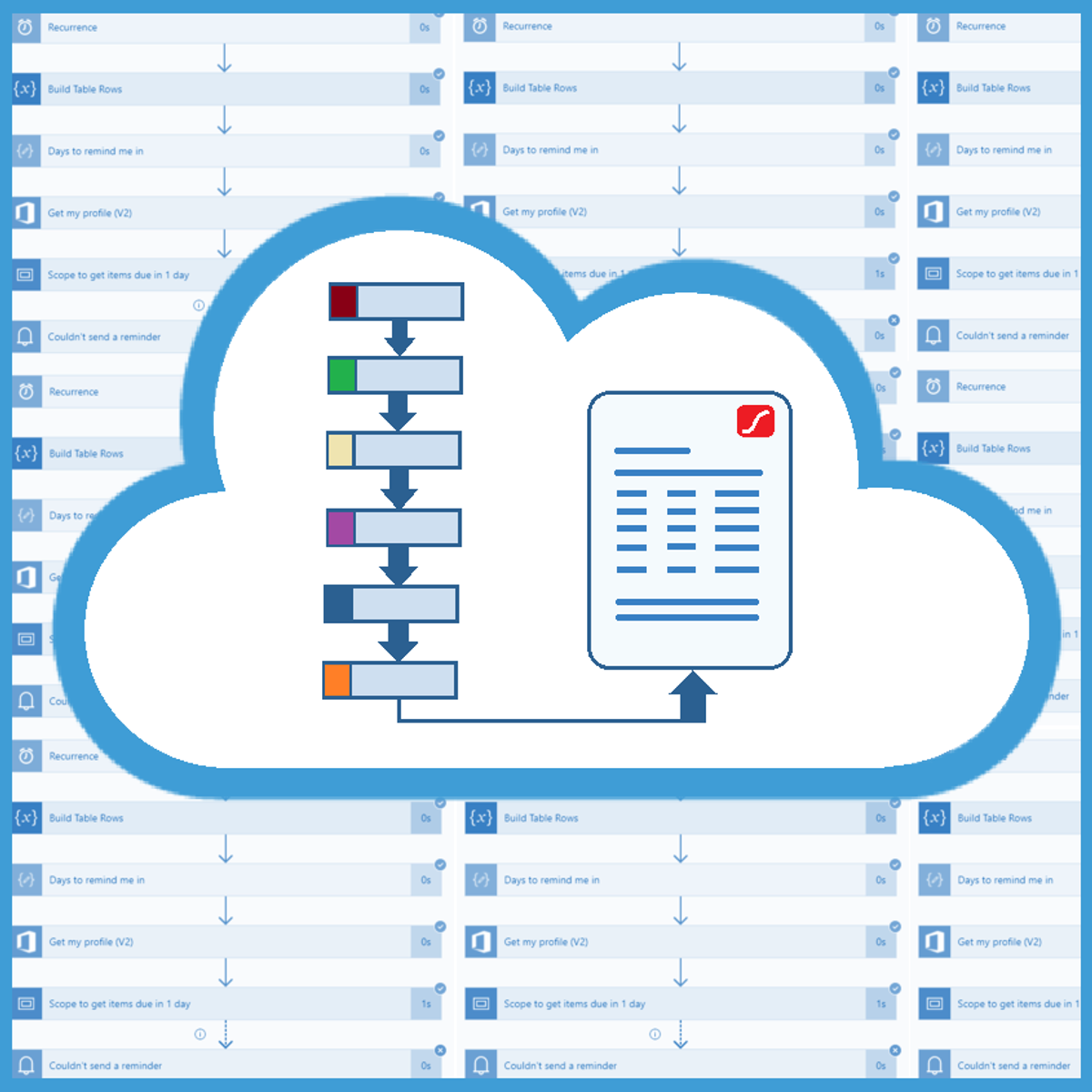
Every company must create various documents and reports for its accountants every month and employees spend a lot of time creating them manually. For example, when it comes to a monthly balance report, employees must keep a record of all outflows and inflows of money (usually in Excel) and manually create documents and reports that are sent to the accountant for further processing. You can imagine how exhausting and time consuming it is. Thankfully, we can leverage Power Automate functionalities and automate document creation with all needed calculations. This Guided Project "Create PDF Balance Report using HTML, Excel & Power Automate" is for any business professional who is looking to automate any kind of document or report creation. In this 1-hour long guided project, you will learn how to use OneDrive, Excel, HTML and Power Automate to automate a monthly balance report creation. You will also create a Power Automate flow to send that report by email. What’s great about Power Automate is that anyone can learn to use it regardless of their educational background! Since this project uses Power Automate (part of the Microsoft Power Platform), you will need access to a Microsoft account and a Microsoft 365 Developer Program subscription. In the video at the beginning of the project you will be given instructions on how to sign up for both. If you are ready to make your and your colleagues’ lives easier by starting to automate manual, time-consuming processes which are hard to track, then this project is for you! Let's get started!
 Coursera
Organic Marketing: Facebook Groups For Small Businesses
In this project, the learner will build a client profile, master Facebook groups netiquette, and utilize them as a Marketing tool. We will learn how to generate clients using a free organic method without paid advertising. By the end of this project we will construct a step by step daily Facebook group action plan to promote a small business, and develop a strong influential Facebook account to attract high paying clients. Note: This course works best for learners who are based in the North America region. We’re currently working on providing the same experience in other regions.
 HubSpot Academy
Lead Management with HubSpot
In this course, you will learn how to create and implement an effective lead management strategy for your business using HubSpot’s tools. After learning the importance of lead management within the context of the buyer’s journey, you will learn best practices for auditing and mapping out your process as well as for using a sales and marketing SLA. You’ll learn how to organize your leads by both segmenting them and qualifying them within a lead qualification framework. Nurturing relationships with your leads will be a key part of these practices, as well. Next, you’ll learn how to assign values to leads in order to prioritize outreach along with how to quickly assign each lead to the right representative on your team. You’ll learn to use metrics to track your lead management results and report them using HubSpot’s dashboard. Finally, the course will culminate in the application of your skills to build a lead management flow in HubSpot. By the end of this course you will be able to: • Describe the importance of lead management • Create an effective lead management strategy • Segment, qualify and organize leads in HubSpot • Create a lead nurturing email campaign • Prioritize leads with lead scoring in HubSpot • Manage Sales Qualified Leads with Lead Routing • Identify metrics to track lead management results • Report on lead management results • Create a lead management dashboard in HubSpot • Experience and build a lead management flow in HubSpot Regardless of your current experience, this course will teach you the practices you need to create a lead management flow in HubSpot and successfully nurture your lead relationships. This course is intended for anyone interested in jumpstarting their career in sales - whether you’re changing careers and looking for an entry-level role, or want to hone your skills in your current role as a sales representative. It does not require any background knowledge or experience to get started. Throughout the course, you will complete exercises that ask you to apply the skills you have learned in a practical way, such as mapping your lead management process, scoring leads with a worksheet, and creating a lead routing workflow. You will compile your work and submit it as a project at the end of the course.
 Johns Hopkins University
Psychological First Aid
Learn to provide psychological first aid to people in an emergency by employing the RAPID model: Reflective listening, Assessment of needs, Prioritization, Intervention, and Disposition. Utilizing the RAPID model (Reflective listening, Assessment of needs, Prioritization, Intervention, and Disposition), this specialized course provides perspectives on injuries and trauma that are beyond those physical in nature. The RAPID model is readily applicable to public health settings, the workplace, the military, faith-based organizations, mass disaster venues, and even the demands of more commonplace critical events, e.g., dealing with the psychological aftermath of accidents, robberies, suicide, homicide, or community violence. In addition, the RAPID model has been found effective in promoting personal and community resilience. Participants will increase their abilities to: - Discuss key concepts related to PFA - Listen reflectively - Differentiate benign, non-incapacitating psychological/ behavioral crisis reactions from more severe, potentially incapacitating, crisis reactions - Prioritize (triage) psychological/ behavioral crisis reactions - Mitigate acute distress and dysfunction, as appropriate - Recognize when to facilitate access to further mental health support - Practice self-care Developed in collaboration with Johns Hopkins Open Education Lab.
 Coursera
Develop Production-Ready ML APIs with MLOps
This intermediate-level course is designed for machine learning engineers and developers who want to move beyond experiments and ship reliable ML systems. Learners will learn how to apply core MLOps practices such as version control, pull requests, and CI/CD pipelines to keep an ML codebase healthy and production-ready. Learners will also design modular software components and build a FastAPI microservice that serves a transformer model through a clean, well-defined API. Through short videos, guided coaching conversations, hands-on learning activities, and an ungraded lab, Learners will practice real workflows used by ML teams in industry. By the end of the course, Learners will be able to confidently collaborate on ML codebases, pass automated quality checks, and deploy machine learning models behind scalable APIs.
 Board Infinity
Backend Development using ASP.Net
The second course in the ASP.NET for Experienced Developers specialization dives deeper into the development of robust and scalable backend applications using ASP.NET technologies. This course is structured around three key ASP.NET technologies: ASP.NET Core, ASP.NET MVC, and ASP.NET Web API. In the first module of the course, participants will explore ASP.NET Core, a cross-platform, high-performance framework for building web applications. Learners will grasp how to create, configure, and control middleware, routing, and controllers in ASP.NET Core applications. The second module of the course focuses on ASP.NET MVC, an advanced framework for building web applications that follow the MVC (Model-View-Controller) pattern. This part will impart knowledge about creating views, models, and controllers and utilizing them effectively to construct web applications. The third module delves into ASP.NET Web API, a framework used for building RESTful APIs consumable by a diverse range of clients. It involves the understanding of creating controllers, mapping routes, handling HTTP requests, and managing responses. By the end of the course, participants will gain a solid understanding of ASP.NET technologies, including ASP.NET Core, ASP.NET MVC, and ASP.NET Web API. They will be capable of creating robust and scalable backend applications that can handle high traffic and complex business logic. Disclaimer: This course is an independent educational resource developed by Board Infinity and is not affiliated with, endorsed by, sponsored by, or officially associated with Microsoft Corporation or any of its subsidiaries or affiliates. This course is not an official preparation material of Microsoft Corporation. All trademarks, service marks, and company names mentioned are the property of their respective owners and are used for identification purposes only.
 Coursera
Introduction to Java Programming: Java Fundamental Concepts
In this 1h 40 minutes long project-based course, you will learn how to navigate and use the NetBeans IDE to create Java projects, packages and programs, declare and use Java Datatypes & Identifiers, work with Java Operators, work with Java Decision Making Constructs, work with Java repetition/Looping Constructs, declare and use Java Arrays, as well as work with the Java Exception Handling mechanism. Once you've successfully completed this project, you should comfortably start learning how to work with mobile application development using Java or delve into advanced Java courses. Note: This course works best for learners who are based in the North America region. We’re currently working on providing the same experience in other regions.
 Coursera
Real-time data visualization dashboard using Node-red
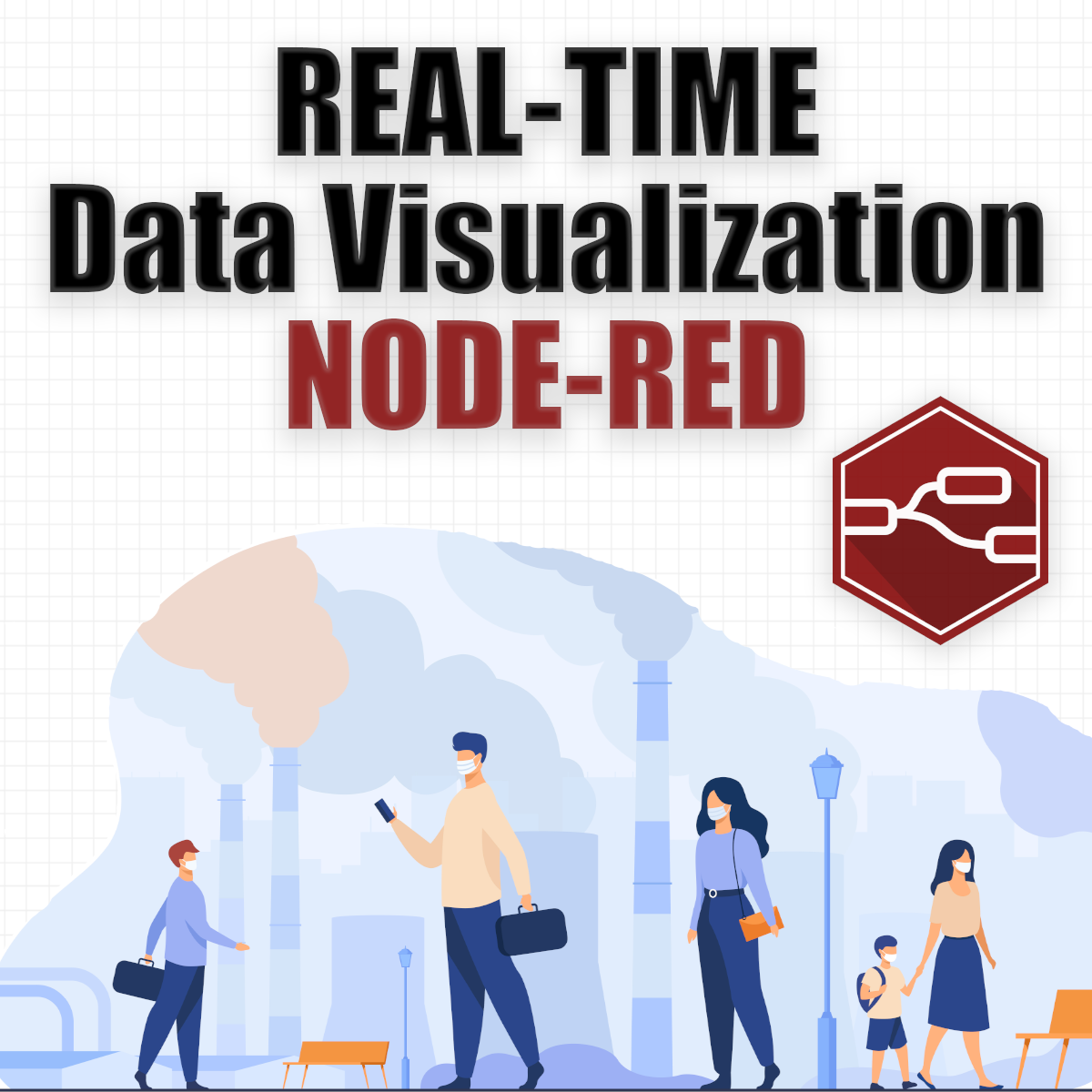
At the end of this project you are going learn how to create an real-time data visualization dashboard using node-red. so in this project we are going to use openAQ API which is an open source API sharing real-time air quality data related to different cities around the globe. we are going to fetch this data, preprocess it and visualize it using node-red. Therefor, as a very important prerequisite you should have a basic knowledge of node-red. if you don’t have any experience using node-red I recommend to attend my guided project course on introduction to node-red on Coursera.
 Google Cloud
Gemini in Google Docs - Deutsch
Gemini für Google Workspace ermöglicht Kunden den Zugriff auf generative KI-Funktionen. In diesem Kurs geht es anhand von Videolektionen, praktischen Übungen und Anwendungsbeispielen um die Funktionen von Gemini in Google Docs. Sie lernen, wie Sie mit Gemini und Prompts schriftliche Inhalte erstellen. Außerdem erfahren Sie, wie Sie Gemini zum Bearbeiten bereits geschriebener Texte verwenden, um Ihre Gesamtproduktivität zu steigern. Am Ende dieses Kurses können Sie Gemini in Google Docs sicher anwenden und bessere Texte verfassen.
 CentraleSupélec
Build Your First Android App (Project-Centered Course)
What you’ll achieve: In this project-centered course*, you’ll design, build, and distribute your own unique application for the Android mobile platform. We’ll provide you with a set of customizable building blocks that you can assemble to create many different types of apps, and that will help you become familiar with many important specificities of Android development. When you complete the project, in addition to having a personalized app that you can use and share, you’ll have the skills and background you need to move on to more advanced coursework in Android development. What you’ll need to get started: This project-centered course is designed for learners who have some prior experience programming in Java, such as an introductory college course or Coursera’s Java Programming Specialization (https://www.coursera.org/specializations/java-programming). You will need a computer with a stable Internet connection, but you will not need an Android phone - we’ll use free software that you can use to emulate a phone on your computer. We'll use Android Studio as IDE; it is compatible with most computer and operating systems. You can find detailed system requirements here: https://developer.android.com/sdk/index.html#Requirements. *About Project-Centered Courses: Project-centered courses are designed to help you complete a personally meaningful real-world project, with your instructor and a community of learners with similar goals providing guidance and suggestions along the way. By actively applying new concepts as you learn, you’ll master the course content more efficiently; you’ll also get a head start on using the skills you gain to make positive changes in your life and career. When you complete the course, you’ll have a finished project that you’ll be proud to use and share. Time: 10 hours of study, 10 hours of active project work
 Stanford University
Organizational Analysis
In this introductory, self-paced course, you will learn multiple theories of organizational behavior and apply them to actual cases of organizational change. Organizations are groups whose members coordinate their behaviors in order to accomplish a shared goal. They can be found nearly everywhere in today’s society: universities, start-ups, classrooms, hospitals, non-profits, government bureaus, corporations, restaurants, grocery stores, and professional associations are some of many examples of organizations. Organizations are as varied and complex as they are ubiquitous: they differ in size and internal structure; they can entail a multiplicity of goals and tasks (some of which are planned and others unplanned!); they are made up of individuals whose goals and motivations may differ from those of the group; and they must interact with other organizations and deal with environmental constraints in order to be successful. This complexity frequently results in a myriad of problems for organizational participants and the organization’s survival. In this course, we will use organizational theories to systematically analyze how an organization operates and can best be managed. Organizational theories highlight certain features of an organization’s structure and environment, as well as its processes of negotiation, production, and change. Each provides a lens for interpreting novel organizational situations and developing a sense for how individual and group behaviors are organized. Theories are valuable for the analyst and manager because most organizational problems are unique to the circumstances and cannot be solved by simple rules of thumb. Armed with a toolset of organizational theories, you will be able to systematically identify important features of an organization and the events transforming it; choose a theoretical framework most applicable to the observed mode of organizing; and use that theory to determine which actions will best redirect the organization in desired directions. In sum, the course has three goals: to become familiar with a series of real-world organizational phenomena; to learn different theoretical perspectives that can elucidate these phenomena; and to apply these different ways of “seeing” and managing organizations to cases. In such a fashion, the course is designed to actively bridge theory and practice, exposing students to a variety of conceptual tools and ways to negotiate novel situations.
 University of Glasgow
Evolutionary Computation and its Applications
One of the most important applications of AI in engineering is optimization. Optimization is almost needed everywhere in science and engineering. Compared with traditional mathematical optimization techniques, evolutionary computation, which is a branch of AI, is attracting much attention. After taking this course, students will be able to understand how evolutionary computation works and fluently use AI-based optimization techniques to solve engineering optimization problems via MATLAB. This course introduces fundamental concepts in optimization and the working principles of genetic algorithm and particle swarm optimization in a comprehensive and understandable way. Case studies from real-world engineering are provided, making sure students have the ability to apply what they have learned in real practice. In partnership with MathWorks, enrolled students have access to MATLAB for the duration of the course.
 Coursera
Uncover AI's Impact on Consumer Psychology
Understand why users embrace or abandon AI wellness tools—and gain the skills to analyze any AI-based well-being product. You'll learn to apply the key psychological factors that drive adoption—trust, privacy, perceived empathy, effort expectancy, and social influence—to evaluate real products and identify where they succeed or fall short. Master the five-stage consumer decision journey and see exactly where users progress or drop off with AI mood trackers, stress-relief chatbots, and wellness apps. Most importantly, you'll apply structured observation techniques to record and categorize real user behavior, separating what you see from what you interpret. Through realistic role plays and coach dialogues, you'll practice applying adoption factors to diagnose products and facilitating decision journey discussions. Designed for product managers, UX researchers, marketers, and anyone working in the AI wellness space. No technical background required—just curiosity about why people interact with AI the way they do.