

The Global Scholarly Directory.
Discover world-class academic programs curated for the modern intellectual. Search through 19877+ degrees and professional certificates.
 Google Cloud
Creating a Gmail Add-on
This is a self-paced lab that takes place in the Google Cloud console. In this hands-on lab you create a Gmail Add-on that allows you to quickly change the labels of an email thread.
 IBM
IBM
ETL and Data Pipelines with Shell, Airflow and Kafka
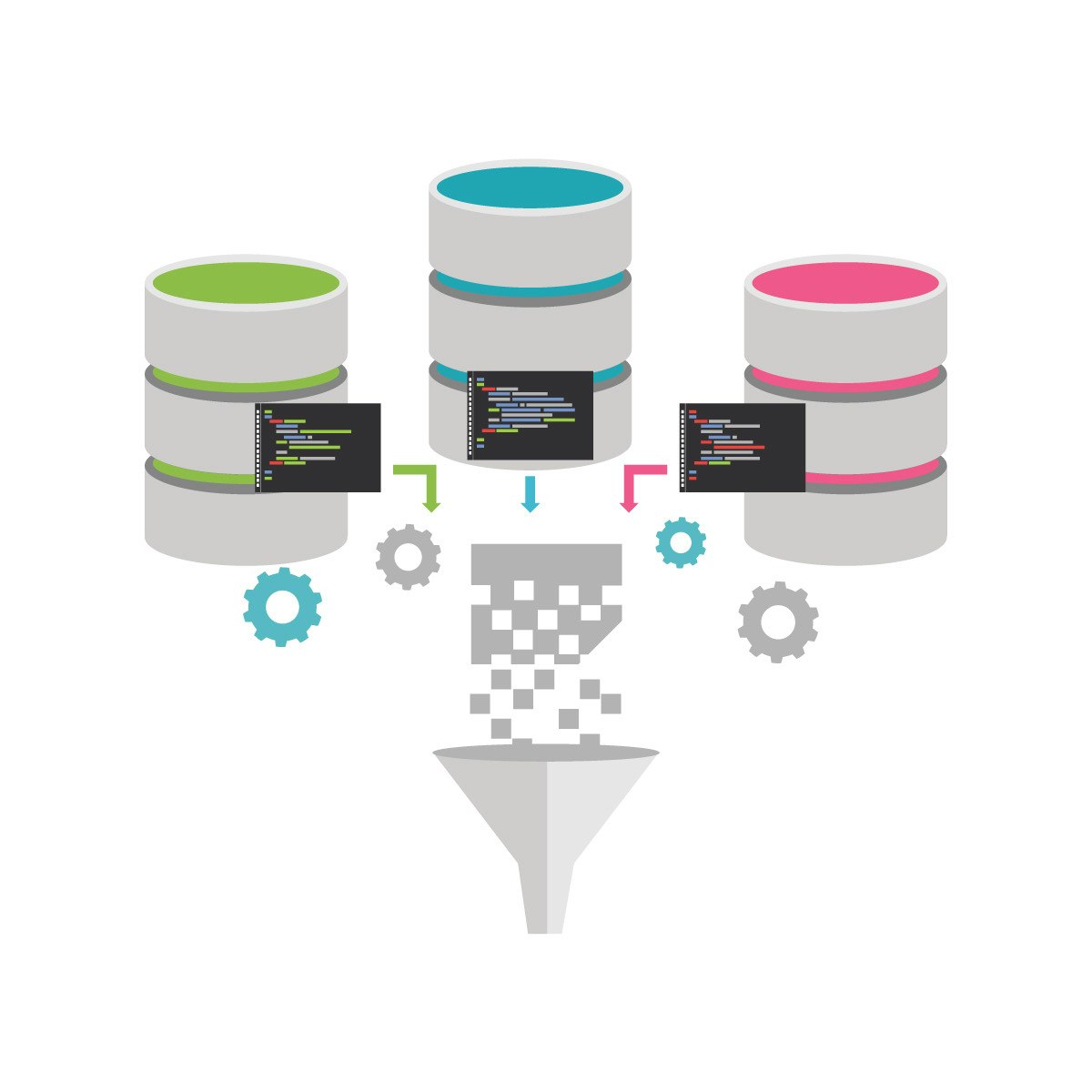
Delve into the two different approaches to converting raw data into analytics-ready data. One approach is the Extract, Transform, Load (ETL) process. The other contrasting approach is the Extract, Load, and Transform (ELT) process. ETL processes apply to data warehouses and data marts. ELT processes apply to data lakes, where the data is transformed on demand by the requesting/calling application. In this course, you will learn about the different tools and techniques that are used with ETL and Data pipelines. Both ETL and ELT extract data from source systems, move the data through the data pipeline, and store the data in destination systems. During this course, you will experience how ELT and ETL processing differ and identify use cases for both. You will identify methods and tools used for extracting the data, merging extracted data either logically or physically, and for loading data into data repositories. You will also define transformations to apply to source data to make the data credible, contextual, and accessible to data users. You will be able to outline some of the multiple methods for loading data into the destination system, verifying data quality, monitoring load failures, and the use of recovery mechanisms in case of failure. By the end of this course, you will also know how to use Apache Airflow to build data pipelines as well be knowledgeable about the advantages of using this approach. You will also learn how to use Apache Kafka to build streaming pipelines as well as the core components of Kafka which include: brokers, topics, partitions, replications, producers, and consumers. Finally, you will complete a shareable final project that enables you to demonstrate the skills you acquired in each module.
 University of California, Irvine
Project Launch
Today’s fast track business and global environment emphasizes increasing project development efficiency while using fewer resources. This course shows you how to accomplish exactly this. Learn how to justify and select projects, and how stakeholders can influence projects. Identify the requirements necessary for defining project scope and create a list of tasks necessary to accomplish that scope. Create effective communication plans and assign responsibilities. Gain an understanding of the fundamentals of project planning through the use of scheduling software. Establish project requirements, objectives, and goals before defining the total project scope using a work breakdown structure (WBS). You’ll have the opportunity to apply what you learn to a case study that brings together the key elements of launching a project.
 Coursera
Launch Chroma Fast
Launch Chroma Fast is an intermediate course for ML engineers and AI practitioners looking to prototype and test vector search applications. This course teaches the critical skill of standing up a local vector database for Retrieval-Augmented Generation (RAG) and semantic search, bypassing the need for complex cloud infrastructure. It provides a direct path to mastering essential Chroma operations and getting a functional instance running quickly. To succeed, you will need basic Python programming experience and a foundational understanding of machine learning concepts, particularly embeddings. No prior database experience is required. Through hands-on-labs, you will install and configure Chroma using its Python SDK, manage collections, and ingest documents with practical examples from enterprise knowledge management and biomedical research. The course culminates in a final project where you will ingest over 2,000 documents and execute similarity searches. Upon completion, you will have the proven ability to deploy, test, and utilize a local Chroma environment, marking a significant step forward in your AI development journey.
 Fortinet, Inc.
FortiGate Administrator
In this course, you will learn how to use the most common FortiGate features including firewall policies, user authentication, high availability, SSL VPN, site-to-site IPsec VPN, Fortinet Security Fabric, and how to protect your network using security profiles, such as IPS, antivirus, web filtering, application control, and more. These administration fundamentals will provide you with a solid understanding of how to implement the most common FortiGate features.
 Coursera
Kubernetes with Helm Charts: Deploy & Manage Apps
Modern applications often span dozens of microservices, each requiring precise configuration and version control across multiple environments. Managing this complexity manually can quickly lead to errors, downtime, and deployment drift. In this course, you will learn how to simplify and standardize Kubernetes application management using Helm Charts which is the industry’s go-to tool for packaging, deploying, and maintaining Kubernetes applications. You’ll explore Helm’s core components, work hands-on with public and custom charts, and practice customizing, upgrading, and automating deployments. Participants should have a foundational understanding of Kubernetes and containerization concepts, along with hands-on experience using kubectl and writing YAML configuration files. They must also have access to a running Kubernetes cluster to practice deployment and management tasks throughout the course. By the end of this course, you’ll be able to confidently deploy and manage containerized applications at scale using Helm. You’ll understand how to streamline Kubernetes operations, ensure consistency across environments, and apply best practices for security, automation, and lifecycle management in real-world production scenarios.
 EDUCBA
Deep Learning with TensorFlow: Build Neural Networks
By the end of this course, learners will be able to explain the fundamentals of neural networks, apply TensorFlow to build and train models, implement convolutional neural networks for image processing, and adapt transfer learning strategies for real-world applications. This course is designed to help learners bridge the gap between theory and practice in deep learning. Starting with perceptrons and core neural network principles, participants will gain hands-on experience in building models, initializing parameters effectively, and processing image data through CNNs. Moving forward, they will learn to classify real-world datasets like dogs vs. cats and master advanced transfer learning techniques to optimize pre-trained models for specialized tasks. Unlike other tutorials, this course uniquely combines step-by-step TensorFlow implementation with conceptual clarity, ensuring learners not only follow code but also understand the reasoning behind each decision. Whether aiming to enhance AI career prospects or apply deep learning in projects, learners will leave equipped with the skills to design, train, and deploy robust neural network models confidently.
 EDUCBA
Design and Build Scalable iOS Applications
By the end of this course, learners will be able to build iOS applications from the ground up, apply core programming concepts, design clean application architectures, and implement scalable patterns such as MVVM and VIPER to develop production-ready iOS apps. This course guides learners through a complete learning journey—from understanding the iOS ecosystem and programming fundamentals to mastering modern architectural patterns used in real-world iOS development. Learners will gain practical skills in structuring applications using Model, View, and Controller layers, transitioning to MVVM for better separation of concerns, and implementing VIPER for complex, scalable projects. The course also covers real-world integration topics such as handling mock data, working with web services, optimizing ViewModels, and efficiently loading images using industry-standard libraries. What makes this course unique is its strong emphasis on architectural thinking and maintainability, not just coding. Learners don’t just write code—they learn why certain patterns are used and how to apply them effectively as applications grow in complexity. By completing this course, learners will be well-prepared to design robust, maintainable, and scalable iOS applications aligned with professional development standards.
 Google Cloud
Configuring Vector Search in Spanner
This is a self-paced lab that takes place in the Google Cloud console. In this lab, you learn the fundamentals of configuring vector search in Spanner.
 Johns Hopkins University
Infectious Disease Transmission Models for Decision-Makers
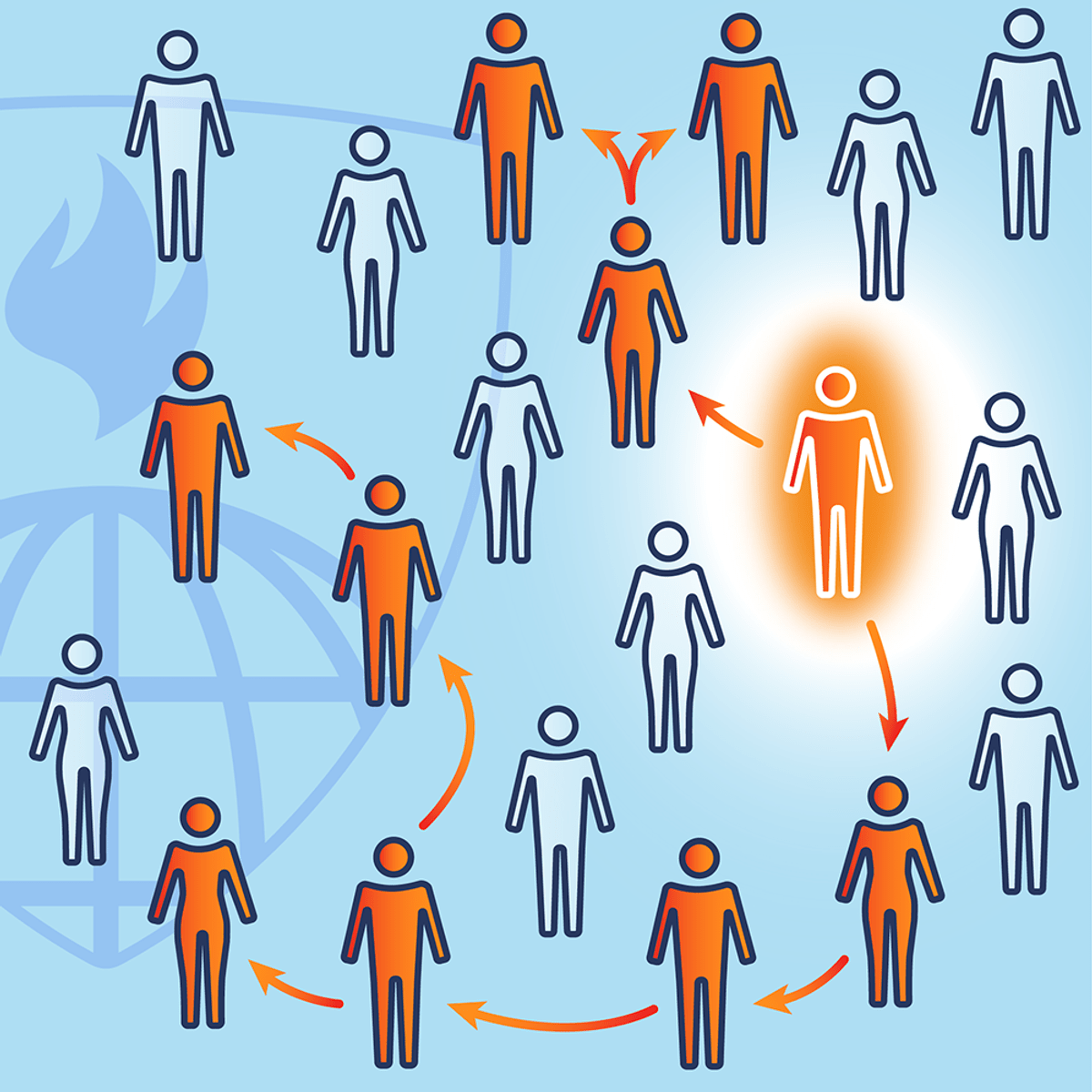
During the COVID-19 pandemic, both the promise and perils of using infectious disease transmission models to make public health policy decisions became clearer than ever. Optimal use of modeled output requires that public health policy makers be informed consumers of models, that they understand the strengths and limitations of possible approaches, and they know the right questions to ask about the vulnerabilities of the model results. This course aims to provide anyone who makes decisions about public health policies and programs with a clear understanding of how infectious disease transmission models work, the various types and functions, and how they can be appropriately used to make decisions. There is no requirement that students have any prior background in infectious disease models and the course does not include any equations. Anyone with a basic background in public health and infectious diseases with an interest in learning more about infectious disease models will benefit from this course. In this course, participants will review the basics of infectious disease transmission models, including comparisons to other types of predictions used in daily life and an overview of the key components of a model and modeling structure. Next, participants will delve into the types of infectious disease models: forecasting, inferential, and theoretical models. Then, participants will learn about assessing whether a model is useful, reasonable and relevant, as well as the vulnerabilities of these models. These concepts will be applied to case studies of the Ebola outbreak in West Africa from 2014-2016 and the COVID-19 pandemic. The course will be rounded out with a review of how models inform policy decisions, including major sources of uncertainty for decision making. Learners who complete this course will have a broad view of infectious disease transmission models, how to assess the usefulness of a given model, and how these models inform policy decisions. Who should take this course? -Public health policy makers -Anyone interested in learning about how infectious disease transmission models can guide public health policy The development of this training was funded by the Centers for Disease Control and Prevention’s Center for Forecasting and Outbreak Analytics. We are grateful to Coursera for waiving enrollment fees through 2025.
 Coursera
Implementing and Integrating 5G O-RAN Systems (Advanced)
Implementing and Integrating 5G O-RAN Systems (Advanced) is an advanced, hands-on course designed for experienced network engineers and systems developers ready to master real-world 5G Open RAN deployment. In today’s fast-evolving telecom landscape, O-RAN skills are essential for building agile, multi-vendor networks that drive innovation and performance. This course dives deep into fronthaul protocols (eCPRI, RoE), xApp/rApp integration with the near-RT RIC, and the orchestration challenges of cloud-native, vendor-diverse 5G environments. You’ll analyze landmark case studies (Rakuten, DISH, Vodafone, NTT Docomo), practice integrating and benchmarking O-RAN systems in virtual labs, and develop troubleshooting habits for live deployments. Through immersive videos, scenario-based readings, and hands-on activities, you'll learn to validate performance, manage interoperability, and drive automation at scale. Whether advancing your current role or preparing for future 5G leadership, you’ll build confidence and capability to deliver high-performance O-RAN solutions in the real world.
 Skillshare
Landscape Photography: Shooting from an Aerial Perspective
Join Michael Yamashita, a 30-year veteran photographer for National Geographic, as he takes you on a landscape photography journey from an aerial perspective. Whether you’re using a ladder, climbing a hill or a rooftop, or boarding a fixed-wing aircraft, Michael shares his secrets, stories and pro tips from three decades of shooting captivating images around the globe. In this inspiring 40-minute class, you’ll learn what equipment and settings Michael uses for the job, what times of day are perfect for shooting aerial landscapes, and how he composes the perfect shot in his mind’s eye even before clicking the shutter — as well as fun stories along the way as Michael shows why rules are meant to be broken. The class will empower you to look for light, pattern and scale to create stunning, big-picture imagery that inspires awe in your audience. Some photography experience is helpful in order to participate in this class, but not required — anyone with a desire to improve their landscape photo skills is encouraged to join. Instructor bio: Michael Yamashita is a National Geographic photographer with over 30 years of experience capturing the world through his lens. A third-generation Japanese-American fluent in Japanese, he specializes in retracing the paths of famous travelers, creating stories on figures like Marco Polo, the Japanese poet Basho, and the Chinese explorer Zheng He. His work has taken him across six continents and has been exhibited widely in Asia, Europe, and the U.S., including the National Gallery in Washington, DC. Michael has published ten books inspired by his National Geographic stories. When not traveling, he lives with his family in rural New Jersey, maintaining a studio and serving as a volunteer fireman.
 Coursera
Using Microsoft PowerPoint to Create a Choice Board
By the end of this project, you will have created a choice board to use with your class in person or virtually. Choice boards allow teachers to accomplish curriculum goals while providing students with greater freedom in how they accomplish those goals. Providing students with choice is one important way to provide them with a sense of ownership of their learning. They will feel that their voice matters and be more engaged in the task at hand through the opportunity to choose their activity. Choice boards also provide an engaging way to encourage practice virtually!
 Coursera
Instagram Community: Build and Engage
Learn how to build a loyal Instagram community through authentic engagement and thoughtful interaction strategies. This course explores the difference between proactive and reactive engagement, offering techniques for managing comments, DMs, and follower interactions effectively. You'll also develop a hashtag strategy to boost content discoverability through Instagram’s search and explore features. With expert guidance and a practical engagement planning activity, you’ll be equipped to foster meaningful connections that support long-term growth.
 Dartmouth College
Engineering of Structures: Tension
This course deals with tension. Tension is one of the easiest forces to understand. It is a pulling force. When we tend to pull an object, it is in tension. Different elements that resist tension in buildings are ropes, cables, and funicular forms. You will study different structures and identify what role tension plays in their designs. The first module explores tension and its importance in building structures. The second module explores funicular forms, angles, and bridges. You will understand the role of funicular forms in sustaining tension, how to best design elements and systems that resist tensile forces. You will also recognize the similarities and differences between suspension bridges and cable-stayed bridges. The third module explores how to build a cable-stayed bridge. You'll also study the structures of different bridges and share a report on them.
 Google
Melakukan Riset UX dan Uji coba Konsep Awal
Melakukan Riset UX dan Uji coba Konsep Awal adalah materi keempat dalam program sertifikat ini yang akan membekali Anda dengan keterampilan yang perlu Anda terapkan pada pekerjaan desain pengalaman pengguna (UX) tingkat pemula. Dalam materi ini, Anda akan belajar bagaimana merencanakan dan melakukan studi kegunaan untuk mendapatkan masukan tentang desain. Kemudian, Anda akan memodifikasi desain low-fidelity Anda berdasarkan wawasan dari penelitian tersebut. Desainer dan peneliti UX dari Google akan menjadi instruktur Anda, dan Anda akan terlibat langsung dalam menyelesaikan berbagai aktivitas yang mengambil skenario desain UX dari dunia nyata. Peserta didik yang berhasil menyelesaikan ketujuh materi program sertifikasi ini telah memiliki keterampilan untuk melamar pekerjaan sebagai desainer UX pemula. Pada akhir materi ini, Anda akan mampu: - Merencanakan studi penelitian UX, yang mencakup latar belakang proyek, tujuan penelitian, pertanyaan penelitian, Indikator Kinerja Utama (Key Performance Indicators, KPI), metodologi, peserta, dan naskah. - Menjelaskan pentingnya menghormati privasi dan data pengguna. - Melakukan studi kegunaan yang disertai moderasi dan tidak disertai moderasi. - Membuat catatan selama studi kegunaan. - Membuat diagram afinitas untuk mengelompokkan dan menganalisis data. - Melakukan sintesis pengamatan dari penelitian dan menghasilkan wawasan. - Mengembangkan keterampilan presentasi persuasif untuk berbagi wawasan penelitian - Memodifikasi desain low-fidelity berdasarkan wawasan dari penelitian. - Melanjutkan perancangan sebuah aplikasi seluler untuk disertakan dalam portofolio profesional Anda. Untuk berhasil dalam materi ini, Anda harus menyelesaikan tiga materi sebelumnya dari program sertifikasi ini. Atau, Anda harus memiliki kemampuan untuk melakukan riset pengguna untuk memberikan informasi pada pembuatan peta empati, persona, cerita pengguna, peta perjalanan pengguna, pernyataan masalah, dan proposisi nilai; serta kemampuan untuk membuat wireframe dan prototipe low-fidelity di atas kertas dan di Figma.