

The Global Scholarly Directory.
Discover world-class academic programs curated for the modern intellectual. Search through 19877+ degrees and professional certificates.
 The Hong Kong University of Science and Technology
Developing Android Apps with App Inventor
The course will give students hands-on experience in developing interesting Android applications. No previous experience in programming is needed, and the course is suitable for students with any level of computing experience. MIT App Inventor will be used in the course. It is a blocks-based programming tool that allows everyone, even novices, to start programming and build fully functional apps for Android devices. Students are encouraged to use their own Android devices for hands-on testing and exploitation.
 Coursera
Créez une publicité ciblée avec facebook audience insights
Dans ce projet guidé d'une heure, vous apprendrez à utiliser l'outil d'audience personnalisée si vous souhaitez participer à l'un des plus grands marchés au monde, Facebook. Vous saurez comment faire de la publicité sur Facebook. À la fin de ce projet, vous serez en mesure de faire de la publicité sur Facebook à l'aide d'un outil d'audience personnalisé. Vous pourrez également différencier les types d'audience sur Facebook.
 Coursera
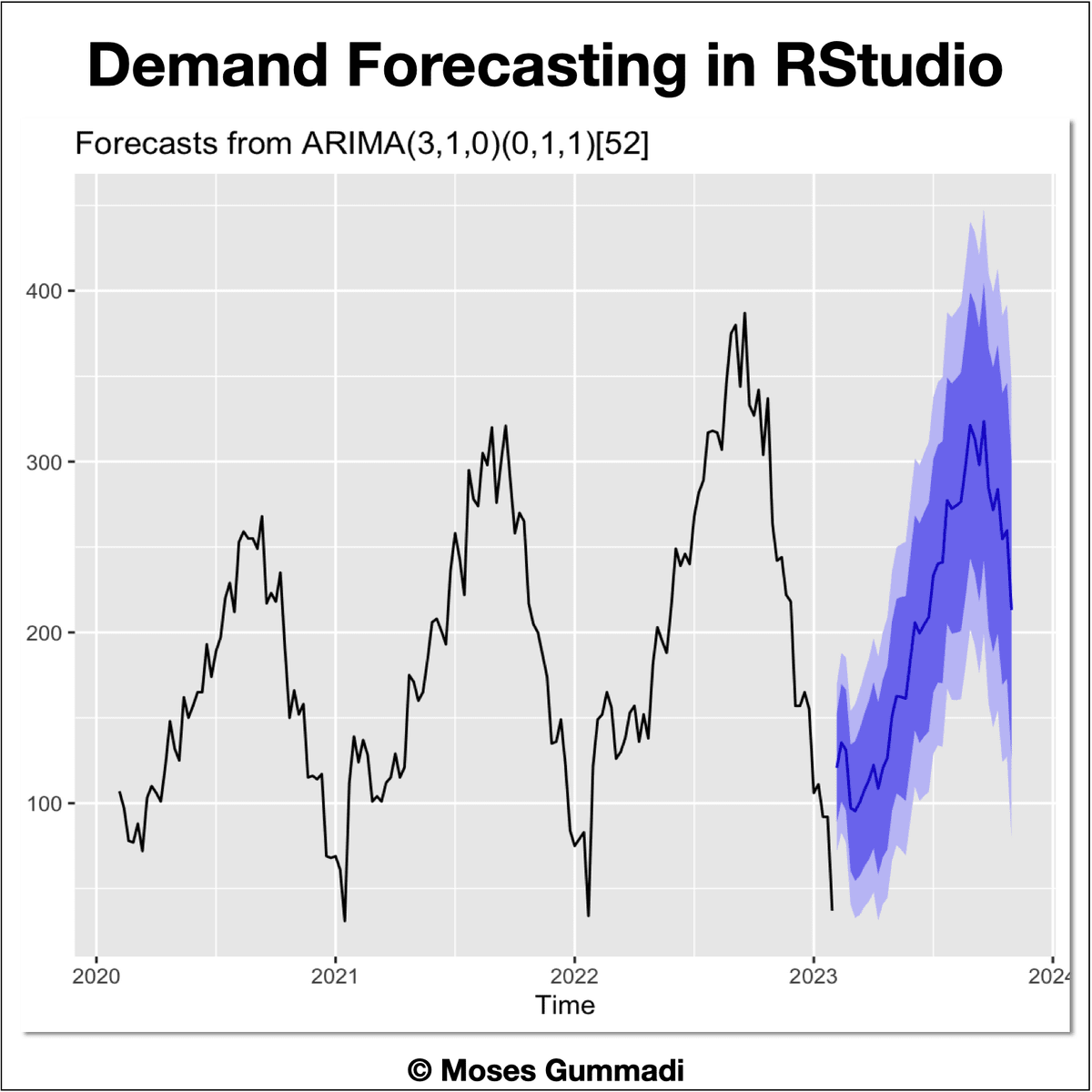
Demand Planning in RStudio: Create Demand Forecast
This Guided Project Demand Planning in RStudio: Create Demand Forecast is for Supply Chain and/or Operations Analysts. In this 2-hour long project-based course, you will learn how: - Analyse demand data and cateogorise products based on trend and seasonality - Model demand data and create demand forecast for a given number of forecasting periods. - Diagnose the demand model; evaluate the forecast; plot and export the output. Benefit: Creating reasonably accurate forecasts enables businesses to make efficient production plans, determine optimal inventory policies, make effective pricing decisions, and achieve better customer satisfaction. Prerequisites: 1. Basic R language (variables, vectors, data frames) 2. Familiarity with RStudio interface 3. Basic overview of Supply Chains / Operations
 Coursera
Formatieren mit Microsoft Excel
Am Ende dieses Projekts kannst du deine Formatierung in Microsoft Excel einfach anpassen. Außerdem kannst du auch grundlegende bedingte Formatierungen verwenden, um Microsoft Excel ohne Probleme für allerlei Projekte zu nutzen und bestimmte Teile deines Projektes in Excel hervorzuheben. Die Möglichkeit, benutzerdefinierte und bedingte Formatierungen in Microsoft Excel zu verwenden, ermöglicht es dir, Daten besser und schneller auf einen Blick zu sehen. Auf diese Weise kannst du deine Daten visualisieren und es dir und anderen erleichtern, die Daten zu verstehen. Dies wird umso wichtiger, je mehr Daten du in Excel verwendest. Das Ziel dieses Projekts ist es, zu lernen, deine Daten für dich selbst und andere mit Microsoft Excel besser darzustellen.
 Korea Advanced Institute of Science and Technology(KAIST)
Electrodynamics: In-depth Solutions for Maxwell’s Equations
This course is the fourth course in the Electrodynamics series, and is directly proceeded by Electrodynamics: Electric and Magnetic Fields. Previously, we have learned about visualization of fields and solutions which were not time dependent. Here, we will return to Maxwell's Equations and use them to produce wave equations which can be used to analyze complex systems, such as oscillating dipoles. We will also introduce AC circuits, and how they can be simplified, solved, and applied. Learners will: • Have a complete understanding of Maxwell's Equations and how they relate to the magnetic and electric potentials. • Be able to solve problems related to moving charges, and add relativistic corrections to the equations • Understand the different components in AC circuits, and how their presence can change the function of the circuit. The approach taken in this course complements traditional approaches, covering a fairly complete treatment of the physics of electricity and magnetism, and adds Feynman’s unique and vital approach to grasping a picture of the physical universe. Furthermore, this course uniquely provides the link between the knowledge of electrodynamics and its practical applications to research in materials science, information technology, electrical engineering, chemistry, chemical engineering, energy storage, energy harvesting, and other materials related fields.
 University of California, Davis
Computer Simulations
Big data and artificial intelligence get most of the press about computational social science, but maybe the most complex aspect of it refers to using computational tools to explore and develop social science theory. This course shows how computer simulations are being used to explore the realm of what is theoretically possible. Computer simulations allow us to study why societies are the way they are, and to dream about the world we would like to live in. This can be as intuitive as playing a video game. Much like the well-known video game SimCity is used to build and manage an artificial city, we use agent-based models to grow and study artificial societies. Without hurting anyone in the real world, computer simulations allow us explore how to make the world a better place. We play hands-on with several practical computer simulation models and explore how we can combine hypothetical models with real world data. Finally, you will program a simple artificial society yourself, bottom-up. This will allow you to feel the complexity that arises when designing social systems, while at the same time experiencing the ease with which our new computational tools allow us to pursue such daunting endeavors.
 Packt
Packt
Kubernetes for Beginners
Updated in May 2025. This course now features Coursera Coach! A smarter way to learn with interactive, real-time conversations that help you test your knowledge, challenge assumptions, and deepen your understanding as you progress through the course. Begin your journey into the world of Kubernetes with a structured course designed to make you proficient in container orchestration. The course starts with an introduction to Kubernetes, explaining its fundamental components such as pods, clusters, nodes, and services. You'll gain a clear understanding of how Kubernetes functions and the role of kubectl in managing your cluster. Next, you’ll set up your environment by installing Minikube and kubectl, essential tools for running Kubernetes locally. You’ll create your first Kubernetes cluster and explore its nodes, giving you hands-on experience in managing a cluster. The course then guides you through creating and managing pods, deployments, and services, providing step-by-step instructions on scaling applications and connecting to services. In the latter part of the course, you'll dive into more advanced topics such as rolling updates, pod recovery, and using the Kubernetes dashboard. You'll also learn how to create and apply YAML specification files for deployments and services. The course culminates in deploying and managing a Node.js application, including creating Docker images, pushing them to Docker Hub, and scaling the application using Kubernetes. By the end of this course, you'll be confident in deploying and managing applications with Kubernetes in real-world scenarios. This course is designed for developers, system administrators, and IT professionals who are new to Kubernetes. Basic knowledge of Docker and containerization is required.
 Fractal Analytics
Generative AI for Consultants
Transform your consulting practice with Generative AI. Learn how leading consultants use large language models (LLMs) to streamline research, craft sharper proposals, and produce client‑ready deliverables faster—without compromising rigor or ethics. This course blends hands‑on use cases, prompt engineering, and governance best practices to help you operationalize AI across the consulting lifecycle. You’ll practice AI‑assisted market scans, issue trees, hypothesis generation, MECE structuring, storyline development, slide drafting, and Excel‑linked analyses. We’ll cover tool selection, workflow design, quality assurance, and Responsible AI guardrails—so you can deliver outcomes that are accurate, explainable, and secure. By the end, you’ll be able to design AI‑enabled consulting workflows, evaluate model outputs for bias and fidelity, and produce polished client artifacts (proposals, workplans, deliverable outlines) with measurable productivity gains. Ideal for strategy, management, and digital consultants seeking practical, immediately applicable skills.
 Duke University
Environmental Leadership
What does it mean to be an environmental leader? How can we inspire others to achieve common goals to combat challenges like climate change? This short course provides an entry-level overview of timeless and timely leadership principles and how to apply them to environmental contexts in your own life. No matter your interests, age, career, or goals, you can make a difference. No prerequisites are needed for this course. To combat climate change, protect our environment, and develop sustainable communities, we must all engage in environmental leadership. Addressing today’s complex environmental issues requires us to view leadership less as a responsibility associated with any one position or person, and rather a call for collective action. Through this course, you will learn how to develop competencies and relationships that will help you work with others to understand the interconnectedness of systems and accomplish goals across boundaries. All kinds of leaders are needed to tackle the environmental and climate challenges that we face as a global society. By the end of the course, you will explore concepts of environmental leadership and how you might apply them in your own community or organization. By growing your leadership skills, you will be more fully equipped to work with others to pave the way to a just and sustainable future.
 University of Maryland, College Park
Risk Management Planning with Expert Judgement
In this course we will review the owner’s primary goal in choosing a project delivery method to ensure that the planned project will meet the project goals and objectives, fit within the culture of their organization, and at the same time allow the project to be delivered on time, within budget, and achieve good quality. We will review the primary project delivery method arrangements with their advantages and disadvantages, and cover the three major types of contracts. It is the owner’s requirement to analyze the project delivery method advantages and disadvantages. The best way to do this is to examine the project risks and major categories of project risk. Next, we’ll address design. Good design is a result of collaboration among many different people, including the construction manager, architect, engineers, and owner. Although there is always a lead designer, the project is a combination of the collaborative process and consultation with other experts.
 Packt
Packt
Blender to Unreal Engine 5 — 3D Props - Medieval Gallows
Updated in May 2025. This course now features Coursera Coach! A smarter way to learn with interactive, real-time conversations that help you test your knowledge, challenge assumptions, and deepen your understanding as you progress through the course. Unlock the power of Blender and Unreal Engine 5 by learning how to design, model, and render medieval gallows. This course covers everything from grey boxing to creating realistic materials and exporting game-ready assets. Learn to model and texture high-quality 3D props using Blender, perfect your portfolio, and integrate your work seamlessly into Unreal Engine 5. By the end, you’ll have created a professional, AAA-standard medieval gallows scene, complete with intricate details and animated features. This course will take you on a deep dive into the complete workflow for creating realistic 3D props, beginning with foundational modeling techniques in Blender, including grey boxing and topology refinement. You’ll explore texturing with detailed materials, like wood and metal, to bring authenticity to the medieval gallows. The course also covers advanced aspects of UV mapping, rope modeling, and animation setup, ensuring a highly polished 3D model. As the course progresses, you will learn how to integrate your model into Unreal Engine 5, where you’ll finalize your portfolio render and make your assets game-ready. By the end of the course, you'll have mastered essential tools and techniques in both Blender and Unreal Engine, acquiring the expertise to produce stunning 3D models with a professional finish. You'll also have the skills to take on more complex projects, as you'll know how to create, texture, and animate props for any 3D environment. This course will be an invaluable asset to your portfolio and a stepping stone to a career in 3D modeling for games. This course is perfect for beginner and intermediate 3D modelers. A basic understanding of Blender is required, while familiarity with Unreal Engine 5 is a plus but not necessary.
 Coursera
Foundations of Machine Learning
Welcome to the Foundations of Machine Learning, your practical guide to fundamental techniques powering data-driven solutions. Master key ML domains—supervised learning (prediction), unsupervised learning (pattern discovery), data preprocessing & feature engineering, and time series forecasting—using Pandas, Scikit-learn, Statsmodels, and Prophet to tackle real-world challenges. By the end of this course, you'll be able to: - Implement and evaluate key supervised models (e.g., regression, classification, Tree-based models & SVMs) for prediction. - Apply unsupervised methods (e.g., K-Means, Isolation Forest) for segmentation and anomaly detection. - Perform robust data preprocessing: handle missing data, encode categoricals, scale features, and apply dimensionality reduction (PCA). - Build and analyze time series forecasts with ARIMA, Exponential Smoothing, Holt-Winters and Prophet. Through hands-on exercises and a capstone customer purchase prediction project, you'll develop versatile skills to confidently address common machine learning challenges.
 Logical Operations
Excel: Data Analysis with Formulas/Functions and PivotTables
In this course, you'll continue developing your data-analysis skills in Excel by analyzing data using formulas and functions. You'll also analyze data using PivotTables. This is the second course in a multi-course Specialization. All of the courses in this Specialization require that you have a recent version of Microsoft Excel installed. The course setup instructions provided in the first course go into more detail about the hardware and software requirements.
 Simplilearn
Foundations of Generative AI in SDLC Training
This beginner-friendly course covers the fundamentals of Generative AI in SDLC and its impact on software development. Explore key concepts like large language models (LLMs), prompt engineering, and human-AI interaction. Learn to craft effective prompts and watch demos using ChatGPT for multilingual review management. Build custom GPTs for Python debugging and UI design, explore top GenAI tools across the SDLC, and create a food ordering app. The course also highlights a real-world Accenture use case. Basic programming knowledge and familiarity with software development concepts are recommended. By the end of this course, you will be able to: - Understand Generative AI, LLMs, and prompt engineering - Design effective prompts and use ChatGPT in workflows - Build and deploy custom GPTs for dev and design tasks - Use Generative AI tools across the software lifecycle - Apply GenAI in real-world development scenarios Ideal for developers, software engineers, and AI learners.
 Kennesaw State University
Managing Network Security
Almost every organization uses computer networks to share their information and to support their business operations. When we allow network access to data it is exposed to threats from inside and outside of the organization. This course examines the threats associated with using internal and external networks and how to manage the protection of information when it’s accessible via networks. In this course, a learner will be able to: ● Describe the threats to data from information communication technology (ICT) ● Identify the issues and practices associated with managing network security ● Identify the practices, tools, and methodologies associated with assessing network security ● Describe the components of an effective network security program
 Pontificia Universidad Católica de Chile
English for Interactions in the Workplace Intermediate Level
The purpose of this course is to provide linguistic tools for effective interaction strategies in the professional context, according to what is established in the lower-intermediate level (B1) of the Common European Framework of Reference for Languages (CEFR). Organizations from different sectors, such as agriculture, mining, industry, and hotels and tourism, require officials and administrators capable of using and applying English competitively in their work activities, to facilitate their interaction with English-speaking peers and thus position and consolidate themselves in the national and international markets. For this reason, by expanding your lexical and grammatical inventory in the English language, the professional value increases, increasing labor skills and, consequently, providing greater mobility in this regard. The course, which is self-instructional, uses videos and reading texts in order to contextualize recurring work situations. The lexical and syntactic forms reviewed in each module are presented through characters and avatars that are part of the course narrative. There are also content application exercises in response to the virtual teacher's expository capsules.