

The Global Scholarly Directory.
Discover world-class academic programs curated for the modern intellectual. Search through 19877+ degrees and professional certificates.
 Scrimba
Learn Bootstrap
This instructional course guides you through the essential knowledge required to build comprehensive websites using Bootstrap v4. Bootstrap is an open-source front-end framework designed for responsive development, prioritizing mobile-first websites and web applications. The Scrimba course offers interactive code engagement within tutorials, providing an opportunity to reinforce concepts as you learn.
 Google Cloud
Deploying a Multi-Cluster Gateway Across GKE Clusters
This is a self-paced lab that takes place in the Google Cloud console. Learn how to enable, use, and deploy the multi-cluster Google Kubernetes Engine (GKE) Gateway controller
 CertNexus
Internet of Things: Governance and Real-World Implementation
To round out your skills in IoT, you'll identify IoT security and privacy risks, manage those risks, and manage safety risks as well. You'll also identify real-world applications for IoT and follow the IoT development lifecycle. This is the third and final course in a multi-course Specialization. All of the courses in this Specialization require that you purchase several electronics components that are used to create an IoT prototype kit. This kit is used in many of the activities to illustrate IoT concepts in a hands-on way. The total estimated cost for all parts is under $50. To source these components, consult the list of components in the course setup instructions provided in the first course.
 Google
Llevar a cabo investigaciones en UX
Realizar investigaciones en UX y probar conceptos preliminares es el cuarto curso de un programa de certificación que te brindará las habilidades que necesitas para postularte a empleos de nivel básico en el diseño de experiencia del usuario (UX). En este curso, aprenderás a planear y llevar a cabo un estudio de usabilidad para recopilar retroalimentación sobre los diseños. Luego, podrás modificar los diseños de baja fidelidad en función de las conclusiones que saques de la investigación. En el curso, que dictarán personas que trabajan actualmente como diseñadores e investigadores de UX de Google, realizarás actividades prácticas que simulan escenarios reales de diseño de UX. Los alumnos que completen los siete cursos de este programa de certificados adquirirán las habilidades necesarias para solicitar trabajos de nivel básico como diseñadores de UX. Al final de este curso, podrás hacer los siguiente: - Planificar un estudio de investigación en UX que incluya antecedentes del proyecto, objetivos de investigación, preguntas de investigación, indicadores clave de rendimiento, metodología, participantes y un guion. - Explicar la importancia de respetar los datos y la privacidad del usuario. - Realizar estudios de usabilidad moderados y no moderados. - Tomar nota durante un estudio de usabilidad. - Crear diagramas de afinidad para agrupar y analizar los datos. - Sintetizar las observaciones de la investigación y sacar conclusiones. - Desarrollar habilidades de presentación persuasivas para compartir las conclusiones de la investigación. - Modificar los diseños de baja fidelidad en función de las conclusiones de la investigación. - Continuar diseñando una aplicación móvil para incluirla en tu portfolio profesional. Para tener éxito en este curso, debes realizar los tres cursos previos del programa de certificación. En caso de que no los hayas realizado, debes saber cómo llevar a cabo investigaciones de usuarios para poder crear mapas de empatía, personas, historias de usuarios, mapas del recorrido de usuarios, planteamientos de problemas, esquemas de páginas y prototipos de baja fidelidad en papel y en Figma.
 Board Infinity
Enterprise Sales Mastery-Hunting, Deal Strategy & Leadership
Enterprise sales requires more than just pitching products. It demands strategic hunting, executive-level conversations, complex deal navigation, and long-term account leadership. In this course, you’ll learn how top enterprise sellers identify large opportunities, engage senior executives, and win complex deals. You’ll explore practical frameworks for territory planning, executive outreach, enterprise demos, strategic account management, and cross-team collaboration. In Module 1, you will learn how to design strategic territories, pursue large enterprise accounts, and build strong points of view from market insights. In Module 2, we will cover how to win complex enterprise deals by building executive narratives, running impactful demos, and managing post-demo deal momentum. In Module 3, we will explore enterprise account management, including mapping power structures, expanding strategic accounts, and running QBRs that create long-term value. In Module 4, we will focus on operating within the broader revenue system by collaborating with SDRs, marketing, pre-sales teams, and sales leadership. By the end, you will: • Design a strategic enterprise territory and named-account plan • Engage senior executives using insight-led outreach • Structure high-impact enterprise demos and deal narratives • Build expansion strategies for key enterprise accounts • Operate effectively within a collaborative revenue organization This course is ideal for: • Enterprise Account Executives and Strategic Sellers • Business Development professionals targeting large accounts • Sales professionals moving into enterprise or strategic roles • Key Account Managers responsible for large client relationships Mastering enterprise sales requires both strategic thinking and operational discipline—this course will help you build both. "Enterprise sales requires more than just pitching products. It demands strategic hunting, executive-level conversations, complex deal navigation, and long-term account leadership. Disclaimer: This is an independent educational resource created by Board Infinity for informational and educational purposes only. This course is not affiliated with, endorsed by, sponsored by, or officially associated with any company, organization, or certification body unless explicitly stated. The content provided is based on industry knowledge and best practices but does not constitute official training material for any specific employer or certification program. All company names, trademarks, service marks, and logos referenced are the property of their respective owners and are used solely for educational identification and comparison purposes.
 Johns Hopkins University
Управление анализом данных
Этот недельный курс описывает процесс анализа данных и способы управления этим процессом. Мы рассмотрим итеративный характер анализа данных и роль постановки точного вопроса, исследовательский анализ данных, выводы, формальное статистическое моделирование, интерпретацию и коммуникацию. Также вы узнаете, как организовать аналитическую работу внутри команды и направить процесс анализа данных на получение понятных и полезных результатов. Это специализированный курс, предназначенный для быстрого ознакомления с процессом анализа данных и способами управления этим процессом. Мы стремились сделать курс максимально удобным для вас, не жертвуя важными материалами. Техническую информацию мы оставили в стороне, чтобы вы могли сконцентрироваться на управлении своей командой и ее развитии. По окончании этого курса вы сможете: 1. Описать базовый цикл анализа данных 2. Определять различные типы вопросов и преобразовывать их в специальные наборы данных 3. Описать различные типы получения данных 4. Анализировать наборы данных, чтобы определять, подходят ли они для вопроса 5. Координировать построение модели для распространенных типов анализа данных 6. Интерпретировать результаты распространенных типов анализа данных 7. Объединять статистические выводы для составления последовательных презентаций анализа данных Затраты времени: 1 учебная неделя, 4–6 часов Обложка курса от fdecomite. Creative Commons https://flic.kr/p/4HjmvD
 The University of Edinburgh
Code Yourself! An Introduction to Programming
Have you ever wished you knew how to program, but had no idea where to start from? This course will teach you how to program in Scratch, an easy to use visual programming language. More importantly, it will introduce you to the fundamental principles of computing and it will help you think like a software engineer. This course is also available with captions in the following languages: Arabic https://www.coursera.org/learn/intro-programming-ar Spanish https://www.coursera.org/learn/a-programar Learners can apply for Financial Aid directly with Coursera to assist with the cost of accessing the full course and gaining a certificate for successfully completing the course.
 Technion - Israel Institute of Technology
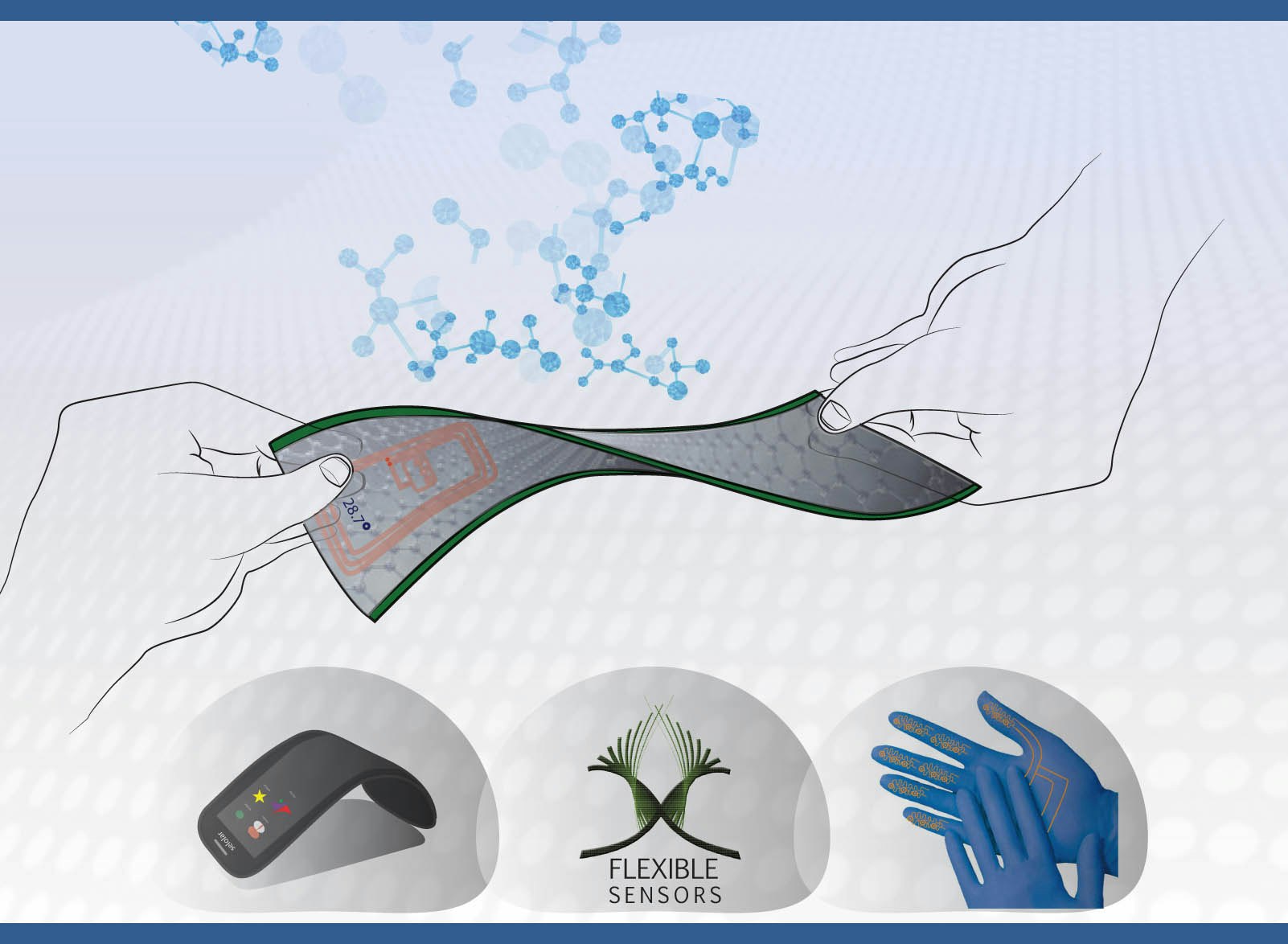
Nanotechnology and Nanosensors, Part 2
Learn about novel sensing tools that make use of nanotechnology to screen, detect and monitor various events in personal or professional life. Together, we will lay the groundwork for infinite innovative applications, starting from diagnosis and treatments of diseases, continuing with quality control of goods and environmental aspects, and ending with monitoring security issues. _ _ _ _ _ _ _ _ _ _ _ _ _ _ _ _ _ _ _ _ _ Nanotechnology and nanosensors are broad, interdisciplinary areas that encompass (bio)chemistry, physics, biology, materials science, electrical engineering and more. The present course will provide a survey on some of the fundamental principles behind nanotechnology and nanomaterials and their vital role in novel sensing properties and applications. The course will discuss interesting interdisciplinary scientific and engineering knowledge at the nanoscale to understand fundamental physical differences at the nanosensors. By the end of the two parts of the course, students will understand the fabrication, characterization, and manipulation of nanomaterials, nanosensors, and how they can be exploited for new applications. Also, students will apply their knowledge of nanotechnology and nanosensors to a topic of personal interest in this course. - - - - - - - -- -- -- - - - - COURSE OBJECTIVES The course main objective is to enhance critical, creative, and innovative thinking. The course encourages multicultural group work, constructing international 'thinking tanks' for the creation of new ideas. Throughout the course, you will be asked to reflect upon your learning, think "out of the box", and suggest creative ideas. The two parts of the course are set to encourage the understanding of: 1. The importance of nanoscale materials for sensing applications. 2. Approaches used for characterizing sensors based nanomaterials. 3. Approaches used for tailoring nanomaterials for a specific sensing application. 4. Metallic and semiconductor nanoparticles. 5. Organic and inorganic nanotubes and nanowires. 6. Optical, mechanical and chemical sensors based on nanomaterials. 7. Hybrid nanomaterial-based sensors. ---------------- We recommend that you read the following supplementary reading materials: -Jiří Janata, Principles of Chemical Sensors, Springer, 2d Edition (1989). -Roger George Jackson, Novel Sensors and Sensing, CRC Press (2004). _ _ _ _ _ _ _ _ _ _ _ _ _ _ _ _ _ _ Teaching Team About Professor Haick Hossam Professor Hossam Haick is an expert in the field of nanotechnology, nanosensors, and non-invasive disease diagnosis. Prof. Haick is the recipient of the prestigious Marie Curie Excellence Award, ERC Award, and the FP-7 Health Award. He is also the recipient of more than 42 international honors and prizes for his achievements, including a Knight of the Order of Academic Palms (conferred by the French Government) and the “List of the World’s Top 35 Young Scientists”, and the Discovery Award of the Bill & Melinda Gates. Prof. Haick is the founder and the leader of a European consortium of eight universities and companies for the development of advanced generation of nanosensors for disease diagnosis. He also serves as an associate editor of the two journals and serves as an advisory consultant to the Chemical Abstracts Service (CAS) – the world's authority for chemical information - a senior scientific advisory member of several national and international companies and institutes, and as a scientific evaluator in the European Commission. Email: hhossam@technion.ac.il _ _ _ _ _ _ _ _ _ _ _ _ _ _ _ _ _ _ Course Staff Meital Bar-Segev, Teaching Assistant: Received her B.A. (Cum Laude) in Chemistry and B.Sc (Cum Laude) in Materials Engineering from the Technion – Israel Institute of Technology (both in 2010). During her studies, she worked in a student position at Tower Semiconductors Ltd. After graduation she worked at Alfred Mann Institute in the Technion (AMIT) as a process development engineer. Currently, she performs her Ph.D. degree (direct track) in the Russell Berrie Nanotechnology Institute (RBNI) of the Technion under the supervision of Prof. Hossam Haick. The research of Meital focuses is the development of electronic skin based on nanoparticles. Abeer Watted, Teaching Assistant: Received her B.Sc. and M.Sc. in Transportation and Highways Engineering from the Technion. She is a Ph.D. student at the Faculty of Education in Science and Technology at the Technion, under the supervision of Asst. Prof. Miri Barak. She received a second master degree in Educatu in Science and Technology from the Technion in 2013. Her research focuses on science education and inquiry-based laboratories. Currently, Abeer works as a lecturer at Al-Qasemi Academic College of Education, where she serves also as the head of Civil Engineering Department. Maya Usher, Teaching Assistant: Received her B.A. and M.A. (Cum Laude) in Communication Studies from Sapir Academic College and Ben Gurion University- Israel (2009; 2013 respectively). Currently, Maya is a PhD. candidate at the Faculty of Education in Science and Technology at the Technion, under the supervision of Asst. Prof. Miri Barak. Her research focuses on examining online collaborative learning in small multicultural groups. Muhammad Khatib, Teaching Assistant: Received his B.Sc in Biochemical Engineering from the Technion – Israel Institute of Technology (2015). His final research project, conducted with Prof. Avi Schroeder, dealt with harnessing liposome-based drug delivery systems to applications in precise agriculture. Currently, he performs his Ph.D. (special track) in the Department of Chemical Engineering of the Technion under the supervision of Prof. Hossam Haick, and his research focuses on self-healing devices for monitoring infectious diseases. Miri Barak, Pedagogical Advisor: Assistant Professor at the Faculty of Education in Science and Technology, Technion- Israel Institute of Technology. She is the Head of the Science and Learning Technologies group and the advisor of graduate students. Her academic activities focus on developing, integrating, and evaluating science education curricula at school and higher education levels. Her studies involve the use of information and communication technologies (ICT), with emphasis on emerging web-2.0 and cloud applications, to foster meaningful learning and high-order thinking.
 Scrimba
React Beginner Project: Build a Color Picker Tool
Enhance Your HTML, CSS, and JavaScript Skills by Building a Custom Color Lighten/Darken Tool This course provides a hands-on opportunity to refine your proficiency in HTML, CSS, and vanilla JavaScript by guiding you through the development of a custom color lighten/darken tool from scratch. Over 19 comprehensive lessons, you'll tackle a series of interactive challenges designed to deepen your understanding of core coding concepts, while also learning practical tips to enhance your workflow. You will structure the project using HTML, style it with CSS, and implement interactive functionality with vanilla JavaScript—no frameworks required. Upon completion, you'll have developed a robust project that is ideal for showcasing in your portfolio or sharing on GitHub. Elevate your coding skills with an engaging, practical project that adds both technical depth and creativity to your toolkit.
 Coursera
Automate CRM Nudges
Automate CRM Nudges is an intermediate, hands-on course for professionals who want to reduce churn and improve reply rates through smarter CRM automation. Rather than relying on fixed schedules, you will learn how to design workflows that respond to real customer behavior using AI-predicted health signals and engagement data. Throughout the course, you will build practical skills to configure health-based triggers, design three-touch CRM sequences, and apply clear entry and exit logic so automation feels timely, relevant, and human. You will also learn how to analyze 30-day engagement funnels, interpret stage-level drop-offs, and make focused improvements such as refining subject lines, shortening copy, and adjusting timing to raise reply rates. By the end of the course, you will be able to confidently design, validate, and optimize CRM workflows that prevent churn and improve customer engagement. This course is designed for learners who already have experience working with a CRM platform and are familiar with basic email campaigns, workflows, and engagement metrics. Prior hands-on exposure to CRM tools will help you apply the concepts quickly and get the most value from the activities.
 Starweaver
Fundamentals of Credit Analysis
This course provides a structured introduction to evaluating credit quality in corporate issuers. Learners examine credit risk fundamentals, the role of credit ratings, the “4 Cs” of credit analysis, and key financial ratios used to assess borrower risk and bond pricing. Through practical examples, participants learn how analysts interpret credit metrics to inform lending, investment, and risk management decisions. Designed for professionals across front, middle, and back-office functions—or those aspiring to such roles—this course benefits individuals in lending, fixed income investment, operations, or risk assessment. No prior credit analysis experience is required; the program builds from foundational concepts to applied analytical techniques. By the end, learners will be able to explain credit risk, analyze financial statements, interpret credit ratings, and compare bonds by credit quality—skills essential for informed decision-making in diverse market conditions.
 Coursera
Connected Leadership: Building Collaborative Teams
In this course, we will explore how to build a thriving team culture based on trust, open communication, and collaboration. Whether you're a first-time manager or an experienced team lead, this course provides you with the tools, strategies, and real-world insights to transform your leadership style and foster a connected team. This course is ideal for first-time managers, team leads, and aspiring leaders who want to enhance their ability to lead teams effectively. It’s also perfect for professionals transitioning into people management roles or anyone seeking to strengthen cross-functional teamwork and communication. If you're looking to build a more collaborative and connected team culture, this course will provide you with the tools and strategies to unlock your leadership potential and create a thriving team environment. While no formal prerequisites are required for this course, it is helpful to have a basic understanding of team structures, such as hierarchical, flat, or cross-functional teams, and how they function within an organization. Familiarity with work processes like workflow management, communication protocols, and decision-making frameworks will also be beneficial. Additionally, a general awareness of collaborative methodologies like Agile or Scrum will aid in grasping the course’s core concepts more quickly, although it is not mandatory. By the end of this course, you’ve gained valuable insights and tools to cultivate a connected leadership style that drives collaboration, trust, and team success. As you move forward, continue to apply the principles of empathy, transparency, and open communication to create a thriving, high-performing team. Leadership is a continuous journey—keep reflecting, adapting, and growing, and watch how your leadership evolves alongside your team. We’re excited to see the positive impact you’ll have, and we encourage you to stay curious and keep learning. Your journey towards connected leadership has just begun!
 University of Michigan
Politics and Ethics of Data Analytics in the Public Sector
Deepen your understanding of the power and politics of data in the public sector, including how values — in addition to data and evidence — are always part of public sector decision-making. In this course, you will explore common ethical challenges associated with data, data analytics, and randomized controlled trials in the public sector. You will also navigate and understand the ethical issues related to data systems and data analysis by understanding frameworks, codes of ethics, and professional guidelines. Using two technical case studies, you will understand common ethical issues, including participation bias in populations and how slicing analysis is used to identify bias in predictive machine learning models. This course also serves as a capstone experience for the Data Analytics in the Public Sector with R Specialization, where you will conduct an applied policy options analysis using authentic data from a real-world case study. In this capstone exercise, you will review data as part of policy options analysis, create a visualization of the results, and make a recommendation. All coursework is completed in RStudio in Coursera without the need to install additional software. This is the fourth and final course within the Data Analytics in the Public Sector with R Specialization. The series is ideal for current or early-career professionals working in the public sector looking to gain skills in analyzing public data effectively. It is also ideal for current data analytics professionals or students looking to enter the public sector.
 SkillUp
The DMAIC Framework - Define and Measure Phase
The course is designed for Lean Six Sigma professionals to excel in the American Society for Quality (ASQ) Certified Six Sigma Green Belt (CSSGB) exam. The course focuses specifically on the first two phases of the define, measure, analyze, improve, and control (DMAIC) framework. In the define phase, you will learn to define a problem statement and project scope, whereas in the measure phase, you will learn about effective data collection strategies and measurement system analysis (MSA). By the end of this course, you will be able to: - Define specific, measurable, achievable, relevant, and time-bound (SMART) project goals and objectives. - Analyze the voice of the customer (VOC) data to translate it to critical to quality (CTQ) parameters. - Explain process mapping and define key performance metrics. - Plan data collection activities to quantify the performance of the process. The course is best suited for individuals who analyze and solve quality problems and work on quality improvement projects. It is recommended that you complete the first course in the ASQ-Certified Six Sigma Green Belt Exam Prep Specialization, Overview: Six Sigma and the Organization, before starting this course.
 Rice University
Anatomy & Physiology: Support & Movement
The second course begins the systems-based approach to human anatomy and physiology at the organ, organ system, and organism level. Three major body systems related to support and movement will be explored in detail: the skeletal and muscular systems. Course material will cover both the structure (anatomy) and function (physiology) of each system with direct application to human development and disease.
 Packt
Packt
.NET Core Microservices - The Complete Guide (.NET 6 MVC)
Updated in May 2025. This course now features Coursera Coach! A smarter way to learn with interactive, real-time conversations that help you test your knowledge, challenge assumptions, and deepen your understanding as you progress through the course. In this course, you'll learn the foundational elements of microservices by building a real microservices-based application with .NET 6. We'll incrementally construct multiple microservices, utilizing IdentityServer for authentication and authorization. The course covers basic blocks of IdentityServer, .NET API, Ocelot, Entity Framework Core, and clean architecture with .NET 6. You'll develop e-commerce modules including product, shopping cart, ordering, payment, and email microservices, using SQL Server and Azure Service Bus with Ocelot API Gateway. By the end of the course, you'll have a complete application with seven fully functional .NET-based microservices, understanding every line of code and their interactions. Topics include .NET 6 microservices architecture, role-based authorization with IdentityServer, Azure Blob Storage basics, and Azure Service Bus. This course is designed for intermediate to advanced developers with a basic understanding of .NET Core and MVC frameworks. Familiarity with C# programming and fundamental web development concepts is recommended.