

The Global Scholarly Directory.
Discover world-class academic programs curated for the modern intellectual. Search through 19877+ degrees and professional certificates.
 Starweaver
Mastering Active Listening in the Global Workplace
In today’s dynamic and diverse professional environments, intentional active listening is no longer optional—it’s essential. This course, Mastering Intentional Active Listening in the Global Workplace, is designed to equip professionals with practical tools and strategies to enhance communication, foster collaboration, and resolve conflicts effectively. Through concise lessons, real-world scenarios, and interactive exercises, participants will learn to listen with intention and empathy while navigating cultural and emotional complexities. By the end of this course, learners will transform their listening habits into a powerful tool for building trust, improving relationships, and enhancing leadership effectiveness. This course is designed for managers, team leaders, HR professionals, and anyone looking to enhance their workplace communication skills. It's especially valuable for professionals who aim to foster trust, improve collaboration, and strengthen team dynamics through more intentional listening. Whether you're guiding teams, managing people, or simply looking to elevate your interpersonal effectiveness, this course provides practical strategies to listen with impact. To get the most out of this course, learners should have a basic understanding of workplace communication practices. A willingness to actively participate in reflective exercises and interactive learning activities is essential, as the course emphasizes real-world application of listening strategies in diverse professional settings. By the end of this course, learners will be able to apply active listening techniques to improve workplace communication and collaboration. They will demonstrate empathy and emotional intelligence in professional interactions, resolve conflicts using reflective listening, and interpret non-verbal cues to strengthen relationships. Additionally, learners will develop the ability to adapt their listening approach to diverse cultural contexts and team dynamics.
 London Business School
Introduction to Digital Transformation: Change & Disruption
Digital transformation is an incredible opportunity for both individuals and for organisations because it's an opportunity to personalise, to customise, to serve customers in new ways, to help them to achieve new things that matter to the world in which we live. Whatever level you are in your organisation, you have some mandate for taking digital transformation seriously within your own area of responsibility.
 DeepLearning.AI
Natural Language Processing in TensorFlow
If you are a software developer who wants to build scalable AI-powered algorithms, you need to understand how to use the tools to build them. This Specialization will teach you best practices for using TensorFlow, a popular open-source framework for machine learning. In Course 3 of the DeepLearning.AI TensorFlow Developer Specialization, you will build natural language processing systems using TensorFlow. You will learn to process text, including tokenizing and representing sentences as vectors, so that they can be input to a neural network. You’ll also learn to apply RNNs, GRUs, and LSTMs in TensorFlow. Finally, you’ll get to train an LSTM on existing text to create original poetry! The Machine Learning course and Deep Learning Specialization from Andrew Ng teach the most important and foundational principles of Machine Learning and Deep Learning. This new DeepLearning.AI TensorFlow Developer Specialization teaches you how to use TensorFlow to implement those principles so that you can start building and applying scalable models to real-world problems. To develop a deeper understanding of how neural networks work, we recommend that you take the Deep Learning Specialization.
 Google Cloud
Optimizing Your Google Cloud Costs en Español
Optimizing Your Google Cloud Platform (GCP) Costs es el segundo curso de una serie de dos partes sobre los conceptos básicos de la administración de costos y facturación de GCP. Este curso está destinado principalmente a personas que se desempeñan en funciones relacionadas con finanzas o TI, y que están a cargo de optimizar la infraestructura de nube de sus organizaciones. Aprenderá distintas maneras de controlar y optimizar los costos de GCP, lo que incluye cómo establecer presupuestos y alertas, administrar los límites de cuota y aprovechar los descuentos por compromiso de uso. En los labs prácticos, podrá repasar con distintas herramientas para controlar y optimizar los costos de GCP, o bien convencer a los equipos encargados de la tecnología de emplear las prácticas recomendadas sobre optimización de costos.
 Coursera
Starting & Managing a Sustainable Hotel or Tourism Business
This course provides a comprehensive overview of sustainable practices in the hotel and tourism industry, focusing on environmental conservation, community engagement and economic sustainability. Imagine a boutique hotel set in a pristine, untouched landscape. This small hotel not only provides luxurious comfort but operates entirely on renewable energy, sources its food locally and maintains the focus on zero-waste policy. It stands as a beacon of sustainability, drawing eco-conscious travelers and setting a new benchmark in the hospitality industry. This vision can become a reality for your business too. Let’s interpret the essential strategies and best practices that will empower you to launch or revamp your hotel or tourism business as a sustainability trailblazer. Throughout this journey, you’ll uncover market trends, acquire practical insights and become a game-changer at implementing eco-friendly practices. Moreover, we’ll explore the multiple advantages of sustainability: not only does it benefit the environment and the community, but it also makes sound financial sense, in the short and log term. This course is designed for aspiring hotel and tourism entrepreneurs, hotel managers and supervisors, professionals interested in sustainable hospitality business practices, and hospitality students. Participants should have a basic understanding of the hospitality industry, a foundational knowledge of business management principles, and a genuine interest in sustainability within the hospitality sector. By the end of this course, you will be able to identify market trends in sustainable tourism, develop a sustainable business plan, implement eco-friendly practices in hotel operations, and analyze the financial and environmental impact of these practices.
 University of Illinois Urbana-Champaign
Understanding Financial Statements: Company Position
This course is designed to provide a basic understanding of financial statements with an emphasis on the balance sheet. However, to understand accounting driven financial statements, it is important to recognize that accounting is less about counting and more about measuring. “What is it that is being measured?” Well, as the course unfolds, you will learn about the three measurement questions and how the balance sheet helps to answer the first two of these questions. By touring a real company and interviewing real business people, the course describes the basic content of financial statements in a simple yet relevant context. The goal of the course is to leave a lasting impression about what balance sheet consists of and what it reveals. The next course in the Fundamentals of Accounting Specialization completes the conversation by addressing the remaining measurement question. Upon successful completion of this course, you will be able to: • Describe the purpose of a balance sheet. • Define the three components of a balance sheet. • Recognize and understand the meaning of several items typically presented on a balance sheet. • Explain the broader purpose of financial statements and the role of accounting in producing the financial statements. • Read and, to some extent, interpret real-world balance sheets. If you enjoy this business course and are interested in an MBA, consider applying to the iMBA, a flexible, fully-accredited online MBA at an incredibly competitive price offered by the University of Illinois. For more information, please see the Resource page in this course and onlinemba.illinois.edu.
 University of Colorado Boulder
Electric Vehicle Sensors
“Electric Vehicle Sensors” starts with a discussion on how electric vehicles work differently from gasoline or diesel fuel powered vehicles and the major types of electric vehicles. It then moves to the unique components of full electric and hybrid electric vehicles, and how in-vehicle and external battery charging systems work. We reference all the sensors that are used for in-vehicle and outside unique components. Then we do a deep dive into how each of these sensors work.
 Rice University
An Introduction to Interactive Programming in Python (Part 1)
This two-part course is designed to help students with very little or no computing background learn the basics of building simple interactive applications. Our language of choice, Python, is an easy-to learn, high-level computer language that is used in many of the computational courses offered on Coursera. To make learning Python easy, we have developed a new browser-based programming environment that makes developing interactive applications in Python simple. These applications will involve windows whose contents are graphical and respond to buttons, the keyboard and the mouse. In part 1 of this course, we will introduce the basic elements of programming (such as expressions, conditionals, and functions) and then use these elements to create simple interactive applications such as a digital stopwatch. Part 1 of this class will culminate in building a version of the classic arcade game "Pong".
 Coursera
Evaluate and Deploy Jira Workflow Schemes
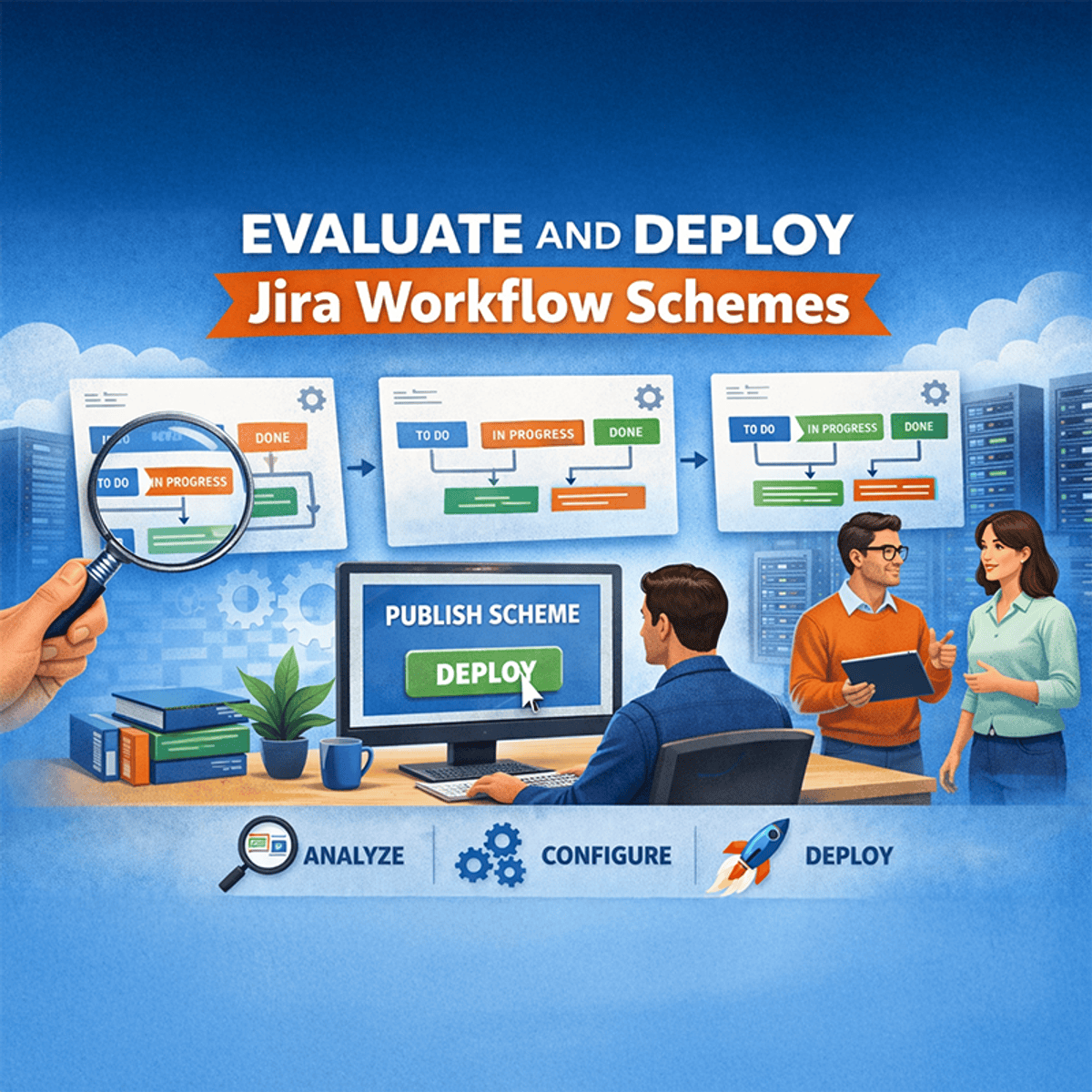
Are your projects being hindered by inconsistent, confusing, or inefficient Jira workflows? This course, Evaluate and Deploy Jira Workflow Schemes, provides a structured path for project managers and IT professionals to move from chaos to clarity. You will learn to critically evaluate competing workflow designs against the essential pillars of compliance, auditability, and user experience. This course moves beyond theory, guiding you through the practical steps of designing and creating reusable, scalable workflow schemes from the ground up. Through hands-on exercises and real-world case studies, you'll learn to build flexible workflows that bring consistency to your organization and can be deployed across active projects without disrupting existing work. By the end, you'll be equipped to implement standardized, user-centric workflow solutions that enhance productivity, ensure governance, and drive project success.
 Tsinghua University
Just Reading and Writing English 1
Do you want to communicate with English speakers fluently? Welcome to our course. The course consists of 6 units with different topics: feelings, staying healthy, learning, university, cultural differences, and cities. From this course, you will have a good knowledge of primary English reading and writing skills in your daily life. We invite you to learn with our teachers and friends from different countries in the videos, such as the United States, the United Kingdom, Ireland, Canada, Australia, and Columbia. Are you ready? Let’s go!
 Coursera
Publish your corporate designs on Slack with Canva
At the end of this project, you will have all the basic skills to create professional designs and publish them on Slack using Canva, an online platform for creating and editing Marketing content. You'll be able to integrate Slack with your Canva and share your designs with your colleagues.
 IBM
IBM
Developing AI Applications with Python and Flask
This short course is designed to equip learners with foundational skills in Python for developing AI-enabled web applications using the Flask framework and Watson AI libraries. You will explore the end-to-end lifecycle of building scalable web applications, starting from writing clean and modular Python code to deploying complete AI-powered solutions. The course begins by introducing Flask, a lightweight and flexible web framework, and helps learners build a strong foundation in web applications, APIs, and the overall development lifecycle. They will gain practical experience with the IBM Skills Network Cloud IDE, learn Python best practices including static code analysis, and write and run unit tests to ensure the reliability of their code. The course dives deeper into application development by teaching learners to build web applications with Flask covering topics such as routing, handling GET and POST requests, dynamic routes, and error management. By the end of the course, learners will complete a practice project and a final peer-reviewed project that showcases their ability to develop, test, and deploy AI-powered Flask applications. The hands-on experience gained throughout this course ensures learners are not only confident in their Python and Flask skills but are also ready to build intelligent web applications in real-world settings.
 Simplilearn
Deep Learning Frameworks and Neural Networks Simplified
This comprehensive Deep Learning program will equip you with advanced skills in TensorFlow, Keras, Recurrent Neural Networks (RNNs), and Neural Networks. You’ll learn to implement cutting-edge AI models and frameworks to tackle real-world challenges and drive impactful innovations. By the end of this course, you will be able to: - Master TensorFlow and Keras: Learn TensorFlow’s architecture, features, and updates from 1.0 to 2.0, and use Keras for data handling and object detection. - Apply RNNs and LSTMs: Understand Recurrent Neural Networks, address the gradient problem, and implement Long Short-Term Memory (LSTM) networks for tasks like time series analysis and natural language processing. - Explore Neural Networks: Dive into feedforward, convolutional, and recurrent neural networks to understand their applications and functionality. - Develop Practical AI Solutions: Build and deploy advanced AI models for solving real-world problems in diverse industries. Guided by experts, you’ll gain the technical expertise and practical knowledge needed to excel in the fast-evolving field of deep learning.
 H2O.ai
H2O ai Large Language Models (LLMs) - Level 2
Continue your exploration of Large Language Models (LLMs) with Andreea Turcu's foundational Level 2 course! Specially designed for those with foundational knowledge, this course delves deep into optimizing Natural Language Processing (NLP) models through robust data practices. Discover the critical role of clean data and effective data preparation techniques essential for NLP model quality. Using LLM DataStudio, navigate supported workflows, customize interfaces, and implement quality control measures. Learn to set up projects and leverage collaboration features to enhance team efficiency. Master QnA dataset creation, ensuring accuracy through validation and quality assurance processes. Perfect fine-tuning with H2O LLM Studio, where you'll tailor models to specific tasks. Explore workflows, employ data augmentation strategies, and select optimal architectures from pre-trained models. Delve deeper into advanced techniques like Quantisation and LoRA for model compression, optimizing your NLP applications for real-world deployment. Earn your LLM Certification Level 2, showcasing your expertise in data preparation, fine-tuning, and model optimization. This certification is ideal for professionals that are aiming to excel in specialized roles within NLP, machine learning, and data engineering. Join Andreea Turcu in this course and elevate your skills in harnessing LLMs for cutting-edge NLP projects, where you’ll dive into practical applications of language models and supercharge your AI career!
 University of Cambridge
The neuropsychology of decision making
An introductory course to the complex cognitive process that is decision-making, from a neuropsychological perspective. Covering basic neuroanatomy, neurodevelopment, important structures, chemicals and networks, individual differences in decision-making and decision-making deficits.
 SkillsBooster Academy
Vibe Coding with Lovable: From Idea to App
Vibe Coding with Lovable: From Idea to App is a hands-on, beginner-friendly course that teaches you how to turn ideas into real, working applications—without traditional coding. You’ll learn how to think, build, and iterate like a modern product creator using Lovable. Through guided walkthroughs, real-world examples, and practical mini-projects, you’ll go from zero experience to confidently creating apps, tools, and websites powered by AI. This course is designed for founders, marketers, creators, and curious professionals who want to move faster, test ideas quickly, and build digital products independently. No coding background. No technical jargon. Just clear thinking, smart prompts, and real results. By the end of this course, you will be able to: Understand what Vibe Coding is and why it’s changing how products are built Confidently navigate and use the Lovable interface Build functional apps, websites, and tools from scratch Write effective prompts that guide AI toward better results Rapidly prototype ideas and iterate without developers Avoid common beginner mistakes when working with AI tools Use Lovable responsibly, ethically, and at scale Plan your next steps for more advanced or professional use cases