

The Global Scholarly Directory.
Discover world-class academic programs curated for the modern intellectual. Search through 19877+ degrees and professional certificates.
 Università di Napoli Federico II
Introducción a la teoría política
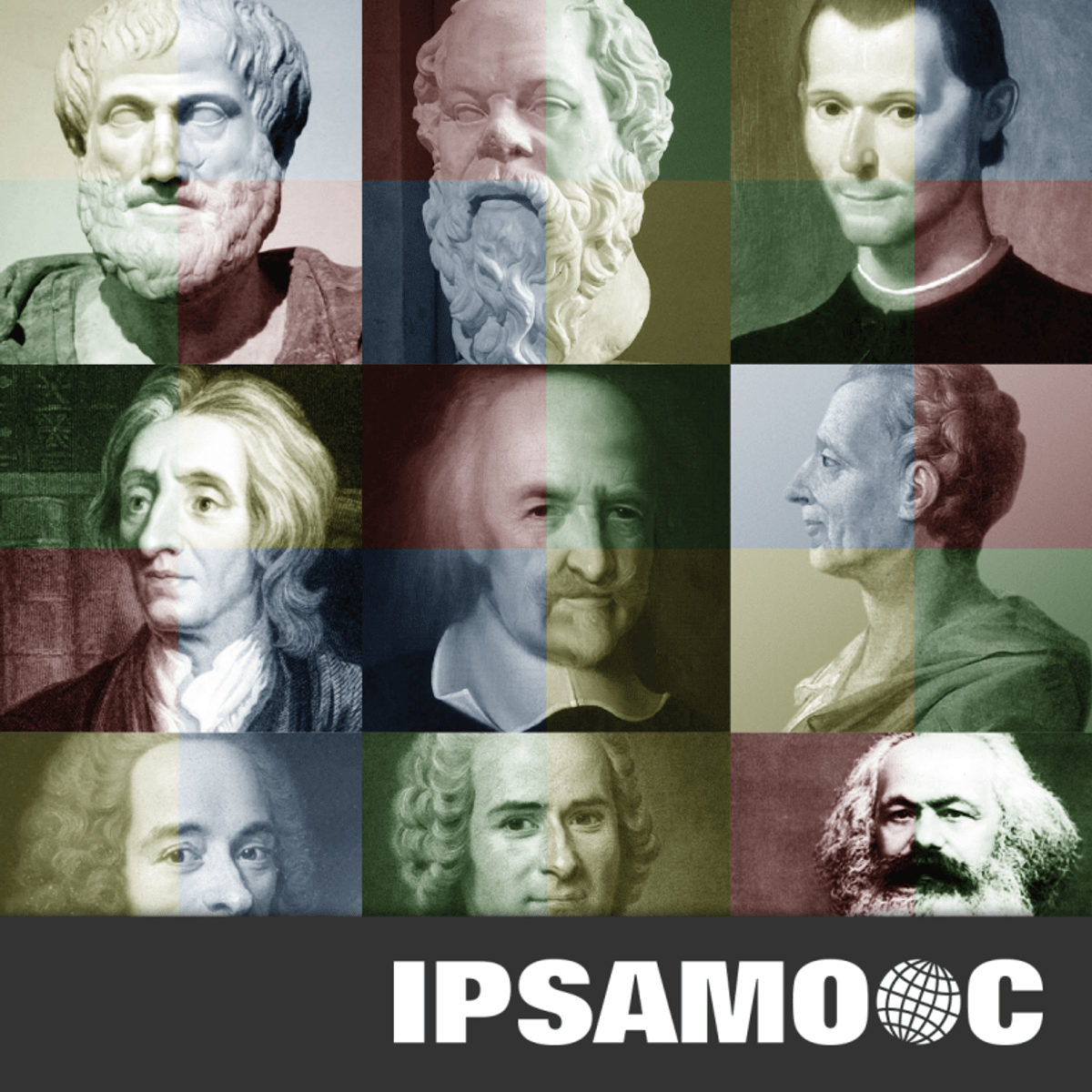
Este curso forma parte del proyecto IPSAMOOC, una iniciativa conjunta de Federica Weblearning y la Asociación Internacional de Ciencia Política (IPSA). El objetivo de este curso de ciencias políticas es la presentación de la historia de la teoría política desde sus comienzos con Platón hasta la obra de Jürgen Habermas. Este curso online expone, por tanto, las teorías de los principales autores del canon tradicional de la teoría política y se vale de ellos para explicar la aparición y el desarrollo de los conceptos políticos centrales a lo largo de la historia. Para poder hacerlo con eficacia, algunos de nuestros módulos se centran sobre los factores contextuales, aportan una síntesis de los principales periodos y abordan los problemas derivados de las posibles interpretaciones de los diferentes autores, así como el valor político actual de sus teorías. En lo relativo a la metodología y el enfoque adoptado, el curso sobre pensamientos políticos aspira a ser simple y directo, dinámico y entretenido. No se busca a una exposición comprehensiva, sino a presentar los rasgos principales de las teorías y cómo conectan unas con otras. Este curso en línea puede ser usado como apoyo de aprendizaje para estudiantes de ciencias políticas, sociología y humanidades, pero puede ser también de gran interés para cualquier ciudadano interesado en temas políticos.
 IESE Business School
Parte 4: Design Thinking en la implementación y cultura
Descubre cómo llevar el Design Thinking más allá del proyecto puntual e integrarlo en la cultura organizacional. Este módulo está orientado a profesionales que buscan generar impacto sostenible con la innovación centrada en el usuario. Abordarás los efectos transformadores de Design Thinking, los obstáculos típicos que dificultan su implementación y las claves para fomentar una cultura propicia para la experimentación y el aprendizaje continuo dentro de las organizaciones.
 INSEAD
Web3 and Blockchain Transformations in Global Supply Chains
The global supply chain is a $50 trillion industry and is the foundation of our global economy. While information technology has improved the flow of goods globally over the last few decades, as the COVID-19 crisis revealed there is still critical work to do. Today’s supply chains are complex, with parties conducting their transactions through a Byzantine network of computer systems with disparate applications like e-mail, phone, and fax. There are invoices, letters of credit, bank guarantees, bills of lading, tax forms, receipts, and other paperwork moving through this complex labyrinth. Payments are made through a hodgepodge of intermediaries, and consumers and supply chain players alike struggle to get accurate information. Enter blockchain—the Internet of Value. For the first time in human history, individuals and organizations can manage and trade their assets digitally peer to peer. These assets can be digital like money, identity, and private information; or they can be physical assets represented by digital tokens. Parties to a transaction achieve trust not necessarily through an intermediary, but through cryptography and clever code. In this course, you will learn how blockchain can improve global supply chains by streamlining processes, reducing costs and fraud, improving supply-chain visibility, authenticating assets and their origins, and ultimately fuelling product innovation. Development of this course was made possible thanks to the generous support of FedEx. Dale Chrystie, Business Fellow & Blockchain Strategist at FedEx, appears in several of the course videos, bringing a real-world industry perspective to the course. The scripts for these videos have been written and/or reviewed by the Blockchain Research Institute and approved by INSEAD to ensure that this content is pedagogically sound, unbiased, and academically rigorous.
 Michigan State University
Effectively delivering the news to your audience
Being a successful journalist is more than hunting down information. How journalists process the information, then put it together, are key steps for news reports. You will learn the process, planning, requirements of how journalists develop their news reports. There are many ways to report news reports, and you will learn different forms of how to perform reporting and writing to serve different audiences. This course also explains the different formats within journalism, beyond the written word and how they are best utilized.
 Packt
Packt
Foundations of NIST Cybersecurity Frameworks
Updated in May 2025. This course now features Coursera Coach! A smarter way to learn with interactive, real-time conversations that help you test your knowledge, challenge assumptions, and deepen your understanding as you progress through the course. Dive into the world of NIST cybersecurity frameworks and build a strong foundation in managing and securing digital assets. This course begins with an introduction to the history and role of NIST, guiding you through essential resources and publications. You will explore NIST’s relationships with various U.S. federal agencies and international standards organizations, providing you with a broad understanding of its impact on cybersecurity practices. As you progress, you will delve into the core components of the NIST Cybersecurity Framework (CSF) and Risk Management Framework (RMF). Learn about the key functions, tiers, and profiles of CSF, and how they interconnect with other NIST publications. Understand how to assess and manage risks by evaluating threats, vulnerabilities, and their potential impact on business operations. Real-world case studies will be used to demonstrate the practical application of these frameworks, helping you to develop a comprehensive cybersecurity program. The course also covers critical aspects of asset management and protection. You will learn to identify and inventory critical assets, conduct business impact assessments, and establish effective security policies. The latter sections focus on system auditing, monitoring, and alerting mechanisms, equipping you with the tools and knowledge to proactively manage security incidents and maintain compliance with NIST standards. This course is designed for cybersecurity professionals, IT managers, and compliance officers seeking to strengthen their understanding of NIST frameworks. A basic understanding of cybersecurity concepts and familiarity with IT systems are recommended.
 EDUCBA
Hadoop Projects: Analyze Big Data with Hive & Pig
By the end of this course, learners will be able to design, implement, and analyze real-world Big Data projects using Hadoop’s core components — HDFS, Hive, Pig, and MapReduce. They will apply data processing techniques to customer complaints, health surveys, traffic violations, and loan datasets to extract valuable business insights. This hands-on, project-based course guides learners through every stage of Big Data analysis — from importing and transforming data to executing distributed computations and exporting results to relational databases. Learners will master essential Hadoop workflows such as writing MapReduce programs, developing Hive queries, integrating Pig scripts, and using Sqoop for seamless SQL data transfer. What makes this course unique is its real-world project orientation that combines four complete Hadoop case studies into one comprehensive learning experience. Each module provides step-by-step implementation practice to build confidence and technical proficiency. Upon completion, learners will be equipped to manage large datasets, optimize performance, and apply Hadoop-based solutions in enterprise environments.
 AI CERTs
AI Essentials
AI+ Everyone™ introduces the core ideas, technologies, and real-world applications of artificial intelligence in a way that is accessible to all learners - regardless of technical background. The course explains how AI systems work, how they are used across industries, and what their growing role means for individuals, businesses, and society. You’ll learn foundational concepts such as machine learning, data-driven decision-making, generative AI, and the typical workflow behind AI projects. Real examples and case studies illustrate how AI supports activities in fields like healthcare, education, marketing, operations, product design, and creative work. The course also emphasizes responsible and ethical AI use, discussing bias, fairness, transparency, and the broader social implications of intelligent technologies. Practical exercises introduce widely used tools - including Runway ML, Grammarly, AIVA, and SciPy- to help you explore how AI enhances creativity, productivity, and everyday problem-solving. An optional module provides an introduction to AI agents and how autonomous systems are beginning to shape work and decision processes. This course is designed for anyone seeking a clear, structured, and practical understanding of AI’s role in today’s world.
 Alex Genadinik
Insights On Stress & Anxiety From Dr. Lisa Feldman Barrett
Learn about cutting edge research in Emotional Intelligence from one of the world's foremost researchers about mood and emotions, and how your mood colors your emotions as well as your experience of stress and anxiety. The research presented in this course is by Dr. Lisa Feldman-Barrett.
 LearnKartS
Cybersecurity Operations and Controls
Strengthen your security expertise with a hands-on journey into Cybersecurity Operations and Controls. This course provides you with technical depth and hands-on experiences of defense tools and techniques that will enable you to respond to and defend against threats. Begin by mastering secure baselines, wireless network protection, mobile device security, application-level controls, and sandboxing to isolate malicious activity. You will investigate each phase of the IT asset lifecycle — data governance, secure decommissioning, vulnerability grouping, remediation planning, and optimizing security tools to increase detection and reporting precision. The course then moves into security controls and incident management, where you will gain an understanding of DNS and web filtering, OS security and secure protocols, IAM, credential and privilege protections, security automation considerations, threat investigation methods, and digital forensics to successfully manage and analyze security incidents. By the time you finish, you’ll be running, optimizing, and defending modern systems with clarity, precision, and real-world skill.
 EDHEC Business School
Economics and Policies of Climate Change
Being aware of the urgency and importance of climate change is not enough to tackle it effectively. To avoid the worst climate outcomes, decisive action has to be taken. But what realistic options do we have? Since our resources are limited, is it better to act now or wait until we have more advanced and less expensive technology? How big do our abatement efforts have to be? This MOOC will help you understand how economists try to answer these questions and find the optimal course of action. Most important, it will give you the conceptual tools to draw your own conclusions. In the first part of the MOOC, you will learn about the two main approaches used by economists to determine when and how much we should invest in the fight against climate change. The first method is the net-present-value approach. Here the social discount rate plays a central role in determining optimal policy, by showing how future benefits and costs can be compared and made comparable (‘present-valued’) with expenditures today. In the second approach you will learn how Integrated Assessment Models (IAMs) work. In particular, you will study in detail the strengths and weaknesses of one of the most popular IAMs, the DICE model, developed by Nobel laureate Professor Nordhaus. This model tries to figure out the optimal course of action by providing a simplified account of the science, the technology and the economics of the problem. The second part of this MOOC then explores the different types of economic policies that decision-makers can adopt. You will be introduced to different methods used to control emissions, such as carbon taxes, regulations and standard-setting. You will also learn about the most developed emissions trading markets around the world and their effects on the economy. This MOOC is for those who wish to understand the economics of climate change and use this understanding to form their own informed opinion about the policies on which we can rely to tackle it. It is not necessary to have specialized prior knowledge, apart from basic familiarity with economic concepts such as utility functions. We do suggest, however, taking the first MOOC of this specialization before starting this one in order to gain a simple but solid understanding of the physical and technological aspects of the problems.
 The Chinese University of Hong Kong
Intellectual Change in Early China: Warring States and Han
This sequence of four courses will propose a multi-disciplinary approach to the study of Chinese cultural history conceived of as a succession of modes of rationality (philosophical, bureaucratic, and economic). The focus will be on the moments of paradigm shift from one mode of rationality to another. For each of these moments, cultural facts and artifacts—thought, literature, ritual—will be examined in relationship to changing social, political, and economic systems. The first two courses will cover the periods of the Warring States (481-256 BCE) and the Period of Division (220-589 CE), with a brief excursion into the Han (206 BCE-220 CE). The Warring States laid the social and cultural foundations for the emergence of the imperial mode of rationality; the Period of Division saw the Buddhist “conquest” of China and the emergence of a rationality defined by the opposition of the Three Teachings to shamanism, that is, of a clear contrast between elite and popular culture. The third and fourth courses will focus on the emergence of modern China in the Song-Yuan (960-1368) and of today’s China 1850 to the present. We will see how the modern attack on religion, redefined as "superstition", led not only to religious reform movements but also to a society in which science and the nation became the primary value systems promoted by the state. The courses are listed below: A Critical Cultural History of China - Early China I: Intellectual Change in the Warring States and Han (481 BCE-220 CE) A Critical Cultural History of China - Early China II: Religious Transformation in the Period of Division (220-589 CE) A Critical Cultural History of China - Modern China I: Religion and Thought in the Song, Jin, and Yuan (960-1368) A Critical Cultural History of China - Modern China II: Structuring Values (1850-2015)
 LearnKartS
Ethical Hacking Practice Project & Questions
Ready to advance your career in ethical hacking? The Ethical Hacking Practice Project & Questions course makes you an expert in Cyber Security with a project and practice questions. Ideal for both beginners and IT security professionals alike, this hacking course enables you to master real-world challenges. You will have the chance to work with tools commonly used in industry, and practice on various projects that involve penetration testing, detection of vulnerabilities, and a complete understanding of what a security assessment means. Prepare yourself to test your skill with practice quizzes by simulating real-life hacking scenarios, which will help you learn to hack. Based on the most recent cybersecurity frameworks, in this course, you’ll have both the certifications and practical knowledge you need to help secure jobs fresh out of your class. Enroll today to gain hands-on experience, sharpen your ethical hacking skills, and unlock exciting career opportunities in the world of cybersecurity! Disclaimer: CEH and Certified Ethical Hacker are trademarks of EC-Council. This course is not affiliated with or endorsed by EC-Council.
 University of Alberta
Astro 101: Black Holes
What is a black hole? Do they really exist? How do they form? How are they related to stars? What would happen if you fell into one? How do you see a black hole if they emit no light? What’s the difference between a black hole and a really dark star? Could a particle accelerator create a black hole? Can a black hole also be a worm hole or a time machine? In Astro 101: Black Holes, you will explore the concepts behind black holes. Using the theme of black holes, you will learn the basic ideas of astronomy, relativity, and quantum physics. After completing this course, you will be able to: • Describe the essential properties of black holes. • Explain recent black hole research using plain language and appropriate analogies. • Compare black holes in popular culture to modern physics to distinguish science fact from science fiction. • Describe the application of fundamental physical concepts including gravity, special and general relativity, and quantum mechanics to reported scientific observations. • Recognize different types of stars and distinguish which stars can potentially become black holes. • Differentiate types of black holes and classify each type as observed or theoretical. • Characterize formation theories associated with each type of black hole. • Identify different ways of detecting black holes, and appropriate technologies associated with each detection method. • Summarize the puzzles facing black hole researchers in modern science.
 Pontificia Universidad Católica del Perú
Fundamentos de Políticas Públicas
¡Prepárate para transformar tu entendimiento y participación en el mundo de las políticas públicas con el curso "Fundamentos de Políticas Públicas"! A través de cuatro módulos clave, este curso te dotará de conocimientos esenciales en materia de políticas públicas. ¿Te interesa descubrir cómo se formulan las políticas públicas y su impacto en la sociedad? El curso te ofrecerá una inmersión profunda en el estudio de las políticas públicas, comenzando por sus definiciones y perspectivas, pasando por la institucionalidad y métrica aplicada, hasta la evaluación crítica de documentos relevantes. Cada módulo ha sido cuidadosamente diseñado para brindarte una comprensión completa y aplicable al contexto peruano, aunque sus enseñanzas son extensibles a cualquier entorno. Al finalizar, no solo entenderás la conexión entre los temas públicos y sus políticas correspondientes, sino que también serás capaz de identificar y utilizar herramientas de medición y análisis crítico. Desde la PUCP, queremos que salgas del curso no solo con conocimientos, sino con la capacidad de aplicarlos efectivamente para hacer un cambio positivo en la sociedad.
 Skillshare
Adobe Lightroom Essentials Pt. 3: Advanced Edits & Presets
Wrap up your Lightroom Essentials training with Daniel Scott as he dives into the creative and professional tools that take your photos (and videos!) to the next level. This advanced course is perfect for learners who already understand Lightroom fundamentals and want to explore powerful retouching, color grading, and presets. Daniel will teach you how to: * Smooth skin, enhance eyes, and remove unwanted objects * Create and apply your own presets to edit in bulk * Color grade with LUTs, tone curves, and cinematic styles * Explore when (and why) to switch from Lightroom to Photoshop * Color correct videos directly in Lightroom CC You’ll also learn how to prepare your photos for client delivery, printing, or sharing online without losing quality. Daniel’s project-based teaching style ensures you get hands-on practice with each new concept, so you walk away with both skill and confidence. If you’ve already completed Parts 1 and 2—or have solid experience with Lightroom’s basic tools—this course will complete your creative toolkit. Instructor bio: Daniel Walter Scott is a digital designer, Adobe Certified Instructor, and founder of Bring Your Own Laptop (BYOL). With over 14 years of teaching experience, he has helped thousands of learners worldwide master design and creative software across print, web, video, and now 3D. Daniel is an Adobe Certified Expert and Adobe Certified Instructor who combines industry expertise with a teaching style that’s practical, engaging, and memorable. Originally from New Zealand, Daniel has lived and taught across Australia, Ireland, and beyond—sharing his skills with a truly global creative community. He’s passionate about helping students build real-world skills they can carry into their careers and creative projects. When he’s not teaching, Daniel enjoys life with his Irish wife and kids. He brings this personal, down-to-earth perspective into his courses, making complex tools feel approachable and fun to learn.
 Google Cloud
Introduction to Vertex AI Studio - Bahasa Indonesia
Kursus ini memperkenalkan Vertex AI Studio, sebuah alat untuk berinteraksi dengan model AI generatif, membuat prototipe ide bisnis, dan meluncurkannya ke dalam produksi. Melalui kasus penggunaan yang imersif, pelajaran menarik, dan lab interaktif, Anda akan menjelajahi siklus proses dari perintah ke produk dan mempelajari cara memanfaatkan Vertex AI Studio untuk aplikasi multimodal Gemini, desain perintah, rekayasa perintah, dan tuning model. Tujuan kursus ini adalah agar Anda dapat memanfaatkan potensi AI generatif dalam project Anda dengan Vertex AI Studio.