

The Global Scholarly Directory.
Discover world-class academic programs curated for the modern intellectual. Search through 19877+ degrees and professional certificates.
 DeepLearning.AI
Preprocessing Unstructured Data for LLM Applications
Enhancing a RAG system’s performance depends on efficiently processing diverse unstructured data sources. In this course, you’ll learn techniques for representing all sorts of unstructured data, like text, images, and tables, from many different sources and implement them to extend your LLM RAG pipeline to include Excel, Word, PowerPoint, PDF, and EPUB files. 1. How to preprocess data for your LLM application development, focusing on how to work with different document types. 2. How to extract and normalize various documents into a common JSON format and enrich it with metadata to improve search results. 3. Techniques for document image analysis, including layout detection and vision transformers, to extract and understand PDFs, images, and tables. 4. How to build a RAG bot that is able to ingest different documents like PDFs, PowerPoints, and Markdown files. Apply the skills you’ll learn in this course to real-world scenarios, enhancing your RAG application and expanding its versatility.
 Arizona State University
Futures Thinking
You can’t always know what’s coming, but you can imagine it. You have the ability to embrace new ideas and stay hopeful about the future. That’s what futures thinking is all about. By exiting your default frame and asking the right questions, you can start to imagine new scenarios and use those to inform your decisions. For anyone trying to think ahead and act strategically, this kind of thinking is a must. With the expertise of Dr. Timiebi Aganaba from the ASU School for the Future of Innovation in Society, the Futures Thinking course will put the tools, knowledge and strategies for imagining possible futures directly into your hands. You’ll learn the fundamentals and get acquainted with your futures thinking toolkit. Then, you’ll directly apply them in hands-on scenarios. Relying on your usual framework will not produce every possible future. Instead, you need to open your mind and remain hopeful. You also need to learn which questions to ask. By the end of your process, you should be able to exit your usual frame of mind and imagine new scenarios that you can plan for — skills that anyone can learn and apply anywhere. Jump-start your futures thinking journey today!
 University of Colorado System
Introduction to Cybersecurity for Business
The world runs computers. From small to large businesses, from the CEO down to level 1 support staff, everyone uses computers. This course is designed to give you a practical perspective on computer security. This course approaches computer security in a way that anyone can understand. Ever wonder how your bank website is secure when you connect to it? Wonder how other business owners secure their network? Wonder how large data breaches happen? This is practical computer security. It will help you answer the question – what should I focus on?
 Packt
Packt
Foundations of Azure Infrastructure Design
Updated in May 2025. This course now features Coursera Coach! A smarter way to learn with interactive, real-time conversations that help you test your knowledge, challenge assumptions, and deepen your understanding as you progress through the course. Unlock the power of Microsoft Azure with this comprehensive course on designing robust infrastructure solutions. You'll gain expertise in creating secure, scalable, and compliant Azure environments tailored to organizational needs. From logging and monitoring to governance and identity management, this course equips you with the critical skills required for cloud success. Begin your journey by exploring solutions for logging and monitoring, where you'll learn to design log routing, recommend monitoring tools, and establish the appropriate level of logging. Next, dive into authentication and authorization, mastering solutions for securing resources with RBAC, identity management, and enforcing compliance. With detailed modules, you'll confidently architect systems that align with industry best practices. Advance to governance and application access strategies, developing hierarchical structures for Azure resources and integrating applications into Azure Active Directory. Each lesson builds your ability to address real-world challenges, providing actionable insights and practical solutions. This course is ideal for IT professionals, cloud architects, and security experts eager to deepen their Azure expertise. A foundational understanding of Azure and cloud computing is recommended, as the course balances intermediate and advanced topics for effective learning.
 Amazon Web Services
Capstone: Preparing to work as a Cloud Support Associate
This course's focus will be on practical aspects of preparing to work as a support agent in organizations with AWS environments. We will start with some review of previous topics covered in the series, with specific attention paid towards debugging and troubleshooting. We’ll then move into concepts around interacting with customers to obtain information and progress towards a solution. In the next module, you'll have the opportunity to view the architecture from various perspectives, such as builder, supporter, and interviewer. We will then shift into preparing you to apply for Cloud Support Associate positions. This will involve diving into resume and portfolio building, as well as the creation of an online presence. The second module will close out with a look at how you can evaluate opportunities and any gaps you may have in your knowledge. The third module of the course will have a focus on interviewing. This will involve preparing for interviews, discussions with professions from AWS Premium Support around the interviewing and hiring process, and looking at mock interviews and sample questions. The last module of the course will allow you to practice using the knowledge and various skills you’ve acquired over the course of the series with a multi-part project. In the project, you’ll build, analyze, and document an application architecture. You’ll also can view the architecture from various perspectives, such as builder, supporter, and interviewer.
 Deep Teaching Solutions
Accelerate Your Learning with ChatGPT
Transform your approach to learning with AI! "Accelerate Your Learning with ChatGPT" brings together two legendary professors on Coursera, Barbara Oakley and Jules White, to guide you through the fascinating intersection of neuroscience, learning strategies, and generative AI. Discover how your brain learns and how to effectively use ChatGPT to support your cognitive abilities. You'll learn to create engaging study hooks, connect ideas to personal experiences, and expand your working memory capacity using AI. The course covers crucial topics like effective prompting techniques, multimodal learning with images, and leveraging AI for personalized practice and feedback. What sets this course apart is its emphasis on preserving critical thinking skills while harnessing AI's potential. You'll explore why memorization remains vital in the AI era and how to use ChatGPT to foster curiosity and motivation. By the course's end, you'll possess a toolkit of practical strategies to improve your learning efficiency across various fields, equipping you for success in our increasingly AI-augmented world.
 Google Cloud
Utiliser des notebooks dans Vertex AI
Ce cours est une introduction aux notebooks Vertex AI, des environnements basés sur des notebooks Jupyter qui proposent une plate-forme unifiée pour l'ensemble du workflow de machine learning, de la préparation des données jusqu'au déploiement et à la surveillance des modèles. Le cours aborde les sujets suivants : (1) Les différents types de notebooks Vertex AI et leurs fonctionnalités, et (2) comment en créer et les gérer.
 Packt
Packt
Ethernet Switching and Routing
Updated in May 2025. This course now features Coursera Coach! A smarter way to learn with interactive, real-time conversations that help you test your knowledge, challenge assumptions, and deepen your understanding as you progress through the course. This course delves into the essential concepts of Ethernet switching and routing, providing a comprehensive understanding crucial for network management. It begins with an introduction to Ethernet switching, covering the fundamentals of Layer 2 and multilayer switches, MAC address tables, and neighbor discovery protocols such as CDP and LLDP. You will also explore Virtual LANs (VLANs), learning how to configure and manage them effectively to enhance network performance and security. As you progress, the course introduces more advanced topics like trunking and the Spanning Tree Protocol (STP), essential for maintaining a stable and loop-free network. You will gain hands-on experience configuring trunk links, managing multiple VLANs, and implementing Voice VLANs. The course also covers critical STP features such as Root Guard, Loop Guard, and BPDU Guard, helping you ensure network resilience and prevent potential issues. In the routing modules, the focus shifts to static and dynamic routing techniques. You will learn about the fundamentals of routing, static route configurations, and the OSPFv2 protocol. The course includes in-depth coverage of OSPF neighbor formation, DR and BDR elections, and LSA types, preparing you for real-world routing scenarios. By the end of the course, you will have a strong grasp of Ethernet switching, VLAN management, and routing protocols, enabling you to design and troubleshoot complex network environments confidently. This course is designed for network professionals and students looking to deepen their knowledge of Ethernet switching and routing. A basic understanding of networking concepts is recommended but not required. It is ideal for those preparing for certifications like CCNA or seeking to advance their careers in network management.
 Coursera
Building Production-Ready Apps with Large Language Models
In the age of artificial intelligence (AI), it is essential to learn how to apply the power of large language models (LLMs) for building various production-ready applications. In this hands-on-course, learners will gain the necessary skills for building and responsibly deploying a conversational AI application. Following the demo provided in this course, learners will learn how to develop a FAQ chatbot using HuggingFace, Python, and Gradio. Core concepts from applying prompt engineering to extract the most value from LLMs to infrastructure, monitoring, and security considerations for real-world deployment will be covered. Important ethical considerations such as mitigating bias, ensuring transparency, and maintaining user trust will also be covered to help learners understand the best practices in developing a responsible and ethical AI system. By the end, learners will have developed familiarity with both the technical and human aspects of building impactful LLM applications. The learners can design, develop, and deploy production-ready applications powered by Large Language Models. This course is designed for individuals with a basic understanding of programming and application development concepts. It is suitable for developers, data scientists, AI enthusiasts, and anyone interested in using LLMs to build practical applications. you need basic concepts, software tools, and an internet-connected computer.
 Coursera
Optimize Campaigns: Data-Driven Marketing
Transform your marketing campaigns from guesswork to strategic precision with Google Analytics and data-driven attribution models. This course empowers digital marketers to systematically analyze user behavior across market demand phases, apply sophisticated model comparisons to optimize campaign targeting, and evaluate true cross-channel effectiveness using multi-touch attribution frameworks. You'll master the art of segmenting analytics data to identify high-intent audiences, implement attribution models that reveal hidden campaign impacts, and create comprehensive performance evaluations that drive budget reallocation decisions. By the end, you'll confidently navigate Google Analytics dashboards, interpret attribution insights, and present data-driven recommendations that transform marketing ROI and campaign strategy alignment.
 École Polytechnique Fédérale de Lausanne
Digital Signal Processing 2: Filtering
Digital Signal Processing is the branch of engineering that, in the space of just a few decades, has enabled unprecedented levels of interpersonal communication and of on-demand entertainment. By reworking the principles of electronics, telecommunication and computer science into a unifying paradigm, DSP is a the heart of the digital revolution that brought us CDs, DVDs, MP3 players, mobile phones and countless other devices. The goal, for students of this course, will be to learn the fundamentals of Digital Signal Processing from the ground up. Starting from the basic definition of a discrete-time signal, we will work our way through Fourier analysis, filter design, sampling, interpolation and quantization to build a DSP toolset complete enough to analyze a practical communication system in detail. Hands-on examples and demonstration will be routinely used to close the gap between theory and practice. To make the best of this class, it is recommended that you are proficient in basic calculus and linear algebra; several programming examples will be provided in the form of Python notebooks but you can use your favorite programming language to test the algorithms described in the course.
 Vanderbilt University
ChatGPT + Zapier: From Email Inbox to Excel Spreadsheet
Unlock the power of automation with ChatGPT + Zapier: From Email Inbox to Excel Spreadsheet! This hands-on course teaches you how to streamline workflows by extracting valuable information from your email inbox and effortlessly organizing it into spreadsheets. Whether you want to track expenses, log action items, collect customer reviews, or manage follow-ups, this course gives you the skills to automate tedious tasks and turn unstructured email content into structured data. Imagine transforming your Gmail inbox—or any other email provider supported by Zapier—into a dynamic source of insights. Learn how to automate data extraction and integration with thousands of popular apps in Zapier, such as Salesforce, Office365, HubSpot, Notion, and more. With detailed, step-by-step guidance, you’ll create “Zaps” that connect email providers, ChatGPT, and various apps to build seamless, automated workflows. Each lesson builds your automation skills, from setting up your data destinations and labeling emails, to configuring Zapier actions and leveraging ChatGPT’s natural language processing capabilities to extract actionable information. What You’ll Learn: • Automate Your Data Collection: Build Zaps that automatically extract key information from labeled emails and store it in tools like Google Sheets. • Customize Prompts for ChatGPT: Master the art of prompt engineering to extract structured data like dates, vendors, amounts, and categories from email bodies. • Use Code by Zapier to Process Data: Add custom JavaScript to parse ChatGPT’s responses and format them for various app integrations. • Expand and Tailor Your Automation: Clone and customize your Zap workflows to track different types of information, such as project tasks, customer feedback, or event dates. Key Course Highlights: • From Email to Apps in Minutes: Quickly set up Zaps that move data from your inbox into Google Sheets, freeing up time and reducing manual data entry. • Hands-On Projects: Follow along with practical examples, like automating expense tracking, to learn real-world applications of ChatGPT and Zapier. • Scalable Solutions: Discover how to adapt your workflows for various use cases by changing prompts, labels, or data formats. Go Beyond the Course: While this course teaches you how to integrate Gmail and Google Sheets, the skills you’ll learn can be applied to other email providers supported by Zapier and thousands of connected apps, such as Salesforce, Office365, HubSpot, Notion, and more. The techniques covered will empower you to extend your automations to a variety of tools and platforms—from CRM systems to project management apps—giving you the flexibility to target different data sources and destinations with your new automation expertise. By the end of the course, you’ll be equipped to automate data extraction from emails, save time, and boost your productivity. Let ChatGPT and Zapier work together to transform your everyday tasks—taking you from email overload to organized data and seamless app integrations with the click of a button!
 University of Michigan
Science of Firearm Injury Prevention Among Children & Teens
Firearm injuries are a leading cause of death among children and teens. However, there are many ways that these injuries and deaths can be prevented using evidence-based practices and policies. Presented by the University of Michigan Institute for Firearm Injury Prevention and the Firearm Safety among Children and Teens (FACTS) Consortium, this course lays a broad foundation for understanding the science of pediatric firearm injury prevention and the latest research and evidence-based solution. This course covers a range of firearm injury topics including firearm-related suicide, unintentional firearm injury, firearm-related community and youth violence, firearm-related intimate partner violence, school and mass shootings, and officer-involved shootings. Through lectures and interviews from leading firearm injury researchers, and activities, readings, discussion boards, and quizzes, learners can become familiar with the epidemiology, prevention strategies, and policy efforts related to pediatric firearm injury prevention. The course also covers important gaps in existing research and future directions for expanding the knowledge base of the field. This course is designed for multiple fields and levels of training, including students and researchers from public health, medicine, public policy, social work, nursing, criminology, sociology and psychology fields. The course is also appropriate for practitioners, educators and parents. As a learner, you will have the ability to select all modules or individual topics that interest you most. Composed of 7 modules, this course may be taken from the comfort of your home or office, and you can learn at your own pace. Supported by a grant to the University of Michigan by the National Institutes of Health - Eunice Kennedy Shriver National Institute of Child Health and Human Development (NIH/NICHD) (Award Number: R24HD087149) and the University of Michigan Institute for Firearm Injury Prevention. The content is solely the responsibility of the contributors and does not necessarily represent the official views of the National Institutes of Health - Eunice Kennedy Shriver National Institute of Child Health and Human Development (NIH/NICHD) or the Department of Health and Human Services.
 Pearson
Linux Foundation Certified System Administrator (LFCS): Unit 5
This course delves into critical security aspects, from local security enhancements to advanced mandatory access control techniques. Begin by mastering file access control lists and file system attributes to bolster local security. Progress to configuring robust Linux firewalls using tools like firewalld and UFW, ensuring your systems are well-protected against unauthorized access. Finally, gain in-depth knowledge of mandatory access control with AppArmor and SELinux, learning to manage file and port access with precision. Through hands-on labs and real-world scenarios, this course equips you with the practical skills and confidence needed to secure Linux systems comprehensively.
 Sapienza University of Rome
Macroeconomic Financial Accounts Course 2
This course provides an in-depth analysis of Macroeconomic Financial Accounts. Each module will delve into one specific Institutional Sector of the National Economy i.e., Financial and non-Financial Corporations, Households, the Government. The Rest of the World is also covered. Students are expected to have a basic understanding of macroeconomic principles and financial accounting. Course 1 or equivalent knowledge is recommended for those with limited experience in macroeconomic financial accounting. Proficiency in using spreadsheets for data analysis is also beneficial. Undergraduates in their final year or university students interested in monetary and financial economics, international macroeconomics, and data mining can benefit from this course. Professionals in government institutions, central banks, business, and the financial industry, along with other individuals interested in finance and macroeconomics, may also find this course valuable. By the end of this course, students will gain a deeper understanding of the financial connections among and within the institutional sectors in market economies.
 The Chinese University of Hong Kong
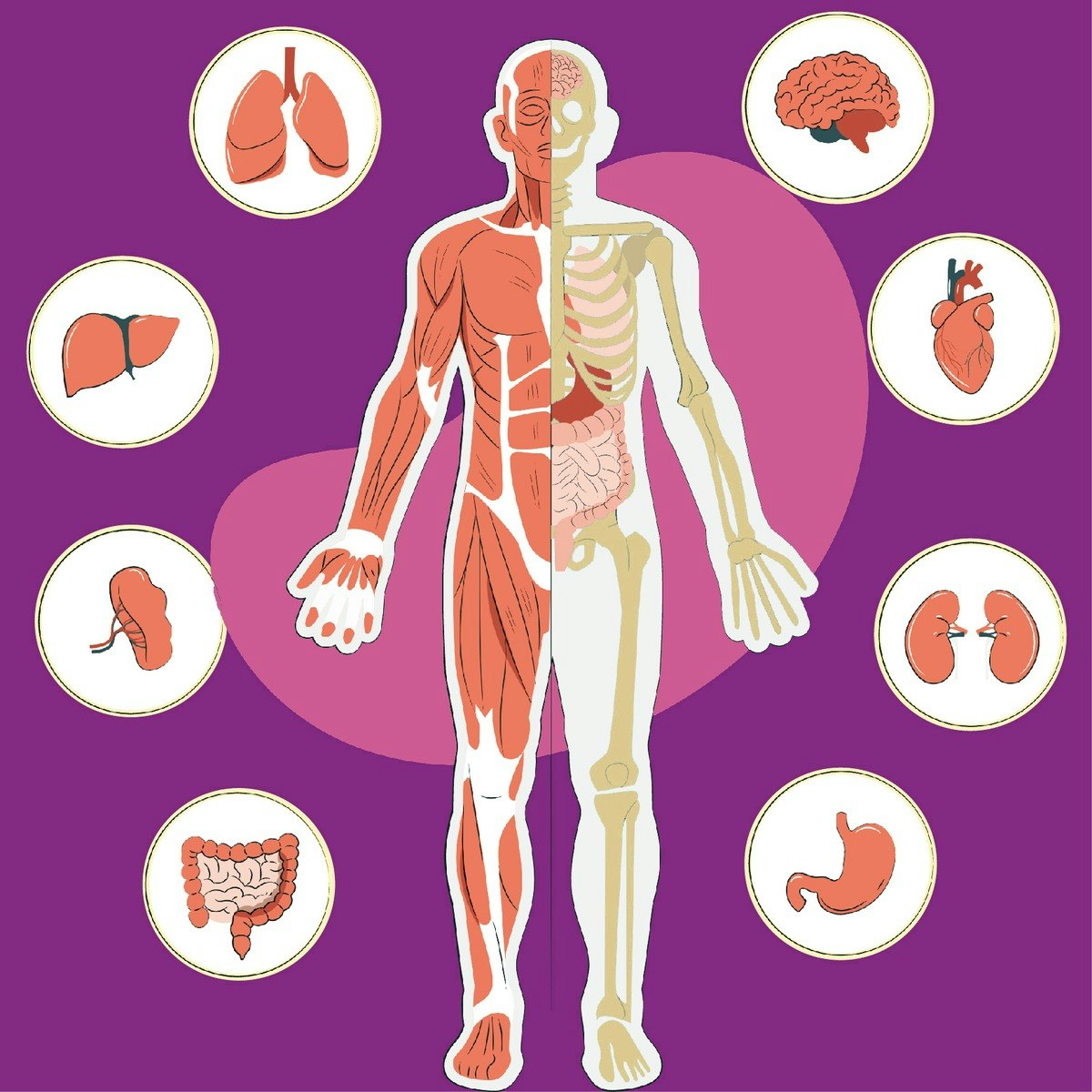
Fundamental Human Physiology in Sports Medicine
This is a course on fundamental sports-related musculoskeletal anatomy which provides students with a basic understanding of the musculoskeletal structure and function of different body regions. Topics include an overview of the musculoskeletal system, spine, upper limb, and lower limb.