

The Global Scholarly Directory.
Discover world-class academic programs curated for the modern intellectual. Search through 19877+ degrees and professional certificates.
 EDUCBA
Comparable Company Analysis: Apply, Evaluate & Excel
By the end of this course, learners will be able to analyze peer groups, apply valuation multiples, calculate enterprise value adjustments, evaluate takeover premiums, and demonstrate comps knowledge in professional interviews. This comprehensive program equips learners with the ability to apply Comparable Company Analysis (comps), one of the most practical and widely used valuation methodologies in investment banking, equity research, and corporate finance. Through structured modules, you will explore the foundations of comps, gain hands-on experience with data adjustments and LTM calculations, and learn to compile professional comps sheets for benchmarking. The course also covers advanced applications, including REIT valuations and takeover premiums, preparing you for real-world corporate finance challenges. What makes this course unique is its balance of technical rigor and career readiness. In addition to financial modeling skills, you will gain interview-focused insights, enabling you to confidently explain and defend your valuation approach in recruitment settings. Whether you are an aspiring analyst, finance student, or professional seeking stronger valuation expertise, this course provides the tools to excel in both practical analysis and career opportunities.
 Infosec
Introduction to Privacy - Part 2
Part 2 of the Privacy Fundamentals course will cover data assessments, documentation and privacy rights. We will also explore different training methods including competency based training.
 Coursera
Medical Coding for Max Reimbursement
Transform your medical billing accuracy and unlock maximum reimbursement potential! Healthcare practices lose millions annually due to coding errors and incomplete documentation – but it doesn't have to be this way. This Short Course was created to help health administration professionals master the foundational skills that directly impact practice revenue. You'll discover how proper code recognition, documentation alignment, and accurate procedural coding can dramatically improve your facility's financial performance. By completing this course, you'll be able to instantly recognize common diagnostic codes, confidently explain how documentation quality affects payment outcomes, and systematically apply correct procedural codes to encounter forms. These aren't just administrative skills – they're revenue-generating competencies that make you indispensable. By the end of this course, you will be able to: Remember common diagnostic and procedural codes for medical billing Explain the relationship between clinical documentation, coding accuracy, and financial reimbursement Apply correct procedural codes to a sample medical encounter form This course is unique because it connects the dots between clinical documentation and financial outcomes, showing you exactly how coding precision translates to revenue optimization. To be successful in this course, you should have a background in basic healthcare terminology and familiarity with medical office procedures.
 Amazon Web Services
Introduction to AWS Cloud Careers
This course introduces technical roles in the AWS Cloud and explains why the Public Cloud Computing model is the new normal. The instructors teach some of the terminologies that are needed to start a Cloud learning journey, covering topics such as the difference between IaaS, PaaS and SaaS, Cloud Computing models (Public, Private and Hybrid Cloud), what are APIs (and why they are important), elasticity, horizontal and vertical scaling. Then, we define the difference between relationship, availability, and milestone-oriented roles, and interview Amazon employees who provide their point of view of how is the day in a life of a Solutions Architect, Data Scientist, Software Developer Engineer, Systems Administrator, Security Engineer, and Customer Support Engineer.
 Edureka
Introduction to YAML
This course equips you with essential YAML skills for configuration, orchestration, and automation in modern software environments. Through hands-on practice and real-world examples, you will learn how to create structured, readable, and reusable YAML files for application configuration, CI/CD workflows, and container orchestration. Whether you are managing infrastructure as code, building deployment pipelines, or integrating YAML with tools like Kubernetes, Docker Compose, and Python, this course provides the foundational knowledge you need to work efficiently and collaboratively in DevOps and cloud-native ecosystems. By the end of this course, you will be able to: - List the YAML syntax rules and basic data types - Explain YAML's features and compare it with JSON and XML - Create and validate simple YAML files for configuration tasks - Examine the complex YAML structures into components and identify errors - Design the YAML configurations for real-world applications This course is designed for aspiring DevOps engineers, software developers, QA testers, and system administrators who want to build a strong foundation in YAML for configuration management, automation, and orchestration workflows. A basic understanding of programming concepts is recommended to make the most of this course. Join us to explore how YAML powers modern tools like Docker, Kubernetes, and CI/CD pipelines, helping you create clean, readable configurations and streamline infrastructure and application management across teams.
 University of Michigan
Data Augmented Technology Assisted Medical Decision Making
Artificial intelligence (AI) and machine learning (ML) have the potential to increase diagnostic accuracy, decrease diagnostic errors, and improve patient outcomes. The Data Augmented, Technology Assisted Medical Decision Making (DATA-MD) course will teach you how to use AI to augment your diagnostic decision-making. The National Academy of Medicine (NAM) recommends ensuring that clinicians can effectively use technology - including AI - to improve the diagnostic process. To use these technologies effectively in your clinical practice, you will need to determine when use of AI is appropriate, interpret the outputs of AI, read medical literature about AI, and explain to patients the role that AI plays in their care. In this course, you’ll explore the ethical considerations and potential biases when making medical decisions informed by AI/ML-based technologies. DATA-MD is a one of a kind curriculum designed to provide an introduction to the use of AI in the diagnostic process. This course was created with the needs of medical students, residents, fellows, practicing physicians, advanced practice providers, and registered nurses in mind. Others, like educators, computer programmers, and data scientists, may also find value in the course. Continuing Medical Education Information: This activity is released for CME credit on 07/30/2024 and expires 06/31/2027. The University of Michigan Medical School is accredited by the Accreditation Council for Continuing Medical Education (ACCME) to provide continuing medical education for physicians. The University of Michigan Medical School designates this enduring material for a maximum of 3.5 AMA PRA Category 1 Credit(s)™. Physicians should claim only the credit commensurate with the extent of their participation in the activity. Dr. Cornelius James and Jessica Virzi, planner and co-planner for this educational activity, have no relevant financial relationship(s) with ineligible companies to disclose. Maggie Makar, Benjamin Li, and Nicholson Price, presenters of this educational activity, have no relevant financial relationship(s) with ineligible companies to disclose. Karandeep Singh, presenter for this educational activity, was a consultant for Flatiron Health. The relevant financial relationship listed for this individual has been mitigated. Cheri Breadon and Jessica Virzi are the coordinators for this activity. After this activity, participants will be able to -Use AI to augment your diagnostic clinical decision-making -Describe the strengths and limitations of AI/ML-based technology in the diagnostic process -Interpret statistical measures frequently used to evaluate the performance of ML models -Critically appraise studies that include AI/ML and determine the applicability of study results in clinical practice If you would like to earn CME credit for participating in this course, please review the information, including expected results, presenters, their disclosures, and CME credit at this website prior to beginning the activity: https://umich.cloud-cme.com/course/courseoverview?P=0&EID=61826
 University of Minnesota
Software Development Processes and Methodologies
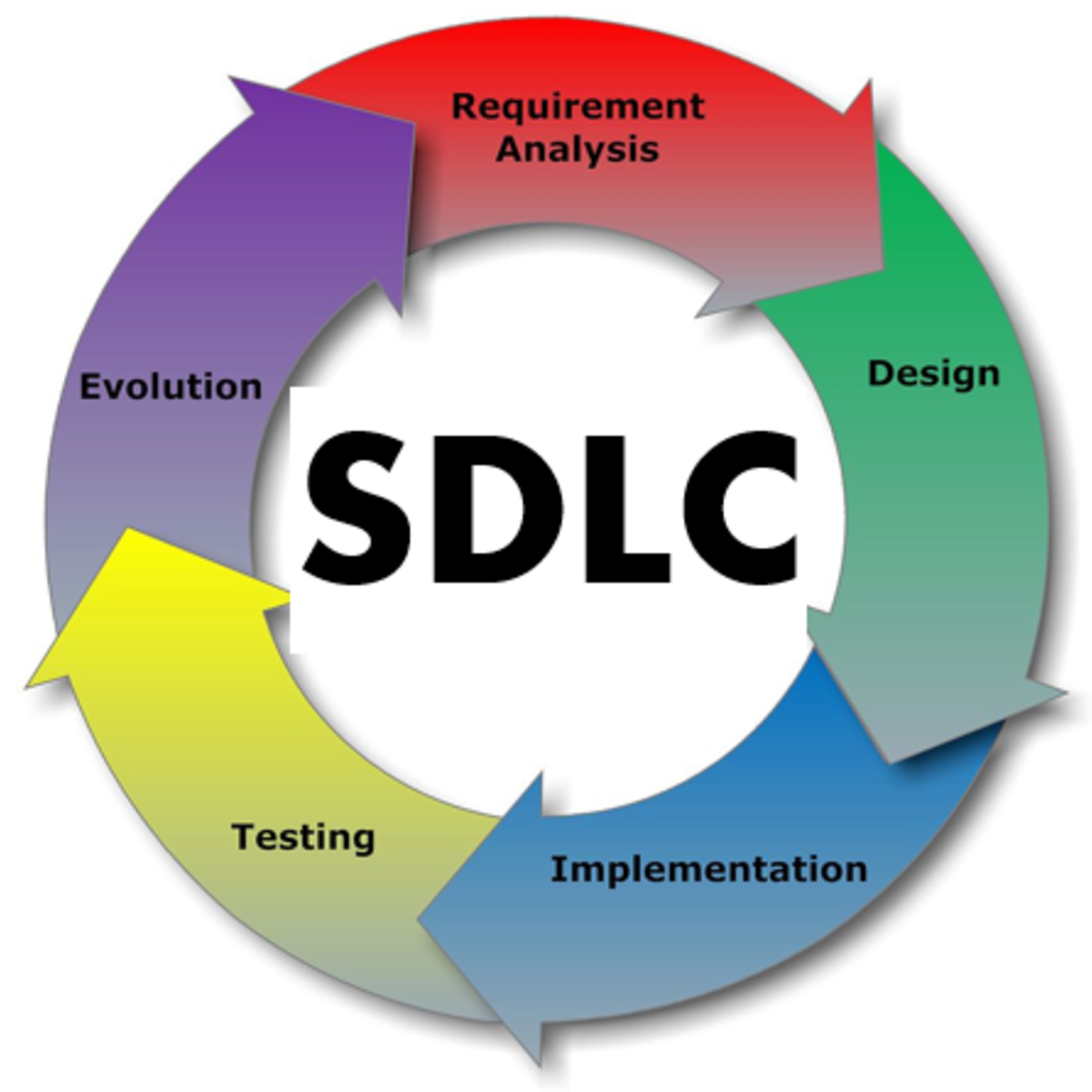
Software is quickly becoming integral part of human life as we see more and more automation and technical advancements. Just like we expect car to work all the time and can't afford to break or reboot unexpectedly, software industry needs to continue to learn better way to build software if it were to become integral part of human life. In this course, you will get an overview of how software teams work? What processes they use? What are some of the industry standard methodologies? What are pros and cons of each? You will learn enough to have meaningful conversation around software development processes. After completing this course, a learner will be able to 1) Apply core software engineering practices at conceptual level for a given problem. 2) Compare and contrast traditional, agile, and lean development methodologies at high level. These include Waterfall, Rational Unified Process, V model, Incremental, Spiral models and overview of agile mindset 3) Propose a methodology best suited for a given situation
 EDUCBA
DP-900 Azure Data Fundamentals
This course provides a foundational understanding of core data concepts and how they are implemented using Microsoft Azure data services. Through structured modules, learners will explore relational and non-relational data models, data storage solutions, database management systems, and the process of integrating, analyzing, and visualizing data using Azure’s modern cloud ecosystem. Participants will gain practical experience through demonstrations and quizzes that reinforce concepts such as data representation, normalization, structured query language (SQL), Azure SQL Database, Cosmos DB, Azure Data Factory, and Power BI. By the end of this course, learners will be prepared to identify appropriate data solutions for various business scenarios, describe capabilities of Azure data services, and confidently pursue the Microsoft DP-900 certification exam.
 Pearson
Certified Kubernetes Security Specialist (CKS): Unit 4
This course teaches you how to strengthen your cluster’s underlying systems by reducing the host operating system’s attack surface. You’ll learn host hardening, how to remove unnecessary services, and set up logging and access controls. You'll cover network security, host firewalls, and kernel hardening with tools like SecComp and AppArmor. You’ll also focus on identity and access management, applying least privilege and understanding RBAC risks. Each lesson provides practical strategies to make your Kubernetes environments more secure and prepare you for the CKS exam.
 Emory University
Reproducible Templates for Analysis and Dissemination
This course will assist you with recreating work that a previous coworker completed, revisiting a project you abandoned some time ago, or simply reproducing a document with a consistent format and workflow. Incomplete information about how the work was done, where the files are, and which is the most recent version can give rise to many complications. This course focuses on the proper documentation creation process, allowing you and your colleagues to easily reproduce the components of your workflow. Throughout this course, you'll receive helpful demonstrations of RStudio and the R Markdown language and engage in active learning opportunities to help you build a professional online portfolio.
 Microsoft
Building Intelligent Troubleshooting Agents
This course focuses on the design and implementation of intelligent troubleshooting agents. You will learn to create AI-powered agents that can diagnose and resolve issues autonomously. The course covers natural language processing, decision-making algorithms, and best practices in AI agent development. By the end of this course, you will be able to: 1. Define, describe, and design the architecture of an intelligent troubleshooting agent. 2. Implement natural language processing techniques for user interaction. 3. Develop decision-making algorithms for problem diagnosis and resolution. 4. Optimize and evaluate the performance of AI-based troubleshooting agents. To be successful in this course, you should have intermediate programming knowledge of Python, plus experience with AI & ML infrastructure and core algorithms and techniques, including approaches using pretrained large-language models (LLMs). Familiarity with statistics is also recommended.
 Packt
Packt
Information Technology and Security Principles
The course begins with an introduction to enterprise architecture and IT fundamentals, laying the groundwork for understanding how different technological components contribute to overall risk. You will explore the roles of hardware, software, networking, and cloud technologies, and learn how to incorporate these elements into comprehensive risk management strategies. This foundational knowledge will help you appreciate the complexities of IT infrastructure and its impact on organizational risk. As the course progresses, you will delve into IT project and lifecycle risk management. This module focuses on the unique challenges posed by IT projects, emphasizing the importance of managing risks throughout the project and system development lifecycles. You will learn to develop and implement disaster recovery and business continuity plans, ensuring your organization is prepared to handle potential disruptions and maintain operational resilience in the face of unexpected events. In the latter part of the course, attention shifts to the rapidly evolving landscape of emerging technologies and the critical importance of information security. You will gain a thorough understanding of core security principles such as confidentiality, integrity, and availability. Additionally, this module covers advanced security measures and data privacy fundamentals, equipping you with the knowledge to implement effective access controls and encryption techniques. By the end of the course, you will be well-versed in the strategies needed to navigate data privacy regulations and protect sensitive information against emerging threats. This course is designed for IT professionals, security analysts, and risk managers who want to deepen their understanding of IT and security principles. A basic familiarity with IT concepts and security fundamentals is recommended.
 University of Michigan
Evaluating Designs with Users
When designing systems that work for users, there is no substitute for watching them try to use the system to see what works and what doesn’t. In this UX course, you will learn how to design and conduct tests with users that will tell you how effective your design is for helping users do what they need to do, and how they feel about using your system. This course is part of the User Experience (UX) Research and Design specialization offered on Coursera. What you'll learn: Identify different approaches to user testing and their appropriate use Understand how to design an effective user test Understand how to run an effective user test to get the most information possible out of each encounter Analyze and report on user testing
 University of Michigan
Python Debugging Capstone Project: Fixing and Extending Code
In “Python Debugging Capstone Project: Fixing and Extending Code,” you will undertake a comprehensive coding project that demonstrates your ability to use NumPy, pandas, and SciPy for advanced data manipulation and scientific computing. You will use the skills and best practices learned throughout the series to debug and analyze real-world data. This project will involve working with complex datasets, requiring you to implement data structures and handle missing data. You will engage in systematic debugging using the OILER framework – Orient, Investigate, Locate, Experiment, and Reflect – learned in the first course within the series and other advanced troubleshooting techniques. By the end of the course, you will know how to properly document your processes through clean, maintainable code notebooks.
 Google Cloud
Datadog: Getting started with the Helm Chart
This is a self-paced lab that takes place in the Google Cloud console. In this lab, you will learn how to use the Datadog Helm Chart. In this lab you will run the Datadog Agent in a Kubernetes cluster as a DaemonSet in order to start collecting your cluster and applications metrics, traces, and logs. You can deploy a Datadog Agent with a Helm chart or directly with a DaemonSet object YAML definition. In this lab you will be explaining and using those options in a real cluster, checking in real time the features they enable.
 Johns Hopkins University
Healthcare Delivery for Medical Practice Managers
Welcome to the Healthcare Delivery in Ambulatory Healthcare Management course! This course provides you with a comprehensive understanding of the various aspects of healthcare delivery within the dynamic field of ambulatory healthcare management. This course is designed for learners with little to no experience in this field, and welcomes all those interested in learning more about medical practice management. Throughout this course, you will explore key topics that are crucial for effectively managing healthcare delivery. You’ll cover the locations of care, including hospitals, ambulatory clinics, virtual care, nursing homes, and other healthcare settings. Additionally, you will delve into practice management, population health, care management, case management, and the distinction between primary and specialty care. By the end of this course, you will have the knowledge and skills necessary to navigate the complex landscape of healthcare delivery in ambulatory settings. Join us on this learning journey to enhance your understanding of ambulatory healthcare management and its impact on patient care, population health, and overall healthcare outcomes.