

The Global Scholarly Directory.
Discover world-class academic programs curated for the modern intellectual. Search through 19877+ degrees and professional certificates.
 EDUCBA
Input Output, Expression Handling, and System Management
This course is designed to provide learners with a practical and conceptual foundation in Unix-based input/output handling, file management, and system administration. Through two in-depth modules, learners will progress from understanding essential I/O mechanisms to executing advanced administrative tasks using Unix commands and structures. In Module 1, learners will define, demonstrate, and apply principles of input/output processing, file streams, standard redirection, and text substitution using tools like sed and regular expressions. The lessons in this module emphasize file-based operations and the abstraction of system components in Unix. Module 2 shifts focus to navigation, disk management, and user-level control. Learners will describe the Unix directory hierarchy, execute device mounting operations, and manage user accounts and permissions—developing the skills needed for real-world system maintenance and security enforcement. With a blend of theoretical concepts, command-line practice, graded assessments, and real-use scenarios, this course equips learners to not only operate confidently in Unix environments but also to analyze system behaviors and evaluate administrative strategies effectively.
 The University of Tokyo
6分間模擬授業で学ぶ授業づくり(Learn How to Teach by 6 Min. Micro Teaching)
授業の設計や改善には、どのように取り組めばよいのか。 6 分間の模擬授業をつくることを通して、授業設計・改善のあり方について、具体的に学ぶプログラムです。初等教育から高等教育まで、現職の教員とこれから教員を目指す方を対象とし、3週間で学べるようになっています。「6 分間の模擬授業」を行う意義を理解し、その授業づくりの考え方「ADDIE モデル」を元にして、必要な知識と理論をさまざまなワーク(体験)によって実践します。そして、グラフィッククラスデザイン、クラスデザインシートの作成を通して模擬授業をデザインし、模擬授業を実施します。その後、実施した模擬授業の検討(振り返り)を通して、改善に取り組みます。 動画視聴とワークシート(個人の取り組み)だけでなく、ディスカッションフォーラムや週間フォーラムといった、受講者同士のコミュニティの場を通しての相互作用による、学びの広がりや深まりも大切にしています。 How should we work on class design and improvement? This is a program to learn specifically how to design and improve classes through the creation of a 6-minute microteaching class. The program is designed for current and prospective teachers from elementary to higher education, and can be completed in three weeks. The program is designed to help learners understand the significance of the “6-minute microteaching class,” and practice the necessary knowledge and theory based on the “ADDIE Model,” a concept for creating such classes, through a variety of work (hands-on experience). Then, through creating a graphic class design and a class design sheet, learners design and conduct a microteaching class. Afterwards, learners will review the microteaching class and work on improvement. In addition to watching videos and completing worksheets (individual work), the course also emphasizes the expansion and deepening of learning through interaction with other learners in the learning community, such as discussion forums.
 École Polytechnique
Optique non-linéaire
Introduction à l'optique non-linéaire, qui correspond au régime d'interaction laser-matière que l'on peut explorer à l'aide de lasers intenses, comme par exemple les lasers femtosecondes.
 Nanyang Technological University, Singapore
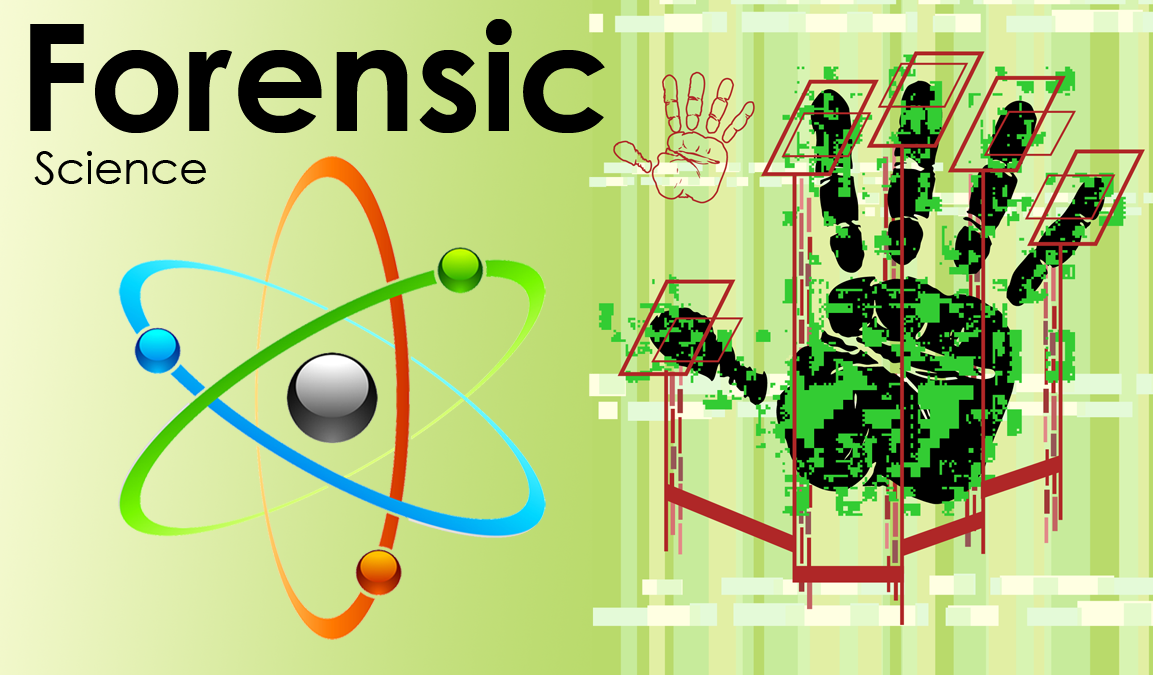
Introduction to Forensic Science
We have all seen forensic scientists in TV shows, but how do they really work? What is the science behind their work? The course aims to explain the scientific principles and techniques behind the work of forensic scientists and will be illustrated with numerous case studies from Singapore and around the world. Some questions which we will attempt to address include: How did forensics come about? What is the role of forensics in police work? Can these methods be used in non-criminal areas? Blood. What is it? How can traces of blood be found and used in evidence? Is DNA chemistry really so powerful? What happens (biologically and chemically) if someone tries to poison me? What happens if I try to poison myself? How can we tell how long someone has been dead? What if they have been dead for a really long time? Can a little piece of a carpet fluff, or a single hair, convict someone? Was Emperor Napoleon murdered by the perfidious British, or killed by his wallpaper? *For Nanyang Technological University (NTU) students, please be noted that this course will no longer be eligible for credit transfer.
 Meta
Meta
Introduction to Data Management
This course explores the basics of data management. You will learn the role that data plays in making decisions and the standard methods of data collection and quality management. You will gain an understanding of data storage systems and data storage architecture. You will examine the fundamentals of data privacy and compliance, as well as the basics of machine learning. By the end of this course, you will be able to: • Describe the fundamentals of data collection and data quality management • Explain data storage solutions and architectures, including big data management • Define data security, privacy and governance principles This course is for learners who want to gain foundational knowledge of data management.
 Duke University
Rust for DevOps
Rust For DevOps is an intermediate level course for software engineers, system administrators, and technical professionals looking to apply DevOps principles using Rust. This course is for you if you have beginner level programming experience and are familiar with Linux, Git, and Docker fundamentals. Through video lessons and coding exercises, you will gain practical Rust skills to build, deploy, and monitor applications using DevOps workflows. You will implement containerization, instrument your code for observability, and automate common administration tasks like file parsing and cron jobs. By the end, you will have the Rust and DevOps skills to rapidly develop robust large-scale applications, regardless of your specific technical role.
 Packt
Packt
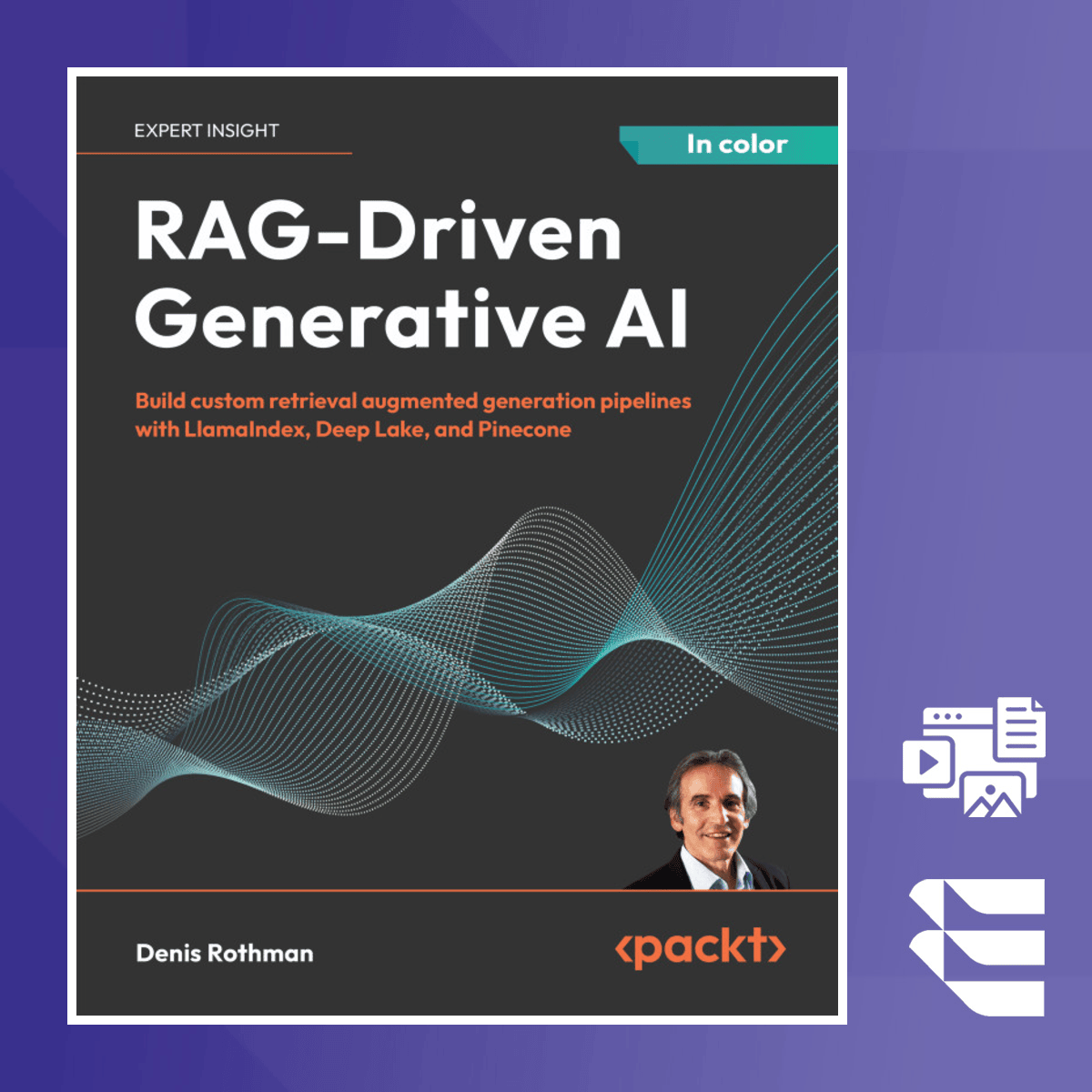
RAG-Driven Generative AI
This course introduces the powerful concept of Retrieval-Augmented Generation (RAG), a technique used to optimize the performance, accuracy, and cost of generative AI systems. Focused on building AI pipelines with LlamaIndex, Deep Lake, and Pinecone, this course will equip you with the skills to create robust AI models capable of handling complex datasets and delivering traceable, context-aware outputs. You will explore how to scale RAG pipelines, implement strategies to minimize hallucinations, and improve response accuracy across multimodal AI systems. By the end of the course, you will have hands-on experience optimizing these systems for real-world applications, empowering you to enhance decision-making and operational efficiency. What sets this course apart is its unique combination of theory and practical implementation. By working with cutting-edge tools like LlamaIndex and Pinecone, you'll understand how to balance cost, performance, and accuracy, while gaining insight into the broader context of AI pipelines and decision-making. This course is ideal for data scientists, AI engineers, and MLOps professionals who are looking to expand their expertise in RAG and generative AI. A basic understanding of machine learning concepts is recommended, as the course builds on these foundations to explore more advanced techniques.
 Google
Speed Up Data Analysis and Presentation Building
Need to crunch data or pull together a presentation? You’ll design prompts that help you extract insights, understand spreadsheet formulas, and build graphs to visualize data. Once you’re ready to present your findings, you can use AI tools to help with speaker notes and practice before your big day.
 Banco Interamericano de Desarrollo
Gestión del agua para las ciudades del futuro
¿Sabes cuáles son los desafíos a los que se enfrentan las ciudades relativos al agua? ¿Sabes cuáles son las acciones que puedes realizar para la mejor gestión del agua en tu ciudad? Este MOOC brinda herramientas para mejorar la gestión de los recursos hídricos en las ciudades bajo una visión integral y de sostenibilidad. Para ello se revisan los aspectos institucionales, financieros y técnicos de la gestión del agua urbana y se examinan los enfoques de la economía circular, de visión de cuenca, de resiliencia y adaptación al cambio climático como mecanismos para garantizar el desarrollo sostenible de las ciudades. El curso está dirigido a funcionarias y funcionarios públicos y privados, personas con perfil técnico, de investigación o docencia, estudiantes de America Latina y el Caribe y todas aquellas personas vinculadas con los procesos de gestión de aguas urbanas.
 Coursera
Deconstruct AI: Complex ML Problems
This course helps you break down complex ML systems into clear, reusable parts and communicate them using practical abstractions. You’ll learn how to separate ingestion, feature serving, inference APIs, and monitoring components while creating flowcharts and pseudocode that guide implementation. Using examples such as real-time fraud detection and feature store workflows, you’ll practice decomposing systems and designing abstractions engineers depend on. Through short videos, readings, hands-on practice, a coach-guided reflection, and a 45-minute ungraded lab, you’ll build skills used across ML engineering and MLOps roles. By the end, you’ll be able to confidently analyze ML systems and produce artifacts that support scaling, clarity, and production readiness.
 L&T EduTech
Pavement Construction Practices (IRC and MoRTH)
The "Pavement Construction Practices" course provides a thorough understanding of highway construction according to IRC and MoRTH standards. It focuses on selecting essential plants and machinery for constructing rigid and flexible pavement layers, including asphalt mix plants, concrete batching plants, and earthmoving equipment. Learners will explore project planning, scheduling, and monitoring, as well as construction sequences and guidelines to meet quality control requirements in compliance with IRC and MoRTH standards. The course offers practical insights into constructing various pavement layers, such as embankments, subgrades, granular sub-base layers, wet mix macadam, bituminous layers (DBM & BC), dry lean concrete (DLC), and pavement quality concrete (PQC). By the end, learners will gain comprehensive knowledge and practical skills, making them proficient in planning, executing, and ensuring quality in highway pavement construction in alignment with Indian standards. Target learners include civil engineering graduate and post-graduate students, as well as professionals in transportation and infrastructure development, with prerequisites in Concrete Technology, Geotechnical Engineering, Building Materials & Construction, and Construction Equipment & Methods.
 Birla Institute of Technology & Science, Pilani
Human Computer Interaction
Explore how humans interact with technology and how thoughtful design transforms those experiences. This course examines the principles of intuitive, user-friendly, and accessible interface design, emphasizing user-centered approaches that ensure usability across diverse platforms and devices. Beginning with the foundations of human factors and cognitive psychology, you’ll trace the evolution of interaction design and learn methods for analyzing user needs, conducting usability testing, and refining prototypes through research and feedback. Beyond traditional interfaces, you’ll explore multimodal interaction—spanning voice, gesture, and cross-platform experiences. By engaging with design patterns, evaluation methods, and emerging technologies, you’ll gain the skills to create seamless, high-performance digital experiences. Integrating theory and practice, the course equips aspiring UX designers, developers, and IT professionals with essential skills to shape innovative, human-centered technologies that enhance the way people live, work, and connect.
 École Nationale des Ponts et Chaussées
Mobilités et véhicules électriques
L’objectif de ce MOOC est d’aider ses apprenants, quel que soit leur profil, leur formation ou leur pays d’origine, à construire une réponse personnelle à des questions comme celles-ci : - Les voitures électriques seront-elles les dernières à circuler dans les métropoles du XXI° siècle ? - Le gain environnemental associé à l’électrification des véhicules justifie-t-il des investissements massifs dans les infrastructures de charge ? - Le véhicule électrique est-il réservé aux riches des pays du Nord ? Grâce à ce MOOC, les participants pourront acquérir des connaissances issues des sciences de l’ingénieur, de la sociologie, des sciences de l’environnement, de l’économie, de la géographie et des sciences politiques pour évaluer, analyser et mettre en œuvre le déploiement des véhicules électriques là où il est pertinent. Le Groupe Renault et les écoles de ParisTech collaborent depuis bientôt 15 ans sur des sujets liés à la mobilité durable. Ensemble, ils ont créé deux Masters (Transport et développement durable en 2004, Mobilité et véhicules électriques en 2010) et l’Institut de la Mobilité Durable (IMD), en 2009, pour accompagner les mutations en cours. Le MOOC Mobilités et véhicules électriques est issu de cette histoire commune et a été élaboré à partir d'un cours délivré au sein du Master Mobilités et Véhicules Électriques, piloté par Arts et Métiers ParisTech en partenariat avec Ensta ParisTech, Mines ParisTech et l’École des Ponts ParisTech. Ce cours est en français, cependant des sous-titres en anglais sont disponibles pour toutes les vidéos et vous pouvez écrire vos messages dans le forum en anglais si vous le désirez./ This course is given in French, nevertheless English subtitles are available for all videos and you can write your posts in the forum in English if desired.
 Alfaisal University | KLD
كيفية بناء منظمة متعلمة|How to Build a Learning Organization
نحن الآن نعيش في عصر العولمة (Globalization) حيث تحتدم المنافسة ليس بين الشركات على المستوى المحلي فحسب، حيث أصبح الصراع الآن عابراً للقارات بسبب تقدم الوسائل التكنولوجية التي أدت إلى سهولة التبادل التجاري بين جميع بلدان العالم، لذلك يجب على الشركات أن تحرص على ميزتها التنافسية (Competitive Advantage) كي تستطيع المحافظة على حصتها السوقية بل ووجودها في الأسواق، و(Competitive Advantage) لا تأتي إلا من خلال قيادة تنفيذية تعمل على إيجادها وتطويرها من خلال العديد من الخطوات، لكن أهمها هو اختيار عاملين لديهم الرغبة والقدرة الحقيقية على التعلم وتبادل المعارف والخبرات، فالتعلم هو المسار الوحيد لبناء مؤسسات قائمة على الإبداع والابتكار والتميز. هذه الدورة هي دورة تمهيدية؛ فهي تلقي الضوء على أساسيات الموضوع بشكل عام بهدف التعريف به وبمحاوره الأساسية التي يجب الإلمام بها. إذا كنت من المهتمين بفهم كيفية بناء منظمة متعلمة، أو كان مجال عملك يتطلب توظيف ذلك في سياق عملك، فهذه الدورة ستكون مثالية لإغناء خبرتك وتطوير مهاراتك بشكل فعال ومؤثر. حيث ستزودك هذه الدورة باطلاع واسع ودقيق على مجموعة من المحاور المتعلقة بهذا الموضوع، مثل: فهم الدروس المستفادة من تجارب ناجحة لتأسيس منظمة متعلمة، التعرف على دور القيادة في بناء منظمة متعلمة، استعراض خطوات بناء وخلق ثقافة التعلم، معرفة المبادئ والسمات الأساسية لبناء منظمة متعلمة.
 Pearson
Certified Kubernetes Security Specialist (CKS): Unit 8
This course gives you the change to apply your knowledge in hands-on, exam-style scenarios that reflect real Kubernetes security challenges. You’ll practice securing API access, enforcing pod security, implementing network policies, and managing secret encryption. Advanced topics include container runtime security, real-time threat detection with Falco, network encryption, and secure ingress. These practice exams build your confidence and experience for the CKS exam and real-world Kubernetes security tasks.
 Lecturio
Leadership and Management in Healthcare
This course introduces the core principles of nursing leadership and management. Learners will explore leadership styles, effective delegation, and communication strategies that strengthen teamwork and patient care. The course also covers conflict management, change leadership, and the nursing chain of command to prepare learners for real-world healthcare challenges. By the end, students will be able to lead teams, resolve conflicts, and promote safe, high-quality care.