

The Global Scholarly Directory.
Discover world-class academic programs curated for the modern intellectual. Search through 19877+ degrees and professional certificates.
 Coursera
Créer des diagrammes de Buyer Persona avec Creately
Ce projet vous permet de créer des diagrammes de Buyer Persona avec Creately. Vous découvrirez la plateforme Creately, logiciel en ligne de conception de diagrammes. Vous comprendrez les diverses fonctionnalités de la plateforme et serez capables de créer des diagrammes personnalisés et professionnels décrivant les profils d’acheteurs idéaux pour votre entreprise. Vous apprendrez à utiliser Creately pour créer des diagrammes de profil d’acheteur professionnels. Ce projet est destiné aux petites et moyennes entreprises.
 Coursera
Manage and schedule content in Facebook Creator Studio
In this project, learners will learn how to manage and schedule your content in Facebook Creator Studio. Facebook Creator Studio has all of the tools that you need together, for you to be able to publish your content, manage it, monetize it and measure your content. You can do all of that for all of your Facebook pages and Instagram accounts. Facebook Creator Studio is the perfect tool to manage your social media presence completely free and in a platform that lets you do it all. In this project you will have the opportunity to learn how you can be effective in your social media management skills and how to take advantage of the tools that you have in hand already. If you are looking into getting better with social media this is the guided project for you. Facebook Creator Studio it's free and available for you if you have a Facebook page.
 University of California San Diego
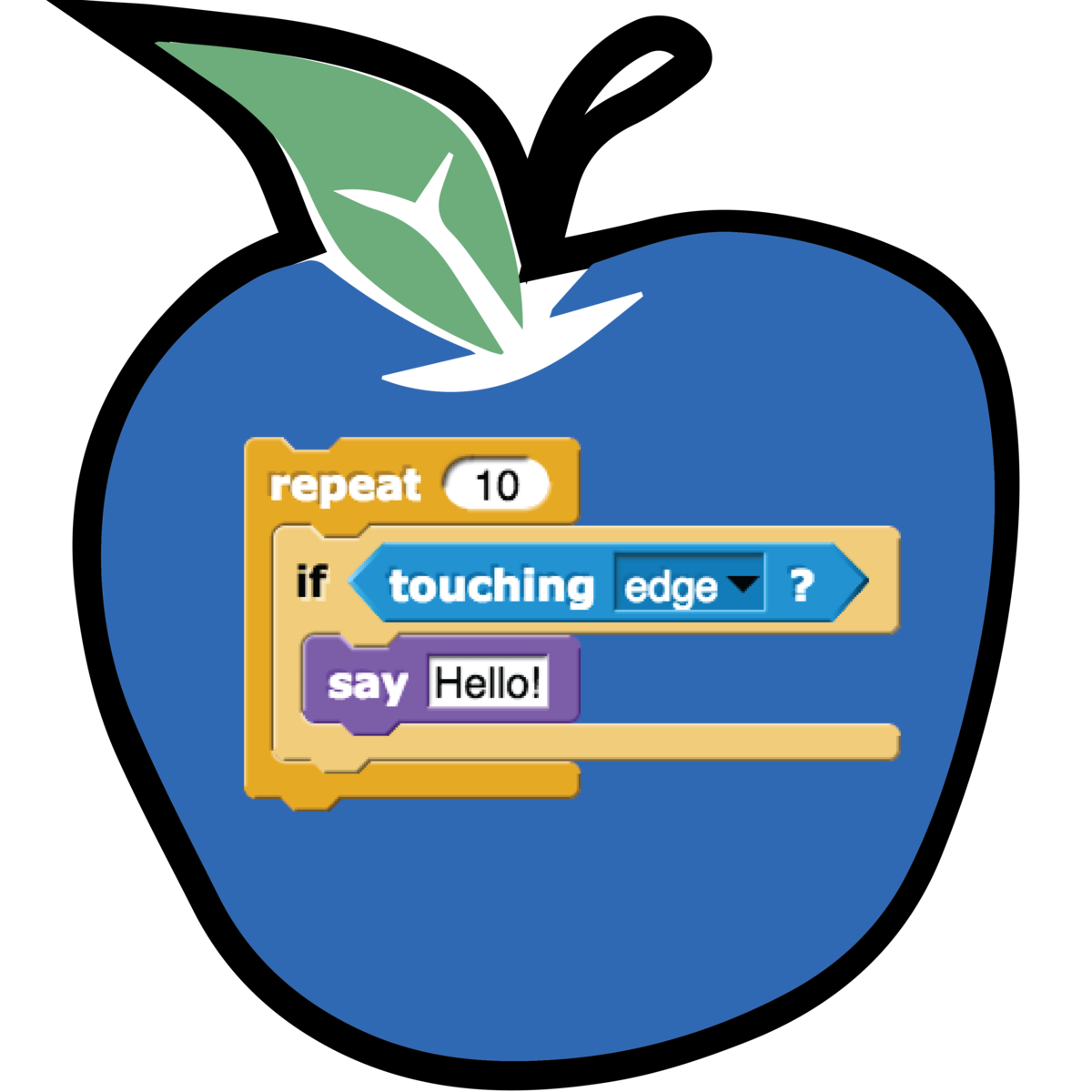
Computational Thinking for K-12 Educators: Nested If Statements and Compound Conditionals
How could you program a complex "choose your own adventure" game? How can your soccer game determine goals, balls out of bounds, and corner kicks? You'll learn to do both of these in this course! This class teaches the concepts of nested if/else statements and compound Boolean conditional expressions. For each concept, we'll start by helping you connect real-world experiences you are already familiar with to the programming concept you are about to learn. Next, through a cognitively scaffolded process we'll engage you in developing your fluency with problem solving with nested if/else statements and compound conditionals in a way that keeps frustration at a minimum. Along the way you will learn about the common challenges or "bugs" students have with these concepts as well as ways to help them find and fix those concepts. You'll also be guided in running classroom discussions to help students develop deeper understanding of these concepts. Finally, you'll prepare classroom resources to help your students to develop debugging skills. Additionally, you will create resources to help educate your students about the impacts of lack of equity in K-12 CS instruction.
 University of Colorado Boulder
Leading the Way: Becoming a Sustainability Change Agent
Leading the Way: Becoming a Sustainability Change Agent is designed to help you craft a meaningful career that aligns with your values and drives real change in organizations, communities, and industries. Drawing from insights shared by sustainability professionals across diverse roles, you will explore your own leadership style, understand how to build resilience and influence within complex systems, and learn how to position yourself for impact in any industry. Offering an authentic, behind-the-scenes look at what it takes to become an effective sustainability change agent - whether you’re early in a career or looking to expand your influence, this course is ideal for connecting purpose with practice, and discovering how to play a more intentional role in advancing sustainability. This course was developed in collaboration with Siemens Digital Industries Software and is part of the "Design for the Circular Economy" collection. Learners who complete and pass the course can receive an industry-recognized digital badge. The “Design for the Circular Economy” microcredential and graduate certificate are developed around the educational goals of providing technical, business, and leadership knowledge and skills that inspire the transformation towards a more circular economy. This includes gaining technical knowledge to apply circular economy principles in product design, minimizing waste and maximizing impact; developing business acumen to implement innovative circular economic models that prioritize sustainability and resilience; and acquiring leadership strategies to communicate effectively and inspire change within an organization. This course can be taken for academic credit as part of CU Boulder’s Master of Engineering in Engineering Management (ME-EM) degree offered on the Coursera platform. The ME-EM is designed to help engineers, scientists, and technical professionals move into leadership and management roles in the engineering and technical sectors. With performance-based admissions and no application process, the ME-EM is ideal for individuals with a broad range of undergraduate education and/or professional experience. Learn more about the ME-EM program at https://www.coursera.org/degrees/me-engineering-management-boulder.
 University of Colorado Boulder
Project Valuation and the Capital Budgeting Process
This course describes the economic viability of an engineering project through the application of net present value, internal rate of return, and payback period analysis. The impacts of depreciation, taxes, inflation, and foreign exchange are addressed. The capital budgeting process is discussed, showing how companies make decisions to optimize their investment portfolio. Risk is mitigated through the application of quantitative techniques such as scenario analysis, sensitivity analysis, and real options analysis. This course can be taken for academic credit as part of CU Boulder’s Master of Engineering in Engineering Management (ME-EM) degree offered on the Coursera platform. The ME-EM is designed to help engineers, scientists, and technical professionals move into leadership and management roles in the engineering and technical sectors. With performance-based admissions and no application process, the ME-EM is ideal for individuals with a broad range of undergraduate education and/or professional experience. Learn more about the ME-EM program at https://www.coursera.org/degrees/me-engineering-management-boulder.
 University of Michigan
Estruturas de dados Python
Este curso apresentará as estruturas de dados centrais da linguagem de programação Python. Vamos superar os fundamentos da programação de procedimentos e explorar como podemos usar as estruturas de dados integradas do Python, como listas, dicionários e tuplas, para realizar análises de dados cada vez mais complexas. Este curso cobrirá os capítulos 6 a 10 do livro “Python para Todos”. Este curso aborda o Python 3.
 Coursera
Design a Client Welcome Kit using Canva
By the end of this project, you will create the main components of a client welcome kit for use in your small business. You will be able to incorporate a color scheme, images, and other design elements for aesthetically pleasing and value-added business marketing collateral. This course will include intermediate to advanced level skills using the free version of Canva. You will create the following pages: cover, content/index, introduction, service, project process, portfolio, what to expect/conditions, contact, end page with space for a quote. Creating a high-quality welcome kit is the perfect way to communicate your business expectations and show your excitement about working with your new client. Note: This course works best for learners who are based in the North America region. We’re currently working on providing the same experience in other regions.
 Logical Operations
Web Dev: Optimization, Server Processing, and JavaScript
To round out your web-development skills, you'll improve web content by adjusting layouts, performing basic search-engine optimization (SEO), and test your website for issues. You'll also submit data to a web server for processing through a URL and a web form. Then, you'll add JavaScript to a web page, perform operations on data, program repetitive tasks, and manipulate Document Object Model (DOM) objects. After that, you'll enumerate elements and attach events through code. Lastly, you'll use third-party JavaScript libraries and frameworks to streamline your code. This is the fourth and final course in a multi-course Specialization. All of the courses in this Specialization require that you run a XAMPP web server on localhost. The course setup instructions provided in the first course go into more detail about the hardware and software requirements.
 Rutgers the State University of New Jersey
Supply Chain Excellence Capstone
Supply Chains are made up of a network of companies from the initial raw materials to the ultimate consumer of the finished product. Within this network of companies, there are three ongoing flows: products, information, and finances. To properly understand and manage the supply chain, you need to understand all the flows. If you do not consider all of the flows, you will miss opportunities or sub-optimize parts of the supply chain. The last of five courses in this specialization is a capstone. You will have the opportunity to show what you learned and apply it to your Supply Chain Excellence project. It will consist of four modules, which will cover the following topics: product flow strategy; information flow strategy; how to use the supply chain to create financial success; and finally, the capstone case study. You will have lectures, readings, and discussions with your peers for each topic, as well as a practice quiz in each lesson. At the end of each module, you can put your knowledge to the test and take a graded quiz. The Capstone Analysis module contains a real-life case analysis that will enable you to be an expert on a company of your choosing.
 Simplilearn
GenAI for Code Migration Tasks Training
This beginner-friendly course explores how Generative AI revolutionizes code migration and optimization across the software development lifecycle. Learn to automate language conversion, framework shifts, version upgrades, and performance tuning using tools like GitHub Copilot. Understand and compare manual vs AI-driven workflows, and explore real-world demos. Master the use of GenAI to improve time and space complexity, refactor legacy systems, and boost code efficiency and scalability. Build practical skills to transform codebases with AI-powered automation, precision, and speed. Basic understanding of programming or software development is recommended. By the end of this course, you will be able to: - Use GenAI tools like GitHub Copilot to automate code migration and optimization tasks - Perform language conversion, framework shifts, and version upgrades using AI - Reduce time and space complexity through AI-powered code analysis - Evaluate GenAI adoption through real-world examples like Uber’s code transformation Ideal for developers, software engineers, and tech professionals seeking to modernize codebases using AI.
 CertNexus
Preparing for Your CertNexus Certification Exam
What is a certification? How is it different than a certificate or credential? This mini-course will answer these questions and provide learners direction on how to prepare for a certification exam from CertNexus or an other certification vendor. It includes tips and tricks to succeed in your journey towards certification, as well as step by step instructions how to schedule and take your exam, whether in person or online. In addition we will provide next steps after your certification, including posting your badge to social posts and your organization. Candidates with industry recognized certifications can earn up to 25% more than candidates without a certification. Learn how to successfully prepare for, pass, and share your certification.
 Pearson
Google BigQuery for Data and ML Engineers
Learn how to use Google BigQuery to enhance your data engineering and machine learning skills in this practical, instructor-led course. Taught by experienced cloud architect and author Dan Sullivan, you’ll work with BigQuery’s serverless architecture, advanced SQL, and data warehousing features to efficiently manage and analyze large datasets. This course is suitable for both beginners and those with experience. You’ll get hands-on practice with data ingestion, transformation, and building reliable data pipelines. The curriculum covers how to create, evaluate, and deploy machine learning models within BigQuery, as well as recent generative AI applications. Through real-world projects and clear instruction, you’ll build the skills needed to use BigQuery in your day-to-day work. Whether you’re new to the field or looking to expand your knowledge, this course offers practical tools and techniques for data engineering and machine learning.
 University of Colorado System
TCP/IP and Advanced Topics
In this course, we give an in-depth study of the TCP/IP protocols. We examine the details of how IP enables communications across a collection of networks. We pay particular attention to the hierarchical structure of IP addresses and explain their role in ensuring scalability of the Internet. The role of address prefixes and the uses of masks are explained in details. We review in details about TCP three-way handshake, flow control, and congestion control. Furthermore, we provide an introduction to some advanced topics, including Multicast, SDN and security
 KodeKloud
Chaos Engineering
In today's fast-paced digital landscape, system resilience is vital for businesses of all sizes. "Chaos Engineering" is a comprehensive and hands-on course designed to equip you with the knowledge and skills needed to ensure your systems withstand and recover from failures. From foundational concepts to advanced applications on various AWS services, including EC2, Aurora, Fargate, and EKS, as well as strategies to ensure availability across multiple Availability Zones. What You’ll Learn: Chaos Engineering Fundamentals: Understand core principles and the philosophy behind Chaos Engineering. Learn why identifying and addressing system weaknesses through controlled chaos experiments is vital. Explore essential tools and methodologies for implementing Chaos Engineering. Building a Basic Fault Injection Simulation (FIS) Experiment: Gain a step-by-step understanding of constructing and executing your first Fault Injection Simulation (FIS) experiment. Understand how to design experiments targeting different failure modes in a controlled setting. Learn to interpret experiment results and refine your simulations for better accuracy. Introduction to Real-Life Application: Discover how to apply Chaos Engineering experiments to real-world applications. Learn best practices for monitoring, capturing metrics, and analyzing results to continually improve system resilience. Chaos Engineering on Compute - EC2: Conduct chaos experiments on EC2 instances to evaluate and improve system robustness. Simulate failures, such as instance termination or network latency, and observe impacts. Chaos Engineering on Database - Aurora: Learn to apply Chaos Engineering principles to Amazon Aurora databases. Simulate failures like cluster instability or node outages and develop strategies for seamless recovery. Chaos Engineering on Serverless - Fargate: Conduct chaos experiments on AWS Fargate to test the resilience of your serverless applications. Simulate events like task failures or service downtime to ensure robust serverless architectures. Chaos Engineering on Kubernetes - EKS: Implement Chaos Engineering on Amazon EKS to stress-test Kubernetes clusters. Simulate pod failures, node crashes, and other disruptions to validate recovery mechanisms. Chaos Engineering on Availability Zone: Conduct chaos experiments across different AWS Availability Zones. Test the impact of zone failures and ensure your systems are prepared for multi-availability zone disasters. Target Audience: - Developers interested in enhancing their systems’ resilience. - Site Reliability Engineers (SREs) focused on improving system reliability. - Cloud Engineers managing AWS environments. - Technical Support Engineers specializing in fault-tolerant systems. - Technical Leads overseeing cloud-native application projects. This course, with its combination of theory, demonstrations, and real-world scenarios, will enable you to build resilient systems capable of withstanding and recovering from unexpected failures efficiently. Join us to master Chaos Engineering and innovate with confidence.
 Meta
Meta
Medir e otimizar campanhas de marketing de mídias sociais
Este curso fornece as habilidades para otimizar seus esforços de marketing de mídias sociais. Aprenda a avaliar e interpretar os resultados de suas campanhas publicitárias. Saiba como avaliar a eficácia da publicidade por meio de estudos de aumento e otimizar suas campanhas com testes de divisão. Entenda como a eficácia da publicidade é medida em plataformas e dispositivos, aprenda a avaliar o ROI do marketing e domine como comunicar os resultados de marketing de mídias sociais em sua empresa. Ao final deste curso, você será capaz de: • Analisar painéis e avaliar o ROI de seus esforços de marketing de mídias sociais • Compreender as diferentes técnicas usadas para otimizar campanhas de marketing, como atribuição e modelos de mix de marketing • Implementar um teste A/B para otimizar sua campanha • Apresentar e comunicar os resultados de sua campanha para uma equipe Este curso é para pessoas que querem aprender a analisar resultados de campanha de marketing, otimizar campanhas e comunicar efetivamente descobertas para suas equipes. Os alunos não precisam de experiência em marketing, mas devem ter habilidades básicas de navegação na Internet e interesse em participar ativamente em redes sociais. É útil ter uma conta no Facebook ou Instagram e, idealmente, os alunos já devem ter concluído os quatro cursos anteriores deste programa. Este curso será seguido pelo curso Conclusão de Marketing de Mídias Sociais do Facebook, o curso final desta certificação, no qual os alunos farão o exame para Associado Certificado de Marketing Digital e um projeto principal para receber o Certificado Profissional de Marketing de Mídias Sociais do Facebook.
 Coursera
Well Being & Self Care: for Physical and Mental Health
The feelings of being overwhelmed, stressed, and continually battling the amount of insufficient time for self-care are the reality in today’s world. Almost everyone knows what’s good for their well-being, yet we can’t find the time to put it into our daily routines. We know that exercising is good, that meditation pays dividends, and that sleeping enough is essential for us to functional optimally. Yet, this knowledge does not always translate to action. This course attempts to bridge that gap through the creation of habits, by suggesting well-being practices that are practical, impactful, and research backed. As we know, we can’t just meditate on our well-being; there are other factors at play as well. This course therefore touches upon deep rooted behaviors that come in the way of our well-being and provides practical, everyday strategies to manage them. Professionals seeking work-life balance and stress management techniques, young adults navigating transitions in life (college, career, relationships), parents juggling family responsibilities and personal well-being, individuals experiencing burnout or seeking to enhance their health, and anyone interested in developing healthier habits and enhancing their overall quality of life will find this course invaluable. Whether you're looking to refine existing self-care routines or establish new habits that support physical and mental well-being, this course provides practical strategies tailored to diverse life stages and challenges. Participants should have an interest in personal development and an openness to learning new concepts and strategies. A willingness to implement self-care practices is essential for effectively applying the course's teachings. This course is designed to guide individuals through the process of habit formation and behavior change, focusing on cultivating habits that contribute to overall well-being and resilience. After completing this course, learners will be able to recognize the significance of habits in shaping their lives, explain the process of habit formation using evidence-based strategies, and apply effective techniques for cultivating habits that promote well-being, such as exercise, meditation, and gratitude practices. Participants will also gain skills in identifying and addressing common behaviors that impact well-being, such as comparing oneself to others and difficulty in setting boundaries, thus fostering a holistic approach to personal health and happiness.