

The Global Scholarly Directory.
Discover world-class academic programs curated for the modern intellectual. Search through 19877+ degrees and professional certificates.
 Berklee
Developing Your Musicianship: Final Project
This course will guide you through the final project for the Developing Your Musicianship Specialization. This course will continue to help you apply the musical concepts you learned throughout the specialization, enabling you to create and perform a 36-measure composition. Taught by Berklee College of Music professor George W. Russell, Jr., the course includes four videos in which George models each stage of the project. Through peer feedback and discussion, practice, and applying what you’ve learned, this final project will hone your skills as a musician.
 Universitat de Barcelona
ÉCHELLE RACE: Dépistage préhospitalier de l’AVC impliquant une occlusion de gros vaisseaux cérébraux
L'AVC est une urgence médicale qui dépend du temps. Dans l'AVC ischémique, le type d'AVC le plus courant, le premier objectif est de rétablir la circulation cérébrale par un traitement thrombolytique avec rTPA intraveineux et, s'il n'est pas efficace ou s'il existe des contre-indications médicales, par traitement endovasculaire. Dans l'AVC hémorragique, il existe également des traitements spécifiques qui peuvent améliorer son pronostic. L'avantage de toutes les thérapies disponibles dans l'AVC aigu est d'autant plus grand que le traitement est commencé tôt. C'est pourquoi l'organisation de systèmes Code Ictus coordonnés entre les systèmes d'urgence médicale et les hôpitaux est cruciale pour obtenir le meilleur traitement possible des patients victimes d'un AVC aigu de manière rapide. De plus, les échelles d'évaluation neurologique facilitent la reconnaissance de l'AVC aux niveaux hospitalier et préhospitalier et fournissent de précieux renseignements sur la gravité de l'AVC. En ce sens, l'échelle RACE est une échelle préhospitalière validée comme outil d'identification des patients ayant subi l'AVC le plus grave, dont on soupçonne une occlusion vasculaire, candidats à un traitement endovasculaire. Le profil de ce cours s'adresse à tous les professionnels de la santé travaillant dans le domaine de l'urgence
 Coursera
Profit Analysis using Economic Value Added
In this 1-hour long project-based course, you will learn how to calculate the Weighted Average Cost of Capital, calculate capital invested, finance charge, and NOPAT, and use financial statements to calculate Economic Value Added. Economic Value Added is one of the most critical metrics in financial modeling and analysis and is used to measure the profitability of the projects and management performance. Note: This course works best for learners who are based in the North America region. We're currently working on providing the same experience in other regions. It is recommended to take the Introduction to Valuation with WACC and Analyzing Company's Performance using Ratios projects first.
 L&T EduTech
Airside Facility Planning
This course delves into the critical processes of planning and designing the airside of a modern airport, the area where aircraft operations take centre stage. You'll gain a foundational understanding of the complex systems that ensure safe and efficient aircraft movement, from initial planning to detailed design. Begin by exploring the fundamental concepts of airport operations and the features that define a modern airport. Understand the critical need for growth requirements, driven by passenger demand and capacity. Delve into the essential codes and aviation regulatory organizations that govern airport development. Gain a firm grasp of key aviation terms and definitions, and explore the diverse landscapes of international airports. Learn the comprehensive airport master planning process, guided by ICAO standards. From site selection for greenfield airports, considering crucial geotechnical investigations and surveys of various facilities, to developing detailed layout plans, you'll understand the strategic roadmap for airport growth. Examine real-world applications through in-depth case studies for Airport Master Plan. Master the intricacies of runway planning and design. Explore location and planning considerations, and learn how to determine the optimal configuration and orientation of runways based on factors like wind conditions, using Windrose diagrams. Understand the technical aspects of runway design, including the essential calculations for runway length. Dive into the world of air traffic management, understanding its crucial role in ensuring safety and efficiency. Analyze airside capacity and delay, and learn to design essential airside infrastructure, including taxiways and aprons. Explore the critical design considerations for drainage systems, ducts, and lighting systems, ensuring the functionality and safety of the airside environment. By mastering the principles of airside facility planning, you'll gain the ability to create and optimize the very core of airport operations. From runway design and air traffic control to the intricacies of master planning, this course equips you with the knowledge to ensure safe, efficient, and future-proof airside environments, laying the groundwork for seamless aviation experiences. The target learners for this specialization are civil engineering graduate students, post graduate students and professionals working in the field of Airports. The prerequisites include Basic Civil Engineering, Building Materials and Transportation Engineering.
 Icahn School of Medicine at Mount Sinai
Introduction to Systems Biology
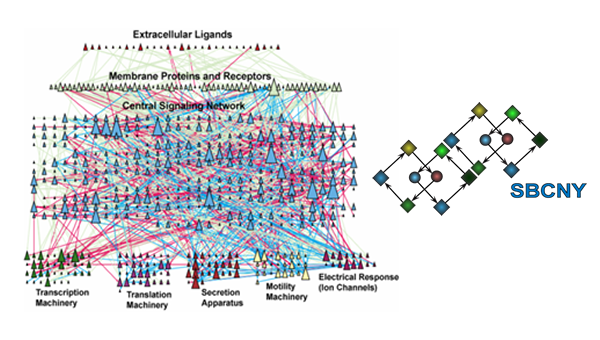
This course will introduce the student to contemporary Systems Biology focused on mammalian cells, their constituents and their functions. Biology is moving from molecular to modular. As our knowledge of our genome and gene expression deepens and we develop lists of molecules (proteins, lipids, ions) involved in cellular processes, we need to understand how these molecules interact with each other to form modules that act as discrete functional systems. These systems underlie core subcellular processes such as signal transduction, transcription, motility and electrical excitability. In turn these processes come together to exhibit cellular behaviors such as secretion, proliferation and action potentials. What are the properties of such subcellular and cellular systems? What are the mechanisms by which emergent behaviors of systems arise? What types of experiments inform systems-level thinking? Why do we need computation and simulations to understand these systems? The course will develop multiple lines of reasoning to answer the questions listed above. Two major reasoning threads are: the design, execution and interpretation of multivariable experiments that produce large data sets; quantitative reasoning, models and simulations. Examples will be discussed to demonstrate “how” cell- level functions arise and “why” mechanistic knowledge allows us to predict cellular behaviors leading to disease states and drug responses.
 Coursera
Deep Learning with PyTorch : Image Segmentation
In this 2-hour project-based course, you will be able to : - Understand the Segmentation Dataset and you will write a custom dataset class for Image-mask dataset. Additionally, you will apply segmentation augmentation to augment images as well as its masks. For image-mask augmentation you will use albumentation library. You will plot the image-Mask pair. - Load a pretrained state of the art convolutional neural network for segmentation problem(for e.g, Unet) using segmentation model pytorch library. - Create train function and evaluator function which will helpful to write training loop. Moreover, you will use training loop to train the model.
 Pragmatic AI Labs
Generative AI and LLMs on Databricks
Build production GenAI systems on Databricks by mastering prompt engineering, RAG pipelines, model governance, and code intelligence. You will apply chain-of-thought, ReAct, and few-shot prompting patterns to decompose complex tasks, then construct retrieval-augmented generation pipelines that fuse vector search with BM25 using Reciprocal Rank Fusion. The course progresses from foundational techniques through production deployment across four weeks. Week one covers tokenization mechanics, sampling parameters, system prompts, and the Databricks Playground. Week two builds RAG systems using embeddings, MLflow experiment tracking, Feature Store, and PMAT code intelligence with TDG scoring and PageRank on call graphs. Week three addresses the fine-tuning vs RAG decision matrix, cryptographic model signing with SHA-256 chain-of-trust verification, AI Gateway configuration, model registry governance via Unity Catalog, and Databricks compute infrastructure. Week four integrates all concepts into a capstone project: a quality-aware code retrieval pipeline using trueno-rag and pmat. You will evaluate RAG quality using faithfulness-relevance diagnostic quadrants and six standard retrieval metrics including MRR, NDCG, recall, precision, hit rate, and MAP.
 West Virginia University
Sales Operations: Final Project
In the final project for the Sales Operations/Management Specialization, learners will be asked to apply the knowledge they have obtained by performing a critical analysis of a real-world business. Learners are to select a business that has a sales function/operation. The learners are to identify the manager responsible for the sales function (typically called a Sales Manager) and interview this person on the sales management practices at this firm.
 Packt
Packt
Linux for Beginners
This course features Coursera Coach! A smarter way to learn with interactive, real-time conversations that help you test your knowledge, challenge assumptions, and deepen your understanding as you progress through the course. This beginner-friendly course introduces you to the basics of Linux. You'll gain knowledge on how Linux differs from other operating systems, how to choose the right distribution, and how to install essential software. The course begins with an overview of Linux, followed by a deep dive into what Linux is and why it’s a popular choice among developers and businesses. You'll explore the different Linux distributions, helping you make an informed decision on which one fits your needs best. The journey then progresses to understanding the various desktop environments and selecting one that suits your preferences. In the final sections, you'll learn about installing and managing software on Linux. These skills are crucial for ensuring your system runs smoothly and efficiently. The course is designed with practical exercises that reinforce what you've learned at each step. This course is perfect for beginners with no prior experience in Linux or those who want to improve their basic understanding. No prerequisites are required, and the difficulty level is beginner, making it accessible to anyone interested in learning how to navigate the Linux environment.
 Google Cloud
Die vielfältigen Formen generativer KI
„Die vielfältigen Formen generativer KI“ ist der dritte Kurs des Lernpfads „Generative AI Leader“. Generative KI verändert die Art und Weise, wie wir arbeiten und mit der Welt um uns herum interagieren. Aber wie können Sie als Führungskraft die Möglichkeiten von KI nutzen, um echte Geschäftsergebnisse zu erzielen? In diesem Kurs lernen Sie die verschiedenen Ebenen der Entwicklung von generativen KI-Lösungen, die Angebote von Google Cloud und die Faktoren kennen, die bei der Auswahl einer Lösung zu berücksichtigen sind.
 IBM
IBM
Build RAG Applications: Get Started
Data Scientists, AI Researchers, Robotics Engineers, and others who can use Retrieval-Augmented Generation (RAG) can expect to earn entry-level salaries ranging from USD 93,386 to USD 110,720 annually, with highly experienced AI engineers earning as much as USD 172,468 annually (Source: ZipRecruiter). In this beginner-friendly short course, you’ll begin by exploring RAG fundamentals—learning how RAG enhances information retrieval and user interactions—before building your first RAG pipeline. Next, you’ll discover how to create user-friendly Generative AI applications using Python and Gradio, gaining experience with moving from project planning to constructing a QA bot that can answer questions using information contained in source documents. Finally, you’ll learn about LlamaIndex, a popular framework for building RAG applications. Moreover, you’ll compare LlamaIndex with LangChain and develop a RAG application using LlamaIndex. Throughout this course, you’ll engage in interactive hands-on labs and leverage multiple LLMs, gaining the skills needed to design, implement, and deploy AI-driven solutions that deliver meaningful, context-aware user experiences. Enroll now to gain valuable RAG skills!
 28DIGITAL
System Validation (4): Modelling Software, Protocols, and other behaviour
System Validation is the field that studies the fundamentals of system communication and information processing. It allows automated analysis based on behavioural models of a system to see if a system works correctly. We want to guarantee that the systems does exactly what it is supposed to do. The techniques put forward in system validation allow to prove the absence of errors. It allows to design embedded system behaviour that is structurally sound and as a side effect forces you to make the behaviour simple and insightful. This means that the systems are not only behaving correctly, but are also much easier to maintain and adapt. ’Modeling Software Protocols, and other behaviour' demonstrates the power of formal methods in software modelling, communication protocols, and other examples. Reading material. J.F. Groote and M.R. Mousavi. Modeling and analysis of communicating systems. The MIT Press, 2014.
 Google
Functions and Conditional Statements
In this course, you’ll discover how to call functions to perform useful actions on your data. You’ll also learn how to write conditional statements to tell the computer how to make decisions based on your instructions. And you’ll practice writing clean code that can be easily understood and reused by other data professionals. By the end of this course, you will be able to: • Explain the purpose and logic of conditional statements such as if, else, and elif • Use comparators and logical operators to compare values • List the benefits of commenting on code • Identify best practices for writing clean code such as reusability, modularity, and refactoring • Describe how to define Python functions using the def and return keywords
 University of Illinois Urbana-Champaign
Inferential and Predictive Statistics for Business
This course provides an analytical framework to help you evaluate key problems in a structured fashion and will equip you with tools to better manage the uncertainties that pervade and complicate business processes. To this end, the course aims to cover statistical ideas that apply to managers by discussing two basic themes: first, is recognizing and describing variations present in everything around us, and then modeling and making decisions in the presence of these variations. The fundamental concepts studied in this course will reappear in many other classes and business settings. Our focus will be on interpreting the meaning of the results in a business and managerial setting. While you will be introduced to some of the science of what is being taught, the focus will be on applying the methodologies. This will be accomplished through use of Excel and using data sets from many different disciplines, allowing you to see the use of statistics in very diverse settings. The course will focus not only on explaining these concepts but also understanding the meaning of the results obtained. You will be able to: • Test for beliefs about a population • Compare differences between populations • Use linear regression model for prediction • Use Excel for statistical analysis This course is part of Gies College of Business’ suite of online programs, including the iMBA and iMSM. Learn more about admission into these programs and explore how your Coursera work can be leveraged if accepted into a degree program at https://degrees.giesbusiness.illinois.edu/idegrees/.
 Banco Interamericano de Desarrollo
Emprendimientos creativos
¿Estás pensando en sacar adelante un emprendimiento en el sector creativo? ¿Estás dando los primeros pasos en el camino de emprender? Entonces este es un curso para ti. Un emprendimiento creativo requiere habilidades emprendedoras fundamentales: contar con los conocimientos y habilidades necesarios para afrontar los retos de crear y hacer sostenible un negocio es imprescindible. Por ello, en este curso de 3 módulos, podrás reconocer metodologías específicas para el desarrollo de las habilidades de una persona emprendedora, reconocer conceptos clave para la gestión financiera de un emprendimiento, identificar plataformas y fuentes de financiamiento en negocios creativos, entre otros. Descubre el panorama de los emprendimientos creativos en América Latina y el Caribe, así como los desafíos que los emprendedores y emprendedoras han encontrado, cómo los han superado y cómo han aprovechado las oportunidades que se les presentaron.
 Skillshare
Canva Design Essentials Pt. 2: Branding & Identity
Take your Canva skills to the next level with Canva Design Essentials Pt. 2: Branding & Identity, taught by award-winning designer Dan Scott. In this course, you’ll explore how to build a consistent and professional brand identity using Canva’s powerful design tools. Learn to work with AI-powered features, remove backgrounds, create mockups, and develop branded visuals that resonate—from logos and typography to color palettes and moodboards. By the end of the course, you'll be confident designing for mobile, building out a visual identity system, and applying branding across platforms. You'll complete hands-on projects like logo design, Instagram mockups, competitor analysis, and more—giving you a portfolio-ready body of work. Whether you’re a freelancer, small business owner, or aspiring brand designer, this course equips you with the skills and strategies to elevate your designs with purpose and polish. All you need is a free Canva account and basic computer skills—Dan’s step-by-step guidance makes branding approachable and fun for everyone. Let’s start building your brand! Instructor bio: Daniel Walter Scott is a digital designer, Adobe Certified Instructor, and founder of Bring Your Own Laptop (BYOL). With over 14 years of teaching experience, he has helped thousands of learners worldwide master design and creative software across print, web, video, and now 3D. Daniel is an Adobe Certified Expert and Adobe Certified Instructor who combines industry expertise with a teaching style that’s practical, engaging, and memorable. Originally from New Zealand, Daniel has lived and taught across Australia, Ireland, and beyond—sharing his skills with a truly global creative community. He’s passionate about helping students build real-world skills they can carry into their careers and creative projects. When he’s not teaching, Daniel enjoys life with his Irish wife and kids. He brings this personal, down-to-earth perspective into his courses, making complex tools feel approachable and fun to learn.