

The Global Scholarly Directory.
Discover world-class academic programs curated for the modern intellectual. Search through 19877+ degrees and professional certificates.
 Pearson
Cisco Certified Support Technician IT Support 100-140 Unit 9
This course is designed to give you hands-on experience with industry-standard solutions like Remote Desktop, TeamViewer, VNC, and Cisco WebEx, enabling you to efficiently assist users and collaborate with teams from anywhere. You’ll master remote access and management techniques, ensuring you can resolve issues and maintain systems without being physically present. The module also guides you through leveraging powerful research tools, including search engines, knowledge bases, and technical forums, to quickly find solutions to complex problems. Discover how to use artificial intelligence for troubleshooting and stay informed about the latest advancements in IT support. Additionally, you’ll learn to navigate privacy, security, and ethical considerations when using public data sources, ensuring responsible and effective support practices. By the end of this module, you’ll be equipped with the practical skills and critical thinking needed to excel in any IT support environment.
 Packt
Packt
vCenter Server and Network/Storage Configuration
This course features Coursera Coach! A smarter way to learn with interactive, real-time conversations that help you test your knowledge, challenge assumptions, and deepen your understanding as you progress through the course. In this course, you will dive into the vCenter Server and its configuration, starting with its architecture and deployment. You will learn how to manage the vCenter Server inventory, configure roles and permissions, and perform backups. Additionally, you'll explore how to monitor appliance health, handle migration and upgrades, and implement high availability (HA) for the vCenter Server Appliance. As you progress, the course will guide you through configuring and managing virtual networks, including the creation of standard and distributed switches, as well as securing virtual switch traffic. You will also learn to configure virtual storage solutions, manage datastores, and explore VMware vSAN, iSCSI, NFS, and Fibre Channel protocols. By the end of this course, you'll have a comprehensive understanding of network and storage management in a virtualized environment. This course is designed for those with basic virtualization knowledge looking to advance their skills in managing vCenter Servers, networking, and storage configurations. It is ideal for IT professionals, systems administrators, and those pursuing a career in VMware technologies.
 Google Cloud
Creating Tile-based Dashboard Alerts in Looker
This is a self-paced lab that takes place in the Google Cloud console.In this lab, you learn how to create and modify tile-based dashboard alerts in Looker.
 EDUCBA
Deep Learning: Build & Optimize Neural Networks
By the end of this course, learners will differentiate core AI concepts, construct deep neural networks, apply image and text models, develop attention-based NLP systems, and design recommender solutions. This hands-on course takes learners from the foundations of machine learning and deep learning to advanced implementations across computer vision, natural language processing, tabular prediction, and recommendation systems. Through guided lessons, coding exercises, and real-world case studies, learners will gain practical expertise with industry-standard tools like Jupyter, Google Colab, and PyTorch. What makes this course unique is its step-by-step structure: starting with beginner-friendly concepts, gradually progressing into building robust neural networks, and finally applying advanced architectures like transformers and attention mechanisms. Each module emphasizes practical coding, ensuring learners don’t just understand theory but also implement and optimize models in real projects. Completing this course equips learners with the skills to analyze data, engineer features, build scalable models, and evaluate performance—making them job-ready for roles in AI, deep learning engineering, and data science.
 University of Colorado Boulder
Battery State-of-Health (SOH) Estimation
This course can also be taken for academic credit as ECEA 5733, part of CU Boulder’s Master of Science in Electrical Engineering degree. In this course, you will learn how to implement different state-of-health estimation methods and to evaluate their relative merits. By the end of the course, you will be able to: - Identify the primary degradation mechanisms that occur in lithium-ion cells and understand how they work - Execute provided Octave/MATLAB script to estimate total capacity using WLS, WTLS, and AWTLS methods and lab-test data, and to evaluate results - Compute confidence intervals on total-capacity estimates - Compute estimates of a cell’s equivalent-series resistance using lab-test data - Specify the tradeoffs between joint and dual estimation of state and parameters, and steps that must be taken to ensure robust estimates (honors)
 Coursera
Share Knowledge Effectively
By the end of this course, you will be able to explain why shared documentation reduces duplicate work and confidently share existing pages with teammates using clear tags that support future search and reuse. In many teams, work slows down not because of lack of expertise, but because the same questions are asked and answered repeatedly. This course will help you recognize the hidden cost of scattered knowledge and build simple, practical habits that make information easier to find, reuse, and trust. Through short videos, guided reflection, and hands-on practice, you will explore how shared documentation shifts effort from repeated explanation to reuse. You will also practice making knowledge discoverable by sharing pages thoughtfully and applying effective tagging strategies that align with how others search. What makes this course unique is its focus on impact over tools. Rather than teaching specific platforms, the course builds transferable skills that apply across roles, teams, and technologies. You will leave with a clear understanding of why knowledge sharing matters and how small actions can create lasting improvements in how work flows every day.
 University of Colorado System
The data to decision path for infusion of AI in healthcare
This course explores AI’s role in healthcare decision-making, focusing on data integration, predictive intelligence, and operational impact. Learners will examine AI’s use in clinical and administrative functions, data governance, and workflow integration. Through real-world examples, they will gain insights into AI’s potential, challenges, and strategic implementation in healthcare.
 Coursera
Create an E-book Cover Using Canva
In this 1-hour long project-based course, you will learn to create an E-book cover using Canva. We will use Canva platform to create ebook covers using different built-in templates from Canva and also from the scratch. This course includes Canva introduction, Exploration of Canva Dashboard , Creation of ebook covers using built-in templates and creation of ebook covers from scratch as well. By the end of this project, you will be able to create amazing covers for your ebook using the built-in template as well as from the scratch using the Canva Platform. Note: This course works best for learners who are based in the North America region. We’re currently working on providing the same experience in other regions.
 McMaster University
Finance for Everyone: Debt
In Debt, we take on one of the most challenging financial questions that remains unresolved: How much to borrow? We start by demonstrating why using debt has always been and continues to be a great temptation, particularly when borrowing costs are historically low. We identify conditions for selecting the optimal amount of debt for a corporation looking to maximize its value. You’ll become fluent in related concepts like norms and benchmarks. You will explore these and other factors that influence debt for individuals and for public sector organizations -including governments, who are the largest consumers of debt. Like pollution, debt creates systemic risks even for the people and organizations that don’t create it. This course discusses the imperative of limiting and reducing debt and the costs to all of us if we don’t. We build on case based learning giving you opportunities to interpret, uncover and acquire financial information that is often hidden or missing. We also summarize important threads from previous courses to give you a deep and cohesive understanding of when debt works for you and when it becomes your worst enemy.
 Codio
Codio
Data Analysis in Python
Code and run your first Python script in minutes without installing anything! This course is designed for learners with no coding experience. It provides a crash course in Python, enabling the learners to delve into core data analysis topics that can be transferred to other languages. This course will teach you how to import and organize your data, use functions to gather descriptive statistics and perform statistical tests. Experience a truly hands-on, self-paced learning journey with our unique video-free course structure. Assignments contain short explanations with images and runnable code examples with suggested edits to explore code examples further, building a deeper understanding by doing. You’ll benefit from instant feedback from various assessment items along the way, gently progressing from quick understanding checks (multiple choice, fill-in-the-blank, and un-scrambling code blocks) to small, approachable coding exercises that take minutes instead of hours. Finally, a longer-form lab at the end of the course will allow you to apply all learned concepts within a real-world context.
 Board Infinity
Scaling SAP ABAP with RESTful Programming Model (RAP)
Learn how to build full-stack, enterprise-ready SAP applications by mastering CDS views, OData services, and SAP Fiori Elements. This course will help you bridge backend ABAP development with UI-driven app design, enabling you to create responsive, secure, and reusable SAP S/4HANA solutions. You'll gain practical experience in data modeling, service enablement, and app development using SAP Business Application Studio. Module 1 teaches you to create and annotate CDS views for business data modeling, including UI annotations and metadata extensions. Module 2 focuses on exposing those models as OData services, securing them with role-based access control and Data Control Language (DCL), and enabling seamless integration with SAP UI5 apps. Module 3 guides you in building SAP Fiori List Report and Object Page applications using real-time backend data and Fiori Elements. By the end, you will... -Build optimized CDS views and apply metadata for UI integration -Expose data models securely as OData services for SAP Fiori apps -Apply DCL and role-based access control to protect sensitive business data -Create and deploy full-stack SAP Fiori apps using Business Application Studio Disclaimer: This course is an independent educational resource developed by Board Infinity and is not affiliated with, endorsed by, sponsored by, or officially associated with SAP SE or any of its subsidiaries or affiliates. This course is not an official preparation material of SAP SE. All trademarks, service marks, and company names mentioned are the property of their respective owners and are used for identification purposes only.
 Google Cloud
Google Cloud Fundamentals: Core Infrastructure en Español
Aspectos básicos de Google Cloud: Infraestructura principal presenta conceptos y terminología importantes para trabajar con Google Cloud. Mediante videos y labs prácticos, en este curso se presentan y comparan muchos de los servicios de procesamiento y almacenamiento de Google Cloud, junto con importantes recursos y herramientas de administración de políticas.
 Coursera
Behind the Scenes: Exploring EV Core Systems
Electric Vehicle Systems is a comprehensive course designed to provide learners with a broad understanding of the components, propulsion systems, batteries, charging technologies, performance characteristics, and factors influencing electric vehicles (EVs). This course is essential for anyone interested in the future of transportation and sustainable mobility. In this course, you will explore the fascinating world of electric vehicles, including the technology that powers them and the environmental benefits they offer. We'll cover the fundamentals of EV components and systems, dive into various propulsion systems, and examine the types of batteries used in EVs. You'll also gain insights into charging technologies and infrastructure, as well as the performance characteristics and factors that influence EVs. Upon completing this course, you will be able to identify and evaluate the range of electric vehicle systems, including their components, propulsion systems, batteries, charging technologies, and performance characteristics. This program is designed for anyone who wishes to learn about electric vehicle systems. It is recommended for the learner to have some knowledge on some basic STEM knowledge to understand some of the technical terms. By the end of this course, you will be equipped with the knowledge to understand, appreciate, and potentially contribute to the ongoing evolution of electric vehicle systems.
 EDUCBA
Master DCF Valuation: Analyze, Forecast, and Present
By the end of this course, learners will be able to define key valuation methods, forecast free cash flows, calculate terminal values, and apply the Discounted Cash Flow (DCF) model to real-world case studies. They will also gain the ability to evaluate debt and equity inputs, interpret risk through beta and CAPM, and finalize valuation models with sensitivity analysis. This beginner-friendly course provides a structured and practical introduction to DCF, guiding learners step by step from foundational concepts to advanced applications. Through hands-on case studies, participants will bridge theory with practice, ensuring they can build accurate and professional valuation models. Unlike many finance courses that only cover theory, this program emphasizes practical modeling skills, conservative assumptions, and effective presentation of results. Learners will finish the course with strong technical knowledge, improved financial reasoning, and interview-ready skills for careers in investment banking, equity research, or corporate finance. Whether you are a student, aspiring analyst, or finance professional, this course equips you with the tools to confidently apply DCF in professional scenarios.
 IE Business School
Foundations of Strategy
Strategy is a complex field and intrinsically related to economics. In this first week of this course you will learn the basic logic of how firms and markets function by using economic logic from a distinctly strategic perspective. The economic logics discussed in the first week have shaped the field of strategic analysis from very early on. Porter’s Five Forces – probably the most well-known strategic analysis tool – directly builds on the notion of market structures and helps us to get a deeper understand of how the competitive environment affects the ability of firms to generate true economic profits. In this week, we´ll look at how Porter's Five Forces are related to market structures, economies of scale, and begin to touch on how firms leverage these to create competitive advantage. Week three, we will move away from exclusively considering the external structure of an industry as the source of competitive advantage and instead focus our view on the internal resources and capabilities within firms – and the associated “resource based view” to look at how internal resources and capabilities play out in competitive situations. Looking through the lens of the five forces at the industry, or through that of the resource-based view at firm internal resources and capabilities, feels a bit like swings of a pendulum – and, indeed, strategic theory and practice over the last decades has veered from a near-exclusive focus on the environment to being entranced by firms’ core capabilities. However, to get the full picture of where your firm stands (and where it and its industry may move) requires us to consider both of these perspectives! In this final week we will work on this crucial integration by building our understanding of what a competitive advantage truly is – and what distinct forms it can take.
 Packt
Packt
Leaders Leap: Transformational Leadership Mindset
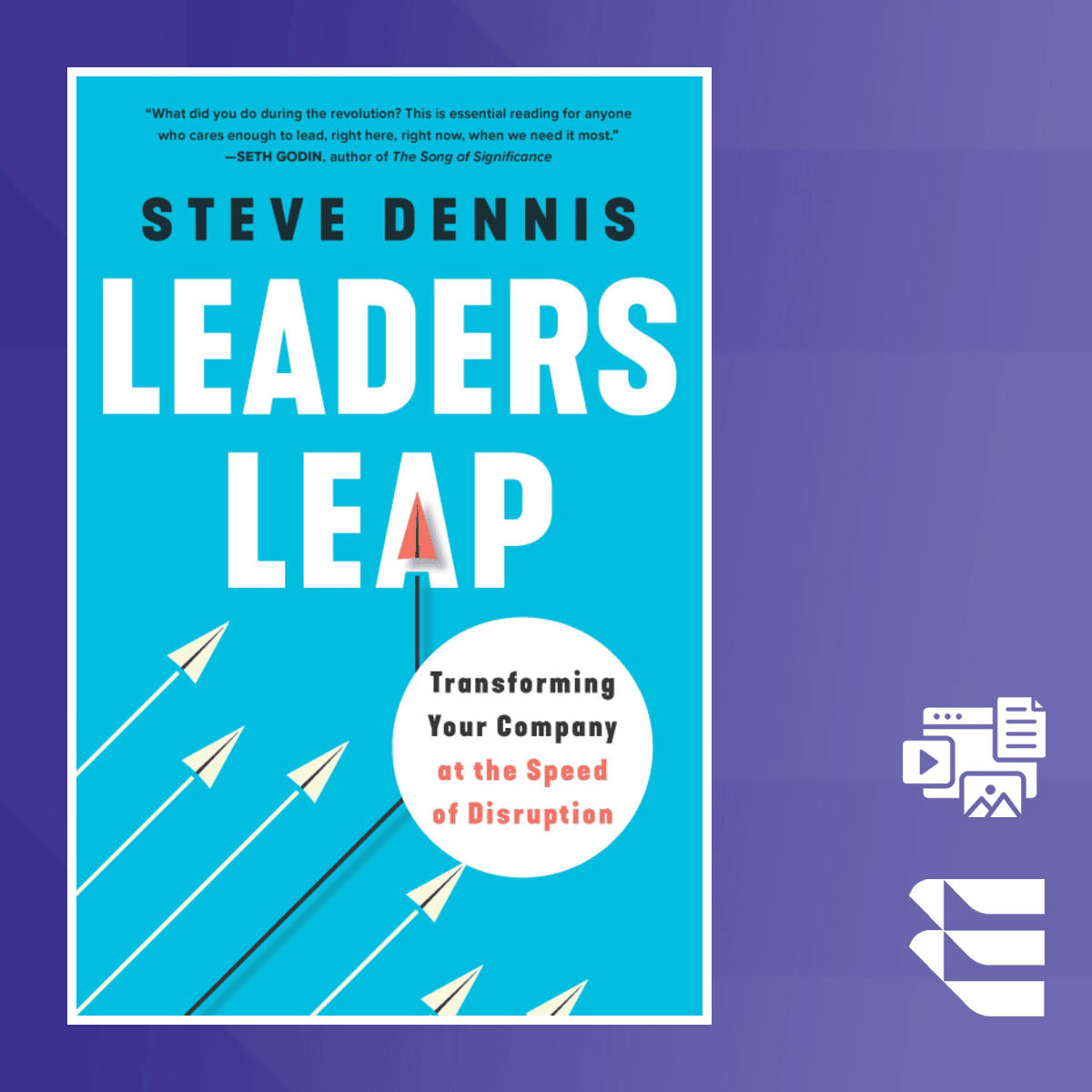
This course is based on Steve Dennis's bestselling book, Leaders Leap. This course explores the mindset shifts that enable exceptional leadership and meaningful transformation. It reveals why traditional approaches fall short and how bold, modern thinking can elevate leaders in today’s rapidly changing world. You’ll learn how to break limiting patterns, embrace radical clarity, and adopt behaviors that fuel impactful action. Through practical frameworks, you’ll develop the confidence and decisiveness needed to lead with purpose and momentum. Combining psychology, leadership strategy, and real-world application, the course moves beyond theory to deliver usable insights. Each “Mind Leap” gives you tools to shift your perspective and make measurable leadership progress. This course is ideal for emerging and established leaders ready to evolve their mindset. No prior leadership training is required, only the desire to grow and take action. Copyright ©2024 by Steve Dennis. All rights reserved. Originally published by Greenleaf Book Group LLC, Austin, Texas. This course has been packaged and distributed by Packt Publishing on behalf of Greenleaf Book Group. Greenleaf Book Group is a hybrid publisher and book distributor dedicated to empowering independent authors and small presses. Renowned for its innovative publishing model, Greenleaf offers a comprehensive suite of services, including editorial guidance, design, distribution, and marketing support, tailored to each author's goals. With a focus on quality and collaboration, Greenleaf has produced numerous bestsellers across a wide range of genres, providing authors with the tools and expertise to maximize their reach and impact in the competitive publishing industry.