

The Global Scholarly Directory.
Discover world-class academic programs curated for the modern intellectual. Search through 19877+ degrees and professional certificates.
 University at Buffalo
Digital Thread: Implementation
There are opportunities throughout the design process of any product to make significant changes, and ultimately impact the future of manufacturing, by embracing the digital thread. In this course, you will dig into the transformation taking place in how products are designed and manufactured throughout the world. It is the second of two courses that focuses on the "digital thread" – the stream that starts at the creation of a product concept and continues to accumulate information and data throughout the product life cycle. Hear about the realities of implementing the digital thread, directly from someone responsible for making it happen at a company. Learn how the digital thread can fit into product development processes in an office, on a shop floor, and even across an enterprise. Be prepared to talk about the benefits, and limitations, of enacting it. Main concepts of this course will be delivered through lectures, readings, discussions and various videos. This is the third course in the Digital Manufacturing & Design Technology specialization that explores the many facets of manufacturing’s “Fourth Revolution,” aka Industry 4.0, and features a culminating project involving creation of a roadmap to achieve a self-established DMD-related professional goal. To learn more about the Digital Manufacturing and Design Technology specialization, please watch the overview video by copying and pasting the following link into your web browser: https://youtu.be/wETK1O9c-CA
 Coursera
Social Media Content Creation with Canva
The Social Media Content Creation with Canva course teaches learners how to design and execute engaging, platform-optimized campaigns for multiple social channels. Learners begin by mastering technical specifications and adapting content to the behaviors and expectations of different audiences across platforms. They then explore the principles of static content creation, applying visual storytelling and template systems to design posts that are both eye-catching and brand-consistent. Building on this foundation, the course introduces dynamic content creation—animations, carousels, and story sequences—equipping learners to capture attention and drive higher engagement. Through practical activities, learners design a full campaign for a product launch, producing static and animated content for Instagram, Facebook, LinkedIn, and other platforms. By the end, participants will be able to plan, design, and deliver a cohesive multi-platform social media campaign, elevating their ability to communicate and market effectively through professional-quality visuals.
 Whizlabs
Exam Prep: HashiCorp Certified Terraform Associate (003)
Terraform is one of the most recognized infrastructure automation tools that help in addressing various real-life challenges. This training course helps you develop your skills and knowledge in Terraform. You can learn the skills for developing cloud infrastructure in an effective and reliable manner. In addition, you can also develop the skills for the automation of infrastructure by using Terraform for public cloud platforms. Exam Prep: HashiCorp Certified Terraform Associate (003) course contains 11+ hours of Training content. Learners could find a combination of Video Lectures. These lectures are divided into 7 Modules and each module is further split into Lessons. The entire course includes Assessments (both Graded and Non-Graded) to validate the knowledge checks of learners. Module 1: Terraform: Introduction, Setup, and Installation Module 2: Terraform: Providers and Statefiles Module 3: Terraform: Variables, Data Types, and Expressions Module 4: Terraform: Files and Provisioners Module 5: Terraform: Modules Module 6: Terraform: State Management and Workspaces Module 7: Terraform Cloud Capabilities Candidates should have hands-on experience in creating services in public cloud platforms such as AWS, Azure, or Google Cloud Platform. The target audience for this course includes any individual aspiring for infrastructure management in public, private, or hybrid clouds. By the end of this course, a learner will be able to: - Elaborate on Terraform features and its components. - Explore Terraform Provisioners, States, data types, and dynamic blocks. - Analyze Terraform Module sources, Workspaces and Security. - Explore Terraform Cloud and its features.
 LearnQuest
Build and Deploy Chatbots and Recommender Systems
Advance your AI application skills by designing high-impact chatbots and recommendation engines—without coding expertise. Explore real-world integration with business channels, optimize for customer engagement, and ensure ethical, measurable deployment. Participants will leverage active case studies to build and refine solutions suited for high-growth sectors in India, the USA, and Spanish-speaking regions. By the end of the course, learners will be able to implement, evaluate, and continuously improve operational AI tools that drive business performance and innovation.
 University of Leeds
Major Engineering Projects: Governance, Risk and Scope
Gain confidence when dealing with stakeholders of major projects by learning to identify and manage those that are involved in the project planning and delivery. This course will enable you to explore project governance in theory and practice. Through real life examples you’ll understand how the critical challenges of the governance in major projects are resolved. Being able to successfully manage risk and uncertainty in major projects is vital for their delivery. In this course you’ll learn to distinguish between risk and uncertainty and the role of risk register. You’ll identify the unique challenges of scope management in major projects and employ scope management tools and techniques that will facilitate your project planning. This course explores concepts analysed in the University’s Online MSc in Engineering Management. If you are interested to develop your skills further, take a look at our online degree.
 Coursera
Link Analytics to Strategy
HR analytics only matters if it connects to what executives care about—growth, efficiency, risk, and competitive advantage. In this beginner course, you'll learn to link people data to organizational strategy and communicate that connection in terms business leaders understand. Using real-world examples from companies navigating workforce challenges, you'll apply strategic framing to identify priorities, use a metric-to-strategy alignment framework to map HR analytics to business outcomes, and analyze AI-drafted narratives to ensure those connections are accurate and defensible. By the end, you won't just report HR metrics—you'll position analytics as essential business infrastructure that drives decisions at the executive level.
 Coursera
أساسيات python: برمج لعبة تخمين الرقم من الصفر
في هذه الدورة التدريبية القائمة على المشروع والتي تستغرق ساعة واحدة، ستتعلم كيفية عمل لعبة تفاعلية بسيطة عن طريق لغة البرمجة python. هتتعلم و تطبق أسس البرمجة زي ال (Data types, variables, conditional and Iterative statements). دا هيساعدك انك تكتب كود لألعاب تانية و مهماتك الحياتية باستخدام python. لغة python هي واحدة من أهم و أكثر لغات البرمجة استخداما و دا يرجع لسهولة ال syntax او الكلمات المستخدمة فيها اللي قريبة جدا من لغتنا العادية. حاليا لغة python بتستخدم كتير في تطبيقات الذكاء الاصطناعي ومعالجة البيانات و دول من أكثر المواضيع المنتشرة حاليا في مجال الحاسبات و المعلومات. حاليا جوجل بتدعم python و بتستخدمها عشان كدا دا مخليها الاختيار الأول لكثير من المهندسين والمبرمجين. ملاحظة: تعمل هذه الدورة التدريبية بشكل أفضل للمتعلمين المقيمين في منطقة أمريكا الشمالية. نعمل حاليًا على توفير نفس التجربة في مناطق أخرى. Note: This course works best for learners who are based in the North America region. We’re currently working on providing the same experience in other regions.
 Coursera
Write Automation Scripts
Write Automation Scripts is an intermediate to advanced course designed for you if you want to replace fragile manual workflows with reliable, efficient automation and then continuously improve those systems over time. In this course, you move beyond simply “writing a script” to thinking like an automation owner who designs, evaluates, and refines automated processes using real execution evidence. Through realistic scenarios, you practice identifying tasks suitable for automation, designing secure and observable workflows, and reviewing logs and runtime data to diagnose inefficiencies. The course emphasizes judgment-driven decision-making: knowing when automation is effective, when performance degradation signals risk, and how to refine scripts responsibly without sacrificing reliability or security. Prerequisites for this course include working knowledge of basic Linux commands, Bash scripting, cloud storage, logging, encryption, file systems, permissions, and environment variables. By the end of the course, you are prepared to automate routine operational tasks, evaluate automation performance, and make evidence-based improvements that scale in real workplace environments.
 Yale University
Journey of the Universe: The Unfolding of Life
Journey of the Universe weaves together the discoveries of the evolutionary sciences together with humanities such as history, philosophy, art, and religion. The course draws on the Emmy-award winning film, Journey of the Universe, and the book from Yale University Press. Journey explores cosmic evolution as a creative process based on connection, interdependence, and emergence. It examines a range of dynamic interactions in the unfolding of galaxies, Earth, life, and human communities. It investigates ways in which we understand evolutionary processes and the implications for humans and our ecological future. The Journey course, thus, is based on a new integration that is emerging from the dialogue of the sciences and humanities. Journey tells the story of evolution as an epic narrative, rather than as a series of facts separated by scientific disciplines. This changes our perception so that we begin to see ourselves as an integral part of this narrative. By situating ourselves within this story we can better appreciate the complexity and beauty of processes such as self-organizing dynamics, natural selection, emergence, symbiosis, and co-evolution. As we discover these intricate processes of evolution, we awaken to the beauty and complexity of our natural environment at this critical juncture in our planetary history.
 University of Illinois Urbana-Champaign
القيادة
في هذه الدورة التدريبية، ستنمي وتعزز قدرتك على القيادة وتتعرف على سمات القيادة التي يظهرها الآخرون في مؤسستك. ستساعدك مهارات الأعمال المهنية المتعلقة بالقيادة المكتسبة عبر هذه الدورة التدريبية على النجاح في أي مؤسسة.
 Coursera
UI/UX Design with Sketch: Travel Booking App
This Guided Project "UI/UX Design with Sketch: Travel Booking App" is for aspiring UI/UX designers and beginners interested in learning Sketch. In this 1-hour long project-based course, you will learn how to create wireframes and high-fidelity prototypes, apply UI/UX design principles, and utilize Sketch’s features. To achieve this, we will work through designing a travel booking app, starting from the welcome screen to user profiles. This project is unique because it provides a hands-on, practical approach to learning Sketch, focusing on real-world application. In order to be successful in this project, you will need a basic understanding of UI/UX principles and a willingness to explore new tools. Whether you are looking to break into UI/UX design or enhance your design skills, this course offers practical knowledge directly applicable to your projects. Join us to master Sketch and create user-friendly app designs.
 Coursera
Close Deals Confidently
This course builds practical, hands-on skills for closing B2B sales deals with confidence and clarity. Learners explore how to recognize closing moments, interpret buyer signals, and select the most appropriate closing technique based on deal context. Through guided lessons, realistic scenarios, and practice activities, learners develop judgment around when to use forward-moving closes versus reassurance-oriented closes, and how to adapt their approach to buyer readiness. Across the course, learners practice crafting and delivering a concise 30-second summary close, refining their language and delivery to reduce hesitation and support buyer decision-making. By the end of the course, learners have a repeatable closing framework they can apply in real sales conversations to move deals from evaluation to decision without pressure, while maintaining trust and momentum in complex B2B environments.
 New York University
MOST from a Methodological Perspective
This course is aimed at intervention scientists working in any area--including public health, education, criminal justice, and others—interested in learning about an innovative framework for conducting intervention research. This course will show you how to use the multiphase optimization strategy (MOST) to: streamline interventions by eliminating inactive components; identify the combination of components that offers the greatest effectiveness without exceeding a defined implementation budget; develop interventions for immediate scalability; look inside the “black box” to understand which intervention components work and which do not; and improve interventions programmatically over time. In this course you will relate the MOST framework to your research objectives; learn how MOST differs from the standard approach to intervention development and evaluation; learn how to complete the preparation and optimization phases of MOST; and become familiar with rigorous and highly efficient experimental designs that will enable you to examine the performance of individual intervention components.
 Google Cloud
Build an LLM and RAG-based Chat Application using AlloyDB and LangChain
This is a self-paced lab that takes place in the Google Cloud console. Learn how to create an interactive application within a deployed environment.
 Sungkyunkwan University
A Bridge to the World: Korean Language for Beginners Ⅰ
This course is an introductory course to Korean language that aims to cultivate basic communication skill for those that are interested in learning Korean language. The course is composed of essential expressions that are often used in everyday life, and designed to teach grammars using basic dialogues which reflect colloquial characteristics of Korean language so by end of this course, a student will be able to express him/herself on ordinary topics. Also, the course provides dialogues used in both formal and informal situations to help students to express in Korean language appropriately in particular situations, and provides various material to help students to understand unique culture of Korean language. Chief Contents Developer: Won-Sook Hyun Contents Developers: Eun-Sil Hong, Ha-ra Yu Production Assistant: Sa-ra Yoo Part of this course was developed with K-MOOC(Korean MOOC) funds.
 Ludwig-Maximilians-Universität München (LMU)
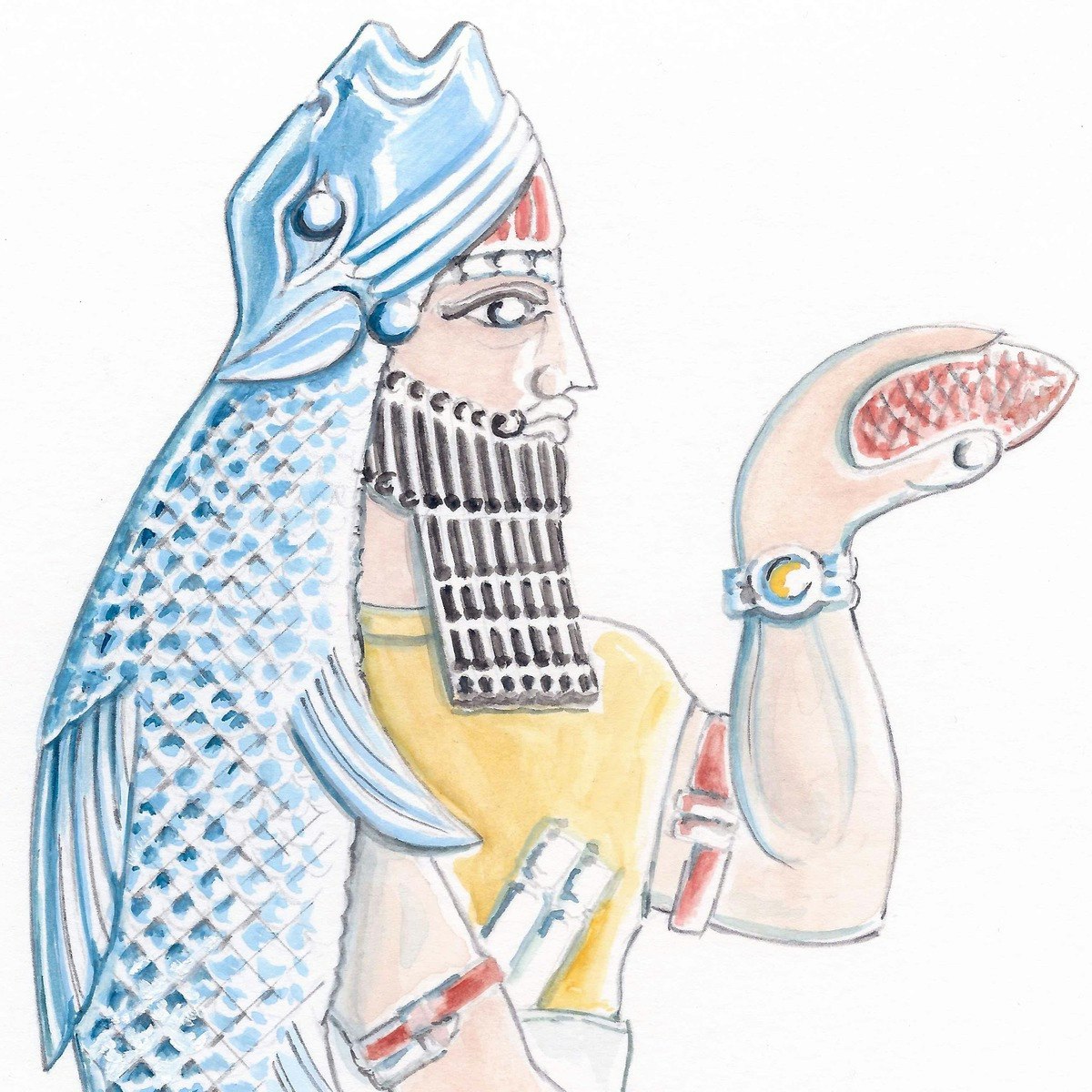
Organising an Empire: The Assyrian Way
Discover the mighty kingdom of Assyria, which came to be the world’s first great empire three thousand years ago. From the 9th to the 7th centuries BC, during the imperial phase of Assyria’s long history, modern day northern Iraq was the central region of a state reaching from the Mediterranean Sea to the Persian Gulf, and incorporating what is now Iraq, Syria, and Lebanon, as well as half of Israel, and wide parts of south-eastern Turkey, and Western Iran. In its geographical extent, this state was unprecedentedly large, and the distinct geography of the Middle East, with deserts and high mountain ranges, posed challenges to communication and cohesion. What were the mechanisms that kept the Empire running? This course explores the methods the Assyrian government employed to ensure unity and maintain loyalty across vast distances, using traditional as well as innovative strategies. Some of these imperial techniques have marked parallels in the ways modern multi-national corporations are operating, others will strike you as profoundly alien. This course focusses on how the Assyrians organised their empire by analysing key aspects, namely: · The CEO – the king, a religious, political and military leader, who is charged to govern by his master, the god Assur; · Home Office – the royal palace in the central region and the royal court that form the administrative centre of the state; · The Regional Managers – the governors and client-rulers to whom local power is delegated; · Human Resources – the Empire’s people are its most precious assets, its consumers and its key product, as the goal of the imperial project was to create “Assyrians”; an approach with lasting repercussions that still reverberate in the Middle East today; and finally · The Fruits of Empire – it takes a lot of effort, so what are the rewards? When we explore these topics we will contextualise them with information about the lives led by ordinary Assyrian families. Taking this course will provide you with an overview of the political, social, religious, and military history of the world’s first superpower. It will give you insight into the geography and climatic conditions of the Middle East and contribute to your understanding of the opportunities and challenges of that region. It will present you with a vision of the Middle East at a time when its political and religious structures were very different from today.