

The Global Scholarly Directory.
Discover world-class academic programs curated for the modern intellectual. Search through 19877+ degrees and professional certificates.
 University of Colorado Boulder
Real-Time Mission-Critical Systems Design
This course can also be taken for academic credit as ECEA 5317, part of CU Boulder’s Master of Science in Electrical Engineering degree. Upon completion of this course the learner will know the difference between systems you can bet your life on (mission critical) and those which provide predictable response and quality of service (reliable). This will be achieved not only by study of design methods and patterns for mission critical systems, but also through implementation of soft real-time systems and comparison to hard real-time. Methods of verification to determine ability to meet mission critical as well as soft real-time requirements will be learned so that the learner can properly assess risk, reliability and impact of failure in real-time systems. At the end of this course learners will be able to apply an architectural style (cyclic executive, RTOS, or embedded Linux) to more detailed design of a mission critical system, a soft real-time system, or a mixed hard and soft real-time system, including: ● Thorough understanding of hardware/software device interfaces and resource view for hardware abstraction layers (HAL, BSP) ● Design trade-offs with different real-time hardware architectures including single core, multi-core, hybrid-FPGA, GP-GPU, and DSP systems, with emphasis on multi-core ● Mission critical embedded systems architecture and key design elements ● Fault tolerant processing, memory, and I/O concepts This course includes specific hardware and software requirements. Please review the FAQ below for complete details.
 Erasmus University Rotterdam
Introduction to Economic Theories
Wondering why economists have not predicted serious financial crises? Shocked by economic assumptions of human behavior as self-centered and focusing only on what can be measured? Asking yourself if there are no sensible economic alternatives to free markets? Then you are at the right place to learn economics! This is the first online course that teaches economics from a pluralist perspective. Economic pluralism means that a plurality of theoretical and methodological viewpoints is regarded as valuable in itself and is simply the best way in which economics can make progress in understanding the world. This MOOC will illustrate economic pluralism not only in substance but also in form. You will see not only me, a Professor of Economics, but also a pop-up Prof of our business school, who illustrates the actor perspective of firms, government and civil society. And you will meet an online student, based in Greece, who will help you through the tutorial videos in which I will explain key concepts, tools and techniques. I will not limit myself to the dominant theory, as almost every other course does. Instead, I will introduce you to four very different economic theories for the whole set of standard topics in microeconomics and macroeconomics. The theories are presented every time from broad and more interdisciplinary to narrow and more mathematical. The four theories that I like to introduce you to are Social Economics, Institutional Economics, Post Keynesian economics and, at the very end of each topic, Neoclassical Economics, for the special case of ideally functioning markets. But not everything is different in this course. Like every economics course, it includes numbers, diagrams, tables, equations, and some calculations. Why would you go through the effort of learning the basics of four theories instead of one? Because it will help you to see why many economists cannot predict crises, whereas others can see signals but are often not being listened to because they do not belong to the dominant school of thought. It will also enable you to see that it is just one theory claiming economic agents to be self-centered and focusing on the measurable only. Other economic theories go well beyond these limitations. And, finally, the pluralist approach will provide you with policy alternatives to neoliberalist policies promoting free markets. The objective of this course is twofold. First, to enable you to understand different economic viewpoints, linked to important traditions in economic thought, and basic economic concepts belonging to these theoretical perspectives. Second, to enable you to do some basic economic calculations that are important in economic life, such as calculating an inflation rate, and in economic policies, such as estimating the rough gains from trade for both trading partners, and in economic arguments, such as in calculating utility maximization with given prices and budgets. Please note that if you do all course elements, total course load is likely to be 4 ECT (approx. 134 hours). I hope you will enjoy the course!
 Georgia Institute of Technology
Software Defined Networking
This course provides an introduction to data center networking technologies, more specifically software-defined networking. It covers the history behind SDN, description of networks in data-centers, a concrete data-center network architecture (Microsoft VL2), and traffic engineering.
 IBM
IBM
System Administration with IBM AIX: Beyond the Basics
Become an expert system administrator! This course dives deep into advanced topics like job scheduling with cron, at, and batch, backup and restore techniques, system startup processes, software management, networking configurations, and error diagnostics. You’ll also learn AIX installation methods, multibos management, the AIX Live Update procedure and problem determination and troubleshooting techniques.
 IBM
IBM
Deep Learning with Keras and Tensorflow
Deep learning is revolutionizing many fields, including computer vision, natural language processing, and robotics. In addition, Keras, a high-level neural networks API written in Python, has become an essential part of TensorFlow, making deep learning accessible and straightforward. Mastering these techniques will open many opportunities in research and industry. You will learn to create custom layers and models in Keras and integrate Keras with TensorFlow 2.x for enhanced functionality. You will develop advanced convolutional neural networks (CNNs) using Keras. You will also build transformer models for sequential data and time series using TensorFlow with Keras. The course also covers the principles of unsupervised learning in Keras and TensorFlow for model optimization and custom training loops. Finally, you will develop and train deep Q-networks (DQNs) with Keras for reinforcement learning tasks (an overview of Generative Modeling and Reinforcement Learning is provided). You will be able to practice the concepts learned using hands-on labs in each lesson. A culminating final project in the last module will provide you an opportunity to apply your knowledge to build a Classification Model using transfer learning. This course is suitable for all aspiring AI engineers who want to learn TensorFlow and Keras. It requires a working knowledge of Python programming and basic mathematical concepts such as gradients and matrices, as well as fundamentals of Deep Learning using Keras.
 Koç University
KALKÜLÜS II: TEMEL KAVRAMLAR / CALCULUS II: BASIC CONCEPTS
Dersin adı nerden geliyor? Eski zamanlarda güncelS hesaplamaları yaparken çakıl taşları kullanılırmış. Eski Yunanca’da çakıl taşının adı “Kalkülüs”. Dersimizin adı buradan geliyor. Kalker, kalsiyum,… gibi kelimeler de aynı kökten. Ders Kısım II ile temel kavramlarla başlıyor ve Kısım III, uygulamalar olarak sürüyor. Neden? Geleneksel kalkülüs kitaplarında önce türev kavram ve uygulamalarıyla, sonra da entegral kavram ve uygulamalarıyla sunuluyor. Geleneksel yaklaşımda, türevleri ve entegralleri öğrenip uygulamalara girince oldukça karışık hesaplamalar öğretiliyor. Öğrenciler de bu karışık hesaplamalar arasında kaybolup, hatta sıkıcı bulup ana kavramları geçiştiriyorlar. Entegral kısmına gelindiğinde bir yorgunluk oluşmuş durumda. Bunun sonucunda öğrencinin entegraldeki temel kavramları anlaması gecikiyor, hatta öğrenciler işi ezberlemeyle geçiştiriyor. Öğrenciler bir bakıma haklı: çünkü sınavlarda türev hesaplaması ve entegral hesaplaması soruluyor. Türev çıkartma ve bölme işlemleriyle, entegral de çarpma ve toplamayla yapılıyor. Her ikisinde de küçük değerlerle limite gidilerek sonuca varılıyor. Kavramsal ve işlemsel olarak türev ve entegral birbirinin tamamlayıcısı. Her birisi de diğer işlemi anlamakta yararlı. Karmaşık hesaplamalara girince, konuların özü anlaşılamadan, öğrenciler de ezberlemeyle teknikleri öğrenip kaybolup gidiyor. Bilgisayarların ve yazılımların çok gelişmiş olduğu dönemimizde, çok karmaşık entegrali hesaplamak pek büyük bir kazanç değil, bunları çeşitli tablolardan görmek mümkün. Yine günümüzdeki iş yaşamında uygulamalar bilgisayarlar yardımıyla sayısal yöntemlerle sağlanıyor. Tabii, sayısal hesaplamaları kurgulamak için temel konuları bilmek önemli, büyük ölçüde yeterli ve gerekli. Çağımızda, kalkülüs eğitiminin uygulamalarda bilgisayarlara hazırlamayı yok sayması beklenemez. “Calculus”: Where does the name come from? In ancient times, pebbles were used for daily calculations. In ancient Greek, "Calculus" means pebble, small regular stone pieces. This is where the name of our course “Calculus” comes from. Words like “calcareous”, “calcium”,... are also from the same root. The course here starts with core concepts as Part II, and applications follow as Part III. Why? In most traditional calculus books, the ordering is different: concepts of derivative and their applications are the starting phase. The second phase is made of the core concepts of integration and their applications. In this traditional approach, derivatives and integrals that are intimately connected appear as two different worlds. Moreover, the students are exposed to rather detailed and somewhat complex calculations with derivatives. When the course comes to integration, fatigue sets in, students would already have forgotten the basic concepts of derivatives trying to solve problems. As a result, the student's understanding of basic concepts of integration becomes a tedious work and understanding is replaced by memorization with the efforts being geared towards solving problems again. In a way, the students are right: in the exams they are asked questions about calculations of tricky derivatives and integrals. The core concepts of derivative and integral are complementary. Derivative is defined by subtraction and division; integral is defined by multiplication and addition. In both, the conclusion is reached by going to the limit with small values. Conceptually and operationally, derivative and integral are the inverse of each other. Each of them is useful in understanding the other process, as well as complementing each other. When they are taught in the beginning, the students are not yet tired and understand more easily these two complementary core concepts.
 Packt
Packt
The Complete Python Course
This course features Coursera Coach! A smarter way to learn with interactive, real-time conversations that help you test your knowledge, challenge assumptions, and deepen your understanding as you progress through the course. Master Python programming with this all-in-one course. Learn Python's core concepts, from variables and loops to advanced topics like functions, classes, and modules, with hands-on coding experience in Python and PyCharm. Start with setting up Python on Windows and Mac, then dive into variables, operators, type conversions, and input handling. Build a solid foundation through loops, decision-making, and string manipulations. Advance to functions, recursion, lambda expressions, object-oriented programming, and Python data structures like lists, tuples, sets, and dictionaries. This course is perfect for aspiring programmers, software developers, data enthusiasts, and anyone looking to learn Python from scratch. No prior programming knowledge is required. By the end of the course, you will be able to write Python programs confidently, understand and use data structures effectively, create functions and classes, and leverage modules to solve real-world problems efficiently.
 Rice University
Fundamentals of Immunology: Innate Immunity and B-Cell Function
Course 1 of a four course specialization called Fundamentals of Immunology: Innate Immunity and B-cell Function. Each course in the specialization presents material that builds on the previous course's material. This is the first leg of a four-part journey through the defenses your body uses to keep you healthy. In this part, we hope to give you the vocabulary and concepts you need to interact with the medical community and provide them with a context that makes them memorable. Fundamentals of Immunology: Innate Immunity and B-cell Function introduces students to the basic functions of the adaptive and innate immune systems. The early lectures survey cells, tissues, and organs using metaphors, cartoons, and models to improve understanding and retention. After describing the form, function, origin, and varieties of antibodies, subsequent lectures provide details on the mechanism of the generation of variation. The course provides animations of gene rearrangement and class switching and descriptions of affinity maturation correlated with detailed physical models of antibody structure. The final lecture reviews these concepts in an anatomical context. Testing employs multiple choice questions testing facts, concepts, and application of principles. Questions may refer to diagrams, drawings, and photographs used in the lecture and reproduced in the outline. What You’ll Learn: The difference between adaptive and innate immune systems, the characteristics of various pathogens that they protect you from, and the overall strategies employed in this protection. The detailed structure of antibodies and related immunoglobulin receptors, the characteristics and function of the different antibody classes, and the mechanism for producing both the recognition regions and stem regions. Finally, how these structures are coded for in the DNA and expressed in the B cells.
 Technion - Israel Institute of Technology
التقانة والمستشعرات النانوية - الجزء الثاني
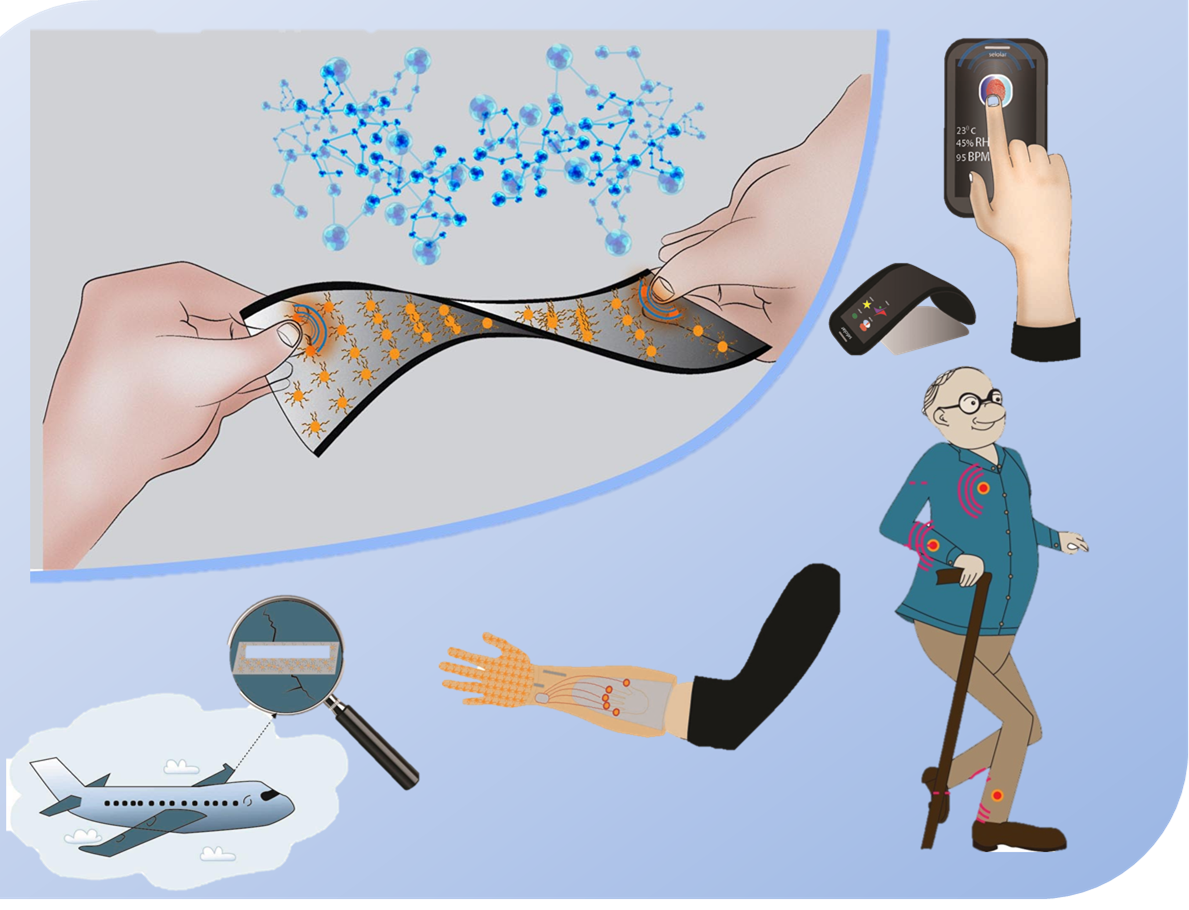
هو مساق للمهتمين في التعرف على أدوات الاستشعار الحديثة التي تستعين بتقانة النانو (وهي التقانة التي تبحث في المجال بين واحد إلى مئة نانوميتر، أي في أجزاء من المليار من المتر) لفرز ومراقبة الأحداث المختلفة في حياتنا الشخصية أو العملية. في أطار هذا المساق، سنكتشف معا عالم النانو المذهل الذي يتعامل مع الوحدات الأساسية في بناء المادة. وبهذا سوف نمهد الطريق لتطبيقات إبداعية لانهائية تطبق في كل جزء من حياتنا اليومية، بدءا من تشخيصات وعلاجات (في الجسم الحي أو خارجه) للأمراض، وثم نستمر في تقانة مراقبة جودة المنتوجات وما يختص بالبيئة، وننهي في تقانة مراقبة القضايا الأمنية. سنتعلم في هذا السعي كيف نصَنع هذه الأدوات الجديدة، وكيف نميزها، وكيف نتحكم بها، وكيف ندمجها في التطبيقات المختلفة. _ _ _ _ _ _ _ _ _ _ _ _ _ وصف المساق تقانة ومستشعرات النانو هو مجال يحوي اختصاصات عديدة ومتداخلة ويجمع بين الكيمياء/البيوكيمياء، الفيزياء، البيولوجيا، علم المواد، هندسة الإلكترونيات وغيرها. سيعرض المساق الحالي بعض مبادئ التقانة ومواد النانو الاساسيّة ودورها الهام في اجهزة و خواص الاستشعار. في هذا المساق سيتم نقاش معلومات شيقة من تخصصات متعددة في مجال العلوم والهندسة في المستوى النانوي, مستهدفا فهم الاختلافات الفيزيائية الأساسية لمستشعرات النانو. عند إنهاء هذا المساق، يكون قد تعلم الطالب تصنيع، تمييز ومعالجة مواد النانو ومستشعرات النانو، وكيفية تسخيرها لبناء تطبيقات جديدة. وأيضا سيطبق الطالب معرفته في تقانة ومستشعرات النانو ضمن مشروع حسب اهتمامه الشخصي. اهداف المساق هدف المساق الرئيسي هو تطوير التفكير النقدي, الابداعي والمبتكر. ان المساق يشجع العمل ضمن فريق ذو افراد من مجالات وحضارات مختلفة, لبناء "مخازن أفكار" عالمية لابتكار افكار جديدة. سوف يطلب منكم خلال المساق ان تقوموا بالتفكير بطريقة مبدعة, غير اعتيادية وان تقترحوا افكار جديدة. يستهدف هذا المساق تشجيع المعرفة بالمواضيع التالية: 1) أهمية المواد النانوية في تطبيقات الاستشعار. 2) الأساليب المستخدمة في تحديد خصائص المستشعرات النانوية· 3) الأساليب المستخدمة لتكييف مواد النانو بهدف استعمالها في تطبيقات استشعار خاصة. 4) جسيمات النانو الفلزية والشبه موصلة. 5) أنابيب النانو وأسلاك النانو العضوية وغير العضوية. 6) المستشعرات الضوئية، الميكانيكية، والكيميائية المبنية من مواد النانو. 7) المستشعرات المبنية من هجين من المواد النانوية. الكتب المطلوبة: · Jiří Janata, Principles of Chemical Sensors, Springer, 2d Edition (1989). · Roger George Jackson, Novel Sensors and Sensing, CRC Press (2004). نبذه عن البروفيسور حسام حايك: البروفيسور حسام حايك هو خبير في مجال التقانة والمستشعرات النانوية، وتشخيص أمراض بوسائل غير باضعة. حاصل على العديد من الجوائز والأوسمة المرموقة في العالم: جائزة ماري كوري للتميز العلمي، جائزة ERC، جائزة الصحة الأوروبية 7-FP. البروفيسور حايك حاصل على أكثر من 42 وسام وجائزه دولية لإنجازاته العلمية، ويشمل ذلك وسام الفارس (التي تمنحه الحكومة الفرنسية) والذي يعد من أعرق اوسمه الشرف في العالم. وقد أدرج اسمه ضمن "قائمة افضل 35 شاب عالم في العالم". كذلك حاز البروفيسور حايك على جائزة ديسكفري من مؤسسة بيل وميليندا غيتس. البروفيسور حايك هو مؤسس ورئيس مجموعه مكونه من 8 فرق أبحاث وشركات أوروبية لتطوير جيل متقدم من الإلكترونيات الجزيئية لتشخيص الأمراض. وهو يشغل أيضا منصب محرر مساعد لمجلتين علميتين ويقوم بدور عضو استشاري علمي بارز في العديد من الشركات والمعاهد الوطنية والدولية، وكذلك مقيم علمي في المفوضية الأوروبية. البريد الإلكتروني: hhossam@technion.ac.il _ _ _ _ _ _ _ _ _ _ _ _ _ _ _ _ _ الطاقم: ميتال بار-سيجف: حاصلة على اللقب الأول B.A في الكيمياء (بامتياز) وحاصله أيضا على اللقب الأول B.Sc. في هندسة المواد (بامتياز) من معهد العلوم التطبيقية – التخنيون (كلاهما عام 2010). عملت أثناء دراستها في شركة "تاور سيميكوندكتور" وبعد التخرج عملت في معهد ألفريد-مان في التخنيون كمهندسة للتطوير والتنمية. حاليا، تقوم ميتال بتحضير الدكتوراه (المسار المباشر) في معهد الإلكترونيات الجزيئية على اسم راسل باري في التخنيون تحت إشراف البروفيسور حسام حايك. موضوع بحث الدكتوراه هو تطوير الجلد الإلكتروني بواسطة مواد النانو. عبير وتد: حاصله على اللقب الأول B.Sc واللقب الثاني M.Sc. في موضوع الهندسة المدنية بتخصصي هندسة المباني وهندسة المواصلات من معهد العلوم التطبيقية – التخنيون (عامي 1998 و- 2005 على التوالي). كما وحصلت على اللقب الثاني M.Sc. في موضوع تدريس العلوم والتكنولوجيا من التخنيون عام 2013. تركزت أبحاثها على تدريس العلوم عن طريق البحث العلمي في المختبرات. عبير تعمل حاليا محاضره في أكاديمية القاسمي-كلية أكاديمية للتربية (باقة الغربية، إسرائيل)، وهي تشغل أيضا منصب رئيسة قسم الهندسة المدنية في الأكاديمية. مايا اشر، مساعدة تدريس: حاصله على اللقب الأول B.Sc واللقب الثاني M.Sc. في دراسات الاتصالات من كلية سابير الاكاديمية وجامعة بن چوريون- اسرائيل (2009, 2013 على التوالي). عملت مايا كمحاضرة في الجامعة المفتوحة- اسرائيل. وحالياً، تقوم باكمال دراستها للدكتوراه في قسم التعليم في العلوم والتقانة في التخنيون تحت اشراف البروفسور ميري باراك. موضوع بحثها يتمركز حول دراسة التعلم التعاوني عبر الإنترنت في مجموعات صغيرة متعددة الثقافات. محمد خطيب، مساعد تدريس: حاصل على اللقب الاول B.Sc في هندسة البيوكيمياء من معهد العلوم التطبيقية – التخنيون (2015). حالياً، يكمل محمد دراسة الدكتوراه (مسار خاص) في قسم هندسة الكيمياء, معهد العلوم التطبيقية – التخنيون، تحت اشراف البروفسور حسام حايك. موضوع بحثه يتمركز حول اجهزة الكترونية قادرة على اشفاء ذاتها، من اجل مراقبة ورصد امراض معدية. ميري باراك، مستشارة تربوية: بروفيسور مساعد في قسم التعليم في العلوم والتقانة، معهد العفوم التطبيقية- التخنيون. هي رئيسة مجموعة التقانات العلمية والتعليمية ومستشارة طلاب الدراسات العليا. فعالياتها الاكادمية تتمركز حول تطوير، دمج وتقييم مناهج تعليم العلوم في المدارس والتعليم العالي. دراساتها تتضمن استعمال معلومات وتقانات اتصال، مع التشديد على الويب 2.0 الناشئ والتطبيقات السحابية، من اجل تعليم ناجع وعمليات تفكير عليا.
 Google Cloud
Understanding and Combining GKE Autoscaling Strategies
This is a self-paced lab that takes place in the Google Cloud console. In this lab you will explore the benefits of different Google Kubernetes Engine autoscaling strategies, like Horizontal Pod Autoscaling and Vertical Pod Autoscaling for pod-level scaling, and Cluster Autoscaler and Node Auto Provisioning for node-level scaling.
 Automatic Data Processing, Inc. (ADP)
Sourcing and Screening Applicants
This course is designed to explain best practices for building a talent pipeline through sourcing and screening applicants and candidates. We’ll begin by examining the essentials of your talent pipeline and discover ways to leverage your network to gather information and obtain referrals from fellow employees and candidates. From there, we’ll discuss evaluating applicants to prepare to present the top tier of candidates to our hiring managers. • Building a talent pipeline. • Demonstrate how to leverage your network. • Appraise the importance of employee and candidate referrals and how to obtain them. • Evaluate resumes, applications, and cover letters against job descriptions. • Identify concerns and develop pre-screen interview questions.
 Coursera
Build an Automobile Listing Website with PHP
In this 1.5 hours guided project, you will quickly get up to speed with the fundamentals of PHP and build a functional, dynamic website at the end. No prior knowledge of PHP is required but basic to intermediate HTML is required as a prerequisite.
 Xbox
Xbox
Digital and Print Media Design
This graphic design course empowers you to create impactful visuals across various mediums. You'll explore digital and print design techniques, learn to apply marketing principles, and refine your work through client feedback and iteration. By the end, you'll have the skills to design exceptional graphics for any project, from captivating social media ads to professional printed materials. By the end of this module, you'll be able to: • Develop skills in creating digital and print media materials using Adobe Photoshop and Illustrator. • Design effective marketing materials, including web banners, social media graphics, and email templates. • Prepare files for print production, understanding printing techniques and specifications. • Complete a final project demonstrating the ability to design and produce digital and print media materials for a video game release. This is an introduction course, intended for aspiring graphic designers who want to gain a comprehensive understanding of design principles and techniques for both digital and print media, graphic designers seeking to expand their expertise in digital and print media, and anyone wanting to create visually compelling designs, including designing for social media, websites, or printed brochures. To succeed in this course, you should have basic literacy, familiarity with basic design principles, and access to Adobe Photoshop and Adobe Illustrator.
 Packt
Packt
Emotional Intelligence
Updated in May 2025. This course now features Coursera Coach! A smarter way to learn with interactive, real-time conversations that help you test your knowledge, challenge assumptions, and deepen your understanding as you progress through the course. Unlock the power of emotional intelligence and transform how you manage emotions, relationships, and leadership. This course equips you with actionable strategies to improve self-awareness, self-control, empathy, and social skills—key components of emotional intelligence that drive success both personally and professionally. Throughout the course, you’ll explore foundational concepts, starting with the basics of emotional intelligence and its role in your daily life. Learn seven proven strategies to boost emotional intelligence, followed by focused lessons on developing essential skills: enhancing empathy, strengthening self-control, boosting self-motivation, and improving social dynamics. By diving deeper, you'll discover targeted techniques to improve your ability to understand and regulate emotions. Each video module delivers practical tools that help you become more self-aware, empathetic, and socially adept, empowering you to manage yourself and inspire others effectively. Designed for professionals, managers, and anyone seeking personal growth, this course is accessible to learners of all backgrounds. Whether you’re just starting or looking to refine your skills, you'll gain valuable insights to excel in your personal life and career.
 University of Colorado Boulder
Deep Learning for Natural Language Processing
Deep learning has revolutionized the field of natural language processing and led to many state-of-the-art results. This course introduces students to neural network models and training algorithms frequently used in natural language processing. At the end of this course, learners will be able to explain and implement feedforward networks, recurrent neural networks, and transformers. They will also have an understanding of transfer learning and the inner workings of large language models. This course can be taken for academic credit as part of CU Boulder’s MS in Data Science or MS in Computer Science degrees offered on the Coursera platform. These fully accredited graduate degrees offer targeted courses, short 8-week sessions, and pay-as-you-go tuition. Admission is based on performance in three preliminary courses, not academic history. CU degrees on Coursera are ideal for recent graduates or working professionals. Learn more: MS in Data Science: https://www.coursera.org/degrees/master-of-science-data-science-boulder MS in Computer Science: https://coursera.org/degrees/ms-computer-science-boulder
 École normale supérieure
Introduction à la théorie de Galois
Le cours expose la théorie de Galois, du classique critère de non-résolubilité des équations polynomiales aux méthodes plus avancées de calcul de groupes de Galois par réduction modulo un nombre premier. Le thème général de cette théorie est l'étude des racines d'un polynôme et concerne en particulier la possibilité de les exprimer à partir des coefficients de ce polynôme. Evariste Galois considère les symétries de ces racines et associe ainsi à ce polynôme un groupe de permutations de ses racines, que l'on appelle maintenant son groupe de Galois. Il dégage à cette occasion pour la première fois, dans ce cadre, la notion de groupe, maintenant omniprésente en mathématiques. Son étude lui permet d'expliquer pourquoi les racines d'une équation prise au hasard ne s'expriment en général pas par des formules algébriques faisant intervenir ses coefficients à partir du degré 5, un résultat démontré auparavant par Abel. Plus généralement, l'étude du groupe de Galois du polynôme permet de dire exactement quand une telle formule existe. C'est ce que l'on appelle la correspondance de Galois : elle relie d'une part la théorie des corps, d'autre part la théorie des groupes.Ce cours expliquera cette théorie en n'utilisant que des résultats de base d'algèbre linéaire. Nous étudierons d'un côté la théorie des corps, c'est-à-dire la façon dont les corps s'emboîtent les uns dans les autres, en introduisant la notion de nombre algébrique (essentiellement les racines de polynômes). D'un autre côté, nous introduirons les éléments nécessaires à l'étude des groupes de permutations. Cela nous permettra d'expliquer la théorie de Galois, non seulement dans son cadre d'origine, c'est-à-dire quand les coefficients du polynôme sont des nombres entiers, mais aussi dans un cadre plus général, par exemple lorsqu'on réduit ces coefficients modulo un nombre premier p. Le cours culminera avec une comparaison des groupes de Galois dans ces deux situations (« entière » et après réduction modulo p), fournissant ainsi un outil de calcul puissant de ces groupes. Ce cours est l'occasion d'aborder des notions d'algèbre variées, essentielles dans de nombreux domaines des mathématiques, de manière très simple pour très rapidement aboutir à des résultats tout à fait remarquables. Nous n'avons pas cherché la généralité maximale mais au contraire à aller rapidement à l'essentiel en utilisant le minimum de formalisme abstrait. Le FLOTeur intéressé sera alors armé pour aller plus loin, notamment grâce à la bibliographie ou à des cours plus avancés.