

The Global Scholarly Directory.
Discover world-class academic programs curated for the modern intellectual. Search through 19877+ degrees and professional certificates.
 Universidade Estadual de Campinas
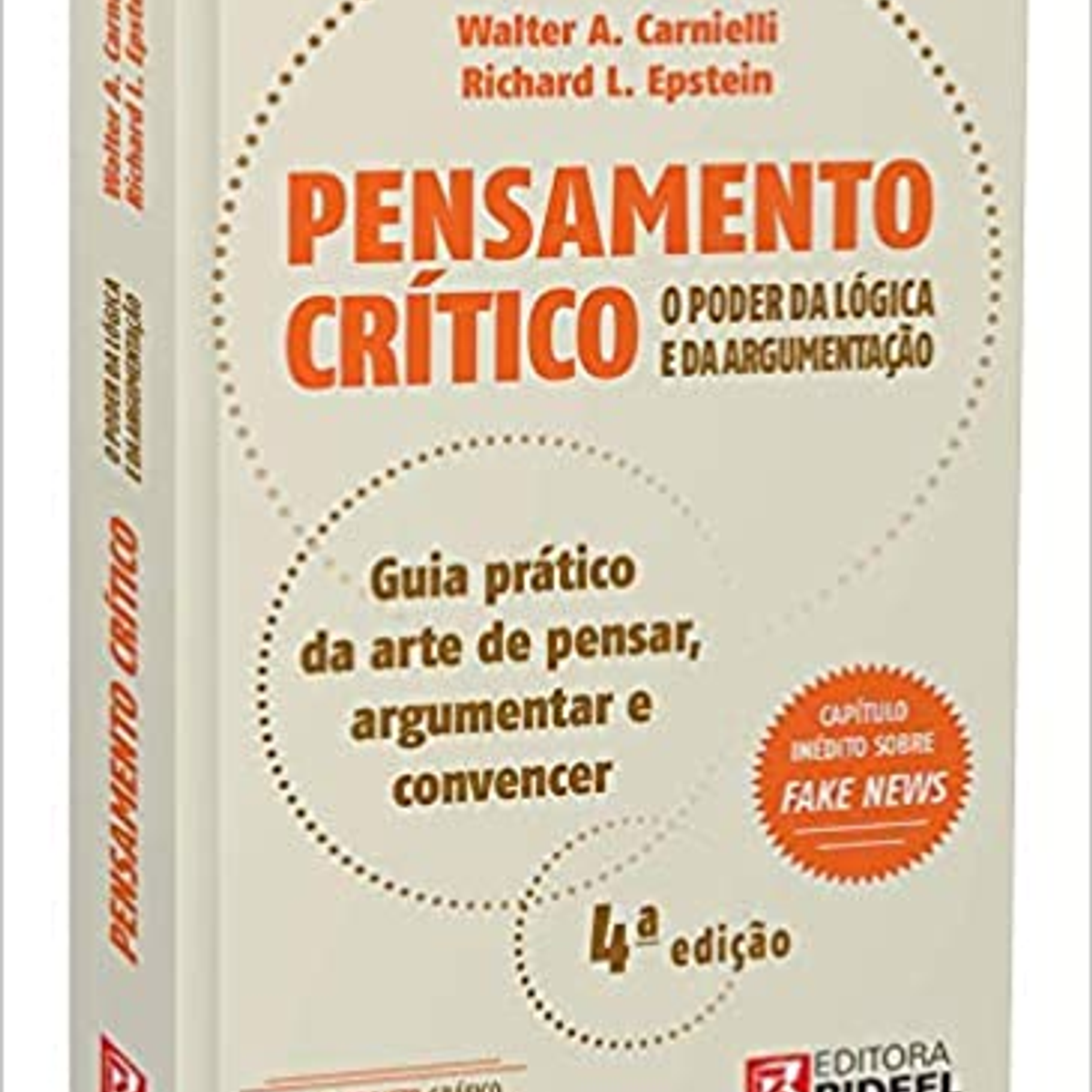
Pensamento Crítico, Lógica e Argumentação
Depois de concluir este curso, o aluno estará equipado com ferramentas para analisar a validade e a força de todos os tipos de declarações e argumentos, de propaganda a artigos de opinião na política e na mídia, veredictos de tribunais e debate geral. Os alunos serão mais persuasivos na redação de ensaios argumentativos, debates, apresentações orais e até mesmo na compreensão de ideias filosóficas. Você, o aluno, também estará mais bem armado para distinguir a verdade de “fatos alternativos” e “notícias falsas”, e para compreender e refutar atitudes negacionistas. O principal objetivo deste curso é torná-lo capaz de reconhecer e refutar comportamentos irracionais e falácias (erros de raciocínio), bem como aprimorar seus próprios argumentos. Este curso teve a participação de: Eliara Santana Jornalista e doutora em Linguística, especialista na Análise do Discurso Robson Rodrigues Monteiro Produtor cultural Elnio Junior Produtor audiovisual
 Duke University
Behavioral Finance
We make thousands of decisions every day. Do I cross the road now, or wait for the oncoming truck to pass? Should I eat fries or a salad for lunch? How much should I tip the cab driver? We usually make these decisions with almost no thought, using what psychologists call “heuristics” – rules of thumb that enable us to navigate our lives. Without these mental shortcuts, we would be paralyzed by the multitude of daily choices. But in certain circumstances, these shortcuts lead to predictable errors – predictable, that is, if we know what to watch out for. Did you know, for example, that we are naturally biased towards selling investments that are doing well for us, but holding on to those that are doing poorly? Or that we often select sub-optimal insurance payment plans, and routinely purchase insurance that we don’t even need? And why do so many of us fail to enroll in our employer’s corporate retirement plans, even when the employer offers to match our contributions? Behavioral finance is the study of these and dozens of other financial decision-making errors that can be avoided, if we are familiar with the biases that cause them. In this course, we examine these predictable errors, and discover where we are most susceptible to them. This course is intended to guide participants towards better financial choices. Learn how to improve your spending, saving, and investing decisions for the future.
 Tecnológico de Monterrey
Critical thinking: reasoned decision making
Making decisions in today's world, a world increasing in complexity, with broad changes and uncertainty, creates the need of approaches that allow us to discern the real problems and the causes that create them. Identifying these problems, in most cases, requires challenging the assumptions on which we base our judgments, regarding the world and its realities. Critical thinking could be defined, as "that way of thinking - on any subject, content or problem - in which the thinker improves the quality of his thinking by seizing the inherent structures of the act of thinking and by subjecting them to intellectual standards". Critical thinking helps making decisions within a company, selecting the best action for the organization. In this course of critical thinking the students will learn the tendencies, approximations and assumptions on which their reflections are based, and the conditions and the outcomes derived from their ways of thinking. This reflective thought is the active, careful and persistent examination of all beliefs in the light of the fundamentals that support them and their conclusions. The reasoned decisions that the world requires, occur in many different areas, especially in business decisions, related to strategies, in the solution of problems in organizations, in the solution of social problems and in corporations’ social and ethical responsibility. In this online course the approaches will be oriented to analyze the critical thinking required in these areas.
 Rutgers the State University of New Jersey
Soul Beliefs: Causes and Consequences - Unit 1: Historical Foundations
Throughout history, the vast majority of people around the globe have believed they have, however defined, a “soul.” While the question of whether the soul exists cannot be answered by science, what we can study are the causes and consequences of various beliefs about the soul and its prospects of surviving the death of the body. Why are soul and afterlife beliefs so common in human history? Are there adaptive advantages to assuming souls exist? Are there brain structures that have been shaped by environmental pressures that provide the foundation of body/mind dualism that is such a prominent feature of many religions? How do these beliefs shape the worldviews of different cultures and our collective lives? What is the role of competing afterlife beliefs in religion, science, politics, and war? This course explores several facets of this relatively unexplored but profoundly important aspect of human thought and behavior. The course consists mainly of 70 to 80 minute lectures, typically broken up into 3 segments, recorded from a course offered by Rutgers University School of Arts and Sciences. These videos include slides and some embedded video clips. Most lectures are accompanied by slides used during the lecture, also including recommended reading assignment which may provide additional opportunities to reflect on your studies. Due to the lengthiness of this class and natural progression, the online course has been separated into 3 units, this is Unit 1.
 EDUCBA
Azure Cognitive Services - Creating an AI Based Chatbot
This hands-on course equips learners with the essential skills to design, develop, and deploy AI-based chatbots using Microsoft Azure Cognitive Services and Java. Tailored for intermediate-level participants, the course focuses on applying Azure’s QnA Maker to construct intelligent FAQ-driven bots and seamlessly integrate them into Java applications. Learners will begin by understanding core concepts of Azure’s cognitive architecture and then progress to configuring QnA services through a dedicated interface. They will build a chatbot back-end in Java, troubleshoot real-world integration issues, and validate the end-to-end deployment using Spring Tool Suite. Finally, learners will evaluate the impact of cloud-based services on operational costs and demonstrate how to perform responsible service cleanup in Azure. By the end of the course, learners will be able to: Design QnA knowledge bases using Azure Cognitive Services. Develop REST-enabled Java applications for chatbot integration. Diagnose and resolve common implementation issues during development. Execute and validate chatbot functionality through local and cloud-based environments. Optimize and manage Azure resources to ensure cost efficiency.
 Intel
Intel
Intel® Network Academy - Network Transformation 102
Welcome to the Intel® Network Academy – a comprehensive training program on network transformation. In this program, we will be covering the topic areas of software defined infrastructure (SDI) network functions virtualization (NFV), software-defined networking (SDN) and beyond. Network Transformation 102 covers topics such as VNF Operations & Development, Cryptography, and Hyperscan technology, students will dive into the benefits of Intel hardware and software and explore how to accelerate compute-intensive operations with Intel® QuickAssist Technology (Intel® QAT). Students will also have a chance to learn more about open source standards including DPDK and FD.io.
 Johns Hopkins University
Measurement – Turning Concepts into Data
This course provides a framework for how analysts can create and evaluate quantitative measures. Consider the many tricky concepts that are often of interest to analysts, such as health, educational attainment and trust in government. This course will explore various approaches for quantifying these concepts. The course begins with an overview of the different levels of measurement and ways to transform variables. We’ll then discuss how to construct and build a measurement model. We’ll next examine surveys, as they are one of the most frequently used measurement tools. As part of this discussion, we’ll cover survey sampling, design and evaluation. Lastly, we’ll consider different ways to judge the quality of a measure, such as by its level of reliability or validity. By the end of this course, you should be able to develop and critically assess measures for concepts worth study. After all, a good analysis is built on good measures.
 Board Infinity
Fundamentals of NestJS
Welcome to the "Fundamentals of NestJS" course for Modern Backend Development, where you will embark on a comprehensive journey to become a proficient NestJS developer. This course is divided into two modules, each focused on essential aspects of NestJS development. In Module 1, we'll get you started with NestJS, covering the fundamentals and project setup. Module 2 delves into more advanced concepts, including services, middleware, and exception handling. In Module 1, "Getting Started with NestJS," we embark on a journey to explore the fundamental concepts and setup of this powerful Node.js framework. In Lesson 1, we provide an introduction to NestJS, give an overview of its capabilities, guide you through setting up the development environment, and delve into the project structure. In Lesson 2, we focus on controllers and routing, understanding their roles, handling route parameters and query strings, and effectively managing requests and responses. In Module 2, "Services, Middleware, and Exception Filters," we dive deeper into NestJS, exploring essential concepts for building robust and modular applications. In Lesson 1, we'll focus on services and dependency injection, covering how to create services, utilize providers, and manage service scopes within modules. In Lesson 2, we'll delve into middleware and exception filters, understanding their roles, implementing exception filters, and effectively putting all these concepts together in your NestJS applications. Our target learner is anyone with a basic understanding of JavaScript and web development concepts, eager to delve into the world of Nest.js. Whether you're a beginner looking to start your backend development journey or an experienced developer aiming to enhance your skillset with Nest.js, this course is tailored for you. Disclaimer: This is an independent educational resource created by Board Infinity for informational and educational purposes only. This course is not affiliated with, endorsed by, sponsored by, or officially associated with any company, organization, or certification body unless explicitly stated. The content provided is based on industry knowledge and best practices but does not constitute official training material for any specific employer or certification program. All company names, trademarks, service marks, and logos referenced are the property of their respective owners and are used solely for educational identification and comparison purposes.
 Duke University
Risk Management and Financial Theory
In this course, you will explore various types of financial risks, including market, credit, and operational risks, and learn strategies for managing and mitigating them. Additionally, you will master the art of building compelling business cases, focusing on strategic alignment, financial justification, risk assessment, and stakeholder communication. You will also understand the fundamental principle that money available now is worth more than the same amount in the future due to its potential earning capacity. You will apply these concepts through scenario-based assessments and financial theory exercises. This course is ideal for non-financial managers or professionals who seek to enhance their financial acumen to make better business decisions. No prior experience in finance is required. However, a basic understanding of business operations and strategic thinking will be beneficial.
 SkillUp
Machine Learning for Healthcare Applications
Build the machine learning foundation for healthcare demands! Learn how to turn complex clinical data into models that drive decision support, early warning, diagnostic assistance, and personalized treatment insights. This course equips you with practical machine learning skills for real-world healthcare analytics. You will apply supervised, unsupervised, and temporal modeling techniques that match common healthcare data realities and clinical use cases. You’ll learn to frame clinical prediction problems, construct features from structured and time-based data, and develop classification and regression models for healthcare settings. You’ll also discover patient subgroups using clustering and dimensionality reduction and interpret patterns in patient populations. Across the course, you’ll focus on interpretability, robustness, and healthcare-appropriate evaluation metrics tied to clinical risk and patient safety. In hands-on labs, you’ll build a Readmission Risk Classifier, cluster patients for phenotype discovery, visualize populations with dimensionality reduction, engineer temporal features for an early warning model, and compare models using ROC, PR, calibration, and threshold-based utility analysis.
 Coursera
GenAI for Customer Service Teams
"GenAI for Customer Service Teams" is an introductory course designed to bridge the gap between generative AI (GenAI) technologies and customer service practices. This course demystifies GenAI, making it accessible for customer service professionals to enhance team coordination, automate tasks, and improve customer interactions. Through engaging content and practical applications, learners will gain a solid foundation in how GenAI can revolutionize customer service operations and enhance customer satisfaction. This course is tailored to customer service team leaders, including Customer Service Managers, Team Leads, and Senior Customer Service Representatives, aiming to enhance leadership skills and drive GenAI adoption. It is also valuable for individuals entering the customer service field with a focus on AI technologies, as well as IT Professionals and Software Engineers interested in cross-disciplinary innovation in customer service. Learners should have a fundamental understanding of customer service principles and strategies, along with an eagerness to learn and adapt to new technologies. While a deep technical background is not required, an openness to integrating GenAI tools into customer service workflows will be beneficial. Throughout this course, learners will gain a basic understanding of GenAI tools and strategies to enhance team collaboration and efficiency. They will learn to integrate GenAI technologies into customer service operations, automate tasks, and stay updated on advancements. Additionally, learners will apply GenAI in real-world scenarios, navigate ethical and legal implications, and ensure responsible AI implementation in customer service practices.
 Yale University
Introduction to Classical Music
Using a simple and enjoyable teaching style, this course introduces the novice listener to the wonders of classical music, from Bach fugues to Mozart symphonies to Puccini operas.
 Pearson
Building the Ultimate Cybersecurity Lab and Cyber Range
Take your first step to building your very own cybersecurity lab and preparing for the future of cybersecurity. Building the Ultimate Cybersecurity Lab and Cyber Range is a vital resource for anyone serious about learning hands-on cyber skills. It is also an essential resource to study for a variety of cybersecurity certifications, including Certified Ethical Hacker (CEH), CompTIA PenTest+, CEH Practical, Offensive Security Certified Professional (OSCP), Cisco CCIE Security, or CCNP Security. The course serves as a comprehensive guide for those beginning their journey in penetration testing, exploit development, or malware reverse engineering; it covers how to build yourown virtualized, physical, or cloud-based environment to practice your skills in a safe ecosystem.
 University of Michigan
AI for Lawyers: Time and Tasks
Explore ways to use artificial intelligence to help you get more things done in less time. In the third course of the four-part series “AI for Lawyers and Other Advocates,” you’ll learn how to navigate the “AI Delegation Matrix” and spot “Low-Hanging AI Fruit.” You’ll also develop strategies to make sure you don’t hand over the wrong tasks to artificial intelligence tools and end up with heavy, regretful feelings of “delegation remorse.”
 The Museum of Modern Art
Fashion as Design: Craft and Sustainability
No true design history can be told without discussing garments and everything that they encompass. Fashion As Design addresses both everyday and high fashion garments from the early 20th Century to today. In this specialization you will consider the design and impact of what you wear, explore fashion as a tool for expression, and experiment with creative prompts that engage your closet. You’ll hear directly from a range of designers, photographers, makers, historians, and others working with clothing—and, in some cases, reimagining and repairing garments for the future. In the Fashion, Craft, Sustainability course, you'll gain insights into the processes that make the clothes in your closet, consider concerns for the fashion industry’s labor and sustainability practices, and explore methods for extending the lifecycle of your clothes.
 Google Cloud
Gemini in Google Slides - Italiano
Gemini per Google Workspace è un componente aggiuntivo che fornisce ai clienti funzionalità di AI generativa in Google Workspace. In questo mini corso imparerai le funzionalità principali di Gemini e come possono essere utilizzate per migliorare la produttività e l'efficienza in Presentazioni Google.