

The Global Scholarly Directory.
Discover world-class academic programs curated for the modern intellectual. Search through 19877+ degrees and professional certificates.
 École Polytechnique Fédérale de Lausanne
Planification des mobilités
"Planification des mobilités" est un cours conçu autour des enjeux environnementaux, économiques, territoriaux et sociaux qui sont liés à la mobilité. Au-delà du transport, la mobilité englobe une multitude de phénomènes et de réalités qui changent et interagissent en permanence. Cela implique des choix politiques qui s’inscrivent dans le temps et qui sont au cœur de l'exercice de la planification. Ainsi, au cours de 5 semaines et avec la participation de nombreux intervenants, le cours met à votre disposition des éléments théoriques, des outils, des techniques et des exemples pratiques qui vous aideront pour entreprendre une démarche de planification de mobilité. Ce MOOC est le produit d’une collaboration entre deux laboratoires de recherche : le Laboratoire de Sociologie Urbaine de l’EPFL et le Laboratoire Aménagement Economie Transport de L’ENTPE à l’Université de Lyon. (Photographie de la vignette: Stéphane Thérond, 2017)
 Coursera
GenAI for Business Intelligence Analysts
Welcome to the transformative world of Generative AI for Business Intelligence Analysts. This course will equip you with the knowledge and practical skills to leverage Generative AI (GenAI) in your daily workflows, enhancing your data-driven decision-making abilities. Through interactive discussions, video tutorials, and hands-on activities, you will learn how to streamline data exploration, elevate data visualization techniques, automate routine tasks, and unveil hidden insights within complex datasets. This course is ideal for team leaders and managers aiming to leverage GenAI to enhance efficiency and innovation, Business Intelligence Analysts seeking to refine their skills and streamline workflows, and career transitioners aspiring to break into the BI field with advanced, sought-after GenAI knowledge. Learners should have a basic understanding of data exploration and analysis principles, including familiarity with data types, basic statistics, and data visualization methods. Proficiency in using data manipulation tools like spreadsheets is advantageous. Upon completion of this course, learners will have the knowledge to unleash the transformative power of GenAI, ushering in a new era of efficiency, productivity and data driven insights in their roles as BI Analysts.
 Scrimba
Intro to Model Context Protocol (MCP)
MCP (Model Context Protocol) lets developers securely connect tools, APIs, and data sources to AI models like Claude, GPT, or Gemini. With MCP, your AI isn’t just a chatbot—it becomes a powerful, action-taking agent that can interact with the outside world. MCP is an open protocol by Anthropic that bridges the gap between language models and real-world context. It standardizes how models access resources, tools, and prompts. Whether you’re building local dev tools or production AI apps, MCP ensures your model always has the right context at the right time. MCP is perfect for developers who want to build AI agents that take meaningful actions, fetch live data from APIs, files, or databases, connect LLM models to IDE plugins or command-line tools, develop composable, multi-server AI workflows, and debug and inspect AI integrations with ease. What you'll build: In this hands-on course, you’ll build your own Weather MCP Server in Node.js/TypeScript and add Tools, Resources, and Prompts. You'll also connect your server to MCP Client (Claude Desktop and MCP Inspector) and see your AI agent fetch live responses in real time!
 AI Business School
Introduction to AI for finance professionals
Welcome to the “Introduction to AI for finance professionals” — a unique, hands-on course designed to help you build foundational AI and Generative AI literacy. In this course, you’ll discover how Generative AI is transforming the finance profession, explore key risks and best practices, while experimenting with powerful AI tools in interactive, finance-focused applications. By the end of this course, you will be able to: - Understand the fundamentals of AI and its potential opportunities in finance - Explore and recognize risks and limitations associated with AI and how to address them - Practice with different AI tools to get hands-on experience - Get started with essential prompting techniques for using different Generative AI models - Discover and try out various finance-specific use cases and AI technologies, explore the ways to integrate them into daily job routines - Participate in a project to generate a finance-specific AI use case idea with an interest in programming. - Prepare for the next phase of your AI journey, progressing from foundational to advanced applications Welcome to the unique “Introduction to AI for finance professionals” course. Just start your AI journey and discover all the fascinating opportunities opened up for you by Artificial Intelligence.
 University of California San Diego
Algae Biotechnology
For decades, researchers have been studying microalgae to understand their biological functions and how we can use technology to harness algae’s power to create a wide range of commercial products. In this course, we will cover how synthetic biology, genetic engineering, and metabolic engineering is used in algae biotechnology, and also examine the current state of algae biotechnology research and tools. We’ll also explore some of the common bio-products we can make from algae, and take a look at some real-world algae companies that are using algae biotechnology to create products consumers can buy today. This course is part of a series of courses produced by the Algae Technology Educational Consortium and UC San Diego with funding from the Algae Foundation, National Renewable Energy Lab, and the U.S. Department of Energy.
 Empower School of Health
Digital Transformation in Healthcare
The module on Digital Transformation in Healthcare provides an overview of the ongoing digital revolution. Learners will explore potential benefits and challenges associated with adopting digital technologies, supported by real-world examples.
 EDUCBA
Unity: Design Voxel Environments with Marching Squares
This advanced Unity development course equips learners with the skills to construct, analyze, and implement performant voxel-based environments using the Marching Squares algorithm. Starting with foundational concepts of voxel grids and triangulation, the course guides students through interactive grid creation, shader-based surface rendering, and stencil-driven editing systems. Learners progressively develop expertise in optimizing grid performance by applying chunking, vertex reuse, and caching strategies. Through detailed exploration of edge logic and stencil visualization, they will analyze triangulation flows, maintain crossing integrity, and ensure seamless mesh continuity across updates. A key focus is placed on identifying and triangulating sharp features to preserve geometric precision in complex topologies. The course concludes with robust software engineering practices, including code refactoring and structural extensions like voxel wall-building with depth. By the end of the course, learners will have built a fully functional, editable, and optimized voxel system in Unity, with reusable architecture suitable for real-time rendering and procedural content generation.
 Packt
Packt
How to Persuade When Facts Don't Seem to Matter
This course features Coursera Coach! A smarter way to learn with interactive, real-time conversations that help you test your knowledge, challenge assumptions, and deepen your understanding as you progress through the course. In this course, you will explore the nuances of persuasion, diving into techniques that go beyond logic to influence others. You will uncover how understanding irrationality, emotions, and context can be powerful tools in your persuasive efforts. The course also introduces a variety of persuasive strategies, including the use of repetition, emotional appeal, and visual communication, to reinforce your message effectively. By applying storytelling techniques, personalizing your messages, and overcoming resistance, you will gain the confidence to persuade in diverse situations. Throughout the course, you will have access to live support, a vibrant Facebook community, and cutting-edge AI tools, which will enhance your learning experience and provide a hands-on approach to mastering persuasion. You will also engage in real-world scenarios like persuasion in sales, marketing, and even within family dynamics. This course is designed for anyone looking to master the art of persuasion and influence. Whether you're a professional, a marketer, or someone wanting to improve their communication skills, this course is for you. It is suitable for those who are starting to learn about persuasion and want a structured, interactive approach to developing their abilities. By the end of the course, you will be able to utilize empathy, handle resistance with confidence, create clear and compelling messages, and apply persuasive techniques in various real-world scenarios. You’ll walk away with the skills to persuade effectively, whether through storytelling, emotional influence, or strategic communication.
 Northwestern University
Fundamentals of Digital Image and Video Processing
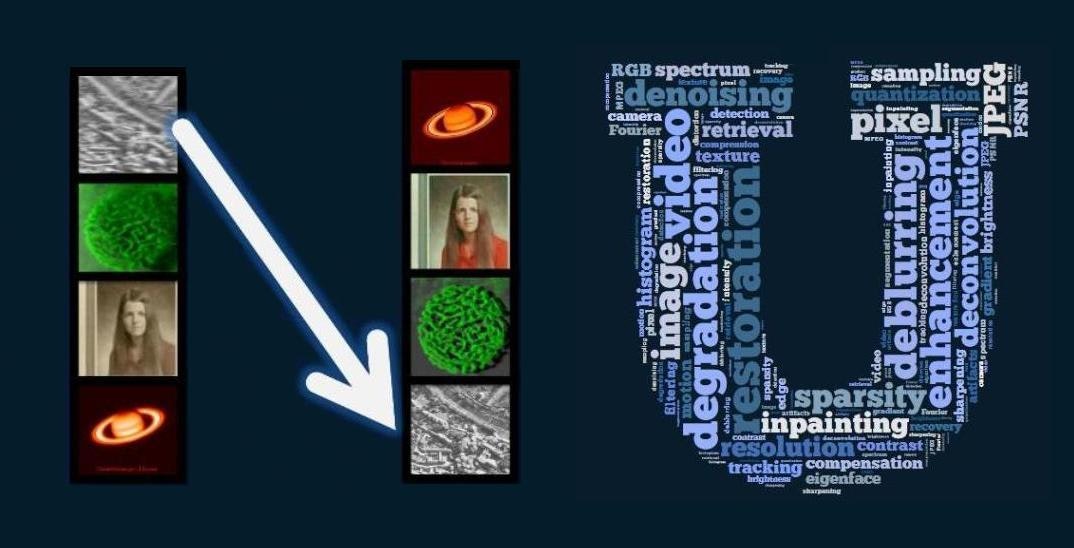
In this class you will learn the basic principles and tools used to process images and videos, and how to apply them in solving practical problems of commercial and scientific interests. Digital images and videos are everywhere these days – in thousands of scientific (e.g., astronomical, bio-medical), consumer, industrial, and artistic applications. Moreover they come in a wide range of the electromagnetic spectrum - from visible light and infrared to gamma rays and beyond. The ability to process image and video signals is therefore an incredibly important skill to master for engineering/science students, software developers, and practicing scientists. Digital image and video processing continues to enable the multimedia technology revolution we are experiencing today. Some important examples of image and video processing include the removal of degradations images suffer during acquisition (e.g., removing blur from a picture of a fast moving car), and the compression and transmission of images and videos (if you watch videos online, or share photos via a social media website, you use this everyday!), for economical storage and efficient transmission. This course will cover the fundamentals of image and video processing. We will provide a mathematical framework to describe and analyze images and videos as two- and three-dimensional signals in the spatial, spatio-temporal, and frequency domains. In this class not only will you learn the theory behind fundamental processing tasks including image/video enhancement, recovery, and compression - but you will also learn how to perform these key processing tasks in practice using state-of-the-art techniques and tools. We will introduce and use a wide variety of such tools – from optimization toolboxes to statistical techniques. Emphasis on the special role sparsity plays in modern image and video processing will also be given. In all cases, example images and videos pertaining to specific application domains will be utilized.
 University of California, Irvine
Identifying, Attracting, and Growing Your Digital Audience
Welcome to Course 1 of the E-Marketing Specialization: Identifying, Attracting, and Growing Your Digital Audience. In this course, we will begin with a brief introduction to digital marketing and how a brand’s identity is closely linked to its digital presence. We will explore strategies to identify, grow, and maintain an online audience to help achieve your marketing goals. You are highly encouraged to use this course experience to begin building a digital marketing plan for your current or future business. The activities in this course are all designed to guide you through different sections of a digital marketing plan. Our learning goals for this course are to: - Recognize the current landscape of the digital business environment. - Develop an audience persona based on a target audience. - Identify strategies to define, attract, and engage your audience online. - Review an e-commerce experience and discuss how to improve customer experience. - Compare social networks and develop a social media strategy designed to meet your marketing goals and objectives.
 Coursera
Data Ingestion, Exploration & Visualization in Qlik Sense
This course is an intermediate-level course designed for learners who want to continue their data visualization journey with Qlik Sense, a powerful sophisticated Business Intelligence tool. Data preparation and ingestion is a key prerequisite for data visualization, and this course not only dives deep into that concept, but other important intermediate topics such as filters, expressions, and personalization. The second of a series of three courses on Qlik Sense emphasizes the significance of moving beyond basic chart creation. In today's data-driven landscape, businesses and professionals require more than simple visualizations to gain a competitive edge. They need to develop a system of highly customized and tailored dashboards that precisely align with their unique data needs. These dashboards serve as powerful tools for effective decision-making and data-driven insights. For example, marketing teams can benefit from dashboards that provide real-time metrics on campaign performance, audience engagement, and conversion rates. This course provides a comprehensive understanding of data visualization with Qlik Sense. It begins with data ingestion and visualization, including how to load data from various sources, how to clean data, and how to build data models. The course then goes through how to create sophisticated charts and dashboards, with intermediate concepts like filters and expression. Finally, the course demonstrates how to apply personalization to tailor the functionality and look of the dashboard. This course is tailored for those looking to advance their data visualization skills with Qlik Sense. It's ideal for data analysts seeking to craft compelling narratives or arguments through data, as well as individuals aiming to effortlessly transform datasets into actionable graphs using Qlik Sense. To excel in this course, intermediate-level learners should have the following prerequisites: a basic grasp of Qlik Sense, familiarity with simple Excel functions or similar spreadsheet software, a foundational understanding of data statistics (e.g., mean, sum, etc.), and an enthusiastic, proactive learning approach.
 Dartmouth College
Engineering of Structures: Tension and Compression
This course deals with tension and compression. After going through this course, you will understand why tensegrity structures and sculptures are different from other structures. You will also explore tension and compression in different types of trusses. Additionally you will understand determinacy and realize how it applies to trusses. The first module introduces you to the concept of tension and compression. The second module explores topics such as tensegrity structure, trusses, and determinacy. After finishing this module, you will also be able to calculate the force in members of a truss. The third module explores how to build a truss bridge.
 Coursera
Getting Started with Microsoft PowerPoint
By the end of this project, you will learn the functions and features of the free online version of Microsoft PowerPoint. You will learn the basics of what it takes to operate Microsoft PowerPoint. You’ll explore the interface and go over the slide editing tools that include: designing slides, formatting text, and inserting content. This project will prepare you to create your first slideshow presentation of many.
 Alfaisal University | KLD
المؤشرات الاقتصادية | Economic Indicators
المؤشرات الاقتصادية (Economic Indicators) هي مؤشرات تُستخدم لتقييم النشاط الاقتصادي، إذ تسمح بتحليل الأداء الاقتصادي للقطاعات المختلفة، والتنبؤ بأدائها واحتياجاتها المستقبلية، وبالتالي فهي وسيلة مهمة لمساعدة المستثمرين في اتخاذ القرارات الاستثمارية. هذه الدورة هي دورة تمهيدية؛ فهي تلقي الضوء على أساسيات الموضوع بشكل عام بهدف التعريف به وبمحاوره الأساسية التي يجب الإلمام بها. إذا كنت من المهتمين بفهم تكلفة رأس المال "تقييم السندات والأسهم"، أو كان مجال عملك يتطلب توظيف ذلك في سياق عملك، فهذه الدورة ستكون مثالية لإغناء خبرتك وتطوير مهاراتك بشكل فعال ومؤثر. حيث ستزودك هذه الدورة باطلاع واسع ودقيق على مجموعة من المحاور المتعلقة بهذا الموضوع، مثل: فهم علاقة التضخم بالأسعار والأجور، التعرف على أسعار الصرف: أنواعها، وأنظمتها، وأهم الآثار المترتبة على تغيّرها، فهم ميزان المدفوعات: أقسامه وأهم وسائل تخفيف العجز فيه.
 Coursera
Decision Tree Classifier for Beginners in R
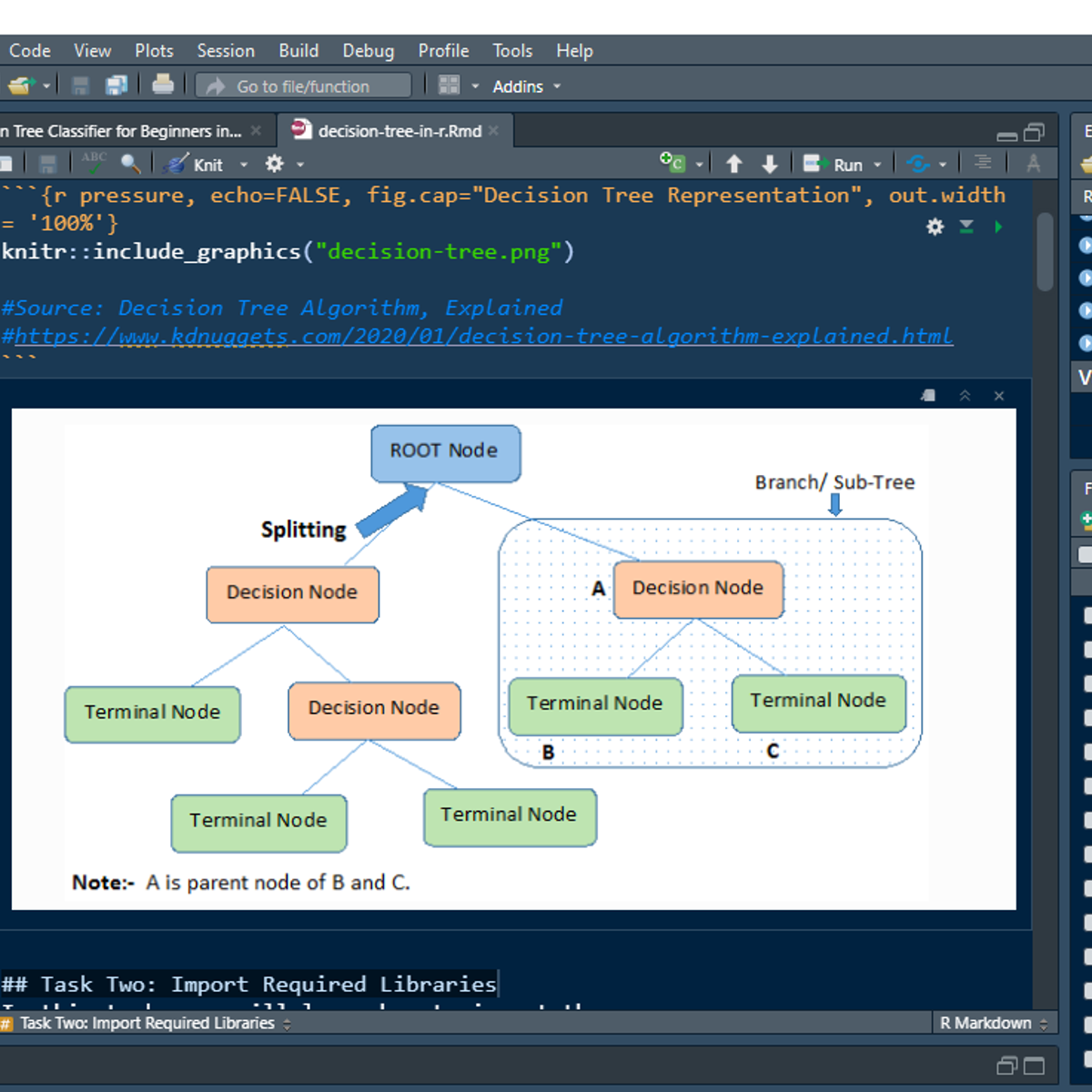
Welcome to this project-based course Decision Tree Classifier for Beginners in R. This is a hands-on project that introduces beginners to the world of statistical modeling. In this project, you will learn how to build decision tree models using the tree and rpart libraries in R. We will start this hands-on project by importing the Sonar data into R and exploring the dataset. By the end of this 2-hour long project, you will understand the basic intuition behind the decision tree algorithm and how it works. To build the model, we will divide or partition the data into the training and testing data set. Finally, you will learn how to evaluate the model’s performance using metrics like Accuracy, Sensitivity, Specificity, F1-Score, and so on. By extension, you will learn how to save the trained model on your local system. Although you do not need to be a data analyst expert or data scientist to succeed in this guided project, it requires a basic knowledge of using R, especially writing R syntaxes. Therefore, to complete this project, you must have prior experience with using R. If you are not familiar with working with using R, please go ahead to complete my previous project titled: “Getting Started with R”. It will hand you the needed knowledge to go ahead with this project on Decision Tree. However, if you are comfortable with working with R, please join me on this beautiful ride! Let’s get our hands dirty!
 Fred Hutchinson Cancer Center
Wrangling Computing Environments: Using Docker for Research
The course includes hands-on exercises for how to use, modify, share, and troubleshoot containers for scientific software development purposes. Goal of this course: Equip learners with basics skills and confidence to utilize containers within the context of scientific software analyses. Expectations: This course is not meant to teach learners how to create complex containers, but instead introduce learners to basic fundamentals of continuous integration and continuous deployment (CI/CD). This course focuses on containers (Docker or Podman) and will not cover any other (perfectly fine) tools for CI/CD. Equipping researchers with the skills to create reproducible data analyses increases the efficiency of everyone involved. By recognizing that biological data analysis code is a form of software development, we can try to adapt good development practices in scientific analyses and software contexts. Scientific software projects may include (but aren’t limited to): - Software built as tools to be utilized by others to analyze biologically derived data - Code that is built primarily for analyzing one project’s data - Code that is built as a workflow for a series of steps and analyses that might be reused among collaborators or within a lab - Any scripts and code that are built to handle data in a research setting - Any scripts and code a researcher might interact with Containers are one tool among many for creating reproducible analyses. A container is a lightweight, portable, and isolated environment that encapsulates an application and its dependencies, enabling it to run consistently across different computing environments. Many individuals performing analyses on cancer data may not have formal training in software development and may be unfamiliar with the idea of containers. Unique Features of This Course - Hands-on exercises exploring real uses of containers for scientific research and software - Activities to demonstrate the common pitfalls using containers - Information about how to use two of the most common tools for containers: Docker and Podman Key Words Reproducibility, Containers, Podman, Docker, Scientific Software Development, Biomedical Research Intended Audience/Required Knowledge - The course is intended for researchers and research staff who might be interested in learning about using containers to make their research or scientific software more reproducible. - Some familiarity with biomedical or health-related research, as well as some familiarity with programming (including bash and command line) is required. Learning Objectives - Understand that computing environments are moving targets - Use containers to share a controlled computing environment - Pull and use a Docker image from online - Modify a Docker image - Build a Docker image from scratch - Troubleshoot the most common Docker related errors Accessibility We are committed to making our content accessible and available to all. We welcome any feedback you might have at https://forms.gle/SzuZjct4ZQyt3Cos7. Questions related to accessibility accommodations should be directed to https://studentserviceportal.force.com/s/.