

The Global Scholarly Directory.
Discover world-class academic programs curated for the modern intellectual. Search through 19877+ degrees and professional certificates.
 The Hong Kong University of Science and Technology
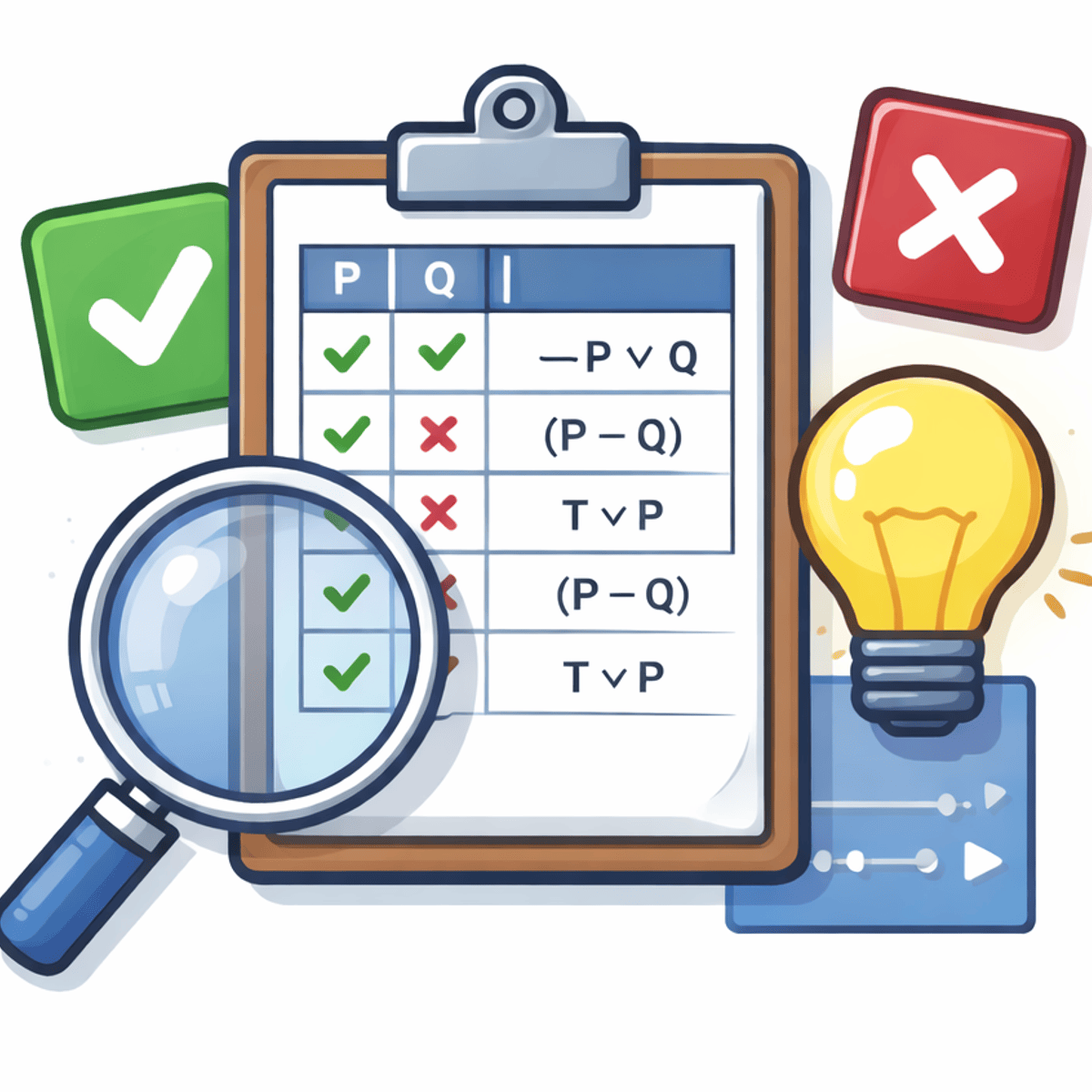
Discrete Math for Computer Science - Logic & Set Theory
This course introduces the foundational concepts of discrete mathematics that are essential for computer science, with a focus on logic, formal reasoning, and set theory. Discrete mathematics studies structures that are non-continuous and symbolic, making it the natural mathematical language of computation. You will begin by learning propositional and predicate logic, developing the ability to translate natural-language statements into precise formal expressions. The course covers logical operators, equivalence, quantifiers, and rules of inference, providing the tools needed to construct and evaluate rigorous arguments and proofs. The course then introduces set theory and functions, which form the backbone of data modeling and abstraction in computer science. Topics include set operations, relations, functions, and cardinality, along with their close connections to logical reasoning. Emphasizing understanding and problem-solving over memorization, this course builds the mathematical maturity required for algorithm design, program correctness, and advanced topics in the specialization.
 University of Pennsylvania
Cryptocurrency and Blockchain: An Introduction to Digital Currencies
What is Cryptocurrency and how is it an innovative and effective method of currency? This course was designed for individuals and organizations who want to learn how to navigate investment in cryptocurrencies. Professors Jessica Wachter and Sarah Hammer will guide you through developing a framework for understanding both Cryptocurrency and Blockchain. You’ll learn how to define a currency, analyze the foundations of digital signatures and blockchain technology in cryptocurrency, and accurately assess the risks of cryptocurrency in a modern investment portfolio. By the end of this course, you’ll have a deep understanding of the realities of Cryptocurrency, the intricacies of Blockchain technology, and an effective strategy for incorporating Cryptocurrency into your investment plans. No prerequisites are required, although "Fintech: Foundations, Payments, and Regulations" from Wharton's Fintech Specialization is recommended.
 Skillshare
Blender 3D for Beginners: Learn to Model a Balloon Dog
Hi, my name is 'Harry Helps' and In this class I'll guide you through a fun beginner exercise where we’ll create a 3d balloon dog in Blender. We’ll go through each part of the process step-by-step, so you should find it fun and easy to follow along with me. We’re using Blender for this tutorial, which is an amazing and totally free 3d software. The only barrier to entry is having a computer to run the software on. A balloon dog might seem like an odd choice for a beginner project, but it really is a perfect place to start! You'll learn: - Modeling - Creating the body of the balloon dog - Modifiers - Additional modeling effects, such as smoothing - Shading - Making the balloon dog look like a colorful rubber - Lighting - Adding lights to illuminate our scene - Rendering - Positioning a 3d camera and generating a picture of our balloon dog At the end, we’ll have a cute balloon dog to render to our heart’s content. It’s also a model that can be easily altered into a different animal just by adjusting some proportions or adding a new piece! Our class project will have you take all of the techniques you learned making the balloon dog, and apply them to make another animal of your choice. You can keep the shape simple and abstract like the balloon dog, or you can go all out and make a balloon masterpiece! Post your balloon animal to the gallery to show off your hard work and imagination to myself and all the other students! I hope you’ll join me on this fun little beginner’s journey through Blender by making your very own balloon dog! Instructor bio: 'Harry Helps' is a 3D artist and educator with over a decade of professional experience in modeling, texturing, animation, and post-production. Throughout his career, he has worked across diverse industries—from MMORPG game studios and video production companies to award-winning architectural visualization firms—holding roles such as Studio Director, Lead 3D Artist, and Greenscreen Editor. His work has been featured in 3D Artist magazine, where he also contributed tutorial content. With extensive expertise in Blender, 3ds Max, V-Ray, and Photoshop, Harry is passionate about sharing his knowledge and inspiring the next generation of 3D creators.
 LearnKartS
Project Management Fundamentals
Trusted by 30,000+ learners preparing for the PMP® exam worldwide. Experience the world of professional project management with this Project Management Fundamentals, a comprehensive course that will provide you with the essential skills to attain real-world project success and the PMP® certification. This course will furnish you with fundamental information that is predicated on the most recent release of the PMBOK® Guide (Seventh Edition), regardless of whether you are a novice in project management or seeking to enhance your abilities. You will begin with an overview of the PMI®, PMP® certification eligibility, and exam structure. Dive into the fundamentals of project management, such as the distinctions between projects, programs, and portfolios, and learn about the Project Management Office (PMO), stakeholders, and governance in operational environments. Explore process groups, lifecycle stages, and frameworks. Learn how to customize business documents and manage projects across different organizational structures. Gain insight into project managers' growing competencies through the PMI Talent Triangle, leadership styles, and the shift from the Sixth to Seventh Editions of PMBOK®. By the end, you'll be confident in your ability to lead projects and advance toward PMP® certification. Enroll now and plan your future in project management. Disclaimer: PMP® and Project Management Professional® are registered marks of the Project Management Institute, Inc. This course is not affiliated with or endorsed by PMI®.
 University of Pennsylvania
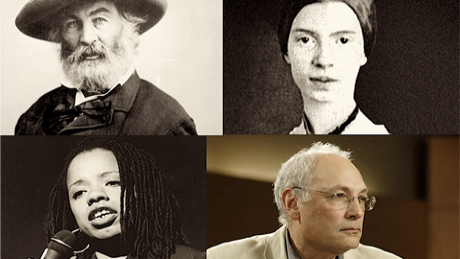
Modern & Contemporary American Poetry (“ModPo”)
ModPo is a FREE (no fee, no charge) fast-paced introduction to modern and contemporary U.S. poetry, with an emphasis on experimental verse, from Emily Dickinson and Walt Whitman to the present. Participants (who need no prior experience with poetry) will learn how to read poems that are supposedly "difficult." We encounter and discuss the poems one at a time. It's much easier than it seems! Join us and try it! ModPo is open all year, so you can enroll now, or any time, and join us. Each year we host a lively, interactive 10-week session, in which we move together through the ten-week syllabus. The next live 10-week session of ModPo will begin on August 31, 2025, and will conclude on November 10, 2025. Al Filreis will be in touch with you by email before the September 1 start of the course with all the information you'll need to participate. If you have questions, you can email the ModPo team any time at modpo@writing.upenn.edu. Much more information about ModPo can be found at modpo.org. During the 10 weeks of the course, you will be guided through poems, video discussions of each poem, and community discussions of each poem. And (unique among open online courses) we offer weekly, interactive live webcasts. Our famed TAs also offer office hours throughout the week. We help arrange meet-ups and in-site study groups. If you are curious about the ModPo team, type "ModPo YouTube introduction" into Google or your favorite search engine, and watch the 20-minute introductory video. You will get an overview of the course and will meet the brilliant TAs, who will be encountering the poems with you all the way to the end. If you use Facebook, join the always-thriving ModPo group: from inside Facebook, search for "Modern & Contemporary American Poetry" and then request to be added as a member. If you have any questions about ModPo, you can post a question to the FB group and you'll receive an almost instant reply. Much more information about ModPo can be found at modpo.org . ModPo is hosted by—and is housed at—the Kelly Writers House at 3805 Locust Walk on the campus of the University of Pennsylvania in Philadelphia USA. All ModPo'ers are welcome to visit the Writers House when they are in our area. Our discussions are filmed there. Our live webcasts take place in the famed "Arts Cafe" of the House. To find out what's going on at the Writers House any time, just dial 215-746-POEM.
 IBM
IBM
Supervised Machine Learning: Classification
This course introduces you to one of the main types of modeling families of supervised Machine Learning: Classification. You will learn how to train predictive models to classify categorical outcomes and how to use error metrics to compare across different models. The hands-on section of this course focuses on using best practices for classification, including train and test splits, and handling data sets with unbalanced classes. By the end of this course you should be able to: -Differentiate uses and applications of classification and classification ensembles -Describe and use logistic regression models -Describe and use decision tree and tree-ensemble models -Describe and use other ensemble methods for classification -Use a variety of error metrics to compare and select the classification model that best suits your data -Use oversampling and undersampling as techniques to handle unbalanced classes in a data set Who should take this course? This course targets aspiring data scientists interested in acquiring hands-on experience with Supervised Machine Learning Classification techniques in a business setting. What skills should you have? To make the most out of this course, you should have familiarity with programming on a Python development environment, as well as fundamental understanding of Data Cleaning, Exploratory Data Analysis, Calculus, Linear Algebra, Probability, and Statistics.
 IESE Business School
Accounting: Principles of Financial Accounting
Financial Accounting, the language of business, is essential for anyone interacting with financial information. Whether you're a business owner, manager, or just starting your career, understanding financial statements is crucial. This course provides the fundamentals of financial accounting, empowering you to interpret financial statements like balance sheets and income statements for informed decision-making. You'll gain the conceptual base for further learning in accounting and finance. No prior experience is needed. Practice your skills using Microsoft Excel, a critical tool in finance and accounting. Understand the basics of accounting, improving your business and potentially unlocking free courses and certificate opportunities along the way.
 Amazon Web Services
Developing Applications in Python on AWS
This course gives you a thorough introduction to the python programming language. You'll start by learning the definition of python, its history, semantics, and how it works. The first week concludes by writing a python script to solve a problem. In Week 2, you'll learn about Serverless Architectures and understand the differences between microservices, service-oriented and monolith architectures. You'll build a microservices architecture by learning how to use the following tools: AWS Lambda, Amazon API Gateway, and Cloud9. It's then time to go deep with AWS Databases. You'll see Amazon RDS and Amazon DynamoDB in action, visualizing the important role they play in developing applications in python. The course's final week will cover application integration services. Amazon's Simple Notification Service (SQS), Simple Queue Service (SQS), and EventBridge take center stage as important “glue” components for scalable, cloud-based applications. You'll close the course with a hands-on project, writing some code to use some hardcoded data to write to dynamodb and then convert that into a lambda function.
 EDUCBA
Apply C++ Programming Fundamentals for Beginners
By the end of this course, learners will be able to explain core programming concepts, write and execute basic C++ programs, apply variables, operators, and expressions, and design structured programs using functions and best practices. This beginner-level C++ programming course is designed for learners with little or no prior coding experience. The course starts by building a strong conceptual foundation, helping learners understand how programming works, how computers interpret instructions, and why programming languages exist. Learners then progress step by step into practical C++ development, setting up a coding environment, writing their first programs, and understanding the compilation process. What makes this course unique is its concept-first, practice-driven approach. Instead of focusing only on syntax, the course emphasizes problem-solving, clean coding habits, and logical thinking. Learners gain hands-on experience with data handling, console input/output, operators, expressions, and functions while following industry-relevant best practices for naming, scope, and code organization. By completing this course, learners will gain the confidence and skills needed to read, write, and reason about C++ programs, preparing them for intermediate programming topics or further software development learning paths.
 Coursera
GenAI for Social Media and Influencer Marketing
"GenAI for Social Media and Influencer Marketing" is a practical, beginner-friendly course designed to equip you with the tools and strategies to thrive in the dynamic world of digital marketing. Did you know 87% of marketers say AI is revolutionizing how they engage audiences? Imagine crafting viral posts, analyzing trends in seconds, and scaling your brand effortlessly—all with Generative AI! This course will help you master these tools and become a trailblazer in social media marketing. In this course, you’ll not only learn the basics of Generative AI but also gain hands-on experience with tools like ChatGPT, Canva AI, and others. You’ll explore how to use AI to overcome creative blocks, craft relevant content, and automate tedious tasks, freeing up time for what matters most—building genuine connections with your audience. Through real-world case studies, you will learn how to achieve measurable results and transform your social media strategies. This course is designed for beginner social media enthusiasts, influencers aiming to expand their reach, digital marketers seeking to optimize campaigns using AI, and entrepreneurs looking to establish a strong online presence. It also caters to content creators eager to automate repetitive tasks and marketing students or aspiring professionals who want to explore the transformative potential of Generative AI in social media and influencer marketing. Participants should have a basic understanding of popular social media platforms such as Instagram, Facebook, and TikTok, including their core features. Familiarity with creating basic social media content such as posts, captions, and hashtags is essential, along with a strong interest in exploring AI tools to enhance creativity, streamline workflows, and boost engagement. Prior exposure to common AI tools like ChatGPT or Canva AI is recommended but not mandatory, as the course provides beginner-friendly guidance. By the end of the course, participants will be able to describe the principles of Generative AI and its role in transforming social media strategies. Learners will gain hands-on experience using tools like ChatGPT and Canva AI to craft personalized content and visuals tailored to diverse audiences. Additionally, they will master AI-driven workflows that enhance authenticity, save time, and scale social media impact, as well as analyze trends using tools like Google Trends to produce timely and engaging content that resonates with their audience.
 Coursera
Agentic AI Content for Practitioners (Teams: Sales)
Agentic AI Content for Practitioners (Teams: Sales) is an intermediate-level course designed for sales professionals and managers seeking to leverage autonomous AI systems for competitive advantage. In today's rapidly evolving sales landscape, agentic AI represents the next frontier in sales automation and intelligence. This course provides hands-on experience with AI tools that can autonomously understand goals, plan multi-step processes, and adapt as they execute tasks. Through real-world case studies from companies like Fujitsu, Snowflake, and Mercedes-Benz, you'll learn to implement AI-driven CRM automation, create personalized outreach strategies, and optimize proposals using competitive intelligence. The course combines strategic understanding with practical application, featuring interactive exercises, AI-powered coaching dialogues, and a comprehensive capstone project. Whether you're looking to automate routine tasks, enhance client personalization, or improve proposal win rates, this course will equip you with the skills to transform your sales operations and achieve unprecedented productivity gains.
 EDUCBA
Financial Modeling of IBM: Analyze & Value
By completing this course, learners will be able to analyze IBM’s financial statements, construct integrated models, develop assumptions, forecast future performance, and conduct advanced valuation techniques. The course begins with foundational concepts of financial modeling, covering assumptions, structure, and applications, before progressing to forecasting and integration of the three financial statements. Learners then apply these principles directly to IBM’s financial data, gaining hands-on experience in income statement projections, balance sheet adjustments, and operational analysis. The final module introduces advanced modeling elements, including depreciation, amortization of intangibles, discounted cash flow, EBIT, and equity value adjustments. This course is uniquely structured around a real-world case study of IBM, making it highly practical and industry-relevant. Learners benefit from a step-by-step approach that blends theory with application, ensuring clarity for beginners while providing depth for advanced learners. By the end, participants will possess the skills to build, interpret, and apply robust financial models for corporate decision-making, investment analysis, and valuation.
 Emory University
Consulting Tools and Tips
This is the #4 course in the specialization on management consulting. Management consultants are quick learners. When you first join a generalist consulting firm, you are expected to learn core consulting skills and will likely be staffed on projects across industry and functions. You might be on a chemicals pricing project, then a retail cost-reduction project. It’s critical that you learn “how to get smart quickly” and ask smart questions. At the same time, you should develop an armory of tools to create data through client interviews, surveys, benchmarking, and observations.
 The State University of New York
Food and Wine Pairing
This course delves into the intricate relationship between wine and food. Students will explore the fundamental principles of taste, flavor profiles, and sensory perception as they relate to both wine and food. Through a combination of theoretical knowledge and practical application, participants will develop a sophisticated understanding of wine and food pairing, enabling them to select and recommend complementary pairings confidently. Key Learning Outcomes: Taste Factors and Food Description: Students will acquire a comprehensive understanding of the factors that influence taste perception, including taste buds, aroma, texture, and temperature. They will also learn to accurately describe the flavors and attributes of various foods, ensuring they are well-prepared to navigate the world of food and wine pairing. Wine Attributes and Sensory Functions: Students will gain expertise in identifying and describing the key characteristics of wine, such as acidity, sweetness, tannins, body, and aroma. This in-depth knowledge will empower them to confidently explore how these attributes contribute to the overall sensory experience and how they can be influenced by factors like grape variety, terroir, and winemaking techniques. Food and Wine Pairing Principles: Students will develop a strong foundation in food and wine pairing principles. They will learn how to analyze the flavors and textures of both wine and food to identify complementary combinations. Through practical exercises and case studies, students will develop the ability to create harmonious pairings that enhance the dining experience.
 Coursera
Analyze AI SEO & Conquer Competitors
In today’s competitive digital landscape, publishing content isn’t enough—every brand is fighting for attention. This course teaches you to think like an SEO strategist by combining social listening and competitor analysis to uncover hidden opportunities. You’ll learn to interpret audience signals, map competitor strengths, and design counter-strategies that drive real SEO impact. Through engaging videos, case examples, and hands-on projects, you’ll leave with job-ready skills to identify, prioritize, and act on opportunities that move your brand ahead.
 Banco Interamericano de Desarrollo
Climate change education: sustainable environments
In this course, we explore the components of landscapes and natural disasters. We emphasize human actions that impact the environment, both in terms of modification and preservation. Additionally, we explore concepts related to cities, megacities, and sustainable environments. The course also delves into the connection between the environment, health, and diseases.