

The Global Scholarly Directory.
Discover world-class academic programs curated for the modern intellectual. Search through 19877+ degrees and professional certificates.
 University of Colorado System
Abstraction, Problem Decomposition, and Functions
This course is the third course in the specialization exploring both computational thinking and beginning C programming. Rather than trying to define computational thinking, we’ll just say it’s a problem-solving process that includes lots of different components. Most people have a better understanding of what beginning C programming means! This course assumes you have the prerequisite knowledge from the previous two courses in the specialization. You should make sure you have that knowledge, either by taking those previous courses or from personal experience, before tackling this course. The required prerequisite knowledge is listed below. Prerequisite computational thinking knowledge: Algorithms and procedures and data collection, analysis, and representation Prerequisite C knowledge: Data types, variables, constants; STEM computations; selection; and iteration (looping) Throughout this course the computational thinking topics you'll explore are abstraction, which is deciding which details matter for the problem you're trying to solve, and problem decomposition, which is about breaking large problems into smaller sub-problems to handle complexity. For the programming topics, you'll continue building on your C knowledge by practicing using arrays, which let you store multiple values in a single variable, and strings, which are arrays of characters. You'll also learn how to implement functions, which are the mechanism we use for problem decomposition in our C programs. Module 1: Learn about arrays as a way to store multiple values in a single variable Module 2: Discover how we store and process strings (arrays of characters) Module 3: Explore abstraction and problem decomposition Module 4: Use functions to implement problem decomposition in your code
 MathWorks
Introduction to Image Processing
In this introduction to image processing, you'll take your first steps in accessing and adjusting digital images for analysis and processing. You will load, save, and adjust image size and orientation while also understanding how digital images are recognized. You will then perform basic segmentation and quantitative analysis. Lastly, you will enhance the contrast of images to make objects of interest easier to identify. By the end of the course, you’ll apply your segmentation skills to identify regions of interest, such as the amount of surface water from satellite images. This introduction to image processing will give you the foundation you need to conduct more advanced work on this topic. You will use MATLAB throughout this course. MATLAB is the go-to choice for millions of people working in engineering and science and provides the capabilities you need to accomplish your image processing tasks. You will be provided with free access to MATLAB for the duration of the course to complete your work. To be successful in this course you should have a background in basic math and some exposure to MATLAB. If you want to familiarize yourself with MATLAB check out the free, two-hour MATLAB Onramp. Experience with image processing is not required.
 Google Cloud
Discover and Catalog Vertex AI Assets with Dataplex
This is a self-paced lab that takes place in the Google Cloud console. In this lab, you learn how to catalog and discover Vertex AI assets, such as models and datasets, using Dataplex.
 KodeKloud
Git Basics for DevOps
What is GIT? What is the single most important tool that Developers and Operations teams must know alike today? Git! Git is a distributed version control system that allows developers and operations teams to collaborate and keep track of the changes made on a project. GIT, as a DevOps tool, empowers collaboration and faster release cycles. Anyone willing to start their DevOps career or level up should start from the basics, and GIT is the most fundamental requirement of all. Why You Should Use GIT Many of the most popular open-source projects today are developed on Github – Kubernetes, Ansible, Tensor Flow, Rust, Node.js, Go, Terraform, and Helm Charts being some of the top ones among the 100 million repositories. If you would like to learn and contribute to these projects, understanding Git is a must, and our GIT for beginners course is here to help! This is a beginner-level GIT tutorial course and is well structured with lectures and labs for those who are absolute beginners to GIT. System Administrators, Developers, or IT engineers without prior experience may go through this course to gain basic knowledge of GIT. GIT for Beginner’s Course – What You Will Learn In our GIT for beginners course, you’ll learn how to get up and running with Git, how to use it in your daily life, and get a deeper understanding of what Git actually is under the hood. This course consists of 19 sections that will familiarize you with Git and its possibilities. We’ll cover the possibilities of local and remote Git repositories, adding version control to your project by using branches and useful commands that make working with these branches even more powerful, such as fetching, pulling, rebasing, and cherry-picking. Besides some common Git commands, we’ll also cover the internals of Git and how it’s actually working under the hood! This course is project-based, so you will be working as part of a team, and you will learn how to share your work with your team members. Our embedded hands-on labs will ensure you gain enough practice right after learning each concept. We will test your work to ensure you have written them correctly and provide feedback. Pre-requisites 1. Linux command line basics 2. No programming/coding knowledge is required Git is a complex topic, especially for a beginner. We simplify complex concepts using the following: 1. Visualizations 2. Animations 3. Real-life project examples 4. Analogies 5. Demos 6. No more boring presentations! Hands-On Learning Learning by doing is the best way to learn. Our labs: 1. Opens right in your browser. No other setup is needed. 2. Pre-configured for you to learn the concepts in the previous lecture 3. Validate your work 4. Gives you instant feedback
 Packt
Packt
Building, Evaluating, and Operationalizing ML Models
This course features Coursera Coach! A smarter way to learn with interactive, real-time conversations that help you test your knowledge, challenge assumptions, and deepen your understanding as you progress through the course. In this course, you will dive into the entire process of building, evaluating, and operationalizing machine learning (ML) models. Starting with data exploration, you'll learn how to select the right algorithms for regression and classification tasks and fine-tune them for optimal performance. As you progress, you'll gain hands-on experience with tools like Azure ML Studio, experimenting with model customization, feature engineering, and advanced algorithms such as XGBoost and Neural Networks. You'll also discover how to evaluate models, optimize performance, and deploy them effectively. The course offers practical demos, empowering you to implement everything from simple models to complex pipelines in ML workflows. Throughout the course, you'll explore model evaluation techniques, including cross-validation and performance metrics, and learn how to address issues like overfitting and model drift. You'll also engage with ML-Ops concepts, discovering how to structure scalable pipelines, automate workflows, and manage the lifecycle of your models. This course is perfect for those looking to gain real-world ML skills, especially those interested in Azure ML Studio and automated pipelines. Whether you’re starting with basic ML concepts or expanding your knowledge, this course provides a comprehensive guide. You’ll learn to make data-driven decisions while optimizing the end-to-end machine learning lifecycle. By the end, you'll be prepared to build and deploy models that are both efficient and scalable, while also staying on top of versioning and performance monitoring.
 Johns Hopkins University
Community Change in Public Health
In bringing about behavior change in public health, we often focus on the individual mother, student, or farmer. We should not forget the community structure and norms constrain for encouraging individual health behaviors. This course examines the community context of the changes needed to promote the public’s health. We begin by examining the various definitions of ‘community’ and the processes by which we ‘diagnose’ or seek to understand the structure and characteristics of different types of communities. An appreciation of community similarities and differences is necessary lest we fall into the trap of designing one-size-fits-all interventions. We need to recognize that no matter that outsiders may view a community as poor or neglected, we can find strengths and capacities for improvement in each community. Identifying community capacities and resources is the first step in facilitating community change. Different practical and philosophical approaches to change and therefore, examined. Specific to the change process is our recognition of the need for communities to participate in the design, implementation and evaluation of any intervention. We examine the concept of participation in an effort to see how different levels of involvement may affect sustainability of community change efforts. Finally a case study of a community participatory approach to onchocerciasis control in Africa is presented. Community Directed Intervention has subsequently been successfully applied to providing other essential primary health care services by and in the community, such as insecticide treated bednets, malaria treatment, vitamin A distribution, deworming medicines, and pneumonia and diarrhea case management.
 Packt
Packt
The Complete Scrum Master Certification & Agile Scrum Course
This course features Coursera Coach! A smarter way to learn with interactive, real-time conversations that help you test your knowledge, challenge assumptions, and deepen your understanding as you progress through the course. In this comprehensive course, you will gain a solid foundation in Scrum and Agile principles, along with the preparation necessary to become a certified Scrum Master. By the end, you will understand key concepts such as Scrum events, roles, accountabilities, and artifacts. Additionally, you will dive deep into the Scrum Master’s role, ensuring you’re equipped with practical skills and insights to apply Scrum in real-world settings. The course will guide you through the intricacies of Scrum, from its origins to the latest advancements, with a special emphasis on real-life scenarios and practical applications. As you progress, you’ll gain in-depth knowledge of Scrum Team accountabilities, including the critical roles of the Product Owner, Developers, and Scrum Master. You'll also explore Scrum events, ensuring you understand the significance of Sprint Planning, Daily Scrum, Sprint Review, and Sprint Retrospective. The course also offers practical examples and case studies to solidify your learning, providing you with the tools to navigate complex scenarios within Agile teams. This course is ideal for aspiring Scrum Masters, Agile Coaches, and anyone involved in the Agile transformation of their organization. It covers both foundational and advanced topics and prepares you for the Scrum Master certification exam. Whether you are new to Scrum or looking to refresh your skills, this course will help you develop a deep, practical understanding of Scrum practices.
 Google Cloud
Creating a Data Transformation Pipeline with Cloud Dataprep
This is a self-paced lab that takes place in the Google Cloud console. Cloud Dataprep by Trifacta is an intelligent data service for visually exploring, cleaning, and preparing structured and unstructured data for analysis. In this lab you will explore the Cloud Dataprep UI to build a data transformation pipeline.
 University of Colorado Boulder
Sensor Manufacturing and Process Control
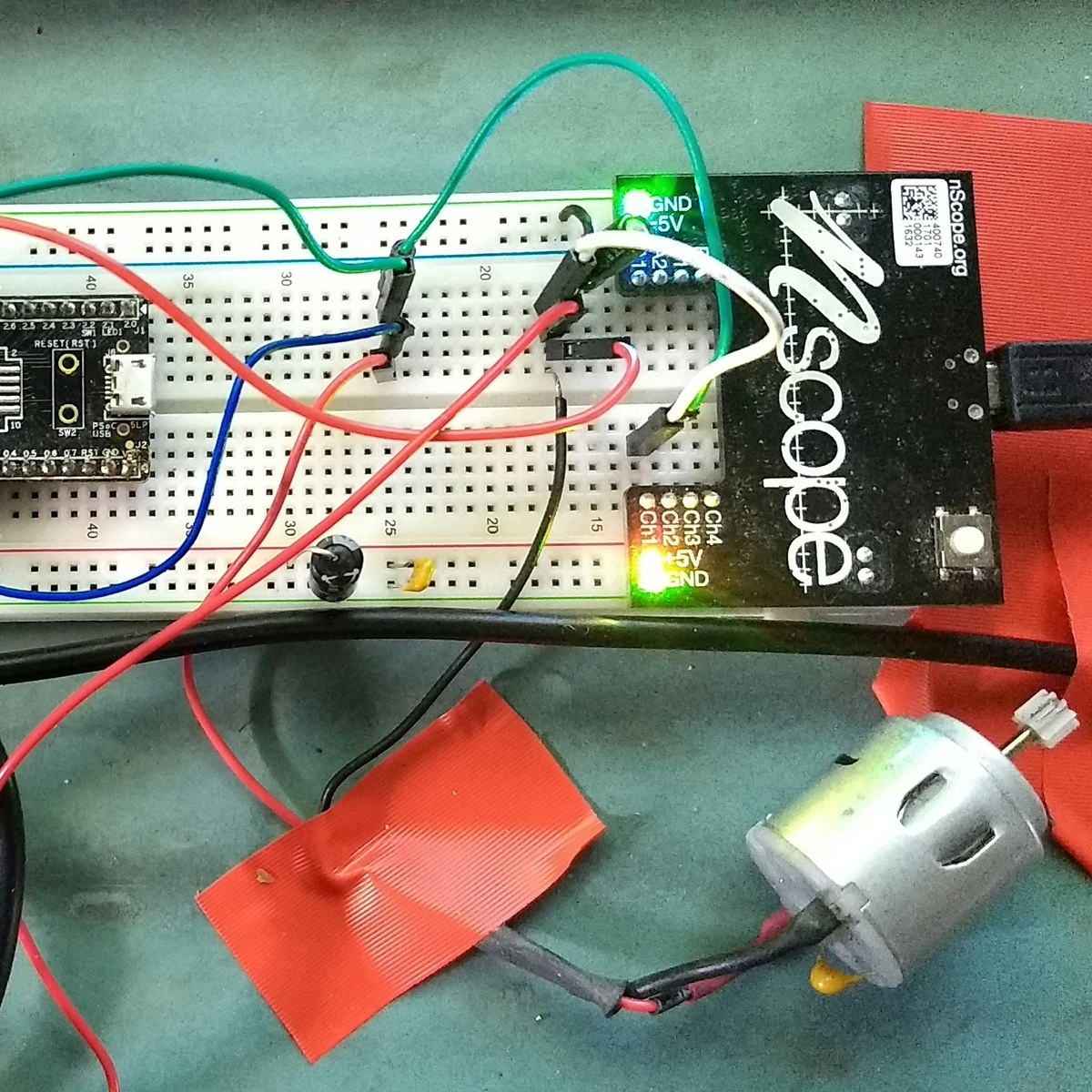
"Sensor Manufacturing and Process Control" can also be taken for academic credit as ECEA 5343, part of CU Boulder’s Master of Science in Electrical Engineering degree. This is our fourth course in our specialization on Embedding Sensor and Motors. To get the most out of this course, you should first take our first course entitled "Sensors and Sensor Circuits", our second course entitled "Motor and Motor Control Circuits", and our third course entitled "Pressure, Force, Motion, and Humidity Sensors". Our first course gives you a tutorial on how to use the hardware and software development kit we have chosen for the lab exercises. Our second and third courses give you three hands-on lab experiments using the kit. This third course assumes that you already know how to use the kit. You will learn about sensor signal characterization and manufacturing techniques and how to optimize the accuracy of sensors. You will also learn about more advanced sensors, proportional-integral-derivative (PID) control, and how this method is used to give you a closed loop sensor feedback system. After taking this course, you will be able to: ● Understand how sensor manufacturers characterize and calibrate their sensors. ● Tune a PID control loop and access the PID control function of the Cypress PSoC development kit for a motor control application. ● Understand manufacturing methods used to build electro-mechanical and micro-machined sensors. This course includes specific hardware and software requirements. Please review the FAQ below for complete details.
 Universidade de São Paulo
Iniciação e Planejamento de Projetos
Informações sobre o curso: O Programa de Cursos Integrados de Introdução aos Princípio se Práticas ae Gestão de Projetos é uma produção em parceria com a UC Irvine. Projetos bem-sucedidos exigem um planejamento cuidadoso. Neste curso, você aprenderá os principais papéis e responsabilidades do gestor de projeto e da equipe do projeto. Você também aprenderá a responder algumas questões chave para atingir os objetivos do projeto: o que este projeto realizará? Por que esse projeto é importante? Quem se beneficia desse projeto? Como planejaremos resultados positivos? Ao completar este curso, você será capaz de: 1. Identificar as principais características de um projeto 2. Identificar as principais restrições de projeto 3. Definir o papel e as responsabilidades do gestor de projeto 4. Identificar estruturas organizacionais do projeto 5. Compreender a definição de um stakeholder ou parte interessada do projeto 6. Identificar as partes interessadas do projeto 7. Identificar as necessidades de informação dos stakeholders do projeto 8. Define as responsabilidades para gerir e controlar o engajamento dos stakeholders, ou partes interessadas 9. Definir o propósito de usar um termo de abertura projeto 10. Resumir os elementos-chave de um plano de projeto 11. Identificar fontes comuns de conflito dentro de um ambiente de projeto 12. Descrever a diferença entre autoridade e influência
 Google
Операційні системи і ви: як стати досвідченим користувачем
На основі відеолекцій, демонстрацій і практичних завдань у рамках цього курсу ви дізнаєтеся про основні компоненти операційної системи і про те, як виконувати такі важливі завдання, як керування програмним забезпеченням і користувачами та налаштування апаратного забезпечення. Пройшовши цей курс, ви зможете: ● виконувати навігацію файловими системами Windows і Linux за допомогою графічного інтерфейсу користувача та інтерпретатора командного рядка; ● виконувати налаштування користувачів, груп і дозволів для доступу до облікового запису; ● встановлювати, налаштовувати і видаляти програмне забезпечення в операційних системах Windows і Linux; ● виконувати налаштування розділів диска та файлових систем; ● розуміти, як працюють системні процеси та як ними керувати; ● працювати з системними журналами та інструментами віддаленого з’єднання; ● використовувати знання операційної системи для усунення поширених проблем у ролі фахівця з ІТ-підтримки.
 Google Cloud
BigQuery Soccer Data Analysis
This is a self-paced lab that takes place in the Google Cloud console. Learn the fundamentals of writing and executing queries to query soccer data stored in BigQuery tables. In this lab you will learn more fundamentals of sports data science by writing and executing queries to query data stored in BigQuery tables. The emphasis of the lab is to illustrate how the database works and answer some interesting questions related to the following topics in soccer.
 University of Arizona
Knowing the Universe: History and Philosophy of Astronomy
This is an introductory level course about the history and philosophy of astronomy, the oldest science. We'll look at how humans learned to ask questions about the universe, and even before the invention of modern instruments like the telescope, learned some amazing things about their place in nature. We will start with prehistoric cultures who kept accurate calendars and move through the time of the Greek philosophers who laid down the rudiments of logic and mathematics and the modern scientific method. We'll then examine the revolutions of Copernicus, Galileo, and Newton that redefined our place in the universe. We will then learn about the revolutions in physics in the early 20th century that redefined our ideas of space and time, mass and energy. Finally, we will discuss how modern cosmology has shown us that we live in an ancient universe (14 billion years old), in one galaxy in a universe of hundreds of billions of galaxies. At the end, will ask questions that don't necessarily have answers. What came before the Big Bang? Is there anything outside our universe? What is reality? We'll finish by looking at the role of life in the universe and ask whether the earth is the only place with biology on it.
 DeepLearning.AI
Data Storytelling
In this course, you’ll learn to communicate insights in ways that drive real decisions. You’ll explore how to choose the right format to present your findings and tailor your message to technical and non-technical audiences. You’ll start by learning how to craft data stories that provide context and align with business goals. Then, you’ll apply those skills by designing clear, effective charts that highlight a single insight. Next, you’ll build interactive dashboards in Tableau using features like annotations, tooltips, and “Show Me.” These skills transfer easily to tools like Power BI and Looker Studio. In the final module, you’ll prepare for the job search: analyzing roles, tailoring your resume and portfolio, building your network, and getting ready for interviews. Throughout the course, you’ll practice applying these skills to realistic business scenarios so you’re ready to share insights that influence decisions.
 Google Cloud
Smart Analytics, Machine Learning, and AI on GCP 日本語版
ML をデータ パイプラインに組み込むと、データから分析情報を抽出する能力を向上できます。このコースでは、Google Cloud でデータ パイプラインに ML を含める複数の方法について説明します。カスタマイズがほとんど、またはまったく必要ない場合のために、このコースでは AutoML について説明します。よりカスタマイズされた ML 機能については、Notebooks と BigQuery の機械学習(BigQuery ML)を紹介します。また、Vertex AI を使用して ML ソリューションを本番環境に導入する方法も説明します。
 AI CERTs
AI for Audio and Music
Sound is no longer just heard - it’s understood, generated, enhanced, and personalized by AI. From voice assistants and smart speakers to automated mixing, voice cloning, and adaptive audio for AR/VR, the future of sound is intelligent and interactive. The AI for audio and music certification introduces you to the fundamentals of AI-driven audio processing and modern speech technologies, blending theory with hands-on practice. You’ll explore how machines listen, analyze, and generate sound using signal processing, machine learning, and neural networks — and how these technologies power real-world applications in media, gaming, accessibility, customer experience, and immersive systems. Through guided labs, you’ll work with Python, Librosa, Hugging Face speech models, Audacity, and no-code AI tools to build audio enhancement pipelines, speech-to-text models, voice synthesis demos, and real-time intelligent audio workflows. You’ll also learn evaluation techniques, ethics for voice AI, copyright considerations for generated audio, and best-practice guidelines for transparent and responsible AI usage. By the end of this program, you'll be able to: Build basic AI-powered audio and speech prototypes Enhance sound quality and remove noise using ML Create simple TTS/voice applications Apply audio AI in creative, business, and product workflows.