

The Global Scholarly Directory.
Discover world-class academic programs curated for the modern intellectual. Search through 19877+ degrees and professional certificates.
 Coursera
حدث كايزن في شرائح جوجل
بنهاية هذا المشروع ، ستكون قادرًا على أداء حدث كايزن وتقديمه من خلال شرائح جوجل. ستكون قادرًا على فهم عملية تحسين العملية المكونة من 4 خطوات وتكون قادرًا على إجراء تحليل السبب الجذري 5W و 2H. سوف تتعلم تحليل البيانات لإظهار التحسن باستخدام المهارات التحليلية والقياسات الكمية. ما هي مزايا العمل في كايزن؟ تقليل الهدر. يعد تقليل الهدر أحد الجوانب الرئيسية في Kaizen وغالبًا ما يكون أسهل في البداية. تبسيط إجراءات العمل. تفيد كايزن الشركات أيضًا من خلال التخلص من العمل الشاق للغاية. تحسين السلامة. تحسين رضا الموظفين والعملاء. ملاحظة: تعمل هذه الدورة التدريبية بشكل أفضل للمتعلمين المقيمين في منطقة أمريكا الشمالية. نعمل حاليًا على توفير نفس التجربة في مناطق أخرى.
 Packt
Packt
Cybersecurity Concepts
Updated in May 2025. This course now features Coursera Coach! A smarter way to learn with interactive, real-time conversations that help you test your knowledge, challenge assumptions, and deepen your understanding as you progress through the course. Unlock the foundations of cybersecurity with this comprehensive course designed to equip you with essential knowledge and tools to defend against modern threats. You’ll explore key concepts, techniques, and technologies that enable cybersecurity analysts to safeguard sensitive data and combat malicious activity effectively. Dive deep into the building blocks of cybersecurity, starting with logging and operating system fundamentals, followed by insights into network infrastructure and IAM principles. You'll gain a strong grasp of encryption, network architecture, and tools like Wireshark, SIEM, and SOAR that are vital for detecting and mitigating threats. As the course progresses, you’ll tackle real-world challenges such as identifying malicious activities across networks, hosts, and applications. Additionally, you'll explore advanced tools for email and file analysis, sandboxing, DNS reputation, and user behavior analytics. Each module builds on the last, ensuring you’re prepared to handle a variety of cybersecurity scenarios. This course is perfect for aspiring cybersecurity professionals, IT enthusiasts, and tech-savvy individuals eager to bolster their defense skills. No prior experience in cybersecurity is necessary, though basic computer knowledge will enhance your learning experience.
 Yonsei University
Valuation for Startups Using Discounted Cash Flows Approach
Discounted cash flow method means that we can find firm value by discounting future cash flows of a firm. That is, firm value is present value of cash flows a firm generates in the future. In order to understand the meaning of present value, we are going to discuss time value of money, first. That is, the value of $100 today is different from the value of $100 a year later. Then, what should be the present value of $100 that you are going to receive in 1 year? How about the value of $100 dollars that you are going to receive every year for next 10 years? How about forever? After taking this course, you are going to be able to find the present value of these types of cash flows in the future. Unlike most of finance courses, in this course, you are going to learn how to use excel to find present value of future cash flows. In addition to the present value, you are also going to learn how to find future value given investment; interest rate given investment and future cash flows, payments given interest rates, number of periods to wait given investment and interest rate, and so on. After learning the concept and how to find the time value of money, you are going to apply this to real world examples and company valuation. After taking this course, you will be ready to make an estimate of firm value by discounting its cash flows in the future.
 Pearson
AWS Developer: Unit 8
This course covers data management and storage solutions within AWS. You'll begin with DynamoDB, Amazon's fully managed NoSQL database service, learning how to implement key-value document database functionality with ease and reliability across multiple regions. Next, you'll explore Amazon S3, a versatile storage solution perfect for everything from generic file storage to hosting static website content. Delve into AWS's Route 53, a managed DNS service that offers advanced routing policies and seamless integration with other AWS services. Finally, gain proficiency in AWS's Relational Database Service (RDS), which simplifies database management by handling the underlying infrastructure for you. By the end of this module, you'll have the skills to effectively manage and store data in AWS.
 Sciences Po
Be entrepreneurial in Cultural Industries in the digital age
À travers son fil pédagogique riche d’interviews d'experts et de cours d'enseignants, le MOOC Entreprendre dans les industries culturelles à l'ère du numérique proposé par l'École d'affaires publiques de SciencesPo et le Ministère de la Culture, invite à découvrir les clés de l'entrepreunariat culturel à l'aune du monde numérique. Suivre la chaîne de valeur de l’entreprise culturelle conduit à aborder successivement la présentation du secteur des industries culturelles (IC) dans ses grandes lignes, les caractéristiques des publics et les tendances de consommation. La question de la création des contenus sera abordée aussi sous l’angle de ses enjeux économiques et financiers. Toute structuration d'entreprise requiert une organisation propre aux entreprises dites des industries culturelles. Les thèmes de la promotion, la diffusion et la distribution des biens culturels seront également une des clés de voûtes de la vision globale de l'entreprise culturelle dans ce monde numérisé. Ce cours est composé de cours donné par des enseignants et de témoignages d'experts. LES ENSEIGNANTS et LES PROFESSIONNELS Emma Archer, Maître de conférences à Sciences Po en Affaires publiques et à la Sorbonne Karen Autret, Directrice du SPIIL, dialogue avec Amélie de Ronseray Jean-Christophe Baillie, Fondateur de Novaquark Tonjé Bakang, Fondateur d'AFROSTREAM et Part-Time director chez The Family Alexander Barclay, Digital policy and innovation pour l’Etat de Genève Laurence Barone, Directrice adjointe chez Relais Culture Europe Valérie-Laure Bénabou, Professeure de droit à l’Université Aix-Marseille Lorenzo Benedetti, Fondateur du Studio Bagel Pierre-Jean Benghozi, Membre du collège de l'ARCEP Françoise Benhamou, Professeure d’économie Université Paris 13 Frédéric Bereyziat, DGA Unifrance Laurent Bizot, Fondateur de No Format! Christian Bombrun, Vice président Marketing, Entertainment and Digital Services chez Orange Stéphane Bossuet, Directeur de ARTENREEL Adeline Braescu-Kerlan, Responsable Incubateur des politiques publiques à Sciences Po Pascal Brunet, Directeur chez Relais Culture Europe Dominique Cardon, Medialab, Sciences Po Marion Carré, Fondatrice de Ask Mona Vincent Carry, Créateur de Arty Farty Camille Caubrière, Co-fondatrice de Guestviews Clothilde Chalot, Co-fondatrice de NoMadMusic Philippe Chantepie, Inspecteur général au ministère de la Culture Jean-Baptiste Clais, Conservateur au Musée du Louvre, enseignant MI Affaires publiques à Sciences Po , Olivier Cohen, Directeur des Editions l'Olivier Rachel Cordier, Directeur de AGEC-Culture Nicolas Colin, Directeur The Family Coline Debayle, CEO d’ARTIPS Romain Delaume, interview écrite pour le Projet d'Artagnans Anaïs Del Bono, Co-auteure de Le financement participatif culturel Lisa Doby, CCI Alizée Doumerc, Co-fondatrice de Guestviews Florent Dumont, Directeur des études et du marketing antenne de FTV Emmanuel Durand, Maître de conférence à Sciences Po - fondateur du parcours innovation sociale à Scoiencespo Louis Fleuret, French Tech Pascal Foy, Responsable mission d’entreprises chez Audiens Gilles Freissinier, Arte Isabelle Giordano, Journaliste David Godevais, Conseiller Culture à la Mairie de Paris Emily Gonneau, Fondatrice de Nüagency et Unicum Eric Hainaut, Expert comptable chez Com’Com Steven Hearn, Président de Scintillo Xavier Lardoux, Directeur du Centre National du Cinéma Luc de Larminat, Directeur d'Opale Guillaume Leblanc, DG de SNEP Laurence Le Ny, VP Start up Content chez Orange Carole Le Rendu, Professeure associée en MRH à Audencia Laure Leroy, directrice des Editions Zulma Nicolas Lesur, Président de Unilend Jean-Christophe Levassor, Directeur de La Condition Publique Sébastien Loubry, Business Development and Communication director du fonds d'investissement Axa Strategic Venture Thierry Mandon, Directeur général de Rollin Publications André Manoukian, Fondateur de Muzeek Guillaume Maréchal, Co-auteur de Le financement participatif culturel Marion Mazauric, Fondatrice de la maison d’édition Au diable vauvert David Michel, CEO et Founder de Cottonwood et Marathon Media Pascal Nègre, Fondateur de #NP, Ex-directeur d’Universal Julien Neuville, Fondateur de Nouvelles Ecoutes Eric Petrotto, CEO de DOOD et 1DLab Jacqueline Pacaud, Commission Européenne Wladimir Pandolfo, Senior Warner Music et professeur à Sciences Po Paris Nicolas Parpex, Senior Investment Director à Bpifrance Investissement Bruno Patino, Directeur éditorial d'ARTE et directeur de l'école de journalisme de Sciences Po Catherine Peyrot, Responsable de plateforme incubation chez LINCC Guillaume Pfister, Directeur Marketing France Deezer Guillaume Proust, Expert comptable et commissaire aux comptes à la Compagnie Fiduciaire Bruno Racine, ex président de la BNF Amélie de Ronseray, Directrice du développement et des partenariats de Artips Pauline Rouer, Enseignante à Sciences Po Paris Alexandre Rovetto, Entrepreneur Cecilie de Saint Venant, Directrice de la communication, de la marque et du mécénat CHAMBORD Eric Scherer, Directeur de l'innovation de France Télévisions Valérie Senghor, ex-directrice du développement et de l'innovation au Centquatre Christine Sinapi, Directrice académique et du développement pédagogique à Burgundy School of Business Romain Slitine, Maître de conférence et fondateur du parcours Innovation Sociale à Sciencespo Alain Sussfeld, DG de UGC François Taddei, Directeur du CRI Julie Zerbib, INPI PRÉREQUIS Ce MOOC est un cours qui s’adresse à un public large. Il traite des questions et enjeux liés à l'entrepreneuriat culturel à l'ère du numérique, il ne nécessite aucun prérequis PLAN DU COURS Séance 0 - Appréhender les contours des industries culturelles Séance 1 - Cerner les grands enjeux économiques des IC et le potentiel entrepreunarial Séance 2 - Observer les mutations des consommations culturelles Séance 3 - Saisir la reconfiguration des contenus et de la création Séance 4 - Penser le modèle de son entreprise Séance 5 - Actionner les bons leviers de financements Séance 6 - Promouvoir, diffuser, distribuer les biens culturels aux publics Séance 7 - De l'entrepreneur au dirigeant d'entreprise : la boîte à outils de l'entrepreneuriat culturel ÉVALUATION Un section QCM est proposée en fin de Mooc. EQUIPE PÉDAGOGIQUE Emma Archer, Alexander Barclay, Françoise Benhamou, Anaïs Del Bono, Florence Botello, Adeline Braescu-Kerlan, Guillaume Pfister, Amélie de Ronseray, Thomas Scaramuzza, Charlotte Khouri, Pôle Audiovisuel Sciences Po CONDITIONS D'UTILISATION Conditions d’utilisation du contenu du cours Droits réservés Licence restrictive : la production relève de la propriété intellectuelle de son auteur et ne peut donc pas être réutilisée. Conditions d’utilisation des contenus produits par les participants Droits réservés Licence restrictive : la production relève de la propriété intellectuelle de son auteur et ne peut donc pas être réutilisée. PARTENAIRES Ministère de la Culture | Ecole d'affaires publiques de SciencesPo Paris
 Packt
Packt
Electronics Foundations and SwiftIO Setup
This course features Coursera Coach! A smarter way to learn with interactive, real-time conversations that help you test your knowledge, challenge assumptions, and deepen your understanding as you progress through the course. In this course, you will gain a solid foundation in electronics and microcontrollers, focusing on SwiftIO and its integration with microcontrollers. You'll learn about electrical components, resistors, capacitors, and more, while also exploring how these components interact within circuits. As you progress, you'll learn the essentials of using Swift code with hardware and dive into hands-on applications for real-world projects. The course begins by introducing SwiftIO, helping you understand the power of microcontrollers and the SwiftIO platform. You will explore different hardware components and their applications, such as voltage, current, and resistance. Through interactive lessons, you'll apply this knowledge to build working circuits and engage with Swift code for practical solutions. The course journey takes you through various fundamental electronics principles, from resistors and diodes to multimeter usage for measuring voltage, current, and resistance. You will also get familiar with using breadboards and other essential tools to test and modify your circuits. This course is ideal for beginners looking to get started with electronics and microcontroller projects. If you're interested in learning the core concepts of electrical engineering and how to apply them using Swift code, this course is perfect for you. There are no prerequisites beyond basic curiosity and a willingness to learn, making this an entry-level course suitable for those with minimal experience. By the end of the course, you will be able to build basic electronic circuits, work with components like resistors and capacitors, use Swift code with hardware, and apply electrical principles to real-world applications.
 Coursera
Agile Sprint Planning and Delivery with Jira
This long course covers foundational agile practices and how to apply them inside Jira to plan, estimate, and deliver work predictably. You will be introduced to core Agile values and Scrum roles before moving into story and sprint-level practices: using INVEST to assess story readiness, applying a Definition of Done to verify task completion, and conducting sprint planning with story-point estimation and work breakdown techniques. The course emphasizes practical use of Jira boards, backlog management, retrospective actions, and timeline planning so learners can coordinate with cross-functional teams and support predictable delivery. You will practice translating product backlogs into prioritized, estimable items, applying planning artifacts to Jira, and using retrospective frameworks to create action items and follow-through. The content aims to give early-career practitioners the confidence to participate in ceremonies, contribute estimates, and convert team agreements into Jira artifacts that maintain transparency and continuous improvement in delivery cadence.
 Johns Hopkins University
Designing Hardware for Raspberry Pi Projects
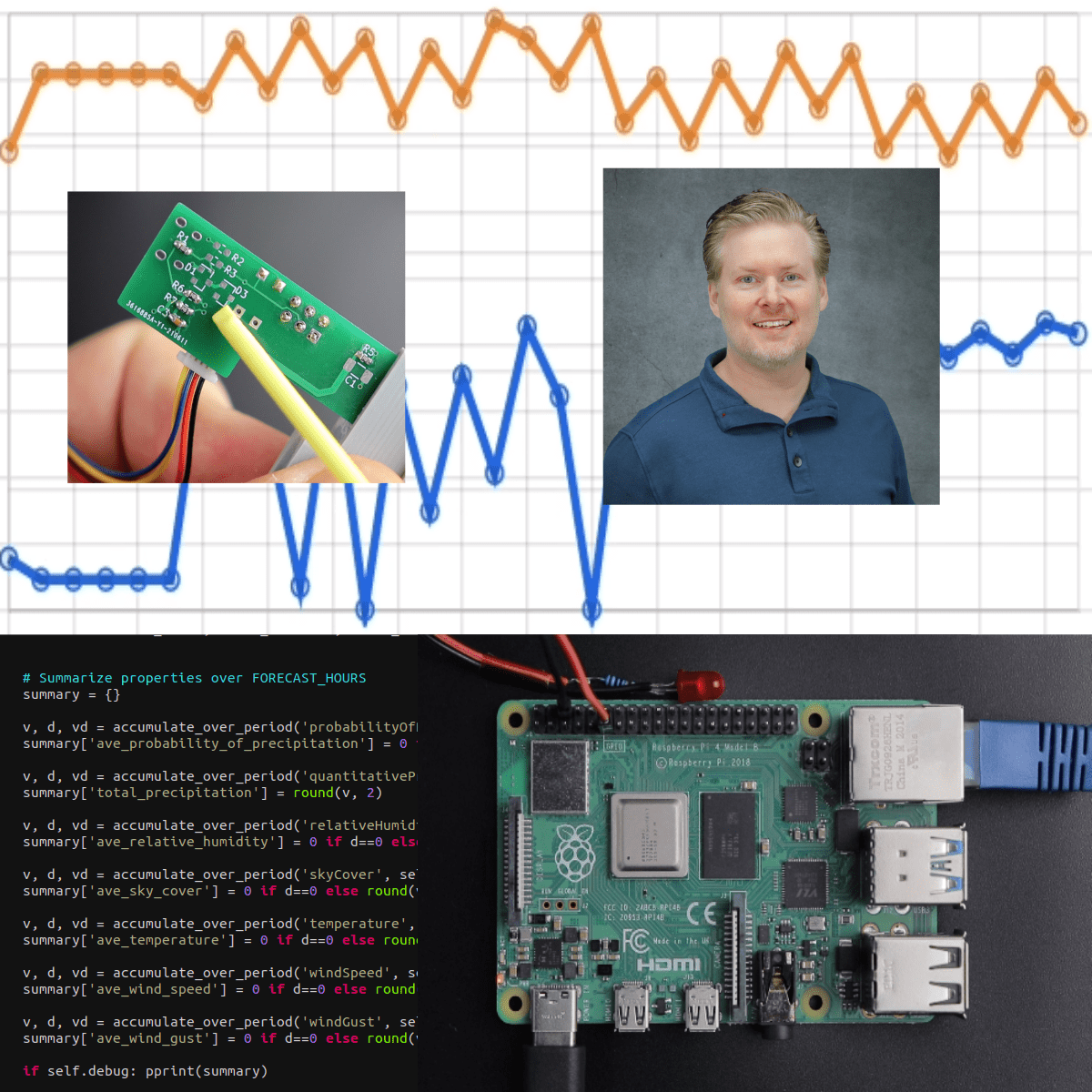
This is course 4 of this specialization (although it can be taken out of order) and focuses on applying experience and knowledge gained in the first three courses to build physical electronics hardware. Specifically, this course focuses on four areas: circuit simulation, schematic entry, PCB layout, and 3D CAD modeling. There are many excellent commercial applications available in these areas, however to give everyone access we'll be using all free and open-source software. By the end of this course you should feel comfortable using free and open-source software to design your own printed circuit board and any bracketry or case to hold it, customized for your application. Module 1 covers circuit simulation using several open-source projects and simulation methods for simulating transient response of circuits as well as frequency-domain response of filters. Additionally, we'll use open-source filter synthesis tools to help you quickly design and simulation filters. Module 2 is all about creating professional looking electrical schematics. This is both an art and a skill and we'll cover the technical elements of using schematic entry software as well as broad concepts that are portable to any commercial application. Module 3 takes our schematic and turns it into a physical PCB design. Understanding this process of how the schematic and the PCB layout work together is critical. We'll be demonstrating this with open-source software, but again, the concepts apply to any commercial software you may have access to. Module 4 demonstrates the powerful idea of co-designing your electrical and mechanical systems together. We'll create a 3D model of our electrical PCB and bring it into 3D CAD software to design mechanical parts around it. Tying together these two applications opens another dimension in customizing your projects.
 University of Colorado Boulder
Introduction to Generative AI
This introductory course offers a comprehensive exploration of Generative AI, including Transformers, ChatGPT for generating text, and Generative Adversarial Networks (GANs), the Diffusion Model for generating images. By the end of this course, you will gain a basic understanding of these Generative AI models, their underlying theories, and practical considerations. You will build a solid foundation and become ready to dive deeper into more advanced topics in the next course.
 Coursera
Present Compelling Executive Reports with Data
Executive reporting is more than charts—it’s how financial analysts turn performance data into leadership decisions. In this intermediate-level course, you’ll learn to create concise, executive-ready reports that blend narrative and visualization to communicate results clearly. You’ll start by building a one-page summary that connects key metrics, visuals, and commentary into a coherent story. Then, you’ll apply presentation techniques to deliver insights confidently—summarizing historical performance and framing future outlooks with precision. Through short videos, practical readings, and guided exercises, you’ll practice transforming complex dashboards into compelling stories that executives can absorb in minutes. You’ll also learn how to anticipate questions, guide focus, and reinforce takeaways using strong visuals and concise messaging. By the end, you’ll be able to design and present data-driven summaries that are clear, credible, and ready for the boardroom.
 MedCerts
The Heart, Blood, and Lungs
In this course on The Heart, Blood, and Lungs, you will learn about the wonderful diversity of the cardiovascular, immune, and respiratory systems and the medical language that is used to describe these systems. Throughout each Lesson, the roots of terms are explained to help students understand how medical terminology works in healthcare and to increase their knowledge and understanding of the material discussed. This course will provide you with a better understanding and working knowledge of medicine that is required for understanding of medical records used for multiple purposes and job duties in the medical field. Lessons include: Cardiovascular System, Blood and Immune System, and Respiratory System.
 EDUCBA
Master Real-Time Streaming with Kafka & Spark
Learners will build, analyze, and implement real-time data pipelines; produce and consume streaming data; and apply aggregation logic to identify top trending songs using Apache Kafka and Apache Spark. This hands-on course equips learners with practical skills in streaming architecture, data ingestion, transformation logic, and end-to-end pipeline execution. Throughout the course, learners benefit from a structured, project-based approach that mirrors real industry workflows. They will set up a complete development environment, design a scalable project structure, implement streaming logic in Scala, and write processed data back to Kafka topics. By completing the project, learners gain confidence in working with real-time event data—one of the most in-demand capabilities in today’s data engineering roles. What makes this course unique is its clear focus on a real-world use case: computing top trending songs from continuous data streams. This contextual approach ensures that learners not only understand Kafka and Spark concepts but also apply them in a meaningful, production-style pipeline. Ideal for aspiring data engineers, developers, and technology professionals seeking practical, industry-relevant streaming expertise.
 Emory University
Marketing Channel Governance
This course is ideal for individuals who currently work in or are targeting opportunities in consulting and strategy, industrial sales and buying, marketing management, entrepreneurship and business development. In this course you will gain a framework for analyzing how much warmth/friendship/socialization is needed for a range of business relationship types. You will also be introduced to the benefits and drawbacks of distributing on Amazon and other third party platforms in which third party resellers are present. You will be exposed to new platforms for B2B exchange via a guest speakers' presentation of a startup called Inxeption. Finally, you will be exposed to how multichannel routes to market can create superior value for downstream customers.
 Illinois Tech
Media, Elections, and Politics - Bachelor's
This course reviews how both old and new media interact with politics and elections, drawing in particular on examples from the United States and United Kingdom over the past 40 years. We track the evolution from traditional media such as newspapers and television towards social media, including Meta platforms (Facebook/Instagram etc), Google (e.g. YouTube), and micronews (e.g. X/Twitter, BlueSky) as well as the growing influence of podcasting. This is a chance for people entering an IT career to see in real time how an IT-driven transformation of the industry has affected our politics, including raising questions of ethics and also how media narratives that once united regions or entire countries have tended to rearrange and “silo” populations into communities of a shared ideological or social interest. It’s a particularly good preparation for anyone with an interest in social or traditional media from an IT perspective, but more generally useful in terms of the implications of information technology’s impact on people’s lives.
 EDUCBA
Unreal Engine Character Development & Combat Systems
This comprehensive course equips learners with the skills to design, implement, synthesize, and evaluate advanced gameplay mechanics using Unreal Engine’s Blueprint system. Through a structured, hands-on approach, learners will progressively build a feature-rich action RPG project from the ground up—starting with character setup and animation pipelines, progressing through dynamic camera and control systems, and culminating in robust AI combat, magic systems, and final game packaging. The course begins with foundational concepts, guiding learners through constructing responsive character blueprints, blendspaces, and animation states. As students advance, they apply input bindings, game modes, and camera logic to build immersive controls. AI design is tackled through reactive behaviors, flinch animations, and magic-based combat mechanics. Learners will then develop layered systems for wave-based enemy spawning, health pickups, and visual feedback, before packaging the completed project into a functional build. By the end of the course, students will have the knowledge and confidence to build, test, and deploy professional-grade gameplay systems using only Blueprints—no prior coding experience required.
 University of California, Irvine
Introduction to Research for Essay Writing
Course 4: Introduction to Research for Essay Writing This course is designed for college students and professionals aiming to master the research and planning phases of academic writing. As the final course in the Academic Writing specialization before the capstone project, it builds upon foundational writing skills to prepare you for advanced academic and professional tasks. By the end of this course, you will be able to complete all the essential steps in planning a comprehensive research paper. After completing this course, you will be able to: - Choose appropriate research topics for college classes and professional reports. - Write detailed outlines for structured research papers. - Find and evaluate credible source material for academic research. - Take and organize effective notes for efficient research and writing. - Use appropriate academic tone and language in your writing. - Document sources by creating a Works Cited list in MLA format. - Avoid plagiarizing your sources through proper citation techniques. To be successful in this course, you should have a foundational understanding of academic writing principles and essay structure, ideally from completing the preceding courses in the Academic Writing specialization.