

The Global Scholarly Directory.
Discover world-class academic programs curated for the modern intellectual. Search through 19877+ degrees and professional certificates.
 Anmol Test Institution
العمل مع المكونات في تطبيق فيغما
في هذه الدورة التدريبية القائمة على المشروع والتي تستغرق ساعة واحدة، ستتعلم كيفية العمل مع المكونات في فيغما. ستكتسب أيضا خبرة عملية كيفية تجاوز المكون وإنشاء خيارات متعددة. في نهاية هذه الدورة، ستكون قادراً على العمل مع المكونات في فيغما بطريقة فعالة.
 Coursera
Measure Brand Buzz
Go beyond likes and shares to truly understand what people are saying about your brand. Measuring Brand Buzz: From Social Listening to Strategic Insights is a practical, hands-on course for marketers who want to master the art and science of measuring brand awareness. In today's crowded digital landscape, understanding your brand's presence is everything. This course will teach you to distinguish between the "how many" of quantitative metrics like share of voice and the critical "what they're saying" of qualitative analysis. You will learn not just the theory but also the application. Drawing lessons from iconic campaigns like Dove's "Real Beauty" and cautionary tales like Pepsi's Jenner ad, you'll see why tracking sentiment is non-negotiable. Using a step-by-step process, you'll apply social listening techniques, as major brands like Toyota do, to find and analyze real-time conversations. The course culminates in a hands-on lab where you'll capture and categorize live brand mentions from X (Twitter), creating a Brand Mention Snapshot that turns raw online buzz into actionable, strategic insight.
 Universidades Anáhuac
Productividad Empresarial con IA: ChatGPT
La era digital ha cambiado la forma en que las personas interactúan con la información y el conocimiento. Cada vez es más común tener fácil acceso a los grandes bancos de información, lo que ha aumentado la demanda de herramientas y tecnologías que permitan una búsqueda y acceso más eficiente a la información. En este contexto, el conocimiento básico sobre ChatGPT se ha vuelto fundamental para muchas personas, ya que se trata de una tecnología avanzada de lenguaje que permite a los usuarios interactuar con la información de manera más natural y eficiente. ChatGPT es un modelo de lenguaje desarrollado por OpenAI que ha sido entrenado con millones de documentos y páginas web para responder preguntas y brindar información en tiempo real. Esta tecnología permite a los usuarios obtener información y conocimiento de manera más rápida y precisa que la búsqueda manual en línea. Además, ChatGPT también puede ser utilizado para realizar tareas como la generación de texto, la traducción de idiomas, el análisis de textos propios y en general la resolución de problemas. Tener conocimientos básicos sobre ChatGPT es es crucial en la era digital, ya que permite a los usuarios interactuar de manera más eficiente con la información en general. Esto es especialmente importante para aquellos que dependen de volúmenes importantes de información para su trabajo o para tomar decisiones importantes en su vida diaria. Por lo tanto, es importante que aprendas a utilizar esta herramienta y sacarle el máximo provecho para mejorar la productividad empresarial y este curso te ofrece lo necesario para poder tener los conocimientos necesarios para poder mejorar la eficiencia y efectividad en varios procesos en la vida laboral diaria gracias al ChatGPT.
 University of Virginia
Financial Accounting Fundamentals
This course, developed at the Darden School of Business at the University of Virginia and taught by top-ranked faculty, will teach you the tools you'll need to understand the fundamentals of financial accounting. Concise videos, the financial records of a small business, and "your turn" activities guide you through the three most commonly used financial statements: the Balance Sheet, the Income Statement, and the Statement of Cash Flows. Beyond recording transactions, you'll learn how to prepare these financial statements, and read and analyze them to draw basic conclusions about a company's financial health. By the end of this course, you will be able to: - Use journal entries to record transactions - Prepare and use t-accounts to summarize transactions recorded during an accounting period - Describe the three most commonly used financial statements and how they fit together - Prepare these financial statements based on transactions recorded during an accounting period - Draw basic conclusions about a company's financial health
 Coursera
Mapa de empatía en Miro
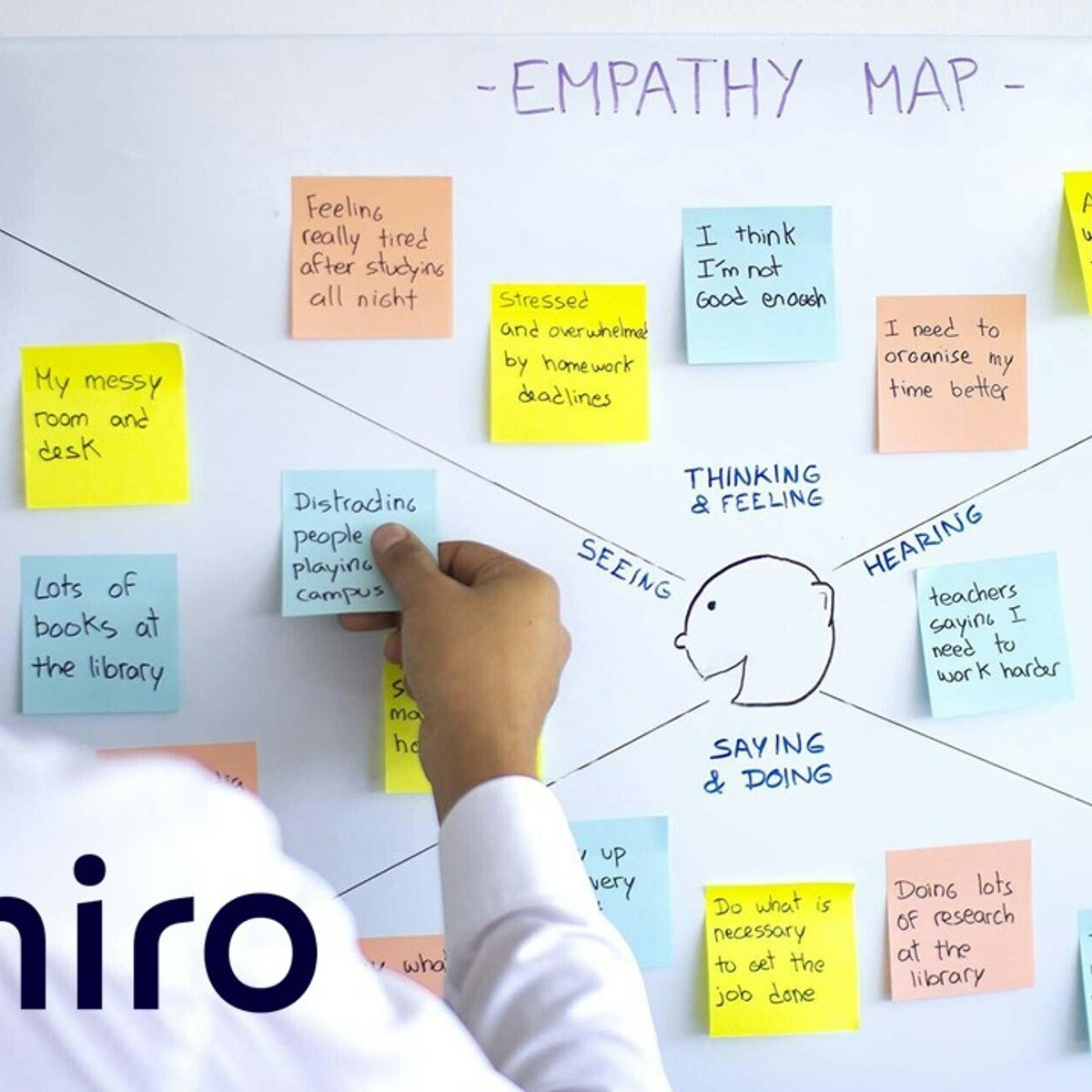
Gracias a este curso aprenderás a desarrollar un mapa de empatía en Miro. Miro es una herramienta que te permite utilizar pizarras virtuales infinitas y a colaborar en tiempo real con todo tu equipo, independientemente de donde se encuentren. Para ello, te guiaremos desde cero para que aprendas que es un mapa de empatía, como puede ayudarte a entender mejor a tu cliente objetivo y a como desarrollarlo con algunos casos de uso real. Después avanzaremos con Miro, desde el manejo básico, la utilización de plantillas, hasta funcionalidades avanzadas y desarrollo de workshops de empatía en Miro. Finalmente desarrollarás un proyecto de principio a fin donde utilices todo lo aprendido acerca del mapa de empatía y de Miro.
 University of Illinois Urbana-Champaign
Subsistence Marketplaces
The foundation for this course lies with unique synergies between pioneering research, teaching, and social initiatives through the Subsistence Marketplaces Initiative. Unique to this approach is a bottom-up understanding of the intersection of poverty and the marketplace. The goals of this course are to help you develop an understanding of marketplace activity in the radically different context of subsistence where much of humanity resides and survives, and for you to design solutions that can be implemented by individuals, businesses, and social enterprises through economically, ecologically, and socially sustainable products for subsistence marketplaces.
 University of Colorado Boulder
Creating a Technology Startup Company
The course starts by exploring entrepreneurial ecosystems and systems thinking. The Technology Adoption Life Cycle is introduced to help explain market dynamics and support developing business strategy. Market research concepts and tools are presented that learners will apply to their course projects. Founder, key manager, and board member considerations are examined, and the qualities of effective leadership are reviewed. The operational structures and processes of a tech startup are identified, and the Balanced Scorecard is presented as a tool for tracking critical performance metrics. Learners will create a first draft of Product, Market, and Management & Operations Plans for their new product or service ideas. Creating a Startup Company can be taken for academic credit as part of CU Boulder’s Master of Engineering in Engineering Management (ME-EM) degree offered on the Coursera platform. The ME-EM is designed to help engineers, scientists, and technical professionals move into leadership and management roles in the engineering and technical sectors. With performance-based admissions and no application process, the ME-EM is ideal for individuals with a broad range of undergraduate education and/or professional experience. Learn more about the ME-EM program at https://www.coursera.org/degrees/me-engineering-management-boulder.
 EDUCBA
Unix System Overview and Command
This comprehensive course equips learners with the essential and advanced skills needed to navigate, manage, and optimize Unix-based systems through powerful command-line utilities. Designed for beginners and intermediate users alike, the course blends foundational concepts with real-world command usage. Through three in-depth modules, learners will first identify core Unix structures and navigate directories using shell commands. They will then manipulate files, filter text streams, and employ communication and data redirection techniques. Finally, learners will integrate remote access tools, automate responses, and apply archiving utilities to streamline system-level operations. By the end of the course, learners will be able to confidently analyze, execute, and optimize Unix system operations for administration, scripting, and automation purposes.
 Vanderbilt University
Introduction to Programming with MATLAB
This course teaches computer programming to those with little to no previous experience. It uses the programming system and language called MATLAB to do so because it is easy to learn, versatile and very useful for engineers and other professionals. MATLAB is a special-purpose language that is an excellent choice for writing moderate-size programs that solve problems involving the manipulation of numbers. The design of the language makes it possible to write a powerful program in a few lines. The problems may be relatively complex, while the MATLAB programs that solve them are relatively simple: relative, that is, to the equivalent program written in a general-purpose language, such as C++ or Java. As a result, MATLAB is being used in a wide variety of domains from the natural sciences, through all disciplines of engineering, to finance, and beyond, and it is heavily used in industry. Hence, a solid background in MATLAB is an indispensable skill in today’s job market. Nevertheless, this course is not a MATLAB tutorial. It is an introductory programming course that uses MATLAB to illustrate general concepts in computer science and programming. Students who successfully complete this course will become familiar with general concepts in computer science, gain an understanding of the general concepts of programming, and obtain a solid foundation in the use of MATLAB. Students taking the course will get a MATLAB Online license free of charge for the duration of the course. The students are encouraged to consult the eBook that this course is based on. More information about these resources can be found on the Resources menu on the right.
 PracticalGrowth
High-Performance Team Leadership: Lead Teams That Deliver
e.g. This is primarily aimed at first- and second-year undergraduates interested in engineering or science, along with high school students and professionals with an interest in programming.Lead high-performing teams by designing the systems that make execution consistent, fast, and scalable. In this course, you’ll learn how strong managers translate company goals into clear team outcomes, define success signals, and build alignment around what “good” looks like. You’ll practice outcome mapping and metrics trees to connect daily work to measurable results, assign ownership without creating blame, and diagnose gaps when outcomes or measurement are unclear. You’ll also learn how to reduce friction through role clarity, clean handoffs, and responsibility mapping using frameworks like RACI, RASCI, and DACI. Finally, you’ll build lightweight operating standards—Definitions of Ready, Definitions of Done, and practical SOPs—and structure a team knowledge base that supports onboarding, autonomy, and scale. By the end, you’ll have practical templates and ready-to-use artifacts you can apply immediately to improve decision speed, execution quality, and team performance.
 L&T EduTech
Site Investigation
Welcome to the comprehensive Site Investigation course, unfolding across four enlightening modules crafted to provide learners with a profound understanding of the complex world beneath our feet. In Module 1, participants will delve into diverse site investigation types, methods, and codal provisions, gaining practical insights to adeptly select drilling and sampling approaches tailored to specific soil conditions. Module 2 will take learners on an exploration of field tests, including SPT, SCPT, DCPT, and Plate Load Tests, fostering proficiency in conducting these tests and providing a nuanced understanding of alternative methods such as Vane Shear Test and Pressuremeter Tests. In Module 3, learners will unravel the essentials of site investigation reports, mastering the analysis of crucial data while delving into the intricacies of liquefaction susceptibility and mitigation methods. Finally, Module 4 will immerse learners in a Virtual Laboratory for soil testing, where they will acquire hands-on skills in conducting tests like liquid limit, plastic limit, compaction, shear strength, consolidation, and permeability—essential tools for their journey into the realm of site investigation and engineering applications. To strengthen acquired knowledge and ensure a continuous learning flow, learners are encouraged to regularly participate in the course on a weekly basis. Consistent review of topics not only fosters clarity but also deepens understanding. Quizzes and assignments are thoughtfully designed to evaluate learners' comprehension, and in instances of difficulty in recall, revisiting content for better understanding is always an option. Supplementary reading materials are provided for additional information and in-depth analysis. Learners are urged to explore these materials, as they delve into practical aspects and real industry cases. Active engagement in the discussion forum is strongly advocated. Collaborating with peers facilitates the exchange of ideas and perspectives, fostering a cooperative learning environment. Interacting with peers proves valuable for validating and reinforcing learning. The course, meticulously crafted and presented by professionals with extensive industry expertise, provides an excellent opportunity to glean insights from seasoned masters. Get ready to uncover the secrets beneath the surface and build a solid foundation of knowledge in Site Investigation!
 Google Cloud
Optimizing Applications Using Cloud Profiler
This is a self-paced lab that takes place in the Google Cloud console. In this lab, you will learn how to use the Cloud Operations Tracing and Profiler tools to diagnose and correct application latencies.
 Google Cloud
Using OpenTSDB to Monitor Time-Series Data on Cloud Platform
This is a self-paced lab that takes place in the Google Cloud console. In this lab you will learn how to collect, record, and monitor time-series data on Google Cloud Platform (GCP) using OpenTSDB running on Google Kubernetes Engine and Google Cloud Bigtable.
 University of Maryland, College Park
Agile Leadership Principles and Practices
Develop Agile Leadership skills. Master change management, evolve leadership theories, and Agile principles to drive collaboration, empower teams, and lead effectively in dynamic environments. This Agile Leadership Principles course takes you from foundational leadership concepts to advanced agile practices. You’ll explore how modern leadership values collaboration, continuous improvement, and empowering teams. Learn to facilitate self-organizing teams, delegate effectively, and align your team around shared goals. The course covers evolving leadership theories, the difference between leadership and management, and how agile integrates the best of modern leadership practices. Understand key agile roles like Scrum Master and Product Owner to lead projects smoothly and foster a motivated, autonomous team environment. Designed for new and experienced leaders, this course emphasizes developing an agile mindset—embracing transparency, adaptability, and continuous learning. By the end, you’ll be ready to create high-performing teams, improve decision-making, and navigate change with agility. Join now to transform your leadership approach and make a lasting impact in your organization.
 Coursera
Advanced Branding in Canva
Advanced Branding in Canva equips learners with the skills to design and manage sophisticated brand identity systems that go far beyond logos. This course focuses on building flexible, scalable brand systems that establish strong recognition and consistency across diverse applications. Participants will learn to create extended color palettes, responsive logos, pattern libraries, and comprehensive typography systems that form the foundation of a distinct brand voice. Beyond creation, the course emphasizes implementation and governance, teaching learners how to design professional brand guidelines and asset management systems that ensure consistency across platforms, teams, and campaigns. Through guided lessons, screencasts, and applied projects, learners will practice developing multi-component brand identities, constructing visual languages through typography, and managing brand elements at a professional level. The final deliverable is a complete brand style guide and governance system designed for real-world application.
 University of Virginia
Coding Algorithms with AI
In this second course in the ‘Coding with AI for MBAs’ specialization, we’ll continue with a contemporary, AI-forward, product-first approach to coding. As an MBA or generalist, this course will help you go from design to code for ‘Controllers’, or ‘algorithms’. Understanding the process of building and maintaining algorithms with AI will both help you build great products yourself as well as make yourself a better collaborator to your engineering-focused colleagues. We’ll be coding in Javascript (JS), but mostly we’ll be focused on the underlying design and engineering principles for building user interfaces. This course was developed at the Darden School of Business at the University of Virginia and is taught by top-ranked faculty.