

The Global Scholarly Directory.
Discover world-class academic programs curated for the modern intellectual. Search through 19877+ degrees and professional certificates.
 Pontificia Universidad Católica de Chile
Perspectivas en Salud Pública: Ampliando la visión en salud
Los cambios de los últimos años, fruto de la globalización y la irrupción de nuevas enfermedades, así como de la pandemia de Covid, han dejado en evidencia la importancia que tiene la promoción de la salud pública. Cuando los cuidados de salud descansan en una perspectiva de cuidado individual, la evidencia empírica muestra que los sistemas de salud tienden al colapso. Por lo mismo, es fundamental aprehender el concepto sanitario desde una perspectiva colectiva. El curso está dirigido a cualquiera que tenga interés en temas de salud pública, sean simplemente personas interesadas, estudiantes de pregrado, técnicos o estudiantes de post grado con carreras afines. Se divide en cuatro módulos, donde se verán conceptos tales como: las bases de la salud pública, cómo esta actúa, conceptos sociodemográficos y los logros y principales desafíos que presenta hoy la salud pública en el mundo y en Chile.
 MedCerts
Medical Terminology, Anatomy, and Physiology Fundamentals
In this Introduction to Medical Terminology and the Human Body course, you will learn about the medical language that is used to describe the human body. Throughout each Lesson, the roots of terms are explained to help students understand how medical terminology works in healthcare and to increase their knowledge and understanding of the material discussed. This course will provide you with a better understanding and working knowledge of medicine that is required for understanding of medical records used for multiple purposes and job duties in the medical field. Lessons include: Introduction to Medical Terminology, Introduction to Anatomy, Physiology and Pathology, Cells – The Foundation of Life, and The Human Body.
 The University of Edinburgh
Philosophy, Science and Religion: Religion and Science
Philosophy, Science and Religion mark three of the most fundamental modes of thinking about the world and our place in it. Are these modes incompatible? Put another way: is the intellectually responsible thing to do to ‘pick sides’ and identify with one of these approaches at the exclusion of others? Or, are they complementary or mutually supportive? As is typical of questions of such magnitude, the devil is in the details. For example, it is important to work out what is really distinctive about each of these ways of inquiring about the world. In order to gain some clarity here, we’ll be investigating what some of the current leading thinkers in philosophy, science and religion are actually doing. This course, entitled ‘Religion and Science’, is the third of three related courses in our Philosophy, Science and Religion Online series. The course will address five themes, each presented by an expert in the area. 1. Science, Religion, and the Origin of the Universe (Professor Tim Maudlin, NYU ) 2. Buddhism and Science (Professor Graham Priest, CUNY) 3. Evolution and Design (Dr Kevin Scharp, St Andrews) 4. Sin Suffering and Salvation: Evolutions Thorny Issues (Dr Bethany Sollereder, Oxford) 5. Human Uniqueness in Science, Theology, and Ethics (Professor David Clough, Chester) The first and second courses in the Philosophy, Science and Religion series, 'Science and Philosophy' and 'Philosophy and Religion' were launched in 2017 and you can sign up to these at any time. It is not necessary to have completed these courses to follow this course. However, completing all three courses will give you a broader understanding of this fascinating topic. Look for: • Philosophy, Science and Religion I: Science and Philosophy - https://www.coursera.org/learn/philosophy-science-religion-1 • Philosophy, Science and Religion II: Philosophy and Religion - https://www.coursera.org/learn/philosophy-science-religion-2 Upon successful completion of all three courses, students will: (1) Understand the main parameters at stake in the current debate between science and religion. (2) Have some familiarity with the relevant areas of science that feature in the debate—including cosmology, evolution, and the neurosciences—and will have begun to engage with them conceptually. (3) Have encountered key philosophical approaches to the interface between science and religion, and will have had the opportunity to engage them in practice. (4) Have embarked constructively in cross-disciplinary conversations. (5) Have demonstrated an openness to personal growth through a commitment to dialogue across intellectual and spiritual boundaries. You can also follow us on Twitter at https://twitter.com/EdiPhilOnline and you can follow the hashtag #psrmooc Learners can apply for Financial Aid directly with Coursera to assist with the cost of accessing the full course and gaining a certificate for successfully completing the course.
 AI CERTs
AI in Supply Chain
AI in Supply Chain Management equips learners with the skills to transform modern supply chains using artificial intelligence. The course explores how AI is reshaping logistics, procurement, demand forecasting, inventory management, and end-to-end supply chain operations across industries. You’ll gain a strong foundation in AI concepts applied specifically to supply chain challenges - such as predicting demand fluctuations, optimizing routes and warehouses, digitizing workflows, and improving decision-making through predictive analytics. Through real-world case studies and practical frameworks, the program demonstrates how AI enables smarter, faster, and more resilient supply chains. The course also covers generative AI and intelligent automation in supply chain planning, helping learners design innovative workflows that reduce costs, improve efficiency, and mitigate disruptions. Sector-specific insights ensure relevance across retail, manufacturing, logistics, and global operations. Designed for professionals and aspiring leaders, this self-paced program prepares you to lead AI-driven supply chain initiatives with confidence, apply data-driven strategies, and stay ahead in an increasingly automated and analytics-powered supply chain ecosystem.
 EDUCBA
Project on Recommendation Engine - Advanced Book Recommender
This project-based course equips learners with the skills to design, develop, and implement a personalized book recommendation system using Python. Spanning two core modules, the course introduces foundational concepts of collaborative and content-based filtering and builds toward a functional hybrid model. Learners will begin by analyzing user data, constructing user-item interaction matrices, and evaluating baseline models. They will then apply advanced data handling techniques using libraries like Pandas and NumPy, and integrate multiple recommendation strategies into a single hybrid engine. Through practical lessons, coding exercises, and quizzes, learners will progressively apply machine learning logic, synthesize similarity computations, and construct real-world recommendation systems that combine user behavior with item features. By the end of the course, learners will be able to confidently build scalable recommendation pipelines tailored for dynamic, user-centric applications.
 Coursera
Target specific user demographics in your followers campaign
In this project learners will get experience researching and implementing strategies to further target their desired audience in a twitter followers campaign. Targeting these specific desired followers will greatly increase the effectiveness of their followers campaign.
 Infosec
Cyber Threat Hunting
This course teaches you the necessary skills to becoming a successful threat hunter. As you progress through the modules, you'll build core hunting skills such as intelligence gathering, investigation techniques and remediation methods. Upon completion, you'll have the knowledge and skills to carry out cyber threat hunting activities with an organization that will ultimately deliver proactive defenses against possible debilitating data compromise.
 EDUCBA
Build Interactive Flutter Apps with Practical UI Design
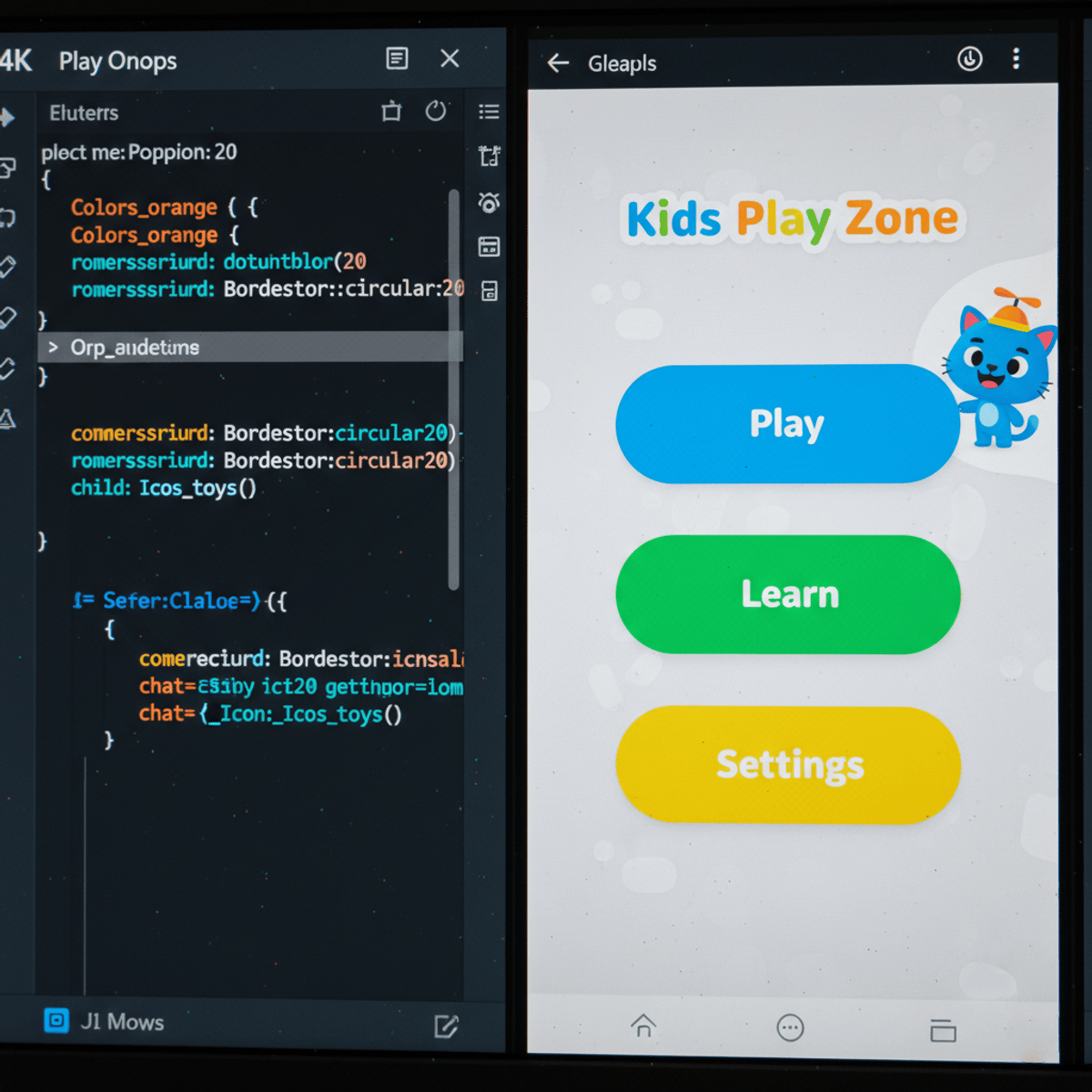
By the end of this course, learners will be able to identify Flutter fundamentals, apply core widgets, design responsive layouts, implement navigation, and build interactive mobile app interfaces using modern UI components and animations. This hands-on course guides learners through the complete development of the Kids Play Zone mobile application, focusing on practical Flutter UI development rather than abstract theory. Starting with project setup and app structure, learners progressively work through layouts, widgets, navigation patterns, animations, and advanced UI effects such as cards, steppers, data tables, and visual filters. Learners benefit by gaining real-world Flutter development skills that are immediately applicable to building production-ready mobile applications. Each module is structured to reinforce concepts through progressive lessons, quizzes, and graded assessments, ensuring strong retention and confidence. What makes this course unique is its project-driven approach, child-friendly app theme, and comprehensive coverage of Flutter UI widgets—from basic text and buttons to advanced slivers, animations, and platform-specific designs. With clear learning objectives, structured modules, and practical examples, this course is ideal for beginners and aspiring mobile developers who want to build, design, and enhance Flutter apps effectively.
 EDUCBA
Mastering Agile: Apply & Adapt Principles for Value Delivery
This course provides a comprehensive, practical exploration of Agile principles, methodologies, and mindset—empowering learners to analyze, apply, and adapt Agile practices across diverse team environments and project scopes. Structured into four detailed modules, the course begins by unpacking the Agile Manifesto and core principles, emphasizing mindset shifts critical to team empowerment and customer collaboration. Learners then dive into foundational frameworks like Extreme Programming (XP) and Scrum, exploring roles, events, and artifacts essential for effective Agile execution. The course further expands into Lean, Kanban, and Agile variants like FDD, DSDM, and Crystal, enabling learners to differentiate and tailor methodologies based on project context, team size, and value complexity. The final module transitions into Agile value delivery, focusing on mindset cultivation, transparency tools like information radiators, and the four subdomains of value-driven delivery: defining positive value, avoiding potential downsides, prioritization, and incremental development. Throughout, learners will engage in scenario-based quizzes, formative assessments, and graded evaluations aligned with Bloom’s Taxonomy to support higher-order thinking. By the end of this course, learners will be able to: • Describe and interpret Agile values and principles. • Differentiate among leading Agile frameworks and methodologies. • Apply Agile practices to real-world projects. • Analyze product value alignment through delivery subdomains. • Evaluate and adapt Agile techniques to suit varying organizational needs.
 Coursera
Boost SEO: On-Page Elements
Learn how to make your pages shine in Google and AI-powered results by mastering five key on-page elements—titles, headings, meta descriptions, alt text, and links. Through hands-on activities and guided reflections, you’ll practice real-world optimizations and create keyword-rich, conversational FAQs that win People Also Ask and AI snippet spots. Perfect for marketers, creators, and entrepreneurs ready to turn content into discoverable, trusted assets.
 Illinois Tech
Innovation and International Strategy
The 21st century competitive landscape is characterized by rapid technological change and globalization. How do companies compete and succeed in such an environment? First, companies must engage in continuous innovation to sustain their competitive advantage. This course is designed to equip students with a deep understanding of why innovation is paramount in the 21st-century landscape and how it influences the way companies compete today. Through a comprehensive exploration of topics like technology adoption life cycle, the product life cycle, disruptive innovation and blue ocean strategy, students will gain the knowledge and skills needed to thrive in a rapidly evolving marketplace. Second, companies must take advantage of the extraordinary opportunities that globalization presents and develop strategies to expand abroad and compete there. In this course, students will develop a deep understanding of how to analyze and evaluate international markets, select the best markets to enter, choose the optimal mode of entry and develop a strategy to compete in international markets. Upon successful completion of this course, you will be able to: - Articulate the significance of innovation in the 21st-century competitive landscape, delineate the factors affecting technology adoption and apply their understanding of the product life cycle stages to make informed strategic decisions regarding strategy. - Articulate the concept and theory of disruptive innovation and apply this understanding to evaluate and propose strategies for how incumbents can effectively respond to disruptive changes in their industry. - Articulate the fundamentals of Blue Ocean Strategy, including its core concepts of Non-customers and Value Innovation, and explain how new market spaces could be created. - Articulate the rationale behind companies expanding into international markets, demonstrate knowledge of how to analyze international markets, and how to select international markets. - Articulate the various non-equity and equity entry modes for international markets and integrate this knowledge to comprehend and explain strategic approaches for effectively competing in international markets.
 Packt
Packt
Apache Kafka Series - Learn Apache Kafka for Beginners v3
Updated in May 2025. This course now features Coursera Coach! A smarter way to learn with interactive, real-time conversations that help you test your knowledge, challenge assumptions, and deepen your understanding as you progress through the course. In this course, you'll embark on a journey to master Apache Kafka, beginning with a solid introduction to its core concepts and architecture. You'll learn about essential topics such as producers, consumers, partitions, and offsets, all while understanding how they fit together within the broader Kafka ecosystem. Each theoretical section is paired with practical examples, ensuring that you not only understand the "what" but also the "how" of Kafka. As you progress, you'll delve into advanced Kafka operations, including starting Kafka without Zookeeper using KRaft mode and mastering the command line interface. The course also includes a thorough exploration of Kafka Java programming, where you'll learn to implement producers and consumers, handle callback functions, and manage consumer groups. By the end of this section, you'll be ready to tackle real-world Kafka projects, armed with the knowledge to implement efficient, scalable solutions. The final modules focus on real-world insights and case studies, where you'll see how Kafka is applied in different industries, from big data ingestion to logging and metrics aggregation. You'll also explore Kafka's role in enterprise environments, focusing on cluster setup, security, and multi-cluster operations. Whether you're new to Kafka or looking to deepen your understanding, this course provides the tools and knowledge to excel in the world of data streaming. This course is ideal for software developers, data engineers, and IT professionals who are new to Apache Kafka and wish to learn from the ground up. No prior experience with Kafka is required, though a basic understanding of distributed systems and Java programming is beneficial.
 Edureka
Project Management Basics: Foundations & Frameworks
Explore the fundamentals of project management with this course, covering essential areas such as integration, scope, scheduling, cost management, and governance structures. Gain a practical understanding of core project management methodologies and frameworks, and learn how organizational roles intersect across project phases to ensure successful delivery. By the end of this course, you will be able to: - Define the fundamental principles of project management, integration, and governance to support effective project outcomes. - Apply structured approaches for managing project scope, schedules, and budgets. - Analyze and adapt project management methodologies predictive, iterative, adaptive, or hybrid to meet various project demands. - Develop tactics for risk management, stakeholder engagement, and resource allocation to boost project outcomes. - Navigate organizational roles, governance models, and the functions of the Project Management Office (PMO) to align projects with business strategies. - Effectively manage project documentation, communication, and change management processes for smoother project execution. This course is designed for aspiring project managers, program managers, and team leaders looking to strengthen their skills in project integration, control, and execution. No prior project management experience is needed, this course provides a strong foundation to help you grow your career with essential project management abilities.
 Universidad Austral
Pilares de Marketing Digital
El Marketing Digital ha revolucionado la forma de hacer negocios, y ninguna corporación, empresa, emprendedor o profesional puede desconocer su importancia vital para lograr el éxito. Este curso proporciona al alumno el dominio de los criterios estratégicos, técnicas y herramientas propias de la disciplina. Objetivos: - Comprender el ecosistema completo del Marketing Digital - Desarrollar las mejores estrategias para conseguir los objetivos - Identificar las principales herramientas para ejecutar las acciones que contemplan éstas estrategias - Aprender a monitorear o controlar para tomar acciones correctivas
 Google Cloud
Google Sheets en Español
En este curso, presentaremos Hojas de cálculo de Google, el software de hojas de cálculo de Google basado en la nube, que se incluye en Google Workspace. Con Hojas de cálculo de Google, puede crear y editar hojas de cálculo directamente en su navegador web sin tener que usar un software especial. Varias personas pueden trabajar al mismo tiempo; puede ver los cambios a medida que los hacen, y cada cambio se guarda automáticamente. Aprenderá a abrir Hojas de cálculo de Google, crear una hoja de cálculo en blanco y crear una a partir de una plantilla. Mediante el uso de Hojas de cálculo de Google, agregará, importará, ordenará y filtrará sus datos, además de darles formato, y aprenderá a trabajar con distintos tipos de archivos. Con las fórmulas y las funciones, puede realizar cálculos rápidos y usar mejor sus datos. Analizaremos cómo crear una fórmula básica con las funciones y cómo hacer referencia a los datos. También aprenderá a agregar un gráfico a su hoja de cálculo. Los archivos de Hojas de cálculo de Google se pueden compartir con facilidad. Analizaremos las distintas formas de compartirlos con otros usuarios. También veremos cómo hacer un seguimiento de los cambios y cómo administrar las versiones de sus documentos de Hojas de cálculo de Google. Google Workspace facilita la colaboración con su equipo, sus clientes y otros usuarios estén donde estén. Por lo tanto, analizaremos algunas de las opciones de colaboración que tiene a su disposición en Hojas de cálculo de Google. Entre los ejemplos, se incluyen los comentarios, los elementos de acción y las notificaciones.
 University of California, Irvine
Advanced Instructional Strategies in the Virtual Classroom
Welcome to Advanced Instructional Strategies in the Virtual Classroom! This course will help you apply strategies to the critical areas of K-12 virtual instruction to significantly impact virtual education. We will examine the pitfalls beginning teachers run into and learn how to overcome them by focusing on the fundamentals that have the greatest impact on student learning in a blended or online environment. By the end of the course, you will be able to empower your students to be voracious learners who are ready to go out and make the world a better place to live. Upon completing this course, you will be able to: • Identify the role of direct instruction within a virtual course. • Establish direct communication and meaningful relationships with your students. • Use instructional strategies that motivate and challenge your students to think more critically. • Define at-risk students and examine effective strategies for teaching this demographic. • Build an inclusive and thriving online community with students, parents, and other teaching professionals.