

The Global Scholarly Directory.
Discover world-class academic programs curated for the modern intellectual. Search through 19877+ degrees and professional certificates.
 IBM
IBM
Monitoring and Observability for Development and DevOps
Application developers and DevOps professionals must ensure their app works at its best. However, these app may need help with bugs, slow speed, or subpar performance. Professionals need to monitor and observe its performance continually. Application monitoring involves identifying, measuring, and evaluating the effectiveness of an application. On the other hand, Observability refers to how well an app can be monitored by the data obtained from monitoring. Both monitoring and observability are necessary to gain insights into the system and ensure its proper functioning. This course thoroughly introduces monitoring and observability, covering fundamental concepts and popular tools like Prometheus, Grafana, Mezmo (LogDNA), and Instana. You will also learn about the three pillars of observability and tracing for container applications and gain hands-on experience with the OpenTelemetry framework. Throughout the course, you will complete interactive hands-on labs to apply your knowledge, and gain experience with the tools and techniques used by software and DevOps professionals. By the end of this course, you will be able to demonstrate your knowledge of monitoring and observability, and you will gain the confidence to perform these tasks in a practical setting.
 Università di Napoli Federico II
Understanding Political Concepts
This course is part of the IPSAMOOC project, a joint venture Federica Weblearning - IPSA, the International Political Science Association. Political science discourse brings us face to face with many important concepts like authority, democracy, and power. However, all of them are used differently in different contexts, and their specific meaning depends on the theory they relate to. There is no way around such puzzling diversity. Students of political science simply have to accept this challenge. Yet, the diversity of political science concepts can be used as a powerful resource for learning, through intellectual techniques for stirring personal creativity. This MOOC teaches conceptual thinking and elementary theory-building through Hyperpolitics, an interactive dictionary for understanding and working with the most central concepts in political science. Its aim is to provide students with fresh critical insights about key political concepts, offering a methodology by which users can unpack and reconstruct them on their own. Its companion open-access website serves as a powerful tool for students' practice in forging their own vocabulary while learning how to make professional use of authoritative PS internet resources. Throughout its 4 weeks, this MOOC comprises lecture sections, based on visualizations of the arguments presented; reading assignments; and practical exercises. This course is part of the IPSAMOOC project, a joint venture Federica Weblearning-IPSA, the International Political Science Association.
 Coursera
Diseña historias para Instagram y Facebook con Easil
Al final de este proyecto, aprenderás a crear y diseñar historias para las redes sociales usando la versión gratis de Easil. No importa si quieres crear tu propia marca o optimizar una marca existente: los contenidos visuales te ayudarán a establecer tu identidad online. Los consumidores hoy en día están constantemente saturados con información e imágenes en las redes sociales. Una parte esencial del marketing en redes sociales es aprender maneras creativas de atraer la atención a productos y servicios, muchas veces con un presupuesto mínimo. La plataforma de diseño gráfico Easil ofrece una variedad de posibilidades para crear contenido llamativo para Instagram y Facebook.
 Georgia Institute of Technology
Lesson | Telephone Language
This lesson is part of a full course, Speak English Professionally: In Person, Online & On the Phone. Take this lesson to get a short tutorial on the learning objectives covered. To dive deeper into this topic, take the full course. By the end of this lesson, you will be able to identify telephone language through phone dialogues.
 University of Pennsylvania
Success
Do you want to be more successful? This course was designed to help you define what success means to you, and to develop a plan for achieving it. Wharton Professor G. Richard Shell, an award-winning author and the creator of the popular Wharton School course on the meaning of success, created this course to help you answer the questions that arise when you consider how best to use your life. Drawing on his decades of research and mentoring, Shell offers personalized assessments to help you probe your past, imagine your future, and measure your strengths. He then combines these with the latest scientific insights on everything from self-confidence and happiness to relationships and careers. Throughout, he shares inspiring examples of people who found what they were meant to do by embracing their own true measure of success. Get ready for the journey of a lifetime—one that will help you reevaluate your future and envision success on your own terms. Students and executives say that Richard Shell’s courses and executive training programs have changed their lives. Let this course change yours.
 DeepLearning.AI
Building Agentic RAG with LlamaIndex
Join our new short course and learn from Jerry Liu, co-founder and CEO at LlamaIndex to start using agentic RAG, a framework designed to build research agents skilled in tool use, reasoning, and decision-making with your data. In this course: 1. Build the simplest form of agentic RAG – a router. Given a query, the router will pick one of two query engines, Q&A or summarization, to execute a query over a single document. 2. Add tool calling to your router agent where you will use an LLM to not only pick a function to execute but also infer an argument to pass to the function. 3. Build a research assistant agent. Instead of tool calling in a single-shot setting, an agent is able to reason over tools in multiple steps. 4. Build a multi-document agent where you will learn how to extend the research agent to handle multiple documents. Unlike the standard RAG pipeline—suitable for simple queries across a few documents—this intelligent approach adapts based on initial findings to enhance further data retrieval. You’ll learn to develop an autonomous research agent, enhancing your ability to engage with and analyze your data comprehensively. You’ll practice building agents capable of intelligently navigating, summarizing, and comparing information across multiple research papers from arXiv. Additionally, you’ll learn how to debug these agents, ensuring you can guide their actions effectively. Explore one of the most rapidly advancing applications of agentic AI!
 Coursera
Create a Newsletter in Microsoft Word
After successfully completing this project, you will have created a visually appealing newsletter using Microsoft Word. While building a newsletter, you will use various features in Word. You will use the Insert feature to insert a header, a drawing and a picture in a document. You will create a drawing with shapes and text. Other features you will use include applying picture styles and applying a filter to a picture search. Note: This course works best for learners who are based in the North America region. We’re currently working on providing the same experience in other regions.
 Coursera
Comment utiliser l'automatisation pour envoyer des e-mails avec MailChimp
Dans ce projet guidé d'une heure, vous apprendrez à créer votre premier e-mail automatisé à l'aide de MailChimp. Nous étudierons comment utiliser l'outil d'automatisation de Mailchimp pour envoyer des e-mails aux abonnés nouvellement ajoutés et ensuite nous conceverons un formulaire d'inscription. À la fin de ce projet, vous créerez un processus entièrement automatique pour vous assurer que les personnes qui s'inscrivent via le formulaire reçoivent une réponse automatisée.
 Packt
Packt
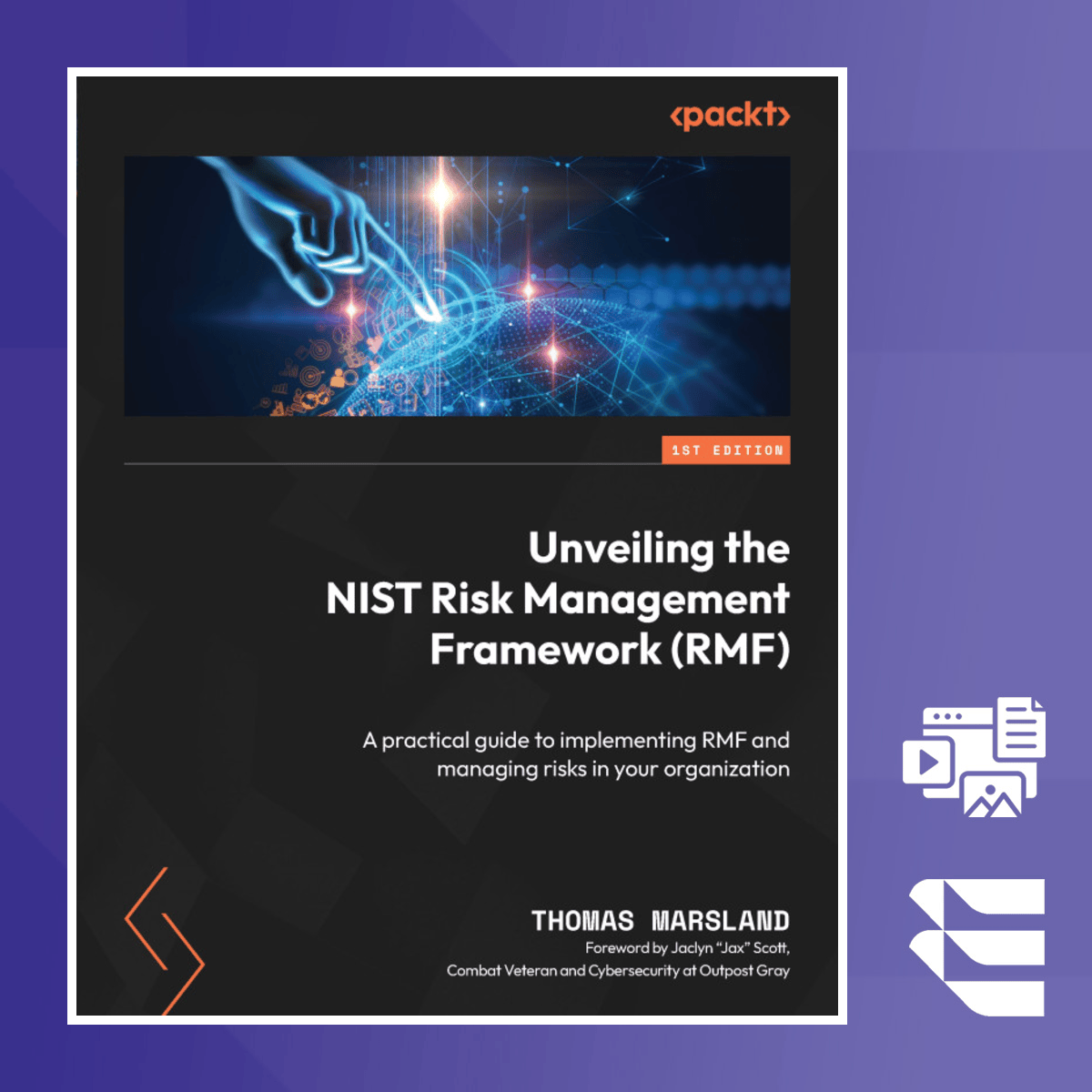
Unveiling the NIST Risk Management Framework (RMF)
The course focuses on developing strong skills in applying the NIST Risk Management Framework, a widely adopted methodology that strengthens cybersecurity resilience. Learners gain a solid understanding of how RMF supports secure decision-making and structured risk reduction within modern organizations. Through step-by-step guidance, the course helps learners perform security categorization, select and implement controls, and evaluate risks effectively. Practical insights, examples, and recommended practices ensure learners can translate RMF principles into measurable outcomes. The content stands out by blending theoretical foundations with real-world case studies and implementation techniques. Learners see how RMF operates in practical scenarios, enabling them to confidently apply it in their own environments. This course is ideal for cybersecurity professionals, IT managers, analysts, and individuals responsible for governance or compliance. Basic cybersecurity knowledge will help learners understand the RMF phases more effectively.
 Whizlabs
Getting Started with Amazon Bedrock
Getting Started with Amazon Bedrock is a foundational course designed for developers, data professionals, and AI enthusiasts seeking to build expertise in generative AI using AWS’s fully managed service—Amazon Bedrock. This course focuses on the key components of the Bedrock platform, including foundation model selection, responsible AI principles, Retrieval-Augmented Generation (RAG), agent orchestration, automation, and integration with AWS services. Through a structured and interactive learning path, you’ll gain hands-on experience developing AI-powered applications, managing secure workflows, and understanding the tools necessary to scale generative AI in production environments. Whether you're just beginning your journey in AI or preparing for AWS certification in machine learning, this course provides the core skills and practical insight needed to succeed in the evolving landscape of generative AI. This course includes approximately 5:30–6:00 hours of video lectures, combining both foundational theory and real-world demonstrations. It is divided into three comprehensive modules, each broken down into focused lessons that progressively build your knowledge of Bedrock's capabilities. To assess learning progress, each module includes interactive quizzes and in-video practice questions that reinforce key concepts and application skills. 📘 Module 1: Amazon Bedrock Fundamentals 🧠 Module 2: RAG, Safety & Agents ⚙️ Module 3: Automation, Monitoring & Careers
 Google Cloud
Create Image Captioning Models - בעברית
בקורס הזה תלמדו איך ליצור מודל הוספת כיתוב לתמונה באמצעות למידה עמוקה (Deep Learning). אתם תלמדו על הרכיבים השונים במודל הוספת כיתוב לתמונה, כמו המקודד והמפענח, ואיך לאמן את המודל ולהעריך את הביצועים שלו. בסוף הקורס תוכלו ליצור מודלים להוספת כיתוב לתמונה ולהשתמש בהם כדי ליצור כיתובים לתמונות
 University of Maryland, College Park
Legal Contracts and Agreements for Entrepreneurs
This course focuses on how legal contracts may impact or impede the success of aspiring and active entrepreneurs. We explore a wide variety of legal considerations, including: * What types of legal contracts and agreements are appropriate for which entrepreneurial activities and actions? * What is the role of torts, liability, and negligence in creating and managing products and services? * How should contracts and sales agreements be created, evaluated, and negotiated? * What legal considerations are applicable when raising financial capital? "Legal Contracts and Agreements for Entrepreneurs" is one of three courses in the "Legal Aspects of Entrepreneurship Specialization" by Coursera and the University of Maryland. This specialization explores the critical legal and business issues entrepreneurs face as they build and launch a new venture. Learners examine real-world scenarios and address legal and business issues from ideation to all of the important junctures along the path to success. Significant attention is placed on new venture formation, intellectual property management, and contracts and financing arrangements.
 Corporate Finance Institute
Advanced Tableau - Table Calculations
This course will help you solve and answer common business questions by using Table Calculations in Tableau. With each scenario requiring a different function, you’ll learn to think on your feet and work with common problems. In total, you’ll work your way through 10 different scenarios and learn to use best practice, conditions, parameters and visual formatting to present these advanced metrics with absolute clarity. Table Calculations form the perfect next step after Tableau Fundamentals and should be completed before Tableau Level of Detail Calculations. By the end of the course, you'll be able to: • Understand what table calculations are what problems they can solve. • Calculate table calculations to help compare values across a full visual. • Learn best practice for implementing table calculations. • Learn how to use table calculations filters to hide data points from visuals. • Identify why Table Calculations are not ideal for Year over Year calculations. • Enhance visuals with conditional formulas, parameters and formatting. This course is perfect for any analyst with a basic working knowledge of Tableau that wants to explore more advanced metrics, visuals and answer common business questions.
 Coursera
Automate Workflows Across Tools Seamlessly
Automate Workflows Across Tools Seamlessly is a beginner-level course designed for project managers, team leads, and operations professionals who want to eliminate repetitive manual work and improve project efficiency. If you often find yourself copying and pasting information between tools such as Trello, Confluence, and Slack, this course will teach you how to build a system that does the work for you. You will learn to think like an automation designer—deconstructing manual processes into a logical sequence of triggers and actions. Through guided practice, you will use a no-code automation platform to design and configure a complete, multi-step workflow that connects your project board, documentation, and communication channels. Step by step, you will design the automation, configure it to pass data between applications (such as task names or links), and verify its operational reliability. By the end of the course, you will have completed an Automation Implementation Project—a working prototype that you can adapt to your own projects. You will leave with the confidence to apply the PMBOK-aligned principles of systems thinking, process improvement, and delivery optimisation to enhance collaboration, transparency, and consistency across your team.
 University of Colorado Boulder
Diode - pn Junction and Metal Semiconductor Contact
This course can also be taken for academic credit as ECEA 5631, part of CU Boulder’s Master of Science in Electrical Engineering degree. This course presents in-depth discussion and analysis of pn junction and metal-semiconductor contacts including equilibrium behavior, current and capacitance responses under bias, breakdown, non-rectifying behavior, and surface effect. You'll work through sophisticated analysis and application to electronic devices. At the end of this course learners will be able to: 1. Analyze pn junction at equilibrium and under bias, capacitance and current characteristics, and breakdown behavior 2. Analyze metal-semiconductor contact at equilibrium and under bias, capacitance and current characteristics, non-rectifying contact and surface effects
 University of Michigan
Data Collection and Processing with Python
This course teaches you to fetch and process data from services on the Internet. It covers Python list comprehensions and provides opportunities to practice extracting from and processing deeply nested data. You'll also learn how to use the Python requests module to interact with REST APIs and what to look for in documentation of those APIs. For the final project, you will construct a “tag recommender” for the flickr photo sharing site. The course is well-suited for you if you have already taken the "Python Basics" and "Python Functions, Files, and Dictionaries" courses (courses 1 and 2 of the Python 3 Programming Specialization). If you are already familiar with Python fundamentals but want practice at retrieving and processing complex nested data from Internet services, you can also benefit from this course without taking the previous two. This is the third of five courses in the Python 3 Programming Specialization.