

The Global Scholarly Directory.
Discover world-class academic programs curated for the modern intellectual. Search through 19877+ degrees and professional certificates.
 Coursera
Advanced Machine Learning Techniques
Welcome to Advanced Machine Learning Techniques, where you'll dive deep into sophisticated approaches that power modern AI applications. We'll explore five key areas of advanced ML: ensemble methods for combining models, dimensionality reduction techniques for handling complex data, natural language processing for text analysis, reinforcement learning for decision-making systems, and automated machine learning for optimization. You'll work hands-on with industry-standard tools including Scikit-learn, XGBoost, NLTK, PyTorch, and MLflow, learning how to implement and optimize advanced algorithms in real-world scenarios. By the end of this course, you'll be able to: -Implement ensemble methods including bagging, boosting, and stacking to enhance model performance -Apply dimensionality reduction techniques like PCA, t-SNE, and UMAP for data visualization and feature extraction -Process and analyze text data using modern NLP techniques and transformer models -Design and train reinforcement learning agents for autonomous decision-making -Optimize machine learning workflows using AutoML tools and experiment tracking Through practical exercises and a comprehensive capstone project, you'll develop the advanced skills needed to tackle complex machine learning challenges in your professional work.
 AI CERTs
AI for Game Design Agent
Artificial intelligence is transforming the future of gaming - from autonomous NPCs and dynamic storytelling to self-learning game opponents and procedural worlds. The AI for Game Design Agent certification equips you with hands-on skills to design and deploy intelligent game agents that think, learn, and react in real time. In just one intensive day, you’ll explore foundations of AI in games, behavior modeling, pathfinding, reinforcement learning, and multi-agent systems. Guided by practical exercises, you will build reactive agents, implement NPC movement and decision intelligence, train reinforcement-learning models, and prototype AI behavior in Unity, PlayCanvas, and Pygame. Through case studies from Pac-Man, Halo, Mario Kart, The Last of Us, and AlphaStar, you’ll understand how industry-leading games achieve realism, challenge, and immersion through AI. You’ll finish with a capstone project, building and optimizing an AI-driven agent for a 2D or 3D environment - ready to demo in a portfolio or interview. Whether you're a game developer, designer, or AI enthusiast, this program gives you a fast, practical pathway to creating the future of intelligent gameplay.
 Alberta Machine Intelligence Institute
Optimizing Machine Learning Performance
This course synthesizes everything your have learned in the applied machine learning specialization. You will now walk through a complete machine learning project to prepare a machine learning maintenance roadmap. You will understand and analyze how to deal with changing data. You will also be able to identify and interpret potential unintended effects in your project. You will understand and define procedures to operationalize and maintain your applied machine learning model. By the end of this course you will have all the tools and understanding you need to confidently roll out a machine learning project and prepare to optimize it in your business context. To be successful, you should have at least beginner-level background in Python programming (e.g., be able to read and code trace existing code, be comfortable with conditionals, loops, variables, lists, dictionaries and arrays). You should have a basic understanding of linear algebra (vector notation) and statistics (probability distributions and mean/median/mode). This is the final course of the Applied Machine Learning Specialization brought to you by Coursera and the Alberta Machine Intelligence Institute (Amii).
 Coursera
تطوير خطة توفير على دخل ثابت باستخدام جداول بيانات جوجل
بحلول نهاية هذا المشروع ، ستكون قادرًا على إنشاء ميزانية ذات دخل ثابت لدمج المدخرات في أوراق Google. سوف تتعلم كيفية إنشاء الصيغ التي ستساعدك في رحلتك. ستنشئ أيضًا رسمًا بيانيًا عمليًا يساعد في تصور مدخراتك أثناء نموها. ستكون هذه أداة رائعة للمساعدة في التوفير لعمليات الشراء الكبيرة أو "أموال الأيام السوداء ". توفر الميزانية باستخدام جداول بيانات جوجل مرونة وتخصيصًا غير محدودين تقريبًا للطريقة التي تريد بها إدارة أموالك.وتقدم العديد من نفس مهام سير العمل والفوائد مثل إعداد الميزانية باستخدام ايكسيل. ومع ذلك ، تحتوي "جداول بيانات جوجل" على بعض الحيل والميزات غير الواضحة التي قد ترغب في معرفتها. فيما يلي بعض النصائح البسيطة حول وضع ميزانية أكثر فاعلية باستخدام جداول بيانات جوجل. حماية البيانات في خلايا محددة. استخدم اختصارات لوحة المفاتيح. استخدم خريطة لمعرفة مناطق الإنفاق الأكبر لديك. استيراد البيانات من جداول البيانات الأخرى. توقع الدخل أو الإنفاق المستقبلي باستخدام وظيفة النمو. ترجمة لغة. أضف عملات مختلفة. تصفية النفقات الخاصة بك حسب الفئة. انظر كم من المال تنفقه في متجر معين. تحميل للاستخدام دون اتصال. ملاحظة: تعمل هذه الدورة التدريبية بشكل أفضل للمتعلمين المقيمين في منطقة أمريكا الشمالية. نعمل حاليًا على توفير نفس التجربة في مناطق أخرى.
 Google Cloud
Moderniser des sites Web à l'aide de l'IA générative sur Google Cloud
Améliorez l'expérience de navigation sur votre site Web en utilisant l'IA générative pour offrir une meilleure expérience de recherche à vos utilisateurs. Dans ce cours, vous allez apprendre à utiliser Vertex AI Search pour proposer aux utilisateurs de votre site Web une expérience de recherche générative leur permettant de découvrir le contenu proposé par votre site Web. En tant qu'éditeur de sites Web, vous allez également apprendre à utiliser l'IA générative pour traduire et améliorer rapidement et efficacement vos contenus à l'aide de suggestions.
 École Polytechnique
Silicon Thin Film Solar Cells
This course consists of a general presentation of solar cells based on silicon thin films. It is the third MOOC of the photovoltaic series of Ecole polytechnique on Coursera. The general aspects of the photovoltaic field are treated in "Photovoltaic Solar Energy". And the detailed description of the crystalline silicon solar cells can be found in "Physics of Silicon Solar Cells". After a brief presentation of solar cells operation, thin film semiconductors are described here. The general properties of disordered and crystalline semiconductors are found very different, in particular in terms of band structure and doping mechanisms. Silicon thin films, generally less than 1 µm thick, are deposited from silane plasma leading to hydrogen incorporation. The growth mechanisms are discussed, in particular the capability to prepare partially crystallized thin films which appear as a mixture of nanocrystallites embedded in an amorphous tissue. The consequences of the semiconductor properties on solar cells behavior are reviewed. The optical properties of amorphous and nanocrystalline silicon are complementary. Thus the plasma process is particularly well adapted to the preparation of multijunctions, with conversion efficiencies around 13-15 %. Furthermore plasma processes allow to prepare solar cells in large area on glass or flexible substrates. Finally, it is shown that crystalline and amorphous silicon materials can be combine into heterojunctions solar cells with high efficiency conversion (about 25 %). **This course is part of a series of 3** Photovoltaic solar energy (https://www.coursera.org/learn/photovoltaic-solar-energy/) Physics of silicon solar cells (https://www.coursera.org/learn/physics-silicon-solar-cells/) Silicon thin film solar cells
 Lund University
African development – from the past to the present
African development – from the past to the present -- offers a unique economic history perspective on Africa's development. Over a period of five weeks, the course covers a logical account of historical events and decisions that have shaped the current political-economical landscape of Sub-Saharan Africa - from the pre-colonial and the colonial era, to the era of liberalisation, modern day Africa and the future prospects of the continent. One does not need to have a dedicated historical interest to benefit from the course. The course targets a broad range of professional groups, actors, organisations and curious individuals - all sharing a common interest in improving their understanding of the limitations and opportunities inherent in the Sub-Saharan African continent.
 Sapienza University of Rome
Recovering the Humankind's Past and Saving the Universal Heritage
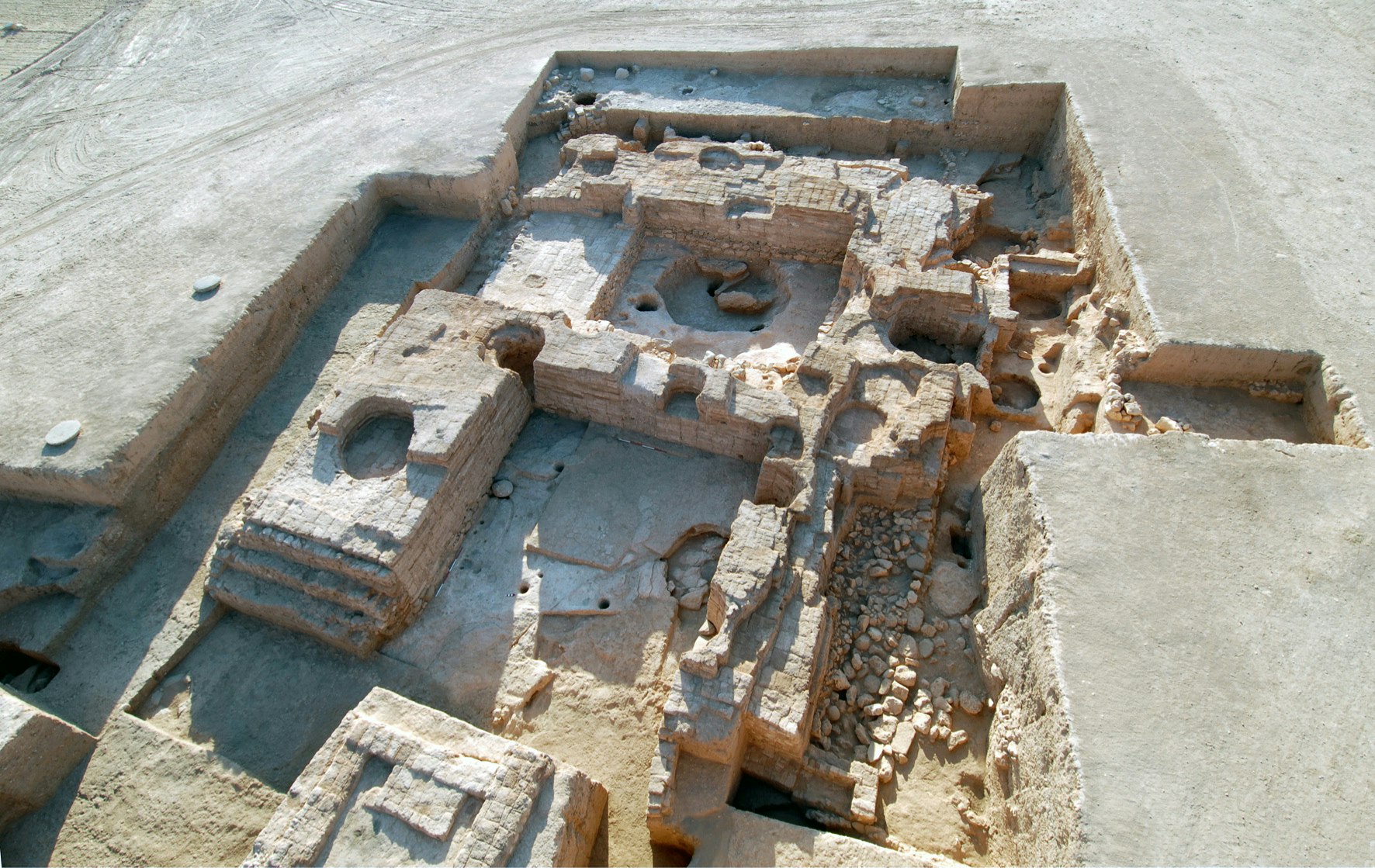
Archaeology is, among human sciences, the discipline with the strongest importance for the rediscovery, but also for the preservation and protection of cultural heritage, as Humankind’s universal patrimony. You will be introduced to the way we ourselves reflect on and are engaged with the study of human past: from the practical and material recovery of ancient traces in the field to the study and interpretation. On the other hand, the discovery of human past implies the correct conservation and presentation for both experts and general public: the study and protection of the past we share every day prevent from any possible destruction, misuse, abuse and thus cancellation of human memory. “Recovering the Humankind's Past and Saving the Universal Heritage” presents to a large public Archaeology as a historical discipline: through an inter-disciplinary perspective you will follow the evolution and change of archaeology to the moment when natural sciences contributed to make the historical reconstructions scientifically sound; the aid of informatics and of virtual reconstructions gives new fascination to the already strong suggestion of Archaeology, as the discipline of discovery par excellence. Within this frame, Ebla, which is the glory of the Sapienza school of Oriental archaeology, will have an exemplary meaning in the course development as a long lasting experience on the field and an excellent example of the scientific results of combined researches and disciplines. Moreover, the course will focus on actual, innovative instruments to preserve, monitor and give value to cultural heritage through a multidisciplinary approach, based on a deep archaeological and historical knowledge but also on ICT technologies. The wide adoption of ICT technologies in our daily life is also impacting in the way in which we interact with our cultural heritage in particular in terms of preservation and dissemination of cultural objects. In this course you will learn the basic techniques to digitize cultural objects and obtain 3D digital copies of a physical objects such as statues, vases or archaeological sites. We will also discuss how to structure the raw data in order to facilitate and make effective the access to digital contents. In particular, we will present the European Data Model, a framework for collecting, connecting and enriching data on cultural objects provided by a number of museum, archives, sites and libraries in Europe.
 Microsoft
Media Relations and Crisis Management
This course will provide you with the essential skills to handle media relations effectively and manage crises with confidence. In this course, you will: • Identify the core principles, frameworks, and strategies for effective crisis communication, describing different types of crises and their corresponding communication approaches. • Formulate media engagement strategies specifically for crisis situations by aligning media and internal messages with the needs of stakeholders. • Develop a plan to cultivate and maintain positive relationships with media professionals and leverage those relationships for brand building. • Identify how to use AI tools to augment and improve crisis communication processes. • Develop a crisis communication plan that integrates media relations strategies and AI capabilities. By the end of this course, you will have a robust understanding of how to manage media relations and handle crises efficiently, utilizing modern AI tools to enhance your strategies.
 Universidad de Palermo
Gestión del Capital Humano en la Indust. de la Hospitalidad
Este curso online te permitirá visualizar la importancia del capital humano relacionado con la hospitalidad. Es preciso considerar y apreciar los puestos de trabajo, dado que las personas son un elemento clave en la gestión de las empresas hoteleras turísticas. Así también se mostrará la importancia de la capacitación y la planificación basándose en las relaciones entre la motivación del recurso humano, el trabajo en equipo y la satisfacción del huésped. Además, se detallará en qué consiste la selección y el reclutamiento del personal para un servicio de calidad, analizando y valorizando el capital humano no sólo como una herramienta para la gestión sino como un elemento diferenciador en la industria de la hospitalidad. Los objetivos del curso son: • Identificar los aspectos del capital humano que los transforman en la verdadera ventaja competitiva en las organizaciones del sector. • Aprender a planificar las necesidades de personal en los diferentes departamentos de una empresa hotelera. • Entender el funcionamiento de equipos altamente competitivos y motivados. • Comprender el alcance de los cambios en la gestión del capital humano en la era de la digitalización y la robótica. • Comprender los procesos de descripción y diseño de perfiles en un contexto de cambio permanente de las competencias laborales.
 University of Colorado System
Security and Privacy in TOR Network
In this MOOC, we will learn about TOR basic concept and see how they protect the security and privacy of users and resist censorship. We will examine how TOR realize the anonymity and utilize its service by downloading and using Tor browser software. A recent attack on TOR’s application flow control called sniper attacks is analyzed. We introduce the hidden service provided by TOR and show how it can be denonymized. We will learn how to setup a hidden server to provide web service on AWS instance. We will also learn the best practices and operational security in providing the hidden services. We will learn how to manage the hidden server using Tor circuit and configure the web server not to reveal the software version information. We also show how it can be defended. To improve TOR’s performance, we discuss the cloud based TOR and their implementation. By the end of this course, you should be able to utilize TOR browser to protect your privacy, set up hidden service on current interface that protect your servers and make it anonymous, you will choosing entry guards wisely since your adversary will try to attack them with DDoS traffic and force you to choose their relay as your entry and exit router. We will also learn the basic components of both censorship and censorship resistance systems, and the scheme deployed by these systems and their attacks.
 LearnKartS
Salesforce Security and Layouts
Want to safeguard your Salesforce organization and provide interfaces that increase efficiency? This Salesforce Security & Layouts course will teach you to implement enterprise-grade security and create customized user experiences, aligning with the Salesforce Administrator Exam (ADM-201) and Platform App Builder (CRT-403) certification exams. The course is ideal for experienced administrators and covers role hierarchies, profiles, permission sets, and user authentication methods. You'll set up field-level security, data access controls, and sharing restrictions, and utilize event monitoring to ensure compliance. You will learn how to create record types, page layouts, custom Lightning pages, and use components, Lightning App Builder templates, and mobile optimizations. This course provides practical mastery of secure, responsive design through videos, quizzes, readings, and real-world demos. By the end of this Salesforce App Builder course, you'll be able to protect data and offer pixel-perfect user experiences. Enroll now! Disclaimer: Salesforce, Lightning, and related marks are trademarks of Salesforce, Inc. This course is not affiliated with or endorsed by Salesforce.
 Ei4Change
Emotional Resilience for Managers
This course is primarily aimed at managers and leaders who want to build their resilience and manage stress more effectively in the workplace. The emotional resilience of those involved in a work setting will contribute significantly to the organisation's success. Almost all of us work in a business environment that is constantly changing, is intense and is unrelenting. With so many challenges and changes to deal with in both life and the workplace, it’s vital to understand how emotions relate to unfamiliar and unpredictable situations and to how they contribute to resilience. Emotional resilience can mean managing the emotions that you experience or managing the emotions of those around you. This course will help you to understand more about the role of emotions in stress management so that you can weather storms in the workplace. The course will help you change the way you think about yourself and the way you approach potentially challenging situations. You will learn how to develop your emotional resilience and use this skill at work. As a manager and leader, you can find out how you can develop resilience within the hearts and minds of your team and your organisation. By completing this course, you will be able to - Discover how you use your emotions to develop your capability to manage your resilience - Determine ways to cope with the emotions associated with change and unfamiliar or unpredictable circumstances - Recognise how realistic optimism helps you to manage stress more effectively - Explore action strategies to develop your personal resilience and the resilience of others - Outline how to develop resilience in others at a personal, team, and organisational level
 Universidad Nacional Autónoma de México
Creando videos educativos con Smartphones
Quien egresa de este curso será capaz de desarrollar y publicar videos educativos, aplicando los elementos y técnicas del desarrollo multimedia y del lenguaje audiovisual. Utilizará herramientas básicas abiertas de grabación, edición y publicación de video en dispositivos móviles, lo que le permitirá compartir recursos educativos con sus alumnos y la sociedad en general, fortaleciendo así su labor docente y contribuyendo al mejoramiento del entorno educativo.
 The University of Sydney
Introduction to Advanced Calculus
This course "Introduction to Advanced Calculus" is a natural sequel to the course "Introduction to Calculus", also on this platform, though students who are well-prepared, with some prior calculus experience, can jump straight in. Once again, the focus and themes of this course address important foundations for applications of mathematics in science, engineering and commerce, with now a particular focus on series representations of functions and an introduction to the theory of differential equations. The course emphasises key ideas and historical motivation for calculus, while at the same time striking a balance between theory and application, leading to a mastery of key threshold concepts in foundational mathematics. Students taking Introduction to Advanced Calculus will: • review key ideas of differential calculus, with further emphasis on pivotal underlying themes and results, such as the Mean Value Theorem and the Intermediate Value Theorem, and add further tools, such as L'Hopital's Rule, Newton's Method and hyperbolic functions (first week) • review key ideas of integral calculus, extending techniques of integration, including tricky substitutions, the method of integration by parts, including a proof that the number pi is irrational, the method of partial fractions, the disc and shell method for finding volumes of revolutions, formulae for arc length and surface area of revolution, application of Riemann sums to estimate work, and an introduction to improper integrals (second week) • introduce sequences and series, tests for convergence, and series representations of functions, including estimates of error terms using Taylor's theorem and a proof that Euler's number e is irrational (third week) • introduce the theory of differential equations, including discussions of separable equations, including the logistic equation and logistic function, equilibrium solutions, first order equations, solved using the integrating factor method, second order equations with constant coefficients and an introduction to solving systems of equations, modelling two interacting populations, which may be in a symbiotic or predator-prey relationship, finishing with a brief discussion of connections with linear algebra and the matrix exponential (fourth week).
 Google Cloud
Google AppSheet: Getting Started
This is a self-paced lab that takes place in the Google Cloud console. Learn how to use Google AppSheet to enable everyone in your organization to build and extend applications without coding..