

The Global Scholarly Directory.
Discover world-class academic programs curated for the modern intellectual. Search through 19877+ degrees and professional certificates.
 EDUCBA
Apply Advanced Redis Data Structures & Messaging Patterns
By the end of this course, learners will be able to apply Redis Sets and Sorted Sets, analyze ranking and scoring strategies, implement efficient querying techniques, and design real-time data and messaging solutions using Redis. This course provides a structured, hands-on journey from intermediate to advanced Redis concepts, with a strong focus on Sets, Sorted Sets, and real-world use cases. Learners will gain practical expertise in managing unique data, building leaderboards, executing score-based and lexicographical queries, and handling dynamic ranking scenarios. Advanced topics such as HyperLogLog for large-scale cardinality estimation and Redis Pub/Sub for real-time messaging are also covered in depth. By completing this course, learners will be equipped to design high-performance, scalable Redis-backed applications for analytics, real-time systems, and event-driven architectures. The course stands out by combining conceptual clarity with practical scenarios, clear progression from fundamentals to advanced patterns, and assessment-driven learning through practice and graded quizzes. Unlike generic Redis tutorials, this course emphasizes applied learning, real-world design decisions, and performance-oriented thinking—making it ideal for developers, data engineers, and architects aiming to use Redis confidently in production environments.
 Macquarie University
Excel Skills for Business: Intermediate II
Spreadsheet software remains one of the most ubiquitous pieces of software used in workplaces across the world. Learning to confidently operate this software means adding a highly valuable asset to your employability portfolio. In this third course of our Excel specialization Excel Skills for Business you will delve deeper into some of the most powerful features Excel has to offer. When you have successfully completed the course you will be able to Check for and prevent errors in spreadsheets; Create powerful automation in spreadsheets; Apply advanced formulas and conditional logic to help make informed business decisions; and Create spreadsheets that help forecast and model data. Once again, we have brought together a great teaching team that will be with you every step of the way. Nicky, Prashan and myself will guide you through each week. As we are exploring these more advanced topics, we are following Alex who is an Excel consultant called in by businesses that experience issues with their spreadsheets.
 Sungkyunkwan University
In Search for the Origins of Korean Philosophy
This course will give you an insight into the formative years of “Korean” culture and thought and uncover together who were the earliest people we could describe as being “Korean.” Korea is unique, but not of a single origin. Through this course, you will rediscover “Korea” today as a unique linguistic-cultural continuum. And from this, you may gain a deeper understanding of yourself by acknowledging the various factors that have influenced you to form your mature identity.
 Johns Hopkins University
Data – What It Is, What We Can Do With It
This course introduces students to data and statistics. By the end of the course, students should be able to interpret descriptive statistics, causal analyses and visualizations to draw meaningful insights. The course first introduces a framework for thinking about the various purposes of statistical analysis. We’ll talk about how analysts use data for descriptive, causal and predictive inference. We’ll then cover how to develop a research study for causal analysis, compute and interpret descriptive statistics and design effective visualizations. The course will help you to become a thoughtful and critical consumer of analytics. If you are in a field that increasingly relies on data-driven decision making, but you feel unequipped to interpret and evaluate data, this course will help you develop these fundamental tools of data literacy.
 Packt
Packt
Cisco CyberOps Associate (200-201)
Updated in May 2025. This course now features Coursera Coach! A smarter way to learn with interactive, real-time conversations that help you test your knowledge, challenge assumptions, and deepen your understanding as you progress through the course. In this comprehensive course, you will gain essential knowledge and practical skills in cybersecurity operations and analysis. You'll understand the importance of security practices, tools, and frameworks like the CIA Triad, risk management, and access control models, providing you with a solid foundation in protecting networks and systems. As you advance, you'll be introduced to critical concepts such as threat actors, data visibility challenges, and how to differentiate between key security concepts like vulnerabilities and risks. The course progresses with a focus on cybersecurity analysis. You'll explore how to identify critical data types and investigate network and web application attacks. Understanding the role of technologies like tcpdump, NetFlow, and firewalls in security monitoring will equip you with the tools needed to track potential threats. You'll also delve into social engineering, evasion techniques, and certificate components, all crucial in analyzing and defending against modern cyber threats. The modules in this section will help you distinguish between common types of attacks and their potential impact on your organization. As the course continues, you'll shift towards more advanced intrusion analysis techniques. You'll learn how to categorize intrusion events using models like the cyber kill chain, understand the difference between firewall operations, and analyze traffic through methods like deep packet inspection and Wireshark. You'll also gain hands-on experience in extracting files from TCP streams and interpreting the artifacts involved in a cybersecurity event. These skills are essential for understanding the technical side of cybersecurity, helping you identify and mitigate advanced threats. This course is ideal for aspiring cybersecurity analysts and professionals looking to deepen their understanding of security operations and analysis. No prior experience is required, though familiarity with basic network concepts is beneficial. The content is structured for individuals aiming to work in Security Operations Centers (SOCs), providing a clear pathway to developing expertise in cybersecurity defense, forensic analysis, and advanced intrusion detection techniques. By the end, you'll be prepared to apply various security approaches and methods to ensure the safety of digital infrastructures.
 Sapienza University of Rome
Paesaggi di Roma Antica. Archeologia e storia del Palatino.
The course presents the topographical lay-out of the most relevant part of the city. Research developed on the Palatine since the end of last century by the team of Sapienza Classical Archaeologists opened a new phase in the urban archaeological investigation and in the scientific debate about the relation between archaeological features and literary tradition as well as the “correct use“ of both kind of evidence, key issues of wide archaeological and historical significance. Students will be introduced to methods and procedures developed and successfully applied by Sapienza School of Classical Archaeology in collection, analyses, integration and interpretation of complex and multi-stratified contexts, including actual methods and innovative instruments based on a deep archaeological and historical knowledge but also on ICT technologies. The course will introduce students to the way we have been reflecting on over the last twenty years and still are engaged with the study of the past of our cities, beginning from the most complex case in the ancient Mediterranean World: the core of Italy and of Roman Empire. On the other hand, knowledge means also preservation and defense of material remains and cultural memory.
 Universitat de Barcelona
Molecular Tumor Board 2024-25
Se trata de un curso que nace a raíz de una de las sesiones formativas que realiza cada 15 días el Servicio de Oncología Médica del Hospital Clínic de Barcelona (HCB). En este curso se presentan casos clínicos simulando un MTB de tumores sólidos, con un objetivo principal, mejorar el conocimiento específico del impacto clínico del perfil molecular en tumores sólidos. Está destinado a médicos oncólogos y a estudiantes y profesionales vinculados a la oncología médica. Cada seminario que conforma el curso lo presenta un profesional de una patología diferente del Servicio de Oncología Médica del HCB.
 University of Michigan
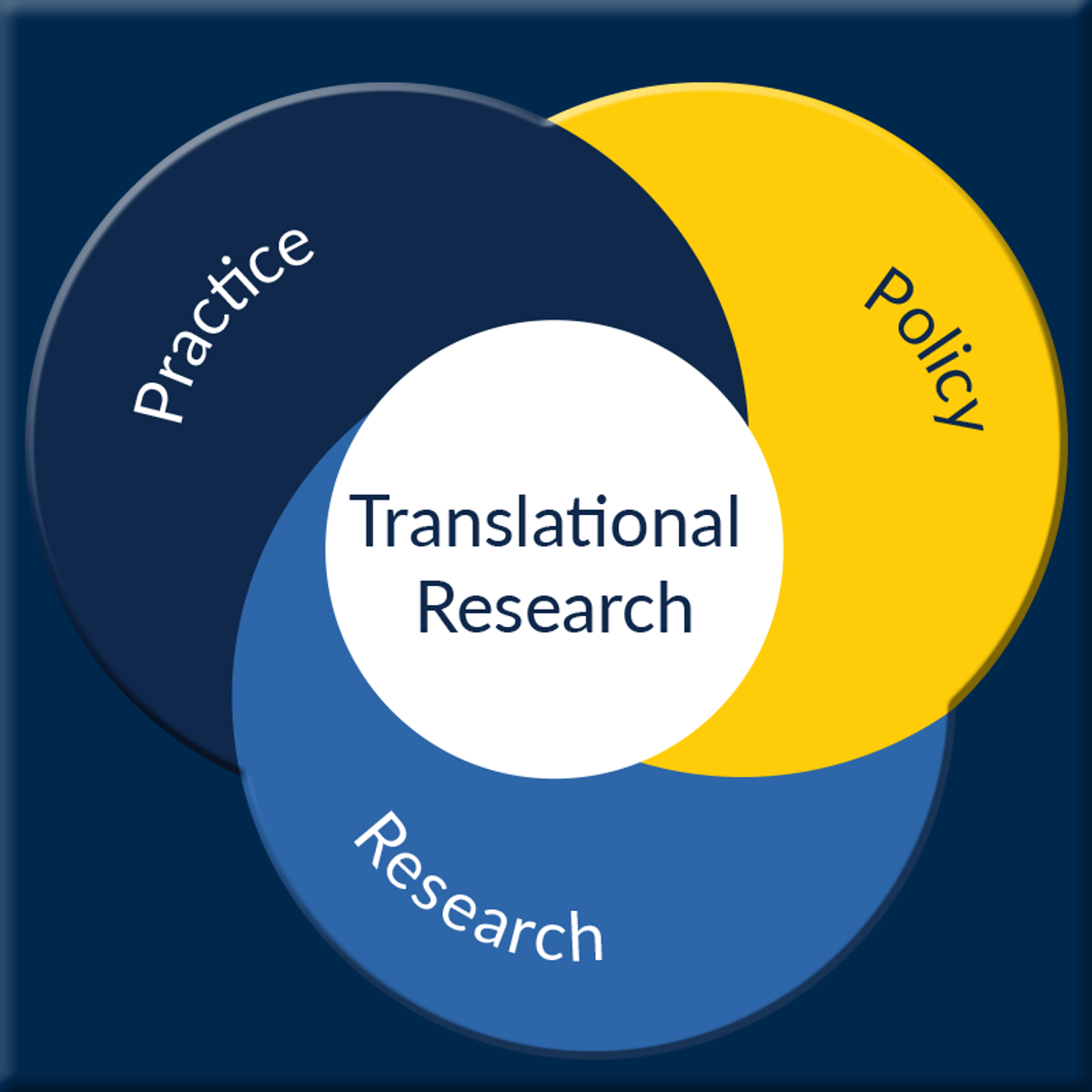
Introduction to Translational Science
Translational science is the process of turning observations in the laboratory, clinic, and community into interventions that improve the health of individuals and populations. In this course, you’ll learn about the role of translational research in moving scientific discoveries into applications for improving human health. With an understanding of the four stages of translational research, you’ll be able to assess team roles for each stage and explain the importance of rigorous research, responsible conduct of research, and the differences between them. Finally, you’ll learn about career opportunities within the in-demand field of translational research. This is an ideal introduction for undergraduate or graduate students interested in the practical application of their research to improve the health of their community. This is the first course of five in the “Translational Science” series.
 Whizlabs
Automation with Ansible
Automation with Ansible is a fundamental course for deploying end-to-end automation. This course provides a secure and stable foundation for automating your environment. Ansible Automation helps organizations to create, share and manage the automation of tasks from development and operations to security and network teams. This course provides 3 hours of training videos which are segmented into modules. The course concepts are easy to understand through lab demonstrations. In order to test the understanding of learners, every module includes Assessments in the form of Quiz and In Video Questions. A mandatory Graded Questions Quiz is also provided at the end of every module. Basic Linux system administration skills are asset for learning Automation with Ansible. By the end of this course, Learners will be able to -Explore Ansible's components such as its ease of deployment, learning and debugging -Demonstrate working of portal that acts as a central repository for sharing, reusing and locating Ansible-related Content -Overview of Ansible Playbooks, which is a YAML based automation tool that developers can use to automate various tasks. -Elaborate Automation with Ansible for remote clients in order to explain Ansible inventory files
 Pohang University of Science and Technology(POSTECH)
Ferrous Technology I
Steel, ever-evolving material, has been the most preeminent of all materials since it can provide wide range of properties that can meet ever-changing requirements. In this course, we explore both fundamental and technical issues related to steels, including iron and steelmaking, microstructure and phase transformation, and their properties and applications.
 Packt
Packt
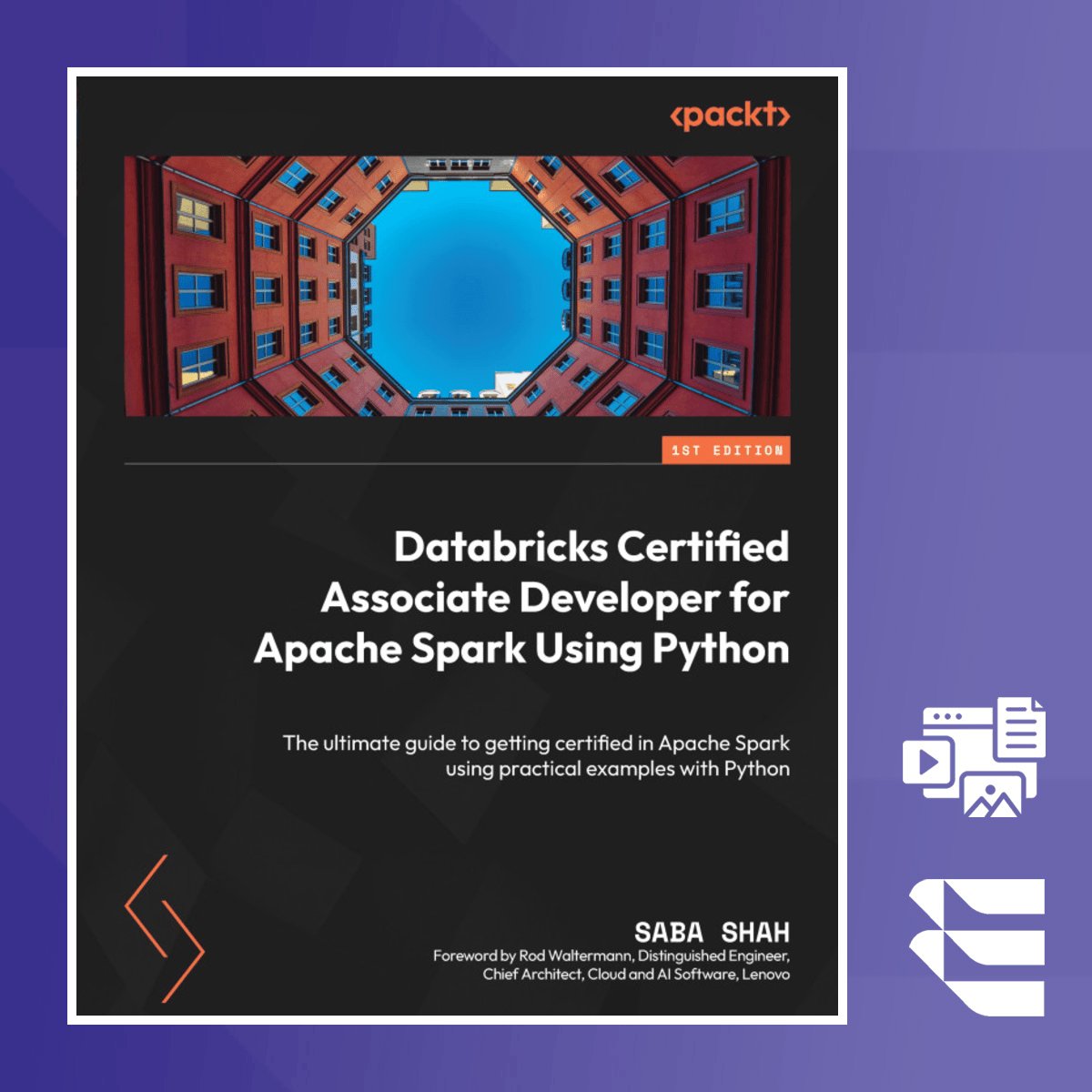
Databricks Associate Developer: Apache Spark with Python
This course equips you with essential skills for working with Apache Spark using Python, preparing you for Databricks' certification exam. Apache Spark is a powerful open-source engine for processing large-scale data, and mastering it is a key asset in the data engineering and big data domain. Throughout the course, learners will gain hands-on experience with Spark's core components, including data processing, streaming, and machine learning. Practical examples and exercises will build confidence and ensure you're ready for real-world challenges. What sets this course apart is its strong focus on practical skills and real-world applications of Apache Spark. You'll not only learn the theory but also apply your knowledge in hands-on projects that reinforce the concepts. This course is ideal for aspiring data engineers, analysts, or scientists who want to achieve Databricks certification. A solid understanding of Python is required, and familiarity with Pyspark is beneficial, but not mandatory.
 University of Illinois Urbana-Champaign
Genomics: Decoding the Universal Language of Life
What is a genome? A genome contains all of the information that a cell needs to develop, function, and reproduce itself, and all the information needed for those cells to come together to form a person, plant, or animal. Genomes contain an organism’s complete set of genes, and also the even tinier genetic structures that help regulate when and how those genes are used. The ability to regrow a torn ligament, the clues that might predict the onset of mental illness, the nutritional potential of crops, and even the history of life itself, are all encoded in genomes. By taking this course, you will discover how scientists are deciphering the language of genomes to learn how to develop sustainable food and fuel supplies, improve disease treatment and prevention, and protect our environment. Professor Robinson is the main instructor for this course. In addition, each module features several guest instructors. These guest instructors come from diverse fields of study—biology, physics, computer science, and many others—and pursue diverse research goals, yet they share a common interest in genomic approaches and technologies. The guest instructors include: - Elizabeth (Lisa) Ainsworth, Associate Professor of Plant Biology - Mark Band, Director of the Functional Genomics Facility - Alison Bell, Associate Professor of Animal Biology - Jenny Drnevich, Functional Genomics Bioinformatics Specialist with High-Performance Biological Computing - Christopher Fields, Associate Director of High-Performance Biological Computing - Bruce Fouke, Director of the Roy J. Carver Biotechnology Center - Glenn Fried, Director of the Carl R. Woese Institute for Genomic Biology Core Facilities - Nigel Goldenfeld, Professor of Physics - Brendan Harley, Assistant Professor of Chemical and Biomolecular Engineering - Alvaro Hernandez, Director of the High-Throughput Sequencing and Genotyping Facility - Victor Jongeneel, former NCSA Director of Bioinformatics and former Director of High-Performance Biological Computing - Kingsley Boateng, Senior Research Specialist with the Carl R. Woese Institute for Genomic Biology Core Facilities - Stephen Long, Professor of Plant Biology and Crop Sciences - Ruby Mendenhall, Associate Professor of African American Studies - William Metcalf, Professor of Microbiology - Karen Sears, Assistant Professor of Animal Biology - Saurabh Sinha, Associate Professor of Computer Science - Lisa Stubbs, Professor of Cell and Developmental Biology - Rachel Whitaker, Associate Professor of Microbiology - Derek Wildman, Professor of Molecular and Integrative Physiology - Peter Yau, Director of the Protein Sciences Facility
 Board Infinity
Step-by-Step Resume Building: Job-Winning ATS-Proof Resumes
The course provides a structured, step-by-step approach to resume building, designed for fresh graduates, career changers, and experienced professionals seeking to create job-winning, ATS-proof resumes. It focuses on helping learners understand recruiter expectations, optimize formatting, and position achievements strategically using proven frameworks like STAR. Unlike generic templates, this course equips you with insider recruiter insights, real-world strategies, and practical tools to ensure your resume passes applicant tracking systems (ATS) while showcasing your strengths effectively. Through interactive lessons, case studies, and guided assignments, you will learn how to conduct a personal SWOT analysis, identify transferable skills, and build a powerful Master Resume. You will also gain hands-on practice tailoring resumes to job-specific opportunities, polishing design and content for readability, and implementing ongoing resume maintenance tips. By the end, you’ll have a professional, recruiter-approved resume ready to secure interviews and stand out in competitive job markets. By the end of this course, you will be able to: - Understand what recruiters and ATS systems look for in top-tier resumes. - Write tailored summaries, achievements, and experiences using frameworks like STAR. - Strategically format and structure resumes for readability and impact. Disclaimer: This is an independent educational resource created by Board Infinity for informational and educational purposes only. This course is not affiliated with, endorsed by, sponsored by, or officially associated with any company, organization, or certification body unless explicitly stated. The content provided is based on industry knowledge and best practices but does not constitute official training material for any specific employer or certification program. All company names, trademarks, service marks, and logos referenced are the property of their respective owners and are used solely for educational identification and comparison purposes.
 Google
Introduction to Detection and Incident Response
In this course, you'll focus on incident detection and response. You will learn what defines a security incident and explain the incident response lifecycle, including the roles and responsibilities of incident response teams. You will also explore how security professionals verify and respond to malicious threats. By the end of this course, you will be able to: - Explain the lifecycle of an incident - Describe the tools used in the documentation, detection, and management of incidents. - Determine the roles and responsibilities of incident response teams - Identify the steps to contain, eradicate, and recover from an incident
 Google Cloud
VPC Flow Logs - Analyzing Network Traffic
This is a self-paced lab that takes place in the Google Cloud console. In this lab, you configure a network to record traffic to and from an apache web server using VPC Flow Logs. You then export the logs to BigQuery to analyze them.
 Packt
Packt
Finding Problems Worth Solving
This course features Coursera Coach! A smarter way to learn with interactive, real-time conversations that help you test your knowledge, challenge assumptions, and deepen your understanding as you progress through the course. This course is designed to guide you through the critical process of identifying and solving impactful problems that can change your life and the world. By combining real-world applications, AI integration, and personal development strategies, you will learn how to focus on meaningful challenges while leveraging technology for scalability and innovation. From understanding problems across life stages to harnessing AI for profitable solutions, you will gain valuable insights into making your solutions impactful and sustainable. Throughout the course, you'll dive into modules that explore the foundations of problem-solving, how to scale solutions, and how to align your personal values with business success. You'll also learn how to apply your knowledge to global issues, turning complex challenges into opportunities for growth. Whether you're seeking personal fulfillment or aiming to solve large-scale problems, this course provides the tools you need to make an impact. This course is ideal for aspiring entrepreneurs, professionals looking to innovate, or anyone interested in aligning passion with profit to solve problems. No prior technical expertise is required; the course is accessible to learners of all levels. It's designed for individuals who want to create value while solving important problems in today's world. By the end of the course, you will be able to identify problems worth solving, develop scalable solutions, harness AI for profitable ventures, and apply your newfound skills to both personal and global challenges.