

The Global Scholarly Directory.
Discover world-class academic programs curated for the modern intellectual. Search through 19877+ degrees and professional certificates.
 Google Cloud
Understanding Cloud Spanner
In this course you will learn about Cloud Spanner. You will get an introduction to Cloud Spanner, contrasting it with other Database products to understand when and how to use Spanner to solve your relational database needs at scale. You will learn how to create and manage Spanner databases using various tools on Google Cloud, learn to optimize relational schemas with Spanner’s distributed database model in mind, interact with your Spanner databases using the Spanner APIs, integrate Spanner with your applications, and learn how to use other Google tools for administering Spanner databases and managing your data.
 University of Pittsburgh
Clinical Terminology for International and U.S. Students
Understanding the clinical terms and abbreviations commonly used during verbal or written communication in U.S. hospitals is challenging. This course is designed for U.S. health care profession students and for international students and practitioners who want to become more familiar with the language of the U.S. clinical setting. Others, such as caregivers and medical interpreters, who wish to develop a better understanding of terms and abbreviations used by health care providers will find this course helpful. The course provides visual and auditory learning experiences to enhance the understanding of terms and abbreviations commonly encountered on a general U.S. hospital unit. You need to pay the fee or apply for financial aid to access the course and earn a certificate. To find out more, click Learn more and apply next to the information about Financial Aid. (Use a computer, not a mobile device, for this step.)
 Infosec
Introduction to Privacy - Part 1
This course will explore how to create a privacy program including the dangers, challenges and methods. We will also explore concepts like Privacy governance, Privacy program frameworks and discuss existing legal, standards and frameworks that can be utilized to build your privacy program.
 Google
إنشاء تصميمات ونماذج أوّلية عالية الدقة في Figma
إنشاء تصميمات ونماذج عالية الدقة في Figma هي الدورة الخامسة في برنامج الشهادة الذي سيزودك بالمهارات التي تحتاجها للتقدم إلى وظائف المبتدئين في تصميم تجربة المستخدم (UX). في هذه الدورة، ستتابع برامج تعليمية تدريجية لتتعلم كيفية إنشاء تصميمات عالية الدقة، تسمى نماذج تجريبية، في Figma، وهي أداة تصميم شائعة. بعد ذلك، ستحول هذه التصميمات إلى نموذج أوّلي تفاعلي يعمل كمنتج نهائي. ستقوم بإجراء بحث لجمع الملاحظات حول تصميماتك وإجراء تحسينات. أخيرًا، ستتعلم كيفية مشاركة تصميماتك مع فرق التطوير وتسليط الضوء على عملك في ملف تجربة المستخدم الشخصي الاحترافية. سيعمل مصممو تجربة المستخدم والباحثون الحاليون في Google كمدربين لك، وستكمل الأنشطة العملية التي تحاكي سيناريوهات تصميم تجربة المستخدم في العالم الحقيقي. يجب أن يكون المتعلمون الذين يكملون الدورات السبع في برنامج الشهادة مؤهلين للتقدم بطلب للحصول على وظائف مصممي تجربة المستخدم المبتدئين. بنهاية هذه الدورة، ستكون قادرًا على: - بناء نماذج تجريبية ونماذج أولية عالية الدقة في Figma - تحديد وتطبيق عناصر ومبادئ التصميم المرئي الشائعة على التصميمات. - شرح كيف يمكن استخدام أنظمة التصميم لتنظيم وتوحيد وتحسين التصميمات. - فهم دور جلسات نقد التصميم والملاحظات أثناء التكرار التحسيني على التصميمات. - معرفة كيفية تسليم مشروعات التصميم النهائية إلى فرق الهندسة. - تصميمات تطبيقات الهاتف المحمول الكاملة لتضمينها في ملف تجربة المستخدم الشخصي الاحترافي. هذه الدورة مناسبة لمصممي تجربة المستخدم على مستوى المبتدئين الذين أكملوا الدورات الأربع السابقة لشهادة تصميم تجربة المستخدم من Google. بدلاً من ذلك، يجب أن يتمتع المتعلمون الذين لم يكملوا الدورات السابقة بفهم قوي لعملية التصميم، وكيفية إنشاء تصميمات منخفضة الدقة على الورق وفي Figma، وكيفية إجراء دراسات قابلية الاستخدام.
 Emory University
Extinctions: Past, Present, & Future
This course introduces you to the five mass extinctions of the pre-human past, their causes and significance to the history of life on earth, and the current mass extinction happening during our time. We’ll also explore the history of paleontology and geological study and review the key players that influenced the science today. Regardless of your familiarity with the topic, you'll get portable handouts, lively demonstrations, and quizzes that bridge and enhance your knowledge.
 Google Cloud
生成 AI: chatbot を超えて
「生成 AI: chatbot を超えて」は、生成 AI リーダー学習プログラムの最初のコースで、前提条件はありません。このコースは、chatbot の基礎的な理解をさらに広げ、組織で実現できる生成 AI の真の可能性を把握することを目的としています。基盤モデルおよびプロンプト エンジニアリングなど、生成 AI の力を活用するうえで重要な概念も紹介します。また、このコースでは、組織において優れた生成 AI 戦略を策定する場合に検討するべき重要事項も見ていきます。
 LearnQuest
Java Servlet Pages (JSPs)
This course will provide an overview of JSP and show the power of using Scripting Elements. Additionally, key JSP Directives are covered. We’ll do an overview of JSP Tags and introduce how to create and access Java Beans to manipulate their properties. We explore JSP Expression Language, examining the rules, syntax, and the most commonly used implicit objects. We also cover standard tags and JSTL.
 Coursera
AI Sales Calling with Vapi: Automated SAAS Demo Scheduler
Did you know that we can now use AI voice assistants to conduct sales calls and potentially increase appointment booking rates by up to 30%? In this intermediate-level, 2-hour project, you'll create an automated outbound call system using Vapi and Make.com. You'll set up AI-driven sales calls, integrate dynamic data for personalized scripts, and build an automated appointment scheduler. By the end, you'll have a sophisticated system that books software demo appointments with incoming leads automatically. This project is perfect for sales and marketing professionals or developers ready to supercharge their outreach with AI. To get the most out of it, you should be comfortable with code or no-code tools like Make.com or Zapier, have some experience with APIs and JSON, and have a credit card handy for GPT tokens.
 Arizona State University
Managing Up
Do you struggle to share feedback with your superiors? Do you need to learn how to develop rapport and credibility with them first? Learn these skills and more from the Managing Up course!
 Coursera
GenAI for Product R&D Teams
"GenAI for Product R&D Teams" offers an introductory exploration into the innovative integration of GenAI within product research and development processes. Tailored for R&D professionals, this course highlights the transformative potential of GenAI in accelerating product innovation, enhancing creative processes, and optimizing development strategies. This course is tailored for product R&D team leaders and their teams, including R&D Managers and Team Leads, Product Developers, Design Engineers, and Training and Development Specialists within R&D departments. Learners should have a fundamental understanding of product R&D principles and strategies as well as an eagerness to learn and adapt to new technologies. This course aims to demystify GenAI technologies, illustrating their practical benefits and ethical considerations, to empower R&D teams in harnessing GenAI's full potential. Whether you're looking to streamline your R&D processes, enhance product innovation, or explore new development horizons, this course provides the necessary knowledge and skills to embark on your GenAI journey.
 Google
Fundamentos: dados, dados, em todos os lugares
Este é o primeiro curso do Certificado de análise de dados do Google. Estes cursos darão a você as habilidades necessárias para se candidatar em empregos de analista de dados de nível introdutório. Organizações de todos os tipos precisam de analistas de dados para ajudá-las a melhorar os processos, identificar oportunidades e tendências, lançar novos produtos e tomar decisões conscientes. Neste curso, você conhecerá o mundo da análise de dados com um currículo prático desenvolvido pelo Google. O material compartilhado abrange muitos tópicos importantes de análise de dados e foi projetado para oferecer uma visão geral do que está por vir no Certificado de análise de dados do Google. Os analistas de dados do Google vão instruir e oferecer maneiras práticas de realizar tarefas comuns de analistas de dados com as melhores ferramentas e recursos. Os alunos que concluírem este programa de certificação poderão se candidatar a empregos de nível introdutório para analista de dados. Nenhuma experiência anterior é necessária. Ao final deste curso, você poderá: - Ter uma compreensão das práticas e dos processos utilizados por um analista de dados júnior ou associado no trabalho cotidiano. - Aprender sobre as principais habilidades (limpeza, análise e visualização de dados) e ferramentas (planilhas, SQL, programação R, Tableau) analíticas que você pode incluir às ferramentas profissionais que já tem. - Descobrir uma ampla variedade de termos e conceitos relevantes para a função de analista de dados júnior, como o ciclo de vida e o processo de análise de dados. - Avaliar o papel da análise no ecossistema de dados. - Realizar uma autoavaliação de pensamento analítico. - Explorar as oportunidades de emprego disponíveis após a conclusão do programa e aprender sobre as práticas recomendadas na procura de uma vaga.
 SAP
SAP
Understanding the Enterprise Systems Environment
Understanding the Enterprise Systems Environment is the second course in the SAP Technology Consultant Professional Certificate program. The course builds your understanding of the digital landscape. You’ll explore business processes and organizational alignment. You’ll get an overview of how systems are designed and developed, and consider architecture, infrastructure, application development, data science, cloud, privacy, and security. You’ll build your understanding of the SAP platform and consider key development and deployment models covering Advanced Business Application Programming (ABAP), Java, SAP API, and SAP Fiori. Plus, you’ll explore gap analysis using SAP RISE and Activate and become familiar with SAP cloud strategy, architecture, and tools. By the end of this course, you will be able to: Describe how digital transformation can impact a customer’s organization, business processes and tools (people/process/tools). Identify the key elements of system design and development and how they relate to specific IT requirements. Identify different computing models (e.g. Compute Network Storage, OnPrem, Cloud etc) and architectures (e.g. Native, Hybrid, Multi-Cloud). Explain the key elements of the SAP platform and environment. Describe key Application, Development and Programming models. Explain the key elements of the SAP Cloud Strategy. Understand the key questions to keep in mind when faced with a specific request from a prospective client.
 Illinois Tech
Cloud: Software as a Service - Bachelor's
INSERT COURSE DESCRIPTION
 University of California San Diego
Big Data Modeling and Management Systems
Once you’ve identified a big data issue to analyze, how do you collect, store and organize your data using Big Data solutions? In this course, you will experience various data genres and management tools appropriate for each. You will be able to describe the reasons behind the evolving plethora of new big data platforms from the perspective of big data management systems and analytical tools. Through guided hands-on tutorials, you will become familiar with techniques using real-time and semi-structured data examples. Systems and tools discussed include: AsterixDB, HP Vertica, Impala, Neo4j, Redis, SparkSQL. This course provides techniques to extract value from existing untapped data sources and discovering new data sources. At the end of this course, you will be able to: * Recognize different data elements in your own work and in everyday life problems * Explain why your team needs to design a Big Data Infrastructure Plan and Information System Design * Identify the frequent data operations required for various types of data * Select a data model to suit the characteristics of your data * Apply techniques to handle streaming data * Differentiate between a traditional Database Management System and a Big Data Management System * Appreciate why there are so many data management systems * Design a big data information system for an online game company This course is for those new to data science. Completion of Intro to Big Data is recommended. No prior programming experience is needed, although the ability to install applications and utilize a virtual machine is necessary to complete the hands-on assignments. Refer to the specialization technical requirements for complete hardware and software specifications. Hardware Requirements: (A) Quad Core Processor (VT-x or AMD-V support recommended), 64-bit; (B) 8 GB RAM; (C) 20 GB disk free. How to find your hardware information: (Windows): Open System by clicking the Start button, right-clicking Computer, and then clicking Properties; (Mac): Open Overview by clicking on the Apple menu and clicking “About This Mac.” Most computers with 8 GB RAM purchased in the last 3 years will meet the minimum requirements.You will need a high speed internet connection because you will be downloading files up to 4 Gb in size. Software Requirements: This course relies on several open-source software tools, including Apache Hadoop. All required software can be downloaded and installed free of charge (except for data charges from your internet provider). Software requirements include: Windows 7+, Mac OS X 10.10+, Ubuntu 14.04+ or CentOS 6+ VirtualBox 5+.
 Coursera
Introducción a la terminal de comandos de Linux
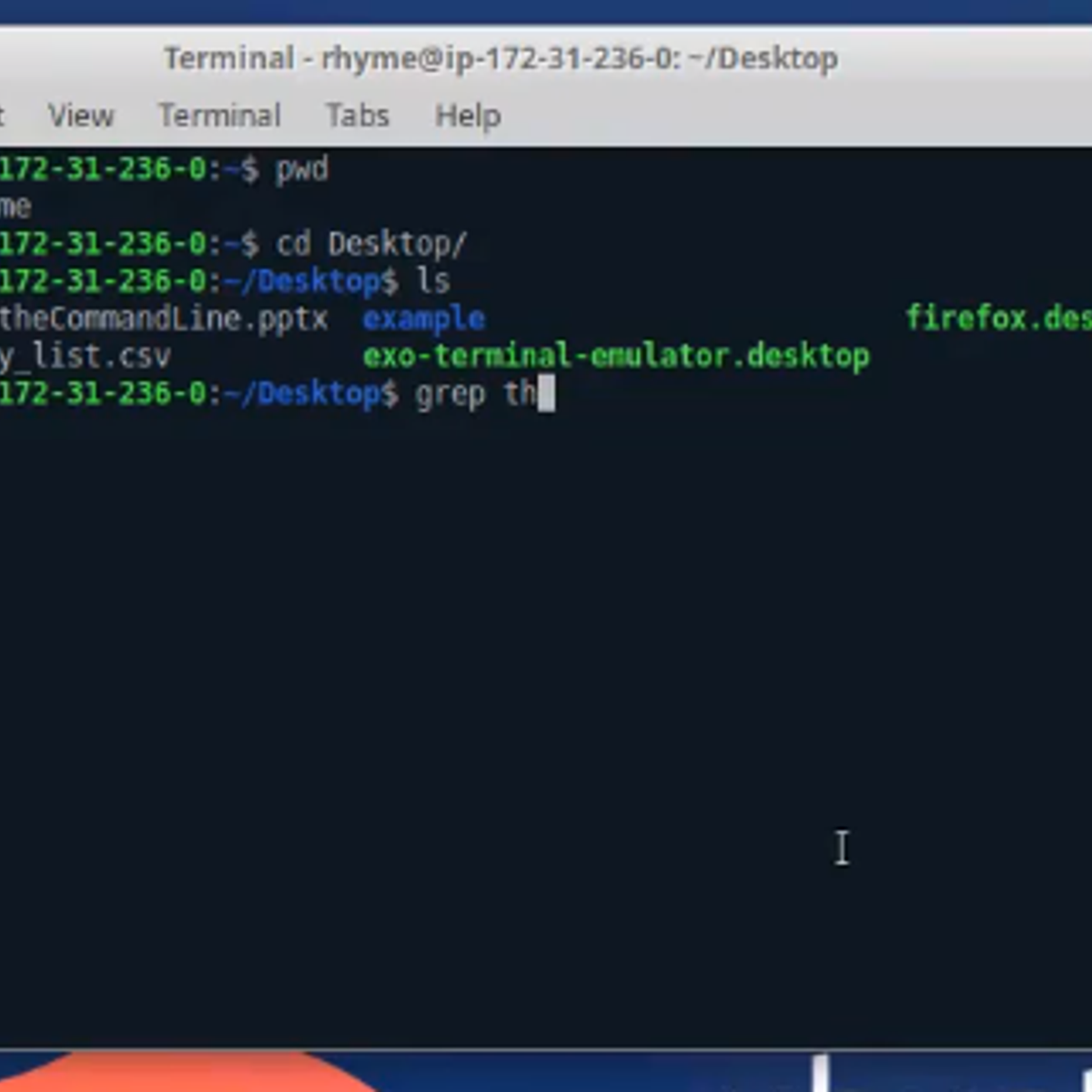
Linux es un sistema operativo popular que se basa en el sistema operativo de Unix. Tiene muchas distribuciones que tienen diferentes interfaces para instalar software, diferentes interfaces de usuario, etc. Una cosa que todas las 'distros' tienen en común es que todas tienen una interfaz de línea de comandos, o terminal. De hecho, a veces no hay ninguna interfaz de usuario excepto la propia terminal. Un servidor Linux que ejecuta una aplicación web en AWS, por ejemplo, puede contener sólo el software necesario para ejecutar la aplicación, y ninguna interfaz gráfica de usuario en absoluto. Es crucial aprender la línea de comandos de Linux si vas a ser un usuario productivo de Linux y/o administrar un servidor Linux. En este curso, utilizarás los comandos de Linux para navegar por los directorios de Linux, buscar archivos, buscar patrones, crear archivos y directorios, y eliminar archivos y directorios. Nota: Este curso está dirigido a personas que buscan iniciarse en el mundo de los sistemas Unix y deseen aprender a manejar la terminal de comandos.
 EDUCBA
Implement SQL Server Loyalty Points Management System
Learners will be able to design a relational database for a loyalty points system, implement customer and gift management features, execute point earning and redemption workflows, and generate transaction history reports using SQL Server logic. This course provides a practical, end-to-end case study focused on building a Loyalty Points Management System using SQL Server. Learners progress from understanding system requirements and database design to implementing real application workflows such as customer registration, gift configuration, point accumulation, redemption, and reporting. Each module reinforces how data integrity, transaction tracking, and business rules are applied in a real-world rewards system. By completing this course, learners gain hands-on experience translating business requirements into structured database solutions and application logic. The course emphasizes practical SQL concepts, including functions, stored procedures, and transaction handling, within a cohesive case study rather than isolated examples. What makes this course unique is its system-level perspective: learners build and understand a complete loyalty management workflow, mirroring real enterprise scenarios. This approach helps learners strengthen problem-solving skills, improve database design confidence, and prepare for practical roles involving SQL Server–based business applications.