

The Global Scholarly Directory.
Discover world-class academic programs curated for the modern intellectual. Search through 19877+ degrees and professional certificates.
 Eindhoven University of Technology
Improving your statistical inferences
This course aims to help you to draw better statistical inferences from empirical research. First, we will discuss how to correctly interpret p-values, effect sizes, confidence intervals, Bayes Factors, and likelihood ratios, and how these statistics answer different questions you might be interested in. Then, you will learn how to design experiments where the false positive rate is controlled, and how to decide upon the sample size for your study, for example in order to achieve high statistical power. Subsequently, you will learn how to interpret evidence in the scientific literature given widespread publication bias, for example by learning about p-curve analysis. Finally, we will talk about how to do philosophy of science, theory construction, and cumulative science, including how to perform replication studies, why and how to pre-register your experiment, and how to share your results following Open Science principles. In practical, hands on assignments, you will learn how to simulate t-tests to learn which p-values you can expect, calculate likelihood ratio's and get an introduction the binomial Bayesian statistics, and learn about the positive predictive value which expresses the probability published research findings are true. We will experience the problems with optional stopping and learn how to prevent these problems by using sequential analyses. You will calculate effect sizes, see how confidence intervals work through simulations, and practice doing a-priori power analyses. Finally, you will learn how to examine whether the null hypothesis is true using equivalence testing and Bayesian statistics, and how to pre-register a study, and share your data on the Open Science Framework. All videos now have Chinese subtitles. More than 30.000 learners have enrolled so far! If you enjoyed this course, I can recommend following it up with me new course "Improving Your Statistical Questions"
 Google Cloud
Serverless Data Processing with Dataflow: Foundations
This course is part 1 of a 3-course series on Serverless Data Processing with Dataflow. In this first course, we start with a refresher of what Apache Beam is and its relationship with Dataflow. Next, we talk about the Apache Beam vision and the benefits of the Beam Portability framework. The Beam Portability framework achieves the vision that a developer can use their favorite programming language with their preferred execution backend. We then show you how Dataflow allows you to separate compute and storage while saving money, and how identity, access, and management tools interact with your Dataflow pipelines. Lastly, we look at how to implement the right security model for your use case on Dataflow. Prerequisites: The Serverless Data Processing with Dataflow course series builds on the concepts covered in the Data Engineering specialization. We recommend the following prerequisite courses: (i)Building batch data pipelines on Google Cloud : covers core Dataflow principles (ii)Building Resilient Streaming Analytics Systems on Google Cloud : covers streaming basics concepts like windowing, triggers, and watermarks >>> By enrolling in this course you agree to the Qwiklabs Terms of Service as set out in the FAQ and located at: https://qwiklabs.com/terms_of_service
 Google Cloud
Preparação para sua jornada de certificação PCNE
Este curso ajuda você a se preparar para o exame Professional Cloud Engineer. Você vai aprender sobre os domínios do Google Cloud abordados no exame e como criar um plano de estudos para melhorar seu conhecimento sobre o assunto.
 Real Madrid Graduate School Universidad Europea
Uso de la IA para la prevención de lesiones y recuperación
Este curso analiza cómo los factores contextuales y ambientales interactúan con la inteligencia artificial para influir en el riesgo de lesión y el rendimiento en el fútbol de élite. Los alumnos explorar á n cómo la superficie de juego, los viajes, los patrones de sueño y las diferencias biomecánicas según la posición y el sexo afectan a la salud del deportista, y cómo los modelos de IA convierten estas variables complejas en estrategias preventivas accionables. A partir de evidencia científica, el curso explica cómo el césped artificial modifica la mecánica de movimiento, por qué el riesgo de lesión varía según la posición y el género, y cómo los clubes adaptan el entrenamiento y la recuperación a las demandas específicas de cada superficie. El curso también profundiza en el impacto de la fatiga por viaje y el desfase horario en el rendimiento fisiológico y cognitivo. Los alumnos comprenderán cómo los sistemas de IA integran datos de sueño, disrupción circadiana, bienestar y métricas de rendimiento para predecir el proceso de adaptación y personalizar la recuperación. A través de casos prácticos, se muestra cómo el aprendizaje automático detecta firmas de fatiga, optimiza cargas y guía intervenciones individualizadas. Al finalizar, los alumnos sabrán cómo la IA mejora la gestión de riesgos contextuales y podrán aplicar estrategias basadas en datos para reducir lesiones, optimizar la disponibilidad y proteger la salud a largo plazo del jugador.
 Codio
Codio
Intro to Managing Resources Using Infrastructure-as-Code
Explore Infrastructure as Code concepts without installing anything! This course is designed for beginning learners, providing a solid foundation of managing cloud resources using Infrastructure as Code techniques. Some of these techniques include: Ansible, Docker, Kubernetis, and Terraform. The modules in this course cover the configuration of containers, deploying those containers, and finally configuring the cloud. At the end of the course, learners will be able to directly implement these techniques to help them manage their own cloud resources. To allow for a truly hands-on, self-paced learning experience, this course is video-free. Assignments contain short explanations with images and suggested exploration examples, building a deeper understanding by doing. You'll benefit from instant feedback from a variety of assessment items along the way, gently progressing from quick understanding checks (multiple choice, fill in the blank, and un-scrambling answer blocks) to small, approachable exercises that take minutes instead of hours.
 University of Colorado Boulder
Fundamentals of Data Visualization
Data is everywhere. Charts, graphs, and other types of information visualizations help people to make sense of this data. This course explores the design, development, and evaluation of such information visualizations. By combining aspects of design, computer graphics, HCI, and data science, you will gain hands-on experience with creating visualizations, using exploratory tools, and architecting data narratives. Topics include user-centered design, web-based visualization, data cognition and perception, and design evaluation. This course can be taken for academic credit as part of CU Boulder’s MS in Data Science or MS in Computer Science degrees offered on the Coursera platform. These fully accredited graduate degrees offer targeted courses, short 8-week sessions, and pay-as-you-go tuition. Admission is based on performance in three preliminary courses, not academic history. CU degrees on Coursera are ideal for recent graduates or working professionals. Learn more: MS in Data Science: https://www.coursera.org/degrees/master-of-science-data-science-boulder MS in Computer Science: https://coursera.org/degrees/ms-computer-science-boulder
 Board Infinity
Data Structures & Backend with Java
The course provides a complete pathway to master Java’s data structures and backend development with Spring Boot, equipping learners with skills to build efficient and scalable applications. It is designed for learners with prior Java knowledge who want to strengthen their problem-solving abilities while gaining hands-on backend expertise. You will begin with Java data structures, learning to work with arrays, strings, and multidimensional data, while exploring advanced manipulation through StringBuilder, StringBuffer, and the Collections Framework. Practical exercises will help you implement stacks, queues, and hashing for real-world problem-solving. The course then transitions into backend development with Spring and Spring Boot, where you’ll understand dependency injection, MVC design, and application layering. You will gain confidence in creating modular applications that are easy to maintain and extend. Finally, you’ll dive into RESTful services, building secure APIs using Spring Boot, performing CRUD operations, handling JSON communication, and applying Spring Security for authentication and authorization. This structured journey ensures you can connect computer science fundamentals with backend development practices used in industry. By the end of this course, you will be able to: - Implement core Java data structures, including stacks, queues, and hashing. - Apply StringBuilder, StringBuffer, and the Collections Framework for efficient data management. - Build modular backend applications using Spring and Spring Boot. - Create and secure RESTful APIs with CRUD operations and Spring Security. Disclaimer: This course is an independent educational resource developed by Board Infinity and is not affiliated with, endorsed by, sponsored by, or officially associated with Oracle Corporation or any of its subsidiaries or affiliates. This course is not an official preparation material of Oracle Corporation. All trademarks, service marks, and company names mentioned are the property of their respective owners and are used for identification purposes only.
 Coursera
Model Power BI Data with Security
In this intermediate-level course, you’ll learn how to model and secure financial data in Power BI using real-world business scenarios. You’ll start by importing General Ledger, Cost Center, and Budget data, then design a star-schema model that supports accurate, high-performing analytics. Through guided demos and hands-on practice, you’ll define relationships, create DAX measures for Gross Margin, and validate your model structure for reliable reporting. Next, you’ll apply Row-Level Security (RLS) and Role-Based Access Control (RBAC) to ensure sensitive data stays protected as you publish to Power BI Service. Along the way, you’ll explore how modeling and security intersect—where table structure influences filter logic and access rules affect collaboration. By the end of the course, you’ll have the confidence to build, test, and deploy Power BI dashboards that are both powerful and secure, ready for real enterprise environments.
 Coursera
Aprendiendo Python con textos, números y ecuaciones
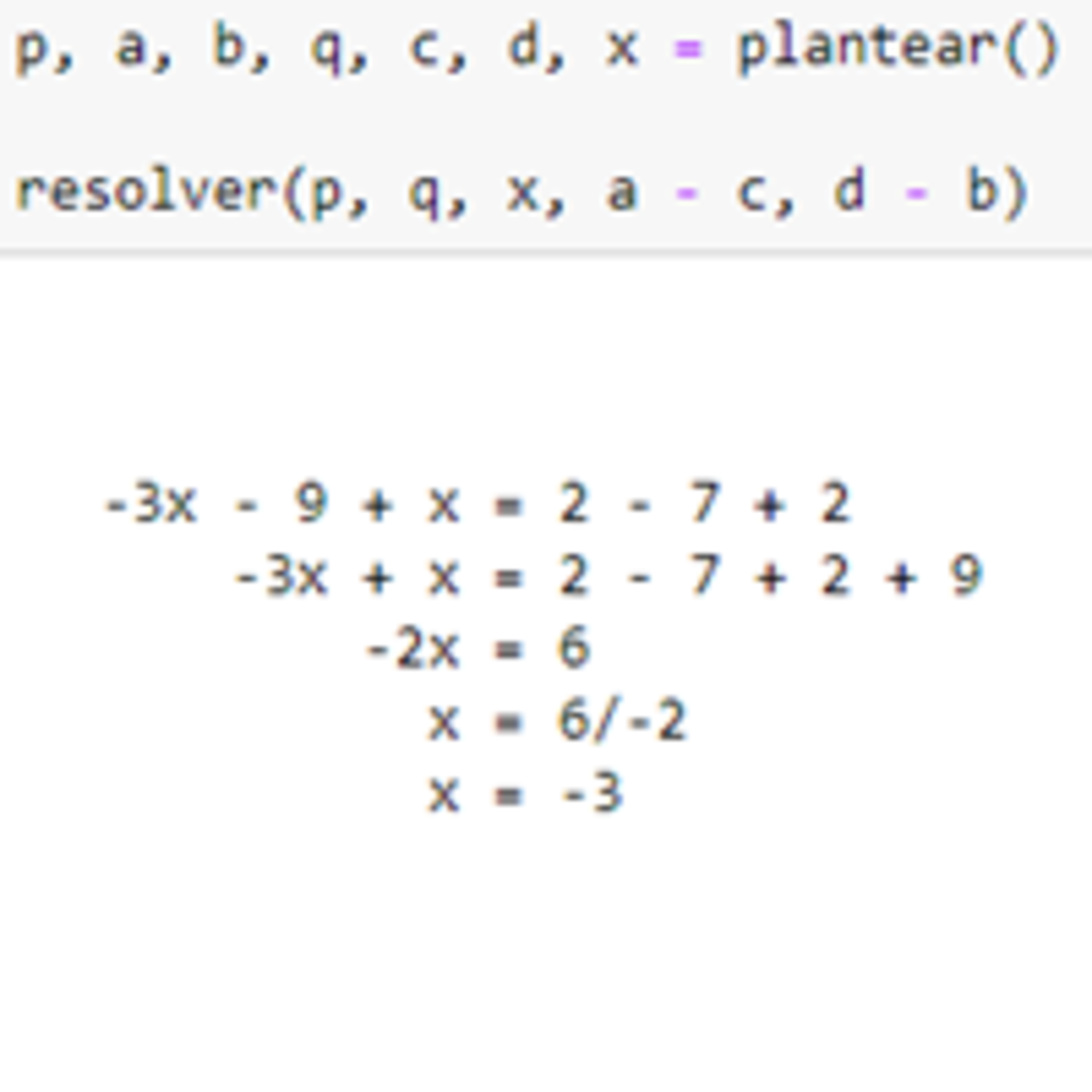
En este curso basado en un proyecto, aprenderás a crear un programa en Python para resolver ecuaciones lineales, y explorarás objetos, sentencias y funciones de Python para procesar textos y números. Al finalizar este proyecto habrás creado una aplicación que ayudará a los estudiantes y profesores a practicar con expresiones y ecuaciones lineales o de primer grado. Durante el proceso aprenderás a usar Jupyter para editar y ejecutar programas de Python; utilizar objetos con datos textuales y numéricos y en listas; controlar la secuencia de ejecución del programa; definir tus propias funciones y utilizar funciones de Python. En varios casos partiremos de algoritmos para crear programas y funciones. Esta experiencia servirá para comenzar a desarrollar programas para otras aplicaciones en matemática, ciencia, ingeniería y tecnología.
 Google Cloud
Modern Security Operations
Modern Security Operations, based on Google's Autonomic Security Operations framework and Continuous Detection, Continuous Response (CD/CR) methodology is a combination of philosophies, practices, and tools that improve an organization's ability to withstand security attacks through an adaptive, agile, and highly automated approach to threat management. In this introductory course, learners will gain a holistic perspective on leading their organizations through modernizing their security operations program.
 Coursera
Accomplishment STAR Techniques for Job Interviews
You will create a compelling Accomplishment STAR Technique for Job Interviews. The STAR Technique will help you stand out greatly from the competition. A compelling Accomplishment STAR Technique will play a significant role to help you tell stories of how YOU solve problems; showcase your team building or leadership skills, as well as help the hiring manager see that you can do the job the company is advertising for.
 Google Cloud
Modernize Infrastructure and Applications with Google Cloud - Français
De nombreuses entreprises traditionnelles utilisent d'anciens systèmes et d'anciennes applications qui ne peuvent plus satisfaire les attentes des clients d'aujourd'hui. Les chefs d'entreprise doivent régulièrement choisir entre deux options : entretenir leurs systèmes informatiques vieillissants ou investir dans de nouveaux produits et services. Le cours ""Modernize Infrastructure and Applications with Google Cloud"" aborde ces problématiques et propose des solutions pour les résoudre à l'aide de la technologie cloud. Ce cours fait partie du parcours de formation Cloud Digital Leader. Il vise à aider les participants à évoluer dans leur poste et à bâtir l'avenir de leur entreprise.
 University of Lausanne
HEALTHY URBAN SYSTEMS - PART 3 : Design and policies
This MOOC is the third part (out of three parts) of the whole MOOC on Healthy Urban Systems. This PART III is very recommended (but not obliged) to take after the PART I and PART II. Once you understood the main concepts and visions of Urban Health, and the best practices of observation in PART I, the theories and models in PART II, you are better prepared to take this PART III on Design and policies. This PART III lasts 4 weeks, comprising two modules of 2 weeks each. The number of credits is 2 ECTS. To obtain these credits, you should achieve all the statements required each week. The final elaboration of a policy design and Health Impact assessment on your proper urban health question, will be specifically evaluated.
 Coursera
GitLab CI/CD: Automating Software Delivery
DevOps has become a core aspect of the everyday development process. Being able to automate common tasks like testing, building, and deploying software allows developers to be more efficient and effective. Extending beyond the world of software, CI/CD can also provide many benefits for hardware development. This comprehensive course equips DevOps specialists and hardware developers with essential skills to build automation into their development processes. Through hands-on labs using industry standard tools like GitLab, you'll master the process of building CI/CD pipelines for hardware projects. This course is for DevOps engineers, hardware developers, and technical leads who manage firmware and hardware development workflows, focusing on automation, testing, deployment, and reliability in hardware projects. Learners should have a basic understanding of C/C++ programming, hardware concepts (PCBs, firmware, embedded components), and Git. No prior CI/CD experience is needed, but an interest in automation and DevOps is helpful. By course completion, you'll confidently be able to build hardware test and deployment processes using GitLab CI/CD pipelines. This course provides the practical expertise required to enhance your development process and automate the common tasks you have.
 Codio
Codio
Core Java
Code and run your first Java program in minutes without installing anything! This course is designed for learners with limited coding experience, building on a solid foundation of Java, learners will dive into key Java classes, interfaces, and frameworks. The modules in this course cover developer best practices, data handling, and connecting to web-based systems. Completion of an introductory Java sequence such as Codio's Hands-On Java Introduction is recommended. To allow for a truly hands-on, self-paced learning experience, this course is video-free. Assignments contain short explanations with images and runnable code examples with suggested edits to explore code examples further, building a deeper understanding by doing. You'll benefit from instant feedback from a variety of assessment items along the way, gently progressing from quick understanding checks (multiple choice, fill in the blank, and un-scrambling code blocks) to small, approachable coding exercises that take minutes instead of hours.
 Google Cloud
Create an Internal Load Balancer
This is a self-paced lab that takes place in the Google Cloud console. In this lab, you create two managed instance groups in the same region. Then, you configure an Internal Load Balancer with the instances groups as the backends.