

The Global Scholarly Directory.
Discover world-class academic programs curated for the modern intellectual. Search through 19877+ degrees and professional certificates.
 Coursera
Using Google Forms to Analyze User Research Data
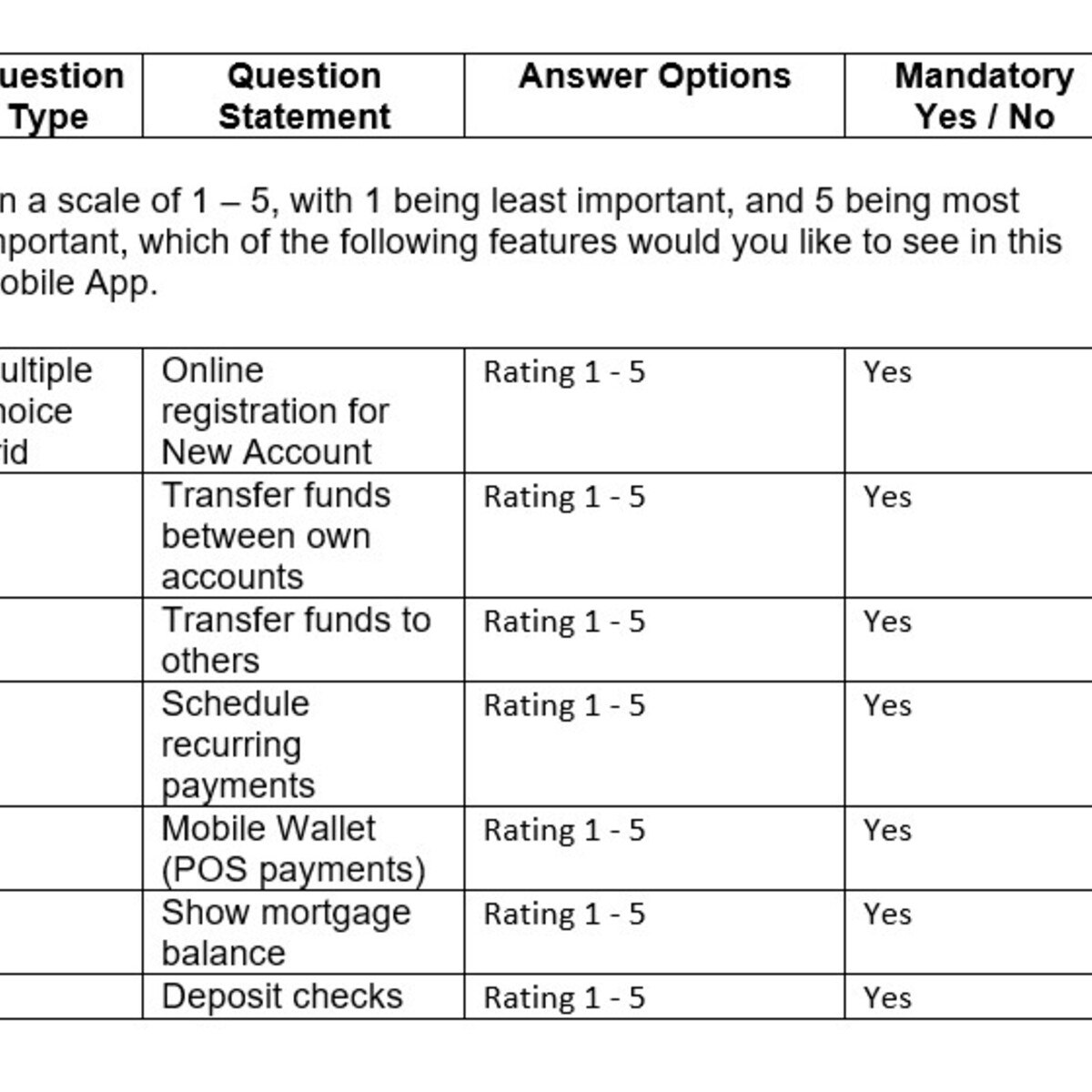
User Research is at the heart of creating engaging, user friendly, and successful products, services, and designs. By the end of this project, you will learn the fundamentals of user research by designing and creating a survey using Google Forms on new features customers would like to see in a mobile banking app. You will also learn how to gather feedback and organize it into a presentable format.
 University of Colorado Boulder
Intro to the Arctic
In this course you will first learn about the Arctic as a geographic region, the peoples the Arctic, and the long history of Arctic settlement and exploration. Attention then turns to key features of the Arctic environment – its climate and weather, features of the ocean, sea ice, lands and the Greenland Ice Sheet, and some of the rapid changes being observed. Learning Objectives: Appreciate the long history of the Arctic and its peoples. Recognize and recall the physical geography of the Arctic, including major features of the Arctic Ocean and Arctic lands. Describe the key climate and environmental elements of the Arctic, including its sea ice cover, patterns of temperature, precipitation, snow cover, land ice, permafrost and vegetation, the physical processes giving rise to these features, and how they are changing.
 Packt
Packt
Harnessing Open Source LLMs and ChatGPT with Minimal Code
This course offers a comprehensive guide to working with local large language models and ChatGPT, designed for technical professionals who want to explore these powerful tools without diving deep into coding. You’ll begin with the basics, including downloading necessary software, setting up local models, and interacting with them using a no-code approach. By the end of this section, you'll be proficient in managing and running LLMs locally, even if you’re new to the field. As you advance, you’ll delve into more sophisticated techniques, such as streaming responses from local models and leveraging the OpenAI API. You’ll learn to set up your environment, handle API calls, and use Python to integrate different functionalities. Each module is crafted to build your skills progressively, ensuring you gain both practical experience and conceptual understanding of these technologies. The final part of the course covers advanced integrations and function calling with ChatGPT, offering insights into the latest features and capabilities. You’ll explore various approaches to deploying models locally and on the web, using Python with minimal code. This course empowers you to harness the full potential of LLMs and ChatGPT for your projects, making advanced AI accessible and manageable for all skill levels. This course is designed for developers, data scientists, and AI enthusiasts who want to leverage large language models and ChatGPT without extensive programming. Basic familiarity with Python is beneficial but not required, as the course starts with foundational topics and gradually introduces more advanced concepts.
 Macquarie University
Supply chain management: Be global
Businesses and their supply chains are facing increasing competition and uncertainty in what is now a truly globalised trade environment. To remain competitive, organisations need to think globally – ensuring supply chains meet customer demands while minimising costs and maximising responsiveness. From a strategic perspective, this involves making important trade-off decisions between cost, quality and flexibility of supply chains. Via structured learning activities (video lectures, quizzes, discussion prompts and written assessments) this course will equip you with the future-focused capabilities needed to design and manage effective, sustainable and efficient global supply chains of tomorrow.
 Banco Interamericano de Desarrollo
Leaders in Citizen Security and Justice Management
This course is aimed at actors and public officials working in the area of citizen security in Latin American and Caribbean countries who are responsible for the design, management and evaluation of public policies for coexistence and citizen security.
 ISSA (International Sports Sciences Association)
GLP-1 Medication Support Course for Fitness Professionals
Empower your practice to support clients using GLP-1 medications such as Ozempic® and Wegovy® with this 100% online, self-paced training. Designed for fitness and wellness professionals, the course provides practical strategies to confidently guide clients through the physical, behavioral, and emotional changes that accompany GLP-1-supported weight loss. You’ll explore how GLP-1s work in the body, learn to adapt exercise and nutrition plans for common side effects, develop effective communication skills for collaborating with healthcare providers, and build long-term wellness habits that extend beyond medication use. Ideal for personal trainers, health coaches, yoga instructors, and wellness professionals looking to stand out in a rapidly evolving niche, this program offers six Continuing Education Units (CEUs), video lessons, case studies, toolkits, and an open-book final exam.
 Siemens
Introduction to the Industrial Metaverse (IMV)
The course Introduction to the Industrial Metaverse enables learners to understand and apply the Industrial Metaverse (IMV) for digital transformation and operational excellence, while encouraging organizations to engage in the IMV ecosystem. Over six modules, the course offers a structured, hands-on overview that connects core technologies, use cases, and key concepts behind the IMV. Learners explore the three IMV pillars—Digital Twin, Industrial AI, and Software-Defined Automation—and gain insight into how the IMV supports different stages of industrial lifecycles. Selected deep-dive topics include physics-based simulation, immersive engineering, and IT/OT convergence, concluding with a future-oriented outlook. Each module features real-world examples, visual aids, quizzes, exercises, and reflection tasks. Modules conclude with graded assignments, and the course ends with a final graded quiz. The course is designed to be accessible to learners from diverse backgrounds. No prior IMV experience or academic degree is required. Basic technical understanding and familiarity with industrial processes may be helpful but are not mandatory. The course addresses a broad audience, including students, career switchers, industrial employees, partners, and suppliers, and is well suited for early-career professionals and anyone interested in the Industrial Metaverse.
 Duke University
Linear Regression and Modeling
This course introduces simple and multiple linear regression models. These models allow you to assess the relationship between variables in a data set and a continuous response variable. Is there a relationship between the physical attractiveness of a professor and their student evaluation scores? Can we predict the test score for a child based on certain characteristics of his or her mother? In this course, you will learn the fundamental theory behind linear regression and, through data examples, learn to fit, examine, and utilize regression models to examine relationships between multiple variables, using the free statistical software R and RStudio.
 Università di Napoli Federico II
Contemporary Issues in World Politics
This course is part of the IPSAMOOC project, a joint venture Federica Weblearning - IPSA, the International Political Science Association. With the collapse of the World Order established following the Second World War, World Politics has entered a period of turmoil. After a short euphoria during which Central and Eastern Europe was incorporated into NATO and the European Union, and a slightly longer-lived American preponderance in the international system, developments of both a regional and global nature have emerged to challenge world peace and order. The course will start with a review of the driving forces of international Politics, followed by a description of the post-World War II international order, then move to its breakdown and will continue with the analysis of the events coming after the end of the Cold War culminating in the transformation of Central and Eastern Europe, the breakup of the Soviet Union and a short-lived uni-polar American domination of the international system. Attention will then be turned to various challenges and problem areas in contemporary World Politics including disorders in the Balkans resulting from the collapse of Yugoslavia, the rise of China and the return of Russia as a major actor in the world stage, the humanitarian disasters in Bosnia and Kosovo where the West intervened; and Rwanda, Kenya etc. where it did not. Continuing with an analysis of the Arab Spring where democratic aspirations mainly failed and the resulting dislocations fanned the expansion of radical Islam and the associated wave of global terrorism. Next the course will examine frozen conflicts such as the Arab-Israeli and Myanmar (Rohingya) conflicts and conclude by looking at the problems of the global commons such as climate change, pollution, pandemics and the growing problem of refugees. After having completed the course, the students would be expected to develop factual and historical knowledge of World Politics, identify the main issues and trends that affect World politics, and reflect critically on the salient World political issues of the day. The update videos on the latest developments in world politics have been created using artificial intelligence.
 Google Cloud
Flutter Startup Namer
This is a self-paced lab that takes place in the Google Cloud console. This lab walks you through writing your first Flutter app compatible for Android, iOS, and web.
 Coursera
Jasper AI: Writing a Product Review Blog Post
Enhance your digital content creation skills with this focused two-hour project-based course, where you'll use Jasper AI to create a professional-grade product review blog post for a pair of wireless noise cancelling earbuds. We'll begin by researching some technical specifications about the product while utilizing Jasper AI to generate a captivating title. Then we'll proceed going through the process of developing an outline and an engaging introduction. Lastly, we'll expand on the product's features in detail with the help of Jasper AI's features to complete your blog post and incorporate customer feedback to add depth to your review. By the end of this project you’ll have a well-structured, persuasive product review, showcasing your ability to produce high-quality content with Jasper AI. Note: This course works best for learners who are based in the North America region. We’re currently working on providing the same experience in other regions.
 Simplilearn
Scrum and Kanban Frameworks Roles and Best Practices
This comprehensive Scrum course will equip you with the essential skills to excel in agile environments and drive project success. You’ll learn Scrum fundamentals, practical applications, and the differences between Scrum and Kanban to choose the right approach for various projects. By the end of this course, you will be able to: - Master Scrum Fundamentals: Understand the history, evolution, core artifacts, and frameworks of Scrum. - Utilize Scrum Boards: Create good user stories, split stories effectively, and plan releases with confidence. - Manage Time and Lifecycles: Navigate the Scrum lifecycle and optimize ideal time management. - Understand Scrum Roles: Learn the responsibilities of Scrum roles through real-world demos and practical scenarios. - Differentiate Agile Methods: Compare Scrum and Kanban to determine the best methodology for specific needs. - Apply Agile Practices: Implement agile frameworks to enhance team efficiency and project outcomes. Perfect for professionals aiming to deepen their understanding of Scrum and achieve excellence in agile practices.
 EDUCBA
ARM Cortex (STM32) Fundamentals: Building Embedded Systems
Upon completing this course, you will: Master the use of floating-point data types and input/output handling in C. Understand and apply various operators and decision-making constructs in C programming. Execute advanced bitwise operations and control LEDs using embedded C. Achieve proficiency in bitwise manipulation and loop constructs for efficient code iteration and embedded system control. Course Description Embark on a comprehensive journey through ARM Cortex (STM32) Fundamentals: Building Embedded Systems. This course begins with essential data manipulation and input/output handling techniques, advancing your understanding of floating-point data types and versatile user input methods. Dive into operators and decision-making constructs, mastering for standardized integer types and honing skills in relational and logical operators. Explore the complexities of bitwise operations, enabling precise LED control through embedded C programming. Elevate your proficiency with bitwise manipulation, mastering loop constructs for efficient code iteration and intricate LED control sequences. By course end, you will possess the essential skills required for developing sophisticated embedded systems using ARM Cortex (STM32) technology. This course's unique focus on practical, hands-on applications and advanced techniques ensures you gain robust, real-world competencies in embedded systems development. Target Learners This course is ideal for: 1) Aspiring embedded systems engineers who want to gain a solid foundation in ARM Cortex (STM32) microcontroller programming. 2) Electronics and computer engineering students seeking practical experience in embedded systems. 3) Professional engineers looking to enhance their skills in embedded C programming and ARM Cortex (STM32) development. Prerequisites Before taking this course, learners should have: 1) Basic knowledge of C programming, including variables, data types, and basic control structures. 2) Familiarity with general computer programming concepts and logic. 3) An understanding of basic electronics principles, such as voltage, current, and circuit components. 4) A willingness to learn and experiment with embedded systems hardware and software.
 Packt
Packt
JavaScript DOM - Interactive and Dynamic Web Pages
Updated in May 2025. In this comprehensive course, you will embark on a journey to master JavaScript and its powerful DOM manipulation capabilities. Starting with the fundamentals, you'll understand how JavaScript integrates with HTML to create interactive webpage content. Through a series of progressively challenging modules, you will learn how to manipulate DOM elements, respond to user inputs, and dynamically update web pages without the need to refresh the browser. As you advance, the course delves deeper into the practical applications of JavaScript DOM. You'll explore various techniques to interact with webpage elements, manage events, and implement animations. Each section is designed to build on the previous one, ensuring a cohesive learning experience that reinforces your understanding through hands-on examples and projects. By the end of this course, you will have the confidence and skills to create fully interactive and dynamic web projects. You'll be able to apply what you've learned to real-world scenarios, making your web pages more engaging and user-friendly. This course is perfect for anyone looking to advance their web development skills and make their websites stand out. This course is designed for aspiring web developers and designers who have a basic understanding of HTML and CSS. No prior JavaScript knowledge is required, although familiarity with basic programming concepts will be beneficial.
 Coursera
Build, Evaluate, and Perfect Marketing Dashboards
Did you know that decision-makers spend nearly 60% more time interpreting dashboards than acting on insights when visuals are poorly designed? The difference between confusion and clarity often comes down to dashboard precision and presentation. This Short Course was created to help professionals in this field transform raw marketing data into executive-ready performance stories and systematically optimize how their visualizations influence stakeholder understanding and decision-making. By completing this course, you will be able to design professional-grade dashboards that showcase marketing performance through clear KPIs, test visualization impacts through A/B experiments, and refine your insights for maximum executive engagement—skills you can apply right away to elevate data storytelling. By the end of this 3-hour long course, you will be able to: Create executive-ready dashboards to showcase campaign performance through key performance indicators. Evaluate the influence of visualization adjustments on user interpretation using A/B testing. This course is unique because it unites marketing analytics, data visualization, and behavioral insight, teaching you how to craft dashboards that not only inform but also persuade, helping teams make faster, more confident business decisions. To be successful in this project, you should have: Basic digital marketing knowledge Familiarity with Google Analytics Understanding of marketing KPIs Experience with data visualization concepts
 Microsoft
High Performing PMOs
This course on Project Management Offices (PMOs) and Strategic Realization Offices (SROs) offers a comprehensive understanding of these organizational entities and their strategic significance. You will explore the evolution of PMOs into SROs and gain insight into their key characteristics and types, emphasizing strategic value with a focus on return on investment (ROI) and alignment. You will examine change management, focusing on resilience and adaptability, and engage with emerging trends, such as Agile approaches and Artificial Intelligence, in program and portfolio management. Through theoretical concepts and practical experience, you will be empowered to drive organizational success through effective PMO and SRO implementation and management. After completing this course, you’ll be able to: • Identify what a PMO is, including its key characteristics and different types. • Discuss the strategic value PMOs bring to an organization, including ROI and alignment with business goals. • Discuss the evolution of PMOs into Strategic Realization Offices (SROs). This is a great way to prepare for some useful certifications, such as PgMP - Program Management Professional from PMI, and MSP Practitioner - Managing Successful Programs from AXELOS.