

The Global Scholarly Directory.
Discover world-class academic programs curated for the modern intellectual. Search through 19877+ degrees and professional certificates.
 H2O.ai
H2O.ai Agents : From Theory to Practice
H2O.ai Agents : From Theory to Practice is a comprehensive course that bridges theoretical understanding with practical implementation, guiding learners through the complete lifecycle of AI agents. You will start with core concepts by understanding the fundamental architecture of AI agents, how they combine large language models (LLMs), tools, and memory to create autonomous workflows. Discover what sets h2oGPTe apart as we showcase its record-breaking performance on the GAIA benchmark, outperforming Google by 15% in reasoning, tool use, and multimodal capabilities. The course transitions from theory to application through hands-on demonstrations across diverse industries. Throughout the course, you’ll gain hands-on exposure to: • The foundational architecture of AI agents within h2oGPTe • How generative and predictive AI combine to drive decision-making • Key benchmarks like GAIA that demonstrate agent performance • Deployment caveats, safety guardrails, and real-world considerations By the end, you’ll not only understand how AI agents work, but also how to implement and scale them for meaningful impact. Whether you’re curious about the future of AI or ready to build with it, this course will prepare you to move from theory to practice.
 Banco Interamericano de Desarrollo
Natural Disaster Risk in Infrastructure Projects
In this course, you will learn about the challenges that countries in Latin America and the Caribbean face in the context of natural disasters and climate change, and their consequent impacts on infrastructure projects and socio-economic development. The course was designed with the aim of enhancing the project teams' capacity to proactively manage events that may affect a project, thereby increasing its likelihood of success.
 The Hong Kong University of Science and Technology
Vector Calculus for Engineers
This course covers both the theoretical foundations and practical applications of Vector Calculus. During the first week, students will learn about scalar and vector fields. In the second week, they will differentiate fields. The third week focuses on multidimensional integration and curvilinear coordinate systems. Line and surface integrals are covered in the fourth week, while the fifth week explores the fundamental theorems of vector calculus, including the gradient theorem, the divergence theorem, and Stokes' theorem. These theorems are essential for subjects in engineering such as Electromagnetism and Fluid Mechanics. Note that this course may also be referred to as Multivariable or Multivariate Calculus or Calculus 3 at some universities. A prerequisite for this course is two semesters of single-variable calculus (differentiation and integration). The course includes 53 concise lecture videos, each followed by a few problems to solve. After each major topic, there is a short practice quiz. At the end of each week, there is an assessed quiz. Solutions to the problems and practice quizzes can be found in the instructor-provided lecture notes. Download the lecture notes from the link https://www.math.hkust.edu.hk/~machas/vector-calculus-for-engineers.pdf Watch the promotional video from the link https://youtu.be/qUseabHb6Vk
 Universidad Nacional Autónoma de México
Charles Darwin: El origen del evolucionismo moderno
Este curso está dirigido a cualquier persona que desee conocer de manera general qué es y cómo se ha explicado la evolución de las especies. Será de gran interés para alumnos, profesores y profesionales del área de ciencias biológicas y de la salud que deseen conocer los antecedentes históricos, así como los fundamentos centrales de la teoría de Charles Darwin, que configuraron el pensamiento evolutivo moderno.
 University of Illinois Urbana-Champaign
New Learning: Principles and Patterns of Pedagogy
Education is in a state of flux – transitioning from traditional architectures and practices to new ecologies of teaching and learning influenced by the tremendous social and technological changes of our times. What changes are afoot today in workplaces, civic life and everyday community life? What are their implications for education? What are the possible impacts of contemporary social transformations on teaching and learning - including in the areas of technology, media, globalization, diversity, changing forms of work in the “knowledge society”, and, in these contexts, changing learner needs and sensibilities? This course explores three pedagogical paradigms: “didactic”, “authentic” and “transformative” learning. It takes an historical perspective in order to define the contemporary dimensions of what we term “new learning”. It prepares participants to make purposeful choices and link particular theories/instructional approaches to individual and group learning goals. -------------------------------- Recommended Background -------------------------------- This course is designed for people interested in the future of education and the "learning society," including people who may wish to join education as a profession, practicing teachers interested in exploring future directions for a vocation that is currently undergoing transformation, and community and workplace leaders who regard their mission to be in part "educative." -------------------------------- Related Resources -------------------------------- Online resources are available here: https://newlearningonline.com -------------------------------- Join our Online Communities! -------------------------------- CGScholar (Create an account and join the New Learning community) https://cgscholar.com/community/community_profiles/new-learning/community_updates Facebook https://www.facebook.com/newlearningonline Twitter https://twitter.com/neolearning -------------------------------- Take this Course for Credit at the University of Illinois -------------------------------- This course has the same content and anticipates the same level of contribution by students in the Assessment for Learning course offered to graduate certificate, masters, and doctoral level students in the Learning Design and Leadership Program in the College of Education at the University of Illinois. Of course, in the nature of MOOCs many people will just want to view the videos and casually join some of the discussions. Some people say that these limited kinds of participation offer evidence that MOOCs suffer from low retention rates. Far from it – we say that any level of engagement is good engagement. On the other hand, if you would like to take this course for credit at the University of Illinois, you will find more information about our program here: https://ldlprogram.web.illinois.edu/overview/ And you can apply here: https://education.illinois.edu/epol/programs-degrees/ldl -------------------------------- The Learning Design and Leadership Series of MOOCs -------------------------------- This course is one of a series of eight MOOCs created by Bill Cope and Mary Kalantzis for the Learning Design and Leadership program at the University of Illinois. If you find this MOOC helpful, please join us in others! e-Learning Ecologies: Innovative Approaches to Teaching and Learning for the Digital Age https://www.coursera.org/learn/elearning New Learning: Principles and Patterns of Pedagogy https://www.coursera.org/learn/newlearning Assessment for Learning https://www.coursera.org/learn/assessmentforlearning Learning, Knowledge, and Human Development https://www.coursera.org/learn/learning-knowledge-human-development Ubiquitous Learning and Instructional Technologies https://www.coursera.org/learn/ubiquitouslearning Negotiating Learner Differences: Towards Productive Diversity in Learning https://www.coursera.org/learn/learnerdifferences Literacy Teaching and Learning: Aims, Approaches and Pedagogies https://www.coursera.org/learn/literacy-teaching-learning Multimodal Literacies: Communication and Learning in the Era of Digital Media https://www.coursera.org/learn/multimodal-literacies
 Oracle
Introduction to Oracle Cloud Essentials
This course introduces you to Cloud Computing and Oracle's Cloud Solutions which include Oracle Cloud Infrastructure and Oracle Cloud Applications. Quick product tours help you experience the capabilities of our OCI and SaaS Platforms.
 Universitat de Barcelona
Magic in the Middle Ages
Magical thought has always attracted human imagination. In this course we will introduce you to the Middle Ages through a wide conception of magic. Students will have an approach to medieval culture, beliefs and practices from the perspective of History and History of Science. Popular magic, as well as learned magic (alchemy, geomancy and necromancy) will be addressed. Moreover, we will also deal with how eastern practices and texts influenced western culture. In July 2016, the course will contain a brand-new module devoted to astrology. Magic in the Middle Ages offers a captivating overview of medieval society and promotes reflection about certain stereotypes associated with this period. At the end of the course, the students: a) will have overcome the usual prejudices about the Middle Ages, b) will be able to analyze historical documentation from the Middle Ages and recognize the most common patterns of juridical documents regarding witchcraft, and c) will be capable of distinguishing between popular magic and the magic of the learned people; will have a notion of which spiritual practices were allowed in medieval Europe and which ones were related to the devil, and will be aware of the link between a cultural product and the society that produced it. This course is taught in English, although subtitles in English, Catalan and Spanish will also be provided. COURSE SYLLABUS Week 1. Introduction to medieval magic (Pau Castell). Week 2. Magic & Heresy (Delfi I. Nieto-Isabel). Week 3. From Magic to Witchcraft (Pau Castell). Week 4. Magic in Islam (Godefroid de Callataÿ and Sébastien Moureau). Week 5. Astrology & Geomancy (Theo Loinaz, Delfi I. Nieto-Isabel, Godefroid de Callataÿ and Blanca Villuendas). © Gemma Pellissa Prades (coord.), Delfi I. Nieto-Isabel and Joana Palau Mumany Magic in the Middle Ages by Gemma Pellissa Prades (coord.), Delfi I. Nieto-Isabel and Joana Palau Mumany is licensed under a Creative Commons Attribution-NonCommercial-NoDerivatives 4.0 International License.
 IBM
IBM
Continuous Integration and Continuous Delivery (CI/CD)
A principle of DevOps is to replace manual processes with automation to improve efficiency, reduce human error, and accelerate software delivery. This requires automation that continuously integrates code changes and continuously delivers those changes to a production environment. This course introduces you to Continuous Integration and Continuous Delivery (CI/CD), an automated approach to software development. You’ll discover the benefits of CI/CD for creating a DevOps pipeline and explore popular CI/CD tools. You’ll examine the key features of CI, explore social coding, and the Git Feature Branch Workflow. You will also learn about standard CI tools and gain a deep understanding of GitHub Actions workflows and their components. This course provides an overview of CD and its goals, benefits, and best practices. You will learn the requirements of a CI/CD pipeline and discover standard CD tools. You will explore Tekton and discover how its components work together to create a CD pipeline. You will learn how to build a pipeline, pass parameters to a pipeline, build triggers to start pipeline runs, implement reusable tasks, and create custom tasks. You will discover how to complete your CD pipeline by building a container image and deploying your application to an OpenShift Kubernetes cluster. Throughout the course, you can hone your skills and challenge yourself through several hands-on labs.
 EDUCBA
Master Excel Fundamentals for Data Analysis
By the end of this course, learners will be able to navigate Microsoft Excel 2019 confidently, apply professional formatting, perform accurate calculations, and analyze data using logical and conditional tools. This Excel 2019 – Beginners Training course is designed for absolute beginners who want to build strong, practical spreadsheet skills from the ground up. Learners start by understanding the Excel interface, worksheets, and file management before progressing to formatting data for clarity and professionalism. The course then introduces mathematical operations, logical functions like IF, and essential number formatting to ensure calculations are accurate and meaningful. Finally, learners develop data analysis skills using functions such as COUNTIF, SUM, AVERAGE, MAX, MINIFS, and visual tools like conditional formatting. What makes this course unique is its step-by-step, concept-first approach, reinforced with practice quizzes and graded assessments that ensure real skill development rather than memorization. Each lesson is aligned with clear learning objectives and real-world use cases, making it ideal for students, professionals, and anyone looking to use Excel effectively for data-driven tasks.
 Google Cloud
BigQuery ML を推論に使用する
推論のための BigQuery ML の概要、データ アナリストがこれを使用すべき理由、そのユースケース、サポートされる ML モデルについて学びます。また、これらの ML モデルを BigQuery で作成し、管理する方法も学びます。
 EDUCBA
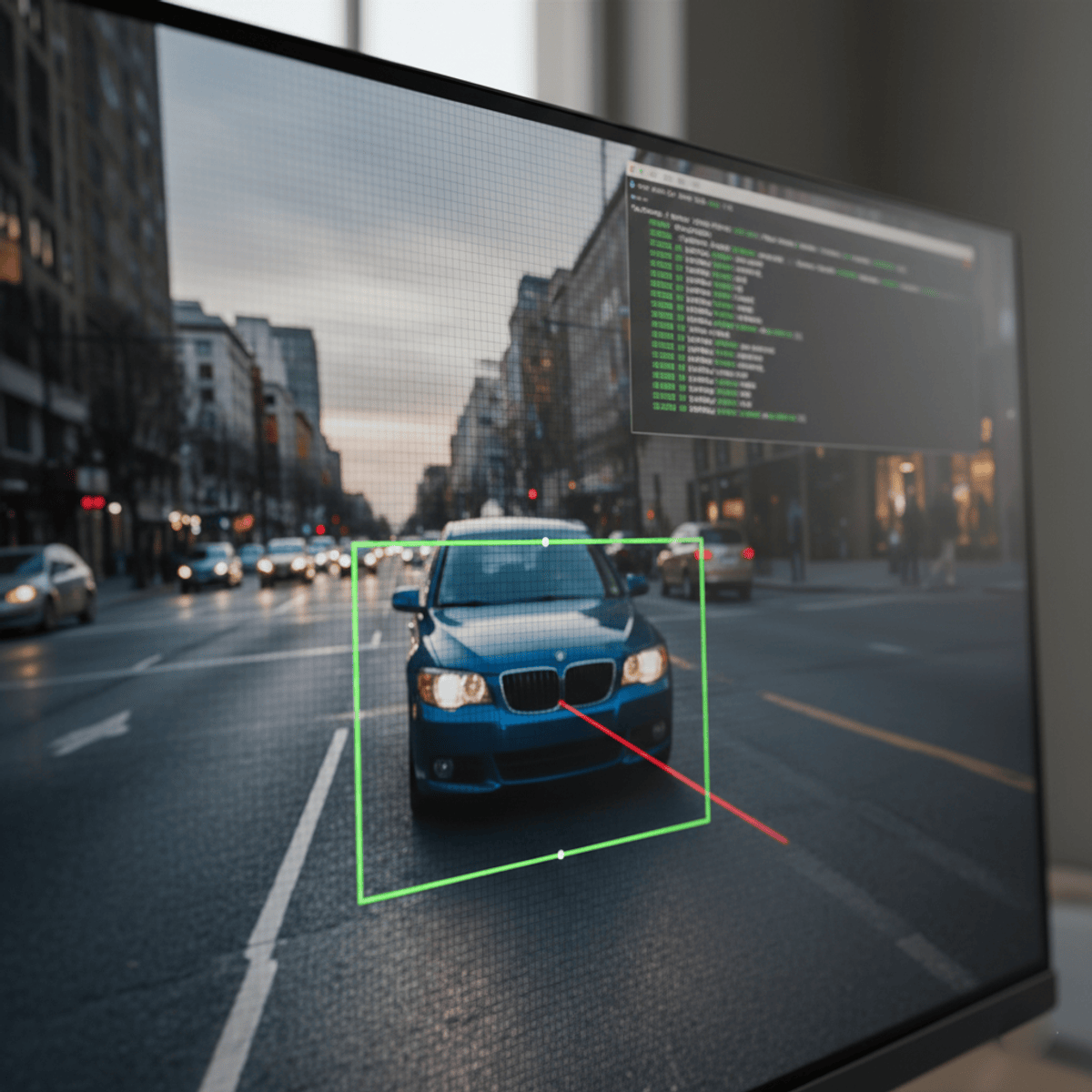
Analyze Video Data Using OpenCV and Python
By the end of this course, learners will be able to analyze video data, apply color models, implement image preprocessing techniques, and build object detection and tracking solutions using OpenCV and Python. They will gain the ability to process real-time and recorded video streams, extract meaningful visual features, and apply motion analysis algorithms to solve practical computer vision problems. This course benefits learners by providing a structured, hands-on pathway from foundational concepts to advanced video analytics techniques. Learners will develop industry-relevant skills in image loading, thresholding, contour detection, color-based tracking, blob detection, optical flow, and face tracking—capabilities that are essential for applications in surveillance, automation, robotics, and intelligent video systems. What makes this course unique is its end-to-end focus on practical video analytics workflows using OpenCV with Python shells. Rather than isolated theory, the course emphasizes progressive skill-building through real-world use cases, clear algorithmic explanations, and implementation-oriented learning. The modular design ensures learners can confidently transition from understanding visual data representation to deploying advanced tracking and motion analysis techniques in real-world scenarios.
 Johns Hopkins University
Exploring Algorithmic Bias as a Policy Issue: A Teach-Out
This Teach Out does not issue certificates of completion. Algorithms – and algorithmic bias – are making regular appearances in the news, and increasingly, are being recognized as a policy issue. But what is an algorithm, exactly? And what does it mean when someone describes an algorithm as biased? This Teach-Out will encourage policy makers, agency leaders, and others in similar positions to identify algorithms that are already in use and make connections to broader ideas about fairness, justice, and equity. After completing the Teach-Out, learners will be able to participate in discussions around algorithmic bias, inform others about how algorithms can perpetuate existing disparities, and take steps to reduce the impact of algorithmic bias on the people and communities they serve.
 University of California, Irvine
IELTS Reading Section Skills Mastery
Whether you have taken the IELTS test before, you will benefit from completing this course on the reading section of the exam. The lessons in this course will improve your overall skills in reading and prepare you for every type of question in this section of the test, increasing your chances of getting your target band score. You will be ready to confidently complete the 40-question reading section, which includes a dozen different types of reading tasks. We’ll review plenty of sample readings and questions so you’ll know exactly what to expect. The helpful tips and strategies offered in this course will give you the invaluable tools and knowledge you’ll need to identify correct answers while efficiently managing the 60-minute time allotted for the reading section. Taking tests can be stressful, but being familiar with the test and practicing will reduce anxiety and give you the confidence you’ll need to perform at your best.
 Coursera
CFD Simulation Through a Centrifugal Pump
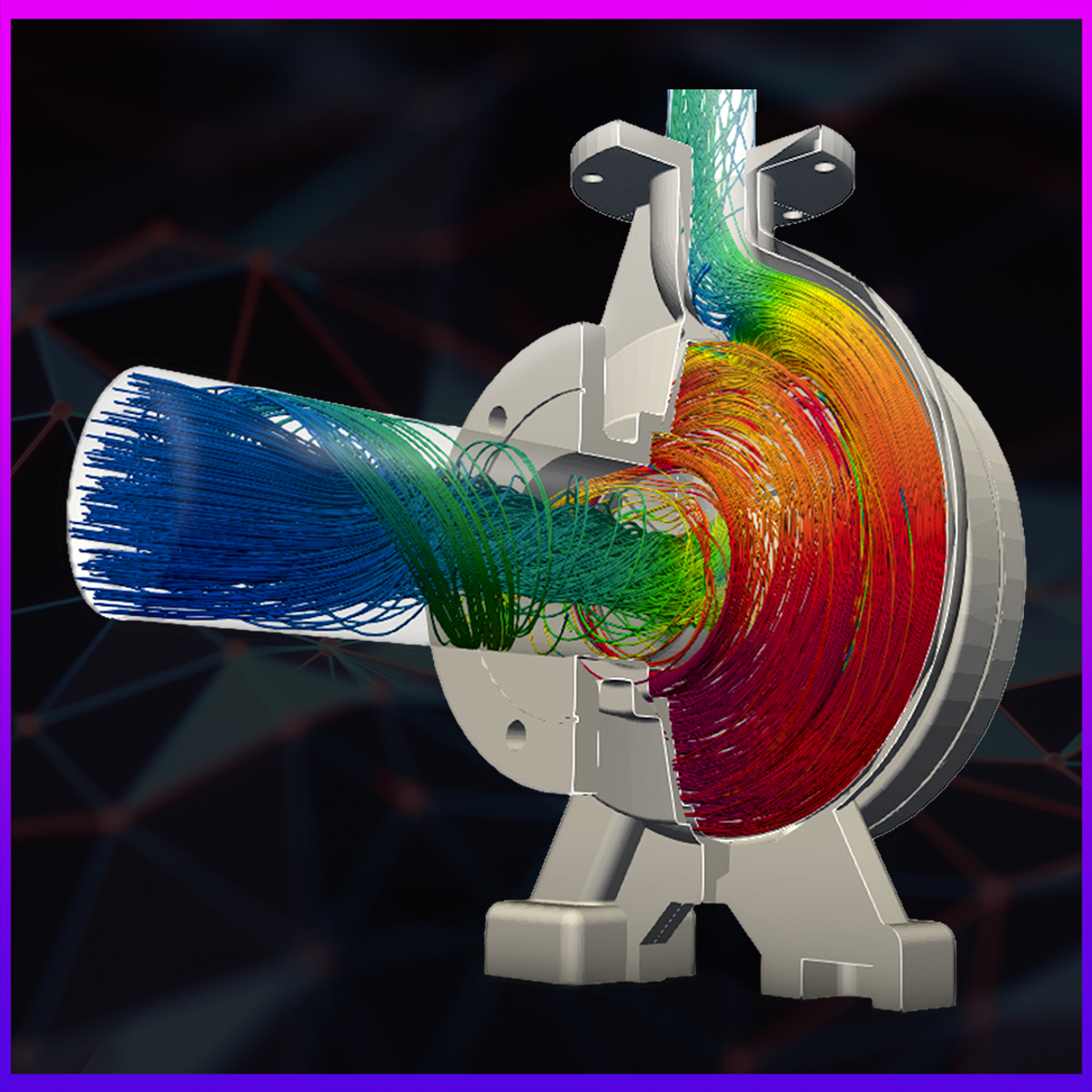
In this hands-on project, you will learn about Computational Fluid Dynamics (CFD) and perform a pump simulation using the cloud-based simulation tool SimScale. We will set up simulation cases with provided geometries to learn the fundamentals of CFD and how a pump simulation is approached and set up in the first place. We will walk through the classical three step process of every simulation which includes the pre-processing, processing and post-processing step. SimScale is an engineering simulation platform that is revolutionizing the way engineers, designers, scientists, and students design products. The SimScale platform is accessible completely via a standard web browser, with an easy-to-use interface which supports numerous simulation types including solid mechanics (FEM), fluid dynamics (CFD) & thermodynamics. This course runs on Coursera's hands-on project platform called Rhyme. On Rhyme, you do projects in a hands-on manner in your browser. You will get instant access to pre-configured cloud desktops containing all of the software and data you need for the project, for this project you need no special setup or any data. Everything is already set up directly in your internet browser so you can just focus on learning! Notes: - This course works best for learners who are based in the North America region. We’re currently working on providing the same experience in other regions.
 Columbia University
Camera and Imaging
This course covers the fundamentals of imaging – the creation of an image that is ready for consumption or processing by a human or a machine. Imaging has a long history, spanning several centuries. But the advances made in the last three decades have revolutionized the camera and dramatically improved the robustness and accuracy of computer vision systems. We describe the fundamentals of imaging, as well as recent innovations in imaging that have had a profound impact on computer vision. This course starts with examining how an image is formed using a lens camera. We explore the optical characteristics of a camera such as its magnification, F-number, depth of field and field of view. Next, we describe how solid-state image sensors (CCD and CMOS) record images, and the key properties of an image sensor such as its resolution, noise characteristics and dynamic range. We describe how image sensors can be used to sense color as well as capture images with high dynamic range. In certain structured environments, an image can be thresholded to produce a binary image from which various geometric properties of objects can be computed and used for recognizing and locating objects. Finally, we present the fundamentals of image processing – the development of computational tools to process a captured image to make it cleaner (denoising, deblurring, etc.) and easier for computer vision systems to analyze (linear and non-linear image filtering methods).
 Google
Assets, Threats, and Vulnerabilities
This is the fifth course in the Google Cybersecurity Certificate. These courses will further explore the importance of protecting organizational assets from threats, risks, and vulnerabilities. They will also continue to develop an understanding of asset classification and how to use the National Institute of Standards and Technology’s (NIST) Cybersecurity Framework (CSF), as well as security controls, to protect assets and mitigate risk. Additionally, learners will gain an understanding of how to develop a threat actor mindset to help protect assets from ever-evolving threat actor tactics and techniques. By the end of this course, you will: - Learn effective data handling processes. - Discuss the role of encryption and hashing in securing assets. - Describe how to effectively use authentication and authorization. - Explain how common vulnerability exposures are identified by MITRE. - Analyze an attack surface to find risks and vulnerabilities. - Identify threats, such as social engineering, malware, and web-based exploits. - Summarize the threat modeling process.