

The Global Scholarly Directory.
Discover world-class academic programs curated for the modern intellectual. Search through 19877+ degrees and professional certificates.
 Johns Hopkins University
Public Health in Humanitarian Crises 1
This course, Public Health in Humanitarian Crises 1, introduces discussions about the public health approach to problems experienced by people affected by disasters, both natural and related to conflict. The course discusses the many changes which occur in people’s lives when they are uprooted by a disaster, ranging from changes in disease patterns, access to health care, livelihoods, shelter, sanitary conditions, nutritional status, etceteras. We will explore what humanitarian interventions could look like if we want to mitigate the effects of disasters. The course content is a mix of theoretical knowledge and many practical examples from recent disasters. We think this course is unique because it contains so many practical ‘real-life’ examples and is taught by instructors and guest lecturers who together have over 200 years of experience in this field. The course consists of 10 modules totaling approximately 9-10 hours of delivered content with an additional 2-3 hours of self-work (quizzes and writing and evaluating a short peer-review assignment) as well as lively discussions forums. The course has been designed in a way that each module builds on the lessons of previous modules. However, you may do the modules in any order and some can be done separately. You do not have to pay for this course if you choose to enroll without a certificate. Sometimes referred to as auditing, enrolling without a certificate means that you will have access to all of the videos, quizzes, assignments, and discussions. The only difference is that you will not receive a certificate upon completion. Click the Enroll Without a Certificate link to sign up and begin the course. Even if you enroll in a session that has yet to begin, you may access most of the course materials right away by clicking the Preview Course Materials link. However, you will have to wait for the session to begin before posting your comments on the discussion forum or accessing the final peer-reviewed assessment. Visit the Learner Help Center for details about session schedules. If you want to learn more, there is a second course which follows this one entitled, Public Health in Humanitarian Crises 2. We welcome you to take this. The course has a similar set-up and discusses additional topics, such as infectious disease outbreaks, disease epidemiology, maternal and newborn health, mental health, humanitarian project design, humanitarian principles, and many other topics.
 Skillshare
Monetize Your 3D Art: Sell Assets & Grow Your Audience
Monetize your passion for 3D by creating, marketing and selling your assets on a 3D e-commerce platform. Madison Erwin started her career as a 3D animator by teaching herself the ins and outs of 3D software like Blender and the workings of the animation industry. Just three years later, she’s gone on to work on projects like Spider-Man: Across the Spider-Verse, I Am Groot, and Doctor Strange in the Multiverse of Madness. Now Madison wants to share everything she learned and did to skyrocket her 3D career to the next level. In this class, Madison will guide you through getting your 3D asset from design and development to selling and marketing it online. By exploring the different 3D marketplaces, where you can market your final assets and how you might structure your business, you’ll be on your way to using your 3D assets as a new income stream, a passion project, or both! With Madison as your teacher, you’ll: * Find the best 3D marketplace for you and your goals * Finalize your business’ identity, branding, and ideal customer persona * Discover your primary and secondary marketing platforms * Maximize your potential profits with a quality marketing strategy Plus, Madison will walk you through what she’s learned since launching her own 3D animation studio and selling their assets online. Whether you’re a freelance animator trying to make some extra money or you’re working full time in the studio and you want a side hustle that will offer you more creative freedom, you’ll leave this class with a notebook full of ideas and strategies to finding success selling your 3D assets. You do not need professional experience as a 3D animator to take this class. You’ll need a journal and pen or your preferred note-taking system to follow along with these lessons. Instructor bio: Madison Erwin is a self-taught 3D animator based in LA. Known for her acting and animation skills, she successfully freelanced for a year before taking a role in-house at Sony. Her work has been featured in blockbuster films like Spider-Man: Across the Spider-Verse, Doctor Strange, the Disney Plus Series I Am Groot, and hit game Kena: Bridge of Spirits.
 Coursera
Change Leadership: Developing Strategic Gap Analysis in Miro
By the end of this guided project, you will be fluent in identifying, and mapping variables for Gap Analysis using a hands-on example. This will enable you to map business states from the AS IS to the TO BE state which is important in for preparing and managing change in professional and personal life. Change happens all the time and in being able to identify factors involved in change and preparing to manage change you increase your chances for success . This analysis will help you if you are in: + Strategy development + Program Management + Project Management + Business Process Re-Engineering + Product Development + Organisational Development And much more. On a personal level this analysis can help you to map where you are and where you want to be for example: + Competing in sports + Having a professional goal + Developing a good habit Furthermore, this guided project is designed to engage and harness your visionary and exploratory abilities. You will use proven models in change management with Miro to identify the gaps in products/services, and further equip you with the knowledge to utilise the learned concepts, methodologies, and tools to prepare for change in various settings.
 University of California, Irvine
Introduction to Learning Transfer and Life Long Learning (3L)
Learn how to identify the enablers and barriers to learning transfer. Use your own experience to categorise the processes and activities involved in learning and transferring that learning into practice. There are many criteria against which the success of training and development activities can be judged. One of the most important, however, is learning transfer. Ultimately, the success of any given training and/or development program is reflected in whether or not what is learned is applied on the job. Organisations - and indeed trainees themselves - invest large amounts of time, effort, and resources in work-related training and generally expect to see this manifested in some way back in the work setting (e.g. as observable changes to how work is conducted). However, many organisations and their people view the likelihood of transfer of training more in hope than expectation. This course will show you how to approach the goal of improving learning transfer in your organisation.
 Coursera
Orchestrate & Recover Real-Time Data Pipelines
Building a data pipeline is easy. Building one that automatically recovers from failures, maintains data integrity during outages, and runs reliably in production—that's what separates junior engineers from platform architects. This course teaches you to design self-healing pipelines with automated recovery, fault tolerance, and disaster recovery built in from day one. You'll learn to build and schedule streaming workflows using modern orchestrators like Airflow and Prefect, implement reliability patterns including idempotence, checkpointing, and dead-letter queues for exactly-once-ish processing, and design multi-region recovery strategies that keep data flowing during regional failures. Through hands-on labs and real-world examples from Airbnb, LinkedIn, Netflix, and Uber, you'll master the orchestration and recovery techniques that turn fragile scripts into production-grade infrastructure. Learn to handle automated retries, run safe backfills, implement checkpoint-based recovery, and execute disaster recovery playbooks that restore pipelines after outages. Engineers who build or maintain real-time data pipelines and need stronger orchestration, reliability, and recovery skills. Basics of Python & SQL, Linux CLI, and Kafka fundamentals. Cloud account helpful but optional. By the end of the course, learners will be able to design, orchestrate, and recover real-time data pipelines that run reliably at production scale.
 Coursera
Salesforce Agents: Building AI-Powered Automations
Mastering AI Automation with Salesforce Agents is an intermediate-level course designed for Salesforce professionals ready to transform their workflows with intelligent automation. In today's competitive landscape, organizations that leverage AI agents don't just improve efficiency—they fundamentally reshape how work gets done. This course equips you with strategic frameworks and practical skills to identify automation opportunities, implement Salesforce Agentforce solutions, and create comprehensive strategies that drive sustainable business value. Through real-world case studies including Wiley's 40% improvement in customer support resolution and Precina Health's breakthrough diabetes management results, you'll learn to design AI agents that eliminate routine tasks while amplifying human expertise. The course combines strategic thinking with hands-on implementation, featuring scenario-based exercises, technical configuration guidance, and comprehensive planning frameworks. Whether you're managing customer service workflows, sales processes, or operational tasks, you'll master the art of intelligent automation that scales with your organization's growth and creates lasting competitive advantages.
 Red Hat
Fundamentals of Red Hat Enterprise Linux
This course will provide you with a basic introduction to Linux® skills using Red Hat® Enterprise Linux 9. It will show you how a Linux system is organized and will demonstrate introductory system administration tasks. The course highlights the significance of Linux and the open source development framework in the current IT landscape. Linux systems are omnipresent, powering the internet, retail point-of-sale setups, global stock exchanges, and more. You'll find Linux at the heart of smart TVs, airplane entertainment setups, and the majority of leading supercomputers worldwide. Learning Linux offers numerous advantages. In the IT sector, proficiency in Linux is highly sought after. Whether you're an app developer, working with cloud-based solutions, engaged in mobile or edge computing projects, or dealing with Windows systems requiring Linux interoperability, Linux knowledge is crucial. Upon completing this course, participants will have a foundational understanding of operating Linux through the command line, with Red Hat Enterprise Linux 9 serving as the basis. These skills are vital for carrying out basic operational tasks, whether on a local Linux machine or a remote system accessed via the Internet.
 Rice University
Key Concepts in Organizational DE&I
Key Concepts in Organizational DE&I is the second course of a four-course series and explores the foundational principles of DE&I and how they often impact decision-making within organizations. While these concepts are common, this course presents them through the unique lens of an equal opportunity professional with experience resolving complaints of discrimination and delivering DE&I programming to influence organizational culture and policy. By the end of this course, you will able to: 1. Demonstrate the ability to link the foundational principles of DEI (equal opportunity, bias, power, privilege and other key concepts) and use awareness exercises to change behavior within your organization. 2. Identify the difference between ist (such as racist or sexist), phobias (such as Xenophobia), bias, and other forms of discriminatory thinking from discriminatory behavior. 3. Describe ways that you and your employees can use cultural competence as a way to address and limit the impact of bias, prejudice and stereotypes on organizational decision making. 4. Describe the essential elements of systemic discrimination and how different forms of power and privilege must be managed to create inclusive organizations.
 UBITS
UBITS
Innovación en el mundo corporativo
Implementar procesos de innovación corporativa hace que las organizaciones consigan enfrentar más fácilmente los desafíos del mercado y respondan de forma ágil y estructurada a las necesidades de sus usuarios, obteniendo así resultados diferentes, valiosos y transformadores, que logran dinamizarlas y darles sostenibilidad. Si bien estos procesos son necesarios en todas las empresas, solo algunas consigue implementarlos de forma estratégica, utilizando el enfoque y las herramientas apropiadas, sorteando efectivamente sus dificultades intrínsecas y apuntando directamente a movilizar los factores que determinan el éxito de una innovación. En este curso Roberto Bolullo y Jordi Díaz, expertos en innovación, te enseñarán cómo innovar estratégicamente en el mundo corporativo.
 Michigan State University
The Emergence of Oncofertility (Past, Present & Future)
Oncofertility is a new interdisciplinary field at the intersection of oncology and reproductive medicine that aims to provide effective fertility options to young cancer patients undergoing gonadotoxic anticancer therapy through several fertility preservation and restoration strategies. This course aims to provide participants with an exciting learning curve to ensure they understand the fundamentals of oncofertility and help them advance their career. This course is offered by the Oncofertility Consortium that represents a global, interdisciplinary, and interprofessional network of experts, medical specialists, scientists, researchers and scholars who are exploring the relationships between health, disease, survivorship and fertility preservation in young cancer patients. The Oncofertility Consortium was created in 2007, and over the past years, it has developed and led the field of oncofertility to improve the quality of life and expand options for the reproductive future of cancer survivors on local, national and global levels. Global Target Audience: This course is primarily targeted towards early-career healthcare professionals, trainees, researchers & scholars around the globe working in Reproductive Endocrinology and Infertility, Andrology and Male Infertility, as well as Pediatric and Adult Hematology/Oncology. Interested healthcare professionals, trainees, researchers & scholars from Obstetrics/Gynecology, Urology, Oncology, Pediatrics or any related sub/specialty are welcome. Sincerely, Oncofertility Consortium Michigan State University Department of Obstetrics, Gynecology and Reproductive Biology 965 Wilson Road, Room A626B East Lansing, MI 48824-1316, USA Phone: +1 (517) 884 6434 Email: oncofert@msu.edu Web: https://oncofertility.msu.edu/
 Kennesaw State University
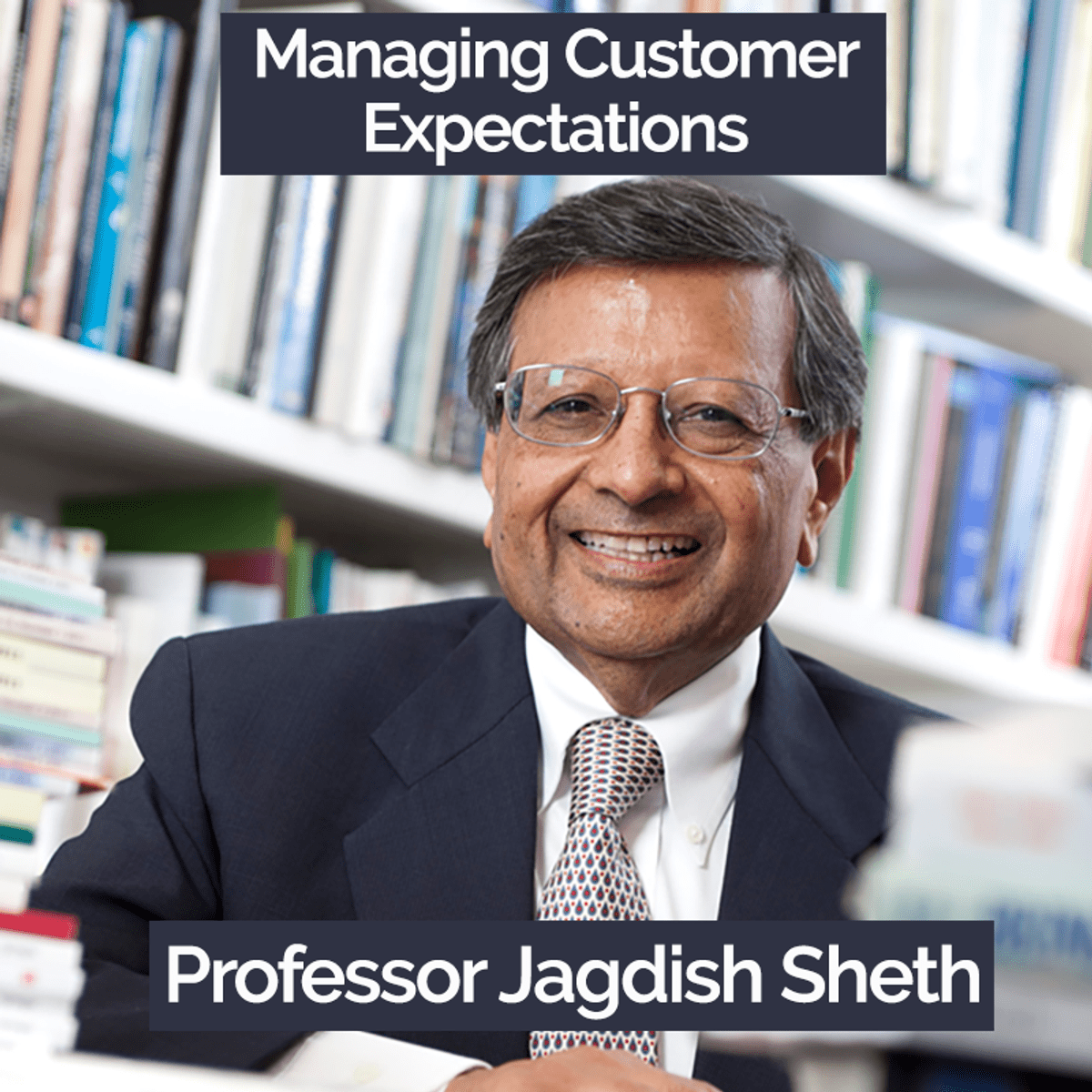
Managing Customer Expectations with Jagdish Sheth
With growing age, income, and ethnic diversity, customer expectations are also becoming more diverse. Therefore, it is becoming difficult to satisfy all customers with growing but divergent expectations. This course, taught by Professor Jagdish Sheth, 2020 Padma Bhushan Award winner for Literature and Education, suggests shaping customer expectations is as, if not more, important than exceeding customer expectations. There are three strategies to manage customer expectations: abandon the customer, accommodate the customer, and adjust customer expectations. Since not all customers are profitable, one must link managing customer expectations with profitability outcomes.
 Imperial College London
Global Disease Masterclass: Global Disease Distribution
The Global Diseases Masterclass is part of the full-degree Masters of Public Health that the School of Public Health. By the end of this specialisation, our aim is that students will be able to critically apply epidemiological concepts to major global diseases and be able to appraise and recommend policy options to combat them. Global Diseases Masterclass: Global Disease Distribution In this course, we will introduce students to the most important trends and pattern in health and disease on a global scale. We will look at how health has improved over time, examine the trends for the future and look at between and within-country inequality in health. We will look at the methods that lie behind those statistics and think about different ways in which health can be conceptualised and measured. The course ends by considering the reason that might lie behind the patterns that we’ve pointed out and introducing the distinction between direct and structural interventions.The course ends by considering the reasons that might lie behind the patterns that we’ve described and introducing the concept of structural interventions.
 Goldman Sachs
Goldman Sachs 10,000 Women के साथ, संचालन के मूल सिद्धांत
यह मुफ़्त ऑनलाइन प्रोग्राम Goldman Sachs 10,000 Women संग्रह में उपलब्ध 10 पाठ्यक्रमों में से एक है, जो उन उद्यमियों के लिए बनाया गया है जो अपने बिज़नेस या व्यवसाय को अगले स्तर पर ले जाने के लिए तैयार हैं। इस पाठ्यक्रम में, आप संचालन प्रबंधन के बारे में जानेंगे और अपने स्वयं के व्यवसाय संचालन और प्रक्रियाओं की पहचान और परिशोधन करेंगे। आप यह पता लगाएंगे कि ग्राहकों की संतुष्टि को अधिकतम करने और व्यावसायिक विकास का समर्थन करने के लिए इन्हें कैसे विकसित और प्रबंधित किया जा सकता है। अभ्यासों में, आप प्रक्रिया मानचित्रण के उद्देश्य की जांच करेंगे और जैसे-जैसे आपका व्यवसाय बढ़ता है, अपनी वर्तमान व्यावसायिक प्रक्रियाओं का मूल्यांकन करने के लिए उसका उपयोग करेंगे। आप इस बात पर विचार करेंगे कि परिचालन दक्षता और अपने व्यवसाय के लिए प्रतिस्पर्धात्मक लाभ प्रदान करने के लिए अपनी प्रक्रियाओं को कैसे परिष्कृत किया जाए, साथ ही ग्राहकों के लिए मूल्य भी बढ़ाया जाए। पाठ्यक्रम के अंत तक, आप अपने व्यवसाय के अंतर्गत प्रमुख प्रक्रियाओं का मानचित्रण और मूल्यांकन, ताकत के क्षेत्रों की पहचान, और अपने व्यवसाय के बढ़ने पर सुधार के लिए उपयुक्त उपायों का चयन कर पाएंगे। 10,000 Women पाठ्यक्रम संग्रह वास्तव में ऑनलाइन सीखने का एक फ्लेक्सिबल अनुभव प्रदान करता है। आपके पास कार्यक्रम को किसी भी तरह से अपनाने की स्वतंत्रता है जैसे आपको ठीक लगे - अपनी सीखने की यात्रा को अपनी व्यक्तिगत व्यावसायिक विकास आवश्यकताओं के अनुरूप बनाने के लिए कोई भी पाठ्यक्रम, या पाठ्यक्रमों का संयोजन लें। यदि आप सभी 10 पाठ पूरे करते हैं, तो आप अपने व्यवसाय के सभी प्रमुख तत्वों का पता लगा पाएंगे और अपने व्यवसाय के विकास के लिए एक संपूर्ण योजना विकसित कर पाएंगे। आप Goldman Sachs 10,000 Women संग्रह पृष्ठ पर अधिक जानकारी प्राप्त कर सकते हैं, जहाँ अक्सर पूछे जाने वाले सवालों का जवाब भी प्रदान किया गया है। पाठ्यक्रम के दौरान आपको कुछ ऐसे शब्द और सन्दर्भ मिल सकते हैं जिन्हे समझाने की ज़रुरत हो। आपकी सहायता के लिए, एक सामान्य शब्दकोष (जनरल ग्लोसरी) और एक वित्तीय शब्दकोष (फाइनेंशियल ग्लोसरी) बनायी गयी है, जिसे आप किसी भी समय देख सकते हैं।
 Google Cloud
Working with Onscreen Data in a Flutter Application
This is a self-paced lab that takes place in the Google Cloud console. In this lab you will develop a Flutter app using a ListView widget. Learn how to contruct a Flutter application that is capable of efficiently showing a list of data. Customise the application AppBar to provide additional functionality.
 Coursera
SQL Joins
In this 1-hour long project-based course, you will learn how to utilize MySQL joins in your queries. By the end of this project, you will create a number of examples that will develop your learning around joins in SQL. This course will enable you to take your beginner knowledge of SQL to the next level by enabling you to utilize joins. Thus, being able to develop more complex queries. This course will provide students with the knowledge behind different joins that are available in MySQL language such as inner join, outer join, and left join. This project will take students through a number of examples demonstrating SQL functions based on a database around a bookstore. You will gain an understanding of these concepts from the in-depth examples provided.
 Coursera
Build Performance Dashboards
Transform your marketing data into strategic business intelligence that drives results. This Short Course was created to help marketing professionals accomplish data-driven decision making through sophisticated dashboard development and systematic campaign analysis. By completing this course, you'll be able to create executive-level reporting that demonstrates marketing ROI and establishes your reputation as a strategic marketing leader. By the end of this course, you will be able to: Develop comprehensive monthly email-performance dashboards shared with leadership to inform strategic planning Lead post-mortem analysis to extract actionable insights feeding improvements into the next email plan This course is unique because it combines technical dashboard creation skills with strategic analysis methodologies, positioning you as both a technical expert and strategic thinker. To be successful in this project, you should have a background in basic email marketing reporting and data visualization concepts.