

The Global Scholarly Directory.
Discover world-class academic programs curated for the modern intellectual. Search through 19877+ degrees and professional certificates.
 Jordan University of Science and Technology
General Histology
This course aims to introduce the novice learner to the essential concepts of animal histology, focusing on the structure and function of tissues in the body. Histology plays a vital role in understanding how tissues support and maintain the organism’s functions, and this course highlights their importance in health and disease. The course will cover various types of animal tissues, each with its unique structure and role. Each week, the course will explore one specific tissue type, such as epithelial tissue, glands, connective tissue, cartilage, bone, muscle tissue, nervous tissue, and the cardiovascular system. The course aims to provide a general understanding of how these tissues are structured and how they contribute to the overall function of the animal body. The role of each tissue in maintaining health, supporting physiological functions, and responding to injury or disease will also be discussed. This course will introduce the key features of each tissue type, its functions in the body, and the importance of histological knowledge in areas such as animal health, disease diagnosis, and research. By the end of the course, learners will have a basic understanding of the microscopic structures of animal tissues and their vital roles in the body.
 Coursera
Document and Evaluate LLM Prompting Success
Document and Evaluate LLM Prompting Success is an intermediate course for ML engineers and AI practitioners responsible for the stability and performance of live LLM systems. Moving an LLM from a cool prototype to a reliable production service requires more than just clever prompting—it demands operational discipline. This course provides the framework for that discipline. You will learn to create professional-grade operational documentation, authoring a step-by-step run-book for managing critical system tasks like a vector index update, complete with validation checks and rollback procedures. You will also move from prompt artistry to prompt science, learning to systematically evaluate and A/B test prompt patterns. By analyzing the trade-offs between response quality, consistency, and token cost, you will make data-driven decisions that ensure both performance and efficiency. The course culminates in creating an LLMOps Production-Readiness Toolkit, equipping you to manage and optimize production AI systems effectively.
 DeepLearning.AI
Carbon Aware Computing for GenAI Developers
Learn how to perform model training and inference jobs with cleaner, low-carbon energy in the cloud! Learn from Nikita Namjoshi, developer advocate at Google Cloud and Google Fellow on the Permafrost Discovery Gateway, and explore how to measure the environmental impact of your machine learning jobs, and also how to optimize their use of clean electricity. 1. Query real-time electricity grid data: Explore the world map, and based on latitude and longitude coordinates, get the power breakdown of a region (e.g. wind, hydro, coal etc.) and the carbon intensity (CO2 equivalent emissions per kWh of energy consumed). 2. Train a model with low-carbon energy: Select a region that has a low average carbon intensity to upload your training job and data. Optimize even further by selecting the lowest carbon intensity region using real-time grid data from ElectricityMaps. 3. Retrieve measurements of the carbon footprint for ongoing cloud jobs. 4. Use the Google Cloud Carbon Footprint tool, which provides a comprehensive measure of your carbon footprint by estimating greenhouse gas emissions from your usage of Google Cloud. Throughout the course, you’ll work with ElectricityMaps, a free API for querying electricity grid information globally. You’ll also use Google Cloud to run a model training job in a cloud data center that is powered by low-carbon energy. Get started, and learn how to make more carbon-aware decisions as a developer!
 University of Virginia
Approche agile et design thinking
Les équipes ont beau avoir de bonnes intentions et de très bonnes idées, et travailler dur, elles finissent trop souvent par créer des produits dont personne ne veut, que personne ne peut utiliser et que personne n'achète. Mais ce n’est pas une fatalité. L’approche agile et le design thinking abordent le développement de produits selon une approche différente, et efficace, qui propose des solutions intéressantes à des problèmes significatifs. Dans ce cours, vous apprendrez à déterminer ce qui est attractif pour un utilisateur dès le début du processus, afin d’anticiper la valeur, en incitant votre équipe à composer des formulations testables sur l'utilisateur et en créant une perspective commune. Ce cours est soutenu par le Batten Institute de la Darden School of Business de l'université de Virginie. Le Batten Institute a pour mission d'améliorer le monde grâce à l'entrepreneuriat et à l'innovation : www.batteninstitute.org.
 L&T EduTech
Foundation Systems, Monitoring and Erection Methods
We delve into the substructure, the crucial support system holding the bridge deck. You'll learn to design piers, the pillars taking the bridge's weight, and abutments providing support at the ends. Analyzing forces acting on these structures and designing them for strength and stability, even during earthquakes, is a key focus. Different pier designs and bearing systems that transfer the bridge's weight to the ground will be explored. Moving underground, you'll tackle foundation engineering - the bridge's cornerstone. We explore different foundation types, from shallow ones for good soil conditions to deep pile foundations for weak soils or heavy bridges. Understanding how soil properties influence the foundation design is crucial. The course equips you to design pile foundations, including selecting the right type, analyzing their load capacity, and ensuring their stability under varying conditions. Well foundations, suitable for deep water or weak soil, will also be covered. But building a bridge isn't just about initial construction. This course emphasizes the importance of monitoring and maintaining bridges throughout their lifespan. You'll learn how engineers use various methods to keep an eye on bridges during construction to identify and address potential issues early on. This includes installing sensors to track the bridge's behavior after construction, allowing for data-driven maintenance decisions. The course covers periodic inspections using visual and specialized techniques to detect problems. You'll learn about routine maintenance tasks like replacing bearings and expansion joints, crucial for ensuring the bridge's long-term functionality. Even bridge widening to accommodate changing traffic needs will be explored. Finally, the course culminates with a fascinating look at bridge construction through real-world case studies. You'll explore how different bridge types are brought to life, from pre-stressed concrete to awe-inspiring cable-stayed bridges. Examining specific construction methods used for each type, such as segmental construction and the impressive balanced cantilever method for achieving large spans, will give you insights into the engineering ingenuity behind these marvels of modern infrastructure. By completing this course, you'll gain a comprehensive understanding of the unseen but critical world that supports bridges. This knowledge is valuable for a career in bridge engineering, construction, or any field where understanding foundations and construction methods is important.
 Rice University
Basic Data Descriptors, Statistical Distributions, and Application to Business Decisions
The ability to understand and apply Business Statistics is becoming increasingly important in the industry. A good understanding of Business Statistics is a requirement to make correct and relevant interpretations of data. Lack of knowledge could lead to erroneous decisions which could potentially have negative consequences for a firm. This course is designed to introduce you to Business Statistics. We begin with the notion of descriptive statistics, which is summarizing data using a few numbers. Different categories of descriptive measures are introduced and discussed along with the Excel functions to calculate them. The notion of probability or uncertainty is introduced along with the concept of a sample and population data using relevant business examples. This leads us to various statistical distributions along with their Excel functions which are then used to model or approximate business processes. You get to apply these descriptive measures of data and various statistical distributions using easy-to-follow Excel based examples which are demonstrated throughout the course. To successfully complete course assignments, students must have access to Microsoft Excel. ________________________________________ WEEK 1 Module 1: Basic Data Descriptors In this module you will get to understand, calculate and interpret various descriptive or summary measures of data. These descriptive measures summarize and present data using a few numbers. Appropriate Excel functions to do these calculations are introduced and demonstrated. Topics covered include: • Categories of descriptive data • Measures of central tendency, the mean, median, mode, and their interpretations and calculations • Measures of spread-in-data, the range, interquartile-range, standard deviation and variance • Box plots • Interpreting the standard deviation measure using the rule-of-thumb and Chebyshev’s theorem ________________________________________ WEEK 2 Module 2: Descriptive Measures of Association, Probability, and Statistical Distributions This module presents the covariance and correlation measures and their respective Excel functions. You get to understand the notion of causation versus correlation. The module then introduces the notion of probability and random variables and starts introducing statistical distributions. Topics covered include: • Measures of association, the covariance and correlation measures; causation versus correlation • Probability and random variables; discrete versus continuous data • Introduction to statistical distributions ________________________________________ WEEK 3 Module 3: The Normal Distribution This module introduces the Normal distribution and the Excel function to calculate probabilities and various outcomes from the distribution. Topics covered include: • Probability density function and area under the curve as a measure of probability • The Normal distribution (bell curve), NORM.DIST, NORM.INV functions in Excel ________________________________________ WEEK 4 Module 4: Working with Distributions, Normal, Binomial, Poisson In this module, you'll see various applications of the Normal distribution. You will also get introduced to the Binomial and Poisson distributions. The Central Limit Theorem is introduced and explained in the context of understanding sample data versus population data and the link between the two. Topics covered include: • Various applications of the Normal distribution • The Binomial and Poisson distributions • Sample versus population data; the Central Limit Theorem
 Duke University
Impact Measurement & Management for the SDGs
How can businesses and investors help fill the multi-trillion-dollar gap needed for sustainable development? Simply put: by incorporating sustainability and social impact factors on people and planet into management decisions. Through this course, anyone can learn to improve their organization's practice of impact measurement and management and align their ESG or impact activities and reporting with emerging global standards. Impact Measurement and Management for the SDGs is a collaboration between UNDP SDG Impact and the award-winning team at CASE at Duke University. The United Nations Development Programme (UNDP) is a steward of the United Nations Sustainable Development Goals (SDGs) that were launched in 2015 and to which 193 countries have signed up to achieve by 2030. The SDGs are a shared plan to end extreme poverty, reduce inequality, and protect the planet; they have become the world’s blueprint to achieve a better and more sustainable future for all. But the public sector cannot meet those goals alone. Climate change, poverty, racial and gender equity, food, health, education, clean water − the list of challenges faced by people and planet is too long. Businesses and investors have stepped in to help. The course was designed around the fundamental elements of the SDG Impact Standards, the only management standards that embed sustainability at the core of an organization in the holistic way intended by the creators of the SDGs. The course demonstrates how the SDG Impact Standards help organizations align with responsible business principles, other standards, and best practices in impact management. In the course, you’ll learn to improve decision-making for positive impact on people and planet in line with the SDG Impact Standards and the Operating Principles for Impact Management. In the course, we have translated 4 universal practices of impact management into practical actions: SET STRATEGY, INTEGRATE, OPTIMIZE and REINFORCE. We teach the steps to implement these actions through short videos and lessons with concrete practical examples. Professionals who know how to apply these sustainable management standards are increasingly in demand by institutions globally as they work to improve their performance and reporting around ESG and impact management. If you work or wish to work within an enterprise, a corporation, a fund that manages assets or an asset owner or advisory that oversees investment assets, or if you just want to learn more about impact investing, ESG, social finance or corporate reporting, this course will help you master the core concepts and practices in impact management for the SDGs and other impacts from enterprise and investor perspectives. This course was written and is delivered by CASE Faculty Director Cathy Clark, and benefitted from extensive input from a larger team from UNDP, CASE, global academic advisors, and other experts. For a full list of acknowledgements, see: https://sites.duke.edu/casei3/for-practitioners/impact-measurement-and-management-for-the-sdgs-course/ Selected course materials have been translated into Baha Indonesia, Thai, and Vietnamese. Spanish and Turkish translations are coming soon. Please find links to these translations under the Resources tab once you are inside the course. This course was made possible by generous support from Norad.
 Tecnológico de Monterrey
Administración ágil de proyectos
En este curso identificarás cuáles son los elementos más importantes en la dirección de proyectos, en la planeación estratégica y cómo lo puedes vincular con el propósito, misión y visión para el logro de los objetivos organizacionales. También conocerás cómo las organizaciones están desarrollando proyectos de transformación que afectan de manera directa al capital humano aplicando nuevas formas de gestión incorporando a la “agilidad” como respuesta a nuevos cambios y a nuevas formas de hacer las cosas.
 Google Cloud
Ingesting FHIR Data with the Healthcare API
This is a self-paced lab that takes place in the Google Cloud console. In this lab you will learn the basic functionalities of Cloud Healthcare API using the Fast Healthcare Interoperability (FHIR) data model.
 Knowledge Accelerators
Change Management Fundamentals: ADKAR for Beginners
Lead organizational change with confidence using practical, people‑centered strategies inspired by ADKAR, a widely used change management model that helps people adopt change at work. In this course, you’ll learn how to communicate change clearly, build buy‑in, reduce resistance, teach new behaviors, and measure adoption, whether you lead teams, support operations, or influence others without formal authority. Why This Course Matters Organizations succeed or struggle based on how well people adapt to change. That’s why change management skills are increasingly valuable across business, HR, operations, project coordination, healthcare, customer service, and transformation roles. This course gives you a clear, structured approach for guiding people through change in a human‑centered, supportive way. Career Impact Change management is a highly transferable skill for professionals who help teams adopt new processes, systems, and ways of working. This course helps you build practical workplace skills that support roles in project delivery, operations improvement, people management, HR support, and organizational change initiatives. In interviews you can highlight an awareness of ADKAR, Kotter's Process and Knowles Adult Learning Theory. What You’ll Learn • Lead change with empathy and influence • Build awareness, desire, and buy-in • Teach new behaviors effectively • Measure adoption and reinforcement What Makes This Course Unique ✔ Beginner-friendly and practical ✔ Built around the ADKAR change management model ✔ Utilizes Kotter's 8-Step Process for Leading Change and Knowles Adult Learning Theory ✔ Focused on real workplace communication and adoption ✔ Short lessons designed for efficient learning ✔ Useful for professionals across many industries and roles Who Should Take This Course This course is for team leads, project coordinators, HR professionals, operations staff, healthcare professionals, customer service leaders, and anyone responsible for driving or supporting organizational change. Enroll to build practical change management skills you can apply right away to help people move from awareness to adoption with greater clarity and confidence. Trademark notice: ADKAR® is a registered trademark of Prosci, Inc. This course is not affiliated with, endorsed by, or sponsored by Prosci.
 Packt
Packt
Strategic Growth Leadership for Managers
This course is based on Scott K. Edinger's bestselling book, The Growth Leader. This course guides leaders in achieving sustainable growth by exploring hidden differentiators and strategic frameworks. It offers practical examples to relate strategies to real-world scenarios, empowering executives to foster growth even in challenging times. With actionable insights, participants can inspire confidence and excellence across their teams. This course provides a structured approach with tools, strategies, and insights to drive sustainable growth and navigate complex challenges effectively. Ideal for executives, senior leaders, and business professionals aiming to drive sustainable growth. A foundational understanding of leadership principles and business strategy is recommended. Copyright Scott K. Edinger. All rights reserved. Originally published by Greenleaf Book Group LLC, Austin, Texas. This course has been packaged and distributed by Packt Publishing on behalf of Greenleaf Book Group. Greenleaf Book Group is a hybrid publisher and book distributor dedicated to empowering independent authors and small presses. Renowned for its innovative publishing model, Greenleaf offers a comprehensive suite of services, including editorial guidance, design, distribution, and marketing support, tailored to each author's goals. With a focus on quality and collaboration, Greenleaf has produced numerous bestsellers across a wide range of genres, providing authors with the tools and expertise to maximize their reach and impact in the competitive publishing industry.
 The University of Edinburgh
Intellectual Humility: Theory
Faced with difficult questions people often tend to dismiss and marginalize dissent. Political and moral disagreements can be incredibly polarizing, and sometimes even dangerous. And whether it’s Christian fundamentalism, Islamic extremism, or militant atheism, religious dialogue remains tinted by arrogance, dogma, and ignorance. The world needs more people who are sensitive to reasons both for and against their beliefs, and are willing to consider the possibility that their political, religious and moral beliefs might be mistaken. The world needs more intellectual humility. But what is intellectual humility, anyway? And why do people seem so drawn toward intellectual arrogance? Psychologists, philosophers, theologians, and educationalists are now suggesting some answers. In this course we try to define intellectual humility and intellectual virtues in general, and ask how we know who is humble. All lectures are delivered by leading specialists, and the course is organised around a number of interesting readings and practical assignments which will help you address issues related to humility in your daily life. This course is a part of a series which explores the theory, the science and the applied issues surrounding intellectual humility (the latter two coming in June and November 2017). Completing all three courses will give you a broader understanding of this fascinating topic. Look for: • Intellectual Humility: Science - https://www.coursera.org/learn/intellectual-humility-science • Intellectual Humility: Practice - https://www.coursera.org/learn/intellectual-humility-practice You can also follow us on twitter: @EdiPhilOnline and #IHMOOC Learners can apply for Financial Aid directly with Coursera to assist with the cost of accessing the full course and gaining a certificate for successfully completing the course.
 Coursera
Design Smart Surveys with Skip Logic
This course builds essential survey design capabilities for market research professionals and anyone tasked with gathering high-quality feedback. Learners will develop a strong understanding of different question types—from multiple-choice to open-ended—and master techniques for implementing conditional skip logic to create efficient, user-friendly respondent experiences. Through practical application and real-world case studies from organizations like the Pew Research Center and Spotify, you will build the technical and creative skills needed to design professional surveys that maximize completion rates and data quality. The curriculum is designed to be immediately applicable. You will learn not only the theory behind what makes a question effective but also how to construct clear, unbiased questions that align with core research objectives. By the end of the course, you will be able to design dynamic survey paths that route respondents past irrelevant sections, respecting their time and improving the relevance of the data you collect. This course provides a direct pathway to mastering the foundational skills required for roles in research operations, survey programming, and data analysis, enabling you to produce trustworthy and actionable insights.
 IBM
IBM
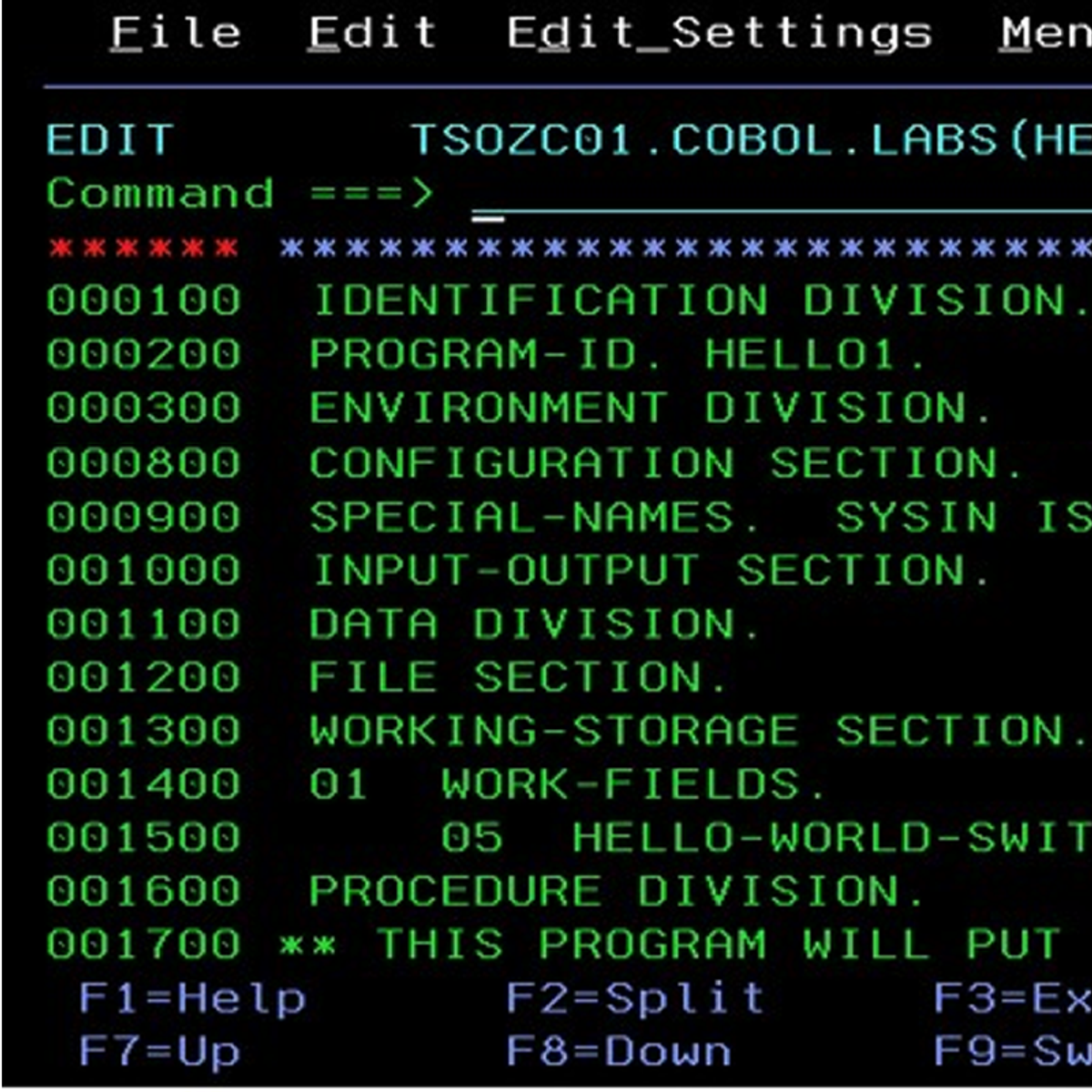
IBM COBOL Software Development Process
This course is geared towards anyone interested in learning about IBM, COBOL, mainframe computing, and the Software Development Lifecycle (SDLC) and increasing their knowledge and hands on experience with core concepts and technologies including life cycle and systems analysis concepts, design and structured coding, and a wide variety of topics designed to provide relevant, requisite working knowledge and practical experience.
 Minnesota State University, Mankato
Technical Editing
Strong editing transforms technical content from adequate to exceptional. This course is designed for professionals who want to deepen their expertise in technical editing and apply proven practices used across industry settings. By completing the course, you’ll gain practical skills to improve clarity, consistency, accessibility, and usability in a wide range of technical documents. You’ll explore the three levels of editing and learn how to choose the right level for a project. You’ll also develop hands-on experience with editing tools and workflows, while exploring accessibility and design principles that ensure documents serve diverse audiences. Each module builds toward creating an adaptable technical editing process you can use in your workplace. This course balances theory and practice: you’ll not only learn about editing frameworks and functional aesthetics but also apply them in realistic contexts. Whether you’re new to technical editing or looking to refine existing skills, you’ll leave with a toolkit to elevate technical content, enhance collaboration with writers and designers, and strengthen your professional value.
 Google Cloud
Google Cloud에서 생성형 AI 앱 만들기
"생성형 AI 애플리케이션은 대규모 언어 모델(LLM)이 발명되기 전에는 불가능에 가까웠던 새로운 사용자 경험을 만들 수 있습니다. 어떻게 하면 애플리케이션 개발자가 생성형 AI를 사용해 Google Cloud에서 강력한 대화형 앱을 빌드할 수 있을까요? 이 과정에서는 생성형 AI 애플리케이션에 대해 알아보고 프롬프트 설계 및 검색 증강 생성(RAG)을 사용해 LLM 기반의 강력한 애플리케이션을 빌드하는 방법을 학습합니다. 생성형 AI 애플리케이션에 사용할 수 있는 프로덕션 레디 아키텍처를 살펴보고 LLM 및 RAG 기반 채팅 애플리케이션을 빌드합니다."