

The Global Scholarly Directory.
Discover world-class academic programs curated for the modern intellectual. Search through 19877+ degrees and professional certificates.
 University of California, Irvine
Essentials of Management and Strategic Planning
This course is for aspiring and current professionals seeking to enhance their management and leadership skills, particularly those involved in business planning, organizational strategy, and driving growth strategies. It benefits individuals looking to understand the fundamentals of running a business and implementing effective strategic planning. By the end of this course, you will be able to: - Understand the core principles of management and leadership. - Develop and implement effective strategic planning for business growth. - Drive accountability and create actionable plans within an organization. - Analyze and select appropriate business strategies to gain competitive advantage. No specific tools or software are covered, as this course focuses on foundational concepts and frameworks. To be successful in this course, no prior experience in management or strategic planning is required, making this an ideal starting point for beginners.
 LearnQuest
Advanced Kubernetes Deployment Strategies and Networking
This course is for learners who possess a foundational understanding of Kubernetes and have some prior experience working with container orchestration. They should have a keen interest in advancing their knowledge and expertise in Kubernetes deployment strategies and networking concepts. This first course focuses on Advanced Kubernetes deployment strategies and networking concepts, providing learners with practical experience in designing and implementing complex Kubernetes deployments. Topics include rolling updates, canary deployments, blue-green deployments, ingress, and network policies. By the end of this course, you will be able to: - Explain the core concepts of Kubernetes deployment strategies - Compare and contrast rolling updates, canary deployments, and blue-green deployments - Analyze the benefits and drawbacks of different deployment strategies - Describe the role of Kubernetes Services and Ingress in cluster networking - Implement a custom Ingress configuration to manage traffic routing - Integrate advanced deployment strategies with Kubernetes networking - Troubleshoot common issues related to deployments and networking - Optimize deployment and networking configurations for performance and resilience
 Amazon Web Services
Amazon WorkSpaces Getting Started
Welcome to this comprehensive exploration of Amazon Elastic Kubernetes Service (EKS) deployment options, designed to help you navigate the diverse ways of implementing Kubernetes across cloud, hybrid, and on-premises environments. This course will guide you through the strategic decisions and practical implementations of EKS deployments.
 IBM
IBM
Malware Analysis and Introduction to Assembly Language
Malicious software, or malware, is typically delivered over a network and is designed to cause disruption to a computer, client, server, or network. Disruptions can include leaked private information, unauthorized access to information or systems, blocked user access, interference with security and privacy, or numerous other variations of attacking systems. Malware analysis dissects malware to gather information about the malware functionality, how the system was compromised so that you can defend against future attacks. Assembly is a low-level language that is used to communicate with the machine. Assembly programming is writing human-readable machine codes or machine instructions that are directly read by the computer. All high-level languages compiled programs like C or C++ can be broken down, analyzed, and understood using Assembly language with the help of a debugger. This process is known as reverse engineering. Understanding what an executable program does is easy if you have direct access to the source code. But if not, such as the case with malware, learning Assembly can be helpful. In this course, through video demonstrations, hands-on reverse engineering, and capture-the-flag type activities, you will be introduced to the processes and methods for conducting malware analysis of different file types. You will analyze native executable files, and analyze popular files like PowerShell, JavaScripts, and Microsoft Office documents. Then you will learn the fundamentals of Assembly language, basic Win32 Assembly programming concepts, and how Reverse Engineers use Assembly to analyze malware.
 Tableau Learning Partner
Data Ecosystem
The Data Ecosystem course will give you a foundational understanding of the entire data ecosystem, including data management. Specifically, this course shows how a business intelligence analyst would organize, access, and use data. You will learn about a variety of data sources along with the use and purpose of each type. Additionally, you’ll learn about the importance of data quality and data governance in relation to effective data management. You’ll also learn about the goals of data management and the principles that form the foundation of modern data architecture. Having a solid understanding of the data ecosystem is important for entry-level roles in business analytics. This course is for anyone who is curious about entry-level roles that demand fundamental Tableau skills, such as business intelligence analyst or data reporting analyst roles. It is recommended (but not required) that you have some experience with Tableau Public, but even if you're new to Tableau Public, you can still be successful in this program. By the end of the course, you will be able to: -Describe the purpose and applications of tabular data, databases, data warehouses, data lakes, and ETLs. -Describe the importance of data quality and data governance in relation to data management. -Identify the goals of data management. -Identify the principles that form the foundation of modern data architecture.
 Coursera
Lead Creative Brainstorms
Lead Creative Brainstorms is an intermediate course designed for team leads, project managers, and marketers who need to transform chaotic meetings into powerful engines for innovation. If you want to move beyond unproductive brainstorming sessions and start generating tangible results, this course will provide you with a facilitator’s playbook grounded in methods from the world's most creative companies. This course is ideal for professionals with a foundational understanding of team dynamics who are ready to take a data-driven approach to collaboration. You will learn not just how to run a brainstorm, but how to design, facilitate, and measure one effectively. Drawing inspiration from the structured creativity of Pixar's "Braintrust" and IDEO's famous brainstorming rules, you will master using digital tools like Miro to ensure every voice is heard and every idea is captured. The course culminates in a hands-on project in which you will analyze collaboration KPIs, such as the idea-to-launch ratio and meeting satisfaction, to propose concrete improvements. You'll leave with the skills to foster a more inclusive and productive creative culture on your team.
 Google
Les systèmes d’exploitation et vous : devenir un utilisateur expérimenté
Ce cours est le premier d’une série qui vise à vous préparer à un rôle de spécialiste du soutien des TI de niveau débutant. Dans ce cours, on vous initiera au monde des technologies de l’information, ou TI. Vous découvrirez les différentes facettes des technologies de l’information, comme le matériel, Internet, les logiciels, le dépannage et le service à la clientèle. Ce cours couvre une grande variété de sujets en TI qui sont conçus pour vous donner un aperçu de ce que contient ce programme de certificat. À l’issue de ce cours, vous serez en mesure : ● de comprendre le fonctionnement du système binaire ● d’assembler un ordinateur à partir de zéro ● de choisir et d’installer un système d’exploitation sur un ordinateur ● de comprendre ce qu’est Internet, ainsi que son fonctionnement et son impact dans le monde moderne ● d’expliquer comment les applications sont créées et comment elles fonctionnent sous le capot d’un ordinateur ● d’utiliser des méthodologies courantes de résolution de problèmes et des compétences générales dans un contexte de technologies de l’information.
 Whizlabs
AWS: Security, Management and Governance
AWS: Security, Management, and Governance is the fifth course of Exam Prep DVA-C02: AWS Certified Developer Associate Specialization. The course is divided into two modules and each module is further segmented by Lessons and Video Lectures. This course facilitates learners with approximately 3:00-3:30 Hours of Video lectures that provide both Theory and Hands-On knowledge. Also, Graded and Ungraded Quizzes are provided with every module to test the ability of learners. - Module 1: Analytics and Application Integration - Module 2: AWS: Security, Governance, and Compliance This course is designed for professionals seeking to build asynchronous, event-driven applications, monitor resources, perform data analysis and search, and handle real-time data streaming. By the end of the course, learners will be able to: - Explore Amazon OpenSearch Service used to deploy, operate, and analyze large volumes of data quickly and easily. - Understand IAM, KMS, and Cognito for secure user authorization, key management, and user authentication respectively. - Effectively monitor and Audit AWS API calls using CloudWatch Logs and CloudTrail respectively.
 Board Infinity
Fundamentals of Flux
Welcome to the "Fundamentals of Flux" course, where you will embark on a journey to become proficient in Flux, a robust architecture for building web applications. Over the course of two comprehensive modules, you will acquire the skills and knowledge necessary to create scalable, maintainable, and efficient web applications using Flux. In Module 1 of our course, "Grasping the Basics of Flux," we will lay the foundation for understanding the Flux architecture, a key concept in modern web application development. This module is designed to provide you with a comprehensive understanding of the core components of Flux and guide you through setting up the necessary development environment. In Lesson 2, we will delve into Actions and Dispatchers, key elements in implementing Flux. Welcome to Module 2 of our course, "Stores and Views," where we will delve into the essential concepts of Flux stores and views. In Lesson 1, you will gain an in-depth understanding of stores, including how to register them with the Dispatcher, retrieve state, and handle store events. In Lesson 2, we will explore Flux views, guiding you through creating views, building a simple Flux application, and providing insights into best practices and common pitfalls. This course is designed for individuals interested in understanding how to manage the state and data flow in web applications efficiently. Our target learner is someone with a basic understanding of JavaScript and web development concepts, who is eager to dive into the Flux architecture to enhance their web development skills. Whether you're a beginner looking to start your journey into state management or an experienced developer seeking to deepen your understanding of Flux, this course is tailored for you. Disclaimer: This is an independent educational resource created by Board Infinity for informational and educational purposes only. This course is not affiliated with, endorsed by, sponsored by, or officially associated with any company, organization, or certification body unless explicitly stated. The content provided is based on industry knowledge and best practices but does not constitute official training material for any specific employer or certification program. All company names, trademarks, service marks, and logos referenced are the property of their respective owners and are used solely for educational identification and comparison purposes.
 Packt
Packt
Introduction to AWS Pentesting
Updated in May 2025. This course now features Coursera Coach! A smarter way to learn with interactive, real-time conversations that help you test your knowledge, challenge assumptions, and deepen your understanding as you progress through the course. Explore the essentials of AWS pentesting with this comprehensive course designed to sharpen your cloud security skills. Dive into key concepts such as understanding the AWS pentesting policy, managing IAM security issues, and identifying vulnerabilities in critical AWS services like S3, EC2, and Lambda. Learn how to protect cloud environments by recognizing and mitigating security risks. The course kicks off with foundational concepts, explaining the basics of AWS architecture, its policies, and security concerns. You'll gain hands-on insights into crucial services such as IAM, ARNs, and cloud storage. By the end of this section, you’ll have a strong understanding of the vulnerabilities pentesters face in AWS environments. Next, explore specialized tools and techniques to enhance your penetration testing efforts. From using the AWS CLI to advanced tools like Pacu and GrayhatWarfare, you'll master strategies for uncovering and exploiting weaknesses. Simultaneously, you'll tackle real-world challenges with the Flaws and CloudGoat modules, where step-by-step scenarios test and refine your AWS pentesting skills. This course is tailored for cybersecurity enthusiasts, IT professionals, and cloud engineers aiming to secure their AWS environments. Basic knowledge of AWS and familiarity with security practices is recommended. With a balanced approach to theory and practice, this intermediate-level course equips you with the skills to excel in AWS pentesting.
 EDUCBA
Apply RPA to Automate HR Processes with UiPath
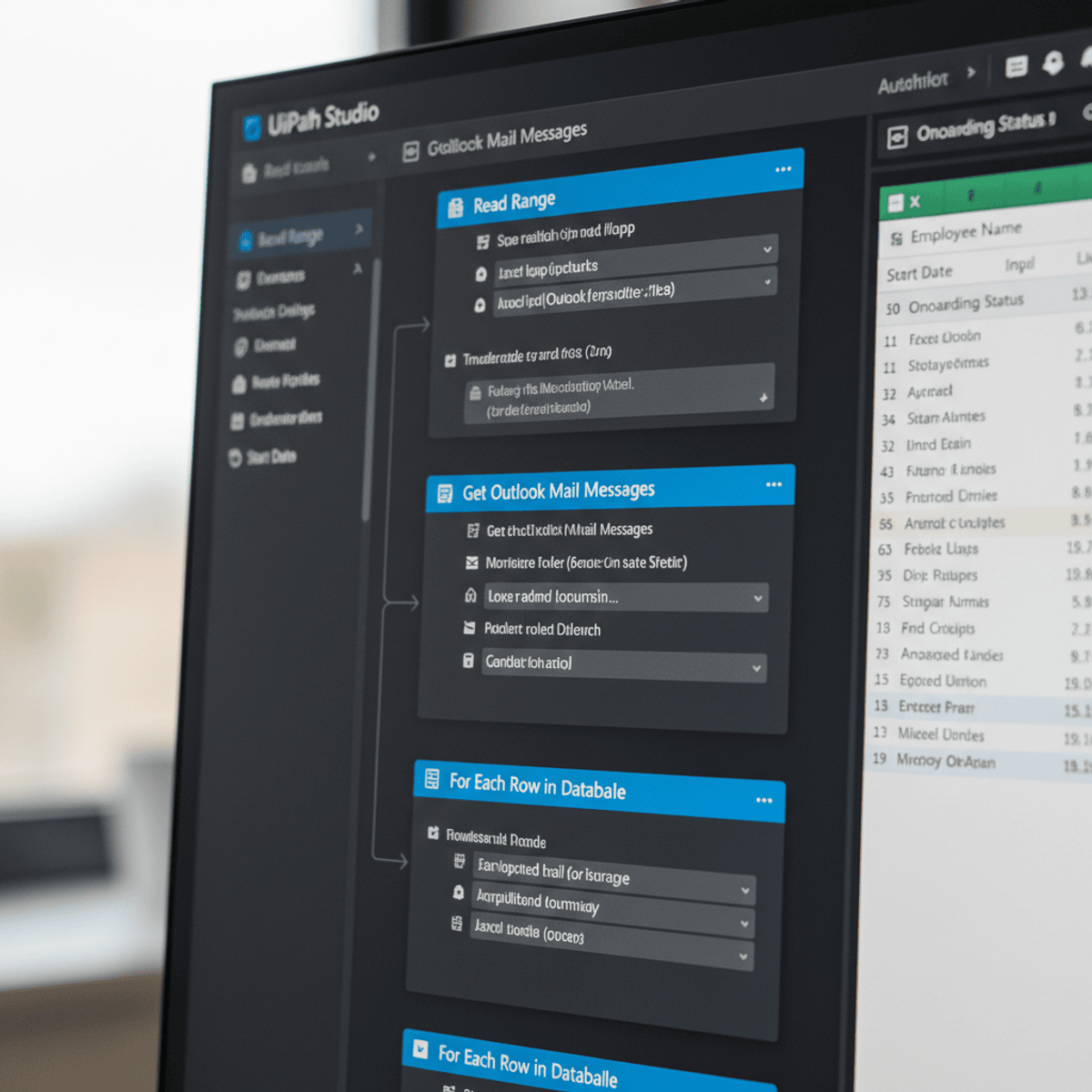
By the end of this course, learners will be able to analyze HR processes for automation readiness, document workflows using industry-standard RPA practices, extract and validate data from emails, and implement an end-to-end HR automation solution using UiPath. This hands-on project-based course guides learners through the complete lifecycle of HR Process Automation using Robotic Process Automation (RPA). Starting with process understanding and documentation, learners progressively build practical skills in task capture, process design documentation, structured data handling, multi-stage data search logic, and secure data storage. Each step mirrors real-world enterprise RPA projects, ensuring strong alignment with industry expectations. Learners benefit by gaining job-ready UiPath skills, practical exposure to HR automation scenarios, and a clear understanding of how to translate business processes into reliable automation workflows. What makes this course unique is its end-to-end project focus, realistic HR use case, and emphasis on best practices such as validation, exception handling, and structured data management—skills highly valued in RPA roles. This course is ideal for aspiring RPA developers, automation analysts, and professionals seeking practical experience in UiPath-based HR automation projects.
 Google
Daten für die Erkundung Vorbereiten
Dies ist der dritte Kurs des Google Data Analytics Certificate. In diesen Kursen lernen Sie alles, was Sie für eine Einstiegsposition in der Datenanalyse benötigen. Während Sie Ihr Verständnis der Themen aus den ersten beiden Kursen weiter ausbauen, werden Sie auch in neue Themen eingeführt, die Ihnen helfen, praktische Data-Analytics-Fähigkeiten zu erwerben. Sie erfahren, wie Sie Tools wie Tabellenkalkulationen und SQL verwenden, um die richtigen Daten für Ihre Ziele zu extrahieren und zu nutzen und wie Sie Ihre Daten organisieren und schützen. Bei Google tätige Fachleute für Datenanalyse werden Sie weiterhin anleiten und Ihnen praktische Möglichkeiten zeigen, mit denen Sie übliche Aufgaben von Fachleuten für Datenanalyse mithilfe der besten Tools und Ressourcen erledigen können. Nach Abschluss dieses Zertifikatsprogramms sind Lernende gerüstet, um sich auf Einstiegspositionen in der Datenanalyse zu bewerben. Es sind keine Vorkenntnisse erforderlich. Im Verlauf dieses Kurses werden Sie: - Herausfinden, wie Fachkräfte für Datenanalyse entscheiden, welche Daten für die Analyse gesammelt werden - Mehr über strukturierte und unstrukturierte Daten, Datentypen und Datenformate erfahren - Erfahren, wie Sie verschiedene Arten von Verzerrungen in Daten identifizieren können, um die Glaubwürdigkeit der Daten sicherzustellen - Erfahren, wie Fachkräfte für Datenanalyse Tabellenkalkulationen und SQL mit Datenbanken und Datensätzen verwenden - Sich mit Open Data und dem Verhältnis zwischen Datenethik und Datenschutz sowie mit deren Bedeutung auseinandersetzen - Lernen, wie Sie auf Datenbanken zugreifen und die darin enthaltenen Daten extrahieren, filtern und sortieren - Die Best Practices zum Strukturieren und Schützen von Daten kennenlernen
 IBM
IBM
Cloud Operations, Monitoring, Security, and Compliance
Build job-ready skills employers need with this IBM Cloud Operations, Monitoring, Security and Compliance course. Ideal for professionals looking to become a hybrid cloud architect or systems architect. You’ll learn how to manage hybrid cloud operations, implement multicloud monitoring, and secure cloud infrastructure at scale. You’ll build in-demand skills in cloud operations management, Site Reliability Engineering (SRE), and Infrastructure as Code (IaC), enabling you to operate, automate, and optimize enterprise cloud environments. Plus, through practical labs, you’ll apply Service-Level Indicators (SLIs), Service-Level Objectives (SLOs), and error budgets to improve reliability while designing monitoring and observability solutions using Prometheus, Grafana, and AWS CloudWatch. You’ll also implement identity and access management (IAM), along with zero trust security models, and enforce data encryption, while aligning architectures with SOC 2, GDPR, and HIPAA requirements. In the final project, you’ll then integrate operations, monitoring, and security into cohesive hybrid cloud architecture. Enroll now to build job-ready cloud operations skills and advance your career.
 University of Colorado Boulder
Network Principles in Practice: Cloud Networking
In Network Principles in Practice: Cloud Networking, you will learn about both the networking abstractions and services for building applications in the cloud, and the technology underlying cloud networking. You will be able to architect complex applications in the cloud. In understanding how the cloud providers created their networks, you will be in a better position to troubleshoot applications and analyze different possible ways of architecting applications, and even help design the next generation of networking for cloud providers. This course can be taken for academic credit as part of CU Boulder’s Masters of Science in Computer Science (MS-CS) degrees offered on the Coursera platform. This fully accredited graduate degree offer targeted courses, short 8-week sessions, and pay-as-you-go tuition. Admission is based on performance in three preliminary courses, not academic history. CU degrees on Coursera are ideal for recent graduates or working professionals. Learn more: MS in Computer Science: https://coursera.org/degrees/ms-computer-science-boulder Course logo by Jordan Harrison on Unsplash.
 Pearson
Certified Cloud Security Professional (CCSP): Unit 6
Designed for professionals navigating the evolving landscape of cloud technology, this module provides critical insights into legal frameworks, privacy concerns, and risk management strategies. Through engaging lessons, you will gain the expertise needed to manage compliance and safeguard your organization in the cloud environment. Upon completing this course, you will have the skills necessary to conduct thorough cloud audits and develop robust contracts, ensuring your business remains secure and compliant.
 University of Michigan
Teaching and Assessing Clinical Skills
The purpose of this course is to improve feedback, clinical teaching, and assessment of clinical skills.