

The Global Scholarly Directory.
Discover world-class academic programs curated for the modern intellectual. Search through 19877+ degrees and professional certificates.
 IE Business School
Fundamentals of Diversity
"The Fundamentals of Diversity" is the first course in IE University's specialization titled "The Journey to Diversity, Inclusion, and Belonging." This course will provide learners with the basic tools to navigate diversity and diverse organizations. Throughout the course, learners will analyze how to promote diversity across demographic categories such as gender, ethnicity, race, disability, age, and physical appearance. The course will also empower learners to identify the challenges posed by diversity. Finally, learners will gain a working knowledge of how to manage diversity in organizations and teams. This course is designed for all: students and young professionals as well as older and senior professionals looking for a better understanding of what diversity is and the critical role it plays in an organization.
 EDUCBA
Apache Pig: Analyze, Transform & Optimize Data
By completing this course, learners will be able to explain the fundamentals of Apache Pig, apply Pig Latin scripts for big data processing, analyze and transform datasets using operators and functions, and design advanced workflows with UDFs and Piggy Bank. This comprehensive program takes learners from beginner to advanced concepts in a structured way. Starting with the foundations of Pig and its role in the Hadoop ecosystem, learners will explore execution modes, data types, and essential commands for managing and displaying data. The course then progresses into mastering Pig operators, including GROUP, JOIN, UNION, SPLIT, and FILTER, while demonstrating the use of built-in functions to prepare data for analytics. Finally, learners gain hands-on experience with Pig scripting, debugging, execution plans, and extending Pig’s capabilities using user-defined functions and community-contributed libraries. Unlike traditional MapReduce coding, Pig offers a simplified scripting environment that reduces development time and complexity. This course is unique because it blends practical scripting exercises with real-world data transformation scenarios, equipping learners with the skills to efficiently process large-scale datasets. By the end, learners will confidently apply Apache Pig to streamline ETL workflows and enhance big data analytics.
 EDUCBA
MAYA Architecture - Living Room Interiors
This course provides a hands-on journey into interior modeling using Autodesk Maya, focusing on creating realistic and functional living and dining room environments. Learners will start by designing a custom dining set, move on to building sofa sets and center tables, and complete the space with detailed decor like lamps and a balcony rocking chair. Through guided lessons, students will master polygonal modeling, extrusion, mesh smoothing, duplication, and scene organization techniques—equipping them with practical 3D skills for professional interior visualization.
 EDUCBA
Develop Interactive Web Apps with DHTML & RGraph
By completing this course, learners will be able to structure content with HTML, design engaging layouts using CSS, apply dynamic interactions with JavaScript and DHTML, and create interactive data visualizations with RGraph on HTML Canvas. They will develop the ability to validate forms, implement dynamic styling, build calculators, and integrate interactive charts with animations, tooltips, and real-time interactivity. Learners benefit from a step-by-step approach that blends foundational web development with advanced visualization techniques. The course not only teaches how to build responsive, dynamic websites but also how to transform raw data into meaningful visuals that enhance user experience. Through hands-on projects, learners gain confidence in applying theory to practical scenarios, preparing them to design professional-grade, interactive web applications. What makes this course unique is its comprehensive integration of HTML, CSS, JavaScript, DHTML, and RGraph. Instead of learning these technologies in isolation, learners experience how they complement each other to create dynamic, data-driven web solutions.
 Scrimba
Learn React Hooks: Build a Tic Tac Toe Game
In this comprehensive course, you will build a functional game using React components, gaining hands-on experience with key concepts in web development. The lessons cover the creation of both simple and advanced components, while introducing the power of React's state management and user interaction handling. You’ll begin by learning how to scaffold components, manage properties (props), and utilize React’s built-in styling capabilities. As you progress, you'll explore important concepts like function logic, such as creating the calculateWinner function and implementing state management techniques. By the end, you'll have a solid understanding of how to render and update UI elements dynamically based on user interactions. A unique bonus lesson will show you how to implement time travel in your game, further extending your skill set with more advanced React concepts.
 Cisco Learning and Certifications
Ansible for Network Automation
This course will train you on the fundamentals of Ansible, an open-source, extensible configuration management tool that streamlines infrastructure management in modern networking environments. You will also learn about Jinja2, a templating language that expands flexibility in automation tasks. Upon completing this course, you will have an essential understanding of Ansible and its application to network automation, enabling you to effectively automate network tasks and improve network operations. This course is primarily intended for network engineers, systems engineers, network architects, and managers interested in learning the fundamentals of network automation and Ansible. By the end of this course, you will be able to: - Construct Ansible playbooks to configure network devices and retrieve operational state data from network devices. - Build Jinja2 templates and YAML data structures to generate desired state configurations. Proficiency in fundamental network routing & switching technologies, basics of Python programming (3-6 mos exp.), and basic Linux knowledge.
 University of Toronto
Introduction to GIS Mapping
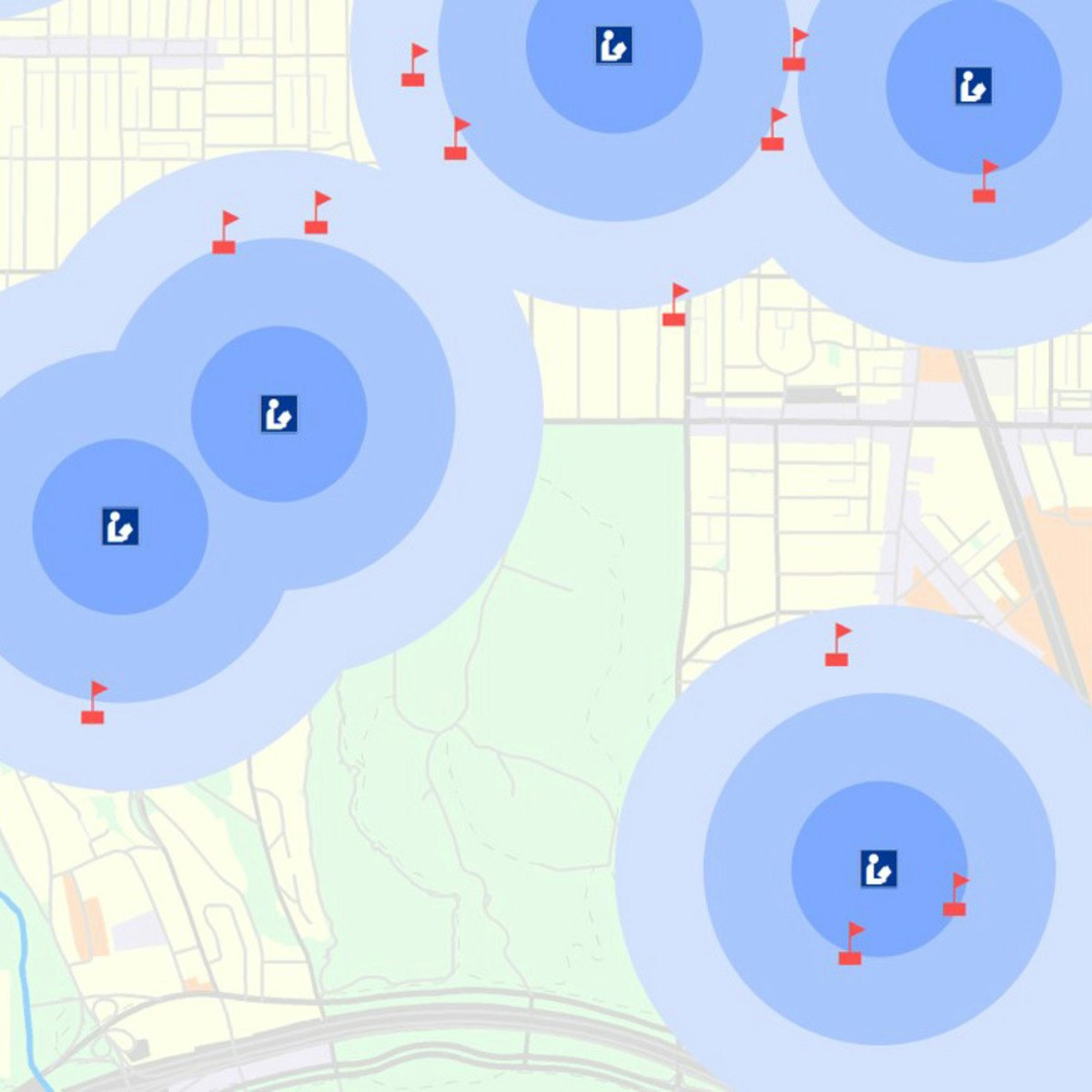
Get started learning about the fascinating and useful world of geographic information systems (GIS)! In this first course of the specialization GIS, Mapping, and Spatial Analysis, you'll learn about what a GIS is, how to get started with the software yourself, how things we find in the real world can be represented on a map, how we record locations using coordinates, and how we can make a two-dimensional map from a three-dimensional Earth. In the course project, you will create your own GIS data by tracing geographic features from a satellite image for a location and theme of your choice. This course will give you a strong foundation in mapping and GIS that will give you the understanding you need to start working with GIS, and to succeed in the other courses in this specialization. This course is for anyone who wants to learn about mapping and GIS. You don't have to have any previous experience - just your curiosity! The course includes both practical software training and explanations of the concepts you need to know to make informed decisions as you start your journey to becoming a GIS analyst. You will need a Windows computer with ArcGIS Desktop installed. (software is not provided)
 Coursera
Optimize SQL and Vector Search Parameters
This intermediate-level course is designed for database professionals, ML engineers, and AI practitioners who need to build and maintain high-performance LLM systems. In the world of large-scale AI, slow queries and inefficient search can bring a system to its knees. This course provides the critical skills to prevent that, focusing on practical database and vector search optimization techniques. You will learn to master parameterized SQL queries to ensure secure, efficient data retrieval and diagnose performance bottlenecks. You will then dive into the core of modern AI retrieval systems, learning to tune vector similarity search parameters to strike the perfect balance between recall and latency. Through hands-on labs using tools like SQLite, FAISS, and Annoy, you will experiment with indexing strategies, tune HNSW algorithm parameters, and measure latency, throughput, and resource utilization. By the end of this course, you will be equipped to systematically analyze and optimize production retrieval systems, ensuring your AI applications are not only powerful but also fast and reliable. To successfully complete this course, a familiarity with basic SQL and database concepts and an understanding of vector search principles is recommended.
 Google Cloud
Vibe Coding for Beginners: From Zero to App
In this course, you'll learn how to build software with Gemini, Google’s generative AI. The best part is: Anyone can do this. It’s okay if you've never written code before. You just need to be curious and motivated, and we'll help you get from zero to app.
 Northeastern University
Computation and Visualization for Analytics Part 1
Offers students an opportunity to learn how to use visualization tools and techniques for data exploration, knowledge discovery, data storytelling, and decision making in engineering, healthcare operations, manufacturing, and related applications. Covers basics of Python and R for data mining and visualization. Introduces students to static and interactive visualization charts and techniques that reveal information, patterns, interactions, and comparisons by focusing on details such as color encoding, shape selection, spatial layout, and annotation.
 Johns Hopkins University
Foundations of Telehealth
Telemedicine has proven itself to be an important part of the future of healthcare. In this course, students will be introduced to the key components and considerations needed to design and implement a successful telemedicine program at both the practice and health system levels. The course emphasizes operational design principles and highlights a team based approach. Key content areas include clinical considerations, patient safety, technology needs, patient satisfaction, legal, government affairs, regulatory and compliance, and billing considerations.
 Edureka
RAG Systems in Practice
This course introduces the core concepts and techniques behind Retrieval-Augmented Generation (RAG) systems, guiding you through building, optimizing, and deploying powerful AI systems that combine language models with external knowledge sources. Whether you are new to RAG or looking to deepen your understanding, this course provides a hands-on approach to mastering RAG workflows and improving model accuracy. Through detailed lessons, demonstrations, and real-world applications, you’ll learn how to preprocess and index documents, generate embeddings, construct RAG pipelines, and deploy production-ready systems. You’ll also explore advanced optimization techniques to enhance retrieval quality, scalability, and context relevance. By the end of this course, you will be able to: • Understand the fundamentals of Retrieval-Augmented Generation and its applications in AI. • Apply text preprocessing and embedding techniques to improve document retrieval. • Build and optimize RAG pipelines using LangChain and FAISS. • Utilize hybrid retrieval, re-ranking, and grounding methods to enhance context accuracy. • Deploy and evaluate RAG systems in production environments for optimal performance. This course is ideal for AI enthusiasts, machine learning practitioners, and developers looking to specialize in building advanced AI systems that integrate external knowledge with language models. No prior experience with RAG systems is required, but a basic understanding of Python and machine learning concepts will be beneficial. Join us to begin your journey into the world of Retrieval-Augmented Generation and learn how to build efficient, scalable, and accurate AI systems!
 The Chinese University of Hong Kong
Everyday Chinese Medicine 2
This course, Everyday Chinese Medicine II offered by the Chinese University of Hong Kong, aims to show to the public, as well as the healthcare professionals about the basic principles of Chinese medicine. Our primary goal is to empower healthcare choices by promoting awareness and practical application on Chinese medicine diagnostic and therapeutic approaches, and to facilitate interprofessional education between Chinese and conventional clinicians. Learners will develop skills in applying theories of Chinese medicine for understanding health and illnesses. We will discuss the treatment principles of Chinese Medicine and the corresponding herbs for application. This will then be followed by the application of diets and exercise. Finally, we would expand the horizons of how integrative medicine are practiced in Chinese populations such as China, Taiwan and Hong Kong for specific diseases. This showcases how different disciplines joints-hands to fulfill the unmet needs from the public. The perspective of research, education and medical coverage will be explored.
 Coursera
Primeros pasos en Visme
Al final de este proyecto habrás aprendido a crear proyectos simples usando la versión gratis de Visme. Aprenderás en este proyecto guiado a organizar tus ideas y a utilizar herramientas de diseño gráfico para crear proyectos. Despues de haber completado este proyecto guiado podrás incorporar un esquema de color , imágenes, y otros elementos de diseño grafico a tus publicaciones. Tus nuevos conocimientos te ayudarán a anunciar tu comercio y a perseguir tu estrategia de marketing. La plataforma Visme ofrece todas las herramientas necesarias para crear un producto tanto organizado como visualmente atractivo y fácilmente de compartir y trabajar en equipo.
 Google Cloud
Feature Engineering 日本語版
このコースでは、Vertex AI Feature Store を使用するメリット、ML モデルの精度を向上させる方法、最も有効な特徴を抽出できるデータ列の見極め方について説明します。また、BigQuery ML、Keras、TensorFlow を使用した特徴量エンジニアリングに関するコンテンツとラボも用意されています。
 Google Cloud
Responsible AI for Developers: Interpretability & Transparency - Português Brasileiro
Neste curso, apresentamos os conceitos de interpretabilidade e transparência em IA. Vamos abordar a importância da transparência em IA para desenvolvedores e engenheiros. O curso também abrange ferramentas e métodos práticos para ajudar a alcançar a interpretabilidade e a transparência em dados e modelos de IA.