

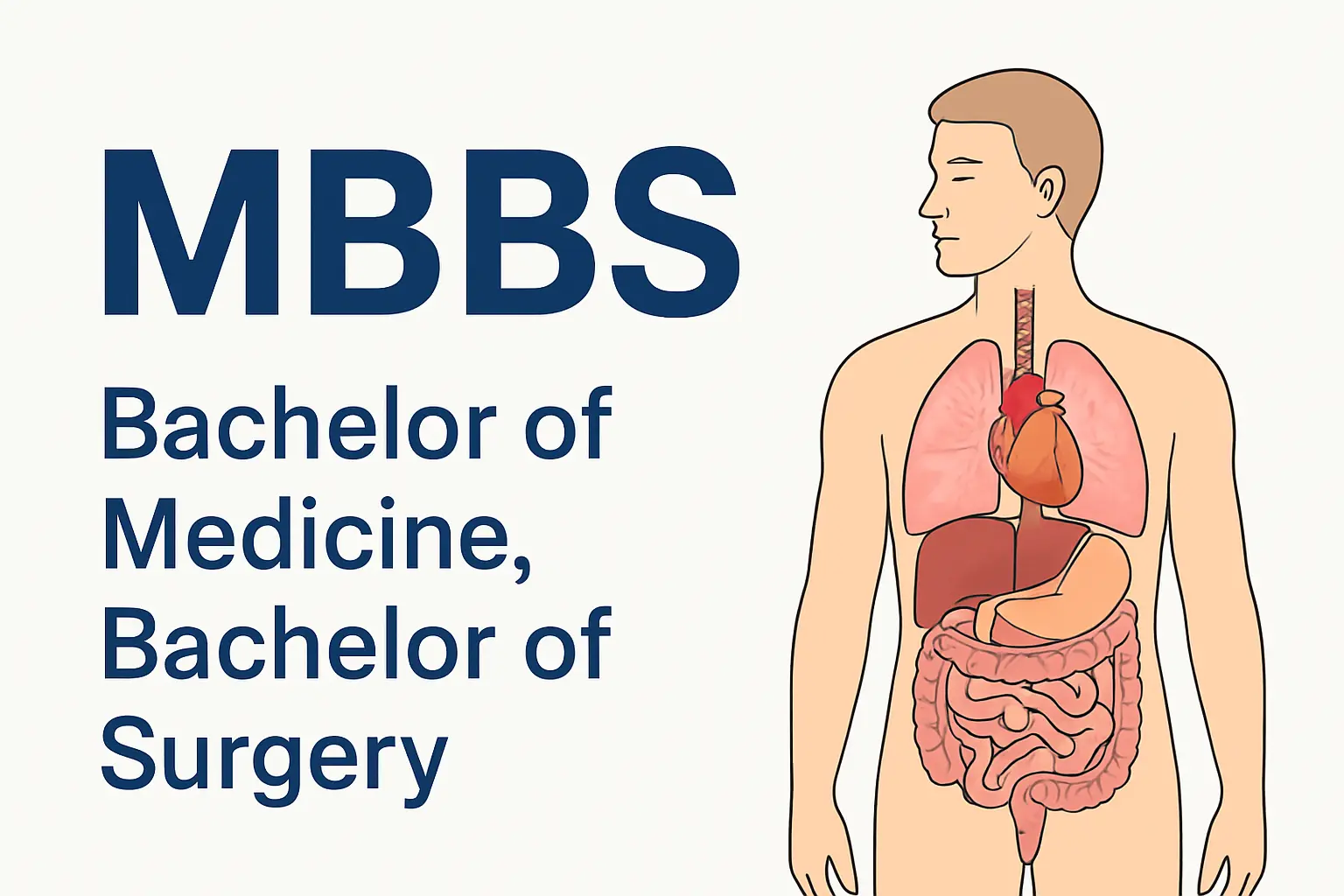
MBBS Meaning — What MBBS Stands For & How the Degree Works
Clear, short, and friendly guide to the MBBS degree. Perfect for students, parents, and first-time visitors researching medical education.
What does MBBS mean?
MBBS stands for Medicinae Baccalaureus, Baccalaureus Chirurgiae. It is the main undergraduate medical degree in many countries. The degree trains students to become licensed doctors.
The title comes from older European traditions. In simple terms, MBBS is the primary qualification for practicing medicine after licensing and internships.
Who awards the MBBS degree?
Universities and medical colleges award MBBS degrees. After graduation, students usually complete clinical rotations and an internship year. Licensing exams follow in many countries before graduates can practice independently.
Typical MBBS course structure
- Pre-clinical years (1–2 years): Basic sciences like anatomy, physiology, and biochemistry.
- Clinical years (2–3 years): Practical training in hospitals: internal medicine, surgery, pediatrics, obstetrics, etc.
- Internship/housemanship (1 year): Hands-on rotation. Students work under supervision in multiple departments.
Course length varies by country. Typical programs run 5–6 years in total.
MBBS eligibility and admission
Eligibility rules differ. Most places require:
- High school diploma with science subjects (biology, chemistry, physics)
- Minimum grades or GPA
- Entrance exam or interview (in many countries)
International students may face additional requirements, like language tests or foreign credential evaluations.
Career options after MBBS
After MBBS, common paths include:
- General practice / house officer
- Residency or specialty training
- Research and academic medicine
- Public health and community medicine
- Hospital administration or medical writing
Many MBBS graduates later specialize by taking postgraduate degrees like MD, MS, or equivalent training in their country.
How MBBS differs from other medical degrees
Different countries use varied degree names. For example:
- MBChB / MB BCh: Alternate form used in some regions.
- MD (in some countries): Can be an undergraduate degree or a postgraduate degree depending on location.
Always check how the degree maps to licensing in your target country.
Common questions (quick answers)
Is MBBS hard? Yes. It is demanding but rewarding.
Can I work abroad with MBBS? Often yes, but you usually must clear licensing or screening exams and complete local requirements.
Is MBBS the same everywhere? No. Course length, content, and licensing rules vary by country.
Frequently asked questions
- What is the full form of MBBS?
- Bachelor of Medicine, Bachelor of Surgery.
- How long does MBBS take?
- Usually 5–6 years including internship.
- Can MBBS graduates practice as doctors?
- Yes, after completing required internships and licensing exams in their country.